Council on Energy, Environment and Water Integrated | International | Independent

18 Sep 2026 | 11:00 am – 1:00 pm IST
Council on Energy, Environment and Water (CEEW) is organising an accelerator session “From Fibre to Finance: Unlocking Circular Textile Clusters” on 18 September 2026 as part of the World Circular Economy Forum 2026 in Delhi, India.
How can textile clusters move circularity from ambition to implementation? This session brings together researchers, recyclers, financiers and policymakers to present a practical framework to align finance with enterprise needs and support the Ministry of Textiles' vision for cluster-led transformation.
This event is an accelerator session at the World Circular Economy Forum 2026 (wcef2026.com). On social media, you can follow the event with #WCEF2026.
Organisers: Council on Energy, Environment and Water
Date and Time: Friday 18 September 2026, 11:00 am – 1:00 pm IST (11:30 pm – 1:30 am CST)
Venue: Sagarmatha, Council on Energy, Environment and Water (CEEW), New Delhi
Format: Hybrid (in-person and online)
Target audience: Policymakers, business leaders, working-level practitioners, financiers and investors.
Focus: Finance, Governance, Industry, System change, Waste
SDG:
India’s Viksit Bharat 2047 vision positions the green economy as a central engine of growth, resilience, and global competitiveness. The circular economy alone can contribute 8.4 million jobs, USD 132 billion in market opportunity, and USD 125 billion in investments, with solid waste and material recovery forming the backbone of this employment potential. Yet, several high-potential circular value chains remain underexplored and underquantified.
One such opportunity is pre-consumer textile waste management—manufacturing scraps, cutting waste, deadstock, and unsold inventory generated across India’s vast textile and apparel ecosystem. As the second-largest textile producer in the world, India generates 7.8 million tonnes of textile waste annually, 42 per cent of which is pre-consumer waste. Major industrial clusters such as Ludhiana, Panipat, Tiruppur, and Surat generate significant volumes of this waste. However, the majority of this waste is mismanaged, resulting in severe environmental impacts, increased social inequity, and significant economic losses, thereby representing a significant loss of material value, jobs, and emissions abatement potential.
This WCEF accelerator session builds on CEEW's research conducted in collaboration with the Aspen Network of Development Entrepreneurs (ANDE) to assess India's pre-consumer textile waste ecosystem, with a focus on strengthening access to finance and enabling policy support.
The session will feature the launch of a flagship report that examines the financing challenges faced by textile waste recovery facilities, recyclers and other processors across India. The report reveals a disconnect between the financing needs of enterprises, the products offered by financiers, and policy priorities. The report proposes a practical framework for matching the right financing instrument to the right enterprise, an approach that can be replicated across textile clusters nationwide.
The extent of material recovery, the actors driving it, and the financing needed to scale circular solutions remain poorly understood. Bringing together researchers, recyclers, and financiers, the roundtable at the accelerator session will discuss key questions:
The session demonstrates how cluster-led transformation can fulfil the Ministry of Textiles' sustainability vision, offering scalable insights on enabling circular business models and building partnerships that can be replicated across textile clusters worldwide.
11:00–11:10 | Welcome and context setting
11:10–11:20 | Opening keynote
11:20–11:40 | Presentation by CEEW on the report findings: “From Fibre to Finance: Unlocking Circular Textile Clusters”
11:40–11:45 | Report Launch and photo session
11:45–12:30 | Round table discussion: A multi-stakeholder dialogue (researchers, recyclers, financiers, and policymakers) on overcoming financial bottlenecks, technology adoption, and infrastructure gaps
12:30 -12:40 | Summarising and way forward
12:40 -12:45 | Closing remarks
12:45| Networking Lunch
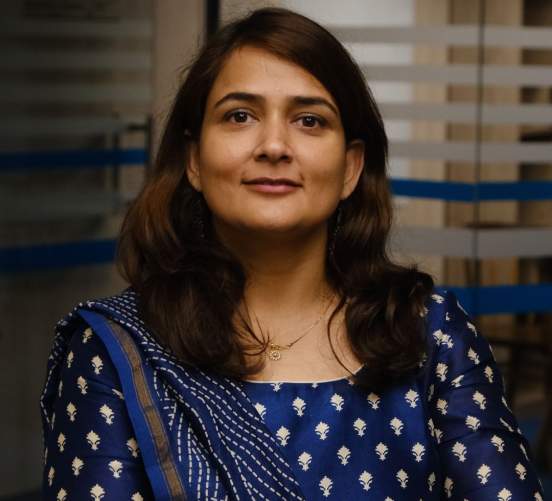
Priyanka Singh
Senior Programme Lead