Council on Energy, Environment and Water Integrated | International | Independent

Suggested Citation: Banerjee, Arunava, Shreya Kapoor, and Neera Majumdar. Inside CEEW: Celebrating 15 Years of People, Purpose and Process. New Delhi: Council on Energy, Environment and Water (CEEW), 2026.
An institution is easiest to describe through its reports, datasets, and policy wins. Inside CEEW asks a different question: who made that work possible, and what did the work make of them?
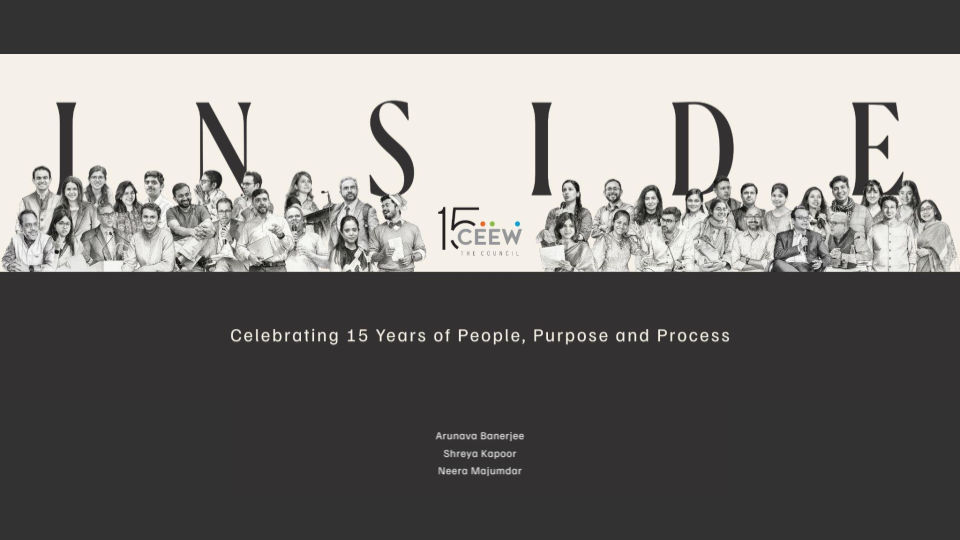
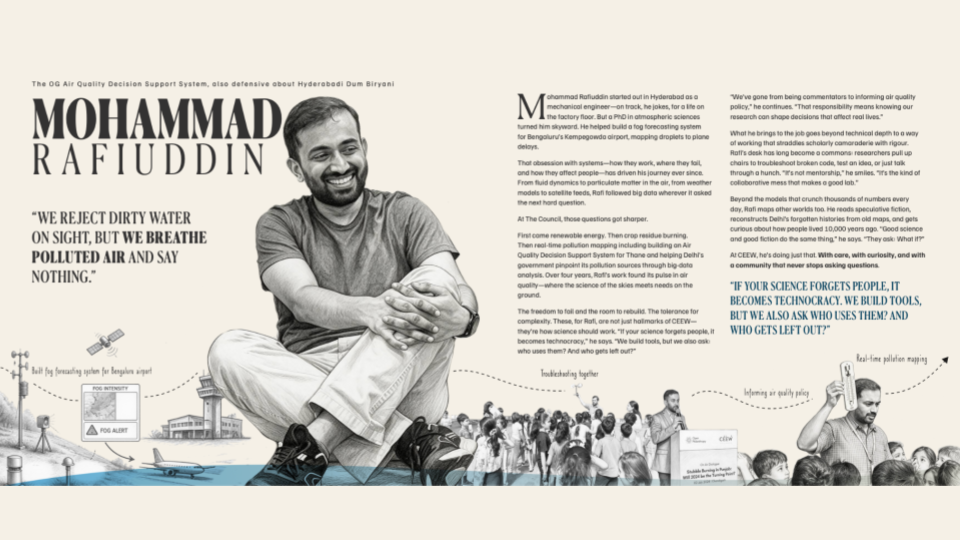
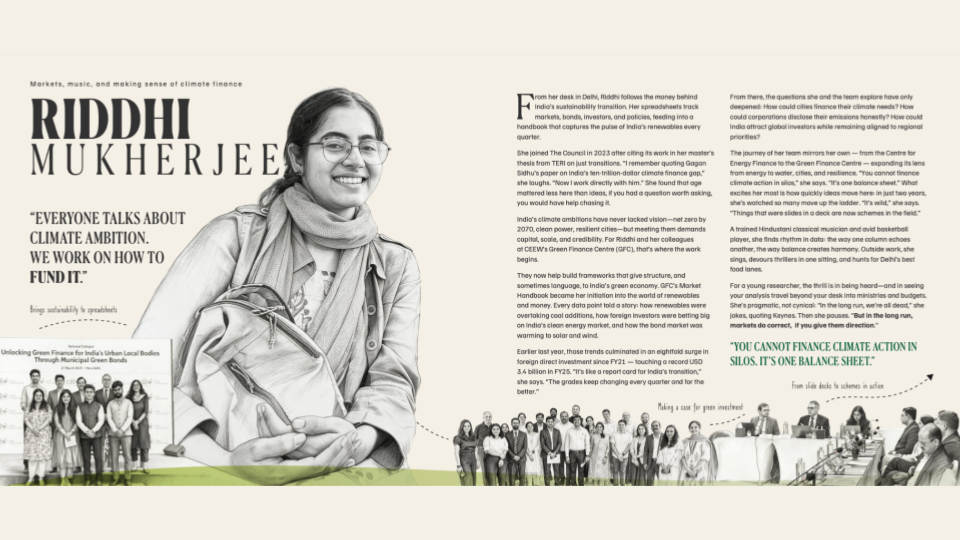
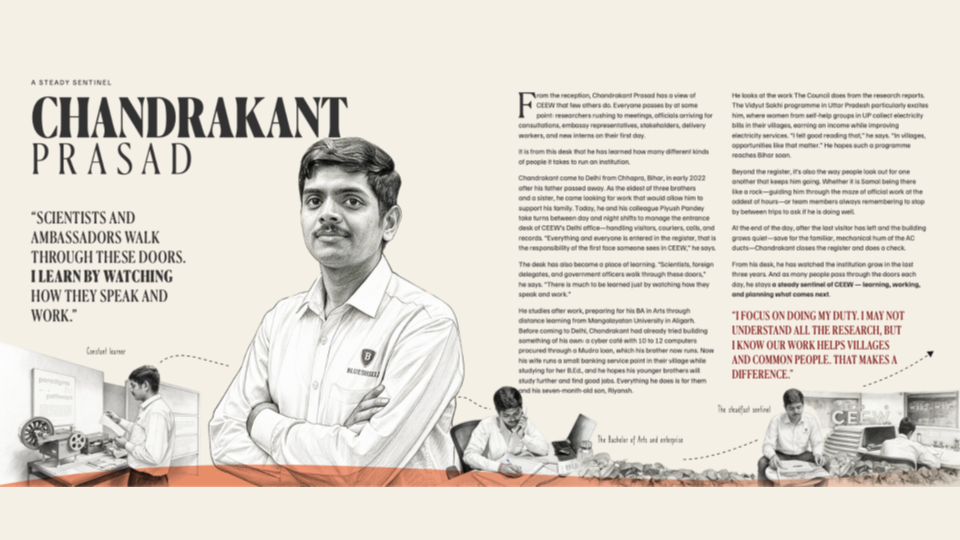
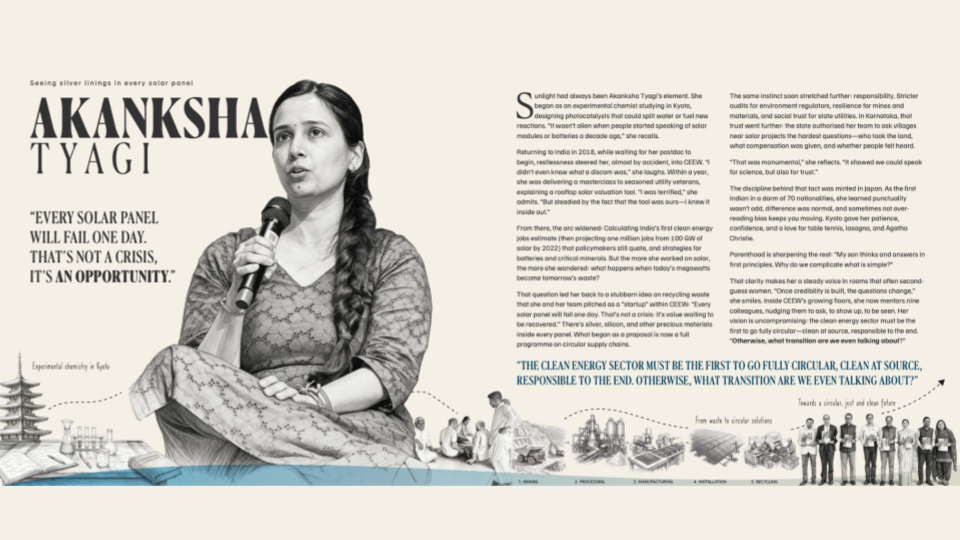
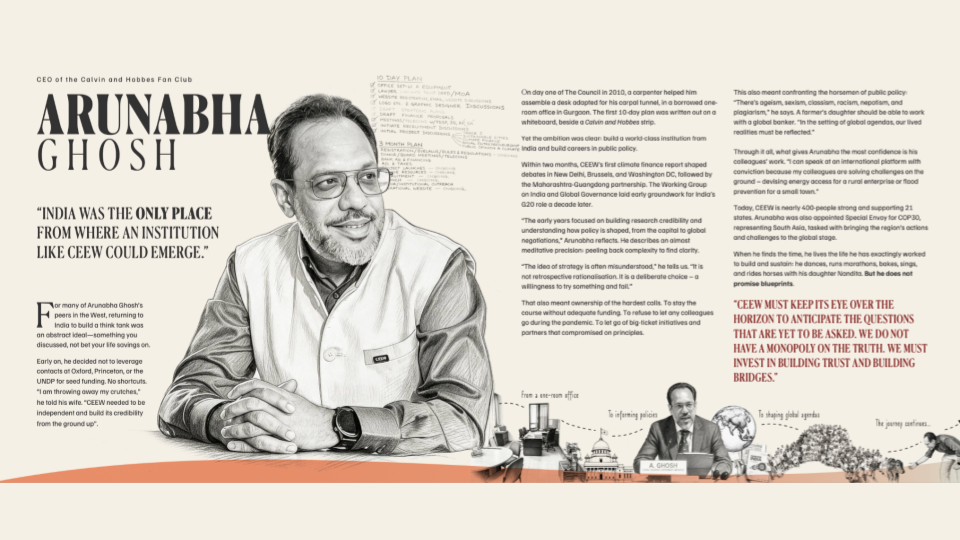
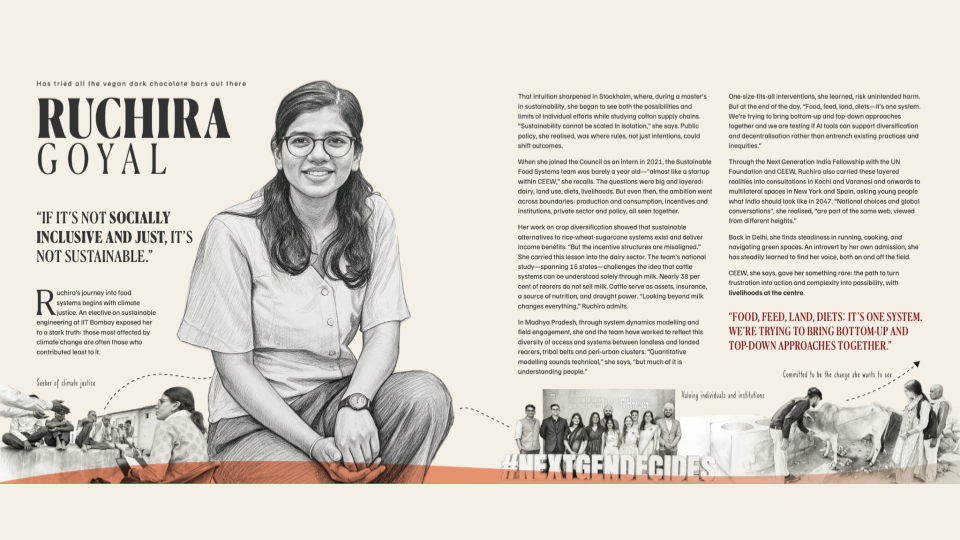
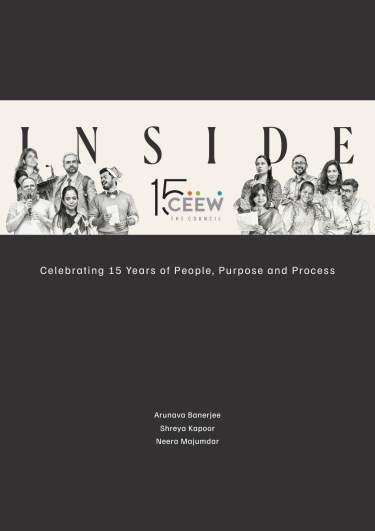
This is the print version of Inside CEEW, a long-form digital-first social storytelling series launched to mark CEEW's 15th anniversary in 2025—part oral history, part portrait project. Each post went beyond titles and tasks to surface the purpose, process, and lived experiences of the people who have shaped the organisation. The ~40 stories were gathered through deep, documentary-style interviews spanning anywhere between 45 minutes to 3 hours and published weekly across CEEW's social media handles. No one's memory outranks anyone else's here, because institutional consequence rarely maps neatly onto designation. Read together, these are the people through whom The Council became itself.
An institution is its people
by Arunava Banerjee
15 years is an awkward age for an institution: old enough to have acquired habits, legends, arguments, scars, and a preferred mode of operation; young enough for many who built its earliest systems to still be walking its corridors and disputing how events ought to be remembered.
Most people encounter the Council on Energy, Environment and Water (CEEW) through its reports, datasets, policy recommendations, partnerships, and programmes. Inside CEEW began by looking beyond that public record to ask who made the work possible, and what the work made of them.
The Council began without an inherited campus, endowment, or archive, but with intent: to build a world-class public policy institution from India, make research from the Global South speak with analytical authority, create careers in public policy, and pursue questions without convenient answers.
Intent, however, does not become an institution by proclamation. It must pass through people.
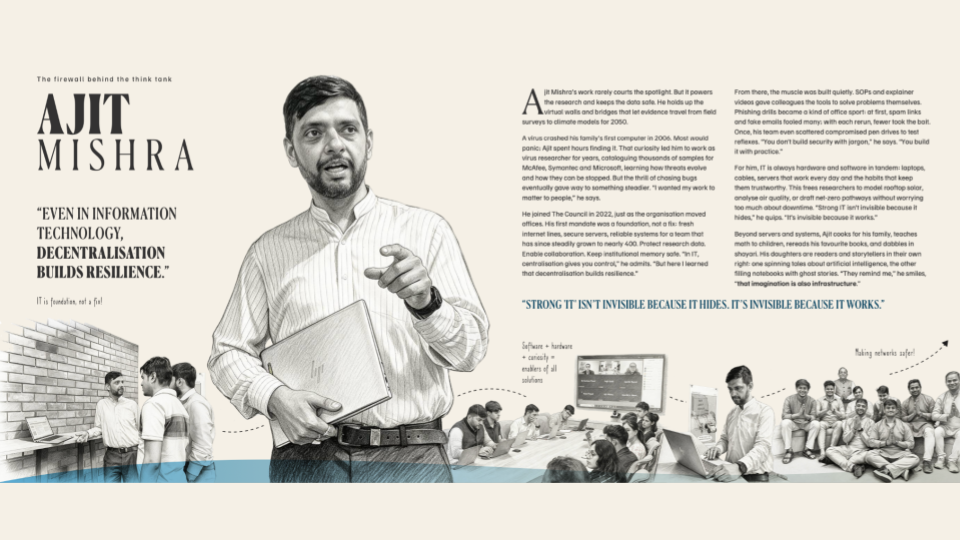
It passes through a researcher moving between a ministry in Delhi and farms in Rajasthan, water-reuse systems in Chennai, homes in Kolkata, or municipal offices in Thane because a number cannot be understood from a spreadsheet alone. It passes through an editor stress-testing a claim the evidence cannot bear; an administrator accounting for every visitor and courier; a finance officer making projects across states credible to partners and auditors; an IT professional keeping data secure through an office move. It passes through those who build teams, repair processes, ask uncomfortable questions, and stay long enough to see a tentative idea acquire institutional form.
Launched during CEEW’s 15th anniversary year, the series was conceived neither as an official chronology nor as a roll call of achievements. The idea was simple: speak to the people who had made and continued to make CEEW, and tell their stories honestly, personally, and close to the ground.
Institutional memory, however, is distributed among people who experienced its growth from different cities, programmes, functions, and positions. Some remembered high-stakes policy meetings or the moment they earned the trust of a rural community. Others reminisced about carrying furniture into a new office, or coaxing stubborn printers. Most credited the families that made the commitment possible: parents who once questioned a career in public policy, partners who shared the risks of return and reinvention, and children growing up alongside late drafts and long journeys.
We decided to not impose a hierarchy upon these memories. Institutional consequence rarely maps neatly onto designation.
Over 10 months, I interviewed around 40 colleagues in conversations lasting between 45 minutes and several hours. Each profile then passed through at least four rounds of editing before its weekly Saturday publication. I arrived with question banks, but the best material often emerged from the conversations themselves: a father wondering why an IIT graduate had joined a non-profit; an electric auto driven from the Golden Temple to the Wagah Border to test whether its battery could last the journey; a two-bedroom flat doubling as CEEW’s first Lucknow office; a solar-irrigation project no one initially volunteered to lead.
The task was to listen until these fragments began speaking to one another.
In classical rhetoric, ethos is the character that makes an argument credible. CEEW’s ethos has accumulated through repeated acts of intellectual seriousness and practical care. Immanuel Kant condensed the Enlightenment into a challenge: “Dare to know.” The scientific spirit asks something harder of an institution: dare to be corrected. Facts must withstand scrutiny. Research must meet the people whose lives its data describes. Evidence matters because lives do.
This sounds solemn. It often is. It is also frequently funny.
At CEEW, a morning spent modelling national emissions can end in a skit rehearsal; a discussion about climate finance could give way to impromptu stand-up; and sustainability means designing national policy while waging patient office campaigns against paper towels. As the inimitable Homer Simpson put it, “Just because I don’t care doesn’t mean I don’t understand.” CEEW has generally operated on the opposite proposition: understanding something deeply makes indifference difficult.
Across the anniversary year, these stories travelled through CEEW’s platforms and the personal networks of those who recognised colleagues, mentors, former teammates, or parts of themselves. But while the internet is excellent at circulation, it fares poorly at memory. A book slows the encounter down. It permits these profiles to coexist: the founder beside those who joined yesterday and are already asking how the place could work better.
Inside CEEW also became my own route into the institution’s history. An editor is trained to look for cold opens, revelations, callbacks, and lines that carry more weight than their word count allows. But people do not arrange their lives for publication. Stories had to cohere without being flattened. The project became my own exercise in translating complexity without pretending to resolve it.
Looking ahead, CEEW is not the institution that began in a borrowed room. Scale has brought reach, expertise, recognition, and the ability to work across problems no single vertical can solve. It has also brought an obligation to guard against complacency, fragmentation, and the false confidence that can accompany institutional success. Scale must not be confused with arrival.
This volume closes one year of stories. It does not exhaust the stories inside CEEW. It gives some of them somewhere to rest and leaves the door ajar for the many still unfolding.
Institutions, after all, are living inheritances. These pages hold some of the people through whom the Council became itself. The rest of the story belongs to those still writing it.