Council on Energy, Environment and Water Integrated | International | Independent

In 2024, the global average temperature rose to 1.36°C, an increase of 0.97 °C at the time of signing the Paris Agreement. With each passing year, extreme heat events are breaking records globally, nationally, and locally. Central to addressing the sector-wide impacts of extreme heat are Heat Action Plans (HAPs), which are proactive policy documents that help city officials prepare for, respond to, and recover from its consequences.
India's heat resilience ecosystem currently suffers from five major gaps:
Whereas the implementation gaps are due to:
Despite funds being available to implement heat resilience projects, our consultations with various national, state, and district officials suggest they often struggle to utilise and leverage these resources due to the aforementioned reasons. Our work within the Climate Resilience team at CEEW aims to conduct a study to understand heat impacts across various themes within the at-risk population, identify what keeps them vulnerable, and examine the current adaptation strategies they use. Based on insights from this nationally representative household survey, we aim to inform future Heat Action Plans in India, which will be formulated using this ground-level evidence to build heat resilience.
To achieve the study objectives, CEEW invites bids from survey agencies with sufficient experience and credentials to conduct surveys among households and various target groups. As part of this assignment, the service provider is required to perform the following two tasks:
A. Household survey: The service provider will conduct a detailed representative household survey within 5 to 6 states, encompassing 2-3 cities from each state. The survey will cover-
B. Deep dive survey: Building on the insights from the household survey, we plan to further conduct a deep dive survey in 2 states (yet to be chosen) to understand in depth with various target groups through FGDs or other survey techniques of how these HAPs can be tailored to meet their needs during the extreme heat season to combat livelihoods loss, support productivity and safeguard health.
The proposed survey sample is estimated to be between 15,000 to 20,000 households, incorporating households from various socio-economic backgrounds.
I. Questionnaire preparation
CEEW will prepare the survey questionnaire in English. The service provider will facilitate its translation into the local language, with input from the Contractor's agents/employees, to ensure the job's accuracy. The survey will be conducted in the appropriate vernacular language used in 5 to 6 identified states.
ii. Mobile-based data collection
The service provider shall utilise an appropriate mobile-based platform/app/tool for data collection, submission, monitoring, and management, utilising an online server. The service provider must lead this task, with support from the CEEW team, to ensure all job requirements are fulfilled. The service provider will be responsible for purchasing an appropriate data collection tool plan that meets the survey's requirements. The service provider will also be responsible for coordinating with the platform's team to resolve any issues related to the application's functionality, servers, or other matters, and for ensuring their timely resolution.
iii. Enumerator hiring, training, and piloting
The service provider shall be responsible for hiring an adequate number of enumerators with sufficient background checks to complete the survey exercise within the given time frame. All enumerators must have at least 2 years of experience and a minimum educational qualification (graduates). There should be a balanced mix of male and female enumerators. Prior experience with climate-related surveys by the service provider and enumerators is highly desirable. CEEW will support the service provider in training the enumerators to ensure they thoroughly understand the questionnaire. CEEW shall conduct an in-house enumerator training (along with mock interviews) at its Delhi office (in Vasant Kunj), and all enumerators and supervisors must be present at the training venue on the pre-decided training days. Apart from arranging the training venue, the service provider shall be responsible for managing all logistics related to travel, training, and piloting.
iv. Data sharing and monitoring
The service provider will adhere to the following data-sharing monitoring steps:
v. Work completion and acceptance
The service provider shall fully cooperate with the Contractor's employees and agents, incorporate any reasonable changes in scheduling and perform the services to accommodate the Contractor's needs, and comply with directions given by the Contractor's representatives. Acceptance of the services will be conditioned upon final acceptance by the market research/survey agency. Payments, including final payment, shall not constitute acceptance, nor does any payment or final acceptance release the service provider from any warranty obligation hereunder.
vi. Inspections
CEEW may inspect and otherwise evaluate the services at any reasonable time and place, but such review or approval is for CEEW's sole benefit. It shall not relieve Service Provider from its representation and obligation set forth in the Agreement.
vii. Work Quality
The survey agency must adhere to the highest standards of quality control. The Contractor's employees/agents will conduct checks during the survey, and any failure to meet quality standards may result in termination of the contract in accordance with the rules and regulations. In addition, the agency will be required to repeat the survey at no extra cost if the outputs do not meet the quality standards expected by the Contractor's employees/agents.
viii. Sub-contracting
Survey agency shall not assign this contract nor any rights or obligations herein, nor subcontract any of the Services without Contractor's prior written consent.
ix. Publicity and publications
Survey agency shall obtain Contractor's written approval prior to the release of any publicity, publication, or information of any nature in connection with this contract.
Deliverables and Timelines
The agency will be required to submit the following deliverables with expected timelines:
| Sr. No | Activity | Schedule of the activity |
|---|---|---|
| 1 | Last date to submit the proposal and quotation | 9 March 2026 |
| 2 | Onboarding of the development agency and signing of the contract document | 14 March 2026 |
| 3 | Completion of the Translation of the questionnaire in local languages | 20 March, 2026 |
| 4 | Training of all enumerators by CEEW | 30 March, 2026 |
| 5 | Pilot of questionnaire in a selected region (Suggested sample: 400 households) | 13 April, 2026 |
| 6 | Completion of questionnaire revision based on the pilot survey conducted | 27 April, 2026 |
| 7 | Initiating the launch of the survey based on the updated questionnaire | 4 May, 2026 |
| 8 | Completion of the survey and submission of all final datasheets | 2 November, 2026 |
| 9 | Verification of datasets by CEEW and submission of comments | 1 December, 2026 |
| 10 | Approval of completion of the task |
4 January, 2027 |
| 11 | Draft report completion | 1 February, 2027 |
| 12 | Final report dissemination | 1 March, 2027 |
Please Note:
The proposal must include the following:
Budget
The agency will be required to provide a detailed budget for carrying out the survey. The budget should include a detailed breakdown of costs related to training, logistics, personnel, administration, and any other relevant expenses.
Evaluation Criteria
The agency will be evaluated based on the following criteria:
Intellectual Property:
All intellectual property rights related to the training modules and multimedia content created for this survey will belong to CEEW.
Confidentiality:
The agency will be required to maintain confidentiality regarding all information and data related to the project.
Contract:
The contract will be awarded based on a competitive bidding process. CEEW reserves the right to reject any or all proposals without assigning any reason whatsoever. The agency will be required to sign a contract with CEEW upon the successful award of the project.
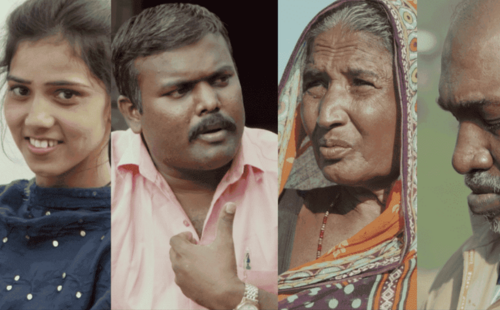
A short documentary series that captures the voices of people from some of India's most climate-vulnerable states. It highlights how people at the grassroots are adapting to the climate crisis.

CEEW and SEI present ‘Portrait of a Silver Lining’ — a poem written and performed to music by Simar Singh, urging bold climate action and accountability to heal our planet.

Dedicated to the planet, our Pale Blue Dot, CEEW presents What On Earth!™ A cartoon series on sustainability. On how we are treating the planet and how the planet is treating us back.