Council on Energy, Environment and Water Integrated | International | Independent


Biogas, a mixture of gases primarily methane and carbon dioxide, is produced by the breakdown of organic matter in the absence of oxygen. Methane is a combustible component of biogas, making it a fuel. When purified and upgraded to greater than 97 per cent, methane is called biomethane, which has characteristics identical to natural gas and can be fed into existing gas infrastructure, thereby reducing the total cost of energy ownership (Dey and Thomson 2023). Biomethane can be used in industries with gas boilers and combined heat and power (CHP) generator sets to decarbonise natural gas applications. It can also be compressed to form compressed biogas (CBG), serving as an alternative fuel for compressed natural gas (CNG)-powered vehicles.
India's compressed biogas potential is estimated to be around 40 to 60 million metric tonnes per annum (MMTPA). However, the current installed capacity is less than one per cent of this potential (IEA 2023). Recent government measures, such as providing market development assistance (MDA) to CBG producers for slurry offtake and mandating CBG blending with CNG and PNG, have sparked renewed interest among private players in the sector (PIB 2023). With the right incentives and government support, Odisha has a significant opportunity to attract private investment and drive sustainable energy solutions and economic growth in the state.
Jobs, market and investment opportunity
If all letters of intent (LoIs) issued to CBG producers in Odisha, totalling 648 tonnes per day (TPD)1 , become operational by 2030, they will generate approximately 21,000 jobs across key phases, including feedstock collection and aggregation, construction and commissioning, and operations and maintenance of CBG plants. Odisha can attract USD 24.2 million in capital investment and USD 123 million in market opportunity by deploying 648 TPD CBG capacity by 2030.
Jajpur, Cuttack, Ganjam, and Dhenkanal have the highest potential for establishing CBG plants, as these regions boast a significant bovine population, ensuring a steady supply of dung feedstock.
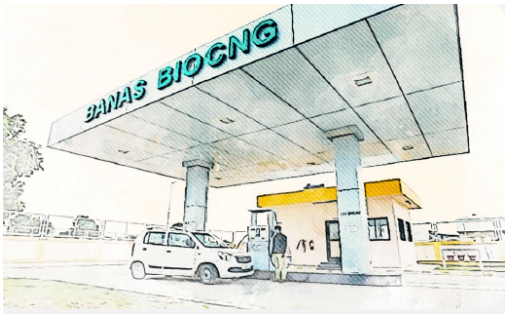
Banas dairy’s 40 TPD industrial-scale compressed biogas plant in Banaskantha, Gujarat, has a 3000 cubic metre digester that produces ~ 300 MT CBG annually. Slurry from the plant is processed further to form organic fertiliser, which is sold to farmers as a replacement for diammonium phosphate (DAP)3 at ⅓ of the subsidised DAP price. The project has resulted in additional income and employment generation for farmers from selling dung and other co-benefits such as improved hygiene and sanitation in the village and lower greenhouse gas emissions (TNRDPRD 2021).
1. Role of departments:
Odisha Renewable Energy Development Agency (OREDA): OREDA would be instrumental in promoting renewable energy sources like biomethane in Odisha. They could provide technical support, facilitate funding, and implement policies that encourage the development of biomethane plants.
Odisha State Pollution Control Board (OSPCB): OSPCB regulates CBG plants, requiring them to obtain environmental clearances before beginning operations. The OSPCB could continue to ensure compliance with environmental standards through continuous monitoring and regular inspections. By establishing a regulatory framework that mandates transparent reporting and independent verification of methane emissions, the OSPCB could promote accountability in CBG operations.
Department of Agriculture and Farmers’ Empowerment: This department could play a role in certifying biomethane byproducts like biofertilisers and organic manures. It can also support integrating biomethane production with crop production by offering incentives or subsidies for farmer-producer organisations (FPOs)/cooperative societies/aggregators that provide agricultural residue to CBG plants. The Department could also help facilitate the formation, training, and capacity building of FPOs in their catchment areas for supplying agricultural residue to CBG plant operators, as well as help in executing long-term supply contracts of agricultural residue between them and the CBG operators.
Department of Animal Husbandry and Dairying: The department can support biomethane production by promoting the use of animal waste as feedstock. It can facilitate collecting and transporting animal waste from dairies and animal husbandry centres via FPOs to biomethane plants.
Odisha Skill Development Authority (OSDA): OSDA can facilitate training programmes for technicians and workers by integrating biogas-related modules into existing courses. OSDA should actively utilise the biogas development and training centres (BDTCs) by MNRE to develop modules and conduct training, making them hubs for equipping workers with the necessary skills and facilitating job placements.
2. Role of the private sector:
Collaboration: Forming partnerships with local FPOs and waste management entities can help in streamlining feedstock logistics to ensure a steady and sustainable supply of feedstock. Engaging with CBG producers early in the process ensures that biogas production meets specific industry requirements. High-demand sectors, such as transportation, can communicate their exact needs to CBG producers, helping to secure a guaranteed offtake of CBG. This collaboration can provide producers with clarity on pricing and volume, allowing for more efficient planning and production.
Investment: The sector currently faces the challenge of slow and labour-intensive feedstock collection due to a lack of mechanisation. Industries and financiers can tackle this issue by investing in research and development (R&D) to develop more efficient mechanical solutions for feedstock collection (Pandey 2024).
Capitalising on government mandates: The latest proposal mandating natural gas marketing companies to procure 5 per cent CBG has renewed enthusiasm in the private sector (PIB 2023). Bolstered by the government's revitalised emphasis on biofuels, major industrial giants such as Reliance Industries and the Adani Group have shown considerable interest in biofuels. Both conglomerates have announced ambitious plans, with Reliance Industries aiming to establish 100 CBG plants and the Adani Group planning to set up five CBG plants in the next five years (Pathak 2023).
3. Role of local administration and civil society organisations (CSOs):
1. Lack of availability of good quality feedstock leading to low capacity utilisation of existing CBG plants: Ensuring good quality feedstock availability at optimal prices poses a major challenge due to lack of regulations for fixed pricing between buyers and suppliers. Most CBG plants receive poorly segregated waste and since most plants lack the technology to process mixed source feedstock, CBG producers have to incur additional cost for waste segregation.
Way forward: We must assess feedstock availability before setting up any CBG plant (IEA Bioenergy Task 37 2023) by conducting community-level biomass mapping to map organic waste streams as they serve the dual purpose of helping manage organic waste effectively as well as meeting energy needs. We should exclude feedstocks having lucrative alternative use cases as a possible feedstock for CBG production.
Establishing a robust supply chain between FPOs and oil marketing companies (OMCs) will ensure consistent year-round feedstock availability. A state-level mandate, which could be a regulatory requirement or a government-led initiative, to establish a robust pricing mechanism for feedstock accessibility and affordability that considers the needs of all stakeholders can serve as a model for a national mechanism.
In the short term, we should create a hub-and-spoke model relying on decentralised storage facilities and use of hand-held mechanical harvesters to ensure the collection of good-quality single feedstock. However, for long-term sustainability, CBG producers will have to transition from single-feedstock processing technology to mixed-feedstock processing technology, with support from private players (Jain 2024).
2. Reduced gas output over time: Lack of pretreatment of feedstocks, especially the ones with high lignocellulosic content such as rice straw, can cause biogas digester to break down as any slight change in temperature, pH or moisture content of feedstock can slow down the growth of microbes in the digester. Slow microbial growth can slow down the anaerobic breakdown of organic matter, reducing biogas production, lowering plant efficiency (Jain 2024).
Way forward: There is a need to ensure pretreatment of lignocellulosic feedstocks before putting them in the digester. To increase the plant efficiency and optimise the performance of biogas plants, continuous monitoring and optimising support systems are needed4 .
3. High CAPEX: The initial capital investment required for CBG plants is quite high, constituting around 90 per cent of total project cost. High-quality equipment required for operating large-scale biogas plants are expensive and are either imported from other countries or acquired through international collaborations. This dependency on other countries translates to increased costs and longer lead times with potential supply chain disruptions.
Way forward: In the shorter term, exemption of customs duty and GST on CBG equipment can help reduce the burden on producers4. However, in the long term, India needs to encourage domestic production of CBG equipment. This would help lower CBG plant's upfront cost while creating more jobs in the country. The government could provide subsidies for manufacturers, tax exemptions, grants for R&D in CBG technologies and foster partnerships between domestic manufacturers, research institutions, and international CBG manufacturers.
4. Difficulty disposing of byproducts: CO2 produced as a byproduct during purification and upgrading of CBG is currently wasted. Similarly, bio-slurry, another byproduct of CBG production, is disposed of as non-disposal of slurry can cause the formation of scum and sediments, affecting the biogas production process and thereby decreasing the efficiency of plants (Swachh Bharat Mission 2022), forcing CBG producers to store bio-slurry for long periods, increasing storage costs (Kumar 2023).
Way forward: There is a need to shift the perception of bio-slurry and CO2 from a cost burden to a revenue stream, with the potential to enhance profit margins and ensure the economic viability of CBG plants. For example, the CO2 produced could be diverted to the chemicals and food processing industries for further utilisation. To ensure disposal of slurry, CBG producers could provide enriched slurry in the form of FOM at a subsidised rate to large farmers practising sustainable agriculture. The recent market development assistance (MDA) announcement by the central government encourages farmers to use Fermented Organic Matter (FOM)(PIB 2023). To further promote slurry uptake, the government could collaborate with state agricultural universities (SAUs) and local CSOs to increase the adoption of FOM among farmers. Fertiliser PSUs should lead in supporting large biogas plants by helping them with branding and marketing of FOM and PROM (Gujarat Energy Development Agency 2021). These fertiliser PSUs can also support CBG producers by establishing long-term contracts to procure these organic fertilisers at fixed rates.
5. Lack of affordable financing options: Despite being classified under priority sector lending, only a few private banks finance CBG projects and those that do often charge high interest rates, creating significant entry barriers for new players in the CBG ecosystem (Nandigama 2023).
Way forward: To facilitate better access to finance for CBG producers, more banks should be incentivised to offer loans at lower interest rates under priority sector lending. Entrepreneurs interested in entering the CBG ecosystem should have ready access to a list of banks that provide loans to CBG producers at reduced interest rates.
6. Lack of CBG support ecosystem: India's existing power plants have the potential to use CBG instead of coal to generate electricity by upgrading boilers, turbines, and fuel handling systems.
Way forward: Raising awareness among power plant operators and industry players regarding existing financing schemes, such as low-interest loans, tax rebates, and carbon credit programmes provided by the government. Public-private partnerships can be pivotal in mobilising the significant CAPEX needed to successfully retrofit India's current power plants to transition from coal to CBG.
7. Lack of skilled workforce: The current workforce needs expansion and upskilling to support the transition to CBG (Jagtap and Dalvi 2021).
Way forward: Odisha must develop a skilled workforce proficient in biogas production and distribution, which requires labourers, operators, engineers, and managers. Integrating biogas-related modules into existing skill courses across technical domains such as biotechnology, mechanical engineering, electrical engineering, and environmental studies is essential. The Odisha Skill Development Authority (OSDA) should utilise already established biogas development and training centres (BDTCs) to develop and conduct training programmes and facilitate job placements.
1. Environmental risks:
a. Methane leaks: CBG could sometimes emit somewhere between 0.5-15 per cent of total gas produced as methane (Singh and Kalamdhad 2022). Although unintentional if not properly managed, these leaks could outweigh the potential climate benefits of CBG production, as methane has a high global warming potential (GWP) 5 of 28 (Dahlgren 2022).
Mitigation: In accordance with growing global consensus on limiting methane emissions from biogas systems, CBG plants in India should be required to limit methane leaks to less than 2 per cent (World Bank 2023). Implementing continuous monitoring systems, regular leakage detection and maintenance schedules, and adopting advanced sealing technologies can help CBG plants in reducing these leaks (European Biogas Association n.d). Adoption of a regulatory framework mandating transparent reporting and verification of gases emitted from the plant annually can help in maintaining accountability of CBG operations.
b. Inefficient land use: Some feedstocks, such as Napier grass, have a higher energy output-to-input ratio, producing more biogas compared to agri-residue, making them a more cost-efficient option (Jain 2023). However, cultivating bioenergy crops demands land, water, and other resources. With the establishment of more CBG plants, demand for feedstock would rise, driving up prices; this could cause potential diversion of land from other productive uses to grow bioenergy crops, leading to inefficient land use and higher greenhouse gas emissions (Searchinger and Heimlich 2015).
Mitigation: To mitigate this risk, we should prioritise using organic waste streams, such as livestock and food waste, as feedstock for CBG production instead of relying on bioenergy crops. Before establishing a CBG plant, it is essential to map the current and future availability of local organic waste streams (GEDA 2024) to prevent the diversion of land for bioenergy crop cultivation.
2. Market risks:
a. Demand-related risks: High demand for CBG exists primarily in urban areas due to the prevalence of CNG vehicles. However, rural areas that supply most feedstock, like crop residue and livestock waste, have limited access to CNG vehicles. This large gap between demand and supply creation translates into increased transportation costs as the cost of producing and distributing CBG often exceeds the revenue from sales when demand is far from production sites.
Mitigation: We must map feedstock types and locations against CBG demand to identify optimal sites for installing CBG plants. For example, establishing CBG plants in urban areas utilising municipal solid waste (MSW) can directly supply fuel to public transport systems. In rural areas 6 , it is better to promote CBG as a cooking fuel over transport fuel as it improves energy access in rural regions and enhances the economic sustainability of CBG projects by creating local demand.
b. Supply-related risks: In February 2023, the Directorate General of Foreign Trade amended a notification to allow the export of agri-residue-based pellets and briquettes (Directorate General of Foreign Trade 2020). While this notification change has opened up international markets for Indian biomass aggregators, it could threaten our domestic supply. If high-quality biomass is exported in large quantities, it could lead to a shortage of good-quality feedstock in India.
Mitigation: To mitigate these risks, export restrictions should be imposed on biomass, which will ensure its availability for domestic use (Nandigama 2023).
The CBG value chain comprises the following segments: 1) collection and aggregation of relevant feedstocks 2) CBG production from respective feedstocks 3) distribution and sale of CBG produced to OMCs/retailers 4) sale of CBG by retailers to consumers. The CBG production segment of the value chain can be further categorised into 1) business development, 2) design and pre-construction, 3) construction and commissioning, and 4) operation and maintenance. We have restricted the scope of this value chain to only direct jobs from feedstock collection and aggregation, construction and commissioning of CBG plants, and operations and maintenance of CBG plants.
Market sizing (in units):
The Central Government constituted a Standing Committee on Petroleum and Natural Gas in 2022 to review the implementation status of CBG plants. The committee found that until 2022, out of all the total Letters of Intent (LOIs) issued by OMCs (oil and marketing companies), only 2.35 per cent of total CBG plants were commissioned. The reasons listed by the committee for the low conversion rate of LOIs included the need for low-cost financing, difficulty in biomass supply chain management, and difficulty in slurry offtake. Since the committee's recommendations, the government has been trying to amp up the CBG plant commissioning process by trying to resolve the issues highlighted by the committee.
One measure includes providing market development assistance (MDA) for selling FOM and PROM produced at CBG plants to increase the slurry offtake and enhance plant efficiency. Another recent measure of mandatory blending of CBG with CNG and PNG has renewed interest of private players in the sector. Given these measures, Odisha can fast-track the plant commissioning process with the proper policy measures and appropriate government support.
Therefore, even though only 15 CBG plants are currently in Odisha's pipeline (amounting to 113 TPD), with four plants under construction and the others yet to begin construction, we assume that all Letters of Intent (LOIs) issued to CBG producers in Odisha (amounting to 648 TPD) will become operational by 2030. This scenario represents our ambitious outlook for CBG production in the state.
Different types of feedstocks significantly influence biogas yield. For instance, the biogas yield from dung ranges from 1 per cent to 4 per cent, while using agricultural residues can boost the yield to 8 per cent to 15 per cent (IEA Bioenergy Task 37, 2023). To estimate the potential size of the CBG value chain in Odisha, we will focus on selecting second-generation (2G) feedstocks, such as agricultural residues and dung originating from waste streams. We will exclude perennial grasses like Napier grass, which require land and water for cultivation, due to concerns about potential land-use changes.
Verified information from the GOBARDhan portal and local newspaper articles shows that five upcoming plants in Odisha will use dung, while the others will rely on MSW. Agricultural residue, a potential feedstock, has significant competing uses, such as animal feed or for producing bio-based packaging and fibres, making it less feasible as the primary feedstock for biogas production. Therefore, we have selected only MSW and dung as potential feedstocks for all proposed CBG plants in Odisha as our ambitious scenario.
To calculate the market opportunity for natural gas consumption in Odisha, we forecast the increase in India's total natural gas consumption by 2030 and estimate Odisha's share based on its current consumption proportion. According to the Indian Brand Equity Foundation, India's natural gas consumption will grow at a CAGR of 12.2 per cent, rising from 174 MCMPD in 2021 to 550 MCMPD by 2030. We assume that Odisha's industries consume 0.97 per cent of India's total natural gas consumption, a percentage derived from the current daily natural gas requirements across various sectors in Odisha. Using this 0.97 per cent proportion, we estimate Odisha's annual natural gas consumption in 2030 based on India's total future forecasted consumption, converting these values into million cubic metres per annum. This approach allows us to determine the volume of CBG that will be produced in Odisha under the ambitious scenario.
Jobs estimation:
We conducted key informant interviews with key players in the ecosystem, using a combination of purposive and convenience sampling to identify respondents. These interviews aimed to gather data on employment levels, average capacity utilisation, production capacity, and other relevant metrics in the CBG sector. We based our full-time equivalent (FTE)/job multiplier calculations on the industry’s average number of working days per year and assumed an 80 per cent industry standard capacity utilisation rate.
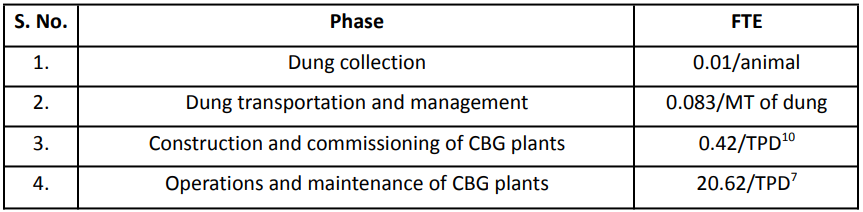
Due to data quality issues, only responses from two players were used in the estimation. For two operational dung-based CBG plants with feedstock capacities of 100 TPD and 40 TPD, we calculated an FTE of 20.62 for a plant producing one tonne of CBG per day. We assumed a feedstock yield of four per cent for a 100 TPD dung-based CBG plant (Jain 2023). We calculated the total jobs in the operation and maintenance phases of CBG plants by multiplying the FTE/TPD of CBG by the total TPD of CBG produced as per the scenario considered.
Total FTE jobs created during O&M phase = FTE/TPD * (Total TPD of CBG produced as per the scenario)
To estimate jobs in feedstock collection and aggregation, we focused exclusively on dung as the feedstock for CBG production and did not include MSW. This is to avoid double counting, as MSW collection and aggregation jobs are already accounted for within the broader waste management jobs as part of the circular economy value chains. For transportation and dung management, we used data from the ILO Study on the Economics of Biogas, which indicates that one contractor or manager can handle 12 metric tonnes (MT) of dung per day. With a 300-day work year, this translates to 0.00027 FTE per MT of dung. We validated these figures through stakeholder consultations. For dung cleaning and collection, the ILO Study states that one full-time cleaner or dung collector is required for every 100 animals, resulting in an FTE of 0.01 per animal. We used this figure for our calculations.
Formula used for jobs generated during dung collection = (FTE per animal)*(total number of animals needed to supply the dung as per scenario)
Formula used for jobs generated in dung transportation and management = (FTE per MT of dung)*(total amount of dung required in MT by 2030 to satisfy the scenario)
Regarding the construction of CBG plants, the MOHUA Circular Economy Waste Management guidelines suggest that 35 people are needed per 100 TPD of plant capacity. With a 300-day work year, this requirement translates to 42.5 people per 100 TPD, or 0.42 FTE per TPD for construction jobs.
Table 1: The phase-wise FTE considered are as follows:
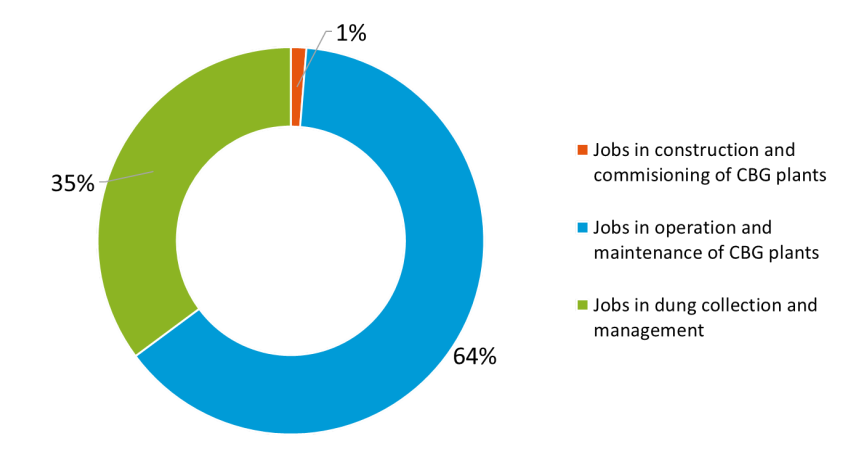
The O&M phase creates the highest number of jobs, and these jobs require more specialised/technical skills compared to those created during other phases of the CBG value chain, such as feedstock management and construction.
The total cubic metres of biomethane produced in the ambitious scenario in 2030 was multiplied by the CBG procurement price set by the government to arrive at the potential market opportunity for CBG in Odisha. The procurement price of CBG from the CBG producer, not the retail selling price as fixed by the government, is considered, which is INR 54/kg (up to 75 km distance) (PIB 2023).
Investments are intended to cover all costs incurred for asset creation (CAPEX). In cases where the total number of units/facilities required to satisfy the demand by 2030 resulted in decimal places, it was rounded off.
The capital cost for setting up a CBG plant varies largely depending on capacity, feedstock, technology, location, and other factors.
Table 2: Tentative project costs based on various feedstocks are provided below:

Source- Authors’ compilation Standing Committee on Natural gas and Petroleum’s report titled, “Review of implementation of CBG”
References
Ghosh, S., Majumder, R., & Chatterjee, B. 2024. “Natural Gas Matters: LNG and India’s Quest for Clean Energy.” Gases, 4(1), 1-17.
GT. 2024. “Alternate energy: How it can shape the vibrant future of India.” Grant Thornton.
Dey, A., & Thomson, R. C. 2023. “India's biomethane generation potential from wastes and the corresponding greenhouse gas emissions abatement possibilities under three end use scenarios: electricity generation, cooking, and road transport applications.” Sustainable Energy & Fuels, 7(1), 209-241.
Jain, Rahul. 2023. “Greening Indian’s Energy Mix With Compressed Biogas (CBG)”. Centre for Science and Environment, New Delhi.
Jain, Purva. 2023. “Biogas: A possible solution for India’s energy security and decarbonisation goals.” Institute for Energy Economics and Financial Analysis, New Delhi.
Jagtap, Nipun Jaikrishna, and Vishwanath Haily Dalvi. 2021. "Feasibility study of bio-methane economy in India." Biomass and Bioenergy 149: 106059.
Pathak, Kalpana. 2023. "Pursuing green, energy giants like Reliance Industries, Adani Group zero in on biogas." The Economic Times, September 5, 2023. https://economictimes.indiatimes.com/industry/energy/oil-gas/pursuing-green-energy-giants-like-rel iance-industries-adani-group-zero-in-on-biogas/articleshow/103332040.cms?from=mdr
Kumar, Manish. 2023. “Lack of market support for bio-manure hindering growth of compressed biogas plants.” Mongabay, January 20, 2023.
https://india.mongabay.com/2023/01/lack-of-market-support-for-bio-manure...
Pandey, Ashish. 2024. “Technology is key to boost efficiency and sustainability of biofuels sector, says Ashvin Patil, Biofuels Junction.” Economic times, September 05,2024.
Jain, Rahul. 2024. “India’s compressed biogas sector present opportunities for startup entrepreneurs.” Down to earth, May 13, 2024.
https://www.downtoearth.org.in/renewable-energy/india-s-compressed-bioga...
Sakthivel, P., Neeraj Mittal, Prabhakar Sinha, M. Sithananthan, and Mukul Maheshwari. 2024. “Assessing the Potential of CBG as an Alternative Fuel: An Experimental Study on Vehicle Performance and Emissions in BS VI Compliant Three-Wheeler and Passenger Car.” SAE Technical Paper, no. 2024-26-0076.
PIB. 2023. “Government announces mandatory blending of Compressed Biogas in CNG (Transport) & PNG (Domestic) segments of CGD Sector.”
PIB. 2023. “Union Minister of State for Chemicals and Fertilisers Launches 400 CBG Plants under the GOBARdhan Initiative.” Press Information Bureau, September 26, 2023.
PIB. 2023. “India will contribute 25% of global demand by 2040 and achieve 20% ethanol blending in petrol by 2025: Hardeep Singh Puri.” Press Information Bureau, January 10,2023. https://pib.gov.in/PressReleseDetailm.aspx?PRID=1889967
Dahlgren, Sofia. 2022. "Biogas-based fuels as renewable energy in the transport sector: an overview of the potential of using CBG, LBG and other vehicle fuels produced from biogas." Biofuels 13, no. 5: 587-599.
IEA Bioenergy Task 37 .2023. “Knowledge Paper: Indian CBG Industry.” IFGE EAC. https://task37.ieabioenergy.com/wp-content/uploads/sites/32/2023/05/Know...
Directorate General of Foreign Trade. "Notification No. 38/2015-2020." Government of India, December 22, 2020. Accessed June 20, 2024.
https://content.dgft.gov.in/Website/dgftprod/f181d180-2bf2-4612-bbe7-e98...
Nandigama, Chandrasekhar. 2023. “CBG is not a priority sector lending to the banks.” India Business & Trade, August 29, 2023.
Gujarat Energy Development Agency. 2021. Biomass Mapping Biogas. [pdf] Available at: https://geda.gujarat.gov.in/Gallery/Media_Gallery/BiomassMappingBiogas.pdf [Accessed 20 June 2024].
Gujarat Energy Development Agency. 2024. “White paper on biomass mapping and motivation to use compressed biogas.” https://geda.gujarat.gov.in/Gallery/Media_Gallery/BiomassMappingBiogas.pdf
Swachh Bharat Mission. 2022. “Manual for GOBAR Dhan.” Department of Drinking Water and Sanitation, Ministry of Jal Shakti. https://swachhbharatmission.ddws.gov.in/sites/default/files/Technical-Notes/GobardhanTechnicalM anual.pdf
TNRDPRD. 2021. "Gobardhan Waste to Wealth: Framework for implementation.” Tamil Nadu Rural Development and Panchayat Raj Department. https://tnrd.tn.gov.in/project/go_files/4_595_2021_S18017.pdf.
PIB. 2023. “Promotion of Natural Farming.” Press Information Bureau. March 14, 2023. https://pib.gov.in/PressReleaseIframePage.aspx?PRID=1906884
Ceniter Engineering Corporation, n.d. https://www.cetinerengineering.com/conversiontables.html
IOCL, n.d. “Compendium of frequently asked questions (faqs) on compressed biogas (CBG) and SATAT scheme.” Indian Oil Corporation Limited. https://iocl.com/download/Frequently_Asked_Questions_on_CBG.pdf
Searchinger, T. and R. Heimlich. 2015. “Avoiding Bioenergy Competition for Food Crops and Land.” Working Paper, Instalment 9 of Creating a Sustainable Food Future. Washington, DC: World Resources Institute. Available online at https://www.wri.org/initiatives/world-resources-report
Singh, Prakash, and Ajay S. Kalamdhad. 2022. "Biomethane plants based on municipal solid waste and wastewater and its impact on vehicle sector in India—An Environmental-economic-resource assessment." Environmental Technology & Innovation 26: 102330.
World Bank. 2023. “World Bank Steps Up Efforts to Address Methane Emissions.” Accessed February 11, 2024.
https://www.worldbank.org/en/news/factsheet/2023/12/04/world-bank-steps-...
European Biogas Association. n.d. “Methane emission mitigation strategies: Information sheet for biogas industry.” Accessed February 11, 2024.
https://www.europeanbiogas.eu/wp-content/uploads/2020/05/Methane-emissio...