Home
Council on Energy, Environment and Water Integrated | International | Independent

Report

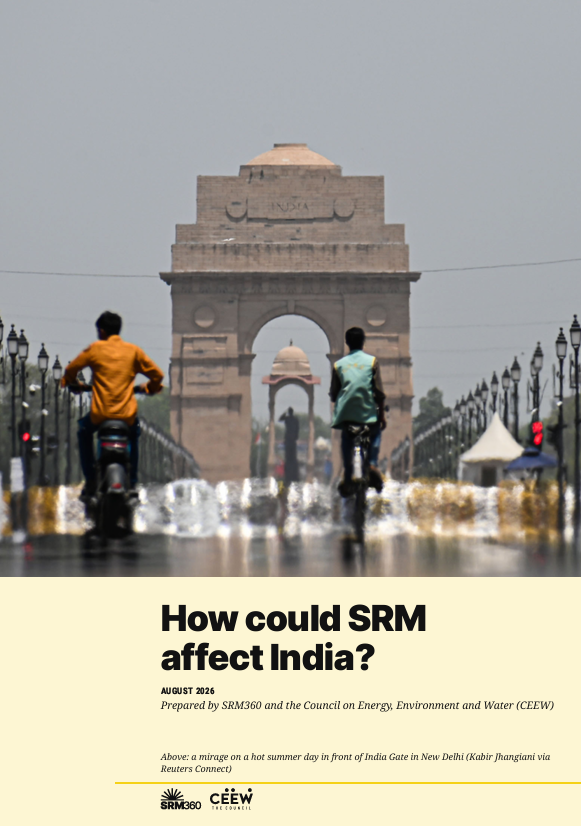
How could SRM affect India?

Vaibhav Chaturvedi
August 2026 | Technology Futures

Overview

With risks from climate change mounting, there is growing interest in emerging approaches to cool the planet, known as sunlight reflection methods (SRM) or solar geoengineering. These approaches could reduce some climate risks, but they also carry new risks and raise pressing questions about how any use of them should be governed. What are these approaches, what could they mean for India, and how should decisions about them be made?

Key Highlights

  • Surging temperatures
    India is expected to face increasingly dangerous temperatures due to continued global warming and future reductions in air pollution. 
  • Risks to be weighed 
    SRM has the potential to reduce many climate risks, but it would also introduce new risks. These should be carefully weighed against the impacts of climate change without SRM. 
  • Understanding and engagement 
    As a particularly climate-vulnerable region with growing analytical capacity on the topic, India will have important decisions to make regarding SRM research and governance. Improving understanding and engagement on the topic in India will be key. 
  • Governance and cooperation 
    Because SRM would affect the whole world and its impacts would be uneven, decisions about it cannot be left to any single actor. Strong, inclusive international governance will be essential to manage the risks and protect the interests of climate-vulnerable countries.

Sign up for the latest on our pioneering research

Explore Related Publications