Executive Summary
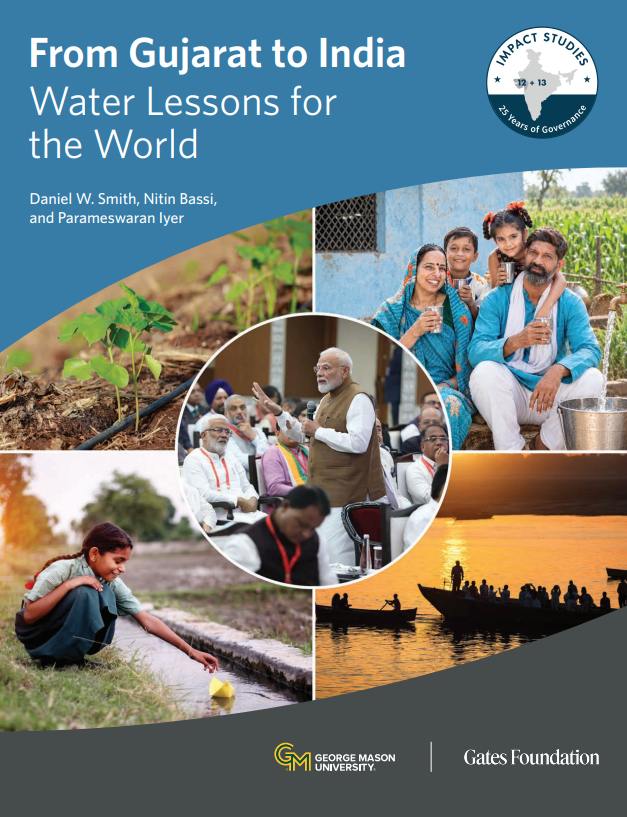
This case study traces a journey of water governance reforms in Gujarat and India from 2001-2026 that strengthened water security, integrated water resource management and scaled up water service delivery to hundreds of millions of people. The period coincided with Narendra Modi’s tenures as Chief Minister of the State of Gujarat and then the Prime Minister of India. More specifically, using research-based methods, the case study traces a sequence of nationwide political leadership and prioritisation actions, public financing and policy decisions, social programmes and community engagement, and administrative implementation that placed water governance and security at the centre of India’s national development strategy.
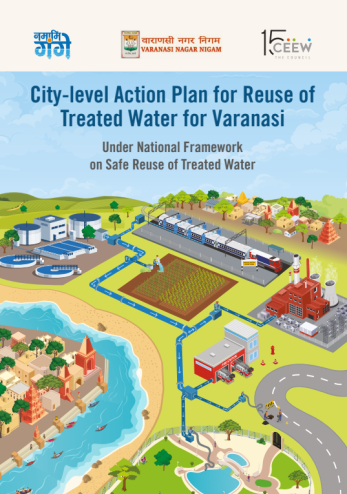
The sequence begins with Gujarat’s water initiatives between 2001 and 2014, a period that served as a laboratory for the water governance reforms rolled out across India after 2014. These included the design and implementation of some of the world’s largest water programmes, including Jal Jeevan Mission (JJM), Jal Shakti Abhiyan (JSA), Namami Gange, Atal Bhujal Yojana (ABY), Per Drop More Crop (PDMC), and Atal Mission for Rejuvenation and Urban Transformation (AMRUT), among others. The outcomes indicate that India’s remarkable progress on water resources management and water supply services is built on big infrastructure programmes such as the JJM and the institutions that govern them alongside community-owned water conservation campaigns; rejuvenation of rivers and water bodies through programmes such as Namami Gange; promotion of sustainable groundwater use and recharge policies through ABY; improvement in water-use efficiency through micro-irrigation under PDMC; and increased urban household tap connections and integration of reuse into water resources planning under AMRUT.
The key takeaway is that India’s large-scale water governance actions provide pragmatic learnings for other countries. Within a microcosm of the Global South with vast rural populations, fast-growing cities, a wide climatic range, and sharp inequalities in water access, India’s flagship national programmes have attempted to take its diverse circumstances and water challenges head on and are thus relevant to similarly diverse global water challenges. Four high-level learnings can be distilled to inform water governance journeys in other countries, and indeed the next phases in India itself: