Council on Energy, Environment and Water Integrated | International | Independent

Suggested Citation: NMCG, VNN and CEEW. 2026. City-level Action Plan for Reuse of Treated Water for Varanasi. New Delhi: Council on Energy, Environment and Water.
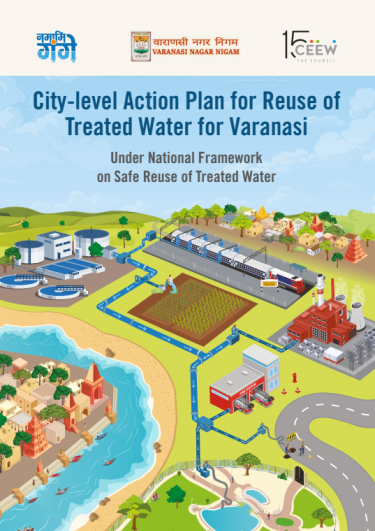
The City-level Action Plan for Reuse of Treated Water for Varanasi has been developed by the Council on Energy, Environment and Water (CEEW), in association with the National Mission for Clean Ganga (NMCG) and the Varanasi Nagar Nigam (VNN). The plan aims to maximise the safe reuse of Treated Used Water (TUW) for non-potable purposes, enabling a circular economy approach to used water management in one of India's oldest living cities and a critical urban centre along the Ganga River.
Varanasi's rapid urbanisation has outpaced the existing water supply and used water infrastructure. The plan evaluates Varanasi’s water scenario and outlines long-term strategies for efficient used water management in the city. It sets city-specific targets for 2030 and 2040 to expand sewerage network coverage, enhance used water treatment capacity utilisation, and scale up the reuse of TUW, thereby reducing Varanasi's dependence on groundwater and supporting the rejuvenation of the Varuna, Assi, and Ganga rivers.
Ensuring water security amidst rapid urbanisation and population growth is becoming a critical challenge for Indian cities. Varanasi, one of India’s oldest living cities and a critical urban centre along the Ganga River, faces similar challenges. Over the past five years, since 2021, the jurisdictional boundary of Varanasi Nagar Nigam (VNN) has expanded by over 78 per cent, and the city’s population has nearly doubled. As a result, the existing water supply and used water (sewage) infrastructure is no longer adequate to meet this rising demand (VSCL 2017). Only 48 per cent of households (HHs) have a formal water supply, while only 38 per cent are connected to the centralised sewerage network (UP Jal Nigam (Rural) Varanasi 2025). Due to inadequate public water supply and used water infrastructure, the city faces the dual challenge of unrestricted groundwater extraction to meet water demand and surface water contamination from the discharge of untreated used water. Addressing this requires a shift from a ‘linear’ to a ‘circular’ treat-andreuse approach to optimise freshwater use and improve the quality of local water sources. A hyperlocal plan is therefore essential for managing used water and scaling up its reuse.
The Treated Used Water (TUW) Reuse Plan for Varanasi City has been developed by the Council on Energy, Environment and Water (CEEW) in association with the National Mission for Clean Ganga (NMCG) and VNN. It aims to maximise the treatment of used water and its safe reuse for non-potable purposes, thereby enabling a circular economy approach to used water management in the city. This has substantial potential to reduce the city’s unsustainable reliance on groundwater, lower pollution loads from untreated sewage entering natural drainage systems, and directly support the rejuvenation of the local rivers, such as Varuna and Assi, which ultimately drain into the River Ganga.
The Reuse Plan sets three actionable targets for 2030 and 2040: expanding the sewerage network, improving the operational used-water treatment capacity, and maximising safe reuse by identifying suitable reuse avenues (Section 2). The 2047 targets include increasing sewerage network to 100 per cent, achieving full operational treatment capacity, and meeting the city’s estimated TUW reuse potential, ensuring that no untreated sewage is discharged into the environment.
We followed a nine-step methodology to develop the Reuse Plan, building on an approach previously developed and applied in the city of Thane, Maharashtra (TMC and CEEW 2025). This methodology includes assessing Varanasi’s water resources and setting long-term treatment and reuse targets, while accounting for current and projected water demand and planned urban development. It also identifies the roles and responsibilities of municipal departments, state agencies, and national institutions operating in Varanasi. The plan was developed in close collaboration with VNN and draws on over 25 consultations with VNN officials from 18 departments and nongovernment stakeholders such as farmers. Field visits were conducted to sewage treatment plant sites and agricultural fields where TUW is already being used by some farmers for irrigation.
Figure ES1(A): Under the business-as-usual scenario, estimated reuse potential can meet 35% of unmet demand by 2040
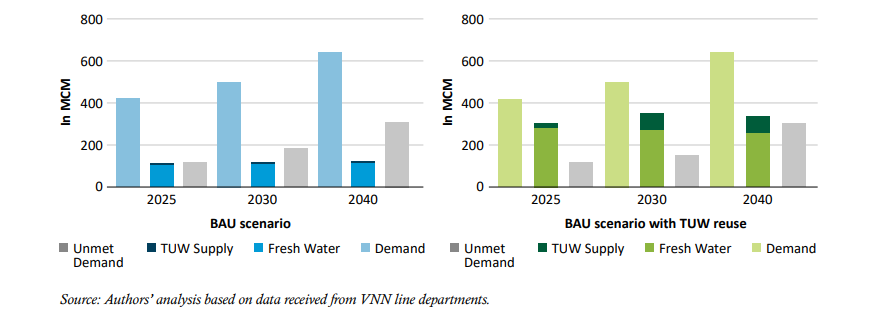
Figure ES1(B): In the high population growth scenario, unmet water demand can be reduced by almost 13% or 72 MLD with TUW reuse
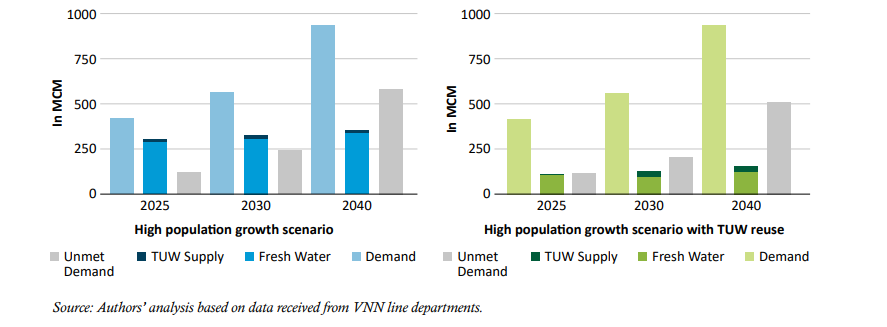
Figure ES2(A): Identified reuse avenues and relevant stakeholders in Varanasi Nagar Nigam
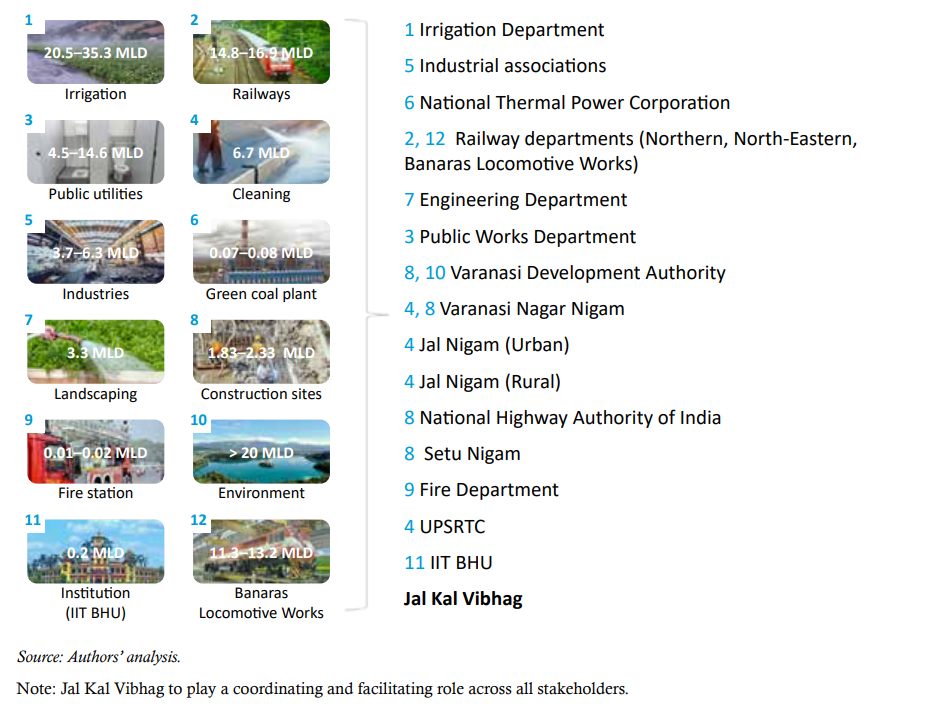
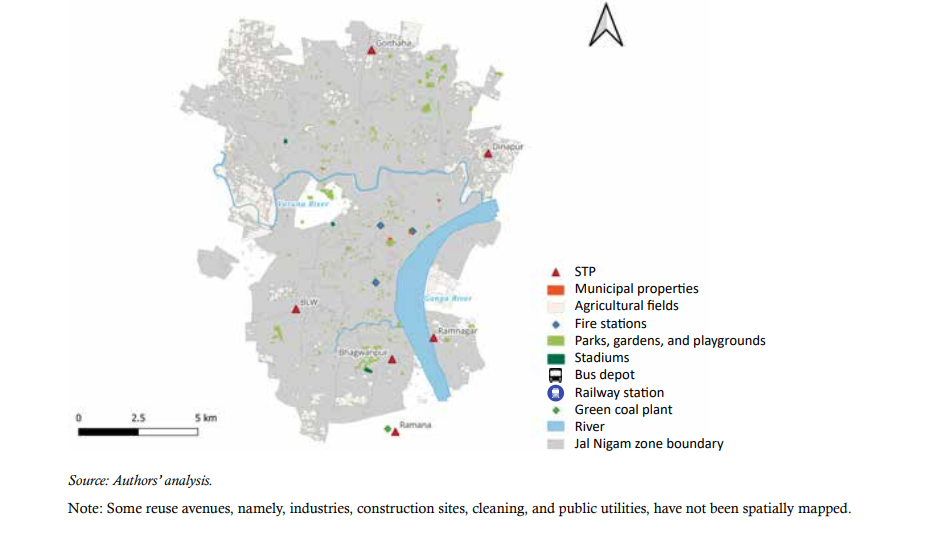
Figure ES2(B): Spatial distribution of identified reuse avenues in Varanasi Nagar Nigam
The National Mission for Clean Ganga (NMCG) – Namami Gange Programme – is an integrated conservation mission launched to achieve the dual objectives of effective pollution abatement and the conservation and rejuvenation of the Ganga River. As part of these efforts, the programme has focused on improving the health of river stretches in cities along the Ganga basin. Among these cities, Varanasi holds particular significance due to its strategic location along the river and its immense religious and cultural importance. As one of India’s oldest living cities and a critical urban centre along the Ganga River, Varanasi is witnessing rapid urbanisation that has far outpaced its existing water supply and used water infrastructure.
The city has eight administrative zones – Adampur, Bhelupur, Dashashwamedh, Kotwali, Varunapur, Rishi Mandvi, Sarnath, and Ramnagar – governed by the Varanasi Nagar Nigam (VNN) (UP Jal Nigam (Rural) Varanasi 2025). In 2021, the area under the jurisdiction of VNN increased from 86 sq km to 146 sq km, representing an increase of more than 100 per cent (VSCL 2017). The city’s population is 26 lakh, residing in 4.15 lakh households (HHs). Of these, only 48 per cent of households have water supply coverage, and only 38 per cent are connected to the centralised sewerage network (UP Jal Nigam (Rural) Varanasi 2025). Due to limited coverage of formal water supply and sewerage network, Varanasi’s water resource management faces the dual challenge of unrestricted groundwater extraction to meet water demand and pollution of water bodies due to the release of untreated used water
The VNN is divided into 10 sewage zones, and its geography is shaped by two tributaries – the Varuna and the Assi – which flow west to east before converging with the Ganga River (Figure 1). The city generates nearly 465 million litres per day (MLD) of domestic sewage and has an installed treatment capacity of 422 MLD through six sewage treatment plants (STPs) (Figure 2). However, actual treatment is only 354 MLD, indicating that STPs remain underutilised, either due to inadequate sewerage network coverage or operational challenges. As a result, untreated used water is discharged directly into open drains.
According to a drone-based survey conducted by VNN, 48 small and medium drains that discharge into the Varuna River have been identified. Of these, 43 are within the municipal limits of VNN, and 5 are in rural areas (UP Jal Nigam (Rural) Varanasi 2025b). Of these, 23 drains within VNN, with a cumulative discharge capacity of 110 MLD (UP Jal Nigam (Rural) Varanasi 2025b), are currently untapped and discharge directly into the Varuna River. The remaining 19 drains, with a cumulative discharge capacity of 105 MLD, are reported to be tapped but frequently overflow due to inadequate maintenance. Additionally, one drain – Narokhar drain – into which treated effluent from the 120 MLD Goithaha STP is discharged, is partially untapped (UP Jal Nigam (Rural) Varanasi 2025b).

Thus, the Varuna River has become a perennial carrier of untreated sewage, which in turn degrades the water quality of the stretch of the Ganga River flowing through Varanasi. The Assi River faces similar challenges, including floodplain encroachment and the dumping of solid waste, effectively reducing it to a stagnant drain or nullah.
There is an urgent need to expand water supply network coverage to reduce dependence on groundwater to meet domestic demand, strengthen sewerage infrastructure to improve the utilisation of treatment capacity, and ensure the time-bound implementation of drain interception and diversion projects to improve surface water quality
The VNN has prepared an action plan for sewage management in the catchments of the Varuna, Ganga, and Assi rivers. Under this plan, sewage zones have been reconfigured to include newly incorporated areas, and efforts are underway to expand sewerage network coverage and treatment capacity. However, these measures must be integrated within a long-term, city-level Treated Used Water (TUW) Reuse Plan framework to achieve sustained impact.
Varanasi requires a reuse planning framework that embeds circularity in used water management through a well-planned sequence of interventions. This includes expanding sewerage networks, upgrading existing centralised treatment plants to meet reuse-specific quality standards and improve operational treatment capacity, developing decentralised wastewater treatment systems (DEWATS) for identified reuse avenues (Districts 2B and 2C, and Problematic 18A), and maximising reuse for non-potable purposes.

This plan aims to maximise the reuse of domestic TUW in VNN, thereby supporting the mainstreaming of a circular economy approach to used water management in the city. It seeks to address the unsustainable reliance on groundwater, optimise the use of treatment infrastructure, and improve the quality of local water sources, thereby enhancing urban resilience. For this purpose, it establishes quantitative targets for 2030 and 2040 (Table 1), aligning with Jal Nigam’s treatment capacity targets.
The first target is to expand sewerage network coverage from the current 38 per cent to 60 per cent by 2030 and 100 per cent by 2040, ensuring that sewage is efficiently collected from households (HHs) across the city and transported for treatment.
The second target is to achieve 80 per cent and 100 per cent operational treatment (as a share of installed capacity) by 2030 and 2040, respectively (Table 1). Together, these targets can ensure that no untreated sewage is discharged into the environment by 2040.
The third target focuses on increasing the reuse of TUW for non-potable purposes in the city. It targets the reuse of up to 15 per cent and 20 per cent of available TUW by 2030 and 2040, respectively
Table 1: City-level targets under the Reuse Plan for Varanasi City
| City-level target | Indicator | 2030 | 2040 |
|---|---|---|---|
| Sewerage network expansion | Number of HHs connected to the sewerage network as a percentage of total HHs | 60% | 100% |
| Operational treatment | Operational treatment as a percentage of installed treatment capacity | 80% | 100% |
| Reuse of TUW | Percentage of available TUW reused for non-potable uses | 15% | 20% |
Source: Authors’ analysis based on data from VNN (Jal Nigam and Jal Kal).
The Reuse Plan assesses Varanasi’s water resource scenario over time and outlines mid- and long-term strategies for implementing TUW reuse in the city. The stepwise approach begins with a holistic assessment of the city’s water resources, including the quality of surface and groundwater, the city’s water balance, and the status of water management, as well as the identification of potential avenues for TUW reuse. This baseline assessment is followed by setting quantifiable reuse targets, estimating reuse potential across identified sectors, and aligning with quality standards to ensure safe reuse.
The final focus of the plan is on implementation, including estimating financial requirements and delineating dedicated reuse zones. This involves detailed zone-wise planning and the deployment of institution-led actions, supported by a framework for continuous monitoring and capacity building to ensure the plan’s long-term viability.
The approach also integrates DEWATS to complement the existing centralised sewage treatment system and recommends strategic capacity upgrades to systematically divert treated effluent away from local rivers for non-potable applications. The overall approach to developing the plan is detailed in Annexures 2–7. To ensure the holistic development of the plan, all relevant stakeholders, including VNN officials, state departments, and end-user groups, were involved in over 25 consultations.
In this section, we analyse depth-to-groundwater levels in Varanasi over a 20-year period (2000– 21), along with seasonal variations in groundwater and surface water quality over five years (2019–23). The analysis considers three scenarios: Scenario 1 examines trends in average depthto-groundwater levels alongside the city’s average annual rainfall, while Scenarios 2 and 3 analyse pre- and post-monsoon groundwater depth trends in relation to monsoon rainfall. A detailed analysis is presented in Annexure 2.
4.1. Depth to groundwater level
Annual rainfall in Varanasi over 2000–21 shows a declining trend (approximately 6.5 mm per year), although this trend is statistically insignificant. Rainfall also exhibits high inter—annual variability, ranging from 400 to 1,300 mm over this period. Monsoon rainfall accounts for roughly 90 per cent of the city’s annual rainfall. Post-monsoon depth to groundwater level is moderately correlated (r = –0.38) with monsoon rainfall (Figure 3b), indicating that higher rainfall generally has a positive effect on groundwater levels. However, time series analysis of groundwater depth relative to rainfall shows a decline in groundwater levels across all scenarios (Figure 3(a–b)). Although statistically insignificant, the steepest decline (68 mm per year) is observed during the pre-monsoon period. Further, the evapotranspiration rate in the region (~1,500 mm) exceeds the average annual rainfall (Raju et al. 2024), placing additional pressure on the city’s freshwater resources.
Apart from declining rainfall in the region, unabated groundwater extraction to sustain urban growth, growing population density, and agricultural activities have contributed to groundwater depletion in the city (Raju et al. 2024; Dey et al. 2020). The region is characterised by a multi-tier aquifer system, with the first aquifer extending to 150–160 metres below ground level (mbgl) and a second, deeper layer characterised by permeable sand, separated by a thick clay layer (Raju et al. 2024). The shallow, unconfined aquifers in the region are tapped through dug and tube wells to meet the city’s growing water demand. Under a business-as-usual (BAU) scenario, in the absence of alternative water supply augmentation, the city’s groundwater resources are projected to decline further. In certain areas of the city, especially near the ghats along the Ganga River, groundwater depletion is contributing to land subsidence. If current trends persist, the continued reduction in storage recovery during the post-monsoon period may lead to a permanent loss of groundwater.

4.2. Water quality of groundwater and surface water sources
The water quality index (WQI) has been computed to assess the quality of freshwater resources in VNN over a five–year period (2019–23). This section describes the status of surface water and groundwater quality.
• Surface water quality
Surface water quality analysis using data from three surface water monitoring stations (1070, 1071, and 2483) under the National Water Quality Monitoring Programme reveals that the five-year annual average WQI ranges from 40.8 to 66.5 (bad to medium water quality). While an overall improvement in water quality is observed during 2019–23 (Figure 5), monitoring station 2483, situated at the confluence of the River Varuna and the Ganga River, is categorised as bad across five years of assessment.
Parameters substantially exceeding the limits set by the Environmental (Protection) Rules, 1986, include faecal coliform, with annual averages of 12,790 ± 2,566 MPN/100 ml at station 1071 and 47,400 ± 38,801 MPN/100 ml at station 2483, against the guideline of 2,500 MPN/100 ml. Additionally, station 2483 records biological oxygen demand (BOD) levels above 3 mg/L and dissolved oxygen below 5 mg/L in four out of five years. The poor water quality at this location is likely due to the discharge of untreated sewage through drains entering the Varuna and subsequently the Ganga (Figure 4).

• Groundwater quality
The annual average groundwater quality index (GWQI) assessed at two monitoring stations in Harahua (135) and Kashi Vidyapeeth (335) indicates consistently poor water quality during 2019– 23 (Figures 6 and 7). The GWQI at the Kashi Vidyapeeth station classifies the water as unsuitable for drinking in four of the five assessment years (2020, 2021, 2022, and 2023).

Parameters such as total hardness (>300 mg/L), magnesium (>30 mg/L), and nitrate (>45 mg/L) exceed the acceptable limits specified in BIS 10500 at Kashi Vidyapeeth. Further, a strong positive correlation exists between electrical conductivity and nitrate (r = 0.59), suggesting a higher proportion of nitrate ions in groundwater and the influence of anthropogenic factors, such as excess fertiliser use in agriculture or leakage from sewerage or septic systems, contributing to groundwater contamination. The findings align with previous studies that attribute high nitrate levels in groundwater to human activities, including inadequate sewerage network coverage, leakage from septic tanks, improper solid waste disposal, agricultural practices, irrigation using untreated used water, and agricultural and industrial runoff in Varanasi (Ahamad et al. 2018; Raju et al. 2009).

The city water balance for VNN was prepared using the Water Evaluation and Adaptation Planning (WEAP) model developed by the Stockholm Environment Institute (SEI) (SEI 2023). The model was configured for the period 2025–2040 to simulate the dynamics of water demand, supply, used water generation, and treatment within the VNN boundary (Figure 8; Annexure 3). The results of the water balance modelling highlight a widening gap between water demand and supply under both BAU and high-population-growth scenarios. Under the BAU scenario (assuming 3 per cent annual population growth), unmet demand increases from 117 MLD in 2025 to 184 MLD in 2030 and 310 MLD by 2040. With TUW reuse based on the reuse targets outlined in Section 2, the deficit is reduced to 149 MLD in 2030 and 301 MLD in 2040 (Figure ES2(a)). Under the high population growth scenario (assuming 6 per cent annual growth), the supply gap widens further, with unmet demand increasing to 241 MLD in 2030 and 581 MLD by 2040 (Figure ES2(b)). With TUW reuse interventions, unmet demand decreases to 205 MLD in 2030 and 509 MLD in 2040.
Scaling up TUW reuse can therefore play a critical role in partially bridging the demand–supply gap and strengthening urban water security.

Varanasi Nagar Nigam is categorised as an outstanding ULB, with a composite index score of 3.18 out of 5 using the Municipal Used Water Management (MUWM) framework (Gupta et al. 2024), among 463 Tier 1 and Tier 2 cities in the Ganga basin (Table 2). The ULB has also secured the highest score in three out of five themes – finance, governance, and data and information – highlighting strong institutional capacity, financial planning, and data-driven decision-making. These strengths can be leveraged to accelerate TUW reuse planning by enabling effective stakeholder coordination, designing sustainable financing models for reuse infrastructure, and supporting data-driven planning and monitoring of reuse interventions. The analysis of the MUWM index’s assessment themes is presented in Annexure 4.
Table 2: The composite index score and theme scores of Varanasi Nagar Nigam using the Municipal Used Water Management framework
| Theme | Scores | Maximum | Category |
|---|---|---|---|
| Finance | 3.04 | 4 | Leading |
| Infrastructure | 3.11 | 6 | Performing |
| Efficiency | 3.03 | 6 | Performing |
| Governance | 5.02 | 7 | Leading |
| Data and information | 2.99 | 4 | Leading |
| Composite index score | 3.18 | 5 | Outstanding |
Source: Authors' analysis.
The Urban Wastewater Treatment (Recycle, Reuse, and Disposal) Policy, developed by the Regional Centre for Urban and Environment Studies (RCUES), Lucknow, and the Urban Development Department, Government of Uttar Pradesh (RCUES 2023), outlines a vision to promote TUW as an economic resource and maximise its use, thereby reducing the dependency on freshwater. The policy provides guidelines for improving the collection and reuse of TUW, identifies priority areas for the Government of Uttar Pradesh, and sets service-level benchmarks.
To maximise reuse, it is essential to identify suitable sectors or user categories for the safe reuse of TUW based on the presence of bulk water users, TUW availability, and the level of treatment. Based on the current situation in Varanasi and consultations with relevant VNN departments (Figure ES3(a)), 12 reuse avenues and their respective applications for non-potable TUW reuse in VNN have been identified (Table 3).
Table 3: Identified reuse avenues and treated used water quantity requirements in Varanasi Nagar Nigam
| Reuse avenue | Applications | Reuse quantity requirements (MLD) | Specification | |
|---|---|---|---|---|
| Minimum | Maximum | |||
| Irrigation | Irrigation of horticulture, rice, and wheat | 20.51 | 35.51 | TUW can meet the irrigation requirements of agricultural areas along the periphery of VNN. |
| Waterbody rejuvenation | Maintenance of city waterbodies | - | - | TUW can rejuvenate urban water bodies and maintain river flows. |
| Minimum Environmental- flow (e-flow) in the Assi River | 20.00 | 20.00 | ||
| Public utilities | Toilet flushing | 4.52 | 14.58 | TUW of specified quality can be used for storage tanks in public toilets. |
| Banaras Locomotive Works (BLW) | Irrigation | 2.57 | 4.28 | The reuse of TUW of specified water quality can meet non-potable water requirements within the railway production unit located in the city. |
| Filling ponds | 0.28 | 0.28 | ||
| Flushing + vehicle washing (domestic) | 0.42 | 0.42 | ||
| Industrial operations | 5.51 | 5.51 | ||
| Cooling tower | 2.27 | 2.27 | ||
| Locomotive cleaning stations | 0.27 | 0.41 | ||
| Reuse avenue | Applications | Reuse quantity requirements (MLD) | Specification | |
|---|---|---|---|---|
| Minimum | Maximum | |||
| Cleaning | Bus depot (vehicle exterior and wheel washing) | 0.01 | 0.02 | TUW of specified quality can be used to clean buses (wheels and exteriors) and for cleaning requirements within STP facilities and municipal properties. |
| STP facilities | 6.50 | 6.50 | ||
| Municipal properties | 0.12 | 0.12 | ||
| Industries | Process-based application | 3.72 | 6.27 | TUW of specified quality can be used by manufacturing industrial units as process water. |
| Railways | Washing of platforms, coaches, terminal tracks, and pits | 2.92 | 2.92 | TUW of specified quality can be used to fulfil various non-potable water requirements at railway stations in the city. |
| Toilet flushing | 0.88 | 1.17 | ||
| Landscaping and irrigation | 0.02 | 0.02 | ||
| Landscaping | Parks | 2.74 | 2.74 | TUW can meet the watering requirements of municipal parks, gardens, road dividers, and stadiums. |
| Road dividers | 0.44 | 0.44 | ||
| Stadiums | 0.14 | 0.14 | ||
| Construction sites (municipal sites, National Highway Authority of India (NHAI), Public Works Department (PWD), Setu Nigam) | Cleaning (aggregate, concrete batching plants, and vehicles) | 1.83 | 2.33 | Secondary TUW can be used for landscaping on construction sites, as well as for clean aggregate, concrete batching plants, machinery, roads, and vehicles. A higher quality of TUW can be used during construction activities to suppress dust. |
| Dust suppression | ||||
| Landscaping | ||||
| Coal plant | Process-based application | 0.07 | 0.08 | TUW of specified quality can be supplied to the city's green coal plant to meet process-based water requirements. |
| Fire station | Maintenance of the water storage system for firefighting | 0.01 | 0.02 | TUW treated to specified quality standards can be used in fire hydrant systems. |
| Institutional (IIT Banaras Hindu University campus) | Landscaping | 0.216 | 0.216 | TUW can be supplied to the IIT-BHU campus to meet their non-potable water needs (e.g. toilet flushing, cleaning, landscaping). |
| Cleaning | ||||
| Toilet flushing | ||||
| Total reuse potential (MLD) | 75.96 | 106.24 | ||
| Total reuse potential (MLD) including 20% conveyance loss | 91.15 | 127.49 | ||
Source: Authors' analysis using data received from VNN (as cited in Annexure 5).
Allocation for the available TUW is determined based on the estimated water demand across the identified reuse avenues. This approach enables optimal allocation of TUW to the identified users based on their respective requirements. Based on the methodology defined (Annexure 5), the total quantified reuse potential of the city ranges between 91 and 127 MLD, averaging at 108 MLD (Table 3). The quantified reuse potential is equivalent to 30 per cent of the city’s current operational used water treatment capacity. Fulfilling the estimated reuse potential across the 12 reuse avenues would ensure the reuse of 19 per cent and 17 per cent of available TUW by 2030 and 2040, respectively. While the 2030 potential (19 per cent) exceeds the 15 per cent target, the 2040 potential (17 per cent) falls 3 percentage points short of the 20 per cent target, necessitating the identification of new avenues or expansion of existing potential over the long term to achieve the desired target.
For ease of implementation, TUW allocation will be undertaken zone-wise in phases, taking into account the sewerage network, the installed and operational capacities of existing and planned treatment infrastructure, and the TUW requirements of identified reuse avenues within the zones.
Six reuse zones – defined based on the city’s existing sewage zones (Figure 1) – have been identified for this purpose. For zone-wise planning, treatment infrastructure within each zone has been spatially mapped along with the identified reuse avenues (Section 11). Based on the extent of treatment infrastructure and treatment levels, as well as the spatial distribution of reuse avenues, the zonewise planning recommends augmenting infrastructure and developing conveyance mechanisms to efficiently fulfil the city’s identified reuse potential.
The allocation priorities for TUW reuse in VNN are based on a defined set of criteria comprising six indicators, which determine the feasibility of reuse across identified avenues (Table 4). It should be noted that this is a relative assessment – certain reuse avenues may fulfil one or more criteria but not be classified as a priority use compared with other uses.
Table 4: Criteria for treated used water allocation for Varanasi Nagar Nigam

Does not meet allocation criteria Meets allocation criteria
Source: Authors’ analysis based on data from VNN
Note: UPSRTC – Uttar Pradesh State Road Transport Corporation; NTPC–MBL –National Thermal Power Corporation–Macawber Beekay; NHAI – National Highway Authority of India; PWD – Public Works Department; VDA – Varanasi Development Authority
Priority areas for TUW allocation
Based on these criteria, the following applications within the identified reuse avenues have emerged as priority areas for TUW allocation:
1. Irrigation undertaken by the irrigation department
2. Identified applications within the railway sector (Northern and North-Eastern Railways)
3. Identified applications within the BLW campus
4. Institutional purposes within the IIT-BHU campus
5. Construction activities undertaken by NHAI
6. Construction activities undertaken by PWD
7. Construction activities undertaken by Setu Nigam
8. Construction activities undertaken by VDA
9. Landscaping undertaken by the engineering department
10. Identified applications within industries
These priority areas have been identified based on the city’s current development patterns. They may be refined to align with future development plans. Within the assessed criteria, institutional readiness emerges as an important consideration in VNN, influencing the social acceptability and economic feasibility of TUW reuse
The TUW discharged must first comply with surface water discharge standards and subsequently meet fit-for-purpose quality standards for reuse, as recommended by national and state agencies. This ensures minimal risk to public health and the environment. The current water quality of TUW generated in VNN and the quality standards required for safe reuse across the identified reuse avenues are discussed in this section.
Table 5: Recommended discharge standards and effluent water quality of existing sewage treatment plants in Varanasi Nagar Nigam
| Ph | BOD (mg/L) | COD (mg/L) | |||||
|---|---|---|---|---|---|---|---|
| Influent (Inf) | Effluent (Eff) | Influent (Inf) | Effluent (Eff) | Influent (Inf) | Effluent (Eff) | ||
| CPHEEO 2024 | 6.5–9 | 10 | 50 | ||||
| Dinapur | 7.7 | 7.5 | 112.5 | 23.0 | 244.6 | 50.5 | |
| Goithaha | 7.2 | 7.3 | 118.7 | 6.5 | 247.2 | 21.2 | |
| Ramana | 7.2 | 7.6 | 120.8 | 9.5 | 281.2 | 41.5 | |
| Bhagwanpur | 7.6 | 7.1 | 66.0 | 12.3 | 238.3 | 66.2 | |
| BLW | 5-9 | <30 | <50 | ||||
| Ramnagar | 5.8 | 7.1 | 104.2 | 7.0 | 229.4 | 37.1 | |
Source: Authors’ analysis using data from VNN (Jal Nigam) and CPCB (Central Pollution Control Board). 2024. “Guidelines for Reuse of Treated Sewage in Reference to Item of Circular Economy.” Ministry of Environment, Forest and Climate Change.
Effluent water quality of existing STPs in VNN
The existing STPs in VNN undertake secondary-level treatment using the activated sludge process (ASP), the sequential batch reactor (SBR) method, or the anaerobic–anoxic–aerobic (A2O) method.
Compared with the performance standards set for conventional technologies (ASP and SBR), the STPs installed in Varanasi are operating efficiently (Tare et al. 2010). However, as per the latest national guidelines issued by the Central Public Health and Environmental Engineering Organisation (CPHEEO) on effluent quality, STPs located in Dinapur, BLW, and Bhagwanpur require improvements to reduce levels of biological oxygen demand (BOD), chemical oxygen demand (COD), total suspended solids (TSS), faecal coliform (FC), total nitrogen (TN), and phosphorus in effluent discharge (CPCB 2024) (Table 5).
Accordingly, Jal Nigam should prioritise improving the operational efficiency of existing treatment infrastructure to ensure consistent compliance with minimum discharge standards (Section 11).
| TSS (mg/L) | FC (MPN/100ml) | TN (mg/L) | Phosphorus (mg/L) | |||||
|---|---|---|---|---|---|---|---|---|
| Influent (Inf) | Effluent (Eff) | Influent (Inf) | Effluent (Eff) | Influent (Inf) | Effluent (Eff) | Influent (Inf) | Effluent (Eff) | |
| 20 | Desirable 100 MPN/100ml/ Permissible 230 MPN/100 ml | 10 | 10 | |||||
| 225.2 | 34.9 | 68466666.7 | 749.7 | - | - | - | - | |
| 197.1 | 6.6 | - | 35.0 | 7.0 | 4.0 | 1.0 | ||
| 261.4 | 11.8 | - | 59.5 | 35.1 | 7.7 | 4.2 | 1.3 | |
| 93.0 | 15.9 | 669.0 | 0.3 | |||||
| <100 | ||||||||
| 217.4 | 7.6 | - | 72.1 | 72.3 | 6.9 | 3.6 | 1.3 | |
Reuse-specific treated used water quality standards and required treatment levels
All STPs in VNN currently provide secondary-level treatment for sewage. Analysis of current effluent quality against CPHEEO guidelines for fit-for-purpose reuse (Annexure 6) reveals consistent breaches of critical parameters, including BOD, TSS, and FC, necessitating additional treatment interventions to ensure public health protection and environmental safety. This approach is aligned with the precautionary principle and follows national and state guidelines for TUW reuse (CPCB 2024; RCUES 2023).
Figure 9 illustrates a sequence of technological interventions required to achieve safe TUW quality for reuse across different sectoral applications. This framework provides baseline treatment recommendations while recognising that specific end-use requirements may necessitate higher treatment standards. Regular effluent quality monitoring, user feedback, and periodic review of reuse outcomes should inform improvements to treatment processes and quality targets, ensuring the plan remains responsive to evolving standards.

In the case of contact-based reuse avenues or environmentally sensitive activities, such as irrigation, landscaping, cleaning, construction, toilet flushing, firefighting, and waterbody rejuvenation, which require meeting specific quality levels with reduced organic, inorganic, and pathogen loads, tertiary treatment in the form of additional filtration through structural/artificial or natural systems is recommended. This step can reliably reduce these parameters to target levels (BOD <10 mg/L; TSS <10 mg/L). The choice between structural and natural systems should be guided by sitespecific factors, including land availability, operational capacity, and cost considerations (Section 10). Natural systems offer the dual benefit of nutrient polishing and lower operational complexity, making them particularly suitable for peri-urban reuse sites such as irrigation.
Agriculture is a high-priority reuse avenue in Varanasi, where parameters such as nutrients, heavy metals, and emerging contaminants must be monitored and reported to safeguard soil health, crop physiology, and agricultural productivity and ensure the safe and acceptable reuse of TUW for agricultural purposes (Annexure 6). While TUW is rich in nutrients such as nitrogen (N), phosphorus (P), and potassium (K), these must be maintained within permissible limits to prevent soil salinity, toxicity, and physiological harm to crops. For agricultural reuse, TUW quality must comply with national guidelines for parameters, including but not limited to boron (mg/L), sulphate (mg/L), chlorides (mg/L), sodium (per cent), and alpha and beta emitters (CPCB 2024).
For industrial reuse, advanced treatment such as ultrafiltration or microfiltration may be required to ensure TUW is suitable for specific industrial and commercial processes. Reverse osmosis (RO) should be considered only for applications requiring stringent water quality standards, such as in the pulp and paper and textile industries.
Table 6 proposes STP-specific interventions in Varanasi to achieve minimum fit-for-purpose quality standards for priority reuse avenues.
Table 6: Recommended interventions for sewage treatment plants in Varanasi Nagar Nigam to meet fit-for-purpose quality guidelines
| STP | Operational challenges | Priority reuse avenue | Proposed interventions | Minimum quality requirements* | Nodal agency |
|---|---|---|---|---|---|
| Dinapur (140 MLD) | Average BOD, TSS, and FC levels are above the permissible limit of effluent discharge | Agriculture |
|
BOD = <6 mg/L TDS = 2,100 mg/L Oil and grease = nil Minimum residual chlorine = nil Coliform = nil Thermotolerant coliform = </=10 – 100 number/100 ml |
Jal Nigam (Urban) |
| Goithaha |
|
|
|||
| Ramana | Overload of plant capacity observed | Reuse for environmental activities to maintain e-flows in the Assi River and supply to the green coal plant |
|
BOD = >=6 mg/L TDS = 2,100 mg/L Turbidity = <2 Oil and grease = nil Minimum residual chlorine = 0.5 Coliform = nil |
Jal Nigam (Rural) |
| Bhagwanpur | Average BOD and COD levels are above the permissible limit of effluent discharge | Institutional reuse (IIT-BHU campus) for landscaping, toilet flushing, and cleaning |
|
BOD = >=6 mg/L TDS = 2,100 mg/L Turbidity = <2 Oil and grease = nil Minimum residual chlorine = nil Coliform = nil |
|
| Ramnagar | No operational challenge observed | Industrial reuse |
|
BOD = >=10 mg/L COD = 50 mg/L TSS = <5 mg/L Turbidity = <2 Oil and grease = nil Minimum residual chlorine = 1 Coliform = 10 Oil and grease = nil Other parameters as specified industry-wise (Annexure 6) |
|
| BLW | Average BOD and TSS levels are above the permissible limit | Reuse within the BLW campus for filling ponds, flushing, vehicle washing (domestic), industrial operations, cooling and tower and locomotive cleaning stations |
|
Industrial purposes: BOD = <=10 mg/L COD = 50 mg/L TDS = 2,100 mg/L TSS = <5 mg/L Turbidity = <2 Oil and grease = nil Minimum residual chlorine = 1 Coliform = 10 (MPN/100 ml) Other activities: BOD = <=6 mg/L TDS = 2,100 mg/L Turbidity = <2 Oil and grease = nil Minimum residual chlorine = nil Coliform = nil |
BLW |
Source: Authors’ analysis based on data from VNN, end-user groups, CPCB 2024, and Mishra et al. 2023. *Listed values represent critical parameters.
Used water treatment to the desired levels must be followed by disinfection to eliminate bacteria and microbial pathogens in all cases. Strict adherence to fit-for-purpose quality standards must be substantiated with monitoring of effluent quality. There is also a need to report additional parameters, such as oil and grease levels, as their presence in TUW can limit its reuse several identified reuse avenues.
This section discusses the financial requirements to strengthen the existing sewage collection and treatment infrastructure and to establish conveyance mechanisms for TUW in Varanasi. It also highlights pricing mechanisms for TUW in identified revenue-generating sectors that can enable cost recovery and generate demand for TUW. Finally, we enumerate some innovative financial instruments to diversify funding sources available to the ULB for financing used water treatment and TUW reuse projects. The methodology underpinning the estimates presented in this section is detailed in Annexure 7.
10.1. Financial requirements
Financial resources are required to expand the city’s sewerage network, increase installed treatment capacity, implement technological upgrades to improve TUW quality for reuse, and develop conveyance mechanisms to supply TUW to end users. Table 7 highlights the additional financial requirements needed to achieve the Reuse Plan targets (Section 2), in addition to VNN’s planned projects to expand used water treatment infrastructure. Tertiary treatment can be undertaken either at STP sites or at end-user facilities. The life cycle cost (LCC) per MLD of treatment upgradation varies depending on the technology adopted (Figure 10 (a–c) and Figure 11(a –c)).
Table 7: Financial requirements to meet treated used water reuse targets
| Sewerage network expansion | Conveyance mechanism (excluding variable costs) | Life cycle cost of technology upgradation | ||
|---|---|---|---|---|
| INR 3.3 crore/km | Tankers | Pipelines | Structural interventions | Nature-based treatments |
| INR 50/KL | INR 15–30 lakhs/km | INR 4.2–6.2 crore/MLD | INR 0.9–3.1 crore/MLD | |
Source: Authors’ analysis based on data from VNN; Ramaiah et al. 2022; Municipal Council Chhatarpur 2016; Srivastava and Singh 2022; Tare et al. 2010, and CEEW and TMC 2024.
Figure 10 (A–C): The total life cycle cost of structural infrastructure interventions for tertiary upgradation can average at INR 5.7 crore/MLD


Source: : Authors’ analysis based on Centre for Science and Environment. 2012. “Case Studies on Decentralised Wastewater Treatment and Reuse.” Centre for Science and Environment.
10.2. Pricing treated used water
Establishing pricing principles to generate demand and support cost recovery for water utilities is crucial to sustaining a market for TUW. In line with national guidelines on the Safe Reuse of Treated Used Water (NMCG 2022) and the State Urban Wastewater Treatment Policy (RCUES 2023), the following factors must be considered while determining tariffs:
• Price of freshwater: The price of TUW per unit should be lower than that of freshwater per unit for the same usage to generate demand. This includes user costs associated with both municipal water supply and groundwater abstraction.
• Level of treatment: The price of TUW will depend on the level of treatment and the type of technology deployed, with tertiary TUW priced higher than secondary TUW.
• Users’ ability to pay: TUW pricing should reflect the target stakeholders’ capacity to pay. Due to their higher paying capacity, the construction sector, the green coal plant, and industries are among the identified tariff-generating reuse avenues in VNN.
Effective pricing of TUW can support the recovery of ULB used water treatment costs, reduce reliance on state and central budgetary support, and enhance the commercial and financial viability of reuse projects. Currently, central fiscal transfers constitute the primary source of income for Jal Nigam, with expenditure partially met through annual sewerage charges collected as part of property tax. As per the Uttar Pradesh state policy, Jal Nigam or the local authority is responsible for pricing TUW appropriately, and the collected tariff must be used for the operation and maintenance (O&M) of STPs
Figure 12 displays two scenarios for revenue generation from tertiary treated used water (TTUW), with the TTUW price set at par with the current minimum and maximum freshwater costs incurred by the identified revenue-generating reuse avenues of construction, coal plants, and industries. Assuming water requirements in these avenues are met through groundwater abstraction, the current unit cost of freshwater is estimated to range from 2 to 5 INR/KL (refer to Annexure 5 for the methodology). Scenario 1 assumes the groundwater abstraction rate applicable to government projects in the construction sector, while Scenario 2 assumes the rate applicable to non-government projects. At these rates, the identified sectors have the potential to cover 77–93 per cent of the operational expenses required to upgrade 7 MLD of treatment capacity to the tertiary level.

The availability of freshwater at low rates in VNN is a limiting factor for pricing TUW and enabling cost recovery. As a countermeasure:
• First, the TUW pricing mechanism must be supplemented with groundwater regulations, such as restricting the use of freshwater for high-priority and/or revenue-generating reuse applications, such as railways, construction, and industries. In addition, water utilities (Jal Kal and the irrigation department) can gradually implement or increase freshwater pricing to make tertiary upgradation and TUW use economically viable (discussed in Section 11.3).
• Second, as per the State Urban Wastewater Treatment (Recycle, Reuse, and Disposal) Policy (RCUES 2023), the pricing mechanism must be reviewed every five years to progressively align with the per-unit treatment cost for each technology (Figure 13).

10.3. Financial instruments
The economic viability of TUW reuse can be enhanced by diversifying Jal Nigam’s revenue sources by mainstreaming innovative financial instruments. Through a combination of instruments, such as bond issuance, credit schemes, user incentives and charges, and private investment, the ULB can recover the costs incurred from different end users, contributing to the eventual success of TUW’s circular economy in VNN. Table A8 proposes a variety of financial instruments that can be leveraged, the success of many of which relies on structured collaboration and sustained partnerships between identified stakeholders (Annexure 7).
The implementation framework is designed in a twofold manner. First, it adopts a reuse zonewise planning approach, outlining standard operating procedures for identified reuse avenues within each zone (Figure 14). Reuse zones have been delineated from VNN’s existing sewage zones based on the feasibility of supplying TUW from centralised STPs or proposed DEWATS to identified reuse avenues, with buffer areas of 1–2 km considered for conveyance planning. For each reuse zone, reuse avenues have been mapped and the corresponding reuse potential estimated.
Second, the framework provides an institutional plan. Under this, a detailed action plan assigns clear roles and responsibilities to specific institutions across action areas (Table 20), enabling accountability for mainstreaming TUW reuse within respective sectors.
The rationale for this plan is to strengthen implementation and ensure institutional accountability for TUW reuse across sectors. For instance, the Irrigation Department has been tasked with TUW reuse in the agricultural sector. The action plan recommends entering into water resource-sharing agreements with Jal Nigam and developing water release schedules aligned with cropping calendars.

11.1. Reuse - zone-specific implementation framework
An implementation framework has been developed for each reuse zone. This includes water quantity and quality requirements for each reuse avenue, appropriate conveyance mechanisms, and recommended business models for effective operationalisation. The framework also identifies the nodal departments within VNN for each reuse avenue. Details are provided in Annexure 8.
| Reuse avenue | Reuse application |
|---|---|
| Landscaping | Parks, gardens, and playgrounds |
| Stadiums | |
| Agriculture | Irrigation |
s
• Dinapur–Lamhi zone
The Dinapur–Lamhi zone comprises areas newly incorporated into the VNN administrative boundary (Figure 15). Previously classified as peri-urban areas, this zone has agriculture as the primary reuse avenue, with additional potential for landscaping (Table 8). This zone comprises Goithaha and Dinapur STPs. Based on the feasibility of TUW conveyance from treatment to reuse locations, the identified irrigation reuse avenue has been divided into four clusters (Annexure 9).
Table 8: Identified reuse avenue in the Dinapur–Lamhi zone
| Reuse avenue | Reuse application |
|---|---|
| Landscaping | Parks and gardens |
| Agriculture | Peri-urban irrigation |
| Cleaning | STP facilities |
Source: Authors’ analysis.

• District 2B–2C zone
The 2B–2C zone lies within the trans-Varuna region, with the Varuna River forming its southern boundary (Figure 16). Multiple reuse avenues have been identified in this zone, including agriculture, parks and gardens, and municipal properties (Table 9). However, supplying TUW from the existing centralised STP is challenging due to the large distance involved. Therefore, DEWATS (Annexure 9), with inlets from identified drains, is critical for supplying TUW for identified reuse applications in the zone.
Table 9: Identified reuse avenues in the District 2B–2C zone
| Reuse avenue | Reuse application |
|---|---|
| Landscaping | Parks and gardens |
| Stadiums | |
| Agriculture | Irrigation |
| Cleaning | Municipal properties |
Source: Authors’ analysis

• District 2A (North) + Problematic 18 + District 1 zone
This reuse zone has been carved out of three sewage zones involving District 2A, Problematic 18, and District 1 (Figure 17). It lies within the cis-Varuna region, with the Varuna River forming its northern boundary. Among all reuse zones, this zone has the most reuse avenues, including landscaping, cleaning, railways, and fire stations (Table 10). However, supplying TUW from the existing centralised STP is challenging due to the large distance involved. Therefore, a bus depot has been proposed as a site for DEWATS, along with a filling station with an inlet from the Teliya Bagh nullah (Figure 16). A serviceable buffer is created for the reuse zone to ensure the feasibility of supplying TUW for various identified reuse avenues (Annexure 9).
Table 10: Identified reuse avenues in District 2A (North), Problematic 18, and District 1
| Reuse avenue | Reuse application |
|---|---|
| Landscaping | Parks and gardens |
| Stadiums | |
| Cleaning | Bus depots |
| Municipal properties | |
| Railways | Washing of platforms, coaches, terminal tracks, and pits |
| Toilet flushing | |
| Landscaping and irrigation | |
| Fire stations | Maintenance of the water storage system for firefighting |
Source: Authors’ analysis

• Lahartara zone (potential reuse zone)
This sewage zone has been classified as a potential reuse zone, which, after the proposed Lahota STP or Durga drain STP is set up (Figure 18), will have significant potential for agricultural reuse. The establishment of the Lahota STP is part of VNN’s drain interception project (Section 1), in which some drains, including the Durga drain, will be tapped and diverted to the proposed STP. The agriculture cluster has been identified in this zone (Annexure 9), representing a major avenue for reuse in addition to landscaping (Table 11).
Table 11: Identified reuse avenue in Lahartara zone
| Reuse avenue | Reuse application |
|---|---|
| Landscaping | Parks, gardens, and playgrounds |
| Stadiums | |
| Agriculture | Irrigation |
Source: Authors’ analysis.

• Chitaipur zone + District 2A (South) zone
This reuse zone has been carved out of two sewage zones, Chitaipur and District 2A (South) (Figure 19). In this zone, Bhagwanpur STP and Ramna STP will serve as sources of TUW for various reuse avenues. The major reuse avenue in this zone is institutional reuse at the Indian Institute of Technology – BHU (IIT-BHU) (Table 12), which will receive TUW from Bhagwanpur STP and the green coal plant, which already receives TUW from Ramna STP (Annexure 9) (Figure 19).
Table 12: Identified reuse avenue in Chitaipur zone and District 2A (South)
| Reuse avenue | Reuse application |
|---|---|
| Institutional | Landscaping |
| Toilet flushing | |
| Cleaning | |
| Green coal plant | Process-based applications |
| Cleaning | STP facilities |
Source: Authors’ analysis.

Ramnagar zone
Ramnagar zone has been identified as an industrial reuse zone, with the Ramnagar STP serving as the source of TUW supply (Table 13 and Figure 20). The STP is strategically located and has significant potential to meet industrial water demand while also playing a crucial role in abating pollution in the Ganga River by treating domestic discharge generated by industries (Annexure 9).
Table 13: Identified reuse avenues in Ramnagar zone
| Reuse avenue | Reuse application |
|---|---|
| Industrial | Industrial cooling, spraying in mine pits, and boiler feed |
| Processing whereby water gets polluted and pollutants are not easily biodegradable | |
| Processing whereby water gets polluted and pollutants are easily biodegradable |

11.2. Institutional plan
The plan maps the relevant institutions responsible for administering the priority reuse avenue as identified in Section 8. It conducts a diagnostic assessment of these institutions by evaluating their strengths, weaknesses, and opportunities (Table 14) from the perspective of integrating TUW reuse into their projects. Based on this assessment, an institution-specific action plan is proposed across five action areas: governance, infrastructure, efficiency, pricing, and financing (Table 15).
Table 14: Action areas for mainstreaming TUW reuse in institution-led projects
| S. No. | Action areas | Action points |
|---|---|---|
| 1. | Governance |
|
| 2. | Infrastructure |
|
| 3. | Efficiency |
|
| 4. | Pricing |
|
| 5. | Financing |
|
Source: Authors’ analysis.
Table 15: Diagnostic assessment of institutions to evaluate their readiness for mainstreaming the reuse of treated used water
| Institution | Strength | Weakness | Opportunity |
|---|---|---|---|
| Irrigation Department |
|
|
|
| Engineering Department |
|
|
|
| Fire Department |
|
|
|
| Jal Nigam |
|
|
|
| PWD/ NHAI/ Setu Nigam |
|
|
|
| VDA |
|
|
|
Source: Authors’ analysis based on stakeholder consultations (Irrigation Department, Engineering, Jal Nigam, NHAI, PWD, Setu Nigam, and VDA)
11.3. Detailed action plan for relevant departments
The detailed action plan outlines the activities to be undertaken by the relevant institution (Tables 16–20) across each action area to mainstream TUW reuse in the specific reuse avenue.
Action Plan for Jal Nigam
Jal Nigam is a central department for mainstreaming TUW reuse across different reuse avenues in Varanasi city. It needs to work in close coordination with the proposed TUW cell at the district level and guide the VNN Municipal Commissioner’s Office in operationalising the Reuse Plan (Table 16).
Table 16: Detailed action plan for Jal Nigam to mainstream the reuse of treated used water across different sectors
| Relevant departments | Governance | Infrastructure | Efficiency | Pricing | Financing |
|---|---|---|---|---|---|
| VNN Municipal Commissioner's Office Jal Kal Tax Department |
Institutionalise a broad-based ULB-level TUW reuse committee under the chairmanship of the Hon'ble Commissioner VNN, to coordinate with the Treated Wastewater Cell (TWC) at the district level. This will be headed by the chief engineer (mentioned in the Urban Wastewater Treatment (Recycle, Reuse, and Disposal) Policy of Uttar Pradesh). Jal Nigam (Urban) Varanasi can act as a facilitator and coordinating agency for the implementation of the Reuse Plan. Annexure 10 presents a case study on interdepartmental coordination that enables TUW reuse through short-, medium-, and long-term actions. Periodically conduct the city's water balance assessment under the direction of the TUW reuse committee. Review priority areas for TUW allocation at regular intervals to meet the reuse potential targets for 2030 and 2040. The TUW reuse committee may consider the findings and recommendations of this Reuse Plan as a baseline to guide interventions to mainstream the reuse of TUW. |
Prioritise partial upgradation of priority STPs of Goithaha (for irrigation) and Ramnagar (for industrial reuse) (Section 11.1) to tertiary treatment level, adopting sand and carbon filtration or NbS and UF + RO, respectively (Section 9.2). Prepare and execute a dedicated O&M plan for all STPs to improve operational efficiency and meet effluent quality standards. Plan and prioritise the installation of bio-gas recovery systems in all STPs to gradually reduce their operational energy demand. Institutionalise inter-departmental coordination to align the planning of sewerage network expansion and the nullah interception project, ensuring effective collection of TUW and time-bound completion of the projects. (at present, the sewerage network plan is being undertaken by Jal Nigam (Urban) and the nullah interception by Jal Nigam (Rural)) Prioritise the deployment of nature-based DEWATS in the city's central sewage zones, such as District 2B–2C and Problematic 18 (North), where supplying TUW from centralised STPs is challenging but offers scope for nullah tapping. |
Improve operational efficiency of all STPs to achieve fit-for-purpose quality standards of all specified parameters in identified reuse avenues. For instance, Dinapur, BLW, and Bhagwanpur are yet to achieve fit-for-purpose standards for landscaping and agriculture reuse avenues. Ensure effective dissemination and wider outreach of STP performance, especially among end users, to build transparency and trust. Act as the enforcement authority to ensure compliance with reuse-specific water quality standards across all STPs. |
Under the direction of the TUW reuse committee, formulate a differential tariff structure for TUW reuse, with Jal Nigam and Jal Kal playing a central role. |
Ring-fence revenue from TUW sales for the following purposes:
Revise existing PPP contracts to include tertiary upgradation and enter a reuse utility buy-back model for the deployment of DEWATS. |
Source: Authors’ analysis based on the consultations with VNN line departments.
Action plan for the irrigation department
Agriculture has been identified as one of the major avenues for TUW reuse for irrigation purposes. During an on-ground consultation, officials from the irrigation department acknowledged that, if supplied at an optimum quality standard, TUW can play a vital role in meeting irrigation demand during the kharif season, especially for the tail-end farmers in the canal command area (Table 17).
Table 17: Detailed action plan for the irrigation department to mainstream the reuse of treated used water in the agricultural reuse avenue
| Relevant departments | Governance | Infrastructure | Efficiency | Pricing | Financing |
|---|---|---|---|---|---|
| VNN Municipal Commissioner's Office Irrigation department Jal Nigam Jal Kal Farmer Producer Organisation (if exists)/ Impacted farmer groups in the Bharatpur canal area. |
Leverage the ULB-level TUW reuse committee to oversee TUW use in agriculture, involving all relevant stakeholders, including farmers' representatives. The committee should meet at least twice before each cropping season to: - Resolve any coordination gaps
Develop a water-release schedule that aligns with the cropping calendar. |
Install field-level monitoring stations at critical points, such as the STP outfall point in the canal, to increase transparency and rebuild farmers' trust. |
Prioritise TUW reuse during the kharif season. Develop an effective IEC campaign that highlights the tangible impact it creates, both through increased PIR and reduced GW extraction. |
Gradually reintroduce the differential canal tariff system based on the area irrigated through the canal and the cropping pattern. |
Formulate a TUW seasonal impact matrix based on:
Based on the results of the seasonal impact matrix results, enter into a resource transfer agreement with Jal Nigam. |
Source: Authors’ analysis based on the consultations with VNN line departments
Action plan for VDA
Varanasi Development Authority is the nodal urban development authority for VNN. It has been included as a priority institution as it is responsible for ecological rejuvenation and enhancement of major ponds in Varanasi (Table 18).
Table 18: Detailed action plan for Varanasi Development Authority to mainstream reuse of treated used water for the rejuvenation of water bodies
| Relevant departments | Governance | Infrastructure | Efficiency | Pricing | Financing |
|---|---|---|---|---|---|
| VNN Municipal Commissioner's Office Jal Kal Jal Nigam |
In coordination with Jal Nigam, incorporate mainstreaming TUW reuse using centralised treatment infrastructure and DEWATS into master plans and zonal-level plans. Designate buffers in and around urban ponds to regulate development activities. |
Support VNN in developing tender documents to mainstream DEWATS in central sewage zones (Districts 2B and 2C, and Problematic 18A) through nullah tapping, particularly for landscaping. In coordination with Jal Nigam, develop a retrofitting plan for the old city (District 1) and identify the scope for mainstreaming TUW reuse and the feasibility of deploying DEWATS. |
Along with pond rejuvenation, mandate the reuse of TUW in tender documents for all VDA-maintained parks, construction activities, and roadside plantations. |
Introduce an incentive mechanism for agencies deploying the on-site TUW reuse system, such as expedited approvals, permit grants, and rebates on electricity bills. Mandate metering of borewells and the levy of groundwater use charges beyond a certain volumetric consumption standard for construction activities. |
As carried out in urban pond rejuvenation, mandate the deployment of DEWATS in tender documents for the development and ecological rejuvenation of blue-green infrastructure. Mandate that private developers install and operate DEWATS as part of statutory environmental compliance. Direct developers to ring-fence a portion of maintenance charges for DEWATS O&M in a separate escrow account. |
Source: Authors’ analysis based on the consultations with VNN line departments
Action plan for the engineering department
The engineering department is designated as a priority institution responsible for maintaining the majority of parks and gardens (Table 19) within the VNN boundary.
Table 19: Detailed action plan for the engineering department to mainstream the reuse of treated used water for landscaping purposes
| Relevant departments | Governance | Infrastructure | Efficiency | Pricing | Financing |
|---|---|---|---|---|---|
| VNN Municipal Commissioner's office Jal Kal Jal Nigam Forest Department Technology provider (for installation of DEWATS) |
Prepare a well-structured plan to scale up nature-based DEWATS and strategically tap nullah flows as influent for DEWATS. The plan should align with TUW's reuse strategy and complement the existing sewerage infrastructure. Leverage the existing TUW reuse committee for effective coordination and speedy approval for the deployment of DEWATS at the identified location. |
Site selection for DEWATS should involve proximity to the targeted nullah, whose flow will serve as the influent to the DEWAT, and installation within the closest available park. Develop a serviceable buffer (1.5–2 km radius) around the DEWATS and use the existing tanker fleet to supply TUW from DEWATS to smaller, scattered parks. |
In coordination with the forest department, identify suitable native species for plantation and develop an irrigation calendar to determine precise water requirements. Quantify the efficiency gains in terms of reduction in groundwater extraction, energy requirement, and fertiliser inputs to make a case for mainstreaming TUW reuse. |
Prioritise the mainstreaming of TUW reuse in serviceable buffers and reduce departmental costs associated with energy and fertiliser consumption. |
Identify appropriate business models with effective risk-sharing arrangements. Suggested models: Reuse utility buy-back model, on-site value creation. |
Source: Authors’ analysis based on the consultations with VNN line departments.
Action plan for PWD, NHAI, and Setu Nigam
This action plan brings together three institutions responsible for implementing high-value infrastructure projects both within and beyond the boundaries of Varanasi city, potentially extending to the district level. These institutions are designated as priority institutions because several of their project sites may fall within the limits specified by the Urban Wastewater Treatment (Recycle, Reuse, and Disposal) policy of Uttar Pradesh.
Each institution identified here administers construction-sector reuse avenues under the Reuse Plan (Table 20), although the nature of their project varies. For instance, PWD is responsible for building buildings and roads, NHAI for roads and highways, and Setu Nigam for bridges.
Table 20: Detailed action plan for PWD Department, NHAI, and Setu Nigam for mainstreaming reuse of TUW in the construction sector
| Relevant departments | Governance | Infrastructure | Efficiency | Pricing | Financing |
|---|---|---|---|---|---|
| VNN Municipal Commissioner's office Jal Nigam Jal Kal Private player Technology providers Relevant institution for which the project is being developed (for instance, PWD is undertaking two projects for the medical department and the Uttar Pradesh police department) |
Include a mandatory clause in tender documents and DPRs requiring the reuse of TUW, subject to an assessment of its availability within a 10 km radius (as per the Uttar Pradesh reuse policy) or through nullah tapping, if required. Leverage the existing TUW reuse committee as a one-stop centre for coordination and approval. |
Develop a serviceable buffer (around 10 km) and designate TUW filling stations for bulk water users. Set up on-site storage tanks and chlorination units within the batching plant. |
Standardise water quality norms and list activities that mandate the reuse of TUW to precisely assess water requirements. |
Certify and provide targeted incentives to contractors for achieving a high replacement rate of fresh water with TUW. |
Leverage existing private-sector partnerships to develop PPP-based bulk supply agreements. If the project site is within 10 km of the municipal boundary, then equal cost-sharing for conveyance, on-site treatment (if required), and storage of TUW between PWD and the private player. If the project site is > 10 km, then TUW conveyance, on-site treatment (if required), and storage costs shall be included in a reimbursable bill-of-quantities (BOQ) item. |
Source: Authors’ analysis based on the consultations with VNN line departments.
The Treated Used Water Reuse Plan serves as a strategic, comprehensive, long-term guiding framework for sustainable used water management in Varanasi. It aligns with national and state guidelines on domestic used water treatment, reuse, and river conservation, including the Namami Gange Programme under the NMCG and the Uttar Pradesh Urban Wastewater Treatment (Recycle, Reuse, and Disposal) Policy. The VNN, as the primary ULB responsible for managing domestic used water in the city, will play a central role in implementing these interventions. The Reuse Plan provides a strategic framework to strengthen used water management and implement TUW reuse projects within its jurisdiction. It establishes city-specific targets that account for both current and projected water demand, as well as planned infrastructure development. The plan also offers a replicable approach that can guide similar initiatives in other cities across the Ganga basin.
It is a long-term action plan developed by CEEW, in association with NMCG and Varanasi Nagar Nigam, to maximise the safe reuse of treated used water (TUW) in the city. The plan assesses Varanasi's water management scenario, sets quantifiable targets for sewerage network expansion, treatment capacity utilisation, and TUW reuse for 2030 and 2040, and lays out a zone-wise implementation framework with institutional roles and reuse-specific business models.
Rapid urbanisation has outpaced the city's water supply and sewerage infrastructure — only 38 per cent of households are connected to the sewerage network, with untreated sewage continuing to degrade water quality in the Ganga. A reuse plan helps the city achieve sustainable urban water management by reducing pressure on freshwater resources and improving quality of local water sources.
The plan identifies 12 reuse avenues, including agricultural irrigation, railways, industries, construction activities, landscaping, and waterbody rejuvenation. Agricultural irrigation accounts for the largest share of the city's estimated reuse potential.
The plan adopts a reuse zone-wise planning approach, setting Standard Operating Procedures (SOPs) for identified reuse avenues within each zone, and establishes an institutional plan, setting clear roles and responsibilities for specific institutions across action areas and enabling accountability for mainstreaming TUW reuse within respective sectors.

From Gujarat to IndiaWater Lessons for the World
The Indian Subcontinent and the Water CycleFrom Monsoon to Ocean
Water, Nature, Progress: Solutions for a New India
India and the GulfA New Strategy for Water, Energy, Food, and Ecosystem Security