Council on Energy, Environment and Water Integrated | International | Independent

Suggested Citation: Goel, Vaishvii, Gunjan Jhunjhunwala, and Akanksha Tyagi. 2026. Scaling Green Manufacturing in India: Recommendations for Jobs, Growth and Sustainability. New Delhi: Council on Energy, Environment and Water.
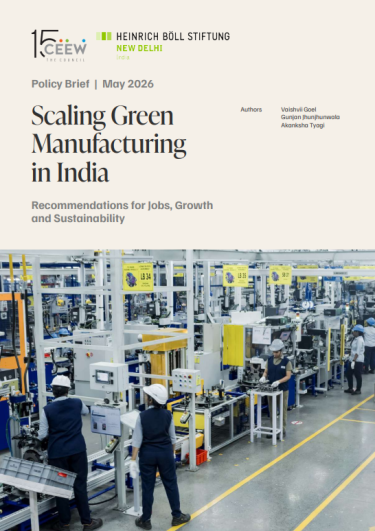
India's green economy, spanning energy transition, the circular economy, and the bio-based economy, holds the potential to generate over 48 million jobs, attract USD 4.1 trillion in investments, and unlock USD 1.1 trillion in market value by 2047. Building these sectors will allow India to enhance energy independence, economic security, and overall national sovereignty. Yet, realising this potential hinges on the country's ability to build robust manufacturing capabilities across these emerging green value chains.
Despite a strong policy push through instruments like the Production Linked Incentive scheme, India's manufacturing gains remain largely downstream-oriented. Structural challenges constrain the green manufacturing ecosystem. This policy brief examines five such systemic barriers: demand uncertainty, limited access to financial capital, import dependence for capital goods, the risk of technological obsolescence, and the low-cost competitiveness of domestically manufactured components. Drawing on stakeholder consultations, it offers actionable recommendations. The interventions will require coordinated action across ministries, regulators, and industry and the institutional agility to course-correct as global conditions shift.
India has consistently introduced policies and missions to boost manufacturing. Despite a strong policy focus, significant headwinds constrain India’s manufacturing abilities in key green economic sectors of renewable energy, circular economy, and the bio-based economy. These green sectors are instrumental in supporting the country’s ambition to become a developed nation by 2047 and its decarbonisation goals. A recently released CEEW (2025) report presented a USD 4.1 trillion market opportunity across thirty-six green opportunities, including electric mobility manufacturing, battery manufacturing, engineered bamboo products, bio-inputs, plastic waste recycling and so on. Building these sectors will allow India to enhance energy independence, economic security, and overall national sovereignty. Several of these opportunities, however, greatly rely on India’s ability to improve its manufacturing ecosystem.
In offering recommendations to capitalise on these opportunities, this policy brief finds that India must build manufacturing ability in the green economy by overcoming demand uncertainty, limited access to financial capital, import dependence for manufacturing equipment, the risk of technological obsolescence, and the low-cost competitiveness of domestically manufactured components.
Demand uncertainty deters long-term investments in green value chains, as it negatively affects innovation, growth, and productivity for firms (Bontempi et al. 2010; Fuss and Vermeulen 2011; British International Investment 2020). Multiple factors drive this uncertainty. Sudden policy shifts, such as the discontinuation of fiscal incentives, create an unpredictable environment and make manufacturers risk-averse. Higher unit costs of green products and continued subsidies for conventional alternatives also dampen adoption, which reinforces demand uncertainties. For example, in the bio-economy sector, feedstock variability affects product quality and escalates costs. This discourages consumers from switching to bio-based products (Jong et al. 2025).
Access to financial capital remains severely constrained for green enterprises. Banks rely on conventional risk assessment metrics, such as stable revenue streams and established track records, that most early-stage green manufacturers cannot demonstrate. For example, feedstock variability in bioenergy products makes it difficult for banks to reliably assess their viability (Renewable Watch 2023). Further, in the absence of a climate finance taxonomy, which can help in a shared understanding of ‘green’, lenders are hesitant (Outlook Business 2025). Green enterprises also struggle with accessing capital from the venture capitalists as they tend to prefer asset-light startups over heavy machinery-led businesses (Yale University 2022).
Heavy import dependence for the manufacturing machinery raises production costs, and lengthens lead times. India’s capacity to produce capital equipment is limited. For example, India’s dependence on imported polymerisation technologies and biomanufacturing machinery constrains the scale-up of bioplastics (Takshashila Institution 2025). Underlying these challenges are India’s low levels of research and development (R&D) (gross expenditure on R&D is 0.64 per cent of GDP, compared to 3.5 per cent in the United States), and limited private sector contribution. While India’s research outputs, such as patent applications, have increased, only a few translate into commercially viable products (Economic Survey 2025-26).
The risk of technological obsolescence discourages capital commitments. India is particularly vulnerable due to its heavy reliance on foreign intellectual property (IP). With approximately 90% of patented inventions concentrated in a few economies reluctant to share tech with developing nations (OECD 2025; Sajid, Zhang & Janjua 2024), Indian firms often settle for licensing agreements. This restricts India’s ability to independently advance the underlying technology. Additionally, low modularity of Indian Small and Medium Enterprises (SMEs) constrain the adoption of emerging technologies (IEEFA 2023).
Low cost competitiveness limits India’s integration into global value chains. In solar manufacturing, 56 per cent of the price difference between India and China is driven solely by bill-of-materials costs (Jain, Dutt and Chawla 2020). India’s low recycling rate of less than 20 per cent, vis-à-vis 70 per cent in Europe, restricts the domestic availability of secondary raw materials. Moreover, Indian MSMEs face a productivity gap compared to advanced economies and lag in adoption of emerging technologies that further reinforces low cost competitiveness (Deloitte 2025; WEF 2025; Economic Times 2025).
Strengthen demand through strategic procurement and financial incentives. India has done this in the past through the public procurement model for the UJALA scheme, unlocking economies of scale that brought prices down (PIB 2022). Similar models should be applied to emerging green sectors. Public procurement criteria should prioritise not just the lowest cost, but also innovation, circularity, and sustainability. Anchor investors should be attracted through strategic financial incentives. SImilarly, producers and consumers should be nudged to co-locate themselves through incentives such as favourable land prices and accelerated depreciation.
Expand access to capital through innovative financial instruments. Banks should collaborate with the RBI, Ministry of MSME, SIDBI, fintech companies and NBFCs to develop and test new financial products through regulatory sandboxes, utilising alternative data sources such as GST filings and transaction histories for creditworthiness assessment. The government must also finalise the Climate Finance Taxonomy. The BSE SME platform should create a dedicated segment for emerging green industries with relaxed eligibility criteria, such as the requirement for a minimum average operating profit before tax of INR 2 crore over the preceding three financial years.
Promote R&D and servitisation to reduce import dependence. India requires missiondriven institutional models, similar to the Biotechnology Industry Research Assistance Council (BIRAC), for the circular economy and energy transition sectors. These institutions can attract private sector investment in R&D, strengthen collaboration among industry, academia, and government, and accelerate the development of market-relevant products in emerging green industries. Simultaneously, the government should advance servitisation to enhance the competitiveness of Indian MSMEs, providing targeted support modeled on the Zero Defect Zero Effect (ZED) scheme.
Incentivise domestic IP ownership and promote adaptive manufacturing. Public procurement should introduce a dedicated category that gives top priority to indigenously designed and manufactured products, drawing inspiration from India’s defence procurement model. To improve plant modularity, the government should extend the Sangam: Digital Twin initiative to manufacturers in rapidly evolving value chains such as EV manufacturing (PIB 2025). The Manufacturing-as-a-Service (MaaS) model should be also be actively promoted, with the government onboarding and certifying MaaS providers near industrial clusters.
Enable a circular economy and industrial symbiosis to improve cost competitiveness. The government should develop a national traceability architecture, building on initiatives such as Battery Aadhaar, to enable material recovery at scale (PIB 2025). DPIIT should lead material flow analysis pilots in industrial clusters to promote industrial symbiosis, leveraging its expertise in designing industrial park assessments.
Ultimately, the effectiveness of these recommendations will depend on how institutional bodies and stakeholders ensure that these interventions are not implemented in silos, avoiding duplication of efforts and coordination failures. A mission-mode approach that aligns ministries, regulatory frameworks, resources and industry policy tools towards common objectives is essential. The green economy is no longer a secondary policy priority but a fundamental prerequisite for a globally competitive and resilient economy. By streamlining these efforts, India can simultaneously generate jobs, attract investments, build climate resilience, and strengthen its long-term economic sovereignty.
Globally, India holds a significant share in manufacturing in the solar and wind sectors. The country has the second-largest solar module manufacturing capacity in the world and it is the third-largest solar energy producer. India has also emerged as a significant exporter of wind energy components (Economic Times 2025). Targeted policy support and domestic demand have led to these advances (IEEFA 2023).
By improving its manufacturing abilities in the emerging sectors in the green economy, such as green mobility, green hydrogen, e-waste recycling, engineered bamboo and bio-based packaging, India can add more than 48 million jobs, which will place it firmly on the path of accelerated, climate-progressive growth (CEEW 2025). The country’s opportunities lie in
• industrial policies,
• the multi-trillion dollar potential of the green economy, and
• safeguard India’s strategic autonomy.
Industrial policies
The global manufacturing landscape is changing. Major economies such as the European Union (EU) and the United States of America (US) are coupling their economic growth strategies with sovereignty, resilience, and sustainability (Global Currents 2025; NITI Aayog). In 2023 alone, more than 2,500 industrial policies in sectors such as low-carbon technology, semiconductors, and medical goods were implemented in China, the EU, and the US (IMF 2024; Global Currents 2025). As the geopolitical order shifts, India has concluded trade deals – with Europe, the UK, and New Zealand, for example to identify its global competitive advantage across sectors, including green opportunities.
Now, the country has the chance to move beyond assembling and increase its contribution to global manufacturing output beyond the current 3 per cent (PIB 2026; European Commission 2024). To do so, India must capitalise on its favourable demographic and human capital base, the thriving start-up ecosystem, the strong service sector, and largely cordial diplomatic relations (PIB 2026; The Hindu 2025; Economic Times 2026; Safeguard Global 2025).
A green economy can generate more than 48 million jobs, attract USD 4 trillion in investments, and unlock USD 1 trillion in market value in India by 2047 (Jain, Jhunjhunwala, et al. 2025).
The multi-trillion dollar potential of India’s green economy
A green economy1 can generate more than 48 million jobs, attract USD 4 trillion (approximately INR 360 lakh crore) in investments, and unlock USD 1 trillion (approximately INR 97 lakh crore) in market value in India by 20472 (Jain, Jhunjhunwala, et al. 2025). These value chains encompass high-impact and high-value products such as electric vehicles (EV) and batteries (McKinsey Global Institute 2024) that can cater to the global economy’s shifting demand towards greener versions of plastics, ceramics, etc. (BCG 2025). Thus, providing an ecosystem to such green value chains to scale up will ensure India’s competitiveness in the future. This will lead to enhanced technological sovereignty, which is essential to securing the country’s energy3 future and economic future, and is increasingly becoming a key priority for economies and a determinant of competitiveness and resilience (ADB 2023; WEF 2026).
Safeguard India’s strategic autonomy
India today imports a majority of its green products, exposing itself to supply chain risks and high forex expenses. Manufacturing these domestically can directly reduce these dependencies and strengthen industrial resilience. Ethanol produced from sugar-based feedstock (although critiqued for conflicting use of agricultural land and water) is being used to reduce India’s import dependence on crude oil. Over the past decade, from 2014-15 to 2025, ethanol has saved more than USD 19 billion in foreign exchange (PIB 2025; Economic Times 2026).
In addition, the cost of inaction is high. Increasingly, countries such as China are leveraging their dominance over supply chains to choke off access to critical minerals and rare earth elements required across sectors such as healthcare and electronics (Pegels and Altenburg 2020; Lebdioui 2024; BBC 2025). Delaying action on the green economy will lead to technological lock-in in carbon-intensive sectors and reduced strategic autonomy.
This policy brief aims to study some of these challenges and propose solutions to boost manufacturing in the emerging sectors of the green economy.
1.1 Approach and methodology
This study adopts a policy-oriented, qualitative methodology with sector-specific analysis.
Based on factors such as growing private sector interest, evolving policy support, and the need to explore green opportunities beyond renewable energy, the Green Economy Report (Jain, Jhunjhunwala, et al. 2025) developed a comprehensive methodology and identified thirty-six opportunities. Though grounded in the Green Economy Report, this policy brief focuses only on nineteen manufacturing-intensive value chains4 across three sectors of the green economy – energy transition, the circular economy, and the bioeconomy (see the Annexure).
The desk research review included academic research, policy documents, industry reports, and other relevant literature on the existing industrial policy landscape on issues addressed and existing gaps.
The consultation process, across the green manufacturing ecosystem, included policymakers from relevant ministries and government agencies, industry associations representing green manufacturing sectors, private sector manufacturers and entrepreneurs, academic researchers, and peer think tanks. The research team contacted over 40 stakeholders across these categories. However, given the specialised nature of the topic and time constraints, 17 experts and green entrepreneurs provided detailed inputs through structured interviews and consultations.
The policy brief attempts to answer four research questions:
• What constrains the growth of manufacturing in the emerging sectors in India’s green economy?
• What fiscal and non-fiscal support exists for these sectors? Are there gaps?
• What lessons can be drawn from the successful industrial policy interventions of India and globally that could be replicated at scale for green sectors?
• What are the actionable recommendations for India’s green industrial policy?
This study examines sectors whose end products advance environmental sustainability by cutting emissions, improving resource efficiency, or enabling circular material use. The production process of manufacturing these products may or may not be green.
Section 2 offers insights into India’s current manufacturing landscape. Section 3 examines five key cross-sectoral systemic challenges, addressing which will generate greater impact than addressing sector-specific barriers in isolation. Section 4 presents our recommendations. Section 5 concludes the policy brief.
A green business may have unique issues, such as demand uncertainty, stricter monitoring, reporting and verification (MRV) requirements, lack of standards, and high logistics and aggregation costs. However, manufacturing-related challenges mirror the same bottlenecks that constrain India’s broader manufacturing landscape, reveal the literature review and stakeholder consultations. Over the years, India has used multiple policy tools to address structural challenges plaguing the manufacturing sector (Table 1).
| Policy | Key features |
|---|---|
| National Manufacturing Policy 2011 |
|
| Production Linked Incentive (PLI) scheme 2020 (initiative under Make in India) |
|
| National Capital Goods Policy 2016 |
|
| National Industrial Corridor Programme (Reconstituted in 2016) |
|
These interventions have yielded results. The PLI scheme has resulted in employment generation of over 9 lakhs and exports surpassing INR 4 lakh crore (PIB 2024). Yet, these gains remain largely downstream-oriented, and India continues to import upstream machinery, raw material, and the core technology required to produce them.
To boost its manufacturing sector, India needs to make a structural shift, towards the production of high-complexity goods such as precision-engineering products and advanced machinery (Economic Survey 2025-26).
Emerging green sectors offer India opportunities to strengthen its manufacturing industry as high-complexity goods like advanced machinery feature prominently across green economy value chains and play a crucial role in sectors such as renewable energy and e-waste recycling.
Along with sector-specific challenges, India’s emerging green sectors face deep-rooted structural challenges across supply, demand, and governance.
The economic viability of green value chains is being eroded by the high cost of capital, weak innovation capacity, limited manpower with the required skill sets for these sectors, heavy reliance on imported raw materials and machinery, infrastructure deficits, price-sensitive consumers, and policy uncertainties.
Five systemic challenges cut across three sectors:
• demand uncertainty,
• limited access to financial capital,
• import dependence,
• the risk of technological obsolescence, and
• low-cost competitiveness.
Addressing these five challenges unlocks potential across multiple value chains and generates far greater impact than solving for sector-specific barriers in isolation.
3.1 Demand uncertainty
Demand uncertainty is the variability and unpredictability in forecasting future demand (Chang et al., 2023). Demand uncertainty negatively impacts manufacturing investments and, in turn, firm growth and productivity (Bontempi et al. 2010, Fuss and Vermeulen 2011; British International Investment 2020).
In 2015, General Electric (GE) misjudged the demand for natural gas and coal and acquired Alstom’s thermal power business. By 2017, global demand for gas turbines had collapsed, GE had lost 74 per cent of its market capitalisation between 2016 and 2018. Such losses make firms risk-averse and deter future investment, not only for the company affected but across the sector.
Hence, it is critical to address this bottleneck, as investments are essential for the growth of green economy solutions, given that many are particularly capital-intensive, and innovationled green solutions often have high gestation periods of eight to ten years.
In this policy brief, we examine two factors that contribute to demand uncertainty in emerging green sectors. First is policy uncertainty that deters firms from committing to long-term investments, and second is the slow adoption of products of green economy value chains, which reinforces demand uncertainties.
Policy uncertainties hinder innovation investments and affect decisions at both the firm and industry levels (Bhattacharya et al. 2017; Kyaw 2022). In India, the discontinuation of tax holidays and reductions in benefits associated with accelerated depreciation negatively impacted clean energy sectors like wind (NITI Aayog 2020). Likewise, domestic manufacturers’ plans were set back when the government deferred implementation of the Approved List of Models and Manufacturers (ALMM), a policy intended to boost domestic manufacturing by mandating the use of approved solar modules (IEEFA 2023). Our consultations corroborate these observations.
Manufacturers that are able to battle policy uncertainity report that the slow pace of adoption of green products affects their business plans. This sluggishness is due to multiple reasons such as high upfront costs, unfamiliarity with the technologies, and large subsidies to grey alternatives like fossil fuels (IEA 2024). If demand falls, manufacturers cancel projects or scale them back, reinforcing demand uncertainties, deterring investments, and locking in grey alternatives (Reuters 2024).
In India, 94 per cent of the capacity planned in the green hydrogen sector is yet to start, due to challenges around slow adoption, driven by the cost difference and inadequate supporting infrastructure (Energywatch 2025). Similarly, the high production costs and limited economies of scale associated with bio-economy value chains such as bioplastics affect demand (Jong et al. 2025)
Thus, the market for emerging green sectors is unpredictable, and enterprises find it difficult to attract investors or secure loans at affordable rates. This highlights the next critical barrier, limited access to financial capital.
3.2 Limited financial capital
Without financial capital, firms cannot scale, innovate, or operate, and projects cannot start or survive (IFC 2025). In global markets, competitiveness depends on financing to meet the high fixed costs of exporting and marketing and of meeting standards (Abor et al. 2014). Yet, the formal credit gap persists (IFC 2025) – more than INR 20 lakh crore, estimates an Expert Committee on Micro, Small and Medium Enterprises (MSMEs) constituted by the Reserve Bank of India (RBI) (ET News 2025). Solving for demand uncertainties should be accompanied by measures to improve the availability of financial capital for manufacturers and their access to it.
While many factors contribute to the limited financial capital available to MSMEs and entrepreneurs in emerging green sectors, this policy brief examines two such factors: information asymmetry around new products and business models; and the valley of death’5 in funding, between early-stage grants and late-stage venture capital.
In emerging sectors, limited access to finance is more pronounced due to information asymmetry around products, business models, and technologies (IFC 2025). The lack of a long-term, consistent track record against which investors can assess risk makes it difficult for industries to attract funding.
The absence of a climate taxonomy hinders banks in providing financial products to firms in emerging industries (Outlook Business 2025) because, as the chief risk officer at Federal Bank notes, ‘climate taxonomies require specific certifications and have thresholds aligned to the overall maturity of the economy where they are developed’.
India brought out a draft climate taxonomy in 2025, but the final version is still awaited. In our stakeholder consultations, entrepreneurs reported that banks do not offer financial products tailored to the needs of emerging green sectors and often assess them on metrics not conducive to early green entrepreneurs or those looking to scale manufacturing. For example, banks cannot reliably assess the viability of bioenergy projects due to variability in feedstock (Renewable Watch 2023). Similarly, in e-waste recycling, the market price of recovered metals fluctuates; as banks find it difficult to calculate return on investment (ROI), they view the sector as being high-risk and hesitate to provide affordable loans for recycling infrastructure (Respose India 2026).
As information on conventional risk assessment metrics – cash flow, internal rate of return, current ratio – is absent, fintech companies and non-banking financial companies (NBFC) leverage alternative data, such as GST filings, transaction histories, and e-commerce sales to bridge the gap and provide loans. But they usually charge higher interest rates, which makes production costs far less competitive (IFC 2025; SIDBI 2025; NITI Aayog 2025). And few financiers use such alternative data, suggesting a firm reliance on traditional data for loan disbursements (ET News 2025).
Entrepreneurs in emerging green sectors also highlighted the valley of death: traditional financers are too conservative to provide the patient capital required; and venture capital (VC) firms prefer asset-light, service-sector start-ups, which offer higher profit margins and help them exit after a few years, over a manufacturing enterprise (Yale University 2022; Chawla and Aggarwal 2019).
To raise the manufacturing sector’s share of GDP to 25 per cent, the government must ensure that firms and start-ups have access to financial capital.
3.3 Import dependence
India depends on imports to fulfil its manufacturing goals, especially for clean energy technologies that are crucial to enable a green economy, from critical minerals to components to machines (IEEFA 2025; Sasakawa Peace Foundation 2026; Warrior et al. 2024).
In solar energy, for example, India has negligible domestic capacity to produce capital equipment for ingots, wafers, cells, and modules, and it depends on China for more than two-thirds of its imports (Dalberg 2026). Similarly, the country’s dependence on imported polymerisation technologies and biomanufacturing machinery constrains the scale-up of bioplastics (Takshashila Institution 2025).
The import of machinery and equipment not only lengthens lead times for operationalising manufacturing facilities but also increases dependence on other countries for maintenance and spare parts (Tandon 2025). This makes India’s manufacturing sector in emerging green sectors subject to risks associated with trade barriers and geopolitical shifts, as in 2023, when China banned the export of rare earth extraction and separation technologies (CSIS 2024).
Dependence on China for refining, separation, and magnet production machines makes Indian supply chains vulnerable. High import tariff rates push up the prices of imported inputs, which impact the final product prices and negatively impact competitiveness.
India’s expanding trade agreements offer a short-term response to this dependence. The India–UK agreement has reduced tariffs on British electrical machinery and precision equipment, which helps Indian manufacturers diversify their sources. However, India must ultimately build domestic capacity to manufacture the capital goods required for clean technologies.
One of the primary reasons for the limited domestic production of machinery required for clean energy technologies is low R&D and innovation levels in India. India’s gross expenditure on R&D (GERD, 0.64 per cent) is significantly lower than countries such as the US (3.5 per cent) and China (2.4 per cent), but the private sector’s contribution to GERD is more concerning.
While the private sector in China and the US contributes close to 75 per cent, this contribution is close to 40 per cent in India (Economic Survey 2025-26). Huawei’s total R&D expenditure in 2023 exceeded USD 20 billion, almost 10 times more than the combined R&D spending of India’s top two spenders in the same year (Scroll 2025), underscoring the lack of private sector expenditure.
India’s performance on research output indicators has improved in recent years. Between FY20 and FY25, patent applications nearly doubled and trademark registrations grew 1.5 times. However, the translation of research outputs into manufacturing and export outcomes has been limited (Economic Survey 2025-26). Investing in R&D will enable India to build a domestic component manufacturing value chain rather than importing machinery.
India’s ability to undertake market-relevant applied research is affected by factors such as limited collaboration among industry, academia, and government, including ineffective technology transfer offices at Indian universities; gaps in financing for technological validation and scale-up; and the alignment of incentives with publishing papers and not for market-relevant inventions (IIT Madras Shaastra 2024; Wadhwani Foundation 2025).
The rapid development of COVID-19 vaccinations in India shows the possibilities when inventors work with industries. As the recent Economic Survey 2025-26 notes, ‘we live in a world where access to inputs and technologies cannot be assumed to be frictionless or permanent’. Building domestic capabilities to manufacture machinery and equipment for a green economy should be a key government priority; however, India’s manufacturers are apprehensive about investing in technology due to the fear of technological obsolescence. Hence, understanding this risk is important to develop the required policy tool.
3.4 The risk of technological obsolescence
Over time, technologies once at the frontier – floppy disks and fax machines, for example – become less valuable. Song Ma (2021) terms this phenomenon technological obsolescence. Firms experiencing technological obsolescence have slower growth in profits, output, capital, and, more importantly, employment; and, Song Ma shows, this effect is stronger when obsolescence occurs in the firm’s core technology areas.
As multiple value chains in the green economy – battery manufacturing, solar energy, advanced recycling – are technology-driven, India needs transfer of relevant, affordable, and scalable technologies to scale its green economy, as highlighted in the country’s fourth Biennial Update Report to the UNFCCC in 2024 (S&P Global 2025). Dependence on foreign IP, with limited core technology transfer and low plant modularity among small and medium enterprises (SMEs), heightens the risk of technological obsolescence.
The majority (90 per cent) of patented inventions (and therefore IP rights) are concentrated in a few economies (OECD 2025), such as the US, Germany, Japan, and China. These countries are hesitant to transfer technologies, because they are concerned that developing countries may imitate these (Sajid, Zhang and Janjua 2024). Thus, technology transfer is driven by market mechanisms, resulting in the flow of technology to attractive markets only (SDG Action 2024).
To make the Indian market attractive, Indian firms are collaborating with foreign companies to boost manufacturing. However, these collaborations are being undertaken in a licensing format, where the core technology remains with the foreign company, and the Indian company learns only about the manufacturing process. For example, L&T has entered into a partnership with McPhy Energy, a France-based electrolyser technology and manufacturing company. Under this arrangement, McPhy Energy has granted L&T an exclusive license to manufacture electrolysers using its pressurised alkaline technology. L&T will set up a gigawatt-scale manufacturing facility in India, but the underlying electrolyser design and IP remain with McPhy (Indian Chemical News 2023).
India’s trade agreements are increasingly incorporating discussions around technology transfer, but it remains to be seen whether these agreements will translate into core technology transfer in the emerging sectors of the green economy.
Another factor that fuels the risk of technology obsolescence in capital-intensive sectors is the low modularity and upgrade flexibility of manufacturers’ plant designs in India. Advances in solar module materials and structures have reduced cell-to-module losses, thereby improving module efficiency (Shiradkar et al., 2022). To accommodate these advancements, it is important for manufacturing plants in India to be flexible and to integrate future changes as they are implemented. Some large industries such as Adani, Tata Power Solar, and Jupiter Solar have mono passivated emitter and rear cell (PERC)6 solar cells manufacturing lines that can be upgraded to the new tunnel oxide passivated contact (TOPCon) technology7 (IEEFA 2023). But these modular and flexible industries are limited to large industries, due to the high capital expenditure and technical know-how required, whereas SMEs are unable to upgrade their manufacturing units, let alone make them modular and flexible.
As Indian manufacturers build greater design ownership and plant modularity, they should also close the cost gap with global competitors, without which there will be limited takers for the product, and the manufacturer will not be able to scale.
As Indian manufacturers build greater design ownership and plant modularity, they should also close the cost gap with global competitors, without which there will be limited takers for the product, and the manufacturer will not be able to scale.
3.5 Low-cost competitiveness
Global value chains (GVC) enable economies to enhance exports by engaging in specific parts of the value chain rather than developing the entire product themselves (Asian Development Bank 2020). Integrating into GVCs is critical because participation has been found to increase the share of manufacturing in GDP (Stöllinger 2018). India’s import dependence directly undermines the cost competitiveness of Indian products, thereby affecting India’s ability to integrate into GVCs (Economic Survey 2025–26).
This policy brief studies two factors that erode SMEs’ cost competitiveness: high input costs; and low production efficiency.
Indian MSMEs are only 18% as productive as large companies, whereas this figure is 45–70% for SMEs in OECD countries (Deloitte 2025).
Policy tools could focus on reducing input costs by enabling industries to reach minimum efficient scale (Yan and Vedder 2022). As the Economic Survey (2025-26) notes, high input costs make it difficult for firms to scale and compete globally, and calls for a national input cost reduction strategy as a necessary foundation for competitiveness (PIB 2026).
In solar manufacturing, bill of materials (BOM) costs constitute 56 per cent of the price difference between India and China and constitute 86 per cent of the selling price (CEEW 2020). To bridge the price difference, innovation is key (IEA 2024), as it can either reduce the cost of the existing component or replace it with a more efficient component, thereby reducing its price (Voxdev 2026).
However, India’s innovation ecosystem faces multiple challenges, including limited commercialisation of prototypes, limited patient capital, and lack of manpower. Input costs for clean energy technologies are also volatile due to the scarcity of rare earth metals, which are expected to face shortages in the coming years (McKinsey 2023). China restricted exports of rare earth metals last year and is currently tightening control over silver (Times of India 2025; South China Morning Post 2025).
At the same time, India’s material consumption is expected to double by 2030 (EAC-PM 2023). Against this backdrop, this is a call to action for India to strengthen waste recycling to supplement the domestic supply of these minerals and rare earth elements – currently, India’s recycling rate is less than 20 per cent, much less than Europe’s 70 per cent (EAC-PM 2023).
To reduce costs further, Indian manufacturers need to improve the efficiency of their production processes. Improving the cost-competitiveness of components used in the manufacturing of green products is a prerequisite for India to emerge as the world’s manufacturing partner and produce high-quality green products at affordable prices to attract both domestic and international buyers.
In India, MSMEs are the second-highest contributor to the country’s economy, but their contribution and productivity are far behind those of more advanced economies: MSME contribution to GDP is 60 per cent in China and 54 per cent in Japan (Deloitte 2025). Similarly, Indian MSMEs are only 18 per cent as productive as large companies, whereas this figure is 45–70 per cent for SMEs in OECD countries (Deloitte 2025).
Using advanced manufacturing technologies would improve production efficiency and, therefore, the competitiveness of India’s industry (Rajendra et al. 2025). For instance, Hyundai is working with IIT Madras to engage with MSMEs to build green hydrogen infrastructure in Tamil Nadu (Times of India 2025).
Improvement in production efficiency is especially important for MSMEs as they will anchor the domestic supply chains of the emerging green sectors. Thus, strengthening MSMEs’ process efficiency is a must for Indian manufacturers.
Globally, manufacturers have begun adopting emerging technologies in their factories to gain real-time insights, improve equipment processes, and enhance resource utilisation (Deloitte 2024). Implementing AI in Indian MSMEs can reduce costs by 20–30 per cent (World Economic Forum 2025).
However, only one-fourth of Indian SMEs have adopted advanced manufacturing technologies, due to limited awareness, a lack of financial capital, a lack of technical knowledge to undertake such activities, regulatory burden, and data security concerns (WEF 2025; Economic Times 2025).
These five challenges do not operate in silos; rather, they are interconnected and mutually reinforcing. Left unaddressed, India may remain a consumer and contribute only to downstream industries, perpetuating its reliance on imports and threatening its technical and economic sovereignty. unaddressed, India will remain a consumer and contribute only to downstream industries, perpetuating its reliance on imports and threatening its technical and economic sovereignty.
The next section outlines targeted, actionable recommendations to address these barriers.
The emerging sectors in the green economy can foster long-term competitiveness, establish international influence, lead to economic growth, enhance its strategic autonomy (EU 2023), and enable countries to remain competitive in technological clusters in the future (Lebdioui 2024). Therefore, industrial policy must be strategic, not merely expansive. enhance its strategic autonomy (EU 2023), lead to economic growth, and enable countries to remain competitive in technological clusters in the future (Lebdioui 2024). Therefore, industrial policy must be strategic, not merely expansive.
To address the challenges outlined in the previous section, this section outlines specific, actionable interventions:
• strengthen demand and offer strategic financial incentives,
• expand access to capital markets,
• promote R&D and servitisation,
• incentivise domestic ownership of IP, and
• enable a circular economy and industrial symbiosis.
4.1 Strengthen demand and offer strategic financial incentives
To push demand, the government should leverage policy tools to stimulate demand for green products by introducing public procurement criteria that prioritise products not only for the lowest value (L1 bidding system) but also for innovation, circularity, and sustainability.
The EU uses non-price criteria, known as the Most Economically Advantageous Tender (MEAT), which awards contracts based on ‘best value’ rather than the lowest price. The MEAT criteria helps address market failure by providing a guaranteed market for innovative green products and by enabling initiatives to grow from pilot to full-scale implementation (European Council of Foreign Relations 2025).
The Department of Expenditure, under the Ministry of Finance, responsible for setting public procurement guidelines, should lead a similar effort. Before large-scale implementation, the department should conduct pilots based on MEAT criteria for specific, high-volume, low-value government purchases such as bio-residue–based packaging.
The World Economic Forum (2024) provides multiple interventions to drive adoption by targeting both supply and demand factors. The three interventions relevant to this policy brief are
• peer collaboration to minimise the need for infrastructure,
• direct subsidies for early adopters, and
• capital expenditure support to enable domestic demand.
We suggest that these interventions happen synergistically in value chains, such as green hydrogen.
For existing clusters, green hydrogen producers and consumers should be provided incentives, such as discounted land prices and a faster depreciation rate, to bring their systems closer together. Moreover, any funding gap for infrastructure should be covered by the government, which will not only incentivise these enterprises to collaborate but also address the funding gap.
Funds for retrofitting existing clusters should be drawn from the cluster development programme fund, and new industrial clusters should include a green hydrogen plant in their planning. The DPIIT should lead this exercise.
Finally, attracting anchor investors can boost demand and reduce uncertainty. Nearly 60 per cent of global manufacturing trade takes place within the supply chains of multinational corporations (CSEP 2026). In the coming year, India should attract global anchor investors by offering incentives to capitalise on its position as a major source of growing demand.
Incentives should be conditional on the procurement of goods and machinery domestically. Industry policy tools such as domestic content requirements should be leveraged to effectively create anchor demand for domestic suppliers.
The government cannot provide these incentives uniformly across all value chains. NITI Aayog, along with DPIIT, should establish a framework for selecting three value chains in the first phase, followed by a detailed scale-up plan. The selection criteria should prioritise value chains that offer significant global export potential and high domestic import-substitution value.
Together, these actions will drive adoption and enhance manufacturers’ trust in the Indian market, thereby fuelling investments and growth in the emerging sectors of the green economy.
4.2 Expand access to capital
The government is keen to explore new mechanisms to provide enterprises, especially those in the emerging sectors of the green economy, access to financial capital (PIB 2026). In its 2026 Union Budget, the government has proposed to integrate the Government e-Marketplace (GeM) portal with the trade receivables discounting system (TReDS); it has also proposed the use of trade receivables as asset-backed securities (PIB 2026).
One pathway to experiment with more such new financial products is through regulatory sandboxes (RBI 2025) that allow for the development and testing of innovative financial products in a controlled environment. RBL Bank is using regulatory sandboxes and working with fintech companies to experiment with alternative data to make more informed decisions regarding lending to MSMEs (RBL Bank 2025). Other banks too should work with the RBI, MSME ministry, SIDBI, fintech companies, and NBFCs to develop financial products. The initial focus should be on value chains like e-waste recycling that face acute working capital bottlenecks.
To further support banks in lending to industries in these sectors, the government must finalise the Climate Finance Taxonomy, which will result in a shared understanding of ‘green’ and enable banks and NBFCs to fund start-ups (CSEP 2025). The draft framework was released in May 2025; however, the final framework remains pending (PIB 2025).
Launched in 2012, India’s BSE SME platform lets SMEs raise equity capital for multiple purposes, including working capital, technology upgrades, and R&D. In 2024, more than 240 SMEs were listed on the platform, with the initial public offering (IPO) averaging INR 35 crore (INR 350 million) (Finology 2025). Small and medium enterprises can use the platform to bridge the valley of death (BSE India).
Countries such as China are leveraging stock exchanges to help start-ups in high-tech fields – new materials, biomedicine, and information technology (IT) – to raise capital without a profit track record (EY 2022). Given their success, the SME platform should launch a segment where eligibility criteria are relaxed for emerging green companies to raise capital (Finlaw 2024). A company is required to have a minimum average operating profit before tax of INR 2 crore over the three preceding financial years. This requirement should be relaxed, as SME entrepreneurs in emerging sectors reported that it is often difficult to meet.
The government should prioritise a few sectors like electrolyser manufacturing where long gestation periods and high capital requirements make it difficult to demonstrate an early profit track record.
These interventions will result in innovative products that provide companies in emerging sectors the financial capital they require and, thereby, realise the potential of a green economy.
4.3 Promote R&D and servitisation
Promoting market-relevant R&D and introducing stronger servitisation models can significantly help reduce import dependence by improving the competitive advantage of products made in India. While R&D helps reduce direct costs, servitisation improves product efficiency and lowers maintenance costs.
Boosting market-relevant research on innovative capital goods and technologies crucial to the green economy requires synergy among industry, academia, and government.
One noteworthy initiative is the Biotechnology Industry Research Assistance Council (BIRAC, n.d.). Its National Biopharma Mission provided capital to R&D projects that received limited private capital, provided mentoring and regulatory facilitation, built shared infrastructure with support from the World Bank, and addressed the skills gap by training researchers and entrepreneurs in technology transfer and commercialisation (World Bank 2026). By establishing domain-specific scientific advisory groups (SAG), the mission has created a cohesive ecosystem that fosters synergies among stakeholders.
Across the circular economy and energy transitions, India needs models similar to BIRAC to crowd in private-sector investments in R&D; foster collaboration between industry, academia, and government; and develop market-relevant research products in emerging green sectors. The model should be tailored to sectoral needs, however, as – for example – compared to the bio-economy, the ecosystem of the circular economy is fragmented, comprising small, informal enterprises.
The Ministry of Science and Technology should work with the MNRE, for energy transition, and with the Ministry of Environment, Forest and Climate Change (MoEFCC), to develop these models. Together, they should launch mission-mode R&D projects for machinery required in sectors such as solar cell manufacturing, where import dependency is high. To avoid reinventing the wheel, BIRAC’s support and experience should be leveraged appropriately.
Servitisation, the integration of services into the manufacturing sector, is a lever to boost the machine manufacturing sector by leveraging India’s strength in the service sector. Servitisation will give Indian manufacturers an edge in GVCs, especially in the context of Industry 4.0, by providing machine manufacturers with insights into machine performance and, thereby, empowering them to improve delivery value to their customers. Servitisation will enable predictive maintenance, ensuring smooth machine operations with minimal downtime, fewer interruptions, and lower maintenance costs (TCS n.d.). By providing such services, Indian manufacturers can stand out from the competition.
In delivering servitisation, SMEs and start-ups will require support from the government, which should provide counselling similar to the zero defect zero effect (ZED) scheme, under which MSMEs receive financial support to avail services of consultants that can help them improve quality and achieve certification.
In a similar vein, the MoMSME should empanel consultants to raise awareness of evolving technologies and business models among SMEs and to help them to understand how to integrate the technologies and business models into their existing processes.
The interventions will lay the foundation for a robust capital goods manufacturing industry, thereby reducing India’s dependence on imports and solidifying its position as a key manufacturing partner to the world.
4.4 Incentivise domestic ownership of intellectual property and promote adaptive manufacturing
Incentivising domestic ownership of intellectual property and promoting adaptive manufacturing will mitigate technological obsolescence risks by reducing India’s dependence on foreign IP in green technologies and enhancing industries’ ability to accommodate these technological advancements in the production processes.
First, to incentivise domestic IP and design ownership, the government should adopt similar mechanism as the defence sector. In defence, the Buy-Indigenously Designed, Developed, and Manufactured category nudges technology transfer beyond assembling and manufacturing processes to core technology development
Public procurement should assign the highest priority to indigenously designed and manufactured products in India in addition to the MEAT criteria (Section 4.1). Enterprises will then need to prove ownership of IP, and foreign technology providers will be encouraged to deepen their local manufacturing footprint to qualify for market access. The Department of Expenditure, under the Ministry of Finance, should lead the effort, by piloting it in certain value chains where IP ownership is crucial, like electrolyser manufacturing.
Second, the risk of technology obsolescence must be mitigated at the factory floor by improving plant modularity. One pathway is to encourage manufacturers to adopt digital twin technology, a virtual replica of physical systems and processes that enables them to simulate and adapt to new technologies without incurring physical redesign costs (McKinsey 2024).
While some large enterprises like Ola Electric and TCS are already pioneering this, SMEs require dedicated support (Nvidia 2024). To bridge this gap, the government should leverage the Department of Telecommunications’ Sangam: Digital Twin initiative. It includes a sandbox for developing and testing digital twin and AI models prior to deployment (PIB 2025). This sandbox should be extended to include complex, rapidly evolving value chains - such as EV manufacturing - where adopting a flexible, modular plant design are increasingly essential.
By leveraging the Manufacturing-as-a-Service (MaaS) model, SMEs can enhance process modularity (Bain & Company 2022). Providers of MaaS acquire and operate machinery and offer capacity on a subscription basis, thereby reducing operational costs and the need to lock in investments. Manufast – an Indian MaaS provider – for example, has manufactured more than 30,000 parts for over 120 customers (Manufast n.d.). They help with quality control, machine design, and analysis for green economy value chains such as EV batteries.
The Indian government should promote models that reduce industry expenditure on machinery by onboarding and certifying MaaS providers and offering them subsidies and incentives to establish facilities closer to industrial and research clusters. These subsidies need not be new instruments – these can be the same as the benefits and incentives already offered to companies in an industrial cluster – and these should be extended to MaaS providers as well.
While these actions can prevent future technological obsolescence risk, manufacturers already operating on earlier generation technologies, like manufacturers in the battery and solar sectors, face costs associated with stranded assets. Whether government interventions can facilitate the repurposing or transferability of these stranded assets is a problem that warrants research and policy attention.
Addressing the risk of technological obsolescence will give domestic manufacturers the confidence to invest capital in frontier technologies. Manufacturers must also close the cost gap with global competitors, because otherwise domestic production risks remaining technologically relevant but commercially unscalable.
4.5 Enable a circular economy and industrial symbiosis
A circular economy can help to mitigate the supply risks associated with imports by reducing import dependence and input costs and enhancing cost competitiveness (Warrior, Tyagi and Jain 2023). However, to enable a sound circular economy, traceability mechanisms are required (UN 2023, WEF 2025). The government should develop a national traceability architecture, especially in the emerging green sectors.
India launched the Battery Aadhaar initiative – similar to Digital Public Passports in the EU (EU 2024) – in July 2025, but implementation is in the nascent stages (PIB 2025).
A draft national framework on traceability in fisheries and aquaculture was released by the Department of Fisheries, Ministry of Fisheries, Animal Husbandry and Dairying, Government of India, in October 2025 (DOF 2025). This document should serve as a reference for other ministries, and each ministry should lead the development of the architecture for its respective sector.
As India develops industrial clusters and manufacturing zones, industrial symbiosis offers the opportunity to design industries that are circular and resilient from the outset.
Industrial symbiosis enables industries to use by-products as secondary raw materials, cutting waste and costs while creating new revenue streams (WEF 2025), and offers opportunities to reduce import dependence and enhance cost competitiveness (Patricio et al. 2022). As India develops industrial clusters and manufacturing zones, industrial symbiosis offers the opportunity to design industries that are circular and resilient from the outset rather than investing in the higher infrastructural costs associated with linear industrial systems (Munonye et al. 2025).
Industrial symbiosis is not entirely new to India. Some clusters have naturally organised themselves in symbiotic relationships, with firms recovering waste within their facilities or exchanging it with neighbouring companies (Bain et al. 2010). These instances are driven by the private sector and are limited, however. Relying on spontaneous relationships alone leaves the vast majority of potential exchanges unrealised, as most manufacturers lack the information, trust networks, or transaction facilitation mechanisms to identify and leverage such arrangements.
Recently, Andhra Pradesh rolled out a state-level circular economy framework that mandates industrial symbiosis (Circular Business Review 2025).
However, India does not have a national-level policy mandating by-product exchange or systematically incentivising manufacturers to engage in it. To unlock this potential, the government should undertake a material flow analysis pilot and scale it to all clusters where possible. The cluster selection should be based on stakeholder readiness.
Two pilots should be conducted in clusters where industrial symbiosis is already underway, to ensure easier stakeholder buy-in and smoother data collection; and one pilot must be conducted in a cluster where industrial symbiosis is not underway, allowing policymakers to understand the modalities of real-world implementation and the barriers to it.
The DPIIT should be roped in to conduct these assessments, as it already conducts the Industrial Park Rating System and has experience in evaluating industrial parks. The United Nations Industrial Development Organization (UNIDO) has experience in developing and implementing eco-industrial parks across countries; the DPIIT should seek its expertise.
By reducing expenditure on operational costs and, thereby, increasing competitiveness, MaaS also offers SMEs opportunities to improve efficiency in their production process
By establishing traceability mechanisms, promoting MaaS models, and implementing industrial symbiosis, India’s manufacturers will be able to produce cost-competitive goods and strengthen their position in GVCs.
While not exhaustive, these recommendations address key aspects of the five challenges examined in this study. Their effectiveness will ultimately depend on how well institutional bodies and stakeholders collaborate, avoiding siloed implementation, duplication of efforts, and coordination failures. Institutional agility will be the most critical determinant of success.
The cost of inaction will only escalate as other countries accelerate industrial policies and adopt protectionist measures, potentially undermining India’s strategic autonomy and increasing import dependence. By taking proactive leadership in emerging sectors, India can help shape future standards and market structures.
The green economy is no longer a secondary policy priority but a prerequisite for a globally competitive, sovereign, and resilient economy aligned with the 2047 vision.
This policy brief focuses on manufacturing in sectors where the end products contribute to environmental sustainability — by reducing emissions, improving resource efficiency, or enabling circular material use. It does not focus on greening the manufacturing process itself.
The brief examines nineteen manufacturing-intensive value chains across three sectors of the green economy: energy transition (including solar, wind, battery, EV, and green hydrogen manufacturing), the circular economy (including e-waste, plastic waste, and lithium-ion battery recycling), and the bio-economy (including engineered bamboo, bio-residue-based packaging, biofuels, and bio-inputs).
Addressing systemic barriers that cut across multiple value chains generates far greater impact than solving for sector-specific challenges in isolation. Many of these barriers — such as low R&D intensity or limited access to finance — constrain growth across energy transition, circular economy, and bio-economy sectors simultaneously.
MaaS allows manufacturers to access machinery and production capacity on a subscription basis, eliminating heavy upfront investments. This helps SMEs avoid being locked into outdated technologies and improves their ability to adapt as green technologies evolve.
Servitisation is the integration of services into the manufacturing sector. It gives Indian manufacturers a competitive edge by providing services like predictive maintenance, which ensures smooth machine operations and lower maintenance costs.
Affordable Financing for Decentralised Renewable Energy Technologies
Assessing India’s Coal Mine Workers:

Roadmap of the methodology to assess the climate co-benefits of the SUP ban in Maharashtra