Council on Energy, Environment and Water Integrated | International | Independent


Suggested citation: Council on Energy, Environment and Water (CEEW) and Asian Infrastructure Investment Bank (AIIB). 2026. India Water Digest: Scaling Investment for a Water-Secure India. New Delhi, India: Council on Energy, Environment and Water.
India's economic growth and long-term competitiveness increasingly depend on how it manages and finances water. Agricultural productivity, industrial competitiveness, energy security, urban development and climate resilience all rest on it. India has responded ambitiously, yet water security remains under pressure from two directions. Challenges and implementation gaps make commercial finance hard to access.
This brief, developed in partnership with the Asian Infrastructure Investment Bank (AIIB), positions water as a strategic economic asset. It maps seven challenges, reviews the missions responding to them and identifies persistent implementation gaps. It sets out six investment priorities: climate-risk assessment, institutional capacity, used-water treatment and reuse, micro-irrigation, pumped storage hydropower, and smart water infrastructure. Financing these needs a diversified architecture, from green and blue bonds, and payments for ecosystem services to results-based financing and resilience-linked loans.
India’s economic growth, fiscal resilience, and longterm competitiveness will increasingly depend on how effectively it manages and finances water. Water underpins agriculture, industry, energy production, urban development, and ecosystem services. Yet despite growing recognition of its strategic importance, India’s policy, financing, and investment decisions often fail to reflect water’s full economic value, contributing to underinvestment and growing water insecurity. As water stress intensifies, the consequences extend beyond individual sectors, affecting food security, economic productivity, climate resilience, and sovereign risk. The Global Commission on the Economics of Water (GCEW) estimates that disruptions to the global water cycle could reduce global GDP by 8 per cent by 2050 (GCEW 2024), while the Asian Infrastructure Investment Bank (AIIB) estimates that rising water stress could increase borrowing costs by weakening sovereign creditworthiness in lower-middle-income economies such as India (AIIB 2026b).
India’s water challenge is increasingly multidimensional. Water availability remains highly variable across geographies and seasons, climate change is intensifying hydrological extremes, natural water infrastructure is degrading with water quality declining, groundwater is being used unsustainably, irrigation systems have low efficiency,and coordination across institutions and sectors remains challenging. Persistent financing constraints compound these pressures, limiting progress in storage development, used water treatment, climate adaptation, ecosystem restoration, and irrigation modernisation (OECD 2022; World Bank 2022). Together, these challenges impose rising economic costs through lower agricultural productivity, increasing disaster losses, growing pressure on public finances, and risks to energy and industrial production. They also threaten public health by increasing exposure to unsafe water, inadequate sanitation, and climate-related disruptions to water services.
India has responded with an extensive portfolio of national policies, missions, and programmes covering drinking water, sanitation, groundwater management, river restoration, watershed development, irrigation expansion, water use efficiency (WUE), and flood resilience. Initiatives such as the National Water Mission (NWM), Jal Jeevan Mission (JJM), Atal Mission for Rejuvenation and Urban Transformation (AMRUT), Namami Gange Programme (NGP), Swachh Bharat Mission (SBM), and Pradhan Mantri Krishi Sinchayee Yojana (PMKSY) have significantly expanded infrastructure and service delivery. More than 159 million rural households have received tap-water connections through JJM (MoJS 2026b), nearly 24 million urban households have received connections through AMRUT, and substantial progress has been made in sanitation, used water treatment, watershed restoration, and irrigation development. Together, these initiatives and achievements demonstrate the scale of India's commitment to strengthening water security.
Despite this progress, significant implementation gaps remain. Water tariffs often fail to recover service-delivery costs- a gap in tariff design rather than an inability among households to pay (Iyer, Ghosh and Damania 2026). Urban planning focuses more on conventional grey infrastructure, while institutional, technological, and data-system constraints continue to hinder integrated water management with responsibility for WASH service delivery alone distributed across six ministries (UNICEF and CEEW 2024). Used water treatment and reuse remain underdeveloped, with only 28 per cent of urban sewage treated before discharge (CPCB 2021), and many water projects struggle to attract commercial finance because of weak revenue streams, limited creditworthiness, and perceived investment risk. As a result, the sector remains heavily dependent on public financing - lacking an accurate break-up, one estimate is that the public purse picks up 85 per cent of global overall water-related expenditure (Joseph et al. 2024).
At the same time, substantial investment opportunities are emerging across climate-risk assessment, institutional capacity building, used-water treatment and reuse, micro-irrigation, pumped-storage hydropower, and digital water infrastructure. CEEW estimates place the opportunity in used-water reuse at INR 3.04 lakh crore (USD 35 billion) by 2047, in micro-irrigation at INR 1.8 to 11.1 lakh crore (USD 19 to 118 billion), in pumped-storage hydropower at roughly INR 5.8 lakh crore (USD 61 billion), and in smart metering and digital water-management systems at INR 4,909 to 11,947 crore (USD 0.5 to 1.3 billion). Investments in these areas can improve water security, increase resource efficiency, support economic growth, and strengthen climate resilience while creating new opportunities for public and private investment.
Meeting India's water investment gap will require a diversified financing architecture. Different categories of water investment face distinct financing constraints, meaning that no single instrument will be sufficient. Financing approaches should combine public expenditure, development finance, private capital, and performance-based incentives. Priority areas include financing natural infrastructure and watershed restoration, supporting institutional and policy reform, mobilising private capital by improving project bankability, and scaling investment through domestic financial institutions. Innovative instruments such as resilience-linked finance, labelled bonds, payments for ecosystem services, guarantees, and blended-finance structures can help expand the flow of capital into the sector.
This brief advances five recommendations. First, recognise water as a strategic economic asset and embed its full economic value more explicitly in policy and investment decisions. Second, strengthen the financial sustainability of water services through gradual, socially sensitive pricing and incentive reforms that improve cost recovery while protecting vulnerable households, extending to electricity pricing for groundwater irrigation (Gulati and Pahuja 2015; World Bank 2020; Gupta 2026). Third, the Government of India, state governments, urban development agencies, and lenders should mainstream hybrid grey–green infrastructure (combining engineered assets with restored natural systems) in water and urban planning, with the central and state governments, urban development agencies, and lenders updating design standards and project-appraisal methodologies. Fourth, focus financing efforts on creating investable opportunities across the water sector by improving project bankability, strengthening utility finances, reducing investment risks, and creating reliable revenue streams. Finally, build the foundations for future environmental and water-finance markets while scaling proven financing mechanisms today, including guarantees, blended finance, payments for ecosystem services and labelled bonds design standards and project-appraisal methodologies. Fourth, focus financing efforts on creating investable opportunities across the water sector by improving project bankability, strengthening utility finances, reducing investment risks, and creating reliable revenue streams. Finally, build the foundations for future environmental and water-finance markets while scaling proven financing mechanisms today, including guarantees, blended finance, payments for ecosystem services and labelled bonds.
By aligning governance, infrastructure planning, and financing around these priorities, India can strengthen water security while supporting long-term economic resilience and prosperity.
India's economic future will increasingly be shaped by how effectively it manages and finances water. As a strategic economic asset, water underpins economic growth, food security, long-term competitiveness, and fiscal resilience, including sovereign creditworthiness. Every major pillar of the economy, from agriculture and manufacturing to energy and urban development, depends on reliable and well-managed water systems. Yet despite growing recognition of water's importance to economic development, policy, financing, and management systems often fail to reflect its full economic value. As water stress intensifies, this gap is becoming increasingly costly.
The economic consequences of water insecurity are substantial and extend beyond the water sector. Disruptions to the global water cycle could reduce global GDP by around 8 per cent by 2050, with losses reaching 15 per cent in lower-income economies. At the same time, nearly 3 billion people and more than half of global food production are located in regions where total water storage is projected to decline (GCEW 2024). Given the dependence of agriculture, energy, industry, and urban development on reliable water supplies, growing water stress poses an increasingly significant macroeconomic risk. The AIIB estimates that a 10-percentage-point increase in water stress could lower sovereign credit ratings by nearly one notch in lower-middle-income economies, raising borrowing costs and constraining fiscal space (AIIB 2026b).
Agriculture, which accounts for around 80 per cent of India's freshwater use, is increasingly vulnerable to unreliable water supplies. More than 40 per cent of the country's thermal power capacity is located in water-stressed regions, posing risks to energy security, industrial output, and economic productivity (Luo, Krishnan, and Sen 2018; TERI 2026). Water insecurity is also an increasing constraint on urban development, with many of India's major metropolitan areas facing seasonal water shortages during the summer months (Breitenmoser 2022; Bassi, Gupta, and Chaturvedi 2024). The broader economic impacts are already evident: climate-related disasters caused an estimated 4.59 lakh crore (USD 56 billion) in economic losses between 2019 and 2023 (Prasad 2024). Despite these economywide risks, investment in water infrastructure and water security continues to lag behind other infrastructure sectors, particularly in attracting private capital.
Treating water resources and infrastructure as strategic economic assets is therefore not simply an environmental imperative but an economic necessity. Better water management and greater investment can generate economy-wide benefits, including higher agricultural productivity, greater industrial competitiveness, enhanced climate resilience and more sustainable urban development. Equally important, reframing water infrastructure and water-security investments as investable assets can help mobilise private capital alongside public finance. Doing so can unlock the resources needed to address critical infrastructure gaps and strengthen India's long-term economic resilience.
This brief examines seven challenges shaping India's water future, assesses the policy and investment response to date, identifies emerging investment opportunities, and sets out five recommendations for scaling finance.
India’s water challenge is not defined by scarcity alone. Rather, it stems from the interaction of highly variable water availability, climate change, degradation of natural and built water systems, unsustainable groundwater use, infrastructure inefficiencies, and fragmented governance arrangements. Together, these pressures are undermining water security and increasing risks to agricultural productivity, economic growth, urban development, energy security, and climate resilience. The following sections examine seven interrelated challenges shaping India’s water future.
India supports 18 per cent of the world’s population with only 4 per cent of global freshwater resources, placing immense pressure on available supplies (AIIB 2026b; Iyer, Ghosh, and Damania 2026). Per capita water availability has declined to around 1,500 cubic metres (m³), far below the global average of around 5,300 m³, and is projected to fall further as demand rises (Hernandez Lagana and Mejias Moreno 2025). This pressure is compounded by India’s uneven rainfall distribution, in both time and space. Nearly 70–90 per cent of annual rainfall occurs during the 12–16- week southwest monsoon, while average annual rainfall ranges from 486 millimetres (mm) in western Rajasthan to 3,751 mm in Meghalaya (AIIB 2026b; Iyer, Ghosh, and Damania 2026; Prabhu and Chitale 2024). Consequently, annual per capita water availability exceeds 2,000 m³ in perennial basins such as the Brahmaputra in the north-east but falls below the 1,000 m³ water-scarcity threshold in seasonal basins such as the Sabarmati in western India (Bassi, Gupta, and Chaturvedi 2023).
However, abundant rainfall alone does not guarantee water security. In many basins, limited storage capacity, deteriorating water quality, and rapid urbanisation constrain the availability of reliable water supplies throughout the year. Major basins, including the Ganga and Brahmaputra, store less than 20 per cent of their annual flows (AIIB 2026b), while cities such as Chennai, for example, have already lost 13.6 million cubic metres (MCM) of tank storage, with a further 175 MCM at risk (TNGCC and CEEW 2026). Climate change is further amplifying these imbalances by altering rainfall patterns and increasing the frequency and severity of floods and droughts across the country.
Rising temperatures and changing atmospheric dynamics are altering the Indian monsoon and disrupting water flows nationwide. About 55 per cent of India’s tehsils have experienced increases of more than 10 per cent in monsoon rainfall, while 11 per cent have recorded declines exceeding 10 per cent compared with the long-period average (Prabhu and Chitale 2024). These shifts are accompanied by growing exposure to climate extremes. Three-quarters of India’s districts are now hotspots for extreme hydro-meteorological disasters, and 40 per cent face alternating flood and drought risks (Mohanty and Wadhawan 2021). The nature of these risks varies considerably across regions. The Himalayas are increasingly exposed to glacial lake outburst floods, peninsular India to urban flooding and agricultural water stress, and coastal regions to sea-level rise and storm surges (AIIB 2026b; Rather et al. 2026).
India’s water infrastructure remains ill-equipped to withstand these growing extremes, threatening not only water security and economic activity but also the reliability of drinking water, sanitation, and hygiene (WASH) services. Across India, 40 per cent of districts face high to very high climate risks to WASH systems (UNICEF and CEEW 2024). The implications extend across key economic sectors. In the Indus and Ganga basins, 129 million farmers depend on increasingly unstable glacier-fed water systems, leaving agricultural production directly exposed to changes in Himalayan hydrology (Biemans et al. 2019; Sharma, Amarasinghe, and Xueliang 2026; TERI 2026) The economic costs are already substantial.
These climate impacts are further intensified by the degradation of natural ecosystems that have historically helped buffer against floods, droughts, and declining water quality.
Wetlands, lakes, ponds, and healthy soils constitute India's natural water infrastructure. These ecosystems capture rainfall, recharge groundwater, mitigate floods, and sustain soil moisture (green water) for rain-fed agriculture, which accounts for more than half of India's net sown area (Chand et al. 2020). However, climate change and unsustainable land use are rapidly degrading this infrastructure. As of 2017–18, wetlands covered 16 million hectares, or 5 per cent of India's geographical area (Gupta et al. 2021). Although the total wetland area increased by 4 per cent between 2006–07 and 2017–18 due to the expansion of reservoirs, tanks, and aquaculture ponds, natural wetlands in urban and peri-urban areas have declined significantly (Bassi, Kashyap, and Gupta 2025). Rapid urbanisation has further replaced permeable landscapes with impervious surfaces, reducing groundwater recharge and increasing flood risk. Delhi lost over 50 per cent of its wetlands between 1989 and 2019 (Venkatesh 2020), while Bengaluru lost nearly 79 per cent of its water bodies between 1973 and 2020 (IISc 2017). Its lake storage capacity also declined by 76 per cent between 2011 and 2017 due to siltation (IISc 2017).
Pollution further undermines these ecosystems. Fertiliser consumption increased fivefold between 1981–82 and 2021–22, accelerating nutrient runoff and eutrophication (MoA&FW 2022). In 2021, Indian cities generated over 72,000 million litres per day of domestic sewage, yet only 28 per cent was treated before being discharged into water bodies (CPCB 2021; Bassi, Gupta, and Chaturvedi 2024). The CPCB has identified 311 polluted river stretches, with nearly half of India's rivers classified as polluted (CPCB 2022). Groundwater quality is also deteriorating, with over 28.3 per cent of monitored samples exceeding permissible limits for contaminants such as nitrate, fluoride, and uranium (CGWB 2025a). Contaminated water threatens food security, public health, river ecosystems, coastal water security, and long-term climate resilience. Poor water quality also increases the risk of water-borne diseases and the cost of water treatment, potentially undermining the benefits of investments in drinking-water and sanitation infrastructure. As natural recharge systems deteriorate and water demand continues to rise, pressure on groundwater resources is intensifying.
India is the world’s largest groundwater user, extracting 247 billion cubic metres (BCM) annually, equivalent to over one-quarter of global groundwater withdrawals (CGWB 2025b). The national stage of groundwater extraction stands at about 60 per cent, with 10.8 per cent of assessed units classified as over-exploited (CGWB 2025a). However, groundwater stress is uneven across the country. Groundwater use is particularly severe in north-western India, where electricity subsidies continue to incentivise water-intensive cropping, while growing urban and industrial demand places additional pressure on shared aquifers (Bassi 2014; Gupta 2023; AIIB 2026b).
India is the world's largest groundwater user, extracting 247 billion cubic metres (BCM) annually, equivalent to over one-quarter of global groundwater withdrawals (CGWB 2025b). The national stage of groundwater extraction stands at about 60 per cent, with 10.8 per cent of assessed units classified as over-exploited (CGWB 2025a). However, groundwater stress is uneven across the country. Groundwater use is particularly severe in north-western India, where electricity subsidies continue to incentivise water-intensive cropping, while growing urban and industrial demand places additional pressure on shared aquifers (Bassi 2014; Gupta 2023; AIIB 2026b).
The impacts extend well beyond declining water tables. Excessive pumping can cause irreversible aquifer compaction and land subsidence, permanently reducing groundwater storage capacity (AIIB 2026b). It can also reduce river base flows. In parts of the Ganga basin, groundwater use has reduced dry-season river flows by 59 per cent since the 1970s, affecting domestic water supply, navigation, and aquatic ecosystems (Mukherjee, Bhanja, and Wada 2018; Arya et al. 2025). The socioeconomic impacts are equally significant. A 1-metre decline in groundwater levels is associated with an 8 per cent reduction in food grain production, while villages where groundwater lies deeper than 8 metres experience 9–10 per cent higher poverty rates due to lower agricultural productivity (Sekhri 2013, 2014). In coastal aquifers, over-extraction has accelerated saline intrusion, with Saurashtra–Kutch identified as one of India's most vulnerable regions (CGWB 2014).
These pressures are compounded by inefficiencies in how water is stored, conveyed, and used, particularly in agriculture, India’s largest water-consuming sector.
India has developed 136.5 Mha, or 98 per cent, of its estimated 139.9 Mha ultimate irrigation potential (CWC 2025). The constraint has therefore shifted from creating irrigation potential to using it efficiently, through modernisation of distribution networks, on-farm water management, and adoption of water-efficient technologies, where progress remains limited. Coverage also remains uneven. On a net basis, 79.3 Mha of India's 140.7 Mha net sown area is irrigated, leaving around 44 per cent of cropped land rain-fed (CWC 2025). At the same time, the composition of India's irrigation has shifted sharply towards groundwater. The share of canal irrigation in the net irrigated area declined from 39.8 per cent in 1970–71 to 22.8 per cent in 2022–23, while the share supplied by groundwater increased from 28.7 per cent to 62.7 per cent, intensifying pressure on already stressed aquifers (Choudhary et al. 2025).
Despite sustained subsidy support, the adoption of technologies to improve WUE in irrigation also remains low. Only 18 per cent of India's estimated 88.7 Mha micro-irrigation potential has been realised, with six states accounting for 79 per cent of total coverage (Srivastava et al. 2024). Adoption remains highly skewed towards larger farmers, with landholding sizes positively associated with the ownership of irrigation assets, meaning that farmers least able to absorb capital costs are also among the least likely to benefit from efficiency gains (Modak 2018). In Gujarat, only 11 per cent of marginal farmers have adopted micro-irrigation compared with 96 per cent of large farmers, reflecting subsidy designs that disproportionately increase costs for smallholders (Katyaini et al. 2026). Addressing these inefficiencies will therefore require not only improvements in infrastructure and greater technology adoption but also stronger policy coordination and institutional reform.
Water governance in India has historically been split across ministries responsible for agriculture, rural development, urban affairs, and other sectors. Across the food, land, and water systems alone, more than 60 relevant policy instruments are spread across 12 ministries, with each typically designed and monitored independently despite acting on the same shared land and water base (CEEW and IWMI 2023). While these ministries may converge for some governance instruments, the larger fragmentation of governance creates challenges for policy coherence, both horizontally across ministries and vertically from the centre to states and districts. For instance, free or subsidised electricity for agricultural pumping, designed by state power and energy departments to support farm incomes, has contributed to rapid groundwater use by removing the price signal that would otherwise discourage over-extraction (CEEW and IWMI 2023).
Coordination challenges are equally evident in WASH service delivery, where responsibilities for service provision are distributed across six ministries. The Ministry of Jal Shakti (MoJS) is responsible for rural drinking water and sanitation; the Ministry of Housing and Urban Affairs (MoHUA) for urban water supply, sewerage, and sanitation; the Ministry of Health and Family Welfare (MoH&FW) and Ministry of Education (MoE) for WASH in healthcare facilities and schools; the Ministry of Panchayati Raj (MoPR) for provisioning and operation and maintenance; and the Ministry of Home Affairs (MoHA), through the National Disaster Management Authority, for WASH during disasters (UNICEF and CEEW 2024). Since water is largely a state subject, each state sequences and prioritises central schemes differently. As a result, identical national policies can produce uneven outcomes across states, illustrating the challenges of vertical coordination alongside those of horizontal coordination.
Despite the scale of India’s water challenge, investment in water security continues to lag behind that in other infrastructure sectors. Public investment remains insufficient to meet growing needs in storage, used water treatment, flood protection, nature-based infrastructure, water-efficient irrigation technologies, water quantity and quality monitoring, and climate adaptation.
At the same time, private investment remains constrained by weak revenue models, tariff structures that often fail to recover costs, institutional weaknesses, and perceived project risks. Lacking an accurate break-up, one estimate is that the public purse picks up 85 per cent of global overall water-related expenditure (Joseph et al. 2024). Consequently, many economically justified water investments struggle to attract financing despite their potentially substantial social and economic returns.
This financing challenge is particularly important because it cuts across many of the other issues highlighted in this section. Expanding water storage, restoring degraded ecosystems, scaling up waterefficient irrigation technologies, improving used water treatment, strengthening climate resilience, and upgrading urban water infrastructure all require substantial and sustained investment. Without adequate financing, progress in addressing these interconnected challenges is likely to remain uneven and insufficient to meet growing demand.
Taken together, these seven challenges demonstrate that India’s water crisis is not simply a resource problem but a systems challenge involving climate, infrastructure, ecosystems, institutions, and finance. Addressing it will require an integrated approach that combines better water management, stronger governance, strategic infrastructure investment, and innovative financing mechanisms.
India has responded to these challenges through a broad set of governance instruments aimed at providing universal access to safe WASH services, improving used water and sanitation-chain management, promoting water conservation and source sustainability, strengthening groundwater management, expanding irrigation, improving WUE, restoring river systems, enhancing flood resilience, and strengthening water governance. The MoJS, Ministry of Agriculture and Farmers Welfare (MoA&FW), MoHUA, Ministry of Rural Development (MoRD), and Ministry of New and Renewable Energy (MNRE) have all played important roles in these efforts. Major central government initiatives are summarised in Annexures 1 and 2.
Over the past decade, India has developed one of the world’s most extensive water-governance architectures. The policy framework is anchored by the National Water Policy (NWP) 2012 and the NWM, which promote integrated water resources management, WUE, climate adaptation, water reuse, groundwater governance, and river-basin planning (Ministry of Water Resources [erstwhile] 2012). These strategic frameworks have been complemented by large-scale implementation programmes covering water conservation, drinkingwater access, sanitation, river restoration, irrigation development, groundwater management, and flood protection.
Several of these programmes have achieved substantial scale. Under the JJM, more than 159 million rural households have received tap-water connections, covering over 82 per cent of the target population (MoJS 2026b). In urban areas, AMRUT has provided tap-water access to 23.8 million households while also supporting wastewater treatment, groundwater recharge, green infrastructure, and urban water-management reforms (MoHUA 2026a). Water-conservation efforts under Jal Shakti Abhiyan: Catch the Rain (JSA: CTR) have led to the construction of nearly 1.9 million water-conservation and rainwater-harvesting structures, alongside extensive watershed-development and water-body restoration activities (PIB 2026a).
India has also made significant progress in sanitation and river restoration. Approximately 96 per cent of villages have achieved ODF+ status under Swachh Bharat Mission-Rural (SBM-Rural), while Swachh Bharat Mission Urban (SBM-Urban) has expanded used water and solid-waste management services across cities (MoJS 2025a, MoHUA 2026b). The Namami Gange Programme (NGP) has installed more than 6,600 MLD of used water treatment capacity to support the restoration of the Ganga river system (MoJS 2026d).
Agricultural water management has similarly received sustained attention. Through PMKSY, irrigation infrastructure has been expanded, water bodies rehabilitated, and watershed-development activities scaled up, while the Per Drop More Crop (PDMC) programme has brought more than 11 million hectares under micro-irrigation (PIB 2026b). Complementary initiatives such as the Pradhan Mantri Kisan Urja Suraksha evam Utthaan Mahabhiyan (PM-KUSUM) are promoting solar-powered irrigation systems to improve farm-level water and energy management (MNRE 2026a).
Taken together, these initiatives demonstrate the scale and breadth of India’s policy response to its water challenges. They also reflect an important shift from a narrow focus on water supply towards a broader agenda integrating water security, climate resilience, ecosystem restoration, sanitation, agricultural productivity, and governance reform. However, the breadth of this policy landscape also reinforces the need for coordination across sectors, institutions, and levels of government to ensure that individual programmes complement one another and collectively contribute to long-term water security.
Despite substantial progress, important implementation gaps remain. Many of these challenges stem not from the absence of policy frameworks but from financing constraints, institutional capacity limitations, weak incentives, and implementation bottlenecks. Addressing these gaps will be critical to translating policy ambitions into improved water-security outcomes.
Water tariffs remain disconnected from the cost of service delivery: Water tariffs in many Indian cities remain well below service-delivery costs, undermining the financial sustainability of utilities and limiting their ability to attract investment. In several major cities, the cost of producing water substantially exceeds the tariffs charged to consumers, resulting in chronic cost under-recovery (Gupta et al. 2025). This gap reflects tariff design rather than an inability among households to pay. In practice, subsidy structures often favour households with formal connections, while poorer households continue to rely on more expensive informal suppliers (Iyer, Ghosh, and Damania 2026). Low freshwater pricing also weakens incentives to adopt alternative sources such as treated used water (TUW).
Urban planning remains more focused on conventional grey infrastructure: Urban planning and investment frameworks continue to favour conventional engineered solutions, limiting the uptake of hybrid grey–green infrastructure. Although nature-based solutions (NbS) are increasingly recognised in policy discussions, the absence of standardised design, implementation, and maintenance guidelines makes them difficult to deploy at scale (Sinha et al. 2025).
Existing procurement systems, project-appraisal methods, and detailed project report (DPR) templates also remain largely oriented towards traditional infrastructure, while hybrid approaches require crosssectoral coordination and dedicated incentives (Depietri and McPhearson 2017).
Limited project bankability constrains private investment: Water infrastructure remains heavily dependent on public finance, as many projects lack the predictable revenue streams, credit quality, and risk profiles needed to attract commercial capital. Low tariffs, weak utility finances, uncertain cost recovery, and limited creditworthiness continue to constrain access to long-term financing (OECD 2022; World Bank 2022). These challenges are particularly acute for urban local bodies (ULBs), which often have limited own-source revenues and weak balance sheets (Iyer, Ghosh, and Damania 2026).
The 16th Finance Commission (FC) of India, covering 2026–31, has recommended grants worth INR 7.91 lakh crore (USD 83 billion)2 to supplement the resources of rural and ULBs, of which INR 2.90 lakh crore (USD 30.5 billion) is tied to sanitation, solid-waste, and water management. This represents an increase of more than 20 per cent at constant prices over allocations by the preceding 15th FC. A separate fund of INR 56,100 crore (USD 5.9 billion) has been earmarked for developing comprehensive water systems in selected cities. The fund will meet 60 per cent of each city's project costs, with state governments and ULBs funding the remainder (16th Finance Commission 2026).
These transfers can, in principle, improve project bankability. Predictable, formula-based grants strengthen the balance sheets of rural and urban local bodies, addressing the creditworthiness constraint noted above, while capital grants reduce the share of project cost that must be financed and serviced from user revenues (World Bank 2025a). In practice, however, many economically justified investments continue to struggle to attract private finance.
While these transfers can improve fiscal capacity and reduce upfront financing needs, they do not resolve the underlying constraints of low tariffs, weak cost recovery, and limited operational efficiency that ultimately determine commercial viability (OECD 2022). As a result, public funding remains necessary for many investments despite their significant social and economic returns.
Institutional, technological, and data-system constraints: Water agencies and utilities have yet to adopt digital technologies at a scale commensurate with growing water-management needs. Non-revenue water (NRW) remains high, while real-time monitoring, smart metering, and advanced operational systems remain limited to a small number of cities (Kumar 2022). At the same time, institutional capacity has not kept pace with the expanding responsibilities of water agencies, which increasingly encompass climate resilience, water allocation, and resource management in addition to service delivery. Data availability has improved considerably through platforms such as the India-Water Resources Information System (WRIS), state water-information systems, and utility-level monitoring tools. However, limited interoperability between datasets, fuelled by inconsistent methodologies and fragmented reporting systems, continue to constrain integrated planning and evidence-based decision-making across the sector (CEEW and IWMI 2023; GCEW 2024).
Limited used water treatment and reuse: India remains one of the world's largest generators of used water, yet treatment and reuse rates remain low (Jones et al. 2021). Existing treatment infrastructure is insufficient, sewerage coverage remains incomplete, and operational challenges often limit the utilisation of installed treatment capacity (Gupta et al. 2025). Moreover, most TUW is neither reused nor integrated into urban water-management strategies (Gupta et al. 2024). The absence of mature reuse markets, limited private-sector participation, and weak pricing mechanisms for TUW further constrain investment and efforts to scale up reuse.
Building on the implementation gaps identified above, six areas stand out as priorities for investment.
Mainstreaming climate-risk assessment: Investments in hyper-local climate-risk assessments can improve the targeting of resilience investments by integrating climatic, hydrological, geological, social (including gender equality, disability, and social inclusion [GEDSI]), economic, and financial information. Such assessments can help identify risk hotspots, prioritise interventions, and strengthen long-term water-security planning. Evidence suggests that every dollar invested in adaptation can generate approximately five dollars in benefits (UNICEF and CEEW 2024).
Building the capacity of financial intermediaries to assess water- and climate-related risks will also be important (OECD 2025). Emerging initiatives that equip banks and financial institutions with climate-risk methodologies and decision-support data demonstrate how better risk assessment can improve project preparation, inform lending decisions, and support the development of a stronger pipeline of climate-resilient investments (EBRD 2024). Strengthening these capabilities among financial intermediaries can have a cascading effect across lending portfolios, helping institutions identify, assess, and mitigate climate-related risks while scaling investment in resilient infrastructure and development.
Strengthening institutional and governance capacity: Effective climate-resilient water management will require stronger institutional capacity, including technical expertise, coordination mechanisms, financing systems, monitoring frameworks, data systems, and human resources across water institutions. A systematic assessment of institutional capabilities can help identify priority areas for investment and support the implementation of climate-resilient water strategies (Abraham et al. 2024).
Expanding used water treatment and reuse: The TUW economy could generate substantial economic value while reducing pressure on freshwater resources. Estimates by CEEW suggest that the sector could create an economic opportunity of up to INR 3.04 lakh crore (USD4 35 billion) by 2047 through a combination of infrastructure investment and market development (Gupta et al. 2025). Even with existing infrastructure, fully reusing the TUW currently available could release significant volumes of freshwater for productive uses, highlighting the scale of this opportunity (Bassi, Gupta, and Chaturvedi 2024).
Nagpur provides a domestic example of how TUW can generate revenue while reducing freshwater demand. Under a public–private partnership operational since 2015, 110 MLD of treated municipal used water is supplied to the Koradi thermal power plant for a fixed annual fee of INR 15 crore (USD 1.57 million), creating a reliable industrial offtake worth nearly INR 400 crore (USD 42 million) over the concession period and supporting the long-term sustainability of treatment infrastructure. The model demonstrates how reuse can align municipal service delivery, industrial water security, and environmental objectives when supported by clear institutional arrangements and predictable demand (World Bank 2019; NITI Aayog 2021).
Scaling micro-irrigation: India has realised only a small share of its estimated micro-irrigation potential, leaving approximately 73 million hectares (Mha), or 82 per cent, available for expansion (Srivastava et al. 2024). Scaling micro-irrigation could improve agricultural water productivity, strengthen climate resilience, and reduce pressure on groundwater resources. Estimates by CEEW suggest that, depending on the technology and location, this represents an investment opportunity of approximately INR 1.8–11.1 lakh crore (USD 19–118 billion) (MoA&FW 2025).
Pumped-storage hydropower: India’s substantial pumped-storage hydropower potential represents a major investment opportunity that can simultaneously support both water management and energy-system flexibility. Meeting national pumped-storage targets, which represent one-third of the country’s total potential, could require investment of roughly INR 5.8 lakh crore (USD 61 billion) (CEA 2026).
Smart water infrastructure: Estimates by CEEW suggest that expanding smart metering and digital water-management systems represents a relatively modest investment opportunity of INR 4,909–11,947 crore (USD 0.5–1.3 billion), with potentially significant returns through improved volumetric water accounting, leakage detection, and operational efficiency (CEEW 2023; MoHUA 2021).
Together, these areas illustrate a practical investment pipeline for India’s water sector. Priority opportunities include climate-risk assessments, institutional capacity building, used water reuse, micro-irrigation, pumped storage hydrogen, smart water infrastructure, as well as targeted investments in watershed restoration, and hybrid grey–green infrastructure. Scaling investment in these areas will require stronger project preparation, improved revenue models, enhanced utility capacity, and financing structures that improve project bankability. Targeted city and basin-level pilot projects can demonstrate viable approaches, build implementation experience, and support replication at scale.
The Maharashtra Climate Resilient Distributed Renewable Energy Access Programme illustrates how energy and water investments can be coordinated to support climate-resilient agriculture. Approved in September 2025, the INR 10,450 crore (USD 1.1 billion) results-based sovereign loan forms part of an INR 17,480 crore (USD 1.84 billion) programme implemented by the state distribution utility (AIIB 2025c). The programme will expand access to reliable daytime irrigation through off-grid solar water pumps and strengthen the electricity distribution network to support future feeder solarisation. By reducing reliance on subsidised grid electricity and fossil fuels, it is expected to ease financial pressure on the state utility while improving energy access for farmers.
The programme also integrates solar irrigation with complementary water-management measures, including drip and sprinkler systems, monitoring against a 70 per cent groundwater-extraction threshold, training for farmers and local communities on depletion risks, and coordination across relevant state agencies. The operation will support 500,000 off-grid pumps and 125 new or upgraded substations over 2026–30 and targets a cumulative reduction of 320,000 tCO2e. Farmers will contribute 10 per cent of the cost of a pump, reduced to 5 per cent for vulnerable households (AIIB 2025c). Building on programmes such as PM-KUSUM and Maharashtra's Magel Tyala Saur Krushi Pump Yojana (Solar Agriculture Pump Scheme (on-demand)) for individual solar pumps and the Mukhyamantri Saur Krushi Vahini Yojana (Chief Minister's Solar Agriculture Feeder Scheme) for agricultural feeder solarisation, the operation demonstrates how clean energy, irrigation efficiency, and groundwater sustainability can be pursued together.
Source: CEEW - AIIB analysis.
Addressing India’s water challenge will require not only increased spending but also financing structures that align capital with the diverse characteristics of water investments. Different categories of investment face distinct financing constraints. Some generate public benefits with limited direct revenue streams, while others offer opportunities to mobilise commercial finance if risks can be appropriately managed. Water investments vary significantly in their risk profiles, revenue-generating potential, and public benefits, indicating that no single financing instrument will be sufficient. Some investments, such as watershed restoration and ecosystem protection, generate substantial social and economic benefits but offer limited direct revenue streams. Others, including water supply and used water treatment and reuse, can be structured to attract commercial finance if risks are appropriately managed. A diversified financing architecture is therefore needed, combining public investment, development finance, private capital, and outcome-based mechanisms.
A first priority is mobilising finance for natural infrastructure and watershed restoration. Healthy watersheds, forests, wetlands, and floodplains provide valuable services, including groundwater recharge, water-quality improvement, flood protection, and drought resilience, yet these benefits are rarely reflected in market prices. Instruments such as payments for ecosystem services, watershed funds, emerging nature-credit markets, and innovative public–private partnerships can create financial incentives for ecosystem restoration and stewardship (MoEFCC 2023; CPI 2024; AIIB 2025a, 2025b, 2026a). Viet Nam's Payment for Forest Environmental Services programme demonstrates how well-designed payment mechanisms can generate substantial and sustained financing for ecosystem services, while local initiatives such as the Palampur catchment agreement5, illustrate the potential to adapt such approaches to the Indian context (UNFF n.d.; Government of Himachal Pradesh 2013).
A second priority is supporting institutional and policy reform. Many of India's most pressing water challenges stem not only from infrastructure deficits but also from governance, regulatory, and incentive failures. Policy-based financing, results-based financing, and performance-linked funding mechanisms can help governments advance reforms in groundwater management, water pricing, utility performance, and used water reuse. By linking disbursement to agreed actions or measurable outcomes, these approaches can strengthen accountability while creating incentives for improved service delivery and institutional performance. Financing structures should also be carefully designed to ensure that fiscal risks and contingent liabilities remain consistent with long-term debt-sustainability objectives. Examples such as the Chennai City Partnership and AIIB's Brazil Value-Enhancing Reforms for Development and Ecological Sustainability (VERDES) operation demonstrate how financing can support not only infrastructure development but also reforms that improve long-term sector performance (World Bank 2021; AIIB 2025a).
A third priority is mobilising greater private capital for water infrastructure. Despite water's central role in economic growth and resilience, the sector continues to struggle to attract commercial investment because of perceived risks, long payback periods, and uncertain revenue streams. Addressing these constraints will require financing structures that improve project bankability and reduce investor risk. Instruments such as resilience-linked loans and municipal bonds; green, blue, and water bonds; guarantee facilities; insurance and risk-transfer mechanisms; and blended-finance structures can help broaden the investor base while lowering financing costs. Climate-risk insurance and related risk-mitigation instruments can further improve the bankability of capital-intensive water infrastructure by increasing the predictability of project cash flows and reducing investor exposure to climate-related risks. International experience increasingly demonstrates how financing terms can be linked to measurable resilience outcomes, creating incentives for improved water-sector performance while attracting capital from sustainability-focused investors (Government of Uruguay 2022a, 2022b; AIIB 2024; ICMA 2024; IFC 2024; ADB 2025; GCF 2025; MIGA 2025; World Bank 2025b).
Finally, scaling investment will require stronger engagement from domestic financial institutions. Many municipalities, utilities, and smaller project developers remain difficult for international financiers to reach directly. On-lending through development finance institutions (DFIs), commercial banks, and specialised infrastructure lenders can help bridge this gap by leveraging local market knowledge, credit-appraisal systems, and project-origination capacity. For instance, in 2025, Agence Française de Développement (AFD) signed a EUR 100 million (USD 116.8 million or INR 950 crore, at current prices) line of credit with the State Bank of India for adaptation finance. Such DFI-routed credit lines can channel international climate finance into domestic lending pipelines at scale (Dutt, Rathee, and Sidhu 2026; The Hindu 2025). Institutions such as the National Bank for Agriculture and Rural Development (NABARD), National Bank for Financing Infrastructure and Development (NaBFID), and Housing and Urban Development Corporation (HUDCO) could play an increasingly important role in expanding access to long-term finance for water supply, used water treatment, irrigation modernisation, and climate-resilient water infrastructure.
Not all financing reforms can be implemented on the same timeline. In the near term, guarantees, blended-finance structures, stronger project preparation, and measures to improve project bankability can help mobilise capital and accelerate investment. Longer-term reforms, including tariff reform, clearer water-allocation arrangements, and the development of water, carbon, and nature markets, will require sustained institutional development and regulatory capacity. Strong monitoring, reporting, and verification systems can provide an important foundation for both near-term investment mobilisation and longer-term market development.
Taken together, these approaches point to a broader shift in how water is financed. Rather than viewing water solely as a public service requiring budgetary support, India may increasingly need to view water-security investments as productive assets that generate economywide returns through improved agricultural productivity, industrial competitiveness, climate resilience, and urban development. Creating investable opportunities across the water sector will therefore be essential to mobilising the scale of capital required to secure India’s water future. Further details on these financial instruments and approaches are provided in Annexure 3.
India’s water challenge is increasingly becoming an economic and financing challenge. Addressing it will require not only greater investment but also reforms that improve incentives, strengthen institutions, and mobilise a broader range of financing sources. Based on the analysis presented in this brief, five priorities stand out. The pathways for implementation will vary across states and sectors, reflecting differences in the maturity of governance, regulatory, and institutional frameworks. However, reforms that strengthen governance, economic valuation, pricing signals, and utility performance will often be important preconditions for mobilising larger volumes of public and private investment. Investment readiness therefore depends not only on the availability of finance but also on the strength of these underlying enabling conditions.
First, embed the full economic value of water in policy, planning, and investment decisions. Water underpins agricultural productivity, industrial competitiveness, energy security, urban development, and climate resilience. Although India’s policy framework increasingly recognises its importance, this recognition is not consistently reflected in incentives, investment decisions, or resource management. Water policy should therefore place greater emphasis on the economic value generated by healthy and resilient water systems.
Second, strengthen the financial sustainability of water services through pricing and incentive reform. Long-term investment in water infrastructure requires financially viable utilities and more efficient water use. India should continue to pursue gradual, socially sensitive tariff reforms that improve cost recovery, while protecting vulnerable households through targeted subsidies or progressive pricing arrangements. Differentiated approaches, including volumetric pricing, increasing block tariffs, seasonal tariffs, and incentives for TUW reuse, can encourage efficiency while supporting service quality improvements. Similar reforms should be considered for electricity used in groundwater irrigation, where current pricing structures often encourage excessive water extraction (Gulati and Pahuja 2015; World Bank 2020; Gupta 2026).
Third, mainstream hybrid grey–green infrastructure in water and urban planning. Natural and hybrid infrastructure can provide water storage, flood protection, groundwater recharge, and water-quality benefits, often at a lower long-term cost than purely engineered solutions. Yet financing, appraisal, and planning frameworks continue to favour conventional grey infrastructure. The Government of India, state governments, urban development agencies, and lenders should update design standards, project-appraisal methodologies, and DPR templates to systematically evaluate hybrid solutions.
Evidence from comparative appraisals and from financiers' own project experience demonstrates the potential benefits of this approach. A sustainable asset valuation of stormwater options for the Paterson Park precinct in Johannesburg found that re-naturalising the stream required less than half the upfront capital of a concrete culvert and generated benefits equivalent to around 3 times its total cost over 20 years, rising to nearly 5 times over 40 years. By comparison, the hybrid option generated benefits equivalent to around 1.7 times its cost, while the concrete culvert generated almost no net benefit (Wuennenberg, Bassi, and Pallaske 2021). In Indonesia, AIIB's Dam Operational Improvement and Safety Project II, co-financed with the World Bank between 2017 and 2023, integrated upstream catchment restoration into the dam design rather than treating it as an add-on. The project combined dredging and structural rehabilitation with the revegetation of more than 760 hectares and formalised long-term maintenance through a memorandum of understanding between the local water catchment forum and river basin organisations (AIIB 2026b). Dedicated funding windows for nature-based and hybrid water infrastructure could further accelerate adoption.
Fourth, focus financing efforts on creating investable opportunities across the water sector. Attracting private capital will require more than identifying suitable financing instruments. The priority should be to improve project bankability, strengthen utility finances, reduce investment risks, and create reliable revenue streams. Credit-enhancement facilities, risk-sharing mechanisms, on-lending through domestic financial institutions, labelled bonds, and performance-based financing structures can all play a role. Financing should increasingly reward measurable outcomes, such as service quality, TUW reuse, operational efficiency, water security, and climate resilience, rather than simply funding asset construction.
Finally, build the foundations for future water-finance markets while scaling proven approaches today. Emerging mechanisms, such as nature credits and nature-based public–private partnerships, may offer important long-term opportunities, but they remain relatively immature. In the near term, India is likely to achieve greater impact by expanding more established approaches, such as guarantees, blended finance, payments for ecosystem services, on-lending arrangements, and labelled bonds. At the same time, investments in methodologies, registries, monitoring systems, safeguards, and verification frameworks can help lay the foundation for future environmental and water-related markets.
Ultimately, securing India’s water future will require a shift in mindset as much as a shift in financing. Water should be viewed not merely as a resource to be managed but as a strategic economic asset that underpins growth, resilience, and long-term prosperity. By aligning policy, infrastructure planning, and financing around this principle, India can unlock the investment needed to build a more water-secure and economically resilient future.
Many water projects struggle to attract commercial finance because of low project bankability stemming from weak revenue streams, limited creditworthiness, and perceived investment risk.
These instruments and approaches can be payments for ecosystem services, watershed funds, resilience-linked loans and municipal bonds, green, blue, and water bonds, emerging nature-credit markets, results-based financing, performance-linked funding mechanisms, guarantee facilities, insurance and risk-transfer mechanisms, blended-finance structure, etc.

From Gujarat to IndiaWater Lessons for the World
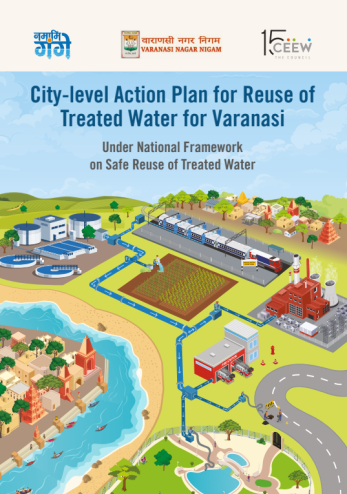
City-level Action Plan for Reuse of Treated Water for Varanasi
The Indian Subcontinent and the Water CycleFrom Monsoon to Ocean
Water, Nature, Progress: Solutions for a New India
India and the GulfA New Strategy for Water, Energy, Food, and Ecosystem Security