Council on Energy, Environment and Water Integrated | International | Independent

Suggested Citation: Kumar Arvind, Ayushman Saboo, Navjot Singh Sarao, and Kurinji Kemanth. 2026. Behaviour Change Approaches to Tackle Stubble Burning at Scale: Reimagining Crop Residue Management. New Delhi: Council on Energy, Environment and Water.
Crop residue (stubble) burning in northwest India remains one of the most visible contributors to the region’s severe seasonal air pollution, accounting for up to 30–35 per cent of Delhi’s PM2.5 during the October–November peak. Since 2018, the Crop Residue Management (CRM) scheme has made real progress, with more than INR 2229.38 crore being disbursed, providing 1.5 lakh machines and 27,083 Custom Hiring Centres alone in Punjab- resulting in fire counts falling. Yet nearly half of Punjab’s farmers still burn or partially burn their residue. Communication efforts to date have focused largely on raising awareness, implicitly treating low adoption as an information problem. But information alone rarely changes behaviour. This report, drawing on primary research with farmers and agriculture officials across Punjab, examines the scheme’s often-overlooked third pillar — communication — through a behavioural science lens. It diagnoses why farmers continue to burn even when they know the harms, and sets out how a structured Behaviour Change Communication (BCC) approach — grounded in behavioural frameworks such as COM-B, EAST and MINDSPACE — can shift the system from informing farmers to actually changing behaviour at scale.
Crop residue burning remains an important air quality and public health concern across northern India. Recent government data indicate a notable decline in reported incidents since 2022 (PIB 2025), suggesting progress in ongoing mitigation efforts.
At the same time, emerging evidence points to evolving patterns in burning practices, including shifts in the timing of fires, that may influence satellite-based detection and, consequently, reported fire counts (Singh et al. 2025). Complementing this, CEEW’s research indicates that satellite-derived fire counts may underestimate the total number of burning events under certain conditions (Ignatious et al. 2025).
Taken together, these insights highlight the importance of interpreting trends in reported incidents alongside measurement and behavioural dynamics. Against this backdrop, this study, based on research conducted in 2025, examines the behavioural barriers and enablers shaping farmers’ decisions, with a view to informing more effective strategies for alternative crop residue management across Indian states.
The Government of India’s CRM scheme includes information, education, and communication (IEC) activities as one of its core pillars, aiming to raise awareness, promote alternative residue management practices, and reduce air pollution. Currently, IEC activities are conducted with the aim of raising awareness for a homogenous farmer population. But we ask, is a onesize-fits-all information dissemination strategy sufficient to induce behaviour change? The Punjab government in 2024-2025 allocated INR 4.5 crore to IEC activities out of the total INR 375 crore allocated to CRM in the state, amounting to only 1.3 per cent of the budget (Annexure I).
Existing evidence suggests that farmers face a combination of structural and behavioural barriers. Structural constraints include short cropping windows, limited or no access to machinery, and high fuel costs (Kurinji et al. 2024). These findings from the literature are also reflected in the responses to the current survey. Key behavioural barriers include loss aversion (Diyyala et al. 2025; He et al. 2023; Patil and Veettil 2024), social norms (Lopes et al. 2020; Mor et al. 2023; Erbaugh et al. 2024), present bias (Clot et al. 2014), misinformation, and cognitive overload. While the government has attempted to address structural challenges by subsidising CRM machinery and establishing machine rental models, a concerted focus must also include a behaviourally informed communication strategy to meet the target of zero-burn Punjab.
This study aims to assess the effectiveness and reach of current IEC activities and offer targeted recommendations to bridge the gap between information provision and behaviour change. Our findings draw on a primary survey (102 farmers) and focus group discussion (FGD) with farmers, as well as consultations with government officials, conducted in Punjab in 2024 and 2025. The analysis examines the reach and effectiveness of existing IEC efforts under the CRM scheme, farmers’ information preferences, and the behavioural and practical challenges they face in adopting sustainable residue management practices.
We acknowledge that the study design has constraints. The findings of this study are non-representative, but exploratory in nature, covering insights from four districts of Punjab. Selection bias stems from purposive village selection based on prior CRM training exposure, likely inflating estimates of reach and awareness compared to state averages. The non-probability sampling method, though stratified by landholding size, limits generalisability beyond the surveyed population. Finally, self-reported burning behaviour data may underestimate actual incidents due to social desirability bias given the issue’s sensitivity.
We categorise the survey findings using a 4C framework: coverage, clarity, credibility, and conversion. The 4C framework helps enhance IEC effectiveness by linking observed gaps to four actionable levers: optimising coverage (channel reach), sharpening clarity (message design), leveraging credibility (trusted messengers), and facilitating conversion (support systems).
Coverage: Are messages reaching farmers?
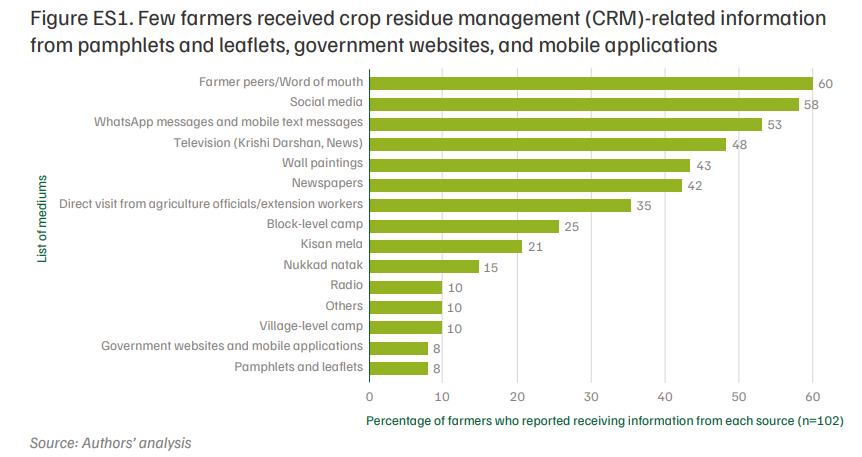
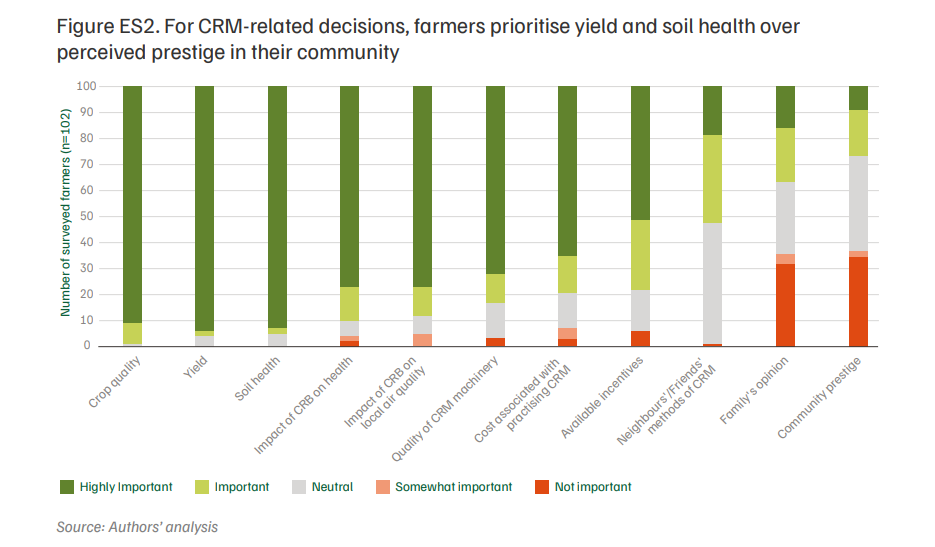
Table ES1. Key recommendations for strengthening Information, Education, and Communication (IEC) efforts for crop residue management
| Timeline | Action points | Anchor agency | Supporting institutions | Expected impact |
|---|---|---|---|---|
| Short-term (0–2 years) |
Push resources towards preferred communication channels
|
Department of Agriculture and Farmers’ Welfare (DoAFW) | Ministry of Agriculture and Farmers’ Welfare (MoAFW), state agricultural departments |
|
Deploy district-specific and audience-segmented campaigns
|
Communications teams within block and district agriculture offices, extension workers | Directorate of Information and Public Relations (DIPR), Commission for Air Quality Management Information, Education and Communication wing, State Pollution Control Boards, and communication consultants |
|
|
Simplify content, increase field demonstrations, and align timing
|
Communications teams and consultants | District agriculture officials, KVKs, state agricultural universities (SAUs) |
|
| Timeline | Action points | Anchor agency | Supporting institutions | Expected impact |
|---|---|---|---|---|
| Medium-term (2–5 years) |
Shift social norms and target identity
|
Model farmers, panchayats, farmer groups, cooperatives, households | DoAFW, DIPR, CAQM IEC Wing, SPCBs, extension workers, farmer groups, communications teams, and consultants |
|
Make benefits visible and address local barriers
|
KVKs, extension workers, communications teams, and consultants | Block and district agriculture officers |
|
|
| Long-term (>5 years) |
Overhaul monitoring and evaluation (M&E) frameworks to measure behavioural outcomes
|
MoAFW, DoAFW | DoAFW, external M&E agencies |
|
Source: MoAFW. 2025. “Revised Operational Guidelines 2025 of the Centrally Sponsored Scheme on Crop Residue Management in the States of Punjab, Haryana, Uttar Pradesh, Madhya Pradesh and NCT of Delhi.” Mechanization and Technology Division, Ministry of Agriculture and Farmers Welfare.
While financial assistance and generic information campaigns have initiated adoption, findings indicate they are insufficient to curb crop residue burning effectively, as information provision alone typically yields only marginal behavioural shifts. To achieve sustained impact, the scheme must adopt a dedicated Behaviour Change Communication (BCC) strategy that actively addresses underlying psychological biases, social norms, and logistical constraints to end crop residue burning. This inclusive approach ensures that the most vulnerable farmers are not left behind, turning awareness into a sustained, communitywide shift in farming behaviour.
A small farmer from Milkowaal village in Ludhiana struggles each year with the high costs and limited access to equipment needed to manage crop residue. Many crop residue management (CRM) machines require highhorsepower tractors, which small farmers like him cannot afford. He explained, “I own a 45-horsepower tractor, so I cannot use in-situ machinery. I incur additional costs of INR 700 per acre for labour and diesel for ex-situ CRM, all from my pocket. The nearest custom hiring centre (CHC) is about 9 km away, further complicating my access to subsidised equipment.” Another farmer added, “Managing paddy residue, particularly through in-situ methods, demands additional costs from farmers. While CHCs offer machinery, finding labour to operate these on large plots remains challenging. Moreover, the cost of fuel is also quite high.” Additionally, uncertainty over machine availability, delivery timelines, and lengthy documentation processes – combined with the short 15–18-day window between harvesting and sowing – often compels farmers to burn crop residue. These logistical and psychological barriers highlight the constraints many farmers face.
Every winter, during the kharif harvest, farm fires become a recurring subject of discussion in northern India. From the media to politicians and citizens alike, a key question persists: What informational, psychological, social, and structural barriers prevent farmers from adopting alternatives they may genuinely want to pursue? Crop residue burning (CRB) in northwestern states worsens air quality, contributing up to 30–35 per cent of PM2.5 levels in Delhi during the peak burning season (~20 days annually) (Govardhan et al. 2023). In response, the Government of India launched the Crop Residue Management (CRM) scheme in 2018 to subsidise machinery such as super seeders and assist farmers in transitioning away from burning their crop residues. Since the scheme’s launch, fire counts have declined in hotspot states such as Punjab and Haryana, while states such as Madhya Pradesh and Uttar Pradesh have witnessed an increasing trend. However, despite financial and material assistance, almost half of Punjab’s farmers continue to burn or partially burn crop residue due to several reasons (Kurinji et al. 2024). This persistence reflects not only structural and logistical constraints but also behavioural barriers such as loss aversion, social norms, and time scarcity (Sharma et al. 2020; Lopes et al. 2023).
To enhance farmers’ awareness of the harms of burning and promote alternative residue management options (in-situ¹ and ex-situ²), the CRM scheme allocates funds for detailed information, education, and communication (IEC) activities, in line with its third objective (Figure 1). Annually, state governments develop and disseminate information through various channels to increase awareness and uptake of the scheme. However, the reach and effectiveness of these channels remain inadequately measured and evaluated.
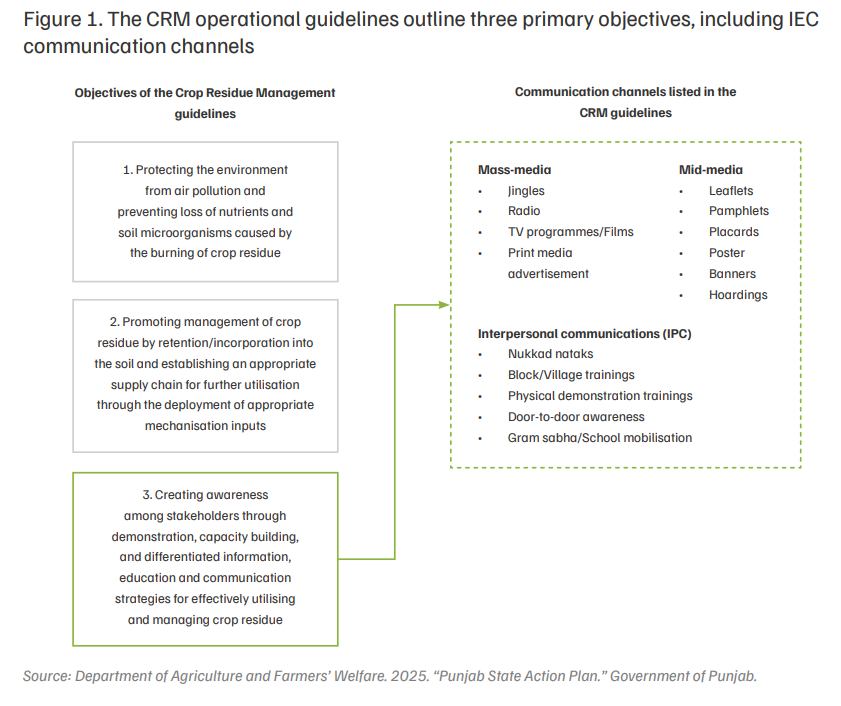
The Punjab State Action Plan (Government of Punjab 2024) and several studies (Sharma et al. 2020; Singh et al. 2024; CII 2022; Kurinji et al. 2024) identify behaviour change as a key enabler of a transition away from CRB. However, the CRM scheme currently lacks a dedicated and structured behaviour change communication (BCC) strategy, relying solely on generic IEC activities to raise awareness. These initiatives have been sporadic but have yielded some positive behavioural shifts. Annually, the government allocates a budget and sets targets for various IEC activities under the CRM scheme (Table 1), including television programmes, printed literature, and village- and block-level camps. For example, the Punjab government allocated INR 4.5 crore for IEC activities out of the total INR 375 crore allocated for CRM in the state, amounting to only 1.3 per cent of the budget (Annexure I). Similarly, the 2025 CRM operational guidelines provide financial assistance of INR 6,000 per hectare for field demonstrations of CRM machinery (MoAFW 2025); however, attendance remains low, and the effectiveness of these interventions remains untracked.
Table 1. Punjab's multi-channel strategy to raise awareness on crop residue burning (CRB)
| Type of IEC activity | Number of IEC activities targeted for 2025 | Financial allocation per activity (INR) | Total financial outlay (INR crore) |
|---|---|---|---|
| On-field CRM demonstrations | 500 | 6,000 | 0.3 |
| Wall paintings | 12,500 | 800 | 1 |
| Mobilisation of school students through essay/painting/debate competitions | 444 | 15,000 | 0.67 |
| Publicity vans | 50 | 1,10,000 | 0.55 |
| Village-level camps | 3,333 | 3,000 | 1.00 |
| Block-level camps | 296 | 18,000 | 0.53 |
| Mobilisation in villages through Accredited Social Health Activist (ASHA) workers | 148 | 6,000 | 0.09 |
| Plays (nukkad natak) | 444 | 3,000 | 0.13 |
| Literature prints | NA | NA | 0.28 |
| Total | 4.55 |
Source: Authors' compilation based on DoAFW, Punjab data, collected in person.
However, evidence shows that education alone is insufficient to bring about lasting behavioural change (Arlinghaus and Johnston 2017). A well-defined IEC strategy goes beyond awareness-building to disseminate information about available schemes and guide citizens on how to access them. Its objective is not only to inform but also to influence attitudes and enable sustained positive behavioural change. Accordingly, IEC strategies use a range of communication tools tailored to the distinct needs of rural and urban populations (MoHFW 2018).
Effective IEC employs multiple approaches, ranging from mass media campaigns that inform or establish positive norms within the general population to targeted interpersonal communication (IPC) designed to help individuals assess their behaviours and develop new personal skills.
In this sense, IEC activities serve as a means of ‘marketing’ the scheme, making it more attractive and generating demand among various target groups through awarenessbuilding exercises.
In this issue brief, we assess the reach and effectiveness of the government’s IEC efforts under the CRM scheme in Punjab and offer recommendations to design more powerful, relevant, and accessible IEC materials going forward.
This brief is intended for the Department of Agriculture and Farmers’ Welfare (DoAFW), state agriculture departments, communications professionals, consultants, and designers engaged in implementing the CRM scheme. It informs current policy discourse by assessing the effectiveness of IEC activities under the scheme and highlighting the need to move beyond awareness-building towards structured, evaluative BCC. By integrating behavioural insights, the brief offers actionable recommendations to make CRM communications more timely, engaging, relevant, and attractive. Policymakers, extension officers, creative agencies, and development partners can benefit from these insights in designing campaigns that not only inform but also enable farmers to adopt sustainable, no-burn residue management practices.
Box 1. From information, education and communication (IEC) to behaviour change communication (BCC)
The transition from IEC to BCC addresses the limitations of linear communication approaches, which often incorrectly assume that knowledge automatically drives action. Unlike IEC’s top-down dissemination of information, BCC employs theories such as the Stages of Change model (Prochaska and DiClemente 1983) to support individuals across a continuum – from awareness to sustained behavioural change. Rather than relying solely on information dissemination, BCC emphasises two-way communication, social support, and enabling environments that make desired behaviours easier to adopt and sustain.
For IEC materials to be effective, they should meet two criteria:
1) They should be informed by formative research that identifies existing knowledge gaps.
2) They should be pre-tested or piloted to ensure that the intended message is clearly understood by the audience (NHA 2021).
In practice, however, these criteria are often not met due to a lack of planning, financial and human resources, and expertise, which constrains the assessment of IEC activities. A deeper understanding of the audience, its triggers, and critical moments of change can enable more precise IEC design. Against this backdrop, we undertook this study with three objectives:
a. Diagnostic objective: The primary objective of the survey was to assess the reach, reception, and preferences related to IEC activities under the CRM scheme.
b. Behavioural audit of existing IEC materials: To map the behavioural barriers that current communications trigger and identify the leverage points where targeted communication interventions could accelerate adoption.
c. Strategic objective: To provide the DoAFW and other stakeholders with actionable recommendations to reorient efforts towards high-impact channels.
Given the annual revisions to the CRM scheme, we assessed its IEC strategy to inform revisions to existing communications channels and materials, as well as the development of new ones to better engage with different subcategories of farmers. This assessment developed an understanding of current relevance, reception, and effectiveness from a user-centric design perspective, particularly in driving long-term behavioural shifts towards sustainable CRM practices.
2.1 Study design
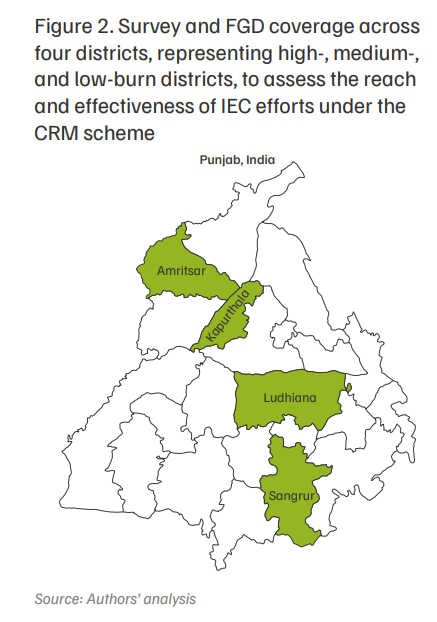
To inform evidence-based decisions on the development and dissemination of communication campaigns, we conducted a survey with 102 farmers across three districts in Punjab during July–August 2025. The findings are not representative but are illustrative, providing exploratory insights. The survey was administered digitally via Computer-Assisted Personal Interviewing (CAPI) on the KoboToolbox platform. In addition, we conducted focus group discussions (FGDs) with 36 farmers in the Amritsar and Kapurthala districts in August 2024 to understand the challenges farmers face in adopting alternative CRM methods.
Table 2. Over 150 stakeholders were consulted to assess the reach of IEC efforts under the CRM scheme
| Respondents | Geography | Theme | Date |
|---|---|---|---|
| 102 farmers interviewed | Sangrur (high-burn, n=33), Ludhiana (medium-burn, n=36), and Amritsar (low-burn, n=33) | Assess the ease, attractiveness, social influence, and timeliness (EAST framework) of IEC efforts, including communication preferences and perceptions of the CRM scheme. | July–August 2025 (kharif pre-harvest season) |
| 15 agriculture officials engaged | Muktsar Sahib, Faridkot, Fazilka, Amritsar, Tarn Taran, Moga, Ludhiana, and Sangrur | Examine whether officials receive training (particularly in communications), the relevance and applicability of the training content, and the current challenges they face in performing their roles, particularly in creating and disseminating IEC materials for farmers. | May 2025 |
| 36 farmers in a focus group discussion (FGD) | Amritsar and Kapurthala | Identify the challenges farmers face in adopting alternative CRM methods. | August 2024 |
Source: Authors' analysis
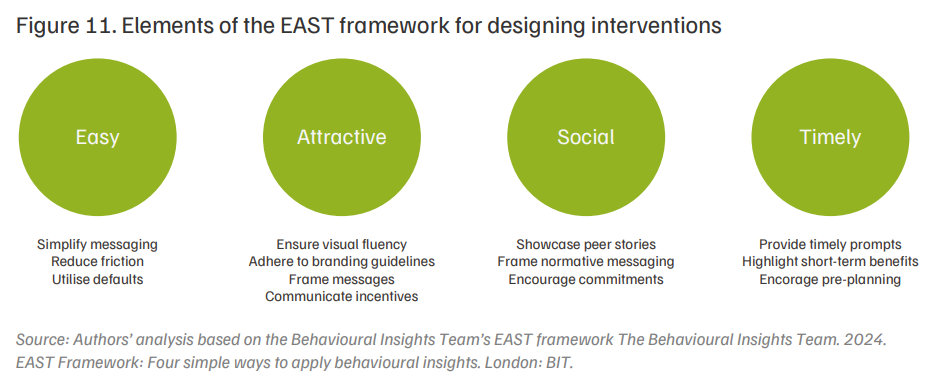
The survey questionnaire was developed to assess the ease, attractiveness, social influence, and timeliness (as per the EAST framework) (Behaviour Insights Team 2024) of IEC efforts under the CRM scheme. We evaluated the materials and dissemination channels against four behavioural parameters:
• Easy: Are the scheme’s offerings and IEC messages easy to understand and access?
• Attractive: Do beneficiaries find the scheme and IEC materials appealing?
• Social: What social factors or norms influence CRM practices?
• Timely: Does information reach the audience at crucial decision-making moments?
To synthesise the findings from our survey, we applied a 4C framework that categorised them into:
• Coverage: Are messages reaching farmers?
• Clarity: Is the information easy to understand, timely, and relevant to farmers’ needs?
• Credibility: Do farmers trust the source and believe the message?
• Conversion: Are farmers successfully adopting or willing to adopt no-burn CRM practices?
2.2 Sampling
We surveyed farmers in Ludhiana (medium-burn; n=36), Amritsar (low-burn; n=33), and Sangrur (high-burn; n=33). Within each district, the sample was stratified by proportion to the cultivator population and landholding size (Census 2011) (Table 3). Village selection was purposive, targeting areas where CRM trainings had previously been conducted. This targeted approach enabled an audit of the quality of existing interventions, but limits the generalisability of ‘reach’ statistics to the wider, untrained population.
Table 3. Distribution of surveyed farmers by landholding size across districts
| Landholding size | Number of farmers surveyed |
|---|---|
| Marginal farmer (<2.5 acres) | 6 |
| Small farmer (2.5–5 acres) | 23 |
| Semi-med farmer (5–10 acres) | 40 |
| Medium farmer (10–25 acres) | 27 |
| Large farmer (>25 acres) | 6 |
Source: Authors' analysis
We also conducted stakeholder consultations with 15 key agriculture officials. In Punjab, this included meetings with nine agriculture development officers (ADOs) across seven districts and three state-level officials from the DoAFW. These direct engagements enabled us to collect and subsequently audit a range of IEC materials – including posters, slogans, wall paintings, and training content (for example, information on agricultural inputs and machine operation) – to identify critical gaps and barriers.
Readers should note that the survey analysis is based on self-reported responses and is therefore susceptible to biases. To address this, we adopted several bias-mitigation strategies (Box 2) to enhance the reliability of the findings. This issue brief offers useful exploratory insights into the effectiveness of communication efforts under the CRM scheme.
Box 2. What this sample can and cannot tell us
Scope
This study provides exploratory insights into behavioural drivers and communication barriers related to CRM. The findings highlight heterogeneity across high-, medium-, and low-burn districts and identify specific servicedelivery frictions
Limitations and direction of bias
• Selection bias: Villages were purposively selected based on prior exposure to CRM trainings. Consequently, findings related to ‘reach’ and ‘awareness’ are likely to be biased upward (overestimated) compared to the state average, suggesting that gaps in non-trained villages may be significantly wider.
• Representativeness: Although the sample is stratified by landholding size, it relies on non-probability sampling. Therefore, the findings should therefore be interpreted as indicative of trends among the surveyed population rather than representative of all farmers in Punjab.
• Self-reporting: Data on burning behaviour relies on self-reports. Given the sensitivity of the issue, social desirability bias may lead to an underestimation of the actual number of burning incidents.
This section presents the findings from our survey of 102 farmers across Amritsar, Ludhiana, and Sangrur. To provide a structured analysis of the current IEC landscape and behavioural trends, we have categorised the findings using a 4C framework: coverage, clarity, credibility, and conversion.
3.1 Coverage: Are messages reaching farmers?
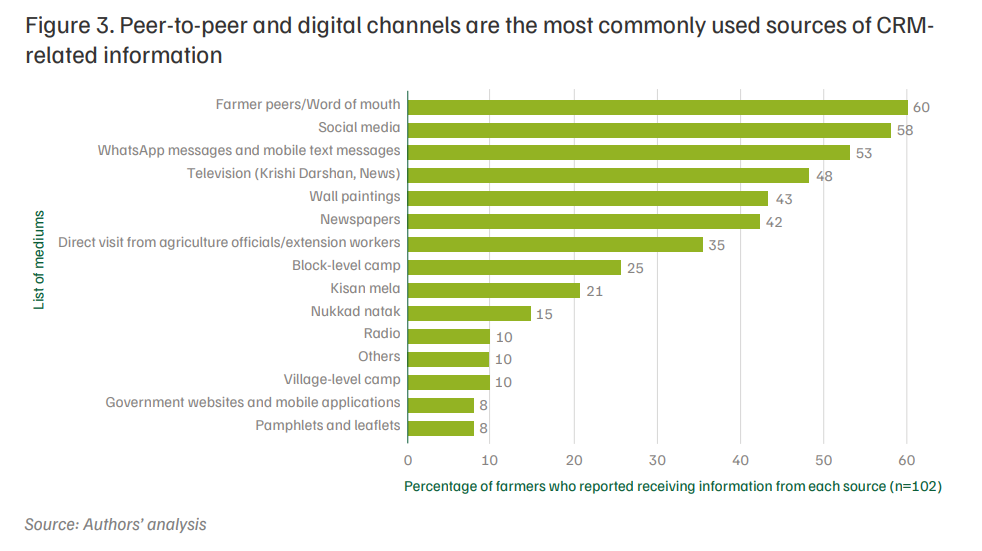
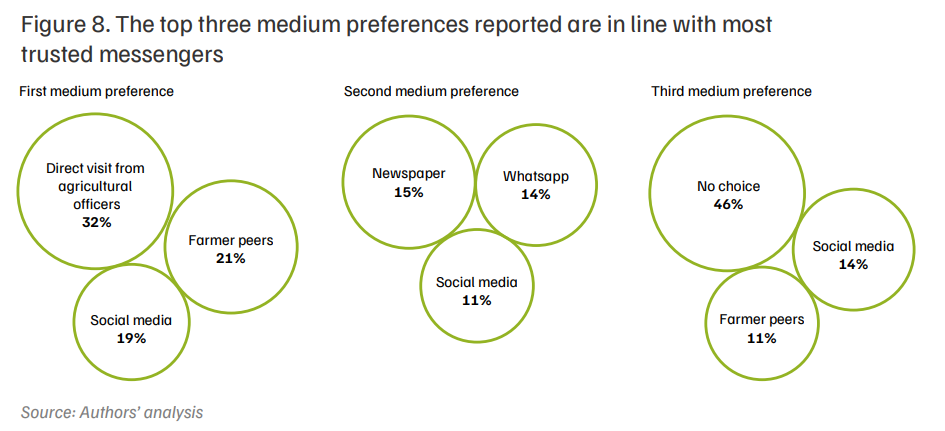
Digital channels play a central role in farmers’ information ecosystems. Farmers were asked to identify the channels (listed in the CRM guidelines) through which they had interacted, as well as their top three preferences. As shown in Figure 4, WhatsApp and social media emerged as the most widely accessed media channels, while direct visits from agriculture officials and word of mouth among farmer peers were the most widely used mediums. This indicates the importance of maintaining strong field-level engagement alongside digital outreach. Traditional media, such as radio and pamphlets, show comparatively lower reach. When asked about their preferences, 55 per cent of farmers reported that digital media are more engaging and accessible than traditional ones.
Visibility of the Unnat Kisan mobile application remains low. While machinery rental is a critical need, awareness of digital solutions is limited. Most surveyed farmers were unaware of the platform, with 86 per cent reporting they had never heard of the Unnat Kisan mobile application. This indicates a significant gap in the promotion of digital public infrastructure intended to support CRM.
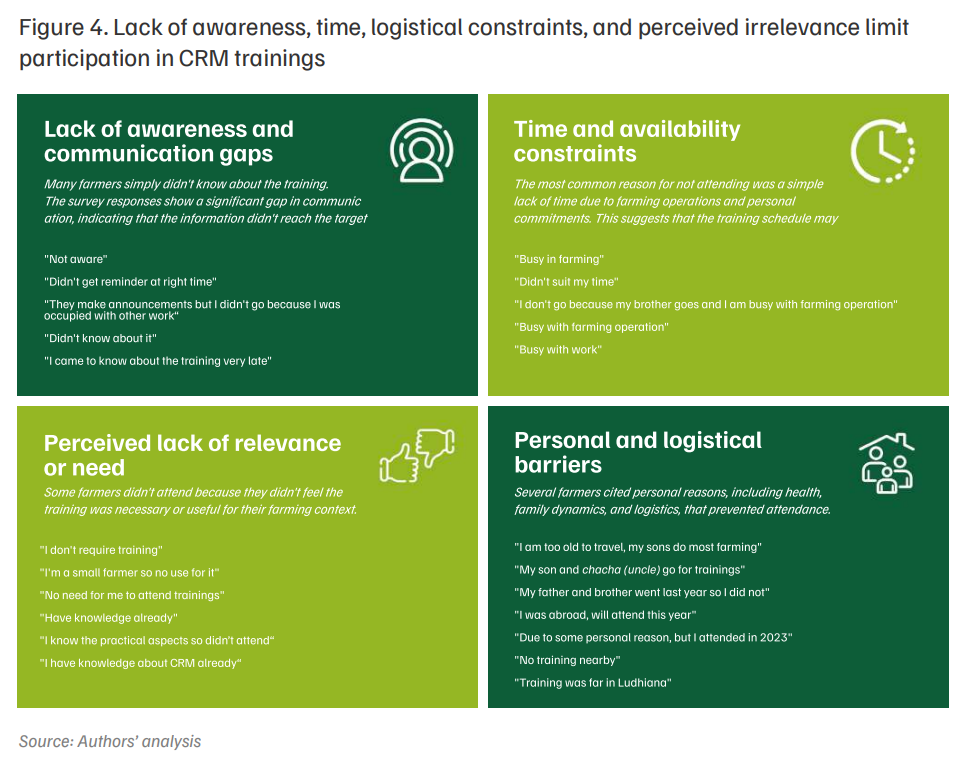
Crop residue management trainings remain underutilised. Most surveyed farmers (78 per cent) did not attend CRM training, primarily because they were unaware that the training was taking place in their village. Low attendance is further driven by time constraints, the perceived irrelevance of training content, and personal or logistical barriers.
3.2 Clarity: Is the information easy to understand, timely, and relevant to farmers’ needs?
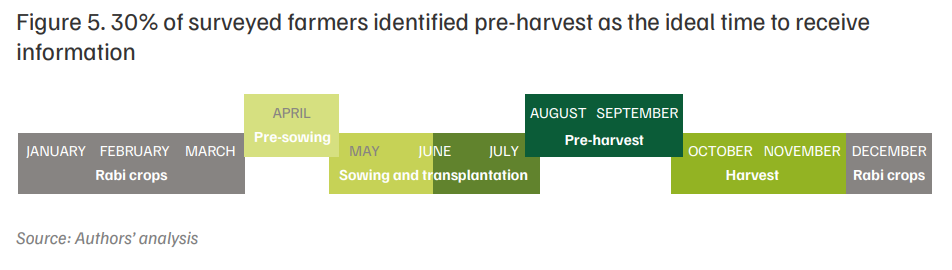
Farmers are most receptive to information shared during the pre-harvest phase, yet timing of communication remains a major friction point. Around 63 per cent of surveyed reported never receiving CRM-related information when they needed it. While 30 per cent identified the pre-harvest phase as the ideal decision-making window, current communication efforts often fail to align with this period (Figure 4). Since CRM-related decisions can directly impact crop yields, soil health, and incomes, farmers prefer taking careful, deliberate decisions during the pre-harvest phase, when they are in a cold state³. As loss aversion is a key behavioural barrier, decisions made during the harvest phase (hot state⁴) may be perceived as ‘hurried’. Messages showcasing the concrete agronomic benefits of no-burn practices should therefore be prioritised during the pre-harvest phase, while information on the ease of shifting to no-burn practices through easy machine access and positive social norms should be emphasised during the harvest phase, helping farmers translate intent into action.
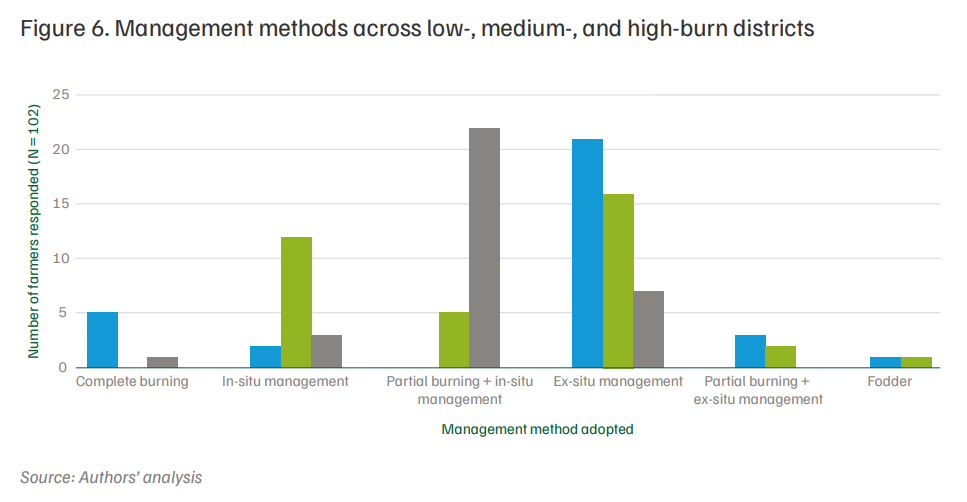
Partial burners represent the most immediate opportunity for behaviour change and can be considered low-hanging fruit. Current communications often treat farmers as a monolith, but the data reveal a critical need for strategic segmentation. Partial burners (31 per cent of farmers) represent the most immediate opportunity for impact. These farmers are already ‘semi-converted’–they practice CRM using machines–but resort to burning residue due to specific, unfounded concerns, primarily regarding pest attacks.
Management practices vary significantly across geographical areas. According to our survey, management practices differ based on local agricultural practices and proximity to machinery and industries. As seen in our survey, farmers in Amritsar have naturally gravitated towards ex-situ methods (70 per cent) due to shorter crop windows (Figure 5). The trend of partial burning has emerged in areas where in-situ management remains the primary option. As management practices shift across district areas, communication strategies must be geographically targeted.
Excessive information leads to cognitive overload. Farmers expressed a strong preference for simplicity, with 73 per cent of those surveyed preferring IEC materials that focus on one or two key messages rather than complex, text-heavy content. Our audit of existing pamphlets revealed they are often generic and cluttered, leading to information overload and subsequent dismissal.
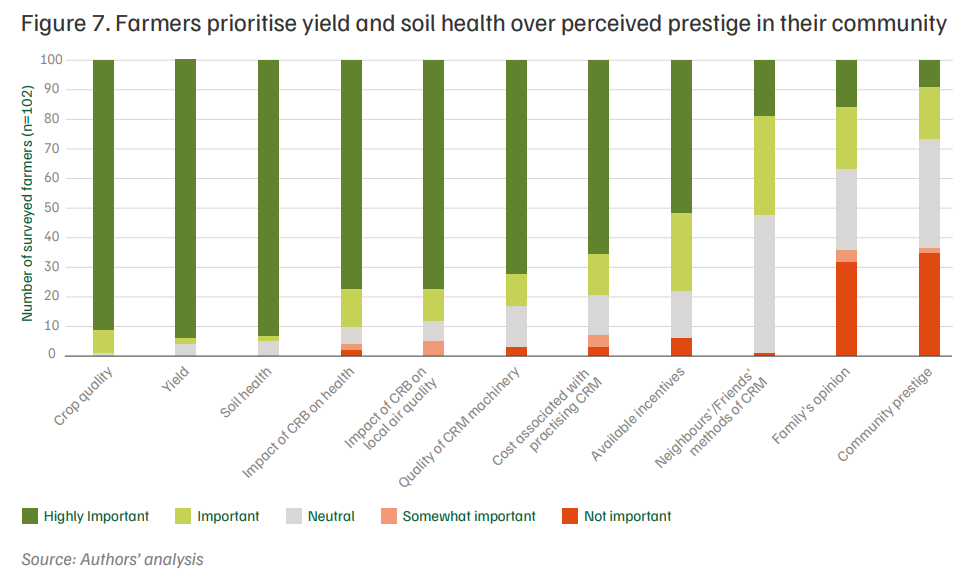
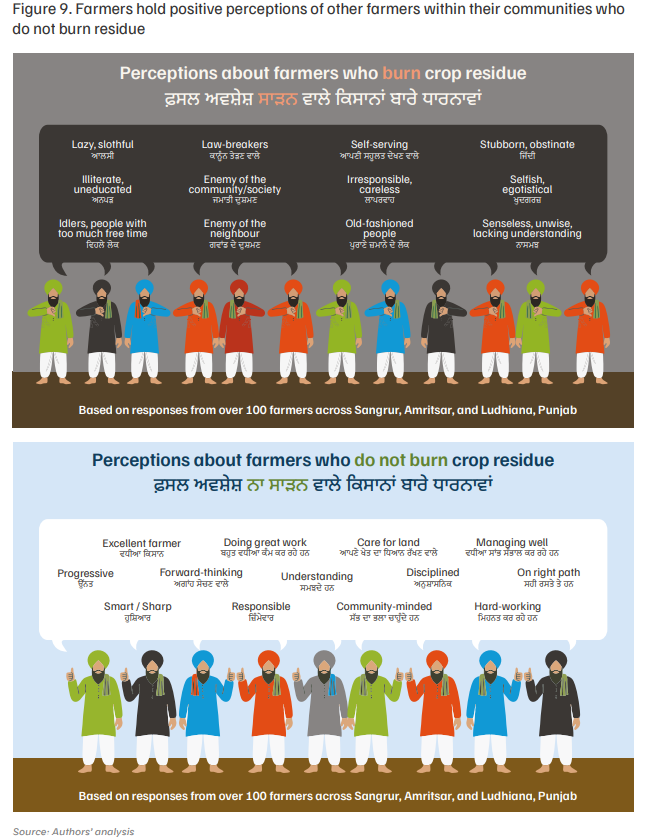
Messages that emphasise agronomic benefits are more likely to resonate with farmers. Farmers prioritise tangible on-farm outcomes. When considering alternative CRM methods, respondents ranked yield, soil health, and crop quality as the most important factors. Conversely, ‘prestige’ or social judgement was rated as least important. Current messaging often fails to clearly link CRM adoption to these primary agronomic motivators (productivity and soil health).
3.3 Credibility: Do farmers trust the source and believe the message?
Agriculture officers and extension workers are the most trusted sources of information. A majority of surveyed farmers reported receiving information from agriculture officers and identified them as the most credible messengers, with 62 per cent citing them as their primary source, followed by fellow farmers. This preference is reflected in communication preferences as well: 39 per cent of farmers identify direct engagement with DoAFW officials as their preferred communication mode. While digital platforms, such as WhatsApp, offer wide reach, face-to-face interactions with officials continue to play a critical role in establishing credibility.
Burning is often driven by misinformation. Credibility is undermined by peer-to-peer misinformation. Among farmers who continue to burn residue, 67 per cent of surveyed farmers cited pest attack prevention as a primary reason. However, 57 per cent of these farmers admitted that they had never personally witnessed increased pest attacks, relying instead on exaggerated peer narratives and hearsay. These informal information channels exhibit a stronger network effect than official scientific assurances from institutions such as krishi vigyan kendras (KVKs) and state agricultural universities (SAUs).
Visible burning weakens the credibility of anti-burning norms. A distinct gap exists between injunctive norms (what people believe should happen) and descriptive norms (what people observe in practice).
• Injunctive: Around 90 per cent of surveyed farmers personally disapprove of burning, and 95 per cent believe that officials also disapprove of the practice.
• Descriptive: Despite this, 73 per cent of surveyed farmers continue to observe their neighbours burning crop residue. This visibility normalises burning behaviour and undermines the credibility of antiburning norms, even in the presence of high personal disapproval..
3.4 Conversion: Are farmers successfully adopting or willing to adopt no-burn CRM practices?
Adoption of alternative CRM methods is rising, but fragmentation persists. Our survey indicates a positive trend in conversion, with 63 per cent of surveyed farmers reporting that they have completely moved away from burning. Farmers attribute this shift primarily to fears of enforcement penalties and to the improved availability of alternative CRM solutions. However, 31 per cent of farmers practice partial burning, while 6 per cent continue to engage in complete burning.
Farmers rely primarily on informal rental systems to access CRM machinery. About 38 per cent of surveyed farmers reported incorporating residues by renting CRM machinery. Of these, 56 per cent rent from fellow farmers, while 34 per cent rely on CHCs. Farmers rely primarily on informal rental systems to access CRM machinery.
To increase rental behaviour and simplify the booking process of CRM machines, the DoAFW launched the Unnat Kisan mobile application, which provides a platform for both machinery owners and farmers seeking rentals. However, we found that 86 per cent of surveyed farmers had never heard of the application. A recent CEEW study found that of 65 CHCs surveyed in Punjab, only ~15 per cent were aware of digital tools, such as Unnat Kisan, and fewer than half of these were actually using them. Traditional communication channels, such as phone calls and in-person visits, remain dominant, while ~10 per cent of CHCs reported using WhatsApp to rent CRM machines and sell agricultural inputs (Jain et al. 2025).
Theoretical lectures fail to build practical confidence. Among farmers who attended CRM trainings, 73 per cent described them as lecture-based, with limited practical demonstrations. This reduces the likelihood that knowledge translates into field practice.
This chapter discusses the insights from FGDs with farmers and interactions with stakeholders, including agricultural officials in the sector. It examines the barriers farmers face in adopting alternative CRM practices and identifies the biases that shape their decisions. We also outline how behaviourally informed messaging can be developed using established frameworks, such as the Behaviour Change Wheel (Michie et al. 2011), the EAST framework, and MINDSPACE (Behaviour Insights Team 2024).
4.1 Information provision alone is insufficient to drive behaviour change: Lessons from past BCC campaigns in India
Traditional policy design is often grounded in the ‘rational agent’ model, which assumes that individuals will make optimal decisions when presented with clear information and financial incentives. In practice, however, this assumption frequently fails in complex, real-world contexts.
The Swacch Bharat Mission (SBM), launched in 2014, adopted a national BCC framework that combined traditional, digital, social media, and interpersonal communication to support behaviourally informed campaigns with consistent, repeated, and clear messaging (MoHUA 2022). The National Annual Rural Sanitation Survey (NARSS) 2018–19 independently verified the SBM’s success, finding that ~93 per cent of rural households had access to toilets and ~97 per cent of those with toilets reported using them (behavioural metric) (MoJS 2019). Similarly, the COVID-19 pandemic presented communicators and policymakers globally with a case for encouraging small behavioural shifts, such as wearing masks, socially distancing, and sanitising, etc. For example, in India, regular prime ministerial addresses during prime time (8–9 pm) with clear, action-oriented slogans, such as “Do gaj ki doori, mask hai zaroori” (ABP News Bureau 2021) influenced the behaviour of a population already eager to avoid exposure to the virus. These practices, though seemingly insignificant, were high-impact key behaviours that helped contain the spread of COVID-19.
Human behaviour is therefore shaped by a range of contextual factors, including cognitive biases, heuristics, and social influences (Kragt et al. 2025). Table 4 outlines key behavioural biases that manifest during CRM-related decision-making, as captured during FGDs with farmers.
Table 4. Common manifestations of behavioural biases affecting farmers’ decision-making towards adopting alternative CRM methods
| Cognitive bias | Definition | Barrier (manifestation in CRM) |
|---|---|---|
| Present bias | People overvalue immediate rewards at the expense of future benefits | Farmers prioritise quick, short-term gains or meeting immediate challenges. For example, many burn stubble to immediately clear fields for the next sowing cycle, undervaluing long-term gains in soil fertility and health gains. Small and medium farmers operating under tight planting schedules often prioritise rapid field clearance over longer-term costs. |
| Limited attention/ Cognitive overload | People have limited attentional resources; they can only focus on a few things at once | Complex messages and processes can overwhelm people. For example, lengthy subsidy application forms, credit-linked backed subsidy processes, and technical instructions for equipment operation and maintenance discourage information uptake. Some farmers avoid training or guidance due to an aversion to complex or repetitive information. Village leaders and CHCs may skip explaining new options due to excessive detail, leading many to procrastinate or opt out. |
| Status quo bias | People prefer sticking with the current state or default option over change | Engaging in alternative residue management practices requires farmers and agricultural officials to undertake tasks that require additional effort, such as gathering documents, incurring expenses, forming groups to avail of subsidies, etc. These requirements discourage farmers from moving away from familiar practices. |
| Loss aversion | People fear losses more than they value equivalent gains | Farmers perceive higher risks in experimenting with new practices. For example, they may avoid using machinery such as Happy Seeders due to fears of crop loss or equipment failure. The perceived risk of yield reduction or pest attacks outweighs uncertain long-term benefits. |
| Saliency bias | People focus on visible and immediate outcomes rather than gradual benefits | Farmers are often strongly influenced by the highly visible, immediate outcomes of CRM practices. For instance, the immediate appearance of a 'clean field' after burning stubble or operating Super Seeders might be highly salient and prioritised over less visible, long-term benefits. Key messages are often not clearly highlighted or made sufficiently salient in current IEC materials, making them prone to oversight. |
| Availability bias | People judge likelihood based on easily recalled examples | Farmers tend to recall prominent pollution sources, such as industries, vehicles, or fireworks, more readily than slow stubble burning. Because farm fires are seasonal, their environmental impact is less salient in memory, leading to an underestimation of their contribution to air pollution. |
| Endowment effect | People overvalue assets they already own | Farmers highly value their existing resources. For example, they may overestimate the value of their machinery, failing to account for the extra income they could earn by renting it out, making them reluctant to do so. This attachment to familiar assets hinders the utilisation of machinery. |
| Social norms | People tend to follow the behaviours of others in their group and display a desire to be part of an 'in-group'. | If most villagers burn residue, individuals will also try to fit in. Peer farmers and local leaders who burn set a strong precedent. Farming communities reinforce each other; going against the community norm is challenging. |
The field of behavioural science offers a lens to understand these drivers and provides tools to design interventions that resonate with target audiences and enable sustained behaviour change. Rather than relying solely on information dissemination, which has been shown to result in only marginal shifts in behaviour, effective strategies must address the core psychological and practical barriers that influence farmers’ decisions.
Our evidence suggests that a policy framework built on the notion that awareness and subsidies alone can change behaviour is incomplete. Therefore, a deeper understanding of behavioural drivers is critical for designing effective, user-centric interventions, whether informational or structural.
4.2 Multiple actors across system levels shape crop residue management behaviours
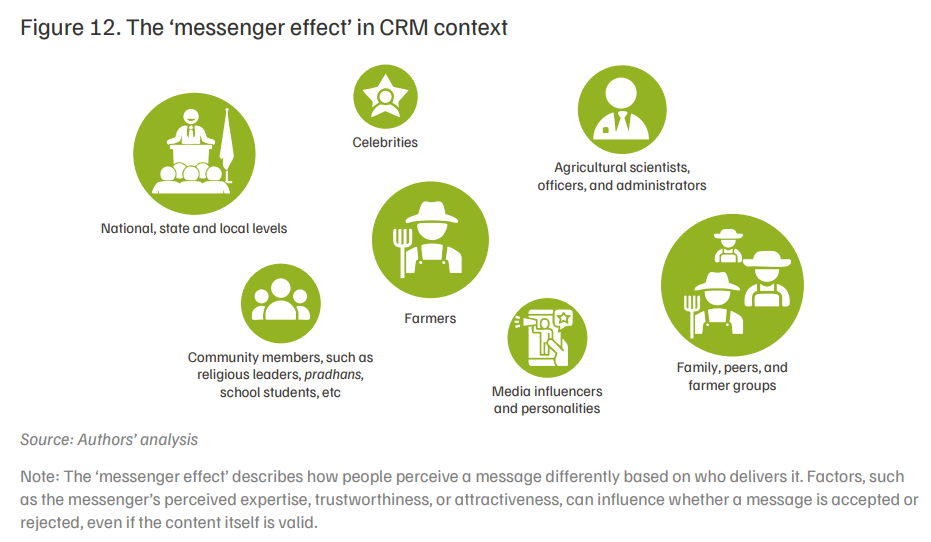
Farmers are often viewed as the only key audience in the CRM system. However, behavioural outcomes are shaped by a wider ecosystem of actors, including politicians, farmer unions, government authorities, and peer networks. Target audiences can be grouped into three basic categories:
• Primary: Individuals whose behaviour is the focus of change.
• Influencers: Actors who can influence the primary audience.
• Gatekeepers: Actors who can facilitate or prevent access to the primary audience.
The Socio-Ecological Model (SEM) is a framework that helps understand how behaviours are shaped not only by individual choices but also by an interplay of factors across multiple levels – individual, interpersonal, community, organisational, and policy (Kilanowski 2017). This model has been widely applied in numerous health interventions, particularly in social and behaviour change communication (SBCC) strategies, to promote positive health practices (Kaur 2022).
At the individual/intrapersonal level, factors such as knowledge, attitudes, and beliefs play a critical role in shaping individual behaviours. The interpersonal level highlights the influence of relationships and social networks, while the community level focuses on social norms and networks that can either facilitate or hinder the adoption of new practices. The organisational level includes institutions that provide resources and support for behaviour change, and the policy level encompasses regulations and incentives that create an enabling environment for sustainable practices (Table 5).
Table 5. System-level actors influencing CRM decisions, mapped using the SEM
| SEM levels | Category | Actors/Institutions (actors sit within institutions) |
|---|---|---|
| Policy level | Gatekeepers and influencers |
|
| Organisational level | Gatekeepers |
|
| Community level | Influencers |
|
| Interpersonal level | Gatekeepers, influencers, and primary |
|
| Individual level | Primary |
|
Source: Authors' analysis based on Bronfenbrenner's (1970) Socio-Ecological Model (SEM)
4.3 Key ingredients of a behaviourally informed IEC approach
A critical first step in designing a behaviourally driven IEC strategy is identifying the specific behaviour to target and defining how it should be measured. In the context of CRM, farmers adopt a range of practices, including in-situ management, ex-situ management, partial burning, and complete burning, often in combination. Selecting a key behaviour, therefore, can be a complex process.
A closer examination of these CRM methods (in-situ or ex-situ) reveals that each management method comprises multiple key behaviours. The target behaviour for change may be just a small step within a longer process, such as filling out a form for a machine subsidy or listing machinery for rent on Punjab’s Unnat Kisan mobile application. Though such behaviours might appear insignificant compared to the broader objective, adopting a behavioural approach enables policymakers to dissect major challenges into smaller, more manageable segments. Incremental improvements to each segment can cumulatively yield tangible, measurable progress towards the overarching goals.
Policy objectives define broader goals, such as ‘improving air quality through sustainable residue management practices’. Multiple pathways exist to achieve such broad goals. Communication objectives, by contrast, focus on the specific behaviours to be promoted among farmers, such as adopting better residue management practices. To align activities with aims, consider these questions:
• What overarching policy objective does this support? (Examples: reducing air pollution through sustainable CRM; improving soil health by promoting no-burn agriculture)
• What specific behaviours must be encouraged or modified to achieve the policy objective? (Examples: renting CRM machinery for mulching or baling) (Table 6).
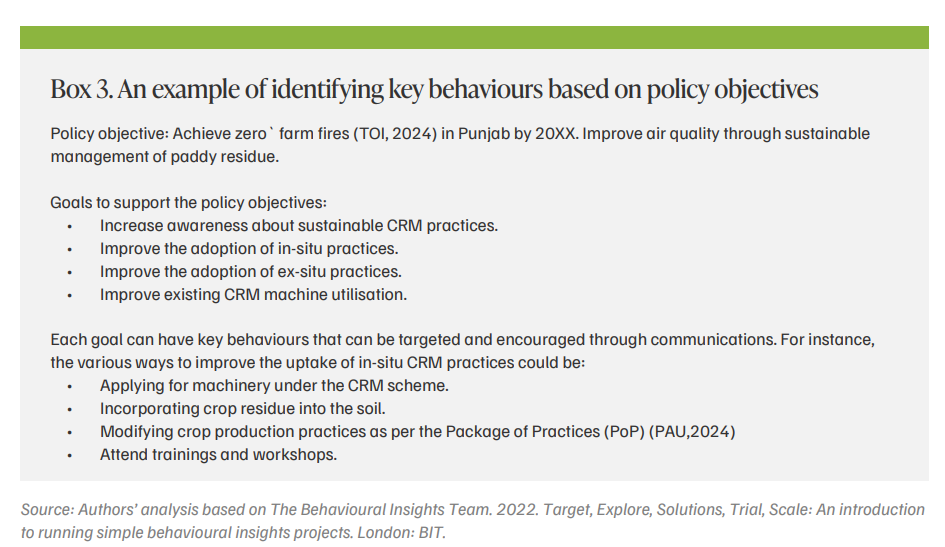
Table 6. Example of identifying key behaviour, audience, and metrics for evaluation
| Goal objective | Key behaviour | Key audience | Evaluation metrics |
|---|---|---|---|
| Improve the adoption of in-situ CRM practices | Submit the scheme registration application to avail the CRM machinery subsidy under the CRM scheme. | Farmers |
Total number of applications received. Total number of applications processed. % increase in the number of applications from baseline. |
| Improve utilisation of CRM machinery | Rent CRM machinery using the Unnat Kisan application (Punjab). | Farmers, CHCs, FPOs |
% increase in signups on the Unnat Kisan application. Total number of machines listed on the Unnat Kisan application. Total number of machines rented through the Unnat Kisan application. |
Source: Authors' analysis
Table 7. Example key behaviours for in-situ and ex-situ stubble management (non-exhaustive list)
| Key behaviours for in-situ management | Key behaviours for ex-situ management |
|---|---|
| Filling up registration forms to avail machine subsidy for in-situ CRM machinery (e.g., Super Seeder, Happy Seeder, mulchers). | Identifying and contacting local industries that utilise crop residue. |
| Attending demonstrations and training sessions on the correct operation and maintenance of in-situ CRM machinery. | Filling up registration forms to avail subsidies for ex-situ CRM machinery (e.g., balers, rakes, tractors). |
| Calibrating in-situ machinery accurately according to field conditions and crop type. | Sun-drying the residue for 2–3 days to control moisture content before baling. |
| Operating in-situ machinery (e.g., Happy Seeder, Super Seeder) for wheat sowing. | Attending physical demonstrations on how baling machines are operated efficiently. |
| Incorporating crop residues into the soil using implements, such as rotavators, cultivators, or reversible mouldboard ploughs. | Storing bale stacks appropriately on the farm using tarpaulin to protect them from any form of contact until collection. |
| Adopting suitable crop rotations and input practices that complement in-situ residue management. | Signing purchase contracts with the nearest industries. |
Source: Authors' analysis
4.4 Understanding behavioural barriers and facilitators using the COM-B model
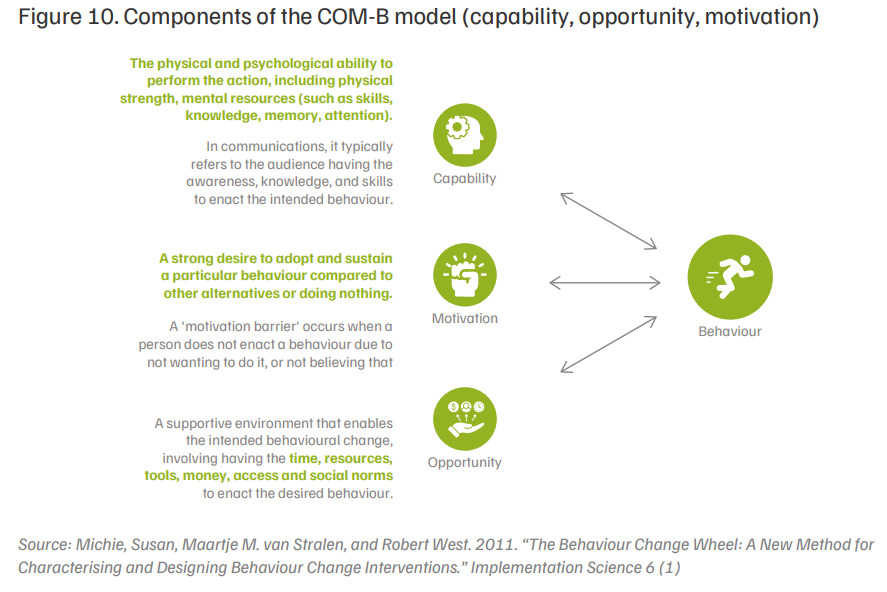
At the individual or actor-specific level, it is essential to identify the barriers that prevent actors from engaging in desired behaviours. The primary target audience varies depending on the target behaviour being addressed. Diagnosing behavioural challenges typically involves interviews, focus groups, surveys, observations, and analysis of existing data to help identify the extent to which individuals adopt target behaviours and the reasons why they do or do not. The COM-B model (Michie et al. 2011) is a useful tool for systematically identifying behavioural barriers (Figure 9). The model posits that three conditions must be met for any behaviour to occur: capability, opportunity, and motivation. The components of the three conditions are summarised in Figure 9.
Box 4. Communication alone cannot address opportunity barriers
It is important to note that not all barriers can be addressed solely through communication tools, as some may fall outside the control of communication efforts. This especially holds true for opportunity barriers. For instance, when the upfront cost of machinery is prohibitively high, communication strategies by themselves are unlikely to significantly increase adoption of specific CRM methods.
Source: Government Communication Service (GCS). 2021. The principles of behaviour change communications.
Identifying barriers using the COM-B model enables a systematic analysis of the factors preventing engagement in target behaviours. When conducting this research, practitioners should select and adapt questions based on the specific target behaviour, context, and method under assessment. Piloting questions with a small group of farmers is recommended to ensure clarity and comprehension. The aim is to gather insights that help practitioners identify barriers and facilitators, while identifying areas where communication interventions will yield maximum impact.
The questions outlined in Table 7 are intended only to guide practitioners in framing more specific, context-tailored questions. The questions can be adapted for specific in-situ practices, ex-situ practices, or to support the uptake of crucial services, such as the adoption of digital services like Unnat Kisan.
Table 8A. Suggestive questions to identify Capability barriers in the CRM context
| Capability | Investigation cues |
|---|---|
| Psychological capability |
|
| Physical capability |
|
Source: Authors' analysis
Table 8B. Suggestive questions to identify Opportunity barriers in the CRM context
| Opportunity | Investigation cues |
|---|---|
| Physical opportunity |
|
| Social opportunity |
|
Source: Authors' analysis
Table 8C. Suggestive questions to identify Motivation barriers in the CRM context
| Motivation | Investigation cues |
|---|---|
| Reflective motivation |
|
| Automatic motivation |
|
Source: Authors' analysis
4.5 Bridging behavioural barriers using behaviourally informed communications
Once key behaviours, contexts, target audiences, barriers, and relevant trends have been identified using the COM-B model (Capability, Opportunity, Motivation–Behaviour), the next step focuses on developing a strategy, designing the specific communication interventions, and creating an implementation plan. Messages and communication channels are tailored to the target audience’s knowledge levels, challenges, and perceptions.
Practitioners select appropriate communication channels, such as face-to-face interactions, digital media engagement, community mobilisation, and advocacy efforts, to trial communications interventions. At this stage, practitioners will:
1. Develop intervention ideas and design referring to behavioural science literature and behavioural design frameworks, such as the EAST framework.
2. Identify medium of dissemination: Interpersonal communication (IPC), digital, mass media, and mid media.
3. Trial intervention and receive user feedback and stakeholder inputs before full-scale deployment.
Designing interventions using the EAST framework and MINDSPACE
The EAST framework, developed by the Behavioural Insights Team, a practical lens for designing interventions encourage desired behaviours.
Box 5. Integrating MINDSPACE principles into CRM messaging
The MINDSPACE framework provides a complementary set of nine psychological levers that can enhance the effectiveness of communication messages. These principles can be embedded within CRM messages designed using EAST:
Messenger: We are heavily influenced by who communicates information.
- Application: Use trusted local farmers who have successfully adopted CRM, respected agricultural scientists from KVKs or SAUs, or dedicated ADOs as primary messengers. Their credibility will enhance message acceptance.
Incentives: Our responses are shaped by predictable mental shortcuts, such as a strong preference for avoiding losses.
- Application: Frame messages around loss aversion (Examples: ‘Avoid losing valuable soil nutrients by not burning’, ‘Prevent yield decline in the long run’). Highlight financial benefits from subsidies ⁵ or income from residue.⁶
Norms: We are strongly influenced by what others do.
- Application: Share statistics or testimonials showing that a significant and growing number of farmers in their region are adopting sustainable CRM practices. (Example: ‘Most farmers in your block are now using and reporting good results’.
Defaults: We tend to follow pre-set options.
- Application: When offering information services or app-based advisories on CRM, make subscription the default (with an easy opt-out) rather than requiring an active opt-in.
Salience: Our attention is drawn to what is novel and seems relevant to us.
- Application: Use striking visuals (persuasive images of healthy, residue-covered soil versus barren, burnt fields), personalise messages with the farmer’s name or village, and highlight benefits directly relevant to their specific crop or farm conditions.
Priming: Our actions are often influenced by subconscious cues.
- Application: Before village meetings on CRM, display posters or short videos showcasing successful local farmers using CRM machinery. This primes attendees to be more receptive to the discussion.
Affect: Our emotional associations can powerfully shape our actions.
- Application: Use positive emotional appeals. Show images of healthy crops and soil alongside happy, prosperous farming families who have adopted sustainable CRM. Evoke pride.
Commitments: We seek to be consistent with our public promises.
- Application: At community meetings or training sessions, encourage farmers to make verbal or written pledges to trial a specific CRM practice on a small portion of their land.
Ego: We act in ways that make us feel better about ourselves.
- Application: Frame farmers who adopt sustainable CRM practices as ‘innovative leaders’, ‘super farmers’, or ‘guardians of the soil’. Publicly recognise and award such farmers.
Source: Authors’ analysis based on The Behavioural Insights Team. 2015. MINDSPACE: Influencing behaviour through public policy. London: BIT
5.1 Redirect resources towards preferred communication channels
• Encourage communications through farmers’ preferred channels: Currently, budgets do not allocate dedicated funds for social media engagement or WhatsApp outreach (Annexure I). Our survey indicates that farmers prefer digital channels; for example, social media and WhatsApp, compared to traditional media, such as radio and pamphlets. Reallocating resources to preferred media, such as interpersonal communication channels and social media platforms, such as YouTube, Facebook, and WhatsApp, can significantly improve the effectiveness of IEC efforts.
• Prioritise trusted, high-impact messengers: Agriculture development officers and extension workers emerge as the most trusted information sources (62 per cent of surveyed farmers rely on them, and 39 per cent prefer them as the first point of contact). Allocating a larger share of IEC budgets to doorstep visits, group meetings, and village-level events can improve credibility and adoption.
• Leverage hybrid engagement models: While direct, face-to-face communication should remain the backbone of IEC, 55 per cent of surveyed farmers find digital media more engaging. A hybrid model that combines social media campaigns with WhatsAppbased information sharing and SMS nudges can extend the reach and frequency of messaging.
• Utilise flexi-funds to pilot BCC strategies: Under the CRM operational guidelines, states can optionally allocate up to 25 per cent of the total budget (both central and state shares) as flexi-funds for any subscheme, component, or innovation aligned with the overall objectives of the CRM scheme. These flexifunds provide a viable financial mechanism for piloting a BCC strategy, which falls under the IEC component.
5.2 Deploy district-specific communications, with a focus on highburn districts
While generic messaging plays an important role, IEC efforts must also be tailored to district-specific farmer concerns. As shown in Figure 9, concerns about alternative CRM methods are not uniform across districts. Communications efforts should therefore focus the most intensive campaigns in districts such as Sangrur, where 69 per cent of farmers continue to partially burn residues.
• Prioritise conversion pathways based on district typologies: Focus first on converting low-burn villages to no-burn practices, where behavioural shifts are already underway, and on medium-burn villages, where farmers have adopted machinery but continue partial burning.
• Highlight aggregator success stories: In early-harvest districts, such as Amritsar, highlight aggregator success stories and the operational and economic benefits of early baling (since crops mature early here).
• Address district-specific fears in partial-burning districts: In districts where partial burning is prevalent, such as Sangrur, communication should directly respond to concerns around machine reliability, maintenance costs and pest attacks through field demonstrations and peer testimonials.
• Reinforce positive norms in districts with higher in-situ adoption: In districts such as Ludhiana, where in-situ adoption is higher, reinforce and celebrate early adopters as role models to strengthen norms.
5.3 Complement IEC with a behaviour change communication approach
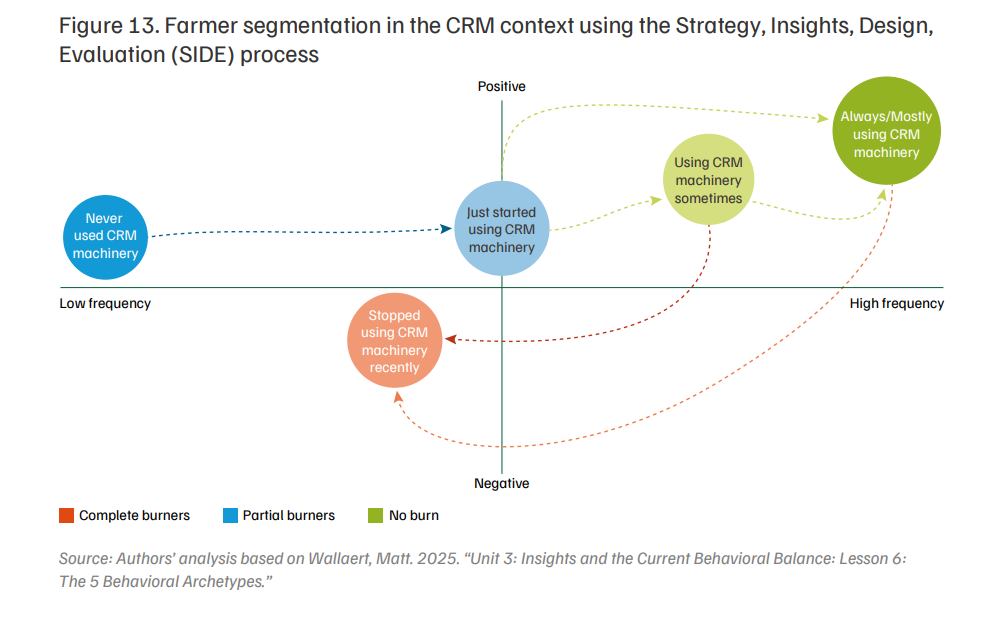
• Adopt a segmented approach based on farmer archetypes: A ‘one-size-fits-all’ communication strategy is ineffective because farmers are not a homogeneous group. To strengthen conversion outcomes, IEC must move beyond generic mass messaging and segment the audience into distinct behavioural archetypes, targeting them with identity-specific appeals. Based on observed patterns of CRM adoption, farmers can be broadly categorised into four archetypes:
- Never used CRM machinery: These farmers have never used CRM machines for residue management. The reasons could include resistance to change, loss aversion, fears of pest attacks, or yield loss. For these farmers, awareness campaigns alone are insufficient. Communication strategies should prioritise technical demonstrations, peer testimonials and evidencebased reassurance to reduce perceived risks and build confidence in alternative practices.
- Always/Mostly using CRM machinery: Farmers in this group primarily prefer to use machines to manage residue and are motivated by efficiency and modernisation. Digital platforms, such as WhatsApp and Unnat Kisan, can be leveraged to reinforce noburn practices among this segment. Messaging should frame no-burn CRM adoption as both aspirational and economically beneficial strengthening positive behavioural reinforcement.
- Just started using CRM machinery: Farmers in this group have recently started using CRM machines. These farmers are highly influenced by social cues. They are unlikely to be the first to change but will follow if they perceive a shift in the community. Moreover, avoiding penalties and fines is a significant motivator for farmers who have recently shifted to no-burn CRM. For them, visibility is key; showing that neighbours are changing is more effective than relying solely on economic arguments.
- Stopped recently: Many farmers may have stopped using CRM machinery after facing negative consequences, such as increased operational costs, or on-field impacts, such as reduced yields, increased pest attacks, or difficulty accessing CRM machinery.
• Target specific, high-impact ‘key behaviours’ using behaviourally informed IEC: During the COVID-19 campaigns, specific communications efforts were designed to drive uptake of specific, high-impact behaviours, such as mask-wearing, handwashing, and social distancing, to contain the spread of the virus. Similarly, achieving the policy objective of achieving zero farm fires requires identifying and targeting a small set of critical behaviours that directly influence CRM outcomes.
• Simplify messaging to reduce cognitive load: Farmers report a preference for receiving only one or two key messages at a time. The current information overload leads to disengagement. Existing IEC materials must be redesigned to focus on single, actionable micro-behaviours. For example, rather than a dense manual on the scheme, a campaign should focus solely on targeted messages, such as ‘Timely access to balers ensures residue clearing’ or ‘Level fields without burning – here’s how’.
• Leverage positive social norms and identity: Survey findings indicate that farmers respond strongly to success stories, with 81 per cent of respondents describing them as believable and motivating. Communication strategies should utilise:
- Descriptive norms: Highlight that the majority of farmers’ behaviours are shifting (for example, ‘100 out of 150 farmers in this block now use Super Seeders’).
- Injunctive norms: Showcase disapproval of burning by key influencers, such as village leaders and family members.
- Shift the narrative from achieving ‘compliance’ to ‘pride’: Frame the non-burning farmer not just as lawabiding, but as guardians of their soil. This appeals to the farmer’s self-identity.
- Institutionalise collective decision-making to overcome individual hesitation. Efforts related to IEC should facilitate village-level CRM agreements, such as group commitments. Encouraging sarpanches, along with farmer groups, to pass formal resolutions against burning through public pledges can create a binding social contract. When a decision is made collectively by the village, it reduces the social risk for individual farmers and establishes a community-enforced standard.
• Make CRM benefits visible and tangible: Farmers are strongly influenced by visual evidence during the harvest season. Since the benefits of improved soil health are often invisible in the short term, IEC materials must make them tangible. This can include before-andafter visuals, short case films shared via WhatsApp, and field demonstrations that visibly compare soil texture and crop health in burnt and unburnt fields.
• Align communication timing with the pre-harvest decision window: Information is most effective when delivered at the moment of decision-making. Farmers report being most receptive during the pre-harvest phase, yet 63 per cent feel that information never reaches them at the right time. Messaging calendars should therefore be aligned with this window (August– September) to maximise attention before the harvest rush.
• Acknowledge and address locally relevant barriers: Around 74 per cent of surveyed farmers perceive current IEC efforts as disconnected from their lived realities. To build trust, communication strategies must validate these barriers rather than dismiss them. Whether the barriers relate to costs, labour, or pest concerns, the messaging should offer specific solutions, such as cost-sharing models, rental CHC links, or targeted pest control advice, rather than reiterating the prohibition on burning.
• Synchronise interventions across the ‘influence triad’: Behaviour change does not occur in a vacuum. Our findings highlight that peer pressure (interpersonal) and machinery access (structural) are as critical as individual intent. Communication interventions must therefore operate in parallel across distinct actor categories to prevent bottlenecks.
- Primary actors: For the individual farmer, interventions must focus on ‘ability’. Even when motivated, farmers cannot switch if the transaction costs remain high. Interventions here must focus on removing frictions, such as simplifying enrolment processes under the CRM scheme and the Unnat Kisan app, providing direct financial incentives, and ensuring technical support for machinery-related concerns.
- Influencers: Since peers dictate norms, communication strategies should target these influencers directly. Progressive farmers can be positioned to act as credible, vocal advocates who validate the safety of no-burn CRM methods. Additionally, engaging family members (especially village-level or household messengers) can create an internal echo chamber of approval within the household, countering negative external peer pressure.
- Gatekeepers: At the ecosystem level, interventions must improve access and devise or communicate appropriate incentives. Informal machinery lenders and CHCs control the physical means of adoption. If they do not effectively promote or supply CRM machines, farmer intent stalls. Policy must incentivise these gatekeepers not merely to own machines, but to actively market them – perhaps through performance-linked bonuses for CHCs that service the highest number of small and marginal farmers.
5.4 Evaluate the outcomes and impacts of deployed IEC activities
• Shift focus from activity counts to behavioural outcomes: Instead of merely tracking the number of wall paintings, posters, or social media posts, measure actual changes in burning behaviour, CRM adoption rates, and intent to adopt CRM methods.
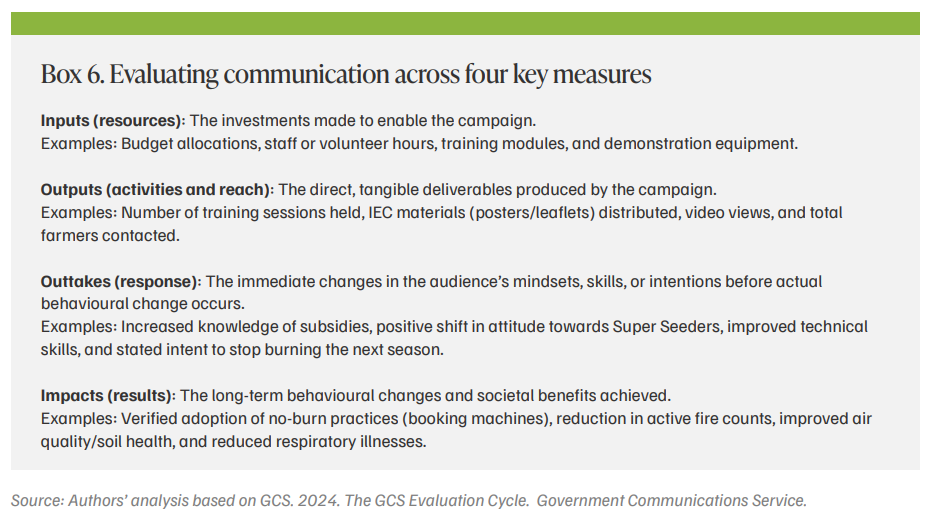
• Establish a robust monitoring and evaluation (M&E) framework: A comprehensive M&E framework should be established at the campaign’s outset, outlining what will be measured, how, when, and by whom. This framework should track progress across the entire results chain. Preliminary assessment of evaluation metrics occurs during key behaviour selection; teams subsequently refine them further and evaluate them across four metrics: inputs, outputs, outtakes, and impact.
• Introduce farmer feedback loops: Regularly collect farmer satisfaction data on IEC content in terms of clarity, timing, and relevance to ensure that campaigns are adaptive and responsive.
• Measure recall and salience: Track the number of farmers who remember the key IEC messages and whether they disapprove of burning by neighbours and village leaders, or approve of no-burn alternative CRM methods.
Table 9. Sample M&E framework with example behavioural metrics for ongoing CRM interventions
| Intervention type | Key objective | Input metrics | Output metrics | Outtake metrics (Knowledge, Attitude, Practice, Intention – KAPI) | Impact metrics |
|---|---|---|---|---|---|
| Training on in-situ management | Increase farmer adoption of Super Seeders for direct wheat sowing. | Budget for training; # trainers; # training modules developed; # machines for demo; # of fields finalised for demo. | # training sessions conducted; # farmers attended/completed; # IEC materials distributed. |
K: % increase in knowledge of Super Seeder operation and benefits; % farmers demonstrating correct operation. A: % increase in positive attitude towards direct seeding. PI: % of farmers intending to use the Super Seeder. |
% of trained farmers using the Super Seeder in subsequent season; area sown using the Super Seeder by trained farmers; change in burning incidence in training villages. |
| Wall paintings/ Billboards | Increase awareness of the negative impacts of burning and promote alternatives. | Cost of design and execution; # locations identified. | # wall paintings/ billboards installed; geographical coverage; estimated viewership. |
K: % increase in recall of anti-burning messages among the exposed population. A: % increase in agreement that burning is harmful. PI: % reporting discussion of alternatives due to IEC. |
# of farmers able to recall wall painting/billboard messages; # farmers exposed to wall painting/ billboard messages. |
| YouTube video series on CRM techniques | Enhance farmer knowledge and skills in specific CRM practices. | Production cost; promotion budget; frequency of videos | # video views; watch time; engagement rate (likes, shares, comments); # subscribers gained. |
K: % viewers correctly answering the quiz on the video content. A: Sentiment analysis. PI: % viewers reporting intent to try the technique. |
% of viewers clicking 'book machine' links; # of calls to helpline originating from video click-to-call buttons; estimated acres managed through ex-situ/in-situ methods by viewer base. |
Our insights suggest that information alone is insufficient to drive behaviour change. Evidence from previous studies (Suryanarayanan and Kumar 2025; Cadario and Chandon 2020) indicates that information provision typically leads to only marginal behavioural shifts (2–3 per cent), particularly when communication interventions are short-term or one-off. This is particularly true in the context of CRM adoption, where farmers face genuine constraints related to cost, time, and convenience. Simply informing farmers about alternative CRM methods is therefore unlikely to overcome these frictions. Instead, a more comprehensive BCC approach is required that combines information with practical support, social reinforcement, and timely nudges.
These findings highlight the need to shift from IEC campaigns that primarily inform to communication strategies that actively shape behaviour. A robust BCC approach should make CRM practices easier, more attractive, socially rewarding, and timely – principles captured by the EAST framework (Easy, Attractive, Social, Timely).
However, this transition requires nuanced execution to avoid unintended negative externalities. While digital channels offer scale, over-reliance on them risks deepening the existing digital divide. Strategies that overlook the realities of data costs, literacy barriers, and age-related technology gaps may exclude the most vulnerable farmers, particularly older farmers and those with smaller landholdings. Furthermore, increasing the volume of communication without improving its relevance may lead to ‘message fatigue’, reducing farmers’ responsiveness to repetitive directives. Therefore, the proposed BCC approach must champion inclusivity, employing hybrid models where digital nudges complement, rather than replace, the trusted, face-to-face counsel of extension workers.
Such an approach can enhance the relevance and reach of IEC campaigns while addressing the cognitive, infrastructural, and social barriers that prevent the widespread adoption of alternative CRM practices.
Overall, the findings presented in this issue brief show that although financial assistance and generic IEC have driven initial adoption, they are insufficient to curb the persistent behaviour of crop residue burning. The success of the CRM scheme depends on transitioning to a dedicated, structured BCC approach that actively addresses underlying psychological biases, including social norms and logistical frictions influencing farmers’ decisions. By aligning communication strategies with the EAST principles, policymakers can move beyond awareness-building towards translating farmer awareness into sustained and widespread adoption of no-burn CRM practices.
Crop residue burning drives up to 30–35% of Delhi's PM2.5 during the three-week October–November window, with serious health consequences across the Indo-Gangetic Plain. Since 2018, the CRM scheme has cut fire counts through machinery subsidies and custom-hiring centres, yet nearly half of Punjab's farmers still burn. This study asks why the practice persists despite this progress — and what the scheme's communication can do differently to shift behaviours.
The CRM scheme rests on three pillars: machinery subsidies, custom-hiring infrastructure, and communication, but only the first two have been studied closely. Structural barriers are real, yet even farmers with access often still burn, because behavioural barriers like loss aversion, social norms and time pressure persist. The study therefore asks whether the communication system itself can be redesigned to change behaviour, not just inform.
It combined primary research: farmer surveys, focus group discussions and official consultations with established frameworks. The COM-B Model diagnosed barriers across Capability, Opportunity and Motivation, while EAST and MINDSPACE guided how messaging could be made easier, more attractive, more social and better timed. A central distinction runs through the report: IEC informs, whereas BCC is designed, segmented and evaluated to actually change behaviour.
The COM-B Model reveals barriers across all three components. Capability: mistaken beliefs persist — 67% of those who burn fear pest attacks, though 57% have never seen one. Opportunity: the tight harvest-to-sowing window, uneven machinery access, and social normalisation (73% see neighbours burn, yet 90% privately disapprove). Motivation: loss aversion, perceived cost and effort, weak habits and status-quo bias. Information alone cannot remove these- a barrier-matched BCC approach is needed.
Awareness campaigns shift behaviour by only 2–3%. A behaviour change approach reframes it as behaviour design, drawing on existing social capital; farmers overwhelmingly disapprove of burning, and matches interventions to specific barriers. The way forward: district-segmented BCC pilots using trusted, interpersonal and digital channels, messages built on social norms over fear, and measurement of behavioural outcomes. The CRM scheme's 25% flexi-funds can finance these, with CEEW taking this forward alongside DoAFW, Punjab.
Unlocking Finance for India’s Textile Waste Management
Are Clean Cooking Fuels Reaching India's Urban Poor?