Council on Energy, Environment and Water Integrated | International | Independent


Suggested citation: Singh, Harman, Aparna Sharma, and Vaibhav Chaturvedi. 2025. EU Carbon Border Adjustment Mechanism: Dominant Perspectives in India. New Delhi: Council on Energy, Environment and Water.
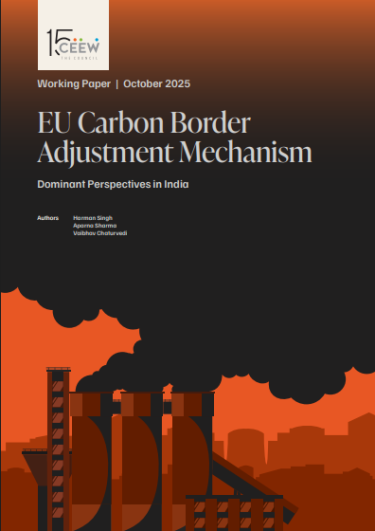
The study, “EU Carbon Border Adjustment Mechanism: Dominant Perspectives in India,” examines how Indian stakeholders interpret and respond to the European Union’s Carbon Border Adjustment Mechanism (CBAM). Based on semi-structured interviews with 16 experts across policy, trade, and environmental domains, it provides a nuanced understanding of India’s discourse around CBAM. Using a codebook-based thematic analysis, the study identifies four key themes shaping national perspectives: carbon pricing, monitoring–reporting–verification (MRV), trade and political implications, and fairness and equity. The findings highlight that while CBAM poses risks to India’s trade competitiveness, it also presents an opportunity to strengthen domestic carbon pricing, enhance MRV systems, and align industrial policy with global decarbonisation trends. The study calls for coordinated domestic reforms and strategic international engagement to turn CBAM challenges into pathways for a just and sustainable green transition.
The study identifies four dominant themes shaping India’s evolving discourse on the EU Carbon Border Adjustment Mechanism (CBAM):
Overall, the study concludes that India’s CBAM response should blend robust domestic carbon reforms with proactive international engagement to protect trade interests while advancing industrial decarbonisation.
In May 2023, the European Union (EU) adopted the Carbon Border Adjustment Mechanism (CBAM), which places a carbon price on certain imports—aluminium, cement, electricity, fertilisers, iron and steel, and hydrogen—to prevent carbon leakage and create a level playing field for industries facing carbon costs under the EU Emissions Trading System (EU ETS). While the EU presents the CBAM as an important environmental measure that complements the EU ETS within its broader climate strategy to achieve net-zero emissions, its impact extends beyond Europe, influencing global trade patterns and international relations.
As a major trade partner of the EU, India has been critical of the CBAM, arguing that the mechanism imposes unilateral and protectionist trade barriers that undermine established international climate and trade norms. Several studies suggest that the EU CBAM could lead to negative trade impacts and welfare losses, particularly for low-income and lower-middleincome countries with high export dependency or significant trade exposure to the EU.
Most existing literature focuses on economic or trade dimensions, with limited integrated analysis of political, trade, and economic perspectives in the Indian context. This study seeks to address this knowledge gap by examining the nuances of the CBAM debate and consolidating dominant narratives among expert stakeholder groups. We undertake a codebook thematic analysis of semi-structured interviews with 16 key Indian stakeholders. Our findings highlight four dominant themes shaping India’s CBAM discourse: (i) carbon pricing; (ii) monitoring, reporting, and verification (MRV); (iii) international trade and political implications; and (iv) fairness, equity, and trust.
To begin with carbon pricing, experts underscored the importance of developing a robust domestic compliance carbon market, such as India’s newly introduced Carbon Credit Trading Scheme (CCTS), which can help establish an ‘effectively paid carbon price’ and thereby reduce the burden of the CBAM. They further encouraged India to seek fairer adjustments by recognising existing implicit carbon costs through separate tax nomenclature or by introducing a new export tax on CBAM-covered goods to retain revenues domestically.
Indian industry concerns are dominated by measurement, reporting, and verification (MRV) challenges. Exporters, especially MSMEs, often lack the technical capacity and resources—both financial and human—to align with EU methodologies for calculating embedded emissions. Traceability-linked data gaps further add to the challenge. As a result, MSMEs risk losing competitiveness in international markets, either through added compliance costs or an inability to meet reporting requirements. A nationally unified and cohesive MRV ecosystem is therefore essential to support Indian exporters and help them remain competitive in global markets.
On trade and political dynamics, the CBAM is predominantly viewed as a non-tariff trade barrier that could restrict market access for developing economies. The border mechanism is expected to shift trade patterns and export strategies, with companies exploring alternate markets, focusing on the growing domestic demand, or positioning themselves as early entrants in clean markets. Concerning EU–India trade talks, experts emphasised the need for India to negotiate concessions such as phased timelines, revenue-sharing arrangements, or technology transfers.
Fairness, equity, and trust emerged as the final theme, revealing fundamental concerns around the CBAM. Experts stressed that the CBAM undermines the principle of Common But Differentiated Responsibilities (CBDR-RC) and functions more like a trade tool than an environmental measure. They argue that the border mechanism places a disproportionate burden on developing countries by imposing high carbon costs, without acknowledging disparities in historical emissions or accounting for the structural and regulatory capacities of developing countries. These concerns reinforce India’s calls for climate finance, technology transfer, and meaningful concessions in negotiations with the EU.
The study concludes that India’s policy response must combine robust domestic reforms with international strategies. Domestically, this means building strong carbon pricing frameworks and a comprehensive government-led MRV infrastructure. Internationally, India must strengthen its negotiation position, safeguard competitiveness, and leverage CBAM as an opportunity to accelerate industrial decarbonisation.
In May 2023, the European Parliament and the Council of the European Union adopted Regulation 2023/956 as co-legislators, introducing the Carbon Border Adjustment Mechanism (CBAM). Designed to reduce emissions from carbon leakage, the mechanism imposes a carbon price on goods produced in energyintensive sectors and imported into the EU. It currently applies to the import of certain goods and selected precursors from six sectors, including aluminium, cement, electricity, fertilisers, iron and steel, and hydrogen (Regulation (EU) 2023/956).
For many years, the EU has struggled with carbon leakage, which occurs when producers relocate carbon-intensive production to countries with weaker environmental regulations. This allows them to avoid costs linked to stringent carbon pricing or emissions standards in home markets (Mehling et al. 2019; Misch and Wingender 2024). This is a critical issue for the EU because it makes Europe less competitive in international markets, while domestic reductions in carbon emissions are partially offset by increases in emissions in other jurisdictions, thereby undermining the environmental effectiveness of the EU’s efforts (Bonnet and Baršauskaitė 2025). To address the trade competitiveness problem, the EU Emissions Trading System (EU ETS) had previously relied on the free allocation of emissions allowances or government subsidies for energy-intensive enterprises at risk of carbon leakage (Joltreau and Sommerfeld 2018 Pirlot 2024). However, as the EU gradually phases out free allowances, increases auctioning, and tightens the cap on emissions, risks of carbon leakage are expected to increase (Wildgrube et al. 2024). Against this backdrop, the CBAM was introduced to mirror and complement the EU ETS. It aims to level the playing field and encourage cleaner industrial production in non-EU countries by equalising carbon prices accrued between European and foreign markets (Regulation (EU) 2023/956; Lamy et al. 2024).
A study by the Organisation for Economic Co-operation and Development (OECD), which tracked carbon pricing policies in 140 countries between 2015 to 2021, found that 13 per cent of emissions reductions achieved in one country through carbon pricing were offset by increased emissions elsewhere through carbon leakage (Teusch et al. 2024). Similarly, an International Monetary Fund (IMF) study that examined 28 countries from 2005 to 2015 reported an average leakage rate of 25 per cent across 21 sectors covered in the analysis (Misch and Wingender 2024).
At the same time, evidence substantiating carbon leakage remains arguable and insufficient (Branger et al. 2016; Healy et al. 2018; Naegele and Zaklan 2019; Nordström 2023). Likewise, the efficacy of border carbon adjustments as tools for reducing carbon leakage and global emissions is questionable (Li and Zhang 2012; Xinlu et al. 2024). According to OECD estimates, under a ‘fit for 55’ aligned policy landscape, the EU CBAM could reduce global emissions by only 0.54 per cent (Dechezleprêtre et al. 2025). Meanwhile, Asian Development Bank–led research projects that at a carbon price of EUR 100, global emissions would fall by 1.3 per cent (Asian Development Bank 2024).
Other modelling studies also conclude that the CBAM is unlikely to contribute to a significant reduction in global emissions (Magacho et al. 2024; Zhong and Pei 2022; Chepeliev 2021; Kuik and Hofkes 2010; Lim et al. 2021; Perdana and Vielle 2022, 2023). Yet, on 1 October 2023, the EU CBAM officially entered its transitional phase. During this period, no CBAM levy was initially charged, but reporting of embedded emissions was required. From 1 January 2026, the CBAM will enter its definitive phase, requiring obligated entities to surrender CBAM certificates equivalent to the emissions imported into the EU jurisdiction (Regulation (EU) 2023/956).
While the CBAM is expected to accelerate global decarbonisation and increase international coordination on carbon pricing mechanisms, it has sparked considerable debate in affected countries, forcing them to revisit emissions reduction strategies in carbon-intensive industries (Van Schaik et al. 2022). International responses have varied, shaped largely by economic and policy contexts (Eicke et al. 2021; Overland and Sabyrbekov 2022). Several studies indicate that the EU CBAM will lead to adverse trade impacts and cause welfare losses in low-income countries with a high export dependence on the EU (Mattoo et al. 2013; Zachman and McWillams 2020; Beaufils et al. 2023; Majumder et al. 2024).
Amongst countries in the Global South, the EU CBAM is widely perceived as undermining the principle of Common But Differentiated Responsibilities and Respective Capabilities (CBDR-RC), as articulated in the UN Framework Convention on Climate Change (UNFCCC, 1992, arts. 3 and 4; Corvino 2023; Dobson 2022. Critics argue that an international carbon pricing scheme compatible with the CBDR-RC principle would not require low-income, historically under-polluting countries to pay the same carbon price as high-income, historically over-polluting countries. They contend that such parity shifts the burden of enhanced climate action onto developing countries and undermines their right to development (Brandi 2021; Perdana and Vielle 2022; Van Schaik et al. 2022; Corvino 2023). These concerns also raise questions about CBAM’s compatibility with international environmental law, with affected countries challenging the mechanism under international trade legislation (Mehling et al. 2019; Dobson 2022.
India has been particularly critical of the CBAM, remonstrating that the mechanism imposes unilateral and protectionist trade barriers that undermine established international climate and trade norms (Van Schaik et al. 2022; IETA 2024; Hübner 2021).
Between 2020 and 2024, India formally raised concerns against carbon border adjustment mechanisms 29 times at the World Trade Organization (WTO) – second only to China and Russia (Bonnet and Baršauskaitė 2025).
The CBAM is of particular importance for India because of its implications for trade dynamics, political relations with the EU, and India’s economic growth and transition pathways. As of 2023, the EU was India’s largest trading partner, accounting for EUR 124 billion in goods trade. It is also India’s second-largest export destination, accounting for nearly 17.5 per cent of total exports (European Commission n.d.). Early estimates suggest that the CBAM will pose a significant challenge for India, as it covers 777 tariff lines of Indian exports to the EU, largely metals (GTRI 2023). The tariff lines represent nearly 27 per cent of iron and steel and aluminium products, valued at USD 8.2 billion (GTRI 2023).
Given India’s high trade volumes to the EU and expected exposure, the CBAM is projected to lead to export losses of USD 771 million, corresponding to a 0.72 per cent decline in output to the EU (Majumder et al. 2024). While the study observes a minimal decline in India’s emission intensity (Majumder et al. 2024), the World Bank’s CBAM vulnerability index indicates that India’s steel industry is exposed to notable risks from the CBAM, as measured by the share of product exports to the EU in global exports. However, it also notes that the broader economic impact of the CBAM is expected to remain limited, as India’s exports to the EU, relative to its GDP, are relatively low (Kathuria et al. 2025). A systematic literature review of 97 CBAM-linked studies observed that most contemporaneous quantitative studies focus on estimating impacts or determining the mechanism’s effectiveness (Zhong and Pei 2023).
While most studies undertake an economic or trade-based analysis of the potential impact of the EU CBAM, holistic analytical interpretations integrating broad areas of political, trade, and economic perspectives, particularly in the Indian context, remain sparse. This research was undertaken to address this knowledge gap. More recently, however, Das and Bandyopadhyay (2025) and Kathuria et al. (2025) have systematically captured qualitative perspectives by undertaking a mixed methods approach, which involves using interviews and surveys to collect primary data. Using separate, more targeted qualitative methods, we interviewed key stakeholders relevant to India’s CBAM debate and applied thematic analysis to their responses to examine prevailing perceptions, identify potential risks and issues, and explore avenues for cooperation between the EU and India.
We use codebook thematic analysis (CTA) as our analytical approach. It is one of the three alternative approaches within thematic analysis (TA) developed by Virginia Braun and Victoria Clarke. First introduced in 2006 (Braun and Clarke 2006), TA applies a rigorous and systematic approach to capturing patterns in qualitative data. It is a method to identify, analyse, and interpret patterns of meaning within a dataset, called themes. It is a widely used form of analysis, especially in psychology and the social sciences. Over time, TA has evolved into a cluster of different methods, sometimes with conflicting approaches, both in the manner the methodology is carried out and its underlying philosophy (Braun and Clarke 2020). These differences relate to epistemological assumptions that guide orientations to data, coding practices, and theme development. The three main versions based on varying approaches of TA are: (i) coding reliability; (ii) codebook; (iii) reflexive thematic analysis. These three versions differ philosophically in terms of their approach towards ‘objectivity’.
The coding reliability approach seeks to minimise researcher subjectivity and ensure that the approach is ‘objective’ or ‘unbiased’ (Braun and Clarke 2019, 2020). It employs a codebook for the analytical process, but relies on multiple coders to ensure ‘accurate and ‘reliable coding’ (Braun and Clarke 2020; Bryne 2022). Inter-reliability between coders ensures accuracy and coding quality. Themes are typically developed early in the analytical process, with theory-based hypotheses formed before data collection and supported by coded evidence from the data.
The reflexive thematic analysis approach, by contrast, is rigorous and systematic, but not rigid, and aimed at allowing flexibility. It emphasises reflexivity, subjectivity, and creativity in the interpretive analysis of the data, rejecting notions of coding ‘accuracy’ or reliability as key quality indicators (Bryne 2022). Here, researcher subjectivity is understood as a resource rather than a potential threat to knowledge production (Braun and Clark 2019). Codes and themes interpreted by one researcher may not be reproduced by another (Bryne 2022). Codes represent the researcher’s interpretations of patterns of meaning across the dataset (Bryne 2022). The coding process is flexible and organic, without reliance on a coding framework (Bryne 2022), and themes are progressively uncovered and entirely undefined. The coding and theme development process is more inductive, one that goes beyond deduction or ‘finding the truth’ from data; instead, the final analysis here reflects deep and prolonged immersion in, analysis of, and reflection on the data (Braun and Clarke 2019).
The codebook approach, used in this study, employs a structured codebook to guide the coding process and conceptualises themes as ‘domain summaries’ (Bryne 2022). However, this approach is more closely aligned with reflexive thematic analysis because it does not emphasise objectivity and replicability in the same manner as coding reliability, despite using a structured codebook (Braun and Clarke 2019; Bryne 2022). This method does not prioritise different coders to apply codes in exactly the same way with high inter-coder agreement – as if coding were a neutral, objective process. Instead, it acknowledges that coding is interpretive and shaped by the coder’s perspectives, context, and subjectivity (Bryne 2022). Consensus between coders and inter-rater reliability are therefore not usually regarded as quality measures (Braun and Clarke 2020).1 Themes may be developed early in the process but can also be refined or newly created as analysis processes (Braun and Clarke 2020).2 This approach can hence be understood to be a midpoint between coding reliability and the reflexive approach. Details related to the structured code book are presented in Annexure B, and the key theoretical assumptions behind this approach are discussed in Bryne (2022).
This paper employed a codebook approach, where the process of developing the codebook was carried out by the first author, followed by validation of the codes by the second author. Using the codebook and the notes created, the team collaboratively developed themes and subthemes through detailed discussions. This process ensured alignment in interpretations and strengthened the rigour of theme building.
Drawing on the literature review and the methodology instruction, we selected 16 experts to participate in the study. We included experts who have been engaging with India’s CBAM debate through popular media, such as newspaper articles, or through dedicated expert-led panel discussions at various forums. Respondents included representatives from multiple industries and industry associations, academia, think tanks, and other relevant sectors, thereby integrating diverse perspectives from informed groups. The complete list of experts is provided in Annexure A. We aimed to capture the range of viewpoints shaping India’s CBAM discourse. Relying on multiple expert sources for data collection adds validity and enables triangulation, which reduces bias and enhances the reliability of inputs.
Four guiding questions were shared with the respondents before the interview process. Discussions during the interviews focused on these questions:
Participant interviews were conducted in both online and in-person settings. The allocated duration for all interviews was between 35 minutes and 1 hour 15 minutes. The four guiding questions, shared with participants in advance, provided the framework for a semi-structured format that ensured consistency while allowing space for in-depth insights on policy issues.
All interviews were recorded and transcribed with participants’ oral consent. Data remained confidential to the interviewers. Prior information on the interview format and consent procedures was recorded before the interviews were undertaken. Anonymity has been consistently maintained throughout the analytical inputs presented in the study. In addition, recognising the sensitivity of politically charged subjects such as the CBAM, participants retained the right to withdraw from the interview at any point, to skip questions, or to request access to collected data after the interview.
As discussed in the methodology section, our results are derived using the codebook thematic analysis approach. Annexure B presents a snapshot of the codebook prepared after a thorough review of interviewee responses. From these codes, four themes emerged as the key findings based on the assessment of interviewee responses. This section discusses each theme along with the associated sub-themes.
The first theme relates to the criticality of carbon pricing not only in the context of the CBAM, but also as a broader instrument for India’s decarbonisation. Most respondents emphasised that India must develop robust carbon pricing instruments to drive the decarbonisation of high-emissions sectors.
Indian compliance market and crediting mechanism
Respondents noted that the Indian Carbon Market should not be motivated primarily by the need to reconcile with a CBAM. Instead, it should be leveraged to meet emissions intensity targets and to stimulate innovation in green technologies. This finding reflects the Government of India’s position that, while the CBAM has influenced the design of India’s recently unveiled Carbon Credit Trading Scheme (CCTS), the scheme ultimately seeks to contribute to India’s long-term net-zero goal (Malik et al. 2023).
A well-functioning compliance mechanism could also help India adapt to the CBAM through its crediting provisions. Under the Regulation, EU importers may reduce their obligation to surrender CBAM certificates if an ‘effectively paid carbon price’ on embedded emissions is borne by exporters of CBAM goods in foreign jurisdictions (EU Regulation 2023/956).
Establishing a robust compliance market mechanism would therefore help meet eligibility for reduction under the CBAM and prevent double carbon pricing on carbon emissions.
Although crediting provisions exist, experts expressed concerns about the complexity and lack of clarity in the EU’s communication on what qualifies as an ‘effectively paid carbon price’ (Lamy et al. 2024). Other studies also point to the ambiguity in crediting rules amid the diversity of existing carbon pricing systems (Marcu et al. 2023; Wildgrube et al. 2024). Given that the CBAM is designed to align closely with the EU ETS pricing framework, the scope for crediting is expected to remain narrow, likely limited to explicit and transparent carbon prices, such as those found in emissions trading systems or carbon taxes. As a result, the potential for adjustments under the crediting mechanism is significantly constrained.
Amendments to the CBAM under the European Commission’s Omnibus package in February 2025 clarify that carbon prices paid in third countries will be explicitly recognised in supply chains. This means non-EU exporters who can prove that a carbon price was paid during production will be eligible for a corresponding deduction against the CBAM obligation. Additionally, from 2027, the Commission may provide predefined values for carbon taxes paid in non-EU jurisdictions to further reduce the financial burden on non-EU exporters from the CBAM (Amending Regulation (EU) 2023/956).
Considering the explicit communication in the amendments, it is likely that carbon credit certificates (CCCs) will be made eligible for reduction against CBAM certificates. Experts expect the adjustment to be minimal, given the significant price differences between EU allowances (EUAs) and Indian CCCs. This disparity raises concerns about equity, with doubts about whether crediting mechanisms will provide meaningful support for exporters in countries like India.
Developing domestic taxation measures
As measures to help developing countries cushion the blow against the CBAM, respondents also discussed domestic taxation measures for the Indian government, specifically highlighting two pathways: (i) a domestic carbon tax on CBAM export goods and (ii) the aggregation of implicit carbon costs.
As a first measure, the government could introduce a domestic carbon tax on goods covered under the CBAM, collected at the point of export. This would ensure that revenue from embedded emissions remains within the Indian jurisdiction, where retained revenues can be spent supporting abatement in high-emissions industries. India’s Minister of Commerce and Industry, Piyush Goyal, has on multiple occasions expressed interest in developing such a domestic taxation mechanism, which could also provide rebates to industries based on their export activity to the EU (Law 2023a; Singh 2023; Business Standard 2024). The next step would be for the government to seek recognition of this deduction as valid under the CBAM, a recourse that has support among industrial stakeholders.
As a second measure, respondents identified that India presently lacks a system to accumulate and aggregate various forms of implicit carbon costs. These include the GST Compensation Cess (coal cess) and fuel excise duties, which could be converted into a carbon price equivalent to help lower the burden of CBAM levies (Gupta et al. 2024). A ‘carbon tax’ nomenclature would also need to be created in India to enable crediting-based adjustments.
While experts advocated for domestic carbon pricing, some categorically stressed that the development and operation of the Indian Carbon Market (ICM) will likely face considerable challenges. For instance, issues specific to the Perform, Trade, and Action (PAT) scheme, such as chronically low prices of Energy Saving Certificates (ESCerts) and low-market liquidity issues, may resurface in the CCTS with CCCs. Thus, serious steps will be required to guide the market during its early stages of development to avoid similar issues that could undermine the stability of India’s compliance market.
Cognisant of the risk that third-country exporters may adopt less reliable and less accurate monitoring, reporting, and verification (MRV) systems – potentially resulting in carbon leakage – the EU integrated specific MRV rules into the CBAM. These were inspired by the Monitoring and Reporting Regulation (MR regulation, EU 2018/2066) and the Verification Regulation (EU 2018/2067) (Gailhofer and Graichen 2023). Multiple industrial experts highlighted challenges around methodologies and MRV for calculating and certifying product-level emissions.
Measurement of embedded emissions
Industry respondents, in particular, emphasised that the emissions calculation methodologies required by the EU, and applied to third-country exporting countries, will remain a challenge for India. Although many producers already use internationally accepted standards, such as the GHG Protocol, ISO standards, or World Steel procedures, exporters to the EU must now comply with CBAM methodologies. This is expected to place additional financial and human resource burdens on Indian firms.
Concerns were raised regarding the capacity and preparedness of Indian industries to adopt CBAM methodologies, since they lack the same capacity as the EU in product-level emissions calculation and reporting. Corroborating further, respondents noted that 2026 represents a ‘very hard deadline’ for the definitive period. They advised the government to develop emissions factor databases that industries can refer to when computing their emissions. They also suggested introducing regulatory measures to be applied at the product level, similar to the methodologies proposed by the EU. Admitting that additional reporting requirements will be challenging to meet in the short term, respondents also mentioned that this could provide interesting data points and opportunities in the longer run.
CBAM-linked MRV also presents distinct challenges for India. Industry respondents notably expressed concern over the limited capacity and technical expertise required for carrying out CBAM-linked MRV procedures. Experts highlighted that MRV in a standardised fashion is almost ‘non-existent’ in India. Thus, limited MRV architecture could risk market exclusion for India, as exports will increasingly need to be certified in the future. This is likely to result in a scenario where the cleanest and most robust MRV goods will be exported first.
Traceability and classification of disputes
The measurement and verification of carbon content is a highly complicated exercise. The scale of challenges and rigour in carbon content calculation are vastly different for different forms of goods, particularly ‘simple’ and ‘complex’ products. Exporters of complex goods face particular challenges due to the limited carbon accounting infrastructure in India.
Tracing embedded emissions across multi-tiered supply chains is another primary concern under the CBAM framework because information about emissions from upstream precursor goods is required to be reported. The involvement of numerous intermediate producers creates complex supply chains that make it challenging to trace emissions across the chain, where exporters can practically face data gaps or information attainment challenges. For instance, in globalised and diverse supply chains, exporters may have to retrace their entire value chain across multiple geographies and jurisdictions, which presents a significant challenge. Experts observed that such robust traceability-based regulations will guide exporters to procure from upstream suppliers with transparent carbon accounting, rather than from the cheapest suppliers, thereby impacting the competitiveness of exporters.
Amendments to the CBAM under the EU Omnibus package have simplified reporting requirements for steel and aluminium exporters, as downstream processing emissions will no longer need to be calculated separately. Coverage of reporting is now limited to primary production of steel and aluminium materials rather than additional processing activities such as rolling or coating, which were previously covered in the pre-February 2025 version of the Regulation. Moreover, exporters that operate from non-EU countries without a carbon trading system similar to the EU ETS may report the ‘mass allocation of precursor materials’. This means exporters will only need to report the quantity of initial materials used to make the steel or aluminium products, and corresponding emissions will be calculated using default values,3 thereby reducing the complexity of data collection and calculation (Amending Regulation (EU) 2023/956).
Additionally, experts noted that the classification4 of complex goods under the CBAM is a highly complex issue that could cause confusion and potentially give rise to disputes. For instance, flat steel products under Chapter 72 of the Customs Tariff Act5 will require a CBAM declaration, whereas kitchen equipment made from the same raw material and embedded emissions, not covered under Chapter 72, will be exempt. This can lead to a dispute.6 As one respondent explained, “Classifications disputes don’t arise if a product in classification A and classification B attracts the same rate of customs duty. But when you have a CBAM obligation on one, and no CBAM obligation on the other, then classification disputes are bound to arise”. Complex goods with multi-tiered supply chains pose an even greater challenge, since products may not fall within a single category. The European Commission’s DG TAXUD is considering expanding the scope of CBAM to include downstream products, aiming to mitigate the risk of carbon leakage from upstream CBAM goods (Smith 2024; Yermolenko 2024). The European Steel and Metals Action Plan has also emphasised the need to expand CBAM coverage to certain steel- and aluminium-intensive downstream products, and announced an EU Commission proposal to be adopted by the end of 2025 (EU Commission DG TAXUD 2025). Experts cautioned, however, that any extended inclusion of HS codes under the CBAM would worsen traceability and classification challenges for exporters in developing countries.
Exposure of micro, small, and medium enterprises
Based on the responses, we observe that the maximum number of references made while performing the coding procedure were relevant to CBAM’s impact on Indian micro, small, and medium enterprises (MSMEs). Respondents unequivocally concurred that the CBAM will disproportionately impact MSMEs because they lack the capacity and resources to comply with its requirements.
Industry respondents submitting CBAM reports every quarter unanimously voiced that large corporate players are considerably better positioned to conform to CBAM’s reporting requirements than smaller players, particularly MSMEs. Product-level emissions measurement and MRV compliance were identified as key challenges that will increase costs for MSMEs and affect their competitiveness. Whether in the form of added compliance costs or their inability to meet reporting requirements, MSMEs risk losing competitiveness in international markets or being excluded from export markets.
Moreover, experts also warned that as the CBAM expands horizontally (across different sectors), vertically (to downstream products), and across jurisdictions through border carbon adjustments (BCAs), MSMEs may struggle even more. Many lack both the awareness and sophistication to navigate multiple complex regulations simultaneously.
Thus, to reduce the intensity of emissions in production, MSMEs require support to transition to low-carbon technologies. However, due to their limited resources, such opportunities remain scarce. To this end, respondents requested that the government provide substantial fiscal and regulatory support to help them access low-carbon technologies.7
Concerns related to data-sharing
Experts even raised security and privacy concerns about CBAM’s detailed data reporting requirements. The Government of India has similarly expressed reservations against the EU’s data collection practices, criticising them for breaching competitiveness principles (Law 2023b).
For exporting industries, this will mean disclosing critical information on the installation’s production methods, emissions volumes, carbon intensity, and supply chain structures of exported goods. Many exporting businesses often wish to withhold such sensitive data to maintain competitive positions in the global market. This includes EU importers, who are customers or buyers. Moreover, respondents also highlighted that CBAM methodologies demand complex and copious volumes of granular data, which may be inaccessible to both the government and industries. This includes data involving geo-located emissions profiling, for experts further questioned the rationale behind the EU demanding unit-level information on installation longitude, latitude, and UN/ LOCODE.
Building on the comprehensiveness of data appropriated by the EU, experts cautioned that it could make India’s position very precarious in international trade and climate negotiations. With access to unitlevel, third-party verified data from thousands of installations with hundreds of data points, this data mine can be leveraged for purposes outside its stated goal, such as market analysis or economic and trade negotiations. Thus, respondents recommend that India negotiate for all national data submitted to the European Commission to be shared with national authorities and seek guarantees from the European Commission against their use of non-regulatory purposes.
International trade implications
Interview discussions on CBAM frequently centred on the climate–trade nexus. Many experts elicited how international trade patterns are becoming increasingly protectionist due to the integration of environmental and sustainability-linked standards and regulations. While these measures are not designed to reduce trade or welfare, regulatory differences make compliance processes complex, often resulting in restricted market access (Disdier and Fugazza 2019). Typically, developing and least-developed countries tend to bear the brunt of these restrictive or distortionary effects (UNCTAD 2013; Guo 2024; Zhao 2024). For instance, USD 37 billion worth of Indian exports are impacted by sustainability-driven non-tariff trade measures imposed by the EU (Prabhakar et al. 2024)
For these reasons, India has historically sought to isolate trade and environment discussions in multilateral negotiations. To this end, several experts have questioned the capacity of the WTO to effectively resolve CBAM-related disputes, as many developing countries, including India, have considered challenging the CBAM at the WTO (Ministry of Commerce and Industry 2024; Suneja 2024). Wary of trade and environmental regulations being passed unchallenged, many stressed that challenging the CBAM at the WTO would be critical for asserting India’s diplomatic position and avoiding a precedent that arbitrarily links trade and environmental policy. At the same time, others viewed the WTO as a platform to clear challenges and explore solutions.
As the CBAM enters its definitive period, it is expected to cause trade distortions and trigger a realignment of global supply chains. Discussions focused on the basket of imports entering the EU and other regulated markets based on embedded carbon content in trade items. Producers able to maintain competitiveness by achieving low production costs and low carbon content will be best equipped to navigate the changing international trade landscape.
Experts highlighted that for these producers the CBAM could create opportunities to leverage market share for exporters in the EU and other regulated markets. Simultaneously, producers with carbon-intensive products will switch to unregulated or less-regulated markets to maintain export profitability margins. Industrial respondents confirmed that such market switching is already part of exporting companies’ strategies. As a result, the CBAM can create separate supply chains based on the degree of environmental regulation in exporting markets where one is cleaner, and the other more carbon-intensive. Some experts also anticipate that restricted market access could be partly offset by growing domestic demand, considering India’s high growth rate.
Another key challenge identified by industrial respondents is that the CBAM is compelling companies to renegotiate contracts due to traceability obligations. Since reporting emissions of upstream precursor goods is necessary, companies exporting to the EU, based in different geographies, are evaluating contracts based on the ability of sourcing companies to provide the necessary information or the carbon content of sourced precursor goods. One of the respondents said, “Even for my traditional Asian markets where I am exporting, because of the reporting requirement, my contracts are being renegotiated because they are saying that eventually somebody sitting in Philippines (for instance) takes my products and then sends it to the EU”.
International cooperation and negotiations
Given CBAM’s far-reaching implications for trade, climate action, and broader political and economic relations between the EU and affected countries, it is vital that countries find pathways for cooperation to address key differences and challenges. All respondents urged the Government of India to negotiate with the EU and seek concessions.
While seeking exemptions, waivers, or indefinite deferments will be difficult, India can seek concessions towards a phased approach to CBAM implementation. This would cater to India’s development needs and allow time for industries to build adequate preparedness to meet the CBAM obligations. While this was advocated by many experts, some acknowledged the difficulty in seeking concessions from the EU considering the uniform nature of the CBAM. A few experts even demanded blanket exemptions for Indian MSMEs. Across these positions, the common argument was that India’s regulatory capacity and industry decarbonisation circumstances warrant more lenient timelines to be able to prepare appropriately
Beyond concessions and timelines, respondents posited and discussed various alternate routes to cooperation. For instance, many pressed for India to mobilise technology transfer and technical support agreements with the EU to facilitate the uptake of green technologies in India. Bridging the technology gap and enabling Indian industries to align with EU standards in production methods, emissions data collection, and MRV processes would help Indian industries develop the capacity and preparedness to absorb the impacts of the CBAM and maintain exporter competitiveness in EU markets.
Referring to specific technologies, many experts expressed immense potential in harnessing green hydrogen to spearhead India’s industrial decarbonisation. Respondents argued that New Delhi must seek external support to develop a green hydrogen ecosystem. Exploring collaboration, ventures, and partnership opportunities with the EU on advanced green hydrogen technologies must be a top priority while considering technology transfer agreements. Beyond technical and technology-linked considerations, many respondents also emphasises the need to appeal for enhanced financial assistance to support India’s industrial decarbonisation objectives, linking these discussions to broader climate finance commitments.
In parallel, to channel increased financial support, many respondents alluded to a widely discussed revenue-sharing model, which earmarks proceeds from the CBAM in the EU General Budget to developing and emerging economies. This was seen as a way to restore trust and cushion the impact of the CBAM on countries with high levels of exposure and vulnerability to it (Lamy et al. 2024; Marcu et al. 2024). In keeping with the principle of CBDR-RC, re-routed climate finance must be ‘new and additional’ – beyond current international climate finance commitments – and provided in amounts at least equal to the burden placed by the CBAM on affected countries (Corvino 2023). However, scepticism remained about whether such revenue-recycling instruments, if implemented, would extend to countries such as India, given that they are likely to only apply to least-developed countries with considerable exposure to the CBAM.
Another proposed pathway for negotiations involved the ongoing EU–India Free Trade Agreement (FTA). While experts consistently considered CBAM negotiations in association with FTA talks, their views offered contrasting positions. While some argued that India should keep CBAM discussions outside FTA negotiations, others pressed that CBAM-linked trade and economic challenges must be addressed during FTA negotiations. Respondents holding the former set of views fear that the CBAM can derail progress on the FTA deal, whereas most of the responses advancing the latter course of action insist that EU–India FTA negotiations can be leveraged to force concessions. The nature of concessions may differ since they can be directly linked to the CBAM Regulation, or separate trade or climate finance-linked concessions could be explored.
For instance, as a form of retaliatory trade measure, one of the respondents proposed suspending equivalent tariff lines under the EU–India FTA, commensurate to the trade losses suffered by exports goods under the CBAM. The rationale behind such a trade recourse assumes a confrontational approach, echoed also by multiple experts. In discussing other forms of trade retaliation, some experts converged on the idea of India potentially adopting trade measures constituting either (i) historic emissions or (ii) per capita emissions. The CBAM only incorporates current gross emissions, without considering the large disparities in historical and per capita emissions between global North and South countries. This will involve scientifically derived methodologies to compute and integrate formulas and emissions estimates into operational trade mechanisms. It is widely discussed that the CBAM could provoke trade apprehension and risk retaliation from trade partners (Bellora and Fontagné 2020).
Equity and climate justice emerged as the final themes to emerge from the TA. All respondents unanimously expressed concern that the CBAM undermines well-established international climate norms, ensuring climate justice and equity. Experts widely criticised the CBAM for eroding trust by undermining the principle of CBDR-RC, reaffirmed in the Paris Agreement.
Fairness and equity
CBAM’s one-size-fits-all approach, which imposes an equal carbon cost across all countries irrespective of the producing country’s economic condition, historical emissions, or resource capacities, exerts a disproportionate burden on developing countries. Experts questioned the fairness of the mechanism, arguing that emerging economies such as India and many others, which are increasingly adopting carbon pricing mechanisms, are forced to submit to a much higher carbon price benchmarked against the EU ETS, regardless of the adjustment prescriptions under the crediting mechanism. Several noted that even the EU ETS took many years to mature, and similar consideration should be extended to non-EU countries before forcing their production methods to meet a much higher carbon price.
Although the CBAM experts argued that the mechanism achieves the opposite when differences in starting points are considered. Industries in the EU receive a considerable advantage in terms of greater access to government subsidies, credit availability, and access to advanced green technologies, which allow industries to adopt less carbon-intensive methods at a lower cost. India, on the other hand, lacks similar resources, leading to an uneven starting point. Especially in the backdrop of Europe being a richer economy, retaining higher historical and per capita emissions, this creates an unfair playing field, as Indian industries are expected to meet the same environmental standards without receiving similar financial or technological support.
Erosion of trust
Some experts have underlined how the CBAM behaves less like a climate policy mechanism and acts more like a trade tool designed to protect domestic EU industries from countries without comparable carbon pricing mechanisms. Many shared scepticism about the EU’s true intent, suggesting the CBAM’s restrictions and trade barriers stand to advantage EU positions in global trade and favour domestic production. One respondent summed up this view, “It (CBAM) is a tool to preserve the competitive edge of the European economy plain and simple”, indicating a lack of trust in EU mechanisms towards their true intent. Many experts suggested that the core motivations behind the CBAM are to safeguard EU industrial competitiveness.
Similarly, industrial respondents also raised concerns around privacy, the sharing of integral data, and the EU’s control over international standard-setting procedures, which reflect a rapid erosion of trust. For instance, the lack of transparency and accountability regarding the use of reported data even prompted some respondents to call for reciprocal data-sharing obligations from the EU. A sense of mistrust and concern also emerges concerning the EU’s engagement in international standard-setting, where environmental protocols and norms are designed to meet EU-specific standards. For example, some respondents referred to the EU as a ‘super-regulator’ while explaining how the arbitrary extension of CBAM methodologies discounts globally accepted methodologies that similarly calculate embedded emissions.
This lack of harmonisation and mutual recognition creates a difficult regulatory environment, forcing experts to raise objections against CBAM’s extended regulatory reach into developing-country policy landscapes. As one respondent shared, “All sovereign countries are entitled to take their own measures, but they are not entitled under international law, under the UNFCCC, to impose their measures on some other country.” This highlights concerns regarding the EU’s potential to extend its influence over the sovereign economic, industrial, and climate policies of developing nations, which experts have pointed out is an overreach.
Conversations surrounding the role of scrap in the CBAM debate also raised concerns about equity and mistrust of EU regulations. While the use of scrap can contribute to low-carbon production of steel, its access, especially for non-EU countries, is increasingly posing a big challenge as jurisdictions limit the trade of scrap. Stricter rules on the export of scrap to non-EU countries from the EU Waste Shipment Regulation (WSR) pose structural limitations on procuring scrap, disadvantaging countries such as India, which are net importers of scrap, thereby increasing the CBAM liability (Sen 2024). Experts argued that the EU WSR and CBAM work in tandem to support EU climate goals but do so at the expense of developing nations, further undermining international principles of equitable climate responsibility.
Fairness and equity in global climate action, particularly in relation to international climate finance, were also widely discussed. Many respondents reiterated the failure of climate negotiations to channel the necessary climate finance to developing countries. Respondents concurred that there is an urgent need to bridge this gap.
To this end, many recommendations emphasised the inherent obligation of developed countries to support and facilitate a transition in developing countries. For instance, calls for EU–India cooperation on technology transfers and technical assistance were rooted in the principle of CBDR, recognising that developed countries possess greater financial and technological capabilities, as well as greater responsibility due to historic emissions. Similarly, respondents also encouraged the adoption of recycling instruments for CBAM revenues to support the adoption of low-carbon production methods. Crucially, these measures need to be additional to, and not substitutes for, existing commitments. Fulfilment of commitments on climate finance and promoting a sense of fairness is critical in ensuring trust and cooperation between states (Corvino 2023).
The CBAM is a policy by the European Union that puts a carbon price on certain imported goods—like steel, aluminium, and cement—to prevent “carbon leakage” and ensure fair competition with EU industries that already pay for carbon emissions.
As one of the EU’s key trading partners, India’s exports—especially from energy-intensive industries—may face higher costs under CBAM. This policy could influence India’s trade competitiveness, industrial decarbonisation, and climate policy direction.
The study identifies four dominant themes shaping India’s CBAM discourse: (1) carbon pricing, (2) monitoring, reporting, and verification (MRV), (3) trade and political implications, and (4) fairness, equity, and trust in global climate governance.
India can strengthen its domestic carbon pricing through the Carbon Credit Trading Scheme (CCTS), build a unified MRV framework, and negotiate for fairer timelines, technology transfer, and revenue-sharing in EU–India discussions.
Many exporters—especially MSMEs—lack the data systems, technical know-how, and financial capacity to measure and report emissions as per EU rules, making compliance costly and complex.
Policymakers should integrate robust carbon pricing, capacity-building for industries, and international cooperation on technology and finance to reduce CBAM risks and turn it into a driver for India’s low-carbon industrial growth.
Land use sequestration potential and uncertainties in India’s net-zero pathway
Transition Risk Scenarios for India's Financial Sector