Council on Energy, Environment and Water Integrated | International | Independent


Suggested citation: Bhanja, Pratyush, Satheskumar Kanagaraj, Rishav Thakur, Eshita Kochhar, Parvathy Subha, Anjaly John, and Madhumitha Srinivasan. 2026. What Drives Natural Farming Adoption in Andhra Pradesh? Evidence from Farmer Behaviours and Practice Trends. New Delhi: Council on Energy, Environment and Water.
India’s Green Revolution transformed the country into a food-surplus nation, but it also intensified dependence on synthetic fertilisers, pesticides, and irrigation-intensive cultivation systems. Over time, this input-intensive model has contributed to soil degradation, rising cultivation costs, farmer indebtedness, and ecological stress.
In response, natural farming (NF) has emerged as a promising agroecological alternative. Andhra Pradesh’s Community-managed Natural Farming (APCNF) programme—launched in 2016 and implemented by Rythu Sadhikara Samstha (RySS)—is among the world’s largest state-led agroecological transitions. The programme aims to transition 8 million farming households to natural farming in the next decade.
This Issue Brief analyses longitudinal survey data from 933 long-term natural farming households across Andhra Pradesh to understand the institutional, behavioural, and agroecological factors influencing the adoption of NF practices. Drawing from data collected from May 2023 to April 2024, the study examines how adoption varies across regions, seasons, farmer categories, and programme engagement.
The findings highlight that sustained community resource person (CRP) engagement, irrigation access, women’s participation in decision-making, and health motivations are among the strongest drivers of adoption. The study also finds that once farmers transition, adoption intensity is similar across landholding sizes—including medium and semi-medium farmers in Green Revolution regions.
The analysis offers actionable recommendations for scaling natural farming through community-led extension systems, context-specific demonstrations, and women-centred dissemination strategies.
1. Sustained cadre interaction is one of the strongest drivers of natural farming adoption
Farmers who regularly interacted with Community Resource Persons (CRPs) adopted 51 per cent more NF practices during the rabi season and 36 per cent more during kharif. Field demonstrations and peer learning networks further strengthened adoption.
Key insight: Natural farming adoption is not a one-time behavioural shift. Sustained handholding and embedded community extension systems are critical for long-term uptake.
2. Green Revolution regions show strong natural farming adoption among transitioned farmers
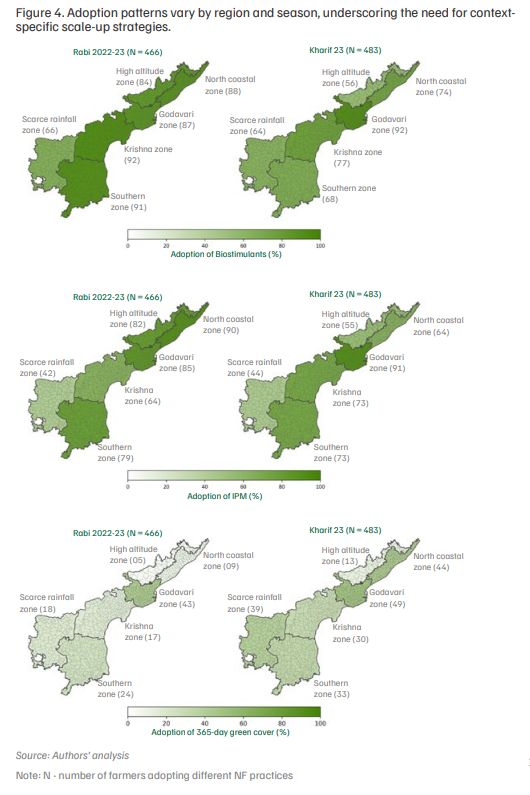
Contrary to prevailing assumptions, farmers in Andhra Pradesh’s Godavari and Krishna zones—regions characterised by input-intensive agriculture—demonstrated high adoption of biostimulants and integrated pest management (IPM) practices.
The study also finds no clear correlation between landholding size and adoption intensity among already transitioned farmers.
Key insight: Medium and semi-medium farmers in irrigated and input-intensive regions can sustain NF adoption when supported through tailored demonstrations and long-term engagement.
3. Women’s participation in farm decision-making increases adoption intensity
Households where women actively participated in farm-related production decisions adopted 14 per cent more NF practices.
Women-led self-help groups (SHGs), which form the backbone of the APCNF dissemination model, emerged as important institutions for behaviour change and peer learning.
Key insight: Women are not just participants in agroecological transitions—they are central agents of adoption and dissemination.
4. Health and nutrition concerns are major motivators for natural farming adoption
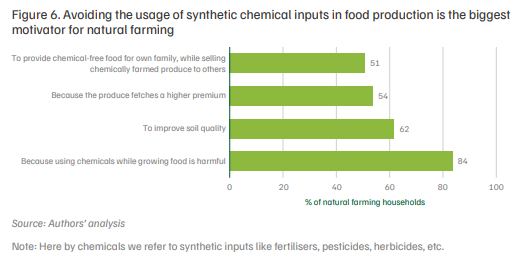
Around 84 per cent of surveyed farmers cited concerns regarding synthetic chemicals in food production as a primary motivation for adopting NF. More than half highlighted the importance of producing chemical-free food for household consumption.
Key insight: Farmers increasingly associate natural farming with safer and healthier food systems. Public messaging around nutrition and health could strengthen adoption pathways.
India’s Green Revolution of the 1960s transformed the country, lifting it from a state of food insecurity to food surplus. However, the input-intensive practices that underpinned the movement have brought significant ecological and socio-economic externalities, including soil degradation, adverse health impact of chemical exposure, and rising farmer debt — making our agriculture system highly vulnerable to shocks (Kumar et al. 2017). In response, alternative models of sustainable agriculture have emerged in recent years. One such initiative is the Andhra Pradesh Community-managed Natural Farming (APCNF) programme, launched in 2016, which promotes chemical-free agroecological practices. The programme aims to scale natural farming (NF) through community-led models by empowering women-led self-help groups (SHGs), fostering peer learning and providing critical support for training.
The APCNF programme seeks to transition all six million farmers and eight million hectares under cultivation in Andhra Pradesh to NF by 2031. The Indian government also aims to have 10 million (1 crore) farmers practising NF by 2027 (PIB 2023). Several states in India are introducing dedicated plans and budgets for scaling NF1. In this issue brief, we analyse longitudinal survey data from October 2022 to April 2024 of farmers in Andhra Pradesh to identify the drivers and barriers to NF adoption and to derive pathways for scale-up.
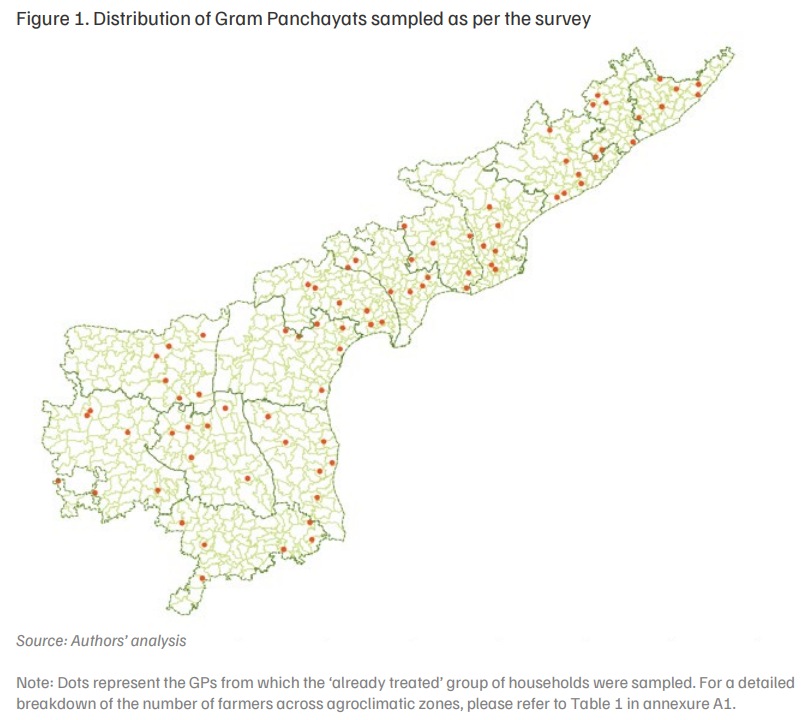
Our study covers 933 households who practice natural farming in 78 gram panchayats (GPs) spread across all (13 former) districts of Andhra Pradesh, where the APCNF programme was introduced between 2016 and 2019. The selected households have been practising natural farming in at least 10 per cent of the cultivated area for a minimum of two years. These households offer insights into the long-term trajectory of NF adoption.
We analyse adoption patterns across agricultural seasons and agroclimatic contexts by first validating and cleaning the dataset and then segmenting observations by season to reflect the state’s cropping calendar.
To identify the determinants of adoption intensity, we estimate a Poisson regression for the number of NF practices adopted, and use logistic regressions to assess what drives the adoption of specific practices, controlling for key socio-economic and geographic factors (e.g., wealth, education, land ownership and agroclimatic zone) and relevant household characteristics.
The findings summarise what this evidence reveals about the strongest levers and bottlenecks for scaling NF adoption in Andhra Pradesh. (Refer to Chapter 2 for more details on our sampling approach).
1. Sustained engagement with community resource persons (CRPs) is a key driver of natural farming adoption and sustenance
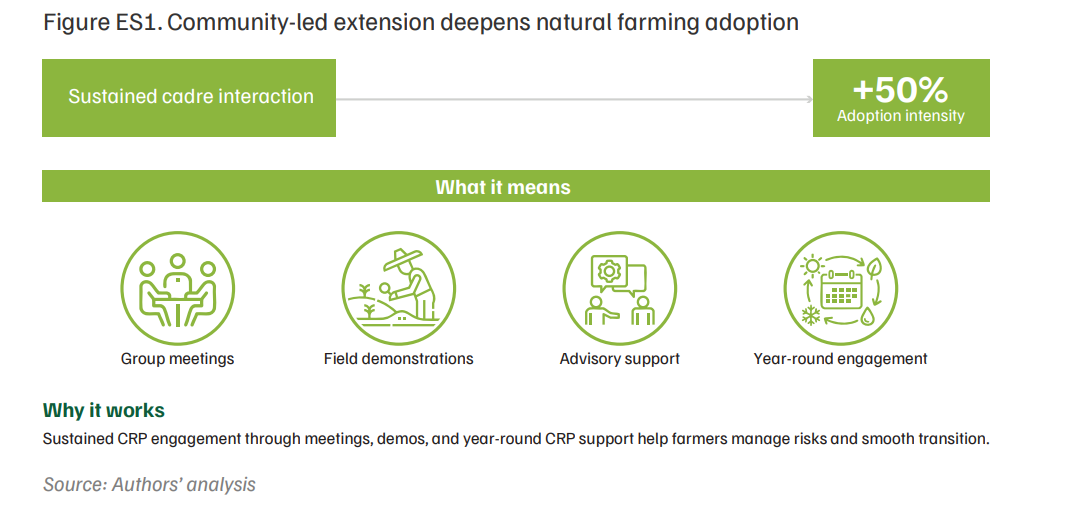
Evidence from long-term APCNF farmers shows that consistent CRP support is associated with a 50 per cent higher adoption of natural farming practices compared to households without regular engagement. Through group meetings, field demonstrations, and year-round advisory support, CRPs enable smooth transitions and reinforce practice uptake.
Adoption patterns also highlight the programme’s promise to evolve farmer behaviour over time— while over 70 per cent of APCNF farmers currently use biostimulants (a past programme focus), practices like 365-day green cover or border and trap crops, though initially adopted by less than 40 per cent of farmers, are now becoming more widely used, as observed in later rounds of data collection and field visits. This underscores the need for policymakers to institutionalise community networks as a long-term (5+ years) extension strategy, complemented by performance-based incentives for extension workers, as envisaged under National Mission on Natural Farming (NMNF), to sustain high-impact farmer engagement.
2. Targeted support can drive high natural farming adoption even in input-intensive regions.
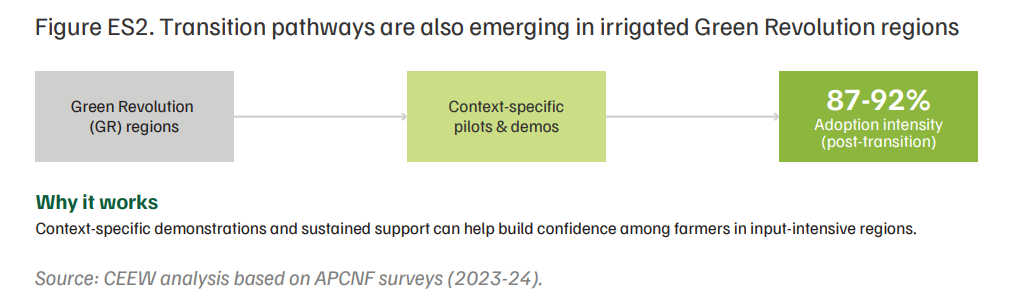
We find that APCNF farmers from Andhra Pradesh’s Godavari zone—a chemical inputintensive, irrigated, Green Revolution (GR) region—show high adoption intensity of NF practices. Among APCNF farmers in this region, 87–92 per cent report using biostimulants. Notably, we also find that the intensity of NF adoption is consistent across marginal, small, semi-medium, and medium landholders once they transition—an important insight for GR regions, where medium and large farmers dominate and drive input-intensive agriculture. During our consultations with programme implementers, we found that although they faced initial resistance to the transition in the GR regions, the farmers who adopted NF showed stronger commitment and higher adoption intensity than farmers in other regions.
To tap into this opportunity, agroecological programmes should consider piloting strategies in GR regions to:

3. Households where women are active in decision-making are more likely to adopt a greater number of natural farming practices.
Evidence from APCNF farmers demonstrate that the involvement of women in farm-related decisions led to a 14 per cent rise in the number of NF practices adopted. Given women’s critical role in agricultural labour and household food & nutrition decisions, the scale-up strategy for NF must target rural women via SHGs. In the APCNF programme, women SHGs have demonstrated significant merit in dissemination and uptake of the programme. Women’s aspiration to provide chemical-free, nutritious food for their families makes them natural leaders in the movement toward sustainable agricultural practices.
4. Produce being nutritionally safer and healthier is a major driver for natural farming adoption.
As many as 84 per cent of the farmers surveyed cited the harms of using synthetic inputs for food production as their primary motivation for adopting NF, demonstrating awareness of input-intensive agriculture's negative impact on health, nutrition, and soil. Among these, 51 per cent of farmers specifically highlighted NF's ability to provide chemical-free food for their families as a primary motivator, underscoring their concerns regarding health and nutrition.
With the NF scale-up currently targeting small and marginal farmers who typically rely on family labour and consume a significant share of their produce, the health benefits of NF emerge as a critical factor in driving adoption. Reduced use of synthetic inputs lowers exposure risks for household members involved in cultivation, while the self-consumption of produce supports safer and healthier food consumption for the family. Positioning NF produce as nutritionally safer and healthier may unlock greater buy-in from farmers and accelerate adoption. Moreover, integrating NF produce into public procurement systems such as Public Distribution System (PDS), Integrated Child Development Services Scheme (ICDS), and Pradhan Mantri Poshan Shakti Nirman (PM-POSHAN) may create stable market access, extend health gains to nutritionally vulnerable populations, and enhance programme reach by leveraging existing public distribution platforms for wider dissemination.
To summarise, for a successful scale-up of natural farming, and sustainable practices in general, the focus must be on (i) sustained and long-term engagement of CRPs with farmers; (ii) awareness campaigns on health and nutrition benefits of NF; (iii) Promoting context-specific training and demonstration plots tailored to farmers in GR regions; and (iv) engagement of women as a critical entry point for initial dissemination of NF approaches and its impacts.
In the 1960s, India launched the GR to transform itself into a food-surplus nation and improve the economic conditions of farmers (Kumar et al. 2017). Although the GR must be credited for securing India’s food supply, it led to an extensive dependence on chemical inputs and resources (John and Babu 2021). This dependence, in turn, has led to severe consequences for sustainability that require careful consideration and innovative policy responses.
The GR promoted practices, such as the use of seeds of high-yielding varieties (HYV) and the increased use of inorganic fertilisers and pesticides. These have led to a complex set of environmental and socio-economic challenges. Intensive cropping without replenishing the soil’s organic content has depleted it of nutrients, while excessive chemical use has led to crosscontamination and increased soil alkalinity, threatening food security (John and Babu 2021).
At the same time, rising input costs, shrinking landholdings, and inequitable market access have deepened farmer debt and reduced incomes, leaving smaller farmers especially impoverished (Pingali 2012; Hardwood 2019).
Climate variability has further compounded these challenges by increasing crop losses and yield volatility—through erratic rainfall, heat stress, and shifting pest/disease pressures—raising production risk and pushing many smallholders deeper into debt. According to a government report, Risk and Vulnerability Assessment of Indian Agriculture to Climate Change, 11 Indian states are facing significant risks to agricultural production due to climate change (Rao et al. 2019).
These risks underscore the need for a fundamental shift from India’s current production methods towards a more resilient agricultural system that can boost yields, protect the environment, and support nutritional security and economic prosperity.
Against this backdrop, we note the emergence of various alternative agricultural systems, including natural farming (NF). NF is an agroecology-based approach that aims to counter the adverse effects of unsustainable chemical-based agricultural practices through the use of natural inputs (Dhandapani et al. 2023). It aims to lower production costs, boost rural economies, and reduce credit risks associated with borrowing capital for costly chemical fertilizers (Kumar et al. 2020; Gupta et al. 2020).
As per data released by the Department of Agriculture & Farmers’ Welfare in 2022–23, the total area under NF in India is 9.5 lakh hectares across 17 states, with an estimated 2 million (20 lakh) farmers practising NF (T. Rajesh et al. 2024). The Government of India seeks to scale up these practices through the National Mission on Natural Farming (NMNF). As announced in the Union Budget 2024–25, the NMNF programme aims to transition 10 million farmers to NF over the next two years (GOI 2024–25).
The Andhra Pradesh Community-managed Natural Farming (APCNF) programme, launched in 2016, represents one of India’s most ambitious efforts to scale agroecological practices. A state-wide programme implemented by the Rythu Sadhikara Samstha (RySS), the APCNF aims to transition 8 million farming households from conventional chemical farming to NF by 2036. As of 2023, APCNF was operational in 3,730 villages across 26 districts, with 850,000 farmers enrolled, cultivating 3.78 lakh hectares. Of these, 90 per cent are small and marginal farmers (Dorin et al., 2024).
Unlike short-term fiscal support policies such as subsidies and cash transfers, the APCNF programme fosters long-term adoption by engaging local women’s SHGs and identifying top-performing farmers as local community leaders. This grassroots model has driven one of the largest agroecological transformations in the world, delivering both economic and environmental benefits – such as lowered input costs from using locally prepared natural bio-inoculants instead of synthetic chemicals, reduced credit reliance, and improved soil health, (GIST Impact 2023; IDSAP 2022).
Evidence suggests that NF practices can also significantly reduce production costs due to the reduced use of synthetic inputs (Reddy et al. 2019; Bharucha et al. 2020). In addition to direct cost savings for farmers, Andhra Pradesh could save an estimated USD 70 million annually in fertiliser subsidies every year if NF covers 25 per cent of the total crop area in Andhra Pradesh (Gupta et al. 2020). These savings—combined with higher net farm incomes—could support improved investments in education, health, and financial security for rural households (CSTEP, 2019).
As one of India’s successful state-led agroecological initiatives, the APCNF programme offers valuable lessons both in scientific outcomes and programme implementation. Meanwhile, RySS already supports farmers in Madhya Pradesh, Rajasthan, Meghalaya, and Odisha and has been declared a national support organisation for NF (GOI 2021). Despite its scale and early success, field-level challenges to NF adoption persist.
APCNF aims to transition 8 million farming households from conventional chemical farming to natural farming by 2036.
Despite the advantages of sustainable agriculture practices, they remain far from mainstream in India. Fewer than 5 million farmers practise agroforestry, and only about 0.8 million farmers practise NF (Gupta et al. 2021). Understanding the factors that enable or hinder the adoption is essential to improving programme design and maximising returns on public investment. These insights can guide other programmes by identifying best practices, addressing challenges, and ensuring the effective integration of agroecological approaches into local farming systems.
In this brief, we analyse longitudinal survey data to identify the institutional, behavioural, and agroecological factors that enable or constrain the scale-up of natural farming in Andhra Pradesh. Using primary data from the APCNF programme, we examine current adoption trends— which practices are adopted, by whom, and in which agroclimatic contexts. We assess the key factors driving NF adoption – such as geography, training, seasonality, access to irrigation, farm characteristics, and peer influence. These findings aim to inform targeted policies that can effectively help scale regenerative agriculture. Our insights aim to guide policymakers in designing interventions that strengthen NF adoption within and beyond Andhra Pradesh.
To bridge the evidence gap on NF’s impact on various economic (cost of cultivation, yield), environmental (soil health), and social outcomes, the Council on Energy, Environment and Water (CEEW), along with the Climate Policy Lab at Tufts University and the Woodwell Climate Research Centre, initiated a large-scale, longitudinal impact assessment of the APCNF programme. The assessment began in 2022 and aims to inform pathways for scaling sustainable agriculture practices in India.
A unique aspect of our study is its focus on long-term practitioners of NF. While 80 per cent of the sample was randomly drawn from non-APCNF villages — represented at the gram panchayat level (GPs)and assigned to treatment and control groups—20 per cent comprised NF households selected from APCNF villages where the GPs had adopted the programme between 2016 and 2019. This allows us to understand the evolution of NF practices from their first adoption and review the associated impacts among the early practitioners of NF. This sample structure enables analysis of practice evolution among early NF adopters while recognising that treated GPs differ systematically from non-treated GPs and therefore cannot be directly compared.
Our study spans five years, with annual household surveys collecting data on agronomic factors (crops, cropping practices, yield), economic indicators (cost of cultivation, revenue, net income), and environmental outcomes (soil health, nutrition). It tracks the cost of cultivation and the adoption of NF across 13 erstwhile districts3 of Andhra Pradesh, assessing the impact of NF on productivity, sustainability, and farmer livelihoods.
In this issue brief, we focus on the ‘already treated’ group of GPs, representing villages where the APCNF programme was introduced between 2016 and 2019. The ‘already treated’ group (henceforth referred to as ‘our sample’) provides insights into the long-term impacts of NF, enabling analysis of how early adopters have incorporated NF into their production systems over multiple seasons.
2.1. Sampling strategy
From each of the 13 districts, we selected six GPs in which the APCNF programme was implemented between 2016 and 2019. These GPs were selected from the gram mandals randomly sampled in Stage 1 of a simple random sampling (SRS)4 of the control group and the ‘already treated’ GPs. In each mandal, the six GPs with the highest number of NF adopters in one village organisation (VO) were selected. From each of these six GPs, we identified 10 –12 farmers who had participated in the APCNF programme since its inception in 2016. These farmers were thus early adopters and practitioners of NF.5 There are 78 such GPs, so with 10–12 farmers from each GP, the total sample size was 933 households. To qualify for our sample, farmers must meet several criteria (For details on inclusion criteria, refer to Table A.1 in Annexure A.1)
2.2. Time period
We drew our data from two agricultural seasons: kharif 2023 (June–September 2023) and rabi 2022 –23 (October 2022–March 2023). This seasonal tracking allowed us to undertake a thorough analysis of NF adoption trends and variations in farmer behaviour across different times of the year and different agroclimatic zones.
Our analysis integrates both exploratory data analysis and econometric modelling to assess the drivers and impacts of NF adoption across seasons.
3.1. Data validation and cleaning
Before the analysis, the dataset underwent rigorous validation and cleaning to address outliers, missing values, and inconsistencies. This ensured the data was accurate, reliable, and suitable for econometric analysis.
3.2. Seasonal data segmentation
Given that NF adoption varies across agricultural seasons, we segmented the kharif and rabi season data based on sowing dates (for further information on sowing timelines, refer to Annexure 2). We analysed the data for each season separately to arrive at a more nuanced understanding of how NF adoption aligns with Andhra Pradesh’s agricultural calendar.
3.3. Regression analysis
To assess the factors influencing NF adoption, we employed two regression models:
1. Poisson regression model: We used this model to estimate the total number of NF practices that farmers adopted. Independent variables included:
- Training-related factors, such as engagement and interaction with internal community resource persons (ICRPs), field demos, and network effects;
- access to irrigation and the use of synthetic chemical inputs;
- whether the farmer retains the crop for their own consumption;
- the landholding size and
- usage of the family’s own or hired labour.
2. Logistic regression model: We employed this binary model (adoption/non-adoption) to evaluate the factors driving the adoption of specific NF practices. The independent variables were the same as in the Poisson model and provided additional insights into the factors influencing the adoption of individual NF practices. (For further information on why these models were used, please refer to Annexure A.3.)
3.4. Practice grouping
The APCNF programme covers a broad range of NF practices, each designed to fulfil specific objectives – enhancing the organic content of the soil, catalysing plant growth, preventing pest attacks, etc. To simplify our analysis of adoption trends, we categorised these practices into three groups based on their functional role in the farm (Table 1).
| Practice group | Practices covered | Intended benefits |
|---|---|---|
| Biostimulants | Beejamrutham,jeevamrutham (ghanajeevamrutham and dhravajeevamrutham), natural plant growth promoters (NGPs) such as panchgavya, egg amino acids, etc. | Enhanced nutrient absorption, strong plant growth (Devakumar et al. 2014, 639–642), increased crop yields (Sutar, Sujith, and Devakumar 2019, 825–828), improved soil health (Kaur 2020), stress relief, and water retention |
| Integrated pest management (IPM) | Kashayams (neemastra, brahmastra, dashparani, etc.), mechanical pest traps (sticky traps and pheromone traps), trap crops and border crops | Reducing pest outbreaks (Kammara et al. 2023, 167–182) to minimise losses to pests and diseases and enhance farmers’ incomes (Kumari et al. 2023, 37–39). |
| 365-day green cover | Mulching and pre-monsoon dry sowing (PMDS) | Soil health, moisture retention, weed control, pest and disease resistance (Jabran 2019) |
The first group–biostimulants–includes practices such as the use of beejamrutham7 and jeevamrutham8. These are prepared using on-farm inputs and are applied directly to crops or fields to promote plant growth and resilience. Their ease of use makes them highly accessible to farmers and important for improving crop performance.
The second group–integrated pest management (IPM) practices–covers kashayams9, mechanical pest traps, and trap and border crops. Despite varying applications, they all work to prevent or control pest infestations, adding up to a comprehensive toolkit that farmers can use to manage pests sustainably.
Finally, 365-day green cover practices focus on agroecological methods such as pre-monsoon dry sowing (PMDS) and mulching. These practices help maintain soil fertility by ensuring continuous green cover. This green cover helps retain moisture, prevents erosion, and improves soil organic matter, contributing to its long-term health.
Following the methodology detailed in Section 3, this section presents the key empirical findings from our analysis. We first map out the key trends in the use of NF practices across the surveyed households and then identify the primary socioeconomic and programmatic determinants that drive or hinder the adoption of these practices.
4.1. Key trends in the adoption of natural farming practices
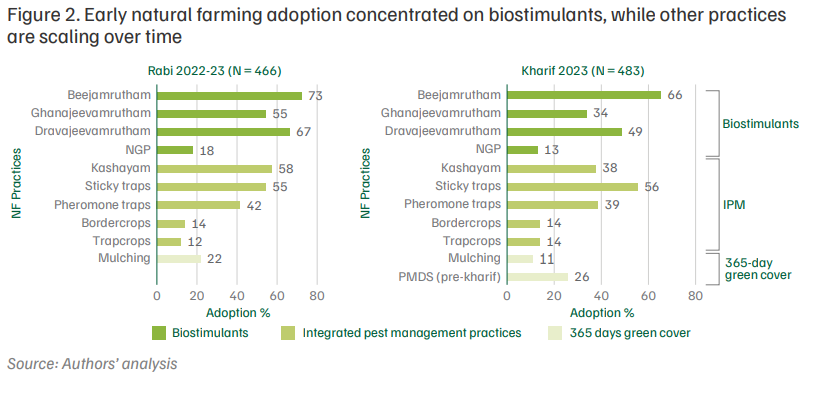
Evidence from APCNF indicates that biostimulants often serve as an entry point into natural farming due to their ease of application, with more than 70 per cent of cultivating farmers using them (86 per cent in rabi and 74 per cent in kharif). This trend is consistent with the programme’s early emphasis on popularising biostimulants as a foundational practice. Farmers often apply biostimulants on portions of their land as an experiment (rather than making a complete transition) when beginning natural farming. Integrated Pest Management (IPM) practices are also widely adopted, with over 65 per cent of farmers using them (74 per cent in rabi and 68 per cent in kharif).
By contrast, agroecological practices that promote 365-day green cover—such as PMDS and mulching—remained less common in the 2023-2024 agricultural year, with adoption rates below 40 per cent in both seasons. This pattern may be linked to the programme’s initial emphasis on biostimulants, which are comparatively easier to prepare and apply.
With the scale-up of APCNF and its shift in emphasis towards PMDS and 365-day cover practices, larger adoption of these agroecological approaches is already being observed in later rounds of data and field visits.This suggests that sustained CRP engagement and evolving programme priorities may support farmers’ progression from input substitution towards more holistic agroecological practices over time.
| Biostimulants | Self-preparation rate (rabi) in % |
No. of farmers using in rabi |
Self-preparation rate (kharif) in % |
No. of farmers using in kharif |
|---|---|---|---|---|
| Beejamrutham | 79.3 | 322 | 74.2 | 397 |
| Ghanajeevamrutham | 83.3 | 267 | 61.5 | 188 |
| Dhravajeevamrutham | 77.3 | 216 | 74.4 | 122 |
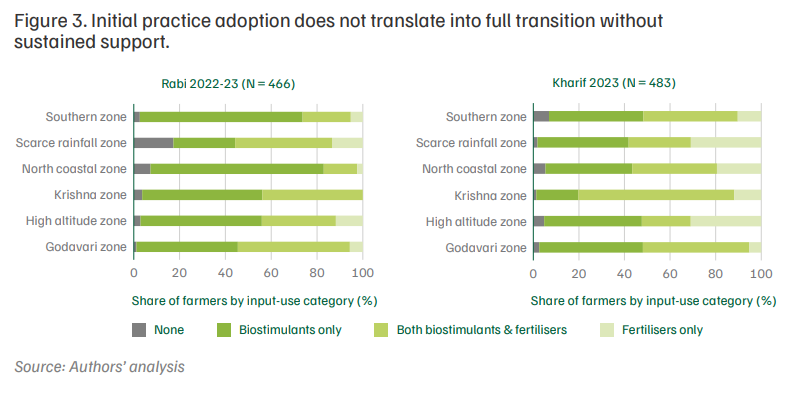
Seasonal variations in adoption suggest an adaptive approach linked to agroclimatic constraints
Our analysis shows that the adoption of NF practices varies across agricultural seasons. While this variation is inconsistent across different practice groups and agroclimatic zones, we observe a clear trend that farmers adopt NF practices more extensively during the rabi season than in the kharif season.
This seasonal disparity suggests that farmers may not be practising NF uniformly across the year. Instead, farmers appear to follow an adaptive, seasonal strategy, likely driven by specific constraints tied to their agroclimatic context, such as water availability, labour demands, cropping patterns, and soil type.
No clear correlation exists between landholding size and adoption of natural farming practices
We also examined NF adoption across different farmer categories, based on landholding sizes. We found no clear correlation between landholding size and the adoption of NF practices, suggesting that once farmers transition, NF practices appeal equally across small, marginal, semi-medium, and medium landholders. This finding does not speak to the likelihood of transition—only to adoption intensity among those who have already transitioned. It therefore highlights that adoption is not limited to smaller landholdings.
While the APCNF programme prioritises small and marginal farmers, similar adoption levels among semi-medium and medium landholders demonstrates the versatility of these NF practices.
For detailed data on the adoption of natural farming practices across different farmer categories and agroclimatic zones, please refer to Table 1 in Annexure A.1.
| Farmer category | Number of cultivators (N) | Median number of natural farming practices adopted | ||
|---|---|---|---|---|
| Rabi 2022–23 | Kharif 2023 | Rabi 2022–23 | Kharif 2023 | |
| Marginal | 240 | 252 | 4.0 | 3.0 |
| Small | 116 | 112 | 4.0 | 3.0 |
| Semi-medium | 72 | 65 | 3.0 | 2.0 |
| Medium | 28 | 35 | 4.0 | 3.5 |
4.2. Key determinants for the adoption of natural farming practices
To understand the key determinants of NF adoption, we used a multivariate Poisson regression model to analyse the factors influencing how many NF practices the farmers adopted. This analysis helps distinguish high adopters from low adopters and identifies the programmatic and household-level characteristics associated with adoption. Some of the key findings from this model are presented in Figure 5.
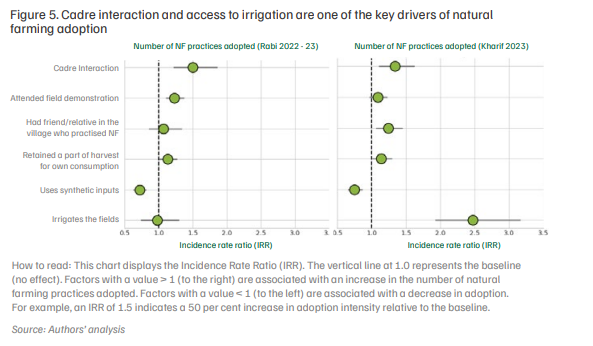
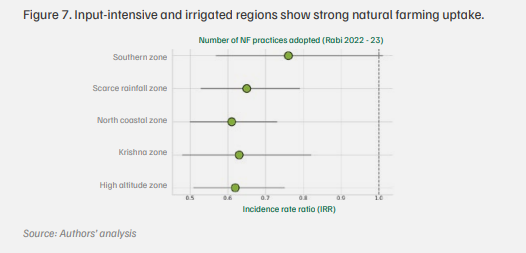
Farmers who took part in regular training and received sustained on-ground support from CRPs adopted 51 per cent more NF practices during the rabi 2022–23 season and 36 per cent more during the kharif season. This highlights the importance of continuous check-ins and Internal Community Resource Person (ICRP) training.
While knowledge transfer through ICRPs is the dominant model of effecting change for the APCNF programme, the data shows that ongoing engagement remains important even for long-term NF practitioners. NF adoption is not a one-time shift but a sustained process requires continuous handholding and cadre support.
Field demonstrations by ICRPs also emerge as an important driver of adoption. Farmers who participated in field demos adopted 24 per cent more NF practices during the rabi season. Additionally, network effects play a crucial role. Farmers adopt 25 per cent more NF practices in the kharif season if they have friends and relatives practising NF.
The strong influence of irrigation on natural farming adoption
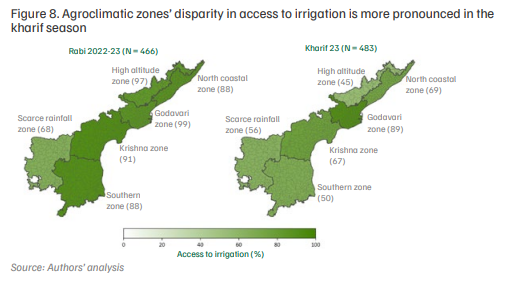
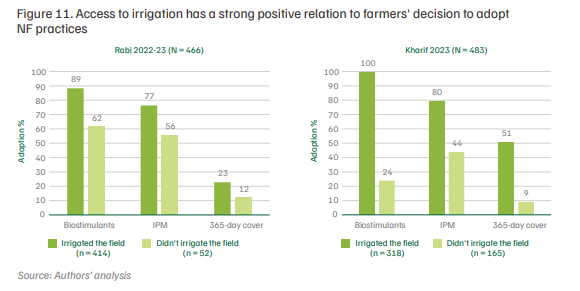
Irrigation access is also a significant enabler of NF adoption. During the kharif season, farmers with access to irrigation adopt more than twice as many NF practices as those without access. In the rabi season, about 90 per cent of the sample farmers irrigated their fields, underscoring the importance of irrigation in farmers’ decision to cultivate during the rabi season.
Empirically, we find a strong relationship between irrigation access and the adoption of NF practices across both the rabi and kharif seasons. During field visits, we observed that while farmers do not explicitly link irrigation with NF, water availability plays a crucial role in supporting the preparation and application of bio-inputs such as jeevamrutham and beejamrutham. This is particularly evident in the case of dhravajeevamrutham,10 where easier water access significantly facilitates its preparation and use.
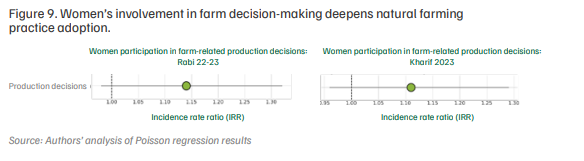
We tested the influence of women’s participation in NF adoption using a measure of their involvement in on-farm decision-making. The results reveal a positive and statistically significant relationship between women’s involvement in decision-making regarding agricultural production and the adoption of a higher number of NF practices, particularly during the rabi season – meaning, households where women are involved in farm decision-making tend to adopt a higher number of NF practices during the lean period.
Since APCNF disseminates NF practices through women’s SHGs, this linkage aligns with programme design. Field observations suggest collaborative decision-making between men and women may improve NF adherence. A gender-inclusive approach not only fosters sustainability, but it can also strengthen household economies, emphasising the vital role of women in the sustained adoption of NF practices.
Factors influencing the adoption of specific natural farming practices
In addition to examining the factors determining the total number of practices adopted, we employed a multivariate logistic model to assess the factors driving the adoption of specific NF practices. NF practices differ in their uses/benefits, on-ground awareness, and ease of adoption. Thus, looking at the drivers of adoption for these practices may inform more nuanced decisionmaking towards scaling up agroecology in the country.
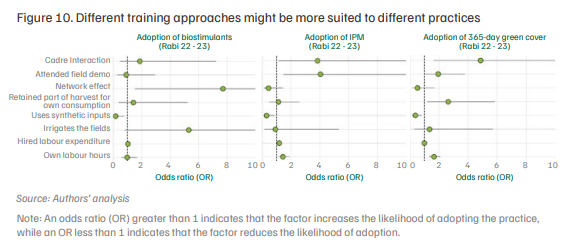
Cadre interactions consistently emerge as a strong enabler across all NF practice groups. For IPM and 365-day green cover practices, field demonstrations by CRPs are crucial. These techniques demand more hands-on learning, making demonstrations more critical for adoption.
The influence of a farmer’s peer network – comprising neighbours, relatives, and community members – is significant for the adoption of biostimulants, on the other hand, but has minimal impact on practices such as IPM and maintaining 365-day green cover.
Moreover, labour usage – particularly during the rabi season – plays a crucial role in the adoption of practices such as IPM and PMDS, highlighting that these practices are labourintensive, with higher usage of the family’s own labour being strongly associated with adoption.
Our analysis of NF adoption across different agroclimatic zones in Andhra Pradesh highlights several patterns that can inform policies for scaling up NF practices. While NF adoption has seen success in certain regions and for specific practices such as biostimulant use, challenges remain when it comes to comprehensive and consistent adoption across all practices, regions, and seasons. Our findings emphasise the need for sustained support through community-led initiatives, tailored training, and field demos. To maximise the impact of NF on farmer livelihoods, environmental sustainability, and agricultural productivity, we propose the following recommendations that are grounded in the observed patterns from our dataset.
5.1. Ensure regular and sustained community resource person engagement for sustained and long-term natural farming adoption
Our analysis indicates that ICRP engagement, such as farmer–cadre interactions and field demonstrations, is positively and strongly linked to the adoption of NF practices and are key drivers of NF adoption. Sustained cadre engagement is important to ensure high adoption of NF practices and techniques, even for long-term NF adopters. In addition to their direct positive impact, ICRP activities might also promote adoption through indirect channels, such as network and peer effects, which we have found to be statistically significant in certain cases.
Our analysis shows that the sampled farmers have high adoption rates for bio-inputs and lower rates for NF practices such as mulching and PMDS. A higher bio-input adoption rate may be due to farmers’ perception of bio-inputs as complements to/substitutes for synthetic fertilisers and their relatively ready availability and ease of preparation. In comparison, mulching and PMDS require greater knowledge, capacity-building, human labour, materials, and experience.
Hence, the programme should ensure the sufficient presence of CRPs/lead farmers in all agroclimatic zones, particularly in the scarce rainfall zone and other places with low adoption rates. While the focus might be on scaling up and ensuring new farmers adopt NF practices, it is equally important to maintain regular interactions with existing practitioners to prevent attrition and deepen adoption.
5.2. Ensure cadre interaction across marginal, small, semi-medium, and medium landholders
Interestingly, although the APCNF programme focuses on small and marginal farmers, our findings from the 'already treated' group show that a farmer’s operational holding size is not statistically associated with the number of practices adopted post-transition. This suggests that once farmers have transitioned, their adoption intensity is primarily influenced by the extent of cadre interaction, rather than the farm size. Therefore, to deepen the adoption of more comprehensive NF practices, programmes should maintain regular engagement with all existing practitioners, regardless of their landholding category.
5.3. Create and deploy context-specific programmes to provide tailored training and hand holdings
We see a strong positive link between farmers’ access to irrigation and their adoption of NF practices. This suggests that farmers with access to irrigation are more likely to adopt NF. This might be the case because most farmers in our sample grow paddy, which typically requires irrigation access and also report higher NF adoption. While NF adoption is relatively higher in irrigated regions, targeted support is needed for dryland farmers. Tailored training led by CRPs can help identify region-specific barriers—such as water constraints, labour availability, and crop selection—and support more equitable adoption across agroclimatic contexts.
5.4. Leverage perception of nutritional and health benefits as a key motivating factor for natural farming adoption
Avoiding synthetic chemical inputs in food production is the strongest motivator for NF adoption, with 81 per cent of farmers citing this reason. Additionally, 51 per cent of farmers find that adopting NF ensures that they provide ‘chemical-free’ food for their own families, highlighting the importance of health and safety benefits.
Farmers are increasingly motivated by the desire to produce food that is free from harmful chemicals, as they associate NF produce with superior nutritional and health benefits compared to conventionally farmed crops. Hence, agroecological programmes can include training and awareness sessions on the perceived and real health and nutritional advantages of NF produce to encourage broader adoption. This can also reduce the rampant use of biocides (herbicides and pesticides) by farmers.
This study shows that sustaining natural farming (NF) adoption depends not just on exposure or initial support for transition, but on the strength of community institutions. Continued engagement through community cadres, peer networks, irrigation access, and health motivations—especially among women—emerge as key enablers of deeper uptake among long-term adopters.
Importantly, the findings highlight that NF adoption is not confined to smallholders or rainfed regions. We observe no systematic link between landholding size and adoption levels among the long-term practitioners. When supported through sustained interaction and training, medium and semi-medium farmers are equally likely to adopt and maintain NF practices. The role of community-based extension, particularly through trained resource persons, play a pivotal role in the process.
These insights point to three priorities for scaling natural farming.
1. Strengthening embedded extension models
State programmes should invest in long-term, locally rooted extension systems that prioritise trust, continuity, and context-specific knowledge rather than short-term or transactional outreach.
2. Explicitly recognising health and nutrition motivations
High levels of self-consumption suggest that farmers’ concerns around health and food safety are important drivers of adoption. Programme design should acknowledge these motivations and explore linkages with public nutrition platforms to expand access to safer food.
3. Centering women as agents of change
SHGs and rural development institutions should go beyond participation targets and actively support women’s roles as catalysts for behavioural change within households and communities.
As the National Mission on Natural Farming moves toward its target of 10 million farmers by 2027, these findings offer a behavioural and institutional roadmap. A scalable NF model will require systems that are not only technically sound, but socially embedded—built on relationships, reinforced by practice, and led by farmers themselves.
Natural Farming (NF) is an agroecological approach to agriculture that seeks to reduce dependence on synthetic chemical inputs such as fertilisers, pesticides, and herbicides. Instead, it promotes the use of locally prepared natural bio-inputs, ecological pest management, crop diversity, mulching, and soil health restoration practices such as pre-monsoon dry sowing. NF aims to lower cultivation costs, improve soil health, reduce ecological stress, and support safer and healthier food systems.
The Andhra Pradesh Community-managed Natural Farming (APCNF) programme is a state-led agroecological initiative launched in 2016 and implemented by Rythu Sadhikara Samstha (RySS). It is among the world’s largest community-driven natural farming programmes. APCNF aims to transition 8 million farming households in Andhra Pradesh to natural farming by 2036. The programme relies on women-led self-help groups (SHGs), community resource persons (CRPs), peer learning, and local extension systems to support farmer transition and long-term adoption.
The Andhra Pradesh Community-managed Natural Farming (APCNF) programme is among the world’s largest agroecological transitions. Its scale, institutional design, and long-term implementation offer valuable lessons for India’s broader natural farming mission.
The study identifies sustained CRP engagement, peer networks, women’s participation in farm decisions, and health motivations as key drivers.
No. The study finds that adoption intensity among already transitioned farmers does not vary significantly by landholding size.
Women’s participation in household production decisions positively influences adoption intensity. Women-led SHGs also play a central role in dissemination and peer learning.

Water, Nature, Progress: Solutions for a New India
Cattle and Community in a Changing Climate
Understanding Trends in Dietary Diversity in India:
Adapting Agricultural Water Resources Management for a Changing Climate