Council on Energy, Environment and Water Integrated | International | Independent


Suggested Citation: Auddy, Surya Shekhar, Varian Crasto, and Abhishek Kar. 2026.Understanding Clean Cooking Fuel Usage Among Migrants Evidence from Willingness to Pay Surveys in 10 Indian Cities. New Delhi: Council on Energy, Environment and Water.
India's migrant workers make up nearly a third of the country's population, yet they remain largely invisible to the clean cooking energy ecosystem. Since 2016, the Pradhan Mantri Ujjwala Yojana (PMUY) has extended LPG connections to 10.5 crore beneficiaries, and PMUY 2.0 opened the scheme to migrant families in 2021 through a simplified self-declaration process. However, no disaggregated data exist on how many migrant households have actually benefited, leaving a critical policy blind spot.
This issue brief presents new primary evidence from a survey of 1,061 migrant worker respondents across 10 Indian cities, examining what cooking fuels they use, how much they currently spend, and what they are willing to pay for cleaner alternatives. The findings are part of a larger survey of over 4,000 respondents spanning rural, urban slum, and migrant households.
By quantifying migrant workers' willingness to pay (WTP) alongside their current access and affordability constraints, this study identifies the precise price points and structural barriers, documentation gaps, informal pricing, and housing instability that keep migrants locked out of formal clean cooking access, and offers targeted recommendations to close this gap.
The Pradhan Mantri Ujjwala Yojana (PMUY) scheme was launched to provide access to Liquefied Petroleum Gas (LPG) for women from low-income households. Since 2016, the PMUY has provided LPG connections to 10.5 crore beneficiaries (PPAC 2026). In 2021, the benefits were extended to migrant worker families under PMUY 2.0 through a simplified self-declaration process (PIB 2021). No disaggregated data are available on the number of migrant households that have availed of this benefit, making it difficult to assess its reach and effectiveness. Migrants comprise 29 per cent of India’s total population (GoI MoSPI et al. 2020), a majority of whom are contractual and daily wage earners in brick kilns, quarries, mines, and the informal construction, manufacturing, and services sectors (Saldanha, D’Cunha, and Kovick 2023). They form the backbone of India’s informal economy. These migrants face a ‘triple exclusion’ from welfare, market, and social systems (Rajan and Nizam 2025). While they typically hold formal documents such as Aadhaar cards, ration cards, and bank passbooks, these are tied to their permanent home addresses; without updated address proof for their temporary work locations, they are unable to access benefits at their workplace.
They face a ‘domicile trap’, where benefits are tied to their state of origin rather than their current place of residence. Consequently, these migrants remained largely outside the formal clean cooking ecosystem. This study therefore presents primary evidence on migrant workers’ access to and affordability of cooking fuels, as well as their expectations regarding the transition to LPG for cooking, to inform the policy discourse on LPG subsidies and access.
Assessing usage and willingness to pay (WTP) is crucial to understanding the price point at which refill behaviour changes, and so bridges physical access and functional adoption. The COVID-19 pandemic reversed gains in clean cooking access and usage across several developing countries (International Energy Agency et al. 2026; Pachauri et al. 2021). This has also impacted the WTP for cleaner fuels. Accordingly, this issue brief examines cooking fuel choices and WTP for cleaner fuels among economically vulnerable groups most likely to rebound to solid fuels post-pandemic. The findings form part of a larger survey of more than 4,000 respondents across urban informal settlements, migrant, and rural households. For the survey findings, slum households are defined spatially by residence in a slum settlement, whereas migrant workers are defined by recent, workdriven migration (arrived ≤6 months prior, intending to stay ≤12 months) in occupations such as construction, waste, transport, and kiln work.
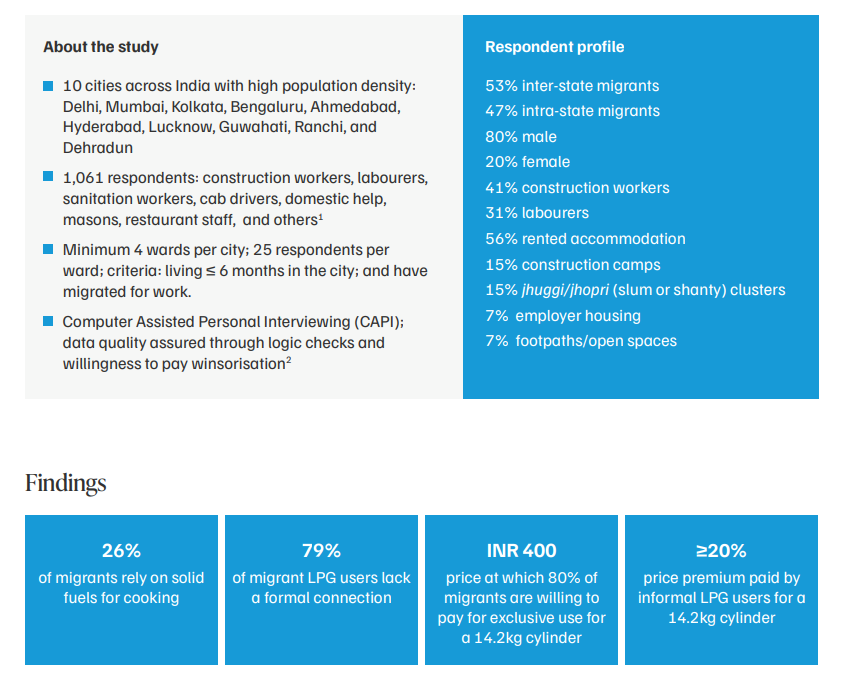
Migrants remain locked out of formal LPG, and PMUY barely reaches them. 74 per cent use LPG; meanwhile, 26 per cent of migrants continue to depend on firewood. 79 per cent of LPG users depend on informal, unregulated connections. Though opened for migrants in PMUY 2.0 in 2021, only around 4 per cent of LPG using migrant respondents are PMUY beneficiaries. Access is lowest among the most vulnerable groups: sanitation workers (44 per cent) and construction workers (30 per cent) lack LPG access.
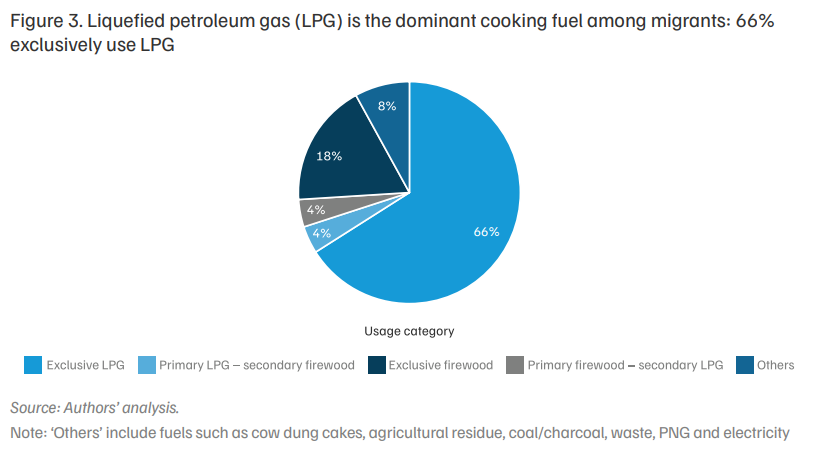
Figure ES1. Liquefied petroleum gas (LPG) is the dominant fuel for cooking among migrants
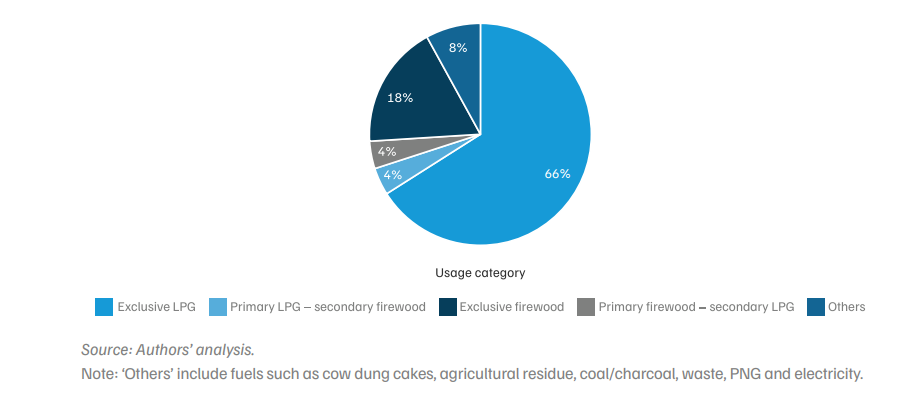
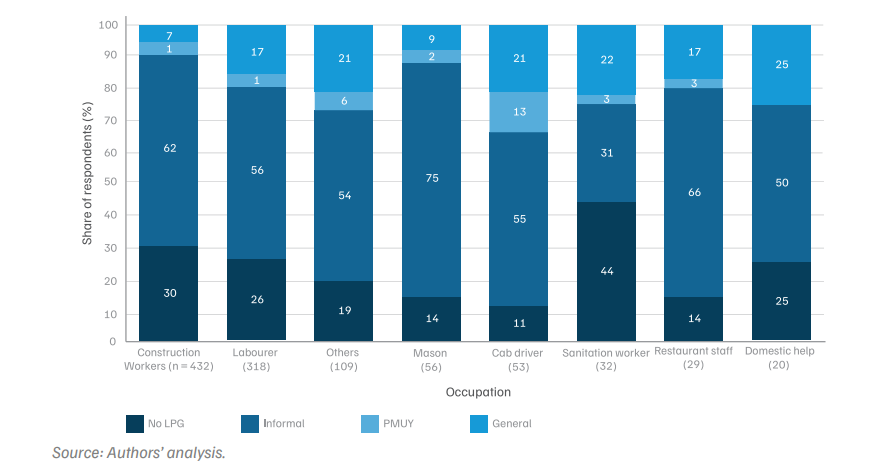
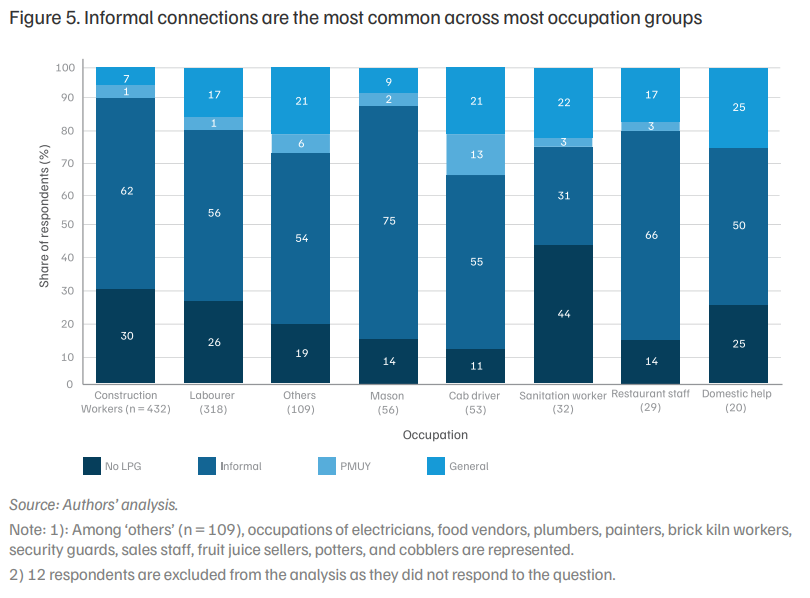
Figure ES2. LPG connections dominate across all occupational types, with low formal PMUY coverage
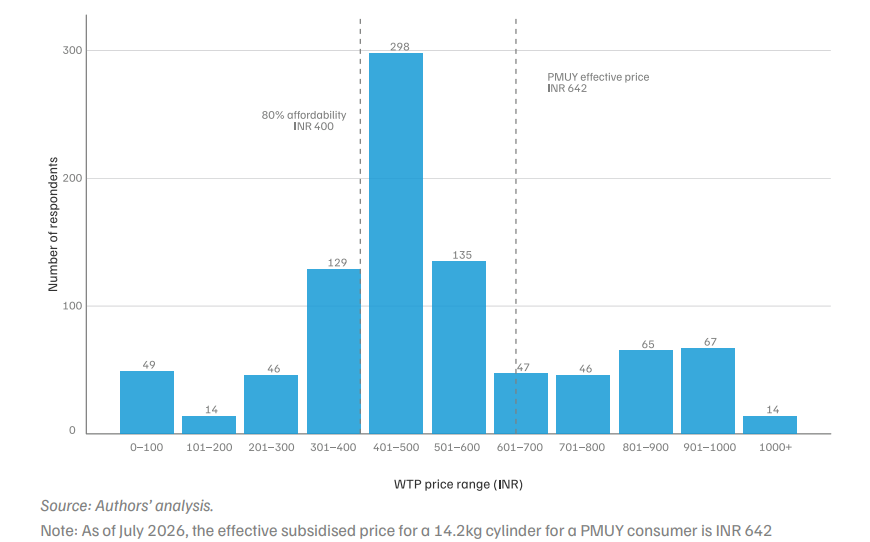
Subsidised LPG remains unaffordable for most migrants. The median willingness to pay (WTP) for exclusive usage of LPG is INR 500 for a 14.2kg cylinder, but the 80th-percentile affordability limit is only INR 400, which is well below the effective subsidised PMUY price of INR 642 (July 2026). Among exclusive solid-fuel users, the bottom 50 per cent median WTP falls to INR 300.
Figure ES3. The overall affordability limit for 80% of migrants is INR 400/b>
According to the State of Global Air Report 2025, air pollution was the leading risk factor for death in India in 2023, with household air pollution accounting for the highest number of deaths of approximately 9.37 lakhs. It is therefore imperative to transition Indian households away from cooking with solid fuels and towards cleaner alternatives, such as liquefied petroleum gas (LPG), piped natural gas (PNG), and electricity, to improve both household health and national ambient air quality (Mani et al. 2021). To ease the burden of accessing clean cooking fuels, the Government of India (GoI) launched the Pradhan Mantri Ujjwala Yojana (PMUY) to provide free LPG connections to economically disadvantaged women. Continued as PMUY 2.0 in 2021, the scheme has made notable progress, adding 2.3 crore new beneficiaries and bringing the total number of PMUY beneficiaries to 10.5 crore since its inception in 2016. However, an important segment of the vulnerable and mobile population, i.e., migrant workers, remains largely excluded from the scheme.
According to the Ministry of Statistics and Programme Implementation (MoSPI)’s report, Migration in India 2020–2021, migrants constitute around 29 per cent of India’s total population. They face a triple exclusion: welfare exclusion by the state, economic exclusion by the market, and social exclusion based on caste hierarchies (Rajan and Nizam 2025). Although standardised provisions exist to enable migrants to access social security, they are often excluded in practice and face challenges such as the ‘domicile trap’, where benefits are tied to permanent residence rather than to the individual. A significant proportion of inter-state migrants also struggle to access social security benefits because of inadequate residential documentation and limited awareness of existing state and central government schemes.
Migrant workers are among the most marginalised groups and have largely been excluded from studies examining barriers to accessing clean cooking fuels. Consequently, there is limited evidence on migrant workers’ demand for and choice of cooking fuels, particularly among those who migrate or move frequently in search of better employment opportunities. A key provision under PMUY 2.0 extended benefits to migrant worker families through a simplified self-declaration process. However, no publicly available disaggregated data are available on how many migrant households have availed of this benefit, making it difficult to assess its reach and effectiveness. In addition, there is limited clarity regarding eligibility within migrant households, particularly whether only adult women are eligible, as under the original scheme. There is also little evidence to support the fixing of a maximum price, as the socio-economic circumstances of migrant populations vary considerably and, consequently, so may their willingness to pay (WTP).
Although a few studies have examined these issues, there is a lack of national-level evidence on the extent of these challenges to support government prioritisation. For example, a study in the Chikli slum of Nagpur found that, of the 252 respondents surveyed, almost all belonged to socially backward caste groups, yet only 17 per cent had access to a caste certificate (Patil et al. 2024). Similarly, a study by The Energy and Resources Institute (TERI) examined WTP for electricity among rural households (Graber et al. 2017), but did not examine other clean cooking fuels or urban low-income households.
There was, therefore, a need to gather evidence on migrant workers’ current access to and affordability of clean cooking fuels, as well as their expectations regarding the transition to gas (LPG) for cooking, to inform policy debates on LPG subsidies and access.
The key objectives of the study are to answer the following questions:
1. What cooking fuels do migrant workers use, and what factors influence their sustained use of LPG?
2. What are respondents’ current expenditures on LPG, and what is their stated WTP for clean cooking fuels?
3. What challenges do migrant workers face in formally obtaining an LPG connection?
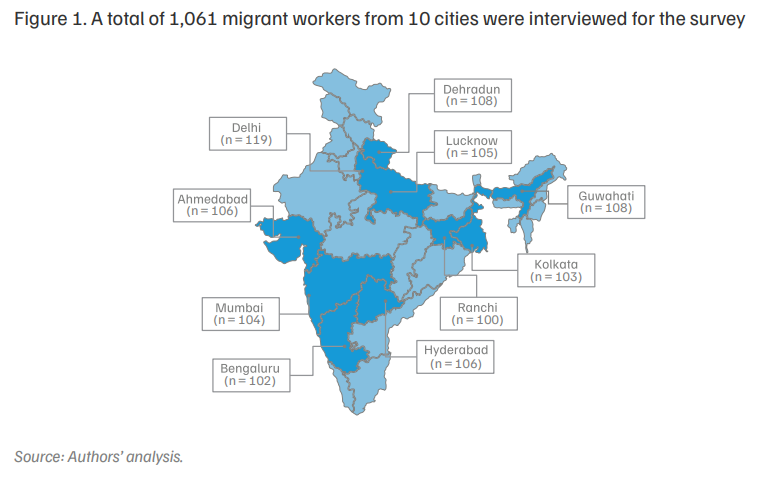
The study was designed to understand the stated WTP for clean cooking fuels among migrant workers. The survey covered a total sample of 1,061 migrant respondents across 10 cities in India. The findings are a part of the larger survey covering more than 4000 respondents across rural households, urban slum households, and urban migrants. The survey covered 2222, 1116, and 1061 respondents from rural households, urban slum households, and urban migrants, respectively.
Sampling
Of the 10 surveyed Indian cities, the first six were the capital cities of the following states: Assam, Jharkhand, Maharashtra, Telangana, Uttar Pradesh, and Uttarakhand—Guwahati, Ranchi, Mumbai, Hyderabad, Lucknow, and Dehradun. The methodology used to identify these six states was adapted from a recent Council on Energy, Environment and Water (CEEW) study (Kar et al. 2024). In addition, four large metropolitan cities with high population densities— Delhi, Bengaluru, Ahmedabad, and Kolkata—were selected.
Convenience sampling was used to select 1,061 migrant worker respondents across the 10 cities.
As there was no inventory of migrant workers or their locations within each city, a minimum of four wards were selected to ensure geographical representativeness—one each from the north, east, west, and south (assuming a central reference point) within the city. The survey covered 25 migrant worker respondents from each ward, covering at least 4 wards. Although the survey is not claimed to be nationally representative of all migrant workers in India, it is reasonably diverse and geographically distributed across the selected cities. Therefore, the findings are indicative of the surveyed migrant worker population and should not be extrapolated to all migrant workers in India.
Respondent selection criteria
As one of the target groups in the broader urban survey comprised urban slum households, it was important to distinguish this group from migrant workers. Respondents were therefore classified based on the following criteria:
1. Respondents should include construction workers, sewage and waste workers, truck and cab drivers, industry workers, brick kiln workers, and others. They may or may not be the primary cooks in their households.
2. Respondents must have migrated from their native place to a different city, another district within the same state, or another state for work or livelihood opportunities.
3. Respondents who had migrated to the city less than or equal to 6 months prior and do not intend to stay in the city for more than 12 months from the date of the survey.
Enumerators were instructed to ensure that at least 50 per cent of respondents in each city comprised construction workers, sewage and waste workers, truck and cab drivers, industry workers, brick kiln workers, and other occupations associated with greater exposure to air pollution. Respondents were selected based on the criteria listed previously following a rapid assessment of the temporary settlements in which they resided.
The study commenced with a conceptualisation phase, during which the survey was designed, tools were developed, and the data collection agency —Sigma Research and Consulting Pvt Ltd3 —was selected. The Computer Assisted Personal Interviewing (CAPI) system, integrated with the survey logic and final survey tool, was developed collaboratively and deployed through SurveyCTO. Data were collected through in-person interviews conducted by a team of more than 60 trained enumerators.
To minimise errors arising from recall bias, social desirability bias, enumerator bias, and other potential sources of bias, multiple rounds of data quality checks were conducted throughout the survey. Recall bias may have affected the accuracy of reported fuel expenditure and usage frequency, particularly among households using multiple fuels intermittently. Social desirability bias may have led some respondents to overreport clean fuel use or underreport
reliance on solid fuels because of the perceived social acceptability of clean cooking. Additionally, hypothetical bias is a well-documented limitation of stated preference, open-elicitation WTP studies, in which respondents may report WTP values that differ from their actual behaviour (Ebert, Winzer, and Müller 2025).
Median values were used for most of the key variables because they are less sensitive to extreme values and provide a better measure of central tendency. To analyse the WTP data points, we winsorised at INR 800 for PMUY users and INR 1,500 for informal and general users. Historically, retail LPG prices and PMUY LPG prices have not exceeded INR 1,200 and INR 800, respectively. This approach was adopted because many migrant workers refill cylinders through informal channels, where they often pay a higher price per kg than the retail LPG prices set by the OMCs.
The findings examine migrant workers’ cooking fuel use, access to formal LPG connections, and willingness to pay, highlighting the key factors shaping their ability to transition to clean cooking. The analysis focuses on how affordability, connection type, and living conditions influence LPG use among 1061 surveyed migrant workers across the 10 cities.
A closer look at the survey respondents’ profile
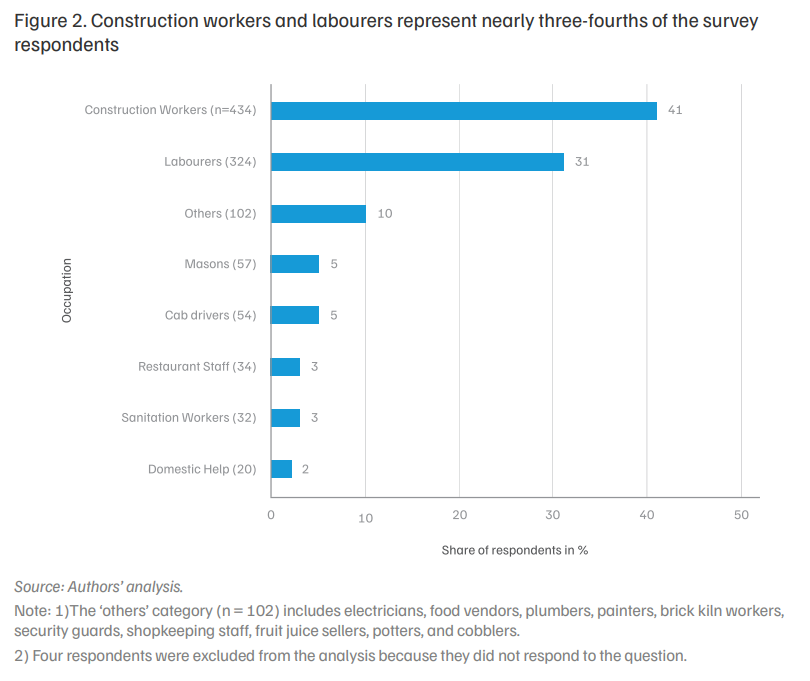
Of all the respondents, 53 per cent are inter-state migrants (whose usual place of residence and place of enumeration are in two different states), while 47 per cent are intra-state migrants (whose usual place of residence and place of enumeration are within the same state). The gender-wise distribution indicates that male respondents overwhelmingly dominate the survey, accounting for 846 respondents (80 per cent), compared with 215 female respondents (20 per cent). By occupation, nearly 41 per cent of the surveyed migrants are construction workers and 31 per cent are labourers. Notably, 36 per cent of India’s migrant workforce is employed in the construction sector, indicating that the survey sample is broadly aligned with national workforce trends.
Occupation-based analysis is important because migrant workers’ willingness to pay for, and affordability of, clean cooking options are closely linked to the nature of their work, income stability, worksite conditions, and mobility. For example, a daily wage construction worker or labourer faces income unpredictability that makes recurring fuel expenditure a financial risk, whereas a plumber or restaurant worker with a more stable income may have a greater capacity for sustained LPG use. Analysing fuel use, connection type, and consumption patterns across occupations therefore provides valuable insights into these differences.
What is the current pattern of LPG usage among migrant workers?
Among the 1,061 respondents surveyed across 10 cities, 74 per cent use LPG for cooking, with 66 per cent, 4 per cent and 4 per cent of respondents use LPG as an exclusive, primary and secondary cooking fuel respectively. Meanwhile, 26 per cent of migrants continue to depend on firewood, including 18 per cent who rely on it exclusively.
Despite this relatively high level of adoption, access remains largely informal, with 79 per cent of LPG users relying on informal, unregulated connections.Though opened for migrants in PMUY 2.0 in 2021, only around 4 per cent of LPG using migrant respondents are PMUY beneficiaries.
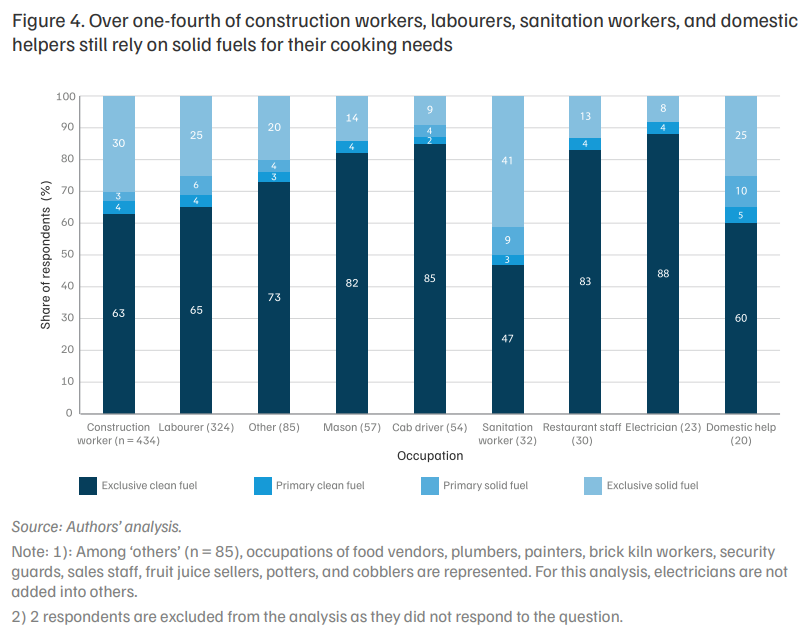
LPG is the dominant primary cooking fuel across all occupational groups, with a majority of respondents reporting it as their main cooking fuel. In several occupations—including masons, cab drivers, restaurant staff, and electricians—over 80 per cent rely on LPG as their primary fuel. However, a substantial proportion of migrants, particularly sanitation workers (41 per cent), construction workers (30 per cent), labourers (25 per cent), and domestic workers (25 per cent), continue to rely exclusively on solid fuels.
What kind of LPG connection do the migrant workers have?
For the purpose of this study, LPG connections are classified into three categories.
A general connection is a standard LPG connection provided by one of the OMCs (such as Indane, HP Gas, or Bharat Gas), under which consumers pay the full upfront security deposit for the cylinder, regulator, and cooking stove.
A PMUY connection is provided to women from low-income, below poverty line (BPL) households. Under this scheme, the government covers the upfront connection costs, providing beneficiaries with a deposit-free cylinder, regulator, and first refill.
An informal connection refers to households that use LPG without having a legally registered connection in their own name through an authorised distributor. As a result, they may pay higher prices than the official retail LPG price.
There is a clear and consistent gap in LPG access across occupational groups. Across occupations, at least 10–15 per cent of respondents lack access to LPG, with the proportion rising substantially higher for some groups, such as sanitation workers (44 per cent) and construction workers (30 per cent). Workers in physically demanding and highly mobile occupations show trends of lower LPG access. Scheme coverage under PMUY is minimal across all occupational groups. The share of respondents reporting PMUY connections remains consistently low, reaching a maximum of 6 per cent, except among cab drivers, where it is higher (13 per cent). Instead, informal LPG connections dominate, accounting for 50–75 per cent of connections across most occupations. This pattern is not incidental; rather, it reflects the practical reality that migrants without locally valid identity documents, fixed addresses, or bank linkages are structurally excluded from formal LPG connections and therefore rely on informal channels.
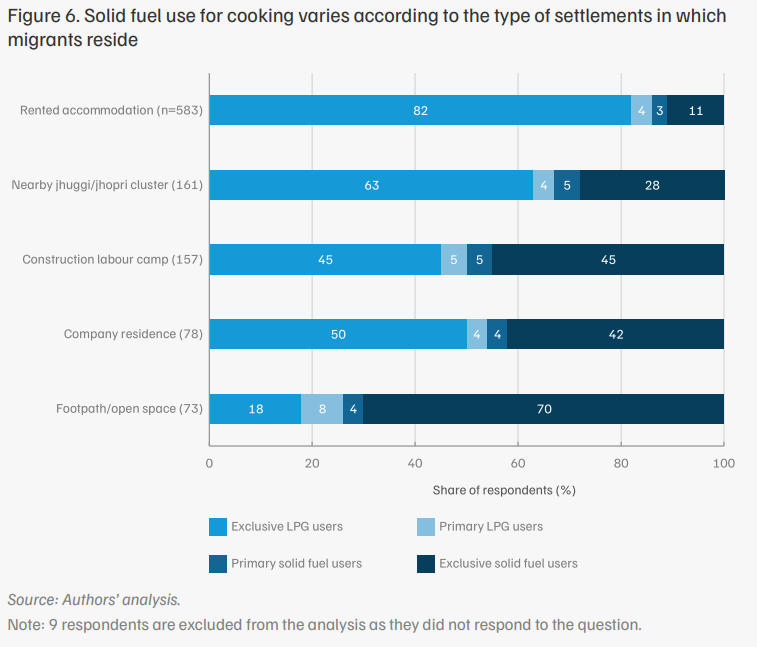
Box 1. Migrants in rental accommodations have higher LPG usage compared with those residing in open spaces/footpaths
First, in terms of living arrangements, migrant workers are distributed across a range of housing conditions, from relatively stable arrangements such as rented rooms, employer-provided accommodation and construction labour camps to more insecure settings such as informal settlements (jhuggi/jhopri clusters), and even open spaces or footpaths. A majority live in rented accommodation (56 per cent), followed by construction labour camps (15 per cent), informal settlements such as jhuggi/jhopri clusters (15 per cent), and employer-provided accommodation (7 per cent). Around 7 per cent reported living on footpaths or in open spaces (homeless).
Second, the share of exclusive solid fuel users is lowest among migrants living in rented accommodations (around 11 per cent). This suggests that migrants who are able to access rental housing—indicating relatively better financial capacity and a degree of settlement—are less dependent on traditional fuels and more likely to transition to cleaner options such as LPG. Additionally, qualitative remarks reported by survey respondents reveal that owners of rented accommodation may restrict the use of solid fuels by their tenants because of the smoke and blackening of walls. In contrast, the highest share of exclusive solid fuel users is observed among migrants residing in open spaces/footpaths (around 70 per cent). This contrast highlights two key insights: (i) the absence of a formal or stable address significantly constrains access to LPG, increasing reliance on solid fuels; and (ii) migrants who can afford rented housing are better positioned to pay for LPG and use it exclusively, suggesting that affordability and housing conditions enable greater clean fuel usage among this vulnerable population.
What prices are currently being paid for LPG refills by migrant workers?
The findings highlight the widespread use of informal LPG connections, with 79 per cent of LPG users among the surveyed migrant workers relying on them. There are considerable differences in both the cylinder sizes used and the prices paid for LPG refills, depending on the type of LPG connection.
Among users with formal connections, the standard larger cylinders (14.2 kg) have a median refill price of INR 838 per cylinder, equivalent to INR 59 per kg of LPG, with little variation from the market prices charged by the OMCs at the time of the survey.
In contrast, informal LPG users—who typically lack authorised connections—rely on partial refills obtained from unauthorised kirana (grocery), or hardware stores, resulting in a markedly different pricing structure. Owing to the unregulated rates in informal channels, the median price paid is INR 71 per kg for a 14.2 kg cylinder and INR 100 per kg for a 5 kg cylinder. On a per-kg cost basis, it is 41 per cent higher for a 5 kg cylinder compared to a 14.2kg cylinder. Consequently, informal users pay a per-kg price penalty of more than 20 per cent over formal users for a 14.2kg cylinder, even though their total expenditure per transaction is often lower.
This apparent affordability stems from the fact that informal users typically purchase only as much LPG as they can afford at a given time, rather than refilling an entire cylinder. For example, informal LPG users paying INR 400 for a partial 4 kg refill may appear more affordable than an outlay of a single installment of INR 1,000 for a full 14.2 kg cylinder, even though the per-kg cost of a partial refill is substantially higher. This pattern reflects liquidity-driven purchasing behaviour, where a lower absolute transaction value masks the higher effective cost of LPG procured through informal channels.
Table 1. Variations in cylinder sizes and prices paid according to the type of connection
| Type of connection | Cylinder size | Median price paid per cylinder (INR) | Median price paid per kg (INR) |
|---|---|---|---|
| Formal connection (n = 166) |
5 kg (n = 10) | 500 | 100 |
| 14.2 kg (n = 156) | 838 | 59 | |
| Informal connection (n = 624) |
2 kg (n = 21) | 200 | 100 |
| 5 kg (n = 326) | 500 | 100 | |
| 10 kg (n = 16) | 1,050 | 105 | |
| 14.2 kg (n = 261) | 1,014 | 71 |
Source: Authors' analysis.
Willingness to pay for LPG among migrant workers
What is the stated willingness to pay for LPG across different fuel user categories?
Willingness to pay was elicited using an open-ended format, in which respondents stated the maximum price they would be willing to pay without being provided with an anchoring value.
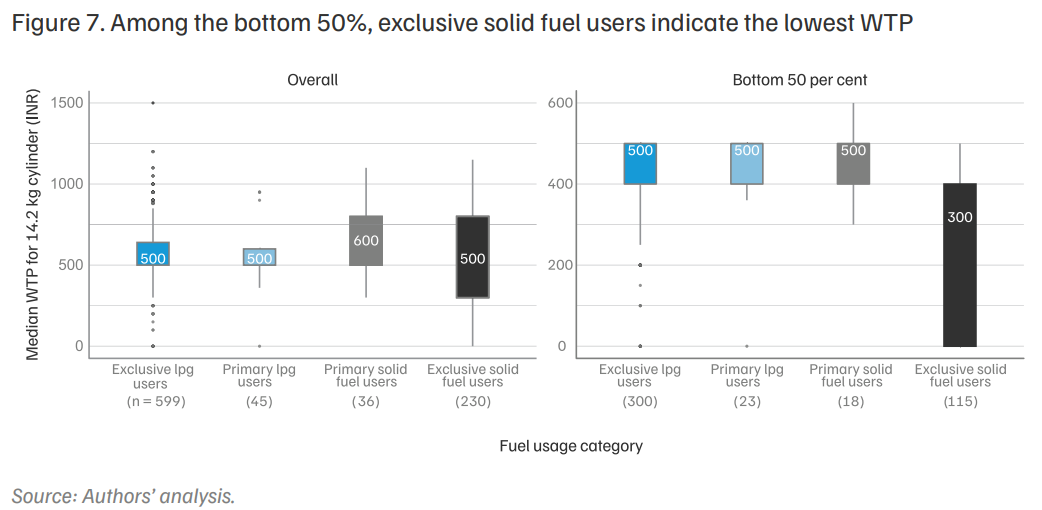
Distinct variations in WTP across different migrant worker groups highlight the affordability constraints associated with the transition to clean cooking (Figure 7). The overall median WTP is INR 500 for a 14.2 kg cylinder, and this remains consistent across the fuel user categories—exclusive LPG users, primary LPG users, and exclusive solid fuel users. Interestingly, among primary solid fuel users, the median WTP is INR 600, indicating an underlying preference and willingness to transition to LPG.
However, differences become more pronounced among the bottom 50 per cent of respondents ranked by their stated WTP. While LPG users within this group continue to report a median WTP of around INR 500, exclusive solid fuel users report a significantly lower median WTP of INR 300, alongside a wide distribution extending down to INR 0. This suggests considerable heterogeneity even within the lower-WTP group, with a subset of migrant workers unable to transition from solid fuels to LPG unless it is available free of cost.
How does the WTP vary across LPG users with different types of connections?
The WTP for a 14.2 kg LPG cylinder varies according to the type of LPG connection held by migrant workers. To analyse these differences, price sensitivity curves were developed for formal users, informal users, and respondents without LPG access. An affordability limit was estimated for each of these groups. The affordability limit was defined as the price at which at least 80 per cent of respondents were willing to pay, providing a practical benchmark for policy intervention (Figure 8).
Although the analysis was initially conducted using the 90th percentile, the resulting affordability limit converged to INR 0, implying that a subsidy equivalent to the full cost of a cylinder would be required to make LPG affordable for 90 per cent of respondents. As such a threshold is neither fiscally nor operationally viable as a policy benchmark, the 80th percentile was adopted as the affordability threshold, balancing coverage with policy feasibility
The overall median WTP for exclusive usage across different types of users of LPG is INR 500. However, both formal and informal LPG users exhibit an affordability threshold of around INR 400 for a 14.2 kg cylinder. While most respondents in these groups remain willing to pay up to this level, willingness declines sharply beyond it, indicating greater price sensitivity. In contrast, migrant workers without LPG access exhibit an affordability limit of INR 250, which is INR 150 lower than respondents with LPG access. The early and steady decline in their price sensitivity curve suggests that a significant proportion of this group is either unwilling or financially unable to pay even at relatively low price points, underscoring deep affordability constraints.
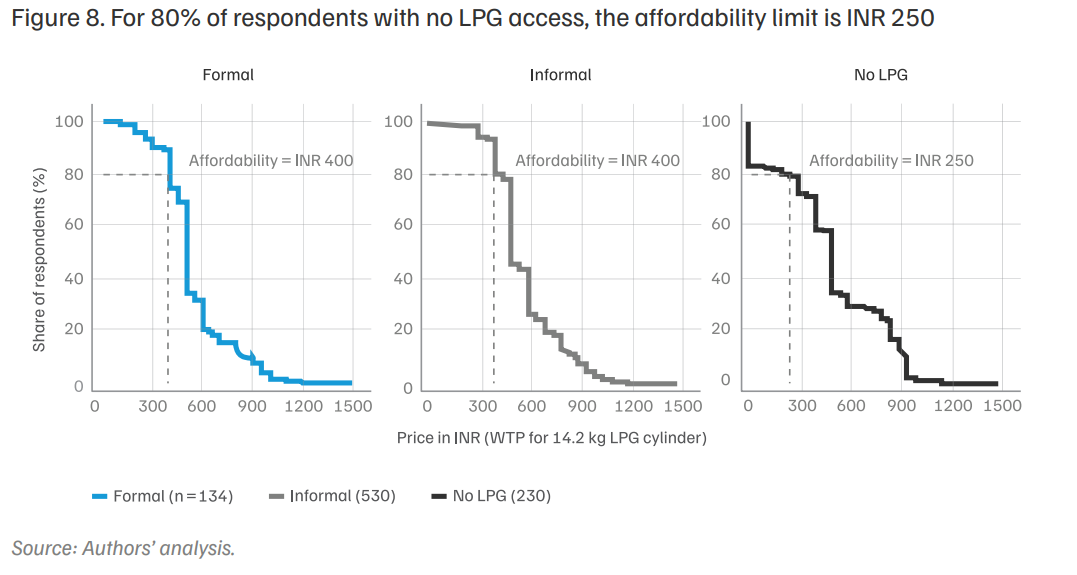
The price sensitivity curve (Figure 8) further shows that informal and formal LPG users exhibit similar gradual, elongated curves, indicating greater heterogeneity in WTP and a higher tolerance, with many respondents willing to pay beyond the affordability threshold. In contrast, the curve for migrant workers without LPG access declines earlier and more steadily, indicating that a larger proportion of this group is unwilling and unable to pay even at relatively low price points.
What is the overall affordability limit and WTP among migrant workers?
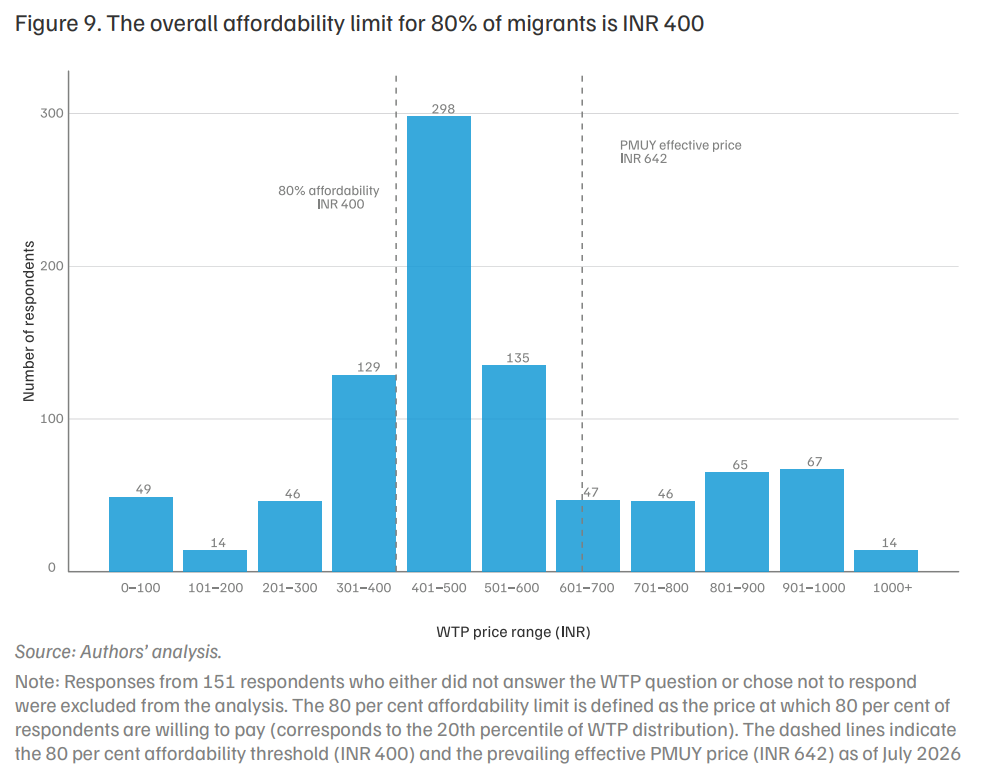
The distribution of WTP for a 14.2 kg LPG cylinder is concentrated in the INR 301—600 range, with more than 60 per cent of respondents falling within this bracket. The highest concentration of responses is observed in the INR 401—500 range. The 80 per cent affordability threshold is estimated at INR 400, the willingness to pay declines as prices rise above INR 400. The prevailing effective subsidised PMUY price (INR 642) is well above this threshold.
Recommendations
The findings demonstrate that migrant workers’ transition to clean cooking is constrained not by a single barrier, but by the combined effects of awareness, access limited affordability, informal pricing, and housing instability. Addressing these interconnected constraints requires policy enablers that improve formal access while making LPG affordable, flexible, and compatible with migrants’ living and working conditions.
Increase awareness of PMUY among migrant workers and more convenient pickup/ delivery of cylinders.
Challenge
Nearly 79 per cent of migrant LPG users lack a formal connection and rely on informal, unregulated sources for refilling. The median willingness to pay for exclusive use of a 14.2 kg cylinder is INR 500, near-identical to the effective subsidised PMUY price prevailing during the survey period. Yet despite PMUY 2.0’s extension to migrant families, enrolment remains very low: only about 4 per cent of LPG-using migrant respondents were PMUY beneficiaries. Unavailability of documents is no longer a challenge. PMUY 2.0 already allows migrants to self-declare family and address details in place of a ration card, and issuance has shifted from distributor discretion to a largely automated process. Documentation has narrowed to Aadhaar seeding and Know Your Customer (KYC), while geo-tagged installations and digital processing have reduced deduplication errors, repeat distributor visits, and the earlier de-linking and re-linking burden with ration cards. The gap is therefore no longer documentationrelated issues but the lack of awareness about PMUY connection for women labourers and male labourers accompanied by their wives. Also, the delivery/ pick time for such migrant labourers conflicts with regular office hours (pick-up) / delivery schedules (doorstep delivery) that distributors typically have.
Solution
First, along the lines of the LPG panchayat model, extend them to worksite LPG camps: employers/ contractors host late-evening or off-day enrolment drives at labour camps and construction sites, while OMCs and distributors assist migrant workers with filling up self-declaration forms, e-KYC, and demonstrate safe use of LPG on the spot. They should also explain why informal LPG connections can be unsafe and more expensive compared to formal PMUY connections, including the option of a 5 kg cylinder that would not be a one-time burden. Secondly, on pickup/ delivery, distributors should offer rescheduled lateevening/weekend slots; aggregate bulk delivery to a site coordinator or camp “cylinder bank” acting as a microdistributorship.
Address affordability through a top-up PMUY subsidy for migrant workers.
Although the median WTP among migrant workers is INR 500 for a 14.2 kg cylinder, the 80th-percentile affordability threshold—the price at which 80 per cent of respondents are willing to pay—is only INR 400. The prevailing effective subsidised PMUY price of INR 642 therefore exceeds the affordability threshold by a considerable margin, meaning that most migrant workers cannot reliably afford even subsidised LPG.
Among the most economically marginalised group —exclusive solid fuel users—the median WTP falls to INR 300 within the bottom 50th percentile, with a subset indicating zero willingness to pay even at nominal prices. A targeted top-up subsidy for migrant workers within the PMUY framework, calibrated to the specific affordability limits identified in this study, could reduce reliance on informal, unregulated pricing. The government must consider expanding the PMUY subsidy by an additional INR 200, bringing the price closer to INR 400, where 80 per cent of households self-report a willingness to use LPG exclusively.
Pilot pay-as-you-go smart meter LPG kiosks (‘LPG ATMs’) and bridging the unit pricing gap for free trade LPG (FTL).
Approximately 52 per cent of surveyed informal LPG users rely on 5 kg cylinders, paying a median price of INR 100 per kg. This amount is 70 per cent higher than the INR 59 per kg paid by formal users of 14.2 kg cylinders. This price effectively penalises and taxes the lowest-income migrant workers for their inability to access the formal LPG distribution system.
Oil marketing companies (OMCs) should pilot payas-you-go smart meters (WHO 2021) LPG dispensing kiosks (‘LPG ATMs’) in migrant-dense urban areas, enabling partial and flexible refills based on users’ disposable income. Bridging the per-kg pricing of LPG across all cylinder sizes would eliminate the regressive pricing structure that penalises low-volume consumers. Indian Oil Corporation Limited (IOCL)’s existing ‘Chhotu’ 5 kg FTL cylinder, designed for urban migrants without address proof, provides a useful product variant. However, achieving per-kg price parity with larger cylinders is essential to make it genuinely affordable and competitive with informal channels.
Integrate housing and fuel access policies for migrant workers.
The survey findings exhibit a strong relationship between housing stability and clean cooking fuel use. Only around 11 per cent of migrants living in rented accommodation rely exclusively on solid fuels, compared with 70 per cent of those living on footpaths or in open spaces. This pattern suggests that LPG access is not solely a fuel policy challenge but is also closely linked to housing and urban inclusion. Migrant workers without a stable address are often unable to meet the documentation requirements for formal LPG connections.
Employers should be mandated to provide clean cooking facilities in construction labour camps and employer-provided accommodation. Policy interventions should therefore bring together urban local bodies (ULBs), housing departments, and OMC distributors to ensure that migrants living in employerprovided camps, labour colonies, and informal settlements are included within the formal LPG distribution system.
Limitations
Before this study, there was limited evidence on migrant workers’ access to clean cooking fuels and their WTP for LPG. This study therefore provides a valuable primary dataset on LPG access, affordability, and willingness to pay among migrant workers. Nevertheless, several limitations should be acknowledged.
- Recall and social desirability bias: Despite employing multiple quality-control measures —including CAPI-based administration, logic checks, and winsorisation of extreme WTP values —recall bias (particularly in fuel quantity and price) and social desirability bias (in stated WTP) cannot be eliminated. Although the use of median values reduces sensitivity to outliers, stated WTP may not accurately reflect actual purchasing behaviour. Hypothetical bias, i.e., the tendency of respondents to report a higher WTP than they would demonstrate under real market conditions, is a recognised limitation of stated preference methods (Ebert, Winzer, and Müller 2025).
- Cross-sectional design: The survey captures behaviour at a single point in time and cannot account for seasonal variation in fuel use (e.g. greater reliance on solid fuels during winter) or changes associated with income cycles, employment status, or migration patterns. Longitudinal studies would be required to assess changes in cooking fuel use over time.
- Exclusion of certain migrant groups: Although the survey methodology specified clear respondent selection criteria, certain groups, such as seasonal and highly mobile migrants, are likely to be underrepresented. Future studies with larger sample sizes could better capture these particularly vulnerable populations.
- LPG price volatility: The survey was conducted before a period of multiple LPG price revisions, with prices increasing by INR 50 in April 2025, INR 60 in March 2026, and a further INR 29 in June 2026. Consequently, data collected on WTP may not fully reflect reactions to these subsequent price changes. Future contingent valuation studies could provide a more robust assessment of WTP under changing LPG price conditions.
Summary
| Key finding | Key recommendation | Future research agenda |
|---|---|---|
| 79 per cent of migrant LPG users lack formal connections, and only 28 of 790 LPG users are PMUY beneficiaries despite the eligibility extension under PMUY 2.0. | Increase awareness of PMUY among migrant workers and more convenient pickup/ delivery of cylinders. | Evaluate the uptake and outcomes of awareness initiatives and innovative delivery approaches to identify remaining barriers. |
| The median WTP is INR 500 per 14.2 kg cylinder, but the 80th-percentile affordability limit is only INR 400, well below the effective PMUY price of INR 642. | Provide a top-up PMUY subsidy for migrant workers, including those not enrolled, and recalibrate subsidy levels to the identified affordability thresholds. | Conduct longitudinal WTP studies to track changes in affordability in response to LPG price revisions and changing migrant conditions, generating evidence to inform policy. |
| Informal LPG users pay a 20 per cent per-kg price premium (INR 71 per kg vs INR 59 per kg for formal users), and 52 per cent rely on the 5 kg cylinder. | Pilot pay-as-you-go smart meter LPG dispensing kiosks (‘LPG ATMs’) in migrant-dense urban areas and standardise per-kg pricing across all cylinder sizes and product variants from OMCs. | Assess the feasibility and cost-effectiveness of pay-as-you-go smart meter LPG ATM pilots and estimate demand for partial refills across different migrant occupational categories. |
| Solid fuel dependence varies with housing type: 70 per cent of footpath dwellers use solid fuels exclusively, compared with 11 per cent of those living in rented accommodation. | Integrate clean cooking schemes with urban housing policy, starting with redevelopment and rehabilitation projects, and mandate clean cooking access in employer-provided labour camps and accommodation. | Study the relationship between housing and cooking fuel across different city typologies, and explore successful models for community-based cooking in employer-provided accommodation. |
The study focuses on work-driven migrants, defined as those who had moved to their current city within the past six months and did not intend to stay longer than 12 months, having migrated from their native place to another city, another district within the same state, or another state in search of work or livelihood. This distinguishes them from urban slum households, who are defined by residence in a slum settlement rather than by recent migration. The 1,061 respondents surveyed were predominantly engaged in occupations involving physically demanding work: 41 per cent were construction workers, and 31 per cent were labourers, with the remainder including masons, cab drivers, sanitation workers, restaurant staff, domestic help, and others such as electricians, food vendors, painters, and brick kiln workers.
India's migrant workers remain largely excluded from clean cooking policy, trapped by a "domicile trap" tying welfare benefits to their home address rather than workplace. With limited prior evidence on their fuel access or affordability, this CEEW study surveys 1,061 migrants across 10 cities, quantifying LPG usage, informal connection reliance, and willingness to pay, filling a critical data gap to inform PMUY reforms and subsidy design for this vulnerable population segment.
PMUY is a Government of India scheme launched in 2016 to provide free LPG connections to women from low-income households, and it has since provided deposit-free LPG connections to over 105 million women. In 2021, PMUY 2.0 extended eligibility to migrant worker families through a simplified self-declaration process. However, in practice, applicants still need to declare family composition linked to their ration cards for verification, a major barrier for migrants, since their family ration card is typically registered at their place of origin, not their place of work.
Among the 1,061 migrant workers surveyed across 10 cities, 74 per cent use LPG in some form (66 per cent exclusively), while 26 per cent still depend on firewood, including 18 per cent who rely on it exclusively. The remaining respondents use other fuels such as cow dung cakes, agricultural residue, coal or charcoal, piped natural gas, or electricity.
Nearly 79 per cent of migrant LPG users lack a formal, registered connection not because they lack documents altogether, but because the documents they hold (Aadhaar, ration cards, bank passbooks) are tied to their permanent home address, not their current place of work. Caught in this domicile trap, they end up buying partial refills through unauthorised kirana or hardware stores instead, despite paying significantly higher prices.
Informal LPG users pay a median of INR 71 per kg for a 14.2 kg cylinder, compared with INR 59 per kg for formal connection holders, a premium of more than 20 per cent. Around 52 per cent of informal users rely on smaller 5 kg cylinders, where the per-kg cost is 41 per cent higher, meaning already constrained for cash liquidity these migrants effectively pay the most for their cooking fuel.
Willingness to pay refers to the maximum price respondents said they would pay for a full 14.2 kg LPG cylinder, without being given a reference price. The overall stated median WTP was INR 500, but the 80th-percentile affordability threshold, the price at which 80 per cent of respondents remain willing to pay, was only INR 400. This is well below the effective subsidised PMUY price of INR 642 (as of July 2026), indicating that even subsidised LPG remains unaffordable for a majority of migrant workers.
Yes. The survey found a strong link between housing stability and fuel choice: only 11 per cent of migrants in rented accommodation rely exclusively on solid fuels, compared with 70 per cent of those living on footpaths or in open spaces. Migrants without a fixed address struggle to meet the documentation requirements for a formal LPG connection, reinforcing their reliance on costlier informal fuel sources.
Unlocking Finance for India’s Textile Waste Management
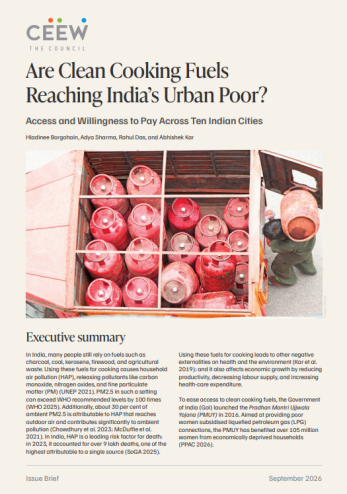
Are Clean Cooking Fuels Reaching India's Urban Poor?