Council on Energy, Environment and Water Integrated | International | Independent

Context: India’s linear resource model is intensifying waste, import dependence, and environmental stress even as demand for materials rises.
Key insight: Circularity across sectors such as municipal solid waste, water, agriculture, textiles, solar, and batteries can generate large-scale economic value, strengthen industrial competitiveness, and improve long-term resource security, but systemic barriers continue to constrain scale.
CEEW recommendation: Mainstreaming circularity will require stronger demand creation, innovative business and financing models, improved traceability systems, and sustained institutional support for local implementation.
Think about the last time you threw something away: A broken phone, a plastic bottle, a worn-out shirt, or a dead battery. Chances are, they went into a bin, and from there, into a landfill or incinerator, their materials lost for good. This is how most of the world handles resources: we extract, use, and discard, in a straight line that ends in waste.
A circular economy bends that line into a loop. Instead of discarding materials after a single use, it keeps them in circulation for as long as possible — through mindful consumption, repair and reuse that extend a product's life, and recycling that recovers value even at the end of that life. As demand for resources grows alongside development, this shift from "take, make, dispose" to "reduce, reuse, recycle" is becoming essential to keep resources available and affordable.
For India, a circular economy presents a significant opportunity. It boosts economic activity, reduces import dependencies, and enhances industrial competitiveness. Research by the Council on Energy, Environment and Water (CEEW) finds that processing just seven kinds of waste — plastic waste, organic waste, lithium-ion batteries, electrical and electronic equipment waste (e-waste), end of life vehicles, used cooking oil and used water — could establish an annual market for India worth INR 11.5 trillion by 2047, creating 8.4 million full-time equivalent (FTE) jobs, and attract INR 10.8 trillion in investments. It could also strengthen India’s strategic position by reducing reliance on imported metals and minerals as demand rises with industrialisation and urbanisation.
This CEEW blog is an entry point to the varied landscape of circular economies in India, with a focus on six sectors: used water, agricultural residue, solid waste, textile waste, solar waste, and lithium-ion battery waste. It also explores how circular entrepreneurs are building businesses across these sectors. Together, this blog also reveals a set of recurring challenges that cut across the circular economies and how they might be addressed.
1. Used water
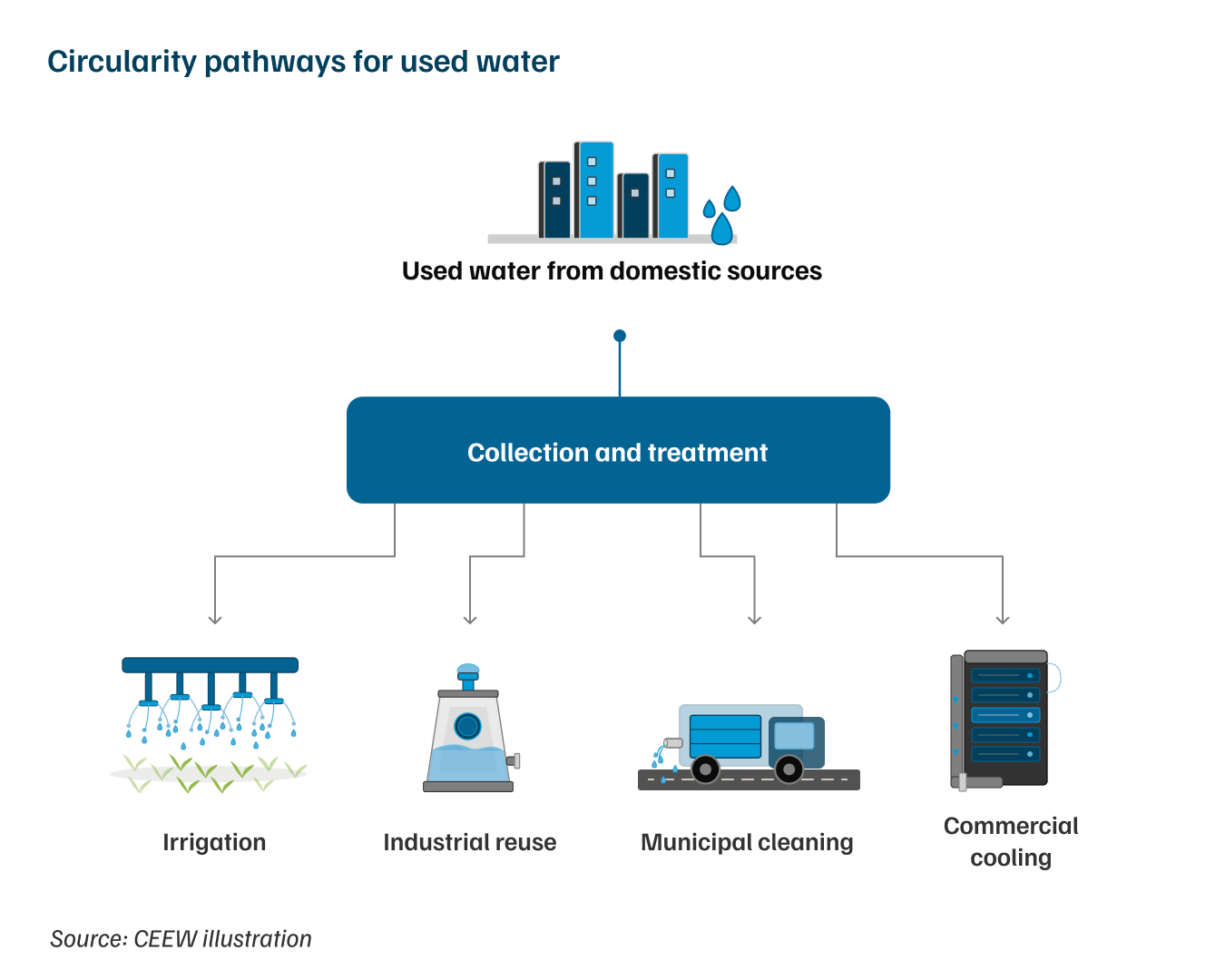
Current ‘waste’: 112 billion litres per day of domestic effluent
Potential economic opportunity: USD 35 billion in 2047
Jobs: Over 0.1 million jobs by 2047
India is the world's third-largest generator of ‘used water’ (we deliberately do not use the term wastewater), producing an estimated 112 billion litres per day of domestic effluent, enough to fill ~45,000 Olympic swimming pools. Most of this comes from urban domestic sewage, only 28 per cent of which is treated before discharge. The result is severe: in 2022, nearly half of India’s monitored rivers were found to be polluted, with cities as a major source of effluents.
Turning this circular requires a shift in perspective. Instead of viewing used water as wastewater, it can be seen as a reusable resource for agriculture, industrial processes, commercial cooling, construction, road cleaning, park maintenance, and other non-potable uses, once treated. This could ease pressure on freshwater resources while generating economic benefits. India’s urban treated used water economy could unlock up to INR 3.04 trillion in economic opportunities by 2047, creating over one lakh FTE jobs. Treated used water also retains nutrients like nitrogen, phosphorus, and potassium, allowing it to double as a natural fertiliser, reducing the need for synthetic alternatives.
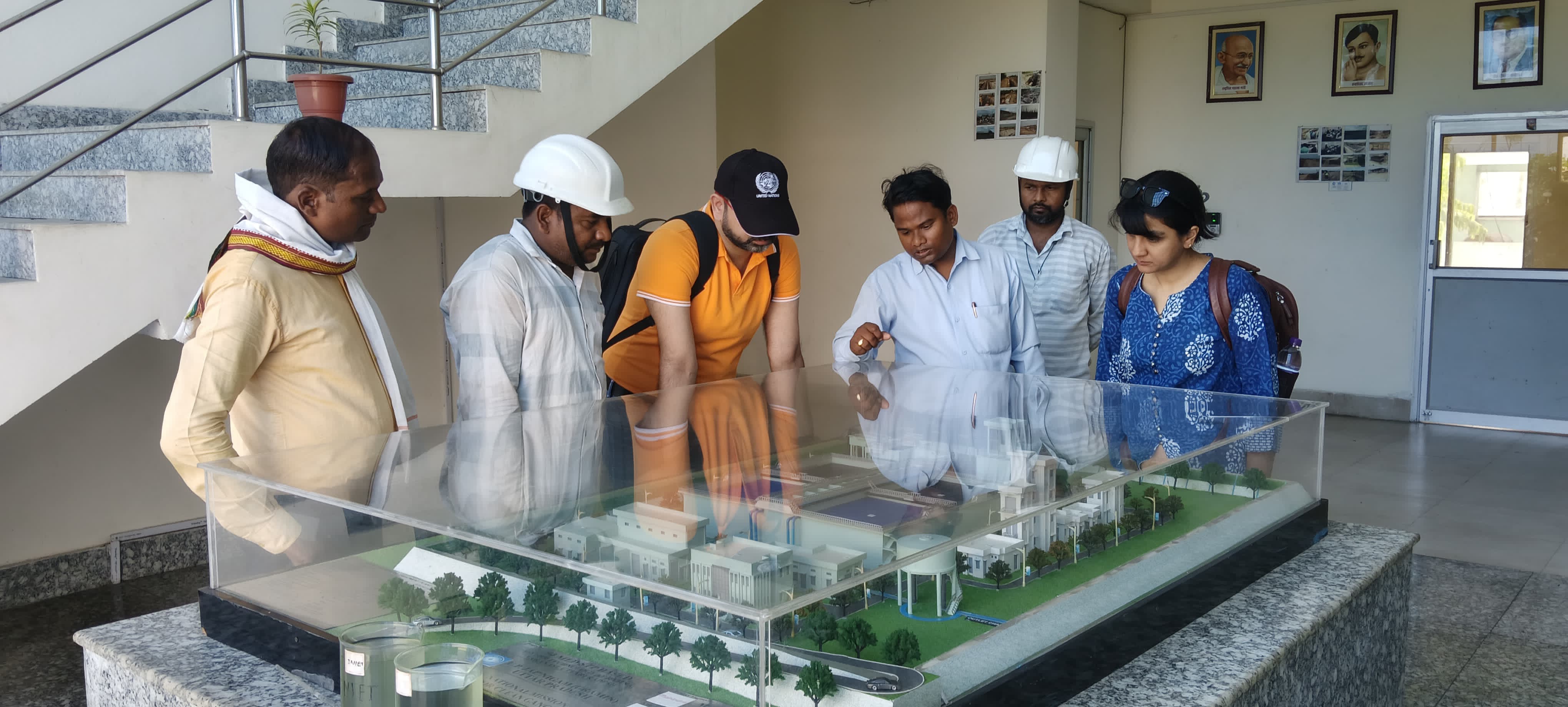
Image 1. CEEW team visiting the Ramana sewage treatment plant in Varanasi in 2025, built under the Namami Gange programme in Hybrid Annuity mode. Source: CEEW
Despite the massive potential, treated used water reuse is very low in India. A CEEW study of 503 cities across 10 states with treated used water reuse policies found that 82 per cent lacked functional treatment infrastructure or did not reuse their treated used water. Thane Municipal Corporation stands out as the first city in India to adopt a formal treated used water reuse plan in 2025.
Closing the gap between potential and reality will require empowering urban local bodies (ULBs), which are the primary implementing authorities for the management of urban domestic used water. ULBs need to develop long-term reuse plans as part of city-level water resource management planning. These plans should include comprehensive water balance assessments, clear treatment and reuse targets that factor in water demand, and sustainable financing mechanisms. Expanding funding beyond traditional public sources through innovative financing models such as the hybrid annuity models, long-term purchase agreements with bulk users, and municipal bonds can improve investment flows. Pricing treated used water at rates lower than for freshwater would further incentivise uptake among industrial and commercial users, helping cities recover treatment costs.
2. Agricultural residue
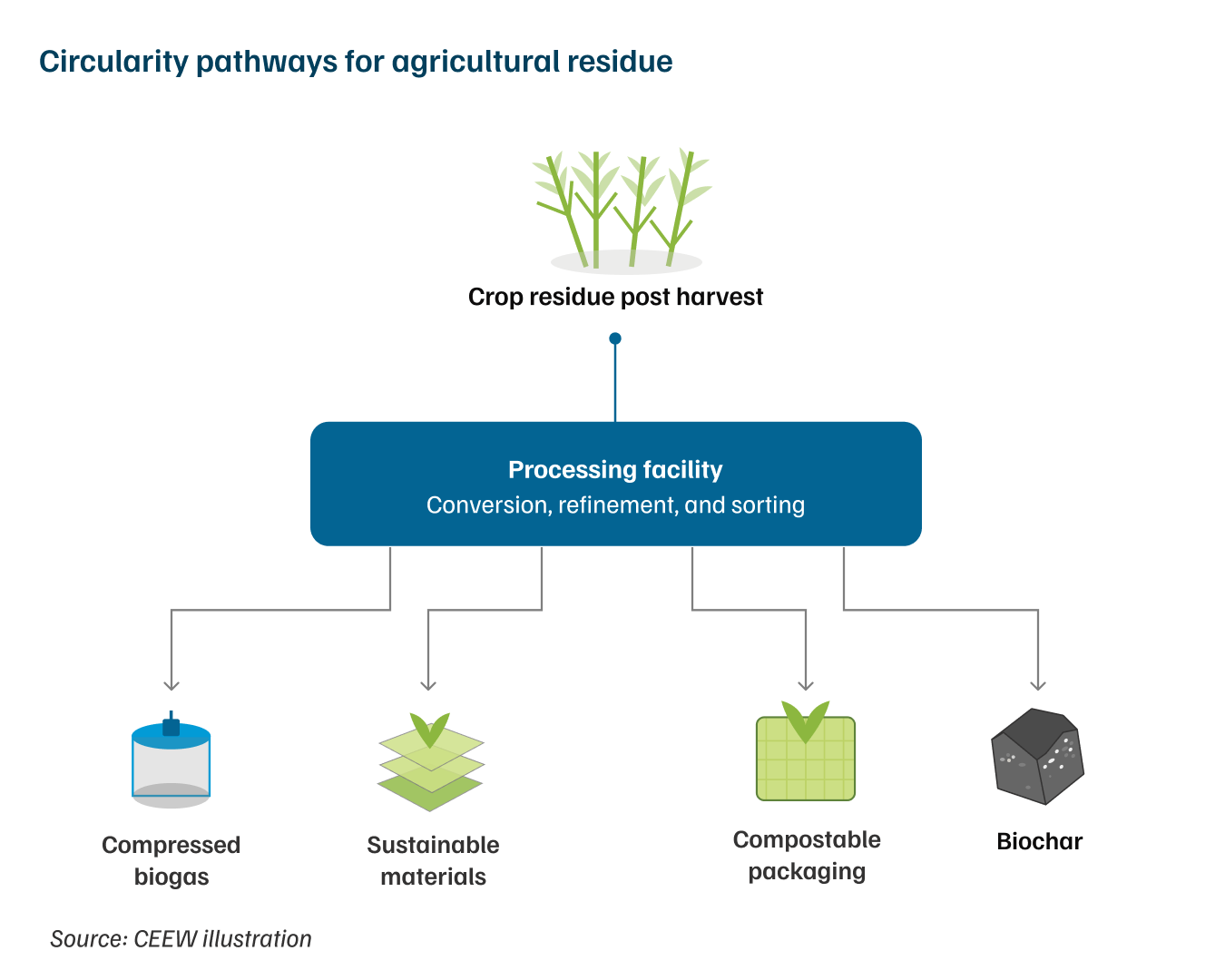
Current ‘waste’: 228 MMT of surplus agricultural residue per year
Potential economic opportunity: USD 157.63 billion by 2047
Jobs: Over 0.8 million FTE jobs by 2047
Each year, India generates around 228 million metric tonnes (MMT) of surplus agricultural residue, majorly comprising paddy straw (41.7 MMT), wheat straw (33.37 MMT), maize stubble (15.2 MMT), and sugarcane trash (6.3 MMT). Most of this residue is burnt to quickly clear fields.
This practice, known as crop residue burning, is the fourth-largest type of biomass combustion in the world, and it degrades air, soil, and water quality. Burning just one tonne of paddy straw releases three kg of particulate matter, 60 kg of carbon monoxide, 1,460 kg of carbon dioxide, 199 kg of ash, two kg of sulphur dioxide, and 0.58 kg of black carbon. In Delhi and adjoining areas, smoke from biomass burning, including crop residue, accounts for a fifth of the city’s PM2.5 concentrations during winter. What was once largely concentrated in traditional hotspots of Punjab and Haryana is now spreading to other paddy-growing states like Madhya Pradesh, Andhra Pradesh and Telangana.
Figure 1
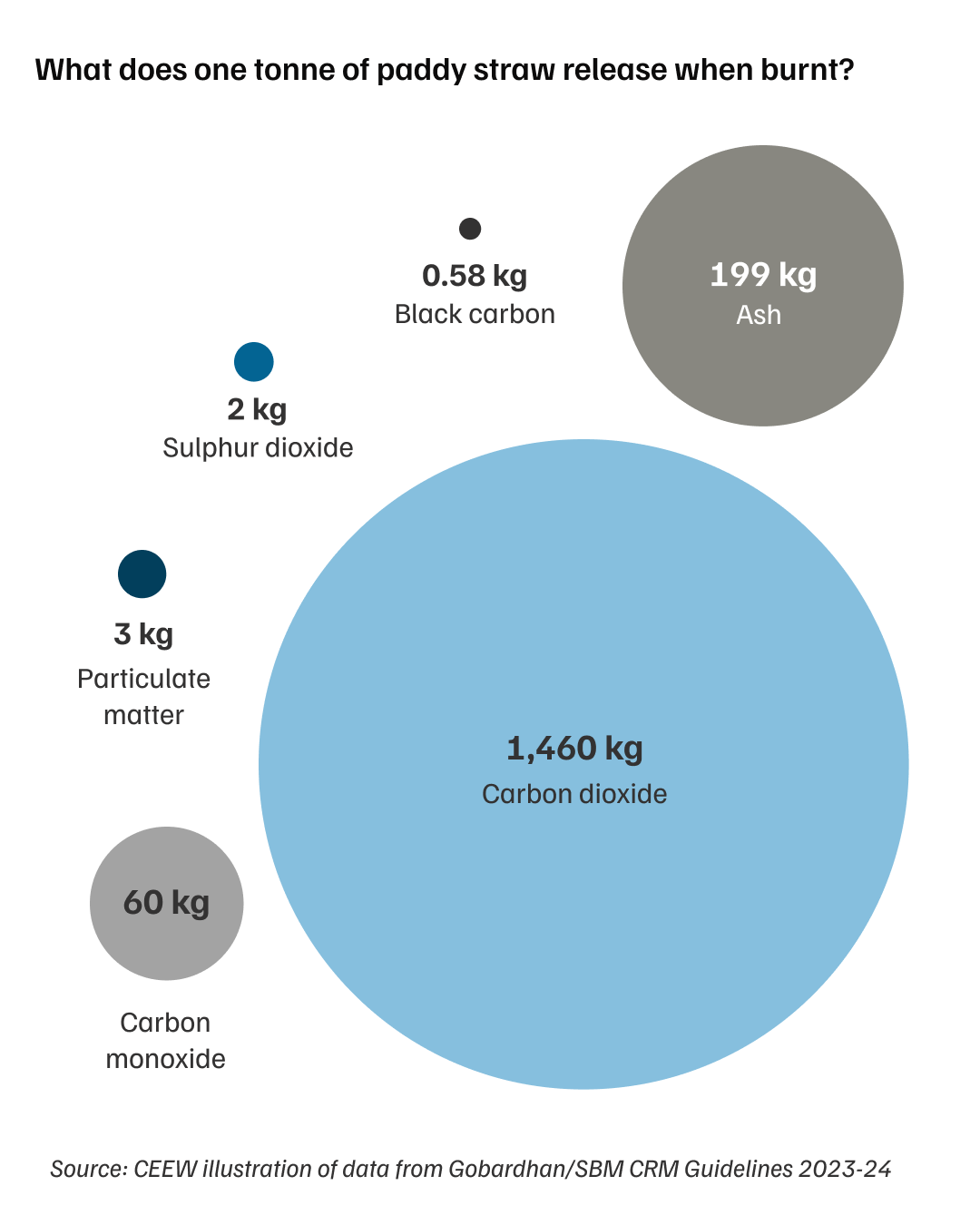
A circular economy approach diverts agricultural residue from open fires to the production of high-value commodities. After harvest, crop residue can be collected from fields and transported to processing facilities, where it is converted into a wide range of products. Paddy straw and other farm waste can be processed into compressed biogas, reducing dependence on imported fossil fuels. Under the Galvanising Organic Bio-Agro Resources Dhan (GOBARdhan) initiative, 1,825 compressed biogas plants (CBG) are registered in India, with 39.4 per cent of them proposed to be agri residue-based. Of which, around 210 CBG plants have already been commissioned. Crop residue can also be turned into sustainable packaging and construction materials, replacing single-use plastics and virgin materials. Prominent applications include bio-bitumen for road construction, compostable packaging materials from Dharaksha Ecosolution, and agri-fibre panels for building insulation from Strawcture Eco.
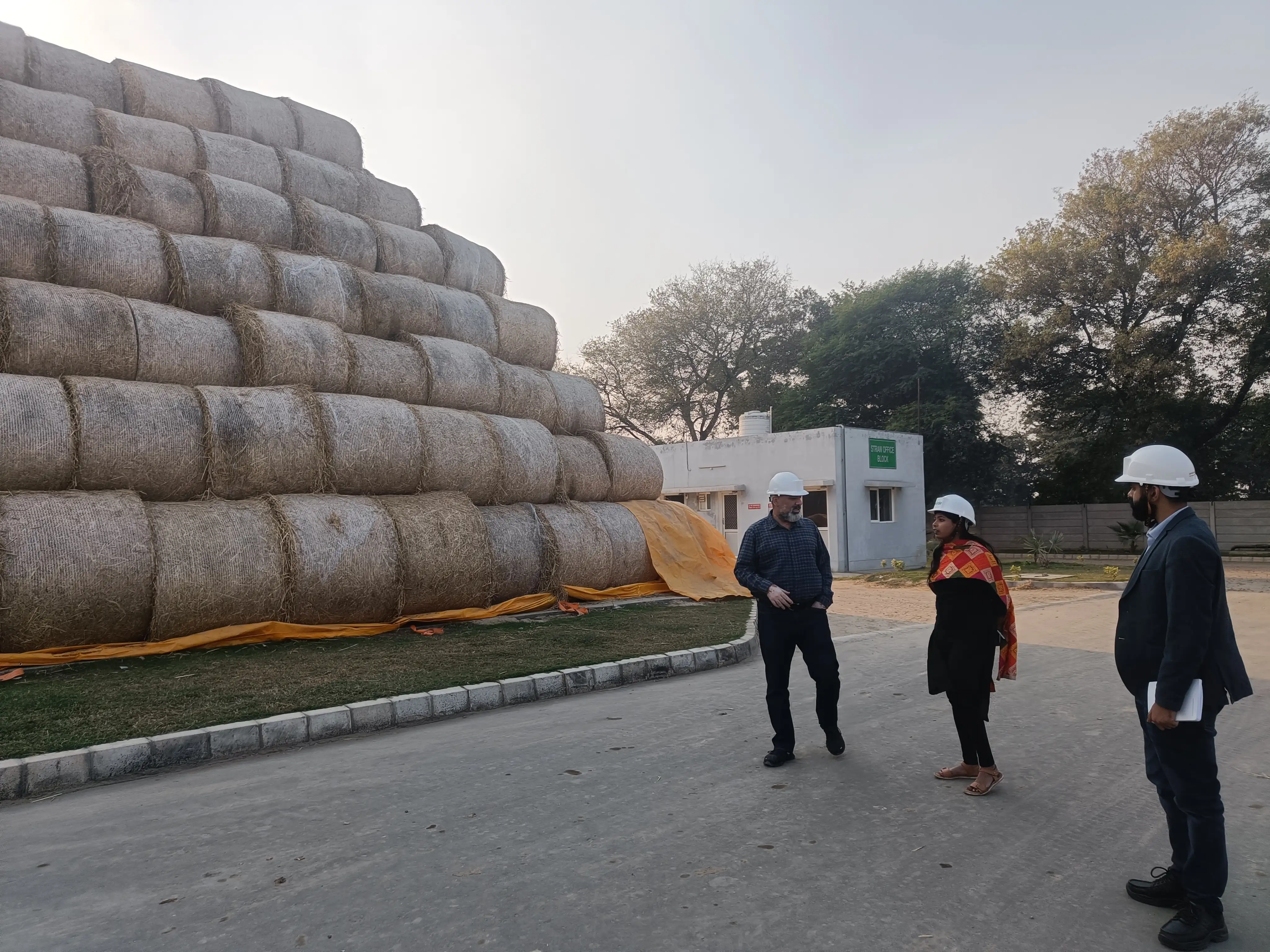
Image 2. The CEEW team visited the 33TPD Verbio CBG plant in Sangrur in 2022, Asia’s largest CBG plant, to understand opportunities and barriers in the CBG sector.
Another circular product from crop waste is biochar, a charcoal-like soil enhancer produced by pyrolysis, which involves heating biomass at high temperatures in a closed container with little to no oxygen. When crop biomass is burnt in the open field, it releases CO2 into the atmosphere. However, pyrolysis can lock this carbon into a stable solid form that can remain sequestered in the soil for longer. Because of its long-term carbon storage capabilities, many organisations purchase the high-quality Carbon Dioxide Removal (CDR) credits from biochar projects to offset unavoidable corporate emissions. In 2025, Google partnered with firms like Varaha and Charm to purchase 100,000 tonnes of biochar for carbon removal by 2030. Similarly, Tata Steel became the first Indian steelmaker to use biochar at its Jamshedpur plant in 2023, replacing around 30,000 tonnes of fossil fuel by November 2024.
Despite these opportunities, scaling faces a fundamental challenge: crop residue is bulky, seasonal, and expensive to transport. They require a vast workforce, heavy vehicles, and extensive storage infrastructure. Research by CEEW finds that simply delivering raw crop biomass to a processing facility within 50 km can cost between INR 2,000 and 3,000 per tonne. To put it in perspective, at this rate, sourcing raw material and labour alone would account for almost half the operating cost for a 5TPD CBG plant. Compressing residue into pellets or briquettes for easier transportation can raise the cost to INR 5000–7000 per tonne.
Scaling circular solutions for agricultural residue management will require targeted interventions. Upfront financial support could reduce the costs of setting up decentralised processing facilities and bring in private investment in the crop biomass supply chain. Mainstreaming green premiums (the additional cost borne by consumers for choosing cleaner, low-emission alternatives over traditional, high-emission ones) could bridge the price gap between sustainable and conventional materials. Continued financial assistance under flagship initiatives such as GOBARdhan, the crop residue management machinery subsidy, and the Agriculture Infrastructure Fund is critical to sustain the momentum of transforming agricultural waste into profitable products.
3. Municipal solid waste
Current ‘waste’: ~62 million municipal solid waste per annum
Potential market value: USD 50.6 billion for the organic fraction of MSW by 2047
Jobs: 2.6 million jobs for the organic fraction of MSW in 2047
In FY 2022–23, urban India generated ~1.7 lakh tonnes of municipal solid waste per day, of which 61 per cent was processed, and 22 per cent ended up in landfills. The remaining 17 per cent remained unaccounted, likely discarded in drains or openly burnt. CEEW analysis shows that open waste burning contributes nearly 10 per cent of PM2.5 emissions in major cities and, if left unaddressed, could become a persistent source of urban air pollution in the coming decade. With waste projected to reach 436 million tonnes annually by 2050, and volumes in large cities having already doubled since 2004, the scale of the challenge is only set to grow.
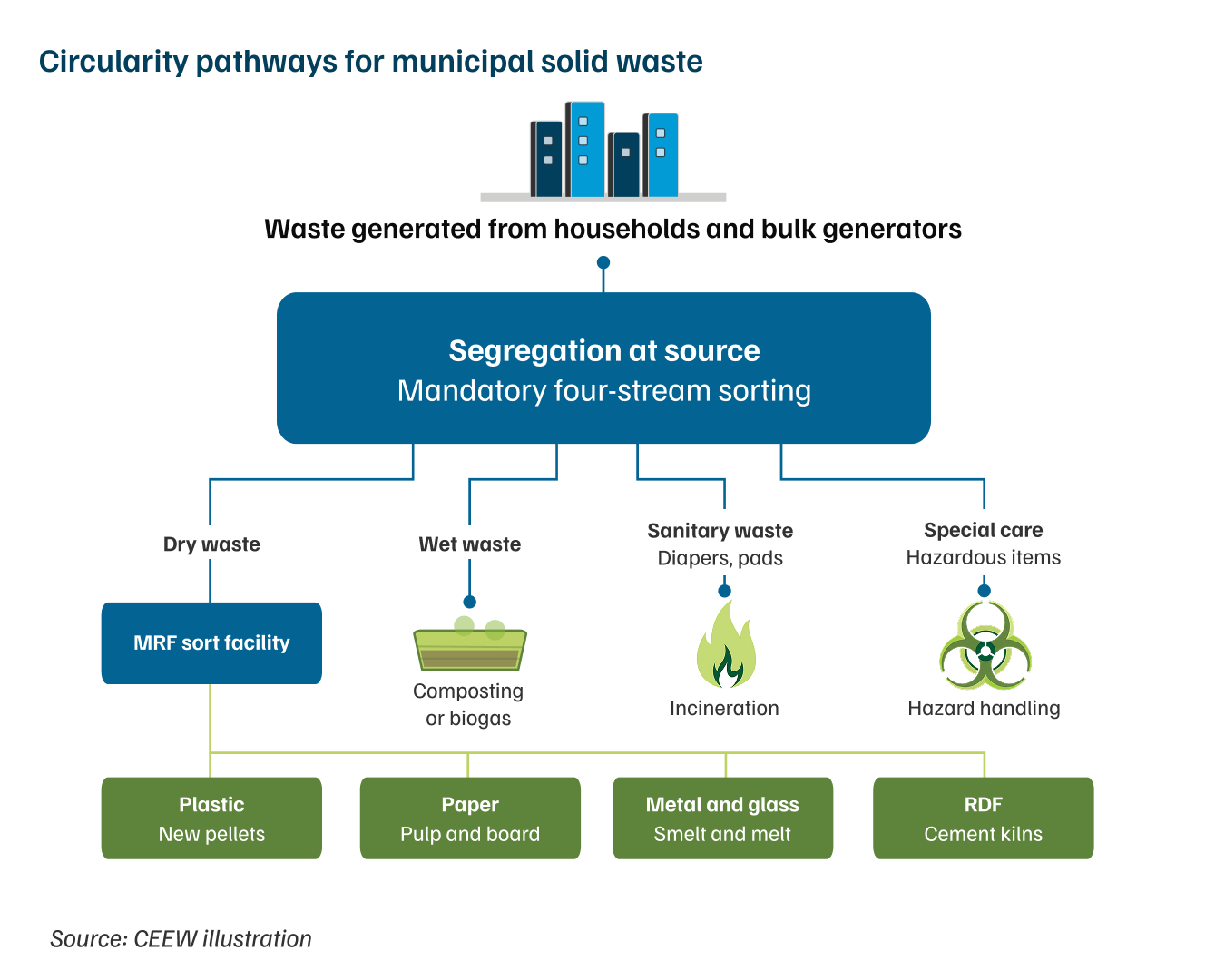
But this waste represents a significant untapped opportunity to implement circularity. As per the Solid Waste Management Rules, 2026, waste from households and commercial establishments can be segregated at source into four separate streams, namely, wet, dry streams, sanitary waste and special care waste. From these, wet waste can go to composting or biogas plants, whose outputs reach farms and the energy grid, while paper, plastic, and metal move to recycling facilities and re-enter manufacturing as secondary raw material.
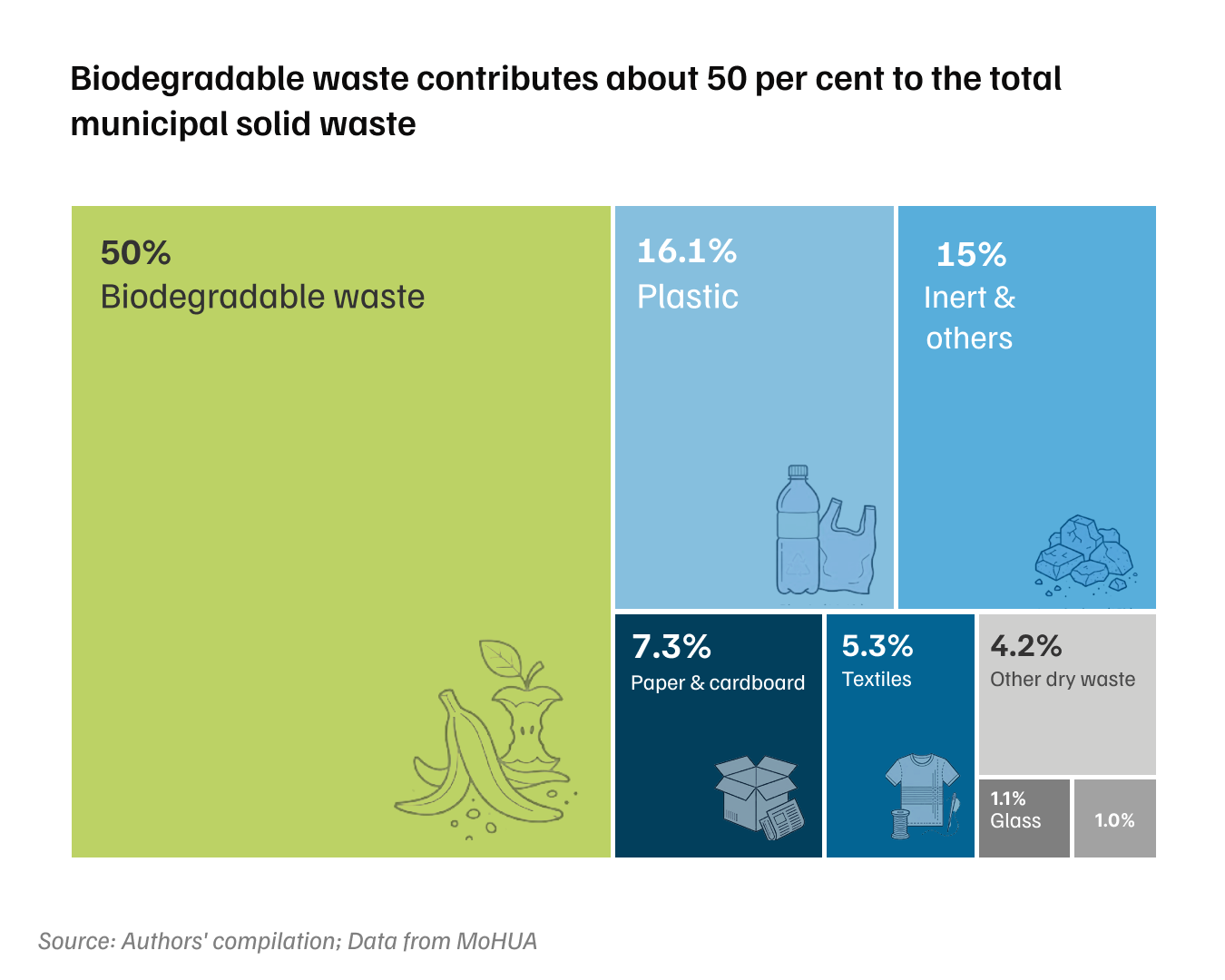
Around 50 per cent of India’s municipal solid waste is biodegradable — food scraps, garden waste, and organic material — that can be processed into compost and biogas. As per CEEW analysis, transitioning to a circular economy for organic waste alone has the potential to generate 26 lakh direct jobs, attract approximately USD 24 billion in investments, and unlock a USD 51 billion market opportunity by 2047, while also offsetting around 68 MtCO₂e in net emissions at the national level. Another 35 per cent is dry and non-biodegradable, such as plastic, paper, and metal, which can be recovered and recycled to reduce the dependence on virgin materials. Managing this waste scientifically could reduce reliance on landfills, free up urban land, lower emissions, and create FTE jobs across the waste management chain. The remaining 15 per cent of waste comprises inert and other material, which is currently disposed of in the landfill and could be brought down significantly by introducing upstream design level interventions and reduction at source.
Figure 2
India has made meaningful progress in municipal solid waste management. Regulations such as the Solid Waste Management Rules 2026, alongside flagship programmes like the Swachh Bharat Mission and GOBARdhan, have led to improved outcomes in how Indian cities manage their waste. Waste collection efficiency has reached 96 per cent, and the share of waste processed has risen from about 18 per cent in 2014 to nearly 60 per cent in 2022. The urban cleanliness challenge is now shifting from infrastructure and finance to institutions and behaviours.
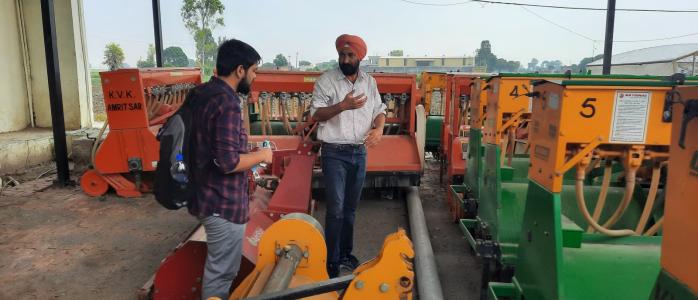
CEEW’s research reinforces this, highlighting that solutions must be tailored to local contexts. Cities vary in waste composition, the capacity of their local bodies, and citizen behaviour. To generate such context-sensitive solutions, CEEW also developed a Challenge-Root Cause-Solution (CRS) matrix that helps cities customise their waste management strategies. They are currently supporting cities such as Ludhiana and Amritsar in developing hyperlocal action plans based on the CRS approach, using sanitary inspectors, citizen perception surveys, and on-the-ground facility visits.
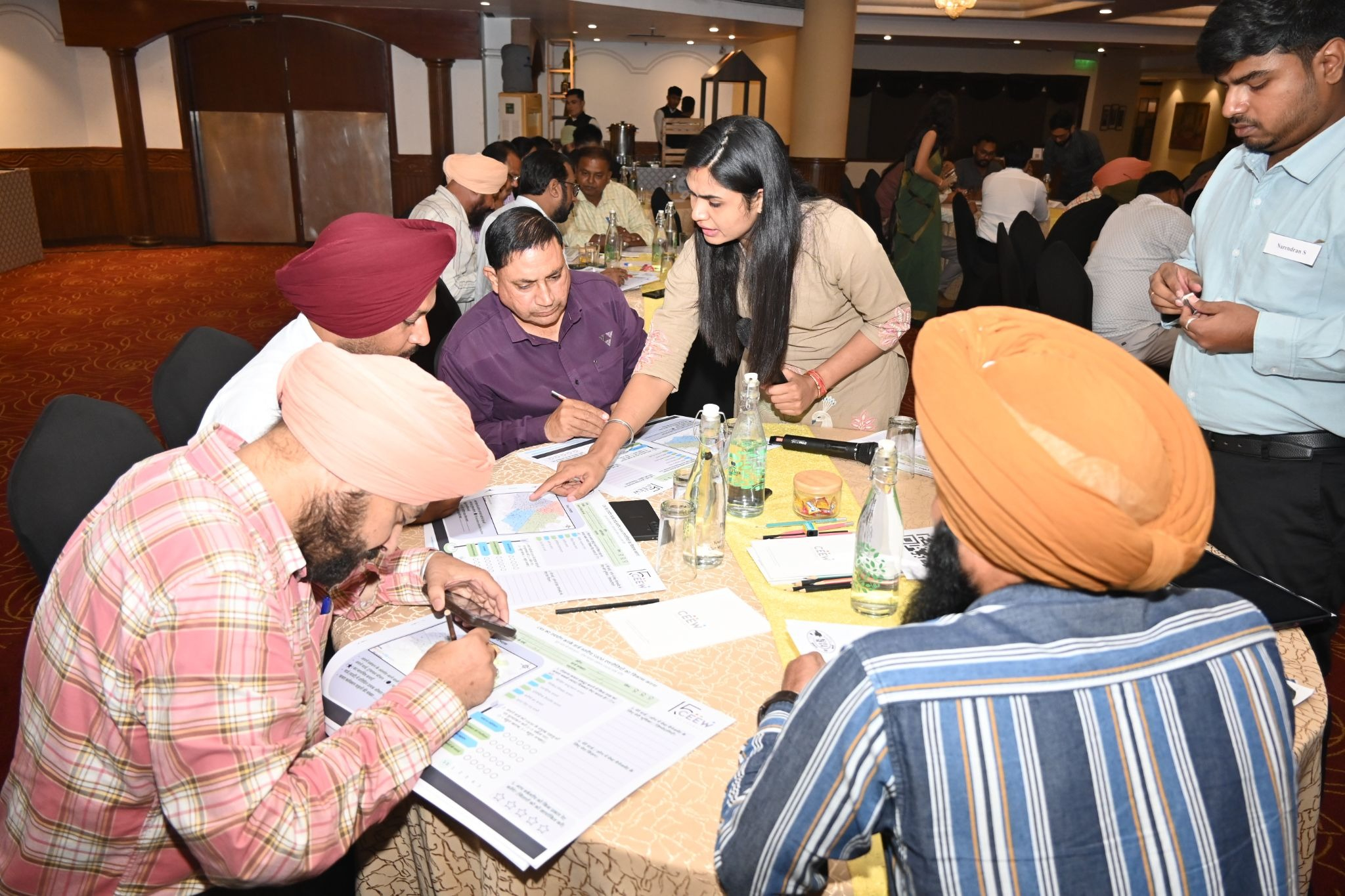
Image 3. The CEEW team using the Challenge-Root-Cause-Solutions matrix to develop a ward-level action plan with sanitary inspectors in Ludhiana in July 2025.
The CRS approach was also cited and recommended in the Economic Survey 2025 as a framework for cities to design context-sensitive interventions. At the same time, CEEW’s research and on-ground engagements with cities highlight that three key systemic gaps continue to prevent urban local bodies from unlocking the potential of circular municipal solid waste management.
The first is segregation. The quality of everything downstream — compost, biogas and recycled materials — depends on proper sorting of waste at source and its maintenance throughout the supply chain. Cities like Indore and Surat have achieved segregation rates above 95 per cent by combining public engagement, enforcement, infrastructure, and real-time monitoring. Other cities could track ward-level segregation, incorporate quality metrics into concessionaire agreements, and intervene as soon as the system breaks down.
The second gap is market development. Processing waste is only financially sustainable if there are reliable buyers for the end products. Urban local bodies can use compost in city nurseries and green spaces, and can actively connect processing facilities with bulk purchasers in agriculture and industry.
The third gap is data and local capacity. Urban local bodies can greatly benefit from data dashboards, AI-enabled monitoring, and integrated command-and-control centres in improving waste operations, from tracking vehicles to monitoring fires. Digital learning platforms such as the iGOT Karmayogi could support training for municipal staff to improve data management and analytical skills.
4. Textile waste
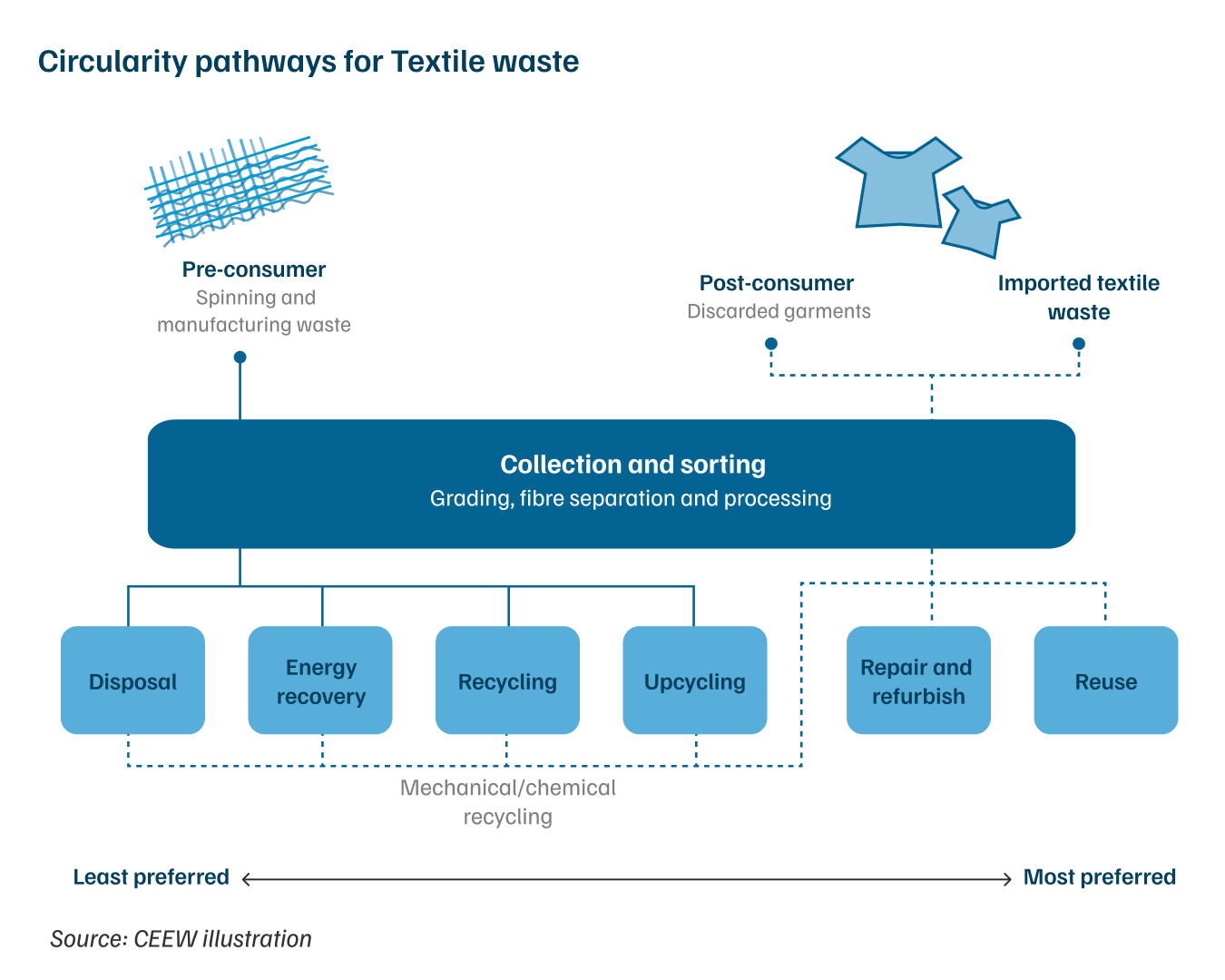
Current ‘waste’: ~7 million tonnes of textile waste each year
Potential market value: USD 3.5 billion by 2030
Jobs: ~0.1 million new green jobs in India by 2030
India generates ~7 million tonnes of textile waste each year. This waste comes from two main sources: pre-consumer (42 per cent) (upstream), generated during spinning, processing, and garment manufacturing; and post-consumer (58 per cent) (downstream), consisting of garments discarded by households and imported waste (0.6 million tonnes per annum) such as second-hand clothing and rags.
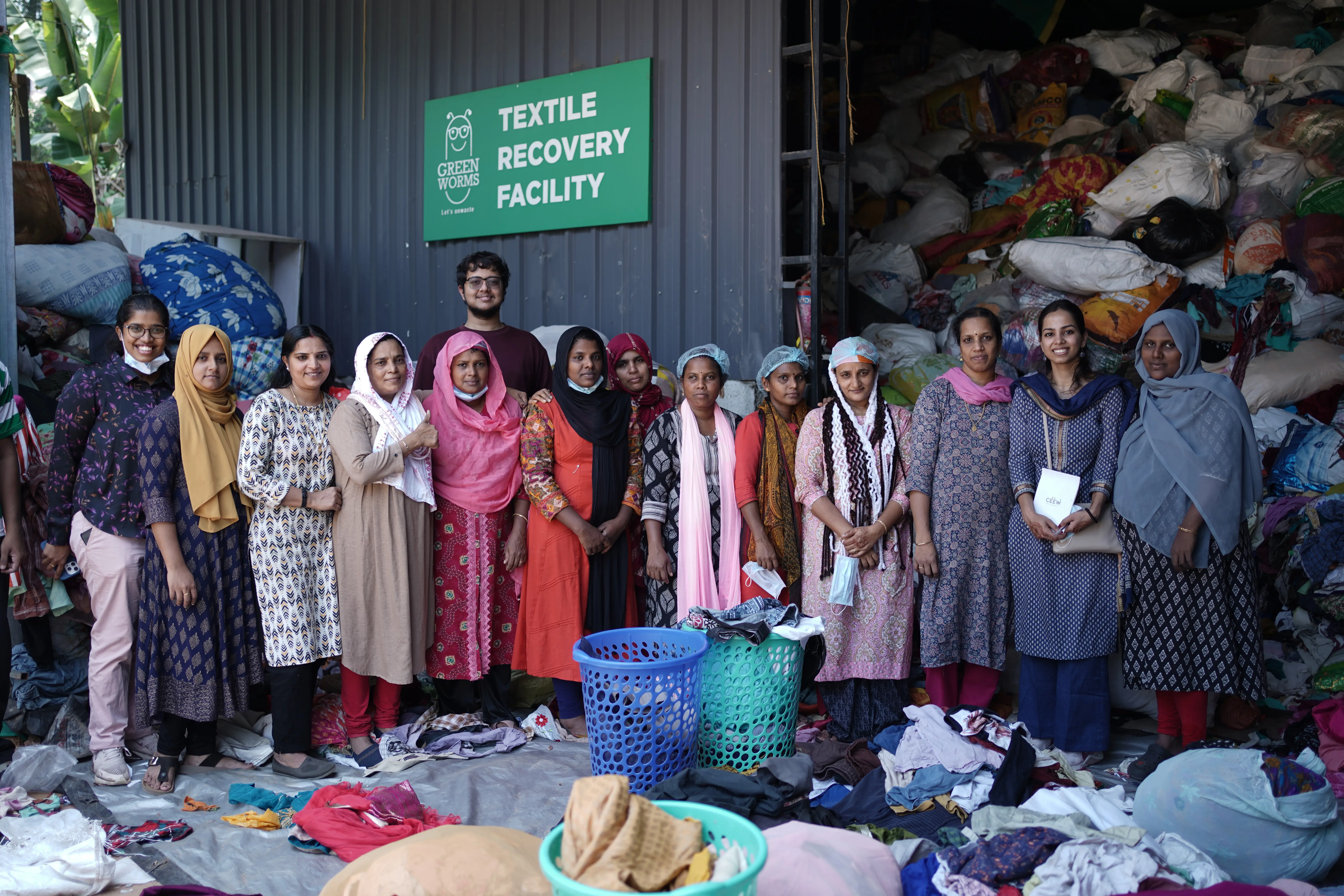
Image 4: CEEW team visited a textile recovery facility to understand the aggregation and management of textile waste in Calicut, Kerala, in February 2026.
A circular textile economy could reduce losses across the value chain by connecting both upstream and downstream interventions. Upstream efforts focus on sustainable design and material, prioritising longevity, durability, repairability, disassembly, and recyclability, including the use of mono-material and bio-based inputs. Downstream measures focus on improved sorting and recycling to transform textile waste into new raw material. Together, these approaches can keep resources in circulation, thereby significantly reducing the textile industry’s carbon footprint and its contribution to landfills and incinerators.
However, structural challenges persist. India’s textile value chain is highly fragmented, with spinning, weaving, and garment manufacturing largely operating in silos. The recycling ecosystem is constrained by uneven standards, an informal workforce, and inconsistent output quality. Modern fast fashion has made things harder still. Cheaper garments made from complex blends are worn briefly and quickly discarded, arriving at recycling facilities contaminated with dirt, stains, and solid waste and mixed with other materials, making sorting labour-intensive and recovery poorer. Buttons, zippers, and other attachments further complicate the process.
As part of ongoing CEEW research on pre-consumer textile waste management, researchers visited four textile recovery facilities across India to understand how these collection and aggregation points operate for both pre- and post-consumer textile waste. Interactions in recycling clusters such as Panipat and Tirupur revealed increased inflow of complex, synthetic, and contaminated material, alongside competition with virgin material.
Recognising these challenges, the Government of India has placed sustainability at the centre of its textile vision. The Ministry of Textiles’ 4Cs framework emphasises collaboration across stakeholders, cluster-led development, common certification to ensure alignment with global standards, and capacity building through skill development and infrastructure support. The Union Budget 2026–2027 announced an Integrated Programme for the Textile Sector with a focus on embedding circularity across the textile value chain, introducing holistic policy frameworks like the Tex-Eco Initiative. A tripartite MoU was signed on February 28, 2024, between the Textiles Committee, GeM and the Standing Conference of Public Enterprises (SCOPE), Circle Back campaign, National Handloom Development Programme, National Textile Sustainability Council to promote and mainstream the public procurement of upcycled products. In addition, under the National Technical Textiles Mission, launched in 2020 with an outlay of INR 1,480 crore, promotes research and development initiatives for waste-to-fibre technologies, including the conversion of textile waste, advanced green materials such as carbon fibres and functional textiles.
The transition to a circular textile economy in India requires a coordinated blend of policy direction, market activation, and implementation, which requires action at both upstream and downstream levels. With stronger standards, improved sorting systems, coordinated cluster-level action, and sustained investment in technology and skills, textile waste can be redirected back into production systems, reducing reliance on landfills, strengthening livelihoods, and improving resource efficiency across the sector.
5. Solar waste
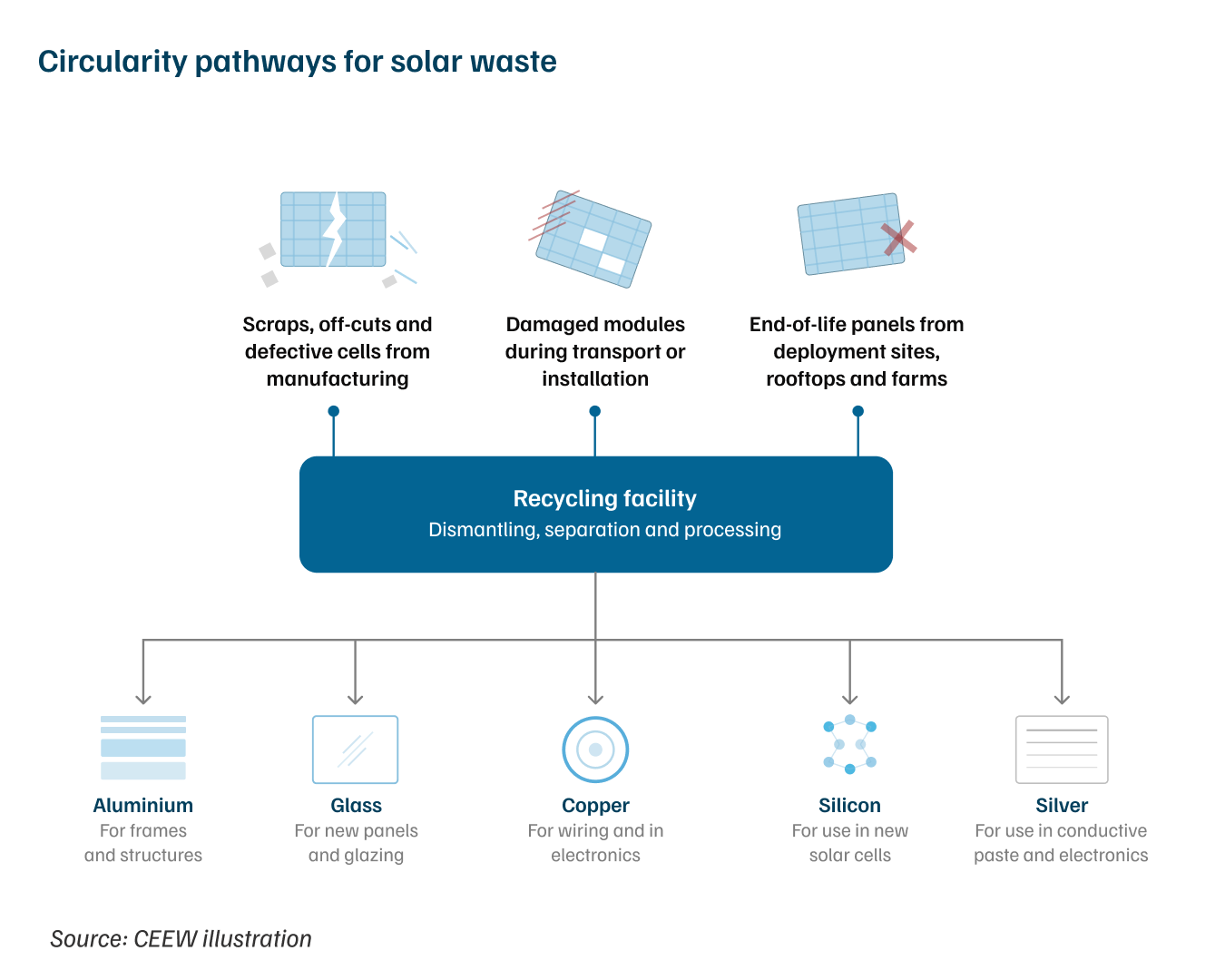
Current ‘waste’: 4,96,000 tonnes between 2021–2030
Potential market value: USD 384 million in 2047
India aims to achieve 60 per cent cumulative electric power installed capacity from non-fossil fuel-based energy resources by 2035. Currently, the installed solar capacity stands at 157 GW, supported by domestic solar module manufacturing capacities of around 193.9 GW per annum and solar cell manufacturing capacity of 30.5 GW per annum.
A CEEW study on sizing the market and investment opportunity from solar recycling estimates that such ambitious deployments will generate 11,221 kilotonnes (kt) of solar waste by 2047. Solar waste includes waste generated during the manufacturing of solar modules or cells, and discarded solar modules that have been damaged during transit or installation or have reached the end of their useful life. Solar waste is collected from deployment locations and transported to recycling facilities, where they are dismantled and processed to recover aluminium, glass, copper, and materials like silicon and silver, which re-enter manufacturing supply chains for new panels or other industrial applications. However, in FY 2025–26, only 1,980 tonnes of solar waste were recycled in India.
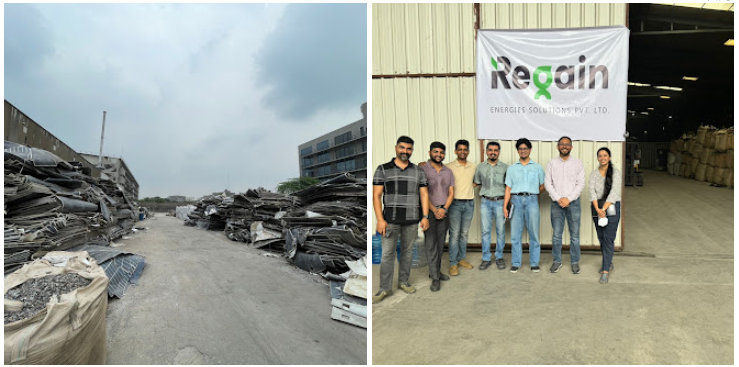
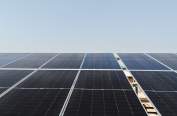
Image 6 and 7. CEEW team visited a solar waste recycling facility in Gujarat that recovers materials from end-of-life solar panels.
Solar waste is regulated under the E-Waste (Management) Rules, 2022. The Rules set out the extended producer responsibility (EPR) framework, under which the producers of electrical or electronic equipment have to comply with recycling targets for the products they have introduced into the market. The only exception is solar waste: there are no EPR targets, and producers are only required to store the waste generated until 2034–35. Further, the scope of certificates that need to be purchased to comply with EPR obligations is limited to only aluminium and iron for solar. The delayed obligations could defer the development of a solar recycling ecosystem and weaken investment signals.
Additional constraints arise from geography and technology. Solar waste is dispersed all across the country, including remote or sparsely inhabited regions, and there is no mechanism to map its potential generation. The lack of spatial data impedes existing recyclers, who are unable to plan and allocate their resources effectively or optimise solar waste collection and logistics. Recycling technologies also face limitations in scalability, material recovery rates, and purity, limiting economic viability. A CEEW study reveals that these challenges constrain India’s ability to achieve the estimated market opportunity of INR 3,709 crore and recover 656 kt of materials by 2047 from solar waste recycling.
Since solar waste is required to be collected and stored by producers until 2034–35, the Central Pollution Control Board (CPCB) has issued Guidelines for the Storage and Handling of Waste Solar Photovoltaic Modules, Panels, and Cells. These guidelines have defined the responsibilities of producers, manufacturers, and other stakeholders across collection, transportation, handling, and storage, to minimise damage to solar waste and enable recovery.
Similarly, addressing ecosystem gaps through timely investments in infrastructure and regulatory readiness can realise the full potential of solar waste recycling, building an economically viable circular value chain. The Ministry of Environment, Forest and Climate Change (MoEFCC), along with the CPCB, could extend recycling targets under the EPR framework for solar waste, whether mandatory or voluntary, to build a steady supply of feedstock for solar recyclers. Expanding the scope of tradable EPR certificates to include critical minerals and high-value metals such as copper, silicon, and silver could help improve recovery and revenue potential.
The Ministry of New and Renewable Energy (MNRE) could establish a centralised, dynamic national inventory of solar manufacturing and deployment data, including geo-location, capacity, commissioning date, and module technology. This would allow recyclers to plan collection and logistics effectively, improving waste traceability and operational feasibility.
6. Lithium-ion battery waste
Current ‘waste’: 36,000 tonnes in 2025
Potential market value: USD 5 billion in 2047
Jobs: 72,800 FTE jobs by 2047
India’s energy transition is heavily dependent on lithium-ion batteries (LIBs), which power electric vehicles (EVs), stationary storage, and consumer electronics. The country aims to achieve 30 per cent of new vehicle sales as EVs by 2030, alongside an estimated requirement for 236 GWh of battery storage by 2031–32, significantly accelerating demand for and use of lithium-ion batteries. As deployment scales, a large volume of end-of-life lithium-ion battery waste will need to be managed. According to CEEW estimates, by 2047, India will generate 14,260 kt of LIB waste.
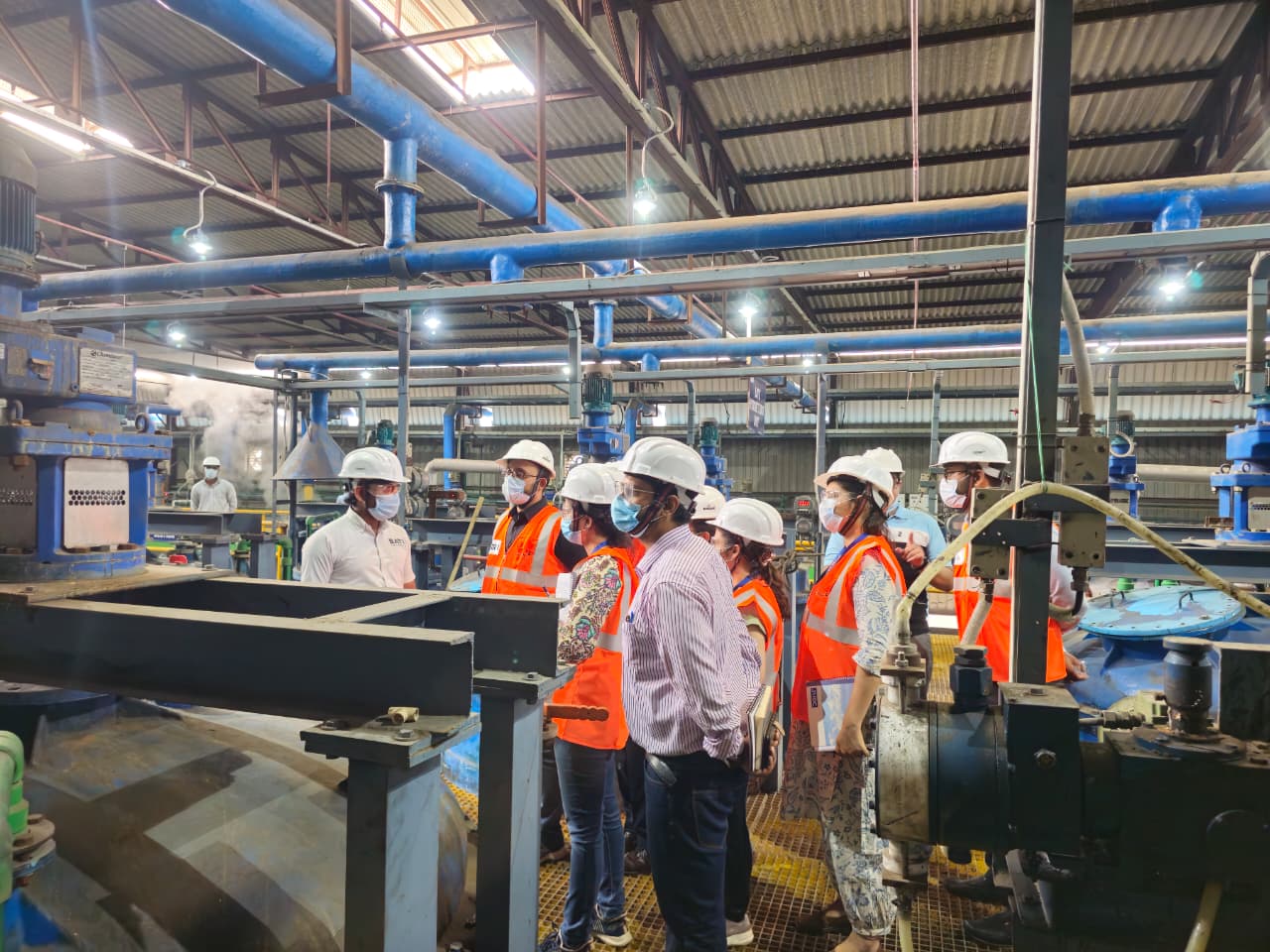
Image 8. CEEW team visited a lithium-ion battery recycling facility in Uttar Pradesh that recovers various materials from end-of-life lithium-ion batteries.
Domestic battery manufacturing is underwhelming. Despite the Production Linked Incentive for Advanced Chemistry Cell scheme for catalysing battery cell manufacturing in India, only 2.8 per cent of the planned 50 GWh capacity has been commissioned. At the same time, India is also highly dependent on imports for critical energy transition minerals, used in making LIBs—100 per cent for lithium, cobalt, and nickel, and around 60 per cent for graphite. With mining and processing concentrated in a few countries, our supply chains remain vulnerable to geopolitical shifts and trade disruptions. In this context, lithium-ion battery recycling offers a strategic pathway to access these minerals domestically through urban mining — the process of recovering metals, plastics, and minerals from waste found in cities — for use in producing LIBs in India.
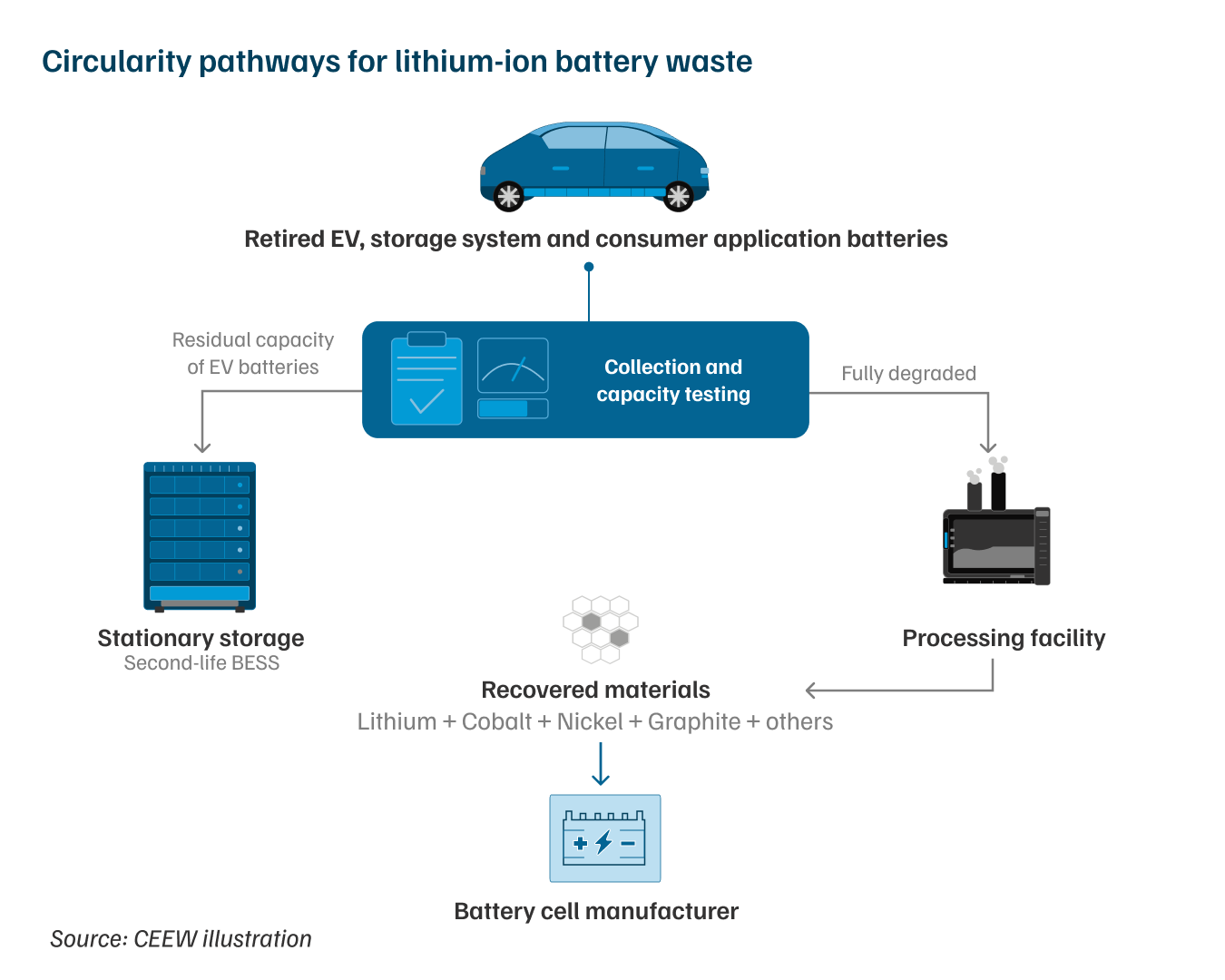
The circular lifecycle of a lithium-ion battery looks like this: Retired batteries from electric vehicles, consumer applications and storage systems are collected and assessed by processing facilities. Those with residual capacity are redirected to less demanding second-life applications, such as stationary storage, to extend their use. Fully degraded units are channelised to hydrometallurgical and/or pyrometallurgical processing facilities, where materials including lithium, cobalt, and nickel are recovered and supplied to battery manufacturers. Lithium-ion battery waste recycling has a market opportunity of USD 5 billion in 2047. Further, facilities recycling this lithium-ion waste can create approximately 72,800 FTE jobs by 2047.
However, reaping these potential benefits requires addressing systemic challenges. Lithium-ion batteries have varied chemical compositions, such as NMC532, NMC622, and their capacity and performance decline over time. The absence of measurable details, including the state of health and remaining capacity, limits price discovery for recyclers of lithium-ion battery waste and risks premature shredding or processing, leading to early loss or inefficient recovery of minerals. This is coupled with a shortage of skilled personnel for safe handling, discharging, and advanced recycling.
To accelerate recycling and secure resources critical to India’s energy transition, the MoEFCC notified the Battery Waste Management Rules, 2022, under which the producers of batteries have recycling and material recovery targets, and have to use recycled content in new batteries as per the mandated targets. The Ministry of Mines has also launched an incentive scheme with an outlay of INR 1,500 crore under the National Critical Mineral Mission to support recycling of lithium-ion battery, e-waste and other wastes (such as permanent magnets, catalytic converters, among others) over FY 2025-26 to FY 2030-31, for the recovery of critical minerals.
In addition to the existing efforts, the MoEFCC, along with the Department of Science and Technology, could institutionalise battery aadhaar or passports with data on composition and performance for lifecycle traceability of batteries. The battery training programmes run by institutions such as Industrial Training Institutes (ITIs) could either adapt or develop a specialised curriculum for this subject, which could be linked to courses on critical minerals and their strategic applications.
Even as India develops lithium-ion battery recycling capacity, a significant share of black mass (the initial mineral-concentrated powder produced by shredding LIB waste) and the ultimately recovered minerals are exported due to higher revenue returns. This is despite continued import dependence on these critical minerals. This hampers the development of a domestic closed-loop LIB circular value chain and further risks the already vulnerable supply chain. For this, the Ministry of Mines and the Ministry of Heavy Industries could work together to create local demand by fast-tracking the development of upstream and midstream battery manufacturing, mandating the use of recycled content in public procurement applications, and integrating recycled materials into strategic stockpiles.
How are entrepreneurs building India’s circular economy?
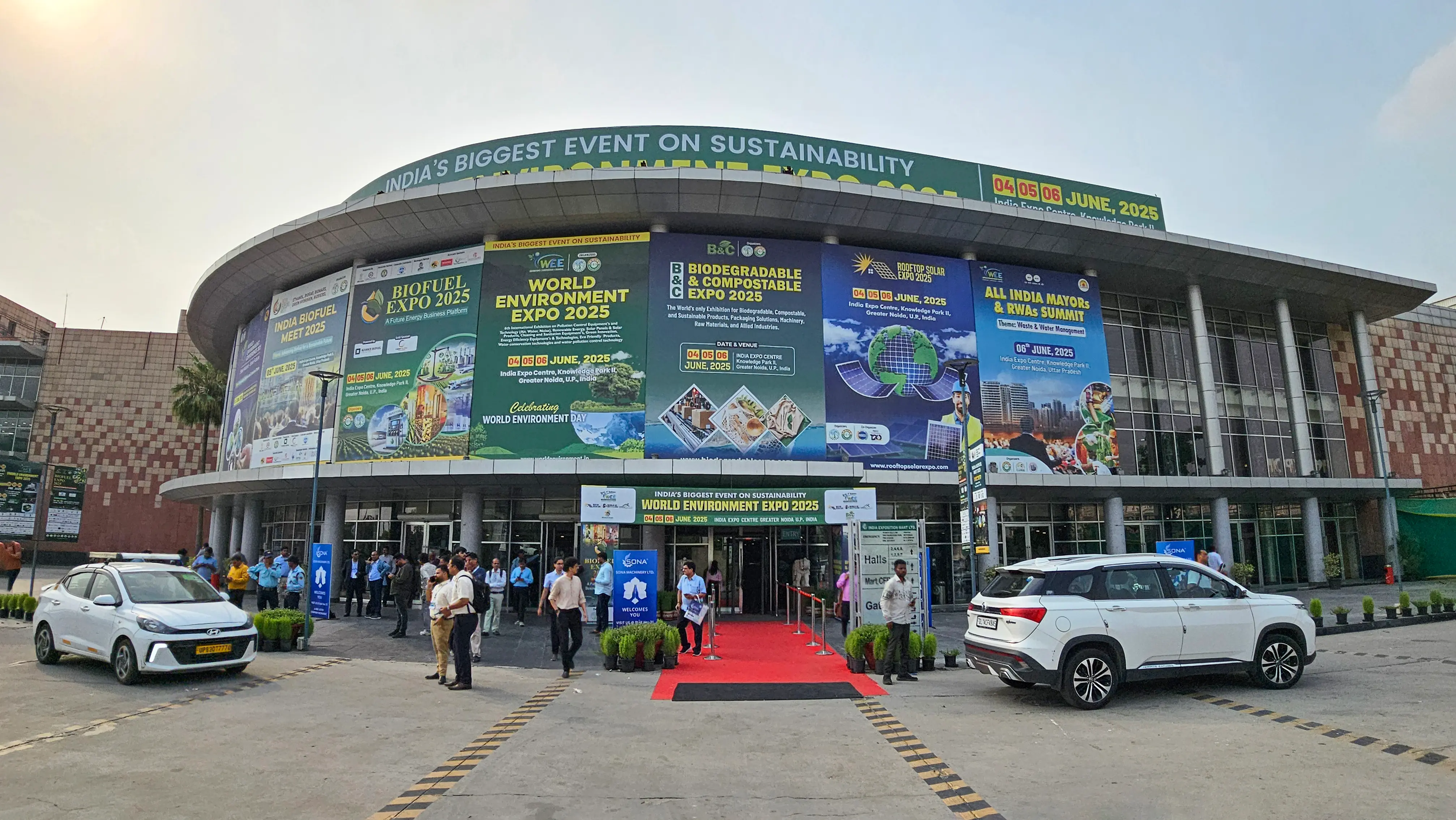
Image 9. An expo showcasing multiple circular businesses in. Source: istock
A circular economy is only as strong as the businesses that bring it to life, and businesses built around reuse, recycling, and waste recovery are on the rise in India. Entrepreneurs are making advances in critical sectors ranging from lithium-ion battery and plastic recycling to repurposing used cooking oil and treating used water for green hydrogen production. So what is helping these businesses grow, and what is holding them back?
Policy tailwinds in the form of Extended Producer Responsibility have created a reliable source of demand for recycling businesses. Depending on the type of waste, these targets range from 20–100 per cent of what producers put into the market. While discrepancies in compliance remain, the policy itself is a welcome signal. The next step would be to extend the Production-Linked-Incentive (PLI) scheme to circular businesses similar to those involved in critical mineral recycling. Since the PLI scheme provides fiscal support to reward actual output, replicating it in other circular sectors will help businesses invest in scaling up advanced technologies, such as chemical recycling of plastics or high-efficiency biodiesel production from used cooking oil. Without structured and production-linked fiscal support, these sectors and businesses might struggle to compete with cheaper, conventional alternatives.
In addition to supportive policy, there is a growing investor network looking to support business opportunities in the circular economy. Ecoil recently attracted USD 2.5 million in funding, Lohum Cleantech, a lithium-ion battery recycling firm, raised USD 54 million in series B funding and Recykal raised USD 23 million in bridge funding. Peak Sustainability Ventures partnered with Arvind Limited to convert cotton stalks to bio-coal. Cleantech startups focusing on decentralised wastewater treatment and resource recovery (such as nutrient extraction and biogas production) are beginning to attract early-stage equity investment. Funding tends to flow towards circular businesses with faster and more predictable returns, particularly clean energy products and digital platform models. To make R&D-intensive circular products that require patient capital with non-linear returns more attractive to finance, it is important to leverage a mix of public, private and specialised financing instruments. Government-backed innovation grants for initial R&D and pilot projects, sustainability-linked debt for late-stage R&D and growth are some such avenues.
However, supply chain bottlenecks are slowing the pace of scaling circular businesses. Collecting waste raw materials is an inherently complicated and hyper-decentralised operation. Material impurity and source segregation make a circular product business very operation-heavy. Formal recyclers find it difficult to out-compete informal recyclers due to greater compliance and overhead costs, and lower price flexibility and collection networks. A discussion with an entrepreneur in Noida, who converts used cooking oil into industrial lubricants, described the struggle plainly: “Solving for constant impurities in the quality of oil and poor compliance with food safety standards (hindering collection of used cooking oil) is a constant challenge for my day-to-day operations.”
Consumers too often expect recycled products to be cheaper, more durable, and better warranted than their raw material alternatives. The lingering association of recycled products with ‘second-hand goods’ means that matching the price of virgin material products is rarely enough. Such consumer preferences make it very difficult for a circular business model to scale based on revenue alone. “I had to switch from making second-life batteries to first-life batteries. We managed to innovate enough to offer second-life batteries at the price of first-life ones, but it was not enough,” said a Bangalore-based entrepreneur.
What common challenges constrain circularity across sectors?
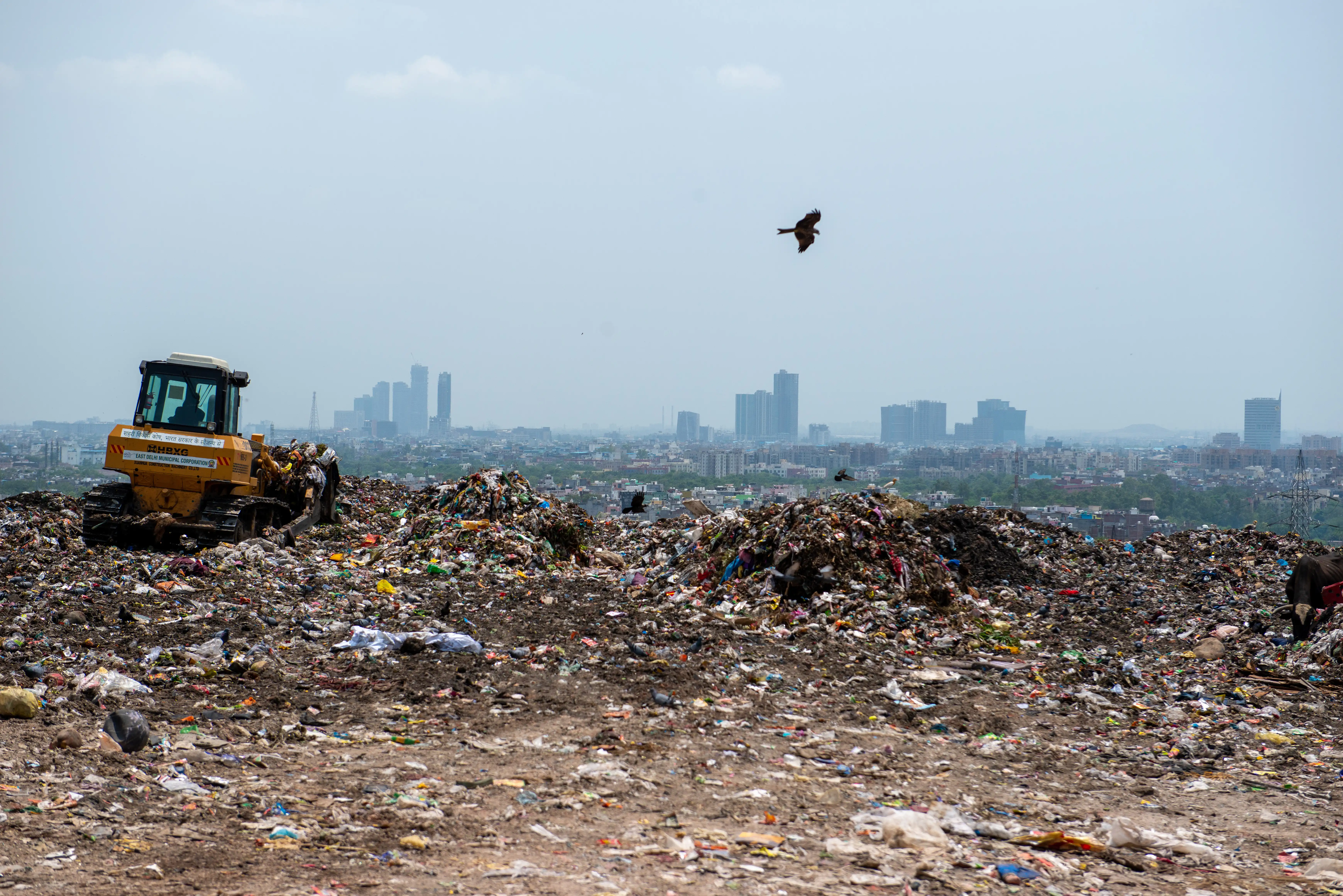
Image 10. An excavator picking up garbage at a landfill. Source: istock
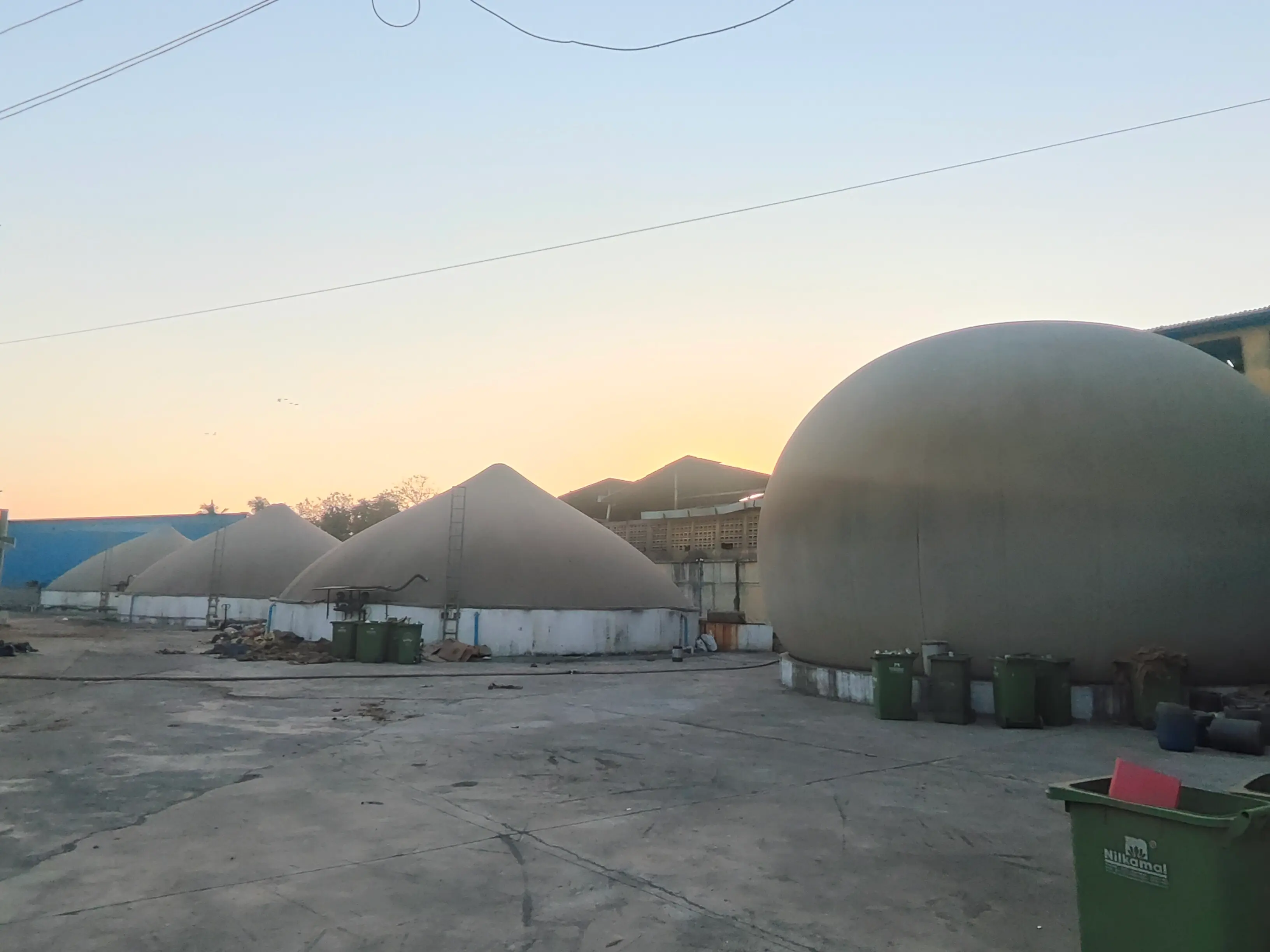
Image 11. 50 TPD biogas plant in APMC market, Surat. Source: CEEW
India’s accelerating entrepreneurial spirit and innovative drive provide a strong foundation for advancing the circular economy. By integrating circularity into economic growth strategies and fostering innovation across critical sectors, such as agriculture, water, energy, and manufacturing, India can solidify its position as a global pioneer in sustainable development, setting a benchmark for others to follow, while generating new employment opportunities and driving inclusive economic growth.
Akanksha Tyagi, Priyanka Singh, and Gunjan Jhunjhunwala are Senior Programme Leads, Saiba Gupta and Kurinji Kemanth are Programme Leads, Aishwarya Jain is a Programme Associate, Srishti Mishra is a Research Analyst, Viraj Joshi is a Consultant, and Adeel Khan is a former Programme Associate at the Council.
Send your comments on used water to [email protected], agriculture residue to [email protected], municipal solid waste to [email protected], textile waste to [email protected], solar and lithium-ion battery waste to [email protected], and circular businesses to [email protected].


Add new comment