Council on Energy, Environment and Water Integrated | International | Independent

Electric three-wheelers have become a familiar sight on the streets of Indian cities. Three wheelers—autorickshaws, tempos, and e-rickshaws—typically seat between three and six passengers and are categorised as Intermediate Public Transport (IPT) or paratransit services. India’s electrification journey began in 2015 with the launch of the Faster Adoption and Manufacturing of (Hybrid &) Electric Vehicles (FAME) scheme. Over the last decade—2015 to 2025—electric three-wheelers have led this transition, achieving the highest EV adoption rate among passenger vehicle segments.
Since 2021, more than half of all three-wheelers registered in India have been electric. In 2024, India also became the global leader in electric three-wheeler sales. Other countries in Asia—including China, the Philippines, Vietnam, and Thailand—are also experiencing a shift toward electric passenger three-wheelers. China, which entered the market early, already has a well-developed charging infrastructure and robust safety norms for these vehicles.

Source: CEEW analysis based on MoRTH VAHAN dashboard data (L5M are passenger vehicles with gross vehicle weight up to 1500 kg, as defined by the Ministry of Road Transport and Highways (MoRTH)
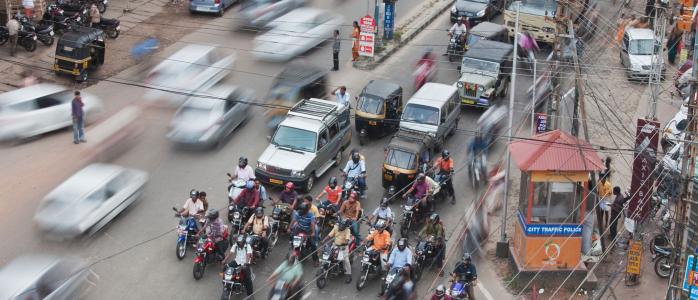
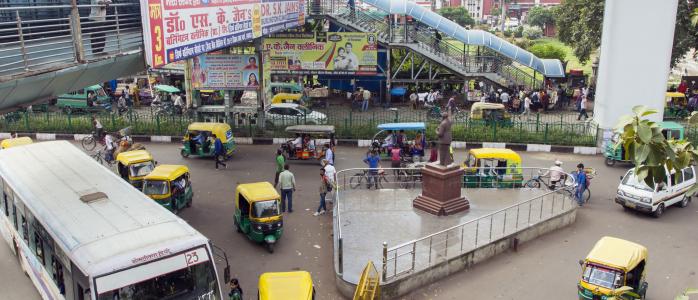
In larger Indian cities, IPT modes not only fill critical gaps in short-trip mobility but also provide last-mile connectivity to and from formal public transport networks. Their small size allows them to navigate through residential pockets and busy commercial hubs. In smaller cities, without formal bus systems, IPT modes are the only source of public transportation, and people rely heavily on them. IPT modes account for between 3–13 per cent of all passenger trips, depending on the city size.
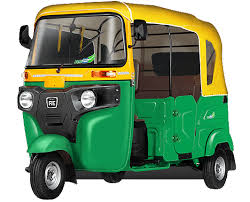
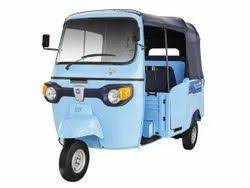
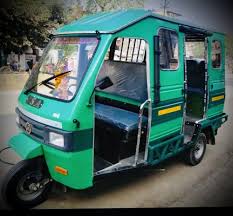
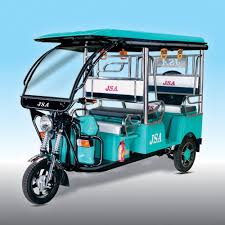
IPT modes include 3-seater L5M auto rickshaws, 6-seater tempos and 4-seater e-rickshaws. E-rickshaws led the electrification of the three-wheeler IPT segment before 2019; since then, L5M electric auto rickshaws have seen significant uptake. Sales of tempos (or Vikrams, as they're known in North India) are stagnating, with limited EV alternatives available. This is due to the growth of cheaper electric alternatives in other segments and the closure of the Scooter India Limited (a PSU which manufactured Vikram tempos).
Source: CEEW analysis based on MoRTH VAHAN dashboard data of vehicle registrations between 2015-25 (Telangana's data is not available)
Looking at the state-wise trends in Figure 2, the electric IPT transition is more concentrated in the northern states of India. Between 2015 and 2025, Uttar Pradesh saw the highest number of electric three-wheeler registrations. In contrast, Maharashtra led in ICE (CNG/Diesel) three-wheeler registrations. Meanwhile, states like Gujarat and several others in southern and northeastern India have seen a relatively slower growth in L5M electric auto rickshaw and e-rickshaw registrations.
Several reasons can be attributed to this. These include regulatory measures; for example, many cities in Uttar Pradesh have set a cap on the issuance of CNG/Diesel three-wheeler permits, and with the introduction of state EV policies, electric three-wheelers have been promoted through permit waivers. Many cities in Uttar Pradesh, Bihar, and Assam also lack public transport in the form of buses; therefore, IPT three-wheelers serve as a de facto substitute. Northeastern states, on the other hand, face terrain-related barriers to widespread electric IPT uptake.
Historically, three-wheeler IPT services have been run on petrol, diesel, and CNG fuel types. But EV technology has quickly gained favour among operators. The economic benefits of owning and operating e-autos and lithium-ion-based e-rickshaws have significantly contributed to this rapid EV transition. Based on Lucknow's IPT system's operational characteristics, we conducted a Total Cost of Ownership analysis on a per-km basis (Figure 3).
In Lucknow, L5M electric autorickshaws cost 38–46 per cent less to run than CNG vehicles when driven 160 km a day. Surprisingly, L5M electric autorickshaws showed a lower cost of ownership than e-rickshaws—mainly because e-rickshaws use lead-acid batteries. These batteries need frequent replacement—typically after 300–350 charging cycles or nine months—raising overall costs. Thus, electric autorickshaws are gaining momentum, and moreover, as battery prices reduce further in future, they will continue to dominate the market segment.
Figure 3: Total Cost of Ownership (TCO) of three wheelers
Source: CEEW analysis based on the 2024-25 market review and Lucknow's IPT operational characteristics (Daily operational kms in Lucknow: E-rickshaw 90 km, Auto rickshaw - 160 km, Tempos - 130 km)
Apart from the economics, Original Equipment Manufacturers (OEMs) have recognised the needs of IPT three-wheeler operators. A compilation of daily operations of IPT three-wheelers in Indian cities, organised from largest to smallest by population size, suggests that auto rickshaws are driven between 100 and 160 km daily, while e-rickshaws travel 70–90 km each day (Figure 4). Current electric models for both these categories comfortably meet the daily driving needs and allow overnight charging, assuming operators have access to parking.
Figure 4: Daily operational distance of IPT three-wheelers in different Indian cities
Source: CEEW analysis (Daily operational km – Secondary literature; Range of EVs – OEM websites; Cities are arranged in decreasing order of their population from Delhi to Kochi; Note - E-rickshaws do not operate in many Indian cities such as Bengaluru, Chennai, Kochi, etc.
As lower costs of ownership expand electric IPT adoption across India, local and state-level planning and policies must evolve to support the shift. This includes not just vehicle availability but also workforce readiness, infrastructure, and environmental safeguards. Some key actions to sustain India's electric IPT momentum are:
India has emerged as the world's largest market for electric three-wheelers. As adoption deepens, the transition’s next phase will demand more than just market enthusiasm—it will require coordinated action across central policies, state regulations, city planning, and industry innovation to shape a cleaner, more inclusive urban transport system.
National schemes like PM E-DRIVE by the Ministry of Heavy Industries are moving in the right direction, promoting charging infrastructure and upgrading testing agencies with modern EV technologies. At the state level, policies such as Delhi’s adopt an ecosystem approach—going beyond financial incentives to include reforms in building byelaws, targeted subsidies for charging networks, and support for EV technology R&D through patents and operational pilots. Meanwhile, capacity-building efforts are underway: the Automotive Skill Development Council of India, for example, has partnered with industry players to upskill workers in EV repairs and services.
To sustain momentum in electrifying three-wheeler intermediate public transport, these initiatives must be scaled up, better integrated, and accelerated—ensuring that India’s EV transition delivers not only cleaner air but also broader economic and social gains.
Samradh Singh Chauhan is a Programme Associate at the Council on Energy, Environment and Water (CEEW). Send your comments to [email protected]




Comments
Tasha
Wed, 02/04/2026 - 03:15
Hey! Do you know if they make
Tasha
Wed, 02/04/2026 - 03:15
Hey! Do you know if they make
Add new comment