Council on Energy, Environment and Water Integrated | International | Independent

Suggested Citation: Chaudhary, Megha, Saakshi Purohit, Manas Vijayan, and Bhawna Tyagi. 2026. What Drives Rooftop Solar Installation Decisions in Indian Homes? Understanding Household Decision-making Through a Pan-India Survey. New Delhi: Council on Energy, Environment and Water.
India's residential rooftop solar adoption is at an inflection point. The launch of Pradhan Mantri Surya Ghar: Muft Bijli Yojana (PMSGY) in February 2024 has nearly doubled the sector's growth rate from a CAGR of 45% to 85%, with more than 4 million households solarised as of May 2026. This report presents findings from the first-ever national consumer-side survey on residential RTS since the PMSGY launch, based on a survey of 17,094 households across 22 states and Union Territories. It traces the consumer journey from need recognition through perception, accessibility, and affordability to post-installation experience, identifying where dropouts occur and what targeted interventions can convert intent into action. The findings suggest that the greatest opportunity lies not in creating demand but in enabling action.
On 21 May 2026, India witnessed an all-time high peak electricity demand of 270.7 GW at 3.47 p.m., but the country’s renewable energy push helped it tide over the surge comfortably. Solar energy, including rooftop solar (RTS), alone helped tackle 22 per cent of the demand (National Power Portal 2026), highlighting its importance as a key pivot of India’s energy transition efforts. Within this sector, residential RTS is a significant focus area for the government in the pursuit of its Net Zero goal.
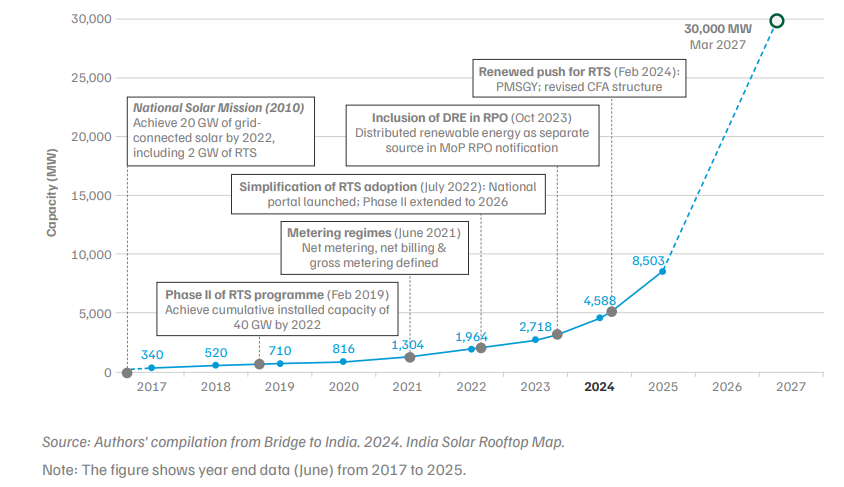
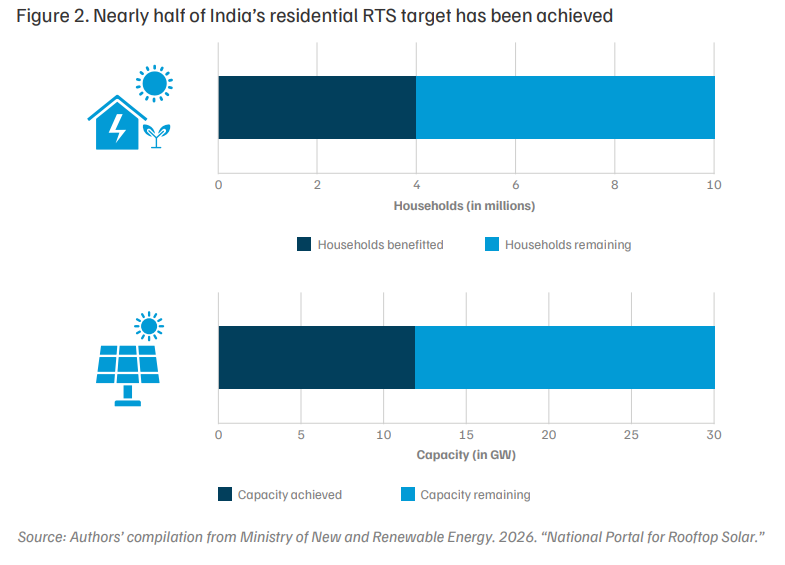
India’s journey in residential RTS adoption is at an inflection point. The launch of a dedicated scheme, Pradhan Mantri Surya Ghar: Muft Bijli Yojana (PMSGY), in February 2024 marked a decisive policy shift. It has helped nearly double the sector’s growth rate from a CAGR of 45 per cent in 2017-2023 to 85 per cent in 2024-2026 (Bridge to India 2024). As of 31 May 2026, PMSGY has received 6.9 million applications and 4 million households have been covered under the scheme. Currently 11.9 GW of capacity has been installed-nearly doubling the entire residential RTS capacity built over the preceding decade.
In absolute terms, the number of households solarised in India (4 million [National Power Portal 2026]), are also now comparable to Australia, a pioneer in residential RTS installation where 4.3 million households solarised over a span of 15 years (Australian Government 2026), even though Australia continues to lead in per capita RTS installations with approximately one in three equipped with RTS (Australian bureau of statistics 2025). To reach the 10 million mark by March 2027, India needs to sustain its current momentum to solarise 0.6 million households per month between June 2026 to March 2027 to reach the 10 million mark. At the same time, there can be an increased effort to diversify the adoption beyond the five states-Gujarat, Maharashtra, Rajasthan, Uttar Pradesh and Kerala, accounting for more than 71 per cent of national installed capacity.
Figure ES1. PM Surya Ghar Yojana nearly doubled the residential RTS growth rate
Nearly two-third of the households applying for RTS proceed to installation, showcasing that the PMSGY is performing well among those who start the journey (Ministry of New and Renewable Energy 2026). The priority now should be to widen the pipeline by reducing the drop outs occurring at every stage of the RTS adoption journey. Our analysis suggests that the dropouts occur in households facing information, procedural, and financial challenges.
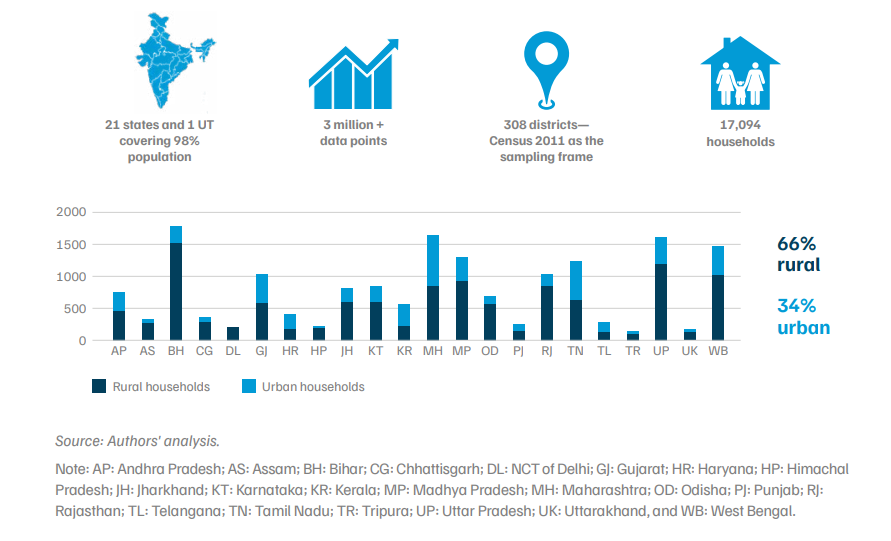
This report-the first-ever national consumer-side survey on residential RTS since PMSGY launch, is an attempt to understand the bottlenecks currently hobbling its expansion and suggest ways to overcome the challenges. Based on a survey of 17,094 households across 21 states and 1 union territory (UT), it set out to answer four questions:
To answer these questions, the study adopts a consumer journey framework, tracing the path from need recognition through perception, accessibility, and affordability, and to post-installation experience. The findings help frame stage-specific targeted interventions to reduce attrition rate.
Figure ES2. Survey highlights-21 states and 1 UT, 3 million+ data points
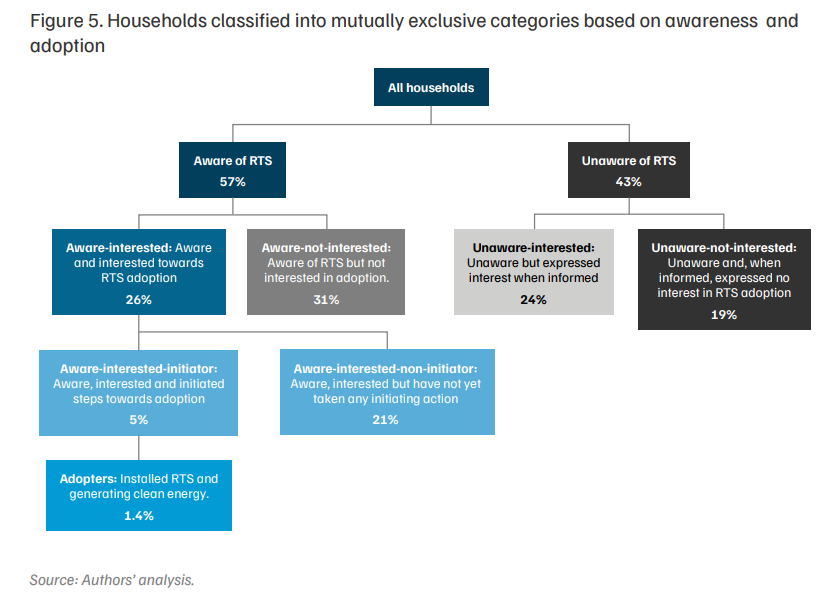
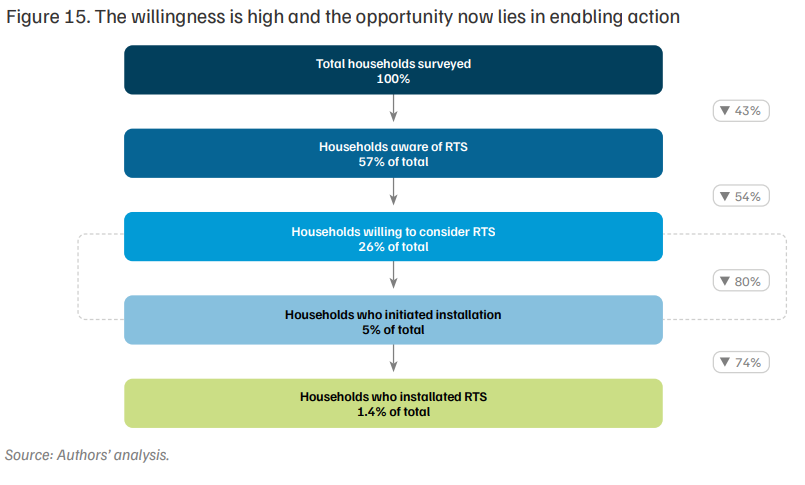
The findings of our survey suggest that the greatest opportunity in India’s RTS programme lies not in creating demand but in enabling action. The survey found that out of the 57 per cent who are aware of RTS, half (26%) were willing to consider RTS, 5 per cent initiated installation, with 1.4 per cent completing the process (Figure ES3). The drop between the journey of willingness to action reveals that insights and nudges from trusted sources can ensure continued momentum and adoption. The survey shows that awareness has significantly improved over the years but more targeted interventions can convert the intent into action.
Figure ES3. The willingness is high and the opportunity now lies in enabling action
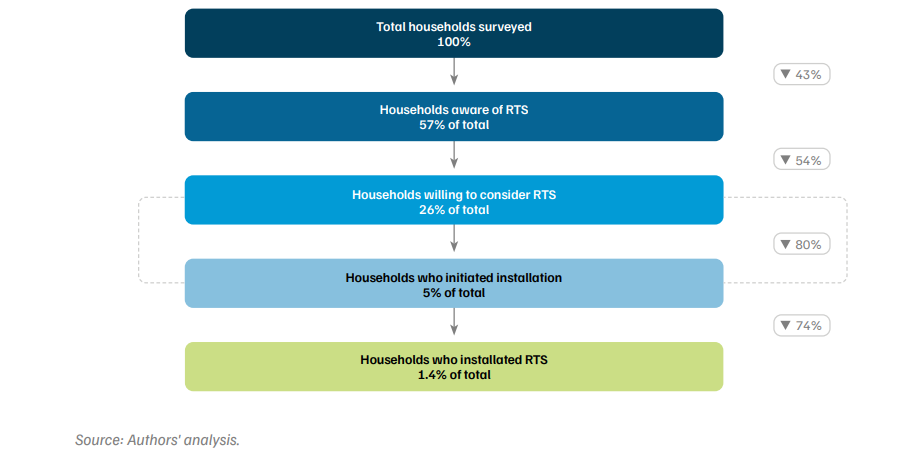
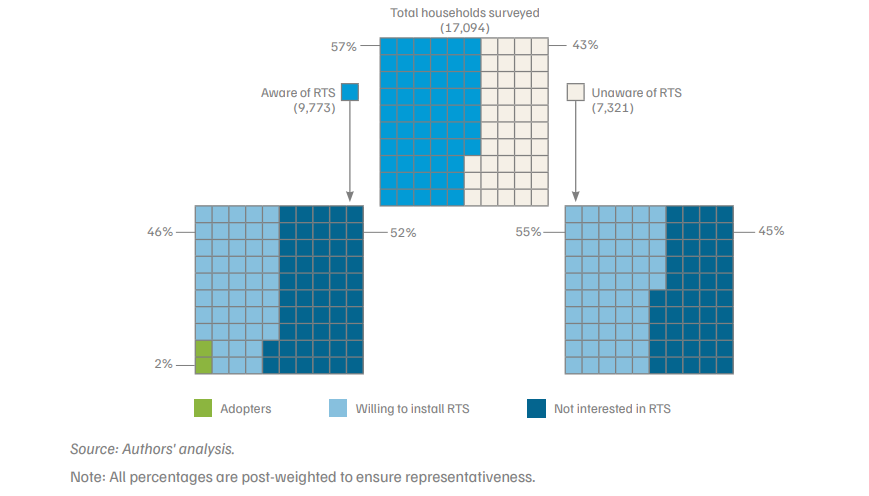
Figure ES4. Among households that were previously unaware, 55% reported being willing to adopt RTS
To sustain PMSGY’s momentum and convert demand into action, we structured targeted interventions around the five stages of consumer journey:
With electricity demand in India rising steadily, the country recorded its highest-ever peak of 270.7 GW on 21 May 2026, underscoring the growing stress on the power system and the need to scale distributed clean energy solutions (National Power Portal 2026). Solar energy, including RTS, proved critical to meeting this demand, contributing 22 per cent to the peak-a testament to its essential role in India’s energy security. Within this context, residential RTS is a key focus area for India’s energy transition and Net Zero objectives.
India’s renewable energy capacity has expanded rapidly, reaching 275 GW as of March 2026, with solar contributing 154 GW (Ministry of New and Renewable Energy 2026). Residential RTS capacity increased significantly in the last two years to 11.9 GW and holds an immense potential for the country’s energy security (installed capacity is 10 per cent of the estimated technical potential) (Zachariah et al. 2023). Nationwide RTS deployment has faced significant challenges including high upfront cost, limited financing options, insufficient awareness among the consumers and a complicated application process (Gupta et al. 2022).
Against this backdrop, the launch of the Pradhan Mantri Surya Ghar: Muft Bijli Yojana (PMSGY) in February 2024 marked a decisive policy attempt to
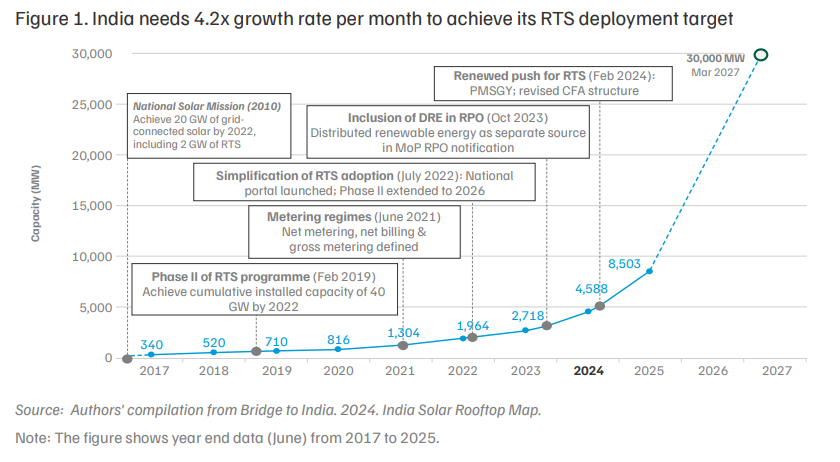
democratise clean energy. With targeted interventions like a subsidy of up to INR 78,000 for a 3-kilowatt (kW) RTS system, collateral-free loans, digitised application process, and a dedicated fund for awareness activities, the scheme aims to install RTS on 1 crore households by March 2027. Figure 1 illustrates how successive policy interventions, ranging from metering reforms to process simplification, have progressively enabled RTS adoption since 2010. The sharp acceleration after 2024 underscores the role of PMSGY in driving a step change in deployment, moving the sector from gradual growth to rapid scale-up.
Policy and regulatory reforms steadily strengthened the RTS ecosystem, while PMSGY unlocked unprecedented momentum in residential RTS adoption.
The scheme has already begun to transform the pace of deployment, nearly doubling the sector’s growth rate from a CAGR of 45 per cent (2017-24) to 85 per cent (2024-25). As of 31 May 2026, 11.9 GW of RTS capacity has been installed across 4 million households, accounting for about 40 per cent of the PMSGY’s target. Leveraging this momentum, India needs to solarise nearly 0.6 million households every month to meet PMSGY’s 2027 target (Figure 2).
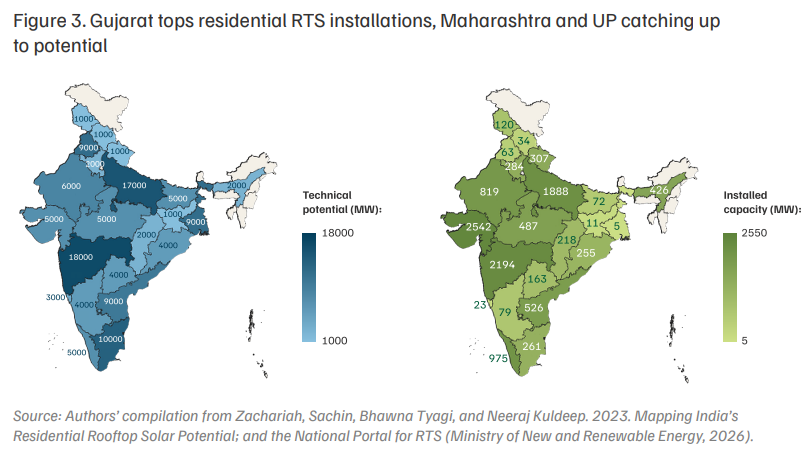
Residential RTS deployment holds significant untapped potential at both the state and national levels. India’s technical potential for residential RTS based on consumption is 118 GW (Zachariah et al. 2023). Maharashtra and Uttar Pradesh show the highest potential (Figure 3), while Gujarat has the highest number of installations currently. Similarly, Tamil Nadu, Madhya Pradesh and Rajasthan have a lot more potential, but the adoption remains limited.
The question arises as to what factors can be an effective trigger for higher adoption. Consumer decision is locked in by multiple factors, from psychological drivers, to economic incentives and technology’s perception (Davis 1989; Rogers 1983). Unlike utility-scale deployment, consumer behaviour forms the backbone of RTS adoption complemented by other institutional factors.
Where is the progress getting bottlenecked?
Nearly seven million residential electricity consumers in the country have initiated their RTS journey through the PMSGY portal. Encouragingly, 58.4 per cent of them had progressed to installation as of 31 May 2026, demonstrating strong conversion among engaged consumers (Ministry of New and Renewable Energy 2026). While these numbers reflect growing momentum in residential RTS adoption, they also highlight significant opportunities to scale adoption by strengthening consumer support across each stage of the adoption pathway-through targeted interventions, improved guidance, and streamlined processes.
Against this backdrop, the study is the first ever national consumer side survey on RTS since PMSGY. It intends to address the following questions:
• How aware are households about RTS in light of PMSGY, and what is their understanding about it?
• What are the factors impacting willingness to adopt and installation decisions across household categories?
• At which stage of the consumer journey does conversion face the greatest challenges?
• What actionable pathways can be designed to support implementation and improve in-process conversion?
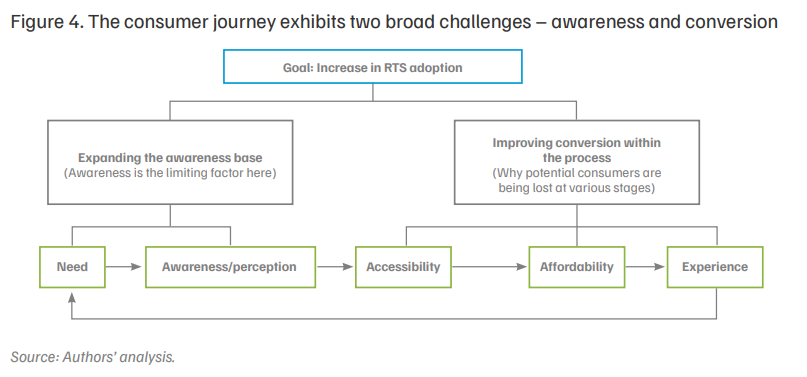
To answer these questions, the study adopts a consumer journey framework, tracing the path from need recognition through perception, accessibility, and affordability, and to post-installation experience as illustrated in Figure 4. The findings help frame stagespecific targeted interventions to reduce attrition rate.
• Beginning with assessing awareness gaps among completely uninformed individuals, and those with limited familiarity with RTS, in order to shape positive perceptions.
• Estimating the drop-offs through the accessibility and affordability stages driven by financial and other constraints.
• Understanding post-installation satisfaction to sustain long term adoption and advocacy.
1.2. Methodology
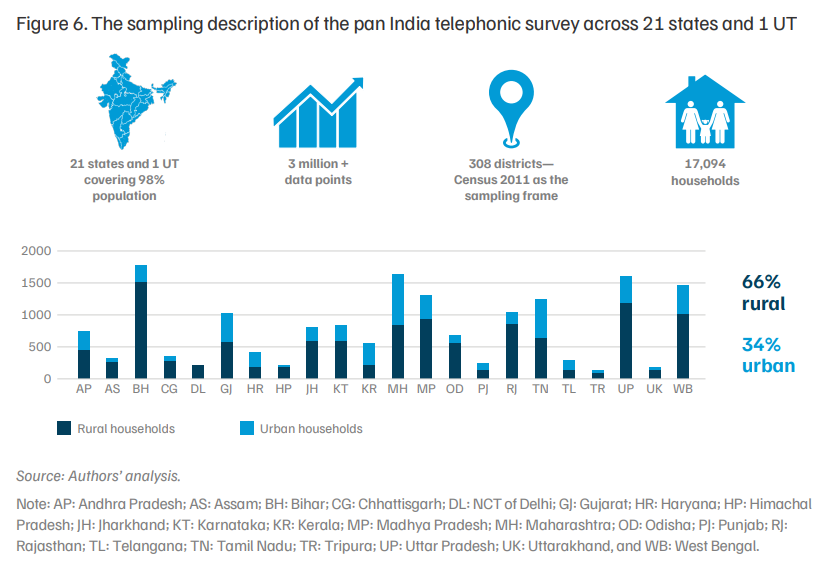
To strengthen the RTS installation pipeline at every stage and chart out actionable pathways, the team conducted a pan-India telephonic-survey covering 17,255 households across 23 states and 1 union territory (UT) from January-April 2026. The final sample was post-weighted to ensure state-level representation in the analysis. A multi-stage sampling approach is adopted to select districts and households to ensure that the sample is representative of 98 per cent of population based on Census 2011. It is state wise urban-rural representative, hence capturing intra-state population heterogeneity. The survey design was based on a two-pronged approach: first, population-proportional allocation of districts using Census data to support broad national, state-level, and urban-rural coverage; second, population-balanced stratification to ensure within-state coverage across large and medium districts.
However, due to data inadequacy, the states of Nagaland and Mizoram are not considered for the analysis in this report. Based on the approach, a total of 308 districts across 21 states and 1 UT were covered, yielding a final sample of 17,094 households (Figure 6). The survey was piloted for 625 households which are excluded in the total achieved sample. The questionnaire was also modified based on our primary understanding of the household awareness on solar panels, sanctioned load and interest expressed by the unaware households in installation. The survey was administered through computer-assisted telephonic interviews (CATI) by trained enumerators, who were trained through in-person training sessions conducted by the CEEW team. Quality assurance protocols were incorporated including enumerator retraining, realtime monitoring, automated skip logic and range checks, and random back-checks. Data quality was also maintained through routine audio recording verification. To ensure analytical consistency across the study, respondents were segmented into mutually exclusive household (respondent) categories based on two primary dimensions: awareness of RTS, and their stage in the adoption journey (Figure 5).
The survey framework combines state representation with urban-rural diversity to capture nuanced consumer perceptions on RTS.
The questionnaire includes a mix of qualitative and quantitative questions covering household socioeconomic characteristics, dwelling type, electricity connection details, rooftop characteristics, awareness of government schemes, adoption status, and household experiences with RTS systems.
Building on this evidence base, the next section examines how awareness and perception are shaping household level willingness to adopt RTS in India.
Data limitations
There are two data limitations encountered in the study as mentioned below:
• The survey was conducted using a telephonic (CATI) approach, while mobile phone penetration in India is at ~77 per cent (Kemp 2025), this method may still under-represent households without reliable phone access or those less likely to respond to unknown calls, introducing a potential selection bias.
• Additionally, the sample was restricted to households residing in self-owned dwellings and to primary decision makers, which may over-represent more stable and financially empowered households relative to the broader population. As a result, the findings may not fully capture the perspective of renters, non-decision makers, or more transient and digitally excluded populations. The findings should be interpreted with this limitation in mind.
RTS is not merely a technical transition-it is a behavioural shift for consumers. The technology acceptance model (TAM) and the diffusion of innovations (DOI) frameworks offer a useful lens for understanding why awareness is needed to nudge consumers into action but at the same time, cannot solely drive adoption (Davis 1989; Rogers 1983). The DOI framework emphasises that for new technologies to scale beyond early adopters it is important that consumers can observe or try them. This reduces their perceived risk of adoption. The TAM framework suggests that financial savings alone (perceived usefulness) are not enough if the product doesn’t offer a seamless user experience (perceived ease of use) (ibid). In India, as trial before adoption is not possible for RTS, peer validation and trusted sources of information will have to play a prominent role in highlighting perceived usefulness as India looks to widen solarisation. Hence, a dedicated awareness campaign has also been a crucial feature of leading RTS countries, including India (Tyagi et al. 2024).
Establishing the need, awareness tends to have a positive but non linear impact on the willingness
Consumer RTS journey starts with establishing the need for RTS as relevant to their household energy decisions. At national level, consumer awareness of solar among households has risen from below 50 per cent in 2020 (Zachariah et al. 2023) to 90 per cent, according to the findings of the survey, with 57 per cent households being aware of its use for household electricity generation. This increase was observed in the rural and urban segments too. Rural awareness stands at 53 per cent of the rural households, up from earlier 42 per cent (Zachariah et al. 2023), still lagging behind urban awareness levels. Urban awareness has shown a significant increase to 67 per cent of the urban households, an increase from 48 per cent as per CEEW, 2020 study. The shift is driven significantly by PMSGY information, education, and communication (IEC) activities. However, high solar familiarity has not automatically translated into RTS need recognition, pointing to a gap between general technology visibility and consumer realisation about its relevance for their household.
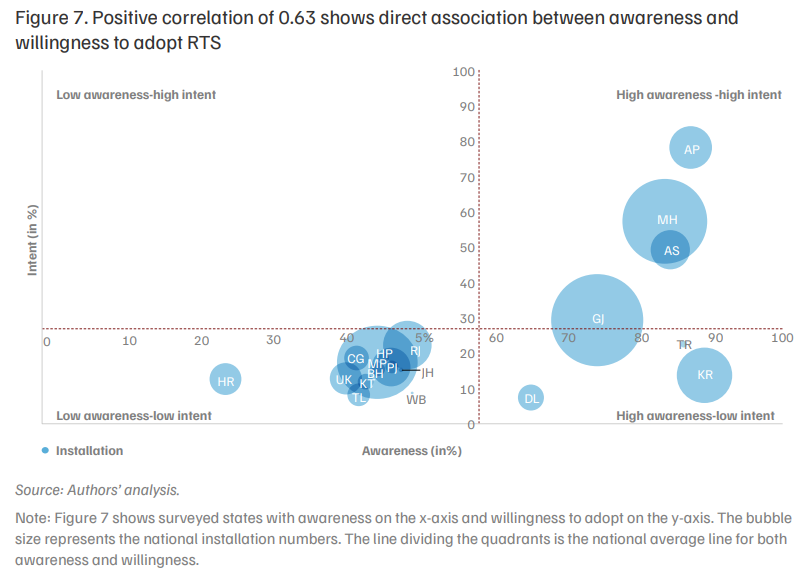
Distilling the information at the state level shows that there is a positive correlation of 0.63, or a direct association between awareness and willingness to adopt as shown in Figure 7. This confirms that building awareness is a foundational requirement for generating intent. States trailing the national average on both dimensions, such as Haryana, West Bengal, Karnataka are clustered in the third quadrant. These markets appear to be constrained by limited information making awareness a prerequisite to unlock latent demand in these regions. A different pattern emerges in the first quadrant of Figure 7. States such as Tamil Nadu, Assam, and Odisha exhibit above-average awareness and willingness to adopt, yet adoptions remain relatively low. This gap is particularly notable given that several of these states also possess strong solar potential. These states represent an intent bottleneck, where the adoption journey is stalling at the perception or accessibility stage rather than the awareness stage.
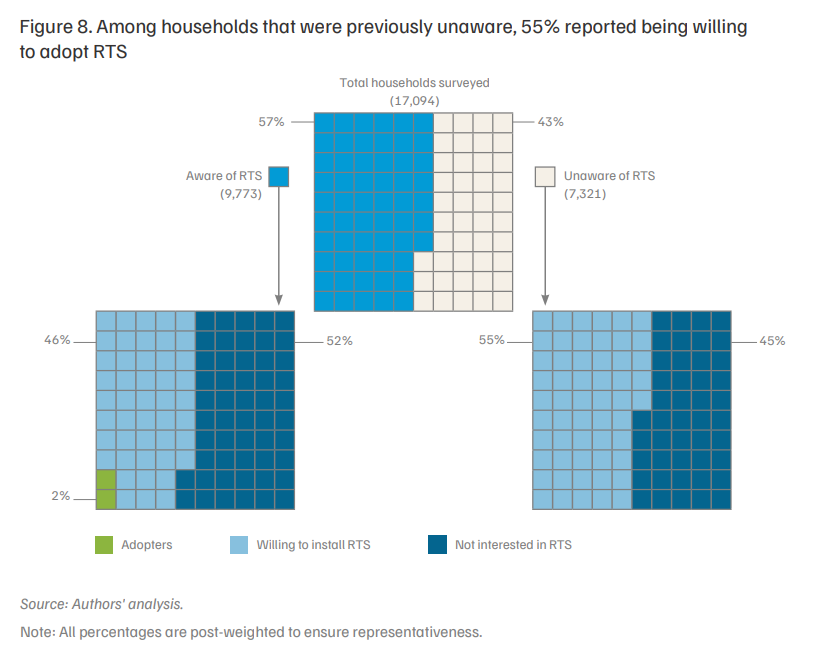
Interestingly, as shown in Figure 8, among the pool of unaware households, 55 per cent are still interested in knowing more and potentially installing RTS in the future. This convertible demand shows that there is a potential to increase uptake even among unaware households through targeted outreach efforts through right channels and trusted intermediaries. This convertible demand theoretically translates to additional 66 GW3 of RTS capacity.
The findings present the need to adopt differentiated approaches across household categories: expanding information reach in states where awareness and intent remain low, and diagnosing conversion barriers in states where awareness exists but is not translating into adoption.
Reaching the unaware: Trust pathways in early-stage awareness to emphasise need of RTS
State-wise adoption patterns and regional enablers at the macro level are shaped by the aggregation of individual consumer behaviour. Variations in how households perceive, evaluate, and act upon RTS opportunities necessitate a more granular lens. Accordingly, in the survey, the households are segmented broadly into three types-aware, unaware and adopters, enabling a clearer understanding of distinct pathways through which adoption can be accelerated.
The first step in the consumer journey is to establish the ‘need’ among individuals-the point at which consumers recognise the technology as relevant to their household energy decision. DOI framework suggests that engagement with unfamiliar technologies needs to move beyond just imparting information. It needs to come from trusted intermediaries to reduce uncertainty and legitimise new choices (OECD 2017; Rogers 1983).
Social media and peer dominates as ‘general diffusion of information’ across all household categories.
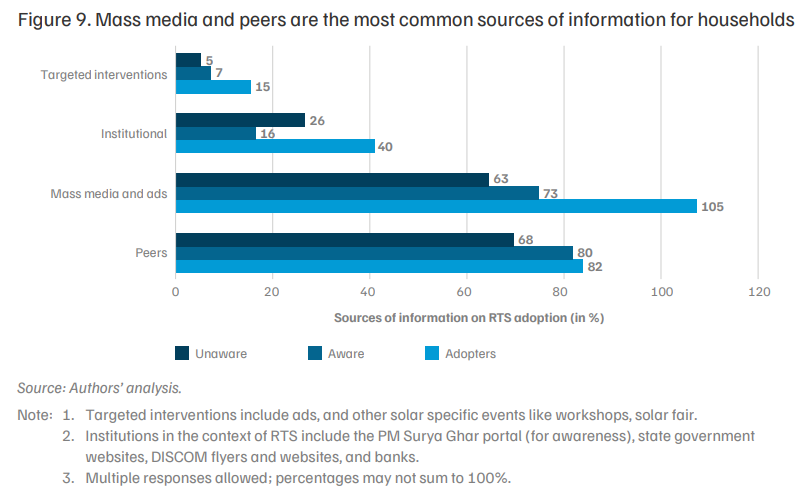
There’s a striking homogeneity across all three household categories (unaware, aware, and adopters) with respect to channels of information about government schemes, with social media and peers emerging as the most prevalent source of exposure, as shown in Figure 9.
Moreover, adopters’ exposure to the targeted interventions (such as radio ad, print ad, RTS focused events) is twice that of other households who have not adopted RTS as shown in Figure 9. This is also consistent with TAM’s framework that consumers sought authoritative and experience based validation to reduce perceived financial and technological risk associated with adoption. This also highlights that a household’s transition from awareness to adoption is not determined solely by mode of communication but also the depth and quality of information received through them.
Institutional actors command the highest trust among unaware households
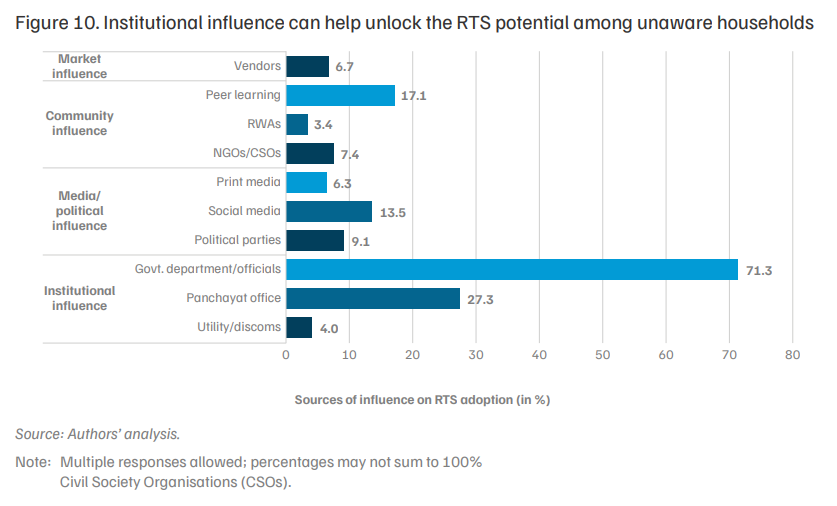
For the 43 per cent of unaware households, the findings reveal a clear hierarchy of trust. Institutional actors emerge as the most credible sources of information regarding new government schemes, with nearly 71 per cent of unaware households as shown in Figure 10, indicating trust in government departments or officials, followed by local governance institutions. Community based actorspeers, non-governmental organisations (NGOs) and resident welfare associations (RWAs)-also demonstrate influence on household decisions comparable to local institutions. Similar findings were observed during the Solarise campaign piloted in Delhi, where households responded positively to information shared by discom in electricity bills (Gupta et al. 2022). These findings reinforce the role of social and authoritative validation critical at the early-stage of technology diffusion.
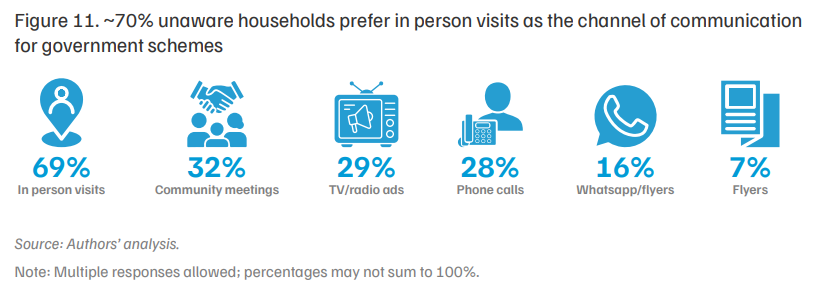
Distilling the information further on preferred mode of communication, in-person visits (70 per cent) are preferred by unaware households when it comes to knowing about the new government scheme (Figure 11). This is followed by the community meetings (24 per cent), TV/radio (23 per cent) and phone calls (22 per cent).
As much as 66 GW of theoretical convertible demand can be unlocked if these awareness gaps are bridged, increasing potential adoption by 24 percentage points among currently unaware households willing to adopt RTS. In order to realise this demand, chronology of awareness touchpoints in the RTS adoption pathway will be critical in designing the IEC campaigns. Broad reach channels such as mass media and peer conversations play an essential role in generating visibility and initiating consumer interest. However, it is insufficient alone to drive adoption. In order to legitimise information and transform it into results, the combination of the most trusted actor and the most preferred channel should be leveraged. For instance, in-person workshops or events led by government officials are the most effective strategy. Similarly, community meetings held and mediated by the Panchayat office will be impactful in forming perceptions.
Shaping ‘perception’ from need recognition to informed intent
After establishing the need, the next step in the consumer journey is internalising the ‘perceived usefulness’ as per the TAM framework to make an informed decision. Awareness creates the opportunity but perception determines what action households take with it. The focus of the section will be on what households believe and whether those beliefs are currently falling short to make a decision.
Economic benefits are the most effective measures to convince people to adopt RTS
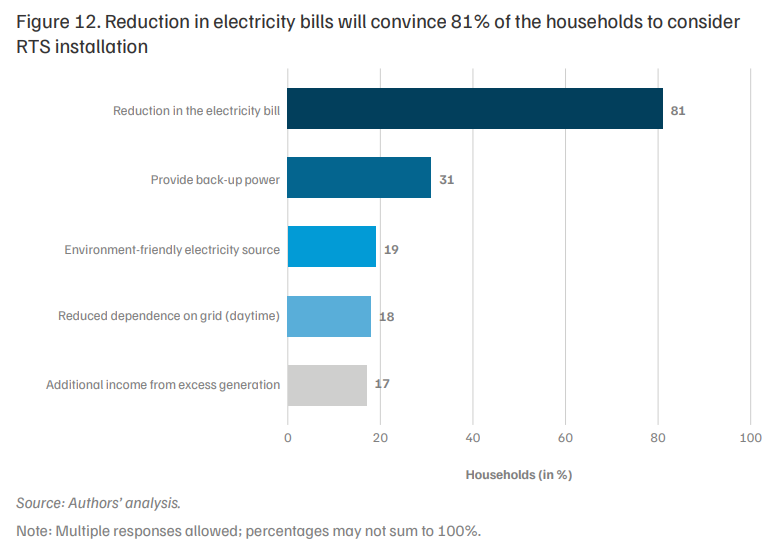
In terms of perceived usefulness, ~81 per cent of the aware households highlighted electricity bill reduction as the primary motivator for adoption. This further validates that the primacy of wallet-first messaging for both the willing and the hesitant (Figure 12). On the other hand, environmental considerations are cited by only 19 per cent, suggesting that green messaging does not function as a primary conversion lever for most households, and may be leveraged as a secondary hook for already-motivated households.
The data also points to a potential risk of perception problem, as 3 in 10 households cited ‘power backup’ as a primary benefit. However, standard grid-connected RTS systems do not provide power backup without battery storage, which is also typically not covered under the PMSGY subsidy. This represents a critical information asymmetry among the aware households, where the intent is formed on the basis of an incorrect expectation. They are likely to experience disappointment post-installation and increases the risk of negative peer-to-peer diffusion. Therefore, it becomes critical to correct this perception gap to ensure organic growth and protect the long-term trust infrastructure that the sector is building.
Hence, the transition from aware household to adopter is not a linear progression but a complex negotiation between economic incentives and trust on technology.
Deepening the knowledge from RTS to PMSGY process awareness
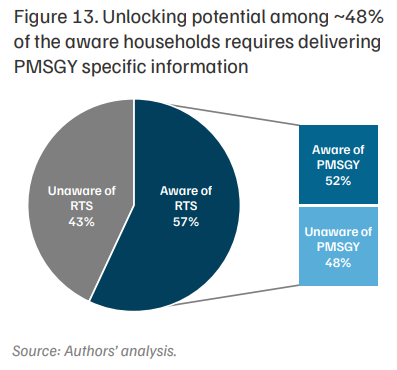
Perception is not only limited to whether households find RTS attractive but also on how to act on that interest. The data presents that there is a profound procedural information deficit. Nearly half of the aware households remain oblivious to the PMSGY scheme, which is the primary vehicle for subsidised RTS adoption as shown in Figure 13.
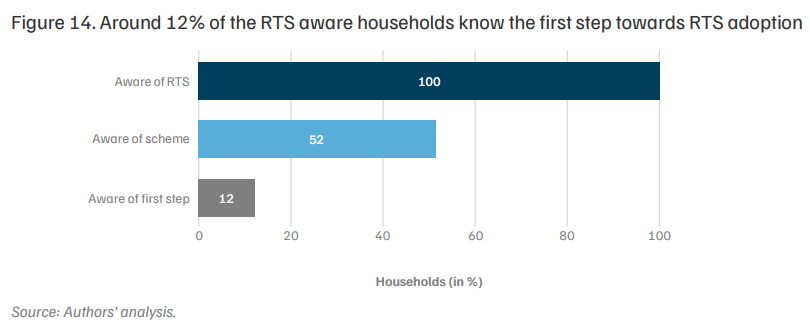
The drop off deepens sharply, as not all PMSGY aware households know the application process through the portal. Nearly 40 per cent of the PMSGY aware households are unaware of how to start the process, as shown in Figure 14. This highlights the disconnect between awareness of the scheme and procedural understanding with only 12 per cent of aware households being aware of the first step of the process, i.e. registration.
Households which are willing to adopt but cannot navigate the application process represent a conversion loss that is entirely recoverable through targeted, process-oriented communication through right channels and sources. This evidence suggests that moving households from awareness to action necessitates deeper engagement with consumer behaviour, supported by targeted nudges that simplify decision-making. This highlights the need for carefully designed, region-specific awareness strategies that are not only informative but also actionable and useroriented.
Awareness, as the preceding analysis suggests, is not merely information dissemination. It is an ecosystem of trusted stakeholders, channels and reinforcing information-the effectiveness of this trust ecology determines whether households translate awareness into informed action. As positive perceptions are formed, the adoption journey moves into more tangible considerations of affordability and accessibility. At this stage, household level intent is tested against practical constraints, which play a decisive role in determining whether initial interest translates into actual installation. The following section analyses how financial and procedural barriers shape household decision-making and influence adoption outcomes.
Household-level awareness about RTS has improved over the years as discussed in Chapter 2, satisfying the foundational condition for RTS adoption at scale. However, a conversion gap persists from willingness to adoption (Figure 15). Chapter 3 seeks to identify these gaps and close the loop to enable action. Willing households, our survey finds, are held back by challenges that emerge at each successive stage of the adoption pipeline. While 26 per cent of the households showed willingness to install RTS, 5 per cent had taken any concrete steps towards adoption (Figure 15).
Figure 15 illustrates a clear, stepwise decline across the adoption funnel. Out of the total households, 1.4 per cent complete installation. While the previous chapter discussed how to close the gaps occurring in the first two steps, the funnel highlights that the more binding challenge lies beyond these stages: of every 10 households willing to consider RTS, eight never initiate installation. The conversion challenge does not end there. Evidence shows that even among households who initiate the adoption journey, a significant share doesn’t complete the process.
46% of RTS-aware households are willing to adopt, indicating that targeted procedural interventions can unlock adoption.
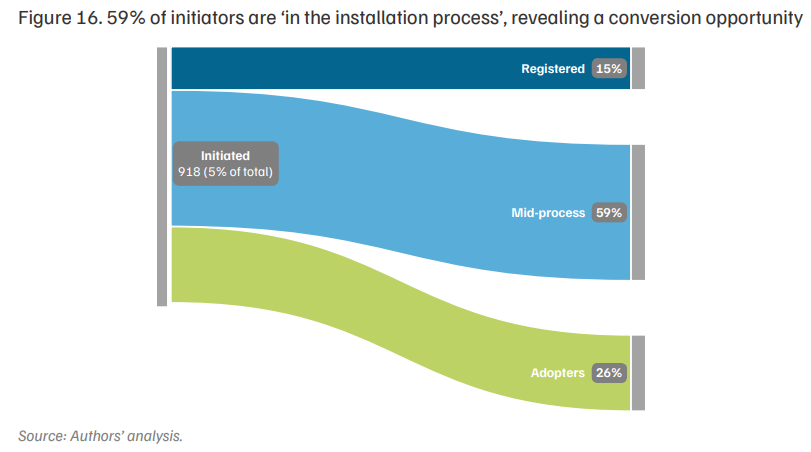
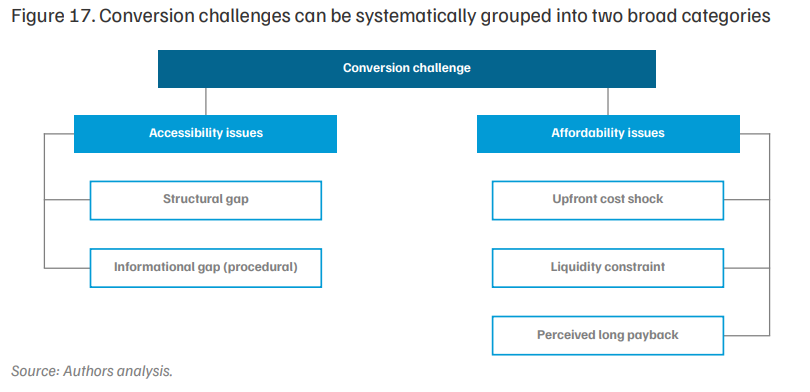
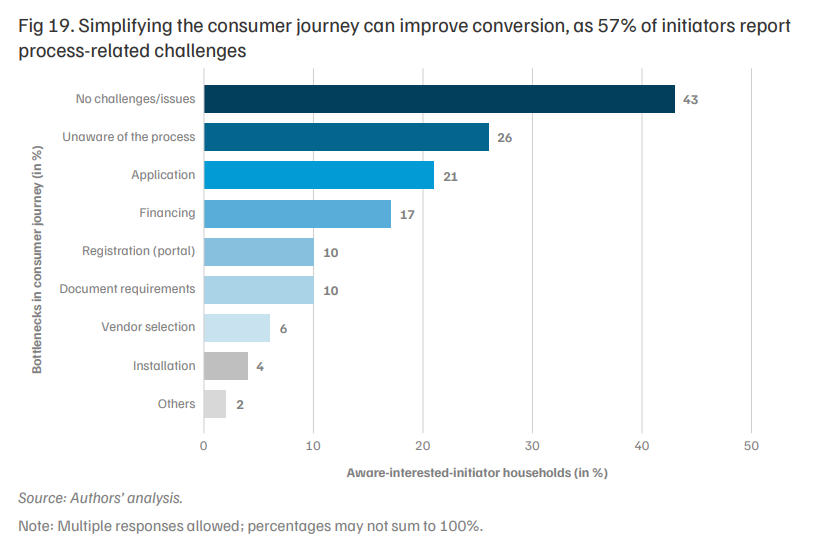
As many as 59 per cent of households who initiate the RTS installation process get held up at intermediate stages (Figure 16) like application, selection of vendor, net metering, etc. The persistence of friction beyond initiation suggests that entering the adoption pipeline is not sufficient. Households must be able to navigate it with predictability and trust. These findings suggest that conversion losses are not confined to a single stage but distributed across the journey, with different barriers becoming salient at different points. Drawing from the Chapter 2 discussion for the TAM framework, this study utilises the “perceived-ease-ofuse” lens to diagnose conversion hurdles like “can I actually do this”, and “can I afford it?”. Consequently the survey findings categorise these challenges into two primary dimensions, i.e. accessibility and affordability (Figure 17). At a high level, households face either affordability-related barriers, like cost perception and liquidity constraints, or accessibility related barriers arising from structural limitations and procedural complexity (Figure 17).
Accessibility constraints are dominant barriers as consumers begin their RTS journey
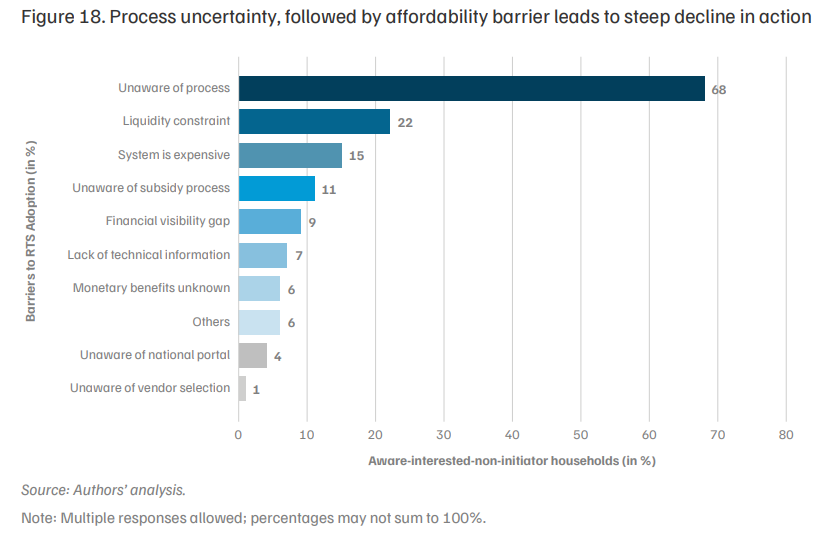
In the RTS adoption pathway, we define accessibility as the ease with which households can understand, initiate, and navigate the installation process, as well as their physical ability to adopt the system. Our survey findings reveal that information and procedural issues are the most dominant barriers in the initial stages of the RTS journey: 68 per cent of aware-interested non-initiator households reported that they do not know how to begin or what steps to follow (Figure 18). This ‘first-step’ friction effectively stalls willing households, presenting the largest loss of potential adopters before the process even begins. In TAM terms, the perceived ease of use has collapsed entirely for this group. This reflects a breakdown in actionable awareness, households understand the benefits of RTS but lack clarity on how to access them. Apart from this, households also face liquidity constraints and negative financial perceptions, which ultimately prevent them from moving forward in the adoption pipeline. These findings indicate that households face significant barriers in entering the system even when intent exists.
Evidence from literature supports this finding. Studies show that incomplete or asymmetric information alone can materially affect adoption decisions, with targeted information interventions improving uptake (Mahadevan et al. 2023). Similarly, complex application procedures, low transparency, and limited trust in vendors or institutions act as key frictions in urban RTS markets (Dutt 2020).
While informational barriers dominate at the entry stage, a smaller but non-trivial share of households face structural barriers related to physical feasibility constraints such as roof ownership and space issues concentrated particularly in urban settings (10 per cent reported inadequate roof space and 4 per cent reported a lack of roof ownership).
Nearly 7 in 10 willing households do not take the first step because they do not know how to begin the process.
Accessibility barriers persist beyond initiation
Accessibility barriers do not disappear once households enter the pipeline. For households who initiate the process, the nature of barriers shifts. Instead of uncertainty about steps for adoption, they encounter procedural delays and institutional frictions. Out of all the households surveyed, only 43 per cent reported a smooth process interaction, while the majority encountered frictions at different stages. Procedural accessibility challenges (Figure 19) emerge immediately after initiation and persist throughout the process.
The evidence suggests that informational and procedural accessibility barriers present a strong case for targeted, stage-specific interventions. Simplifying the journey into clear steps, improving visibility of the application process, and providing guided support can significantly reduce first-step friction and dropouts during progression. On the other hand, households facing structural barriers are unlikely to convert through improved information or financing alone and require alternative delivery models such as shared solar, community solar, or third-party ownership structures.
Focusing on affordability is a crucial thread in unlocking adoption
Among households, affordability emerges as the second most binding constraint, influencing both willingness and adoption after accessibility constraints are overcome. In the survey, 44 per cent of aware-interested-non-initiator households and 29 per cent of aware-not-interested households cited at least one affordability-related issue that stops them from adopting RTS. Liquidity constraint is a dominant factor in this context among the interested and non-interested alike, followed by upfront capital shock (Figure 20). This suggests that even interested households are unable to translate intent into action without clarity on affordability. Interestingly, concerns regarding the perceived long payback period of an RTS system drop significantly-from 40 per cent to just 6 per cent-as households shift from being not interested in adoption to interested.
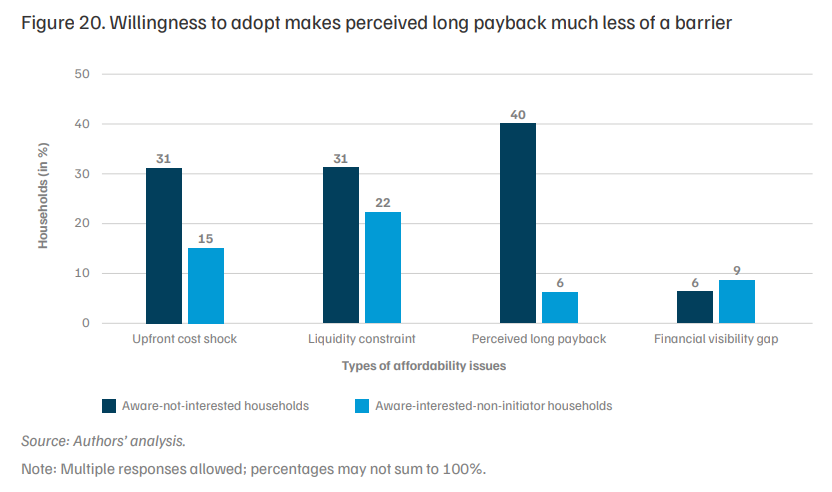
Among aware-not-interested households, affordability also emerges as one of the top three reasons to disengage from the adoption journey. Among the aware-interested households, 31 per cent shared that they face a liquidity crunch and think RTS system is expensive. Similarly for non-initiators, process ambiguity is followed by affordability constraints such as a liquidity crunch and the shock of upfront costs (Figure 18).
Affordability constraints are not uniform, they are concentrated among specific segments
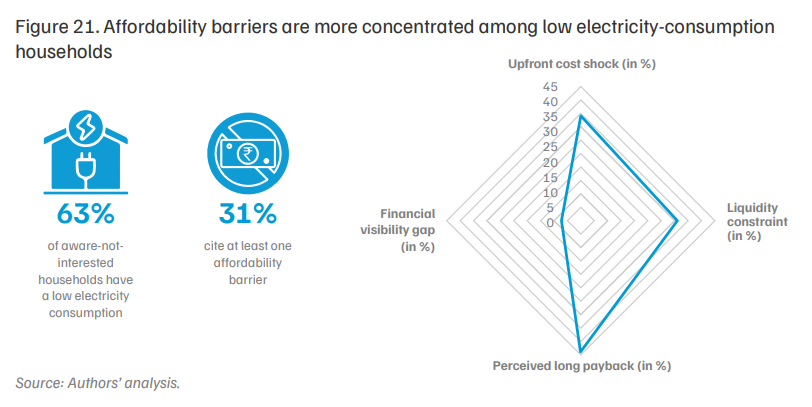
Affordability barriers in RTS adoption are not evenly distributed across specific segments. They can be shaped by underlying heterogeneity in consumption levels. The type of affordability issue can vary by sectoral diversity as well. Survey data reveals that 63 per cent of aware-not-interested households lie in the low electricity-consumption category4 (Figure 21). Within this group of households 31 per cent report at least one affordability-related barrier, indicating that affordability concerns are present but not pervasive. This suggests that disengagement among these households is not an information failure; it reflects an economic mismatch between the cost of installation and expected benefits. For lowconsumption households, the economic proposition of RTS appears less compelling due to the lower potential for absolute savings and relatively longer perceived payback periods. As a result, even when financially viable in technical terms, RTS may not align with their immediate financial priorities.
Further, the nature of affordability constraints is multidimensional. As seen in Figure 21, concerns such as upfront cost, liquidity constraint and payback periods dominate for households in the low-electricityconsumption bracket. Importantly, these barriers interact with limited awareness of financing, which can amplify perceived cost burdens, especially for households already uncertain about benefits.
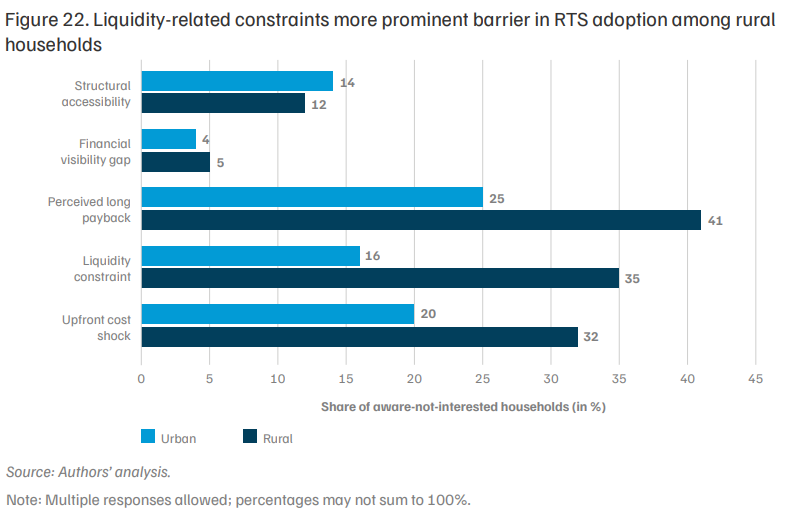
The geographic dimension of affordability also requires differentiated responses. While the broad categories of financial barriers remain similar across rural and urban areas, the share of households reporting these barriers differs. Rural households face stronger liquidity-related constraints, with 32 to 35 per cent citing upfront cost concerns and saying “financial position does not allow” adoption (Figure 22). Perceived long payback remains a prominent barrier across geography, but is reported more frequently among rural households than urban. This reflects not only gaps in savings communication but also the impact of low electricity bills, which are often driven by subsidised tariffs. Urban households, while facing similar financial concerns, report comparatively higher structural barriers alongside them, particularly inadequate roof space.
Financing awareness shapes how affordability is perceived
Affordability is not only a function of income or system cost, it is also shaped by how households understand and evaluate the financing options available (Sharma and Gupta 2025). Survey findings suggest that perceptions of cost are closely linked to gaps in financing awareness, which influence how households interpret the affordability of RTS.
Among aware-not-interested households who perceive RTS as expensive, 73 per cent are not aware of solar financing options. This indicated that cost concerns are disproportionately concentrated among financially unaware households. Financing awareness also affects the likelihood of perceiving RTS as expensive. Among aware-not-interested households, those unaware of financing options are more likely to perceive RTS as expensive (33 per cent) than those aware of financing (27 per cent). This 6-percentage-point difference suggests that lack of financing awareness amplifies cost perception (Figure 23). However, cost concerns persist even among financing-aware households, pointing to real financial constraints beyond information gaps alone.
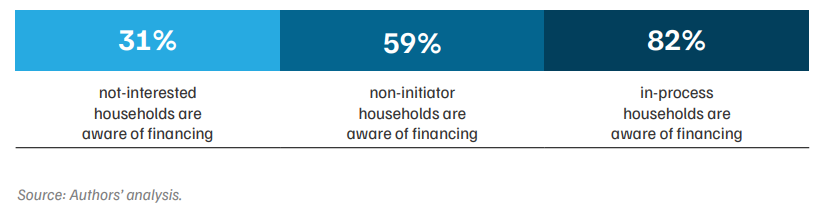
Financing awareness also increased progressively along the adoption pathway shown in Table 1. While this does not imply causality, it suggests that understanding financing options helps households better interpret affordability and navigate financial constraints as they move forward.
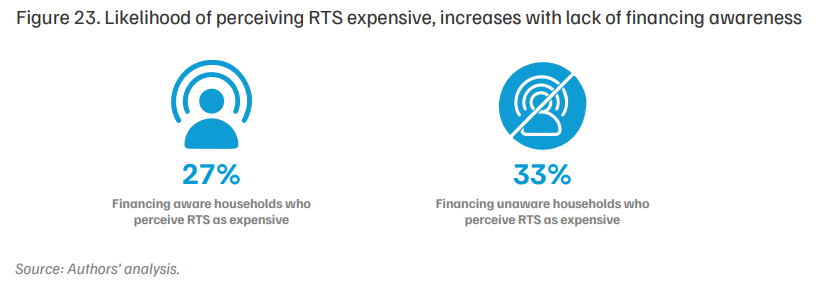
Table 1. Financing awareness is closely associated with progression along the adoption journey
Financing can unlock latent demand
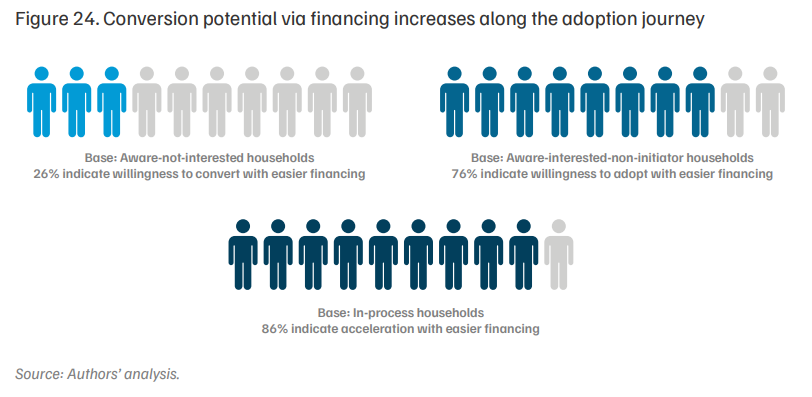
Many households are not fundamentally opposed to RTS, but are constrained by the absence of financial pathways that feel accessible and affordable. Among aware-not-interested households, 26 per cent indicate that they will reconsider adoption if offered solar loans with easier terms like concessional interest rate, longer tenure, and no collateral. These households are potentially convertible, pointing to a large pool of latent demand that remains untapped. This translates to adding 22.7 GW5 of RTS capacity.
Conversion potential also increases along the adoption pathway. The impact of easy financing becomes more pronounced as households move closer to adoption. As shown in Figure 24, this progression highlights that financing plays a differentrole at different stages. At early stages, it helps activate latent demand. At later stages, it helps sustain momentum and prevent dropouts.
Affordability in RTS adoption is not purely an economic constraint. It is also shaped by how costs are perceived. Financing awareness plays a critical role in shaping these perceptions by reducing the salience of upfront costs. However, awareness alone is not sufficient. It must be accompanied by accessible, credible, and easy-to-use financing options to meaningfully shift household decisions.
Closing the gap between intent and actual installation requires solving for systemic inefficiencies. A large share of aware-interested households drop out due to process ambiguity, affordability concerns, and accessibility constraints that are identifiable, addressable, and in many cases recoverable through targeted interventions. However, to fully tap into the potential requires going beyond fixing individual bottlenecks to solving for structural constraints, offering affordable financing options, among others. The most effective response is therefore layered: process simplification and targeted IEC for information barriers, innovative business models for structural barriers, and financing design calibrated to segment-specific constraints for affordability barriers.
The preceding chapters traced the path from unawareness to installation and reasons for dropouts at each stage. To derive actionable insights and interventions and close the loop, examining the lived experiences of adopters is also critical.
Out of the 17,094 surveyed households, 242 have installed RTS, representing 1.4 per cent of the sample. Although modest in size, this subset is analytically meaningful, closely mirroring the national RTS adoption rate of approximately 1.21 per cent among metered residential consumers. However, the distribution of adopters across the 21 states and 1 UT surveyed, is uneven, as illustrated in Figure 7. While this skew reflects underlying differences in state-level adoption patterns, it also leads to the overrepresentation of a small number of states within the sample. Consequently, given the limited number of adopters, the inferences derived from this group should be interpreted as indicative rather than statistically representative.
This chapter examines the adopter experience with two complementary angles. First, a detailed examination of the adoption journey-who adopted, what converted them, and how satisfied they are. This will help in the better framing of existing policies and awareness campaigns, and strengthening processes. Second, exploring how the adopter experience can be systematically leveraged to reduce friction for the households who are yet to initiate RTS adoption journey.
Satisfied adopters are an untapped asset. Examining their journey is important for both policy-intelligence and outreach intervention.
Adopters-an untapped yet integral link for scaling RTS
The feedback loop theory (FLT) provides a clear understanding of peer-learning through a feedback mechanism-a structured exchange of information about behaviours, actions, or performance, delivered in a way that promotes reflection, learning, and actionable improvement (Rachmad 2022). Further, the DOI framework discussed in Chapter 2 also emphasises the importance of peer-learning in reducing a household’s perceived risk of adoption, and for scaling RTS beyond the early adopters. Adopters have the ability to demystify the process, validate economic benefits, and build peer trust to reduce friction at various stages of RTS journey-making them an integral part of scaling RTS.
The promoter hypothesis is more than just an idea; it is an active and largely untapped asset already present in the communities reached by the scheme. As many as 87 per cent of these RTS adopters indicated that they will recommend their solar vendor to others. This presents a key finding that a satisfied and willing adopter base already exists within the communities the scheme is trying to reach. Examining the adopter journey is, therefore, both a policy-intelligence and a promoter-programme design exercise.
Dissecting the characteristics of the adopter base helps to inform which policy design choices have worked, which segments still remain underserved, and whose social network they can reach. This helps to identify the segments of non-adopters (households that haven’t installed RTS) that are most likely to be influenced.
The socio-economic gradient: A structural constraint on organic diffusion
The survey findings reveal a monotonic relationship between adoption rate and income of the households that have installed RTS. Adoption rate is highest amongst the high income households-5.04 per cent, ten times higher than among low-income households, and three times higher than middle-income households (Table 2). While the share of low-income households among all-India RTS installations has grown from 12 per cent in 2024 to 17.3 per cent in 2026, the adoption rate gap remains large, primarily dominated by middle-income households.
The findings have two distinct implications. For policy design, the evidence suggests that the existing scheme boosted overall adoption. However, the adoption among intended beneficiaries, i.e., households consuming up to 300 units, has been limited. Further, 41 per cent of low-income households reside in kutcha or semi-pucca buildings-facing additional structural issues that hamper adoption. Unlocking the potential for this segment requires targeted recalibration of the current subsidy and financing design, metering and installation mechanisms.
Similarly, for promoter programme design, the findings reveal a structural problem for unassisted peer diffusion, where the current adopter base is disproportionately drawn from high income segments. Organic word-of-mouth from the current adopter base will reproduce the existing income distribution of adoption, not close the gap-which will require rethinking of promoter programme routing peer influence across socio-economic boundaries.
Table 2. RTS adoption rate is highest among high-income households
| ISEC class | Households in survey (%) | Adopters (%) | Adoption rate (%) | Average installed capacity (kW) | Share of Installations in 2024 (%) | Share of Installations in 2026 (%) |
|---|---|---|---|---|---|---|
| High income (ISEC 1-3) | 6.6 | 26.2 | 5.18 | 3.08 | 16.6 | 27.0 |
| Middle income (ISEC 4-8) | 40.3 | 54.3 | 1.77 | 3.06 | 49.6 | 52.4 |
| Low income (ISEC 9-12) | 53.1 | 19.5 | 0.49 | 2.53 | 12.0 | 17.3 |
Source: Authors’ analysis.
Note: 1. n = 15,912 (1,182 unclassified, unweighted). Nagaland and Mizoram are excluded. All figures are post- stratification weighte
2. ISEC socio-economic mapping classifies households into 12 categories (ISEC 1-12). The following standard household classification is adopted in this study: high income (ISEC 1-3), middle income (ISEC 4-8), and low income (ISEC 9-12),
Geographic distribution: An uneven base
The distribution of adopters is higher in urban areas (52.4 per cent) compared to rural areas (47.6 per cent). Dissecting the adopter base at local-governance level shows that nagar panchayat-typically the transitional areas (rural to urban) and peri-urban areas-record an adoption rate of 3.29 per cent, compared to 1.01 per cent in rural areas and 2.21 per cent under municipal corporation limits.
This pattern suggests that peri-urban areas leverage the combination of the high RTS market demand of an urban setting (Sharma and Gupta 2024), with the community familiarity of rural ones-a combination that appears particularly conducive to peer learning and adoption diffusion. This is also similar to the ‘Desakota’ concept where transitional zones are described by intense intertwining of urban and rural activitiesidentified as critical to balanced and inclusive growth in India (Mcgee 1991; Alphonso 2025).
Electricity demand and appliance ownership: A reliable targeting proxy
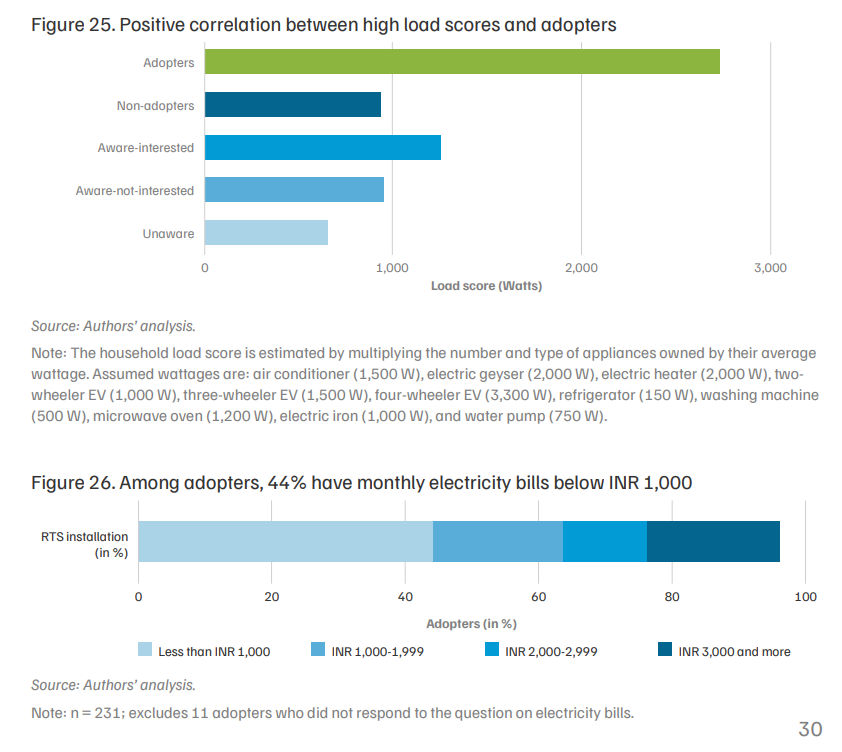
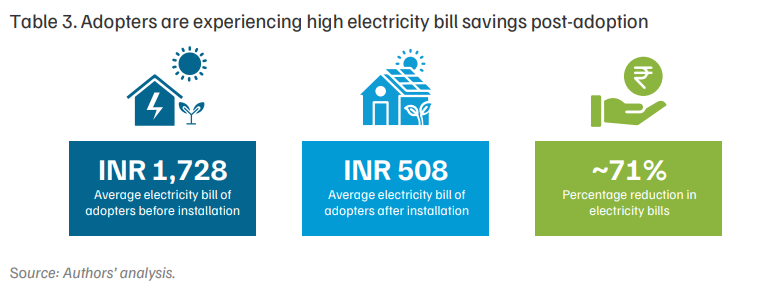
On average, RTS adopters have an average monthly electricity bill of INR 1,728 (51 per cent more than non-adopters)-clearly highlighting high electricity bills as a key driver of adoption. This is further reinforced by a 93.2 per cent satisfaction rate following postadoption reduction in electricity bills. Further, adopters also diverge sharply from non-adopters in appliance ownership and load score. Load scores of households are derived based on the type and quantity of electricity-intensive appliances they own. Adopters tend to exhibit a higher electricity demand, as reflected in significantly higher load scores-2,734 watts, 66 per cent more than non-adopters (Figure 25). In addition, as highlighted in Chapter 2, high electricity bill is also one of the motivating factors for aware-interested households.
An important nuance emerges when adoption is disaggregated by bill size. Among adopters, 44 per cent have monthly electricity bills below INR 1,000 and realise the lowest post-installation savings-a 53 per cent bill reduction compared to 73 per cent for those with higher monthly bills (above INR 1,000) (Figure 26). This suggests that although the financial case for RTS adoption is more pronounced among households with higher electricity bills, adoption behaviour, particularly among low-consumption households, may not be driven solely by immediate bill savings.
Therefore, to unlock the potential among lowconsumption households, it is important to communicate long-term savings trajectories of RTSnot just upfront bill reduction. Peer-to-peer diffusion can be leveraged for households with high electricity bills, and those owning heavy appliances like ACs, geysers, and EVs. They are more likely to install RTS, and have a compelling financial story to share with relatable households at the same load level.
System size preferences: The 3 kW concentration
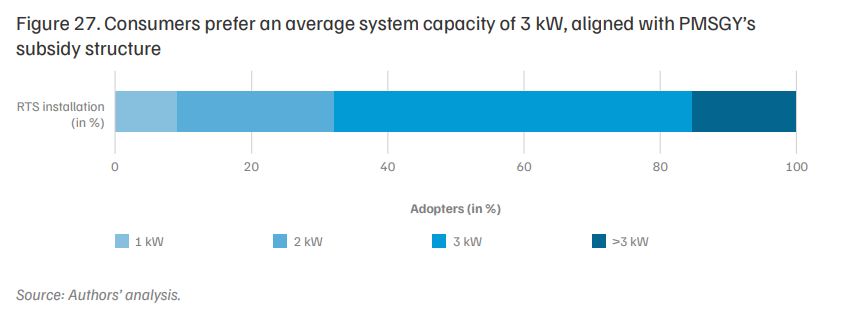
The majority of adopters-52 per cent-have opted for systems with 3 kW capacity (Figure 27). The average capacity of RTS systems among adopters is evenly spread across households that vary by size of electricity bills, load scores, and socio-economic classification (Table 2). The findings presents that a household’s decision on the preferred capacity of an RTS system is shaped by the subsidy structure of the PMSGY (capped at 3 kW).
From a policy design perspective, the subsidy structure appears to function as intended for households with relatively low system capacity requirements, with an average sanctioned load of 1.9 kW among adopters. However, this is also shaping the decision for households requiring higher system capacity based on their current consumption levels, with 76 per cent of adopters having a load score above 3 kW undersizing their system capacity to match the subsidy cap. From a programme design standpoint, this induced homogeneity reduces variability in adopter experiences, resulting in more consistent peer feedback and testimony across participants.
What worked in converting intent to adoption-lessons for programme and campaign design
Leveraging an adopter to be a promoter of RTS requires examining the factors that helped them close the loop. The findings are relevant to inform future programme design and for taking the ‘stories’ that adopters carry as lived experience.
Conversion channels vs awareness channels
As mentioned in Section 2.2, what distinguishes an adopter from the remaining aware households with respect to information channels is that the former have twice the exposure to targeted interventions. Beyond general information, adopters also exhibit higher exposure to two information channels that function as conversion platforms: vendor advertisements (+12 percentage points more among adopters than awareinterested households that haven’t installed RTS), and the PMSGY portal (+7.2 percentage points). This suggests that campaign design should distinguish more deliberately between channels that build awareness and channels that enable action, and invest proportionally in the latter.
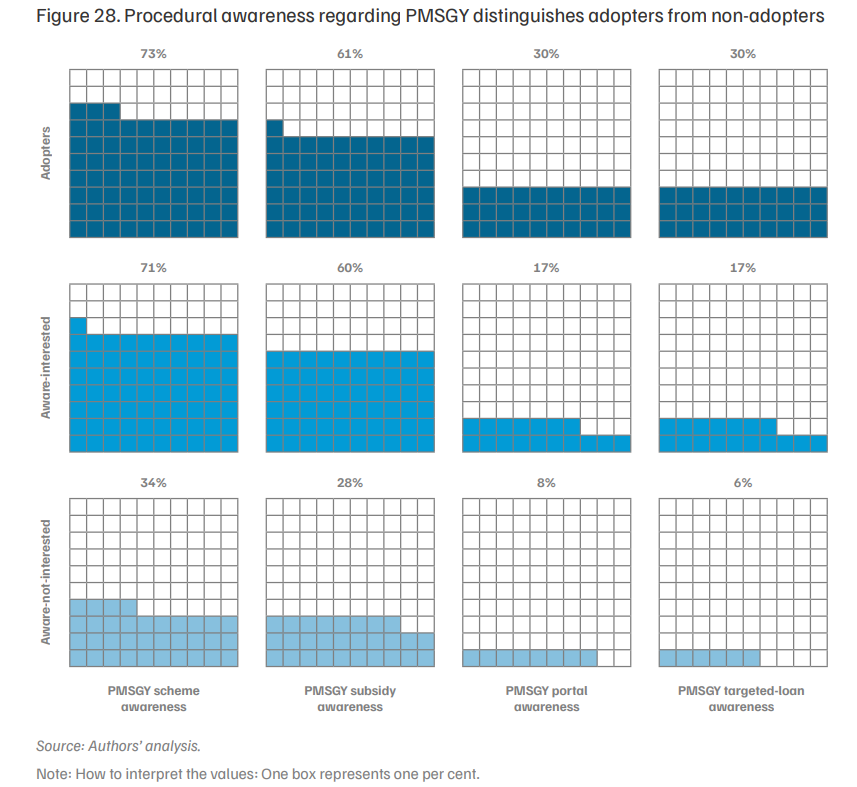
Further, adopters demonstrate a more comprehensive knowledge of PMSGY-the subsidy structure, national portal, targeted loan provisions, which distinguishes them from non-adopters (Figure 28). This is consistent with the DOI and TAM framework discussed in Section 2.1 that successful adopters are the ones who moved beyond passive information to seeking decision assurance, and authoritative validation to reduce perceived risk. This highlights that campaign design needs to deepen the procedural information-beyond the scheme awareness and enabling households to move from interest to action.
Financing: A promoter knowledge asset
The findings show that 23 per cent of adopters availed loans for their RTS installation. This reiterates the findings from the previous chapter that affordability is a major barrier inhibiting households from initiating
the adoption journey (Figure 20). Further, 55 per cent of unaware households mentioned that they are willing to initiate the installation process through the collateral-free loans provided through the PMSGY. Those who successfully navigated the collateral-free loan process under PMSGY possess a specific, transferable knowledge-institutions offering loans, their experience and method of selection. As established in Chapter 3, 69 per cent of aware-notinterested households lack awareness of financing options and an adopter who can walk a peer through the loan process step by step addresses a barrier that no awareness campaign can resolve with equivalent credibility.
The adopter experience: What are the key takeaways?
The credibility of the promoter hypothesis rests entirely on the quality of the adopters’ experience. The findings from the survey strongly support this.
Bill reduction-the headline story
The survey data shows a significant pre-to-post average reduction in electricity bills among adopters, as well as average potential savings on electricity bills up to INR 306,097 for an adopter during the life span of an RTS system (25 years).
Low maintenance awareness among adopters is a hidden risk to the long-term success of RTS.
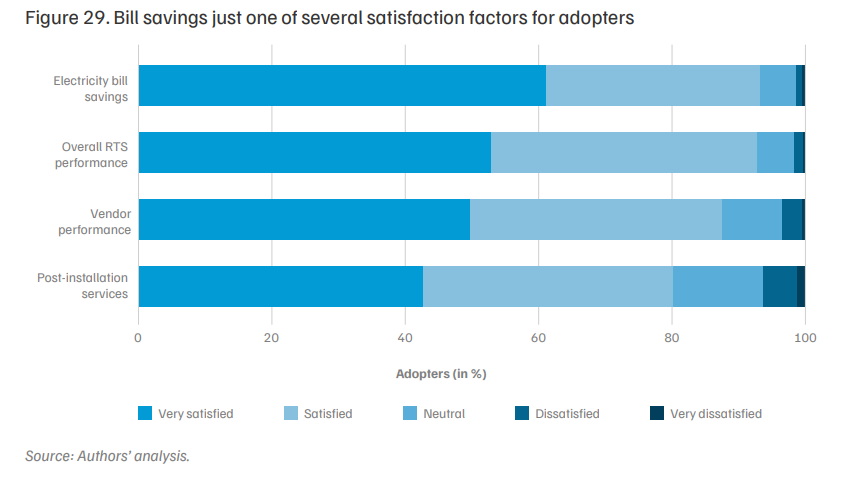
The 71 per cent bill reduction figure (Table 3) is the most persuasive element of an adopter’s peer story, with very high satisfaction levels amongst adopters-93.2 per cent mentioned they are very satisfied or satisfied with the achieved electricity bill reduction (Figure 29). This is the metric that 81 per cent of aware consumers cited as the perceived benefits of RTS. This alignment between expectation and outcome is the foundation of the promoter case.
Adopters report similarly high levels of satisfaction with other post-installation experiences: 92.9 per cent are satisfied with the overall performance of the RTS system and 87.5 per cent with overall performance of the solar vendor (Figure 29). Regarding post installation services, 6.3 per cent adopters have mentioned dissatisfaction, but only 1 per cent consider that to be a challenge in the adoption journey.
Operation and maintenance: A policy and promoter quality risk
Operation and maintenance (O&M) data introduces the most important qualification to the positive experience of an adopter. This also has implications on the policy design and durability of the promoter asset. The long-term sustainability and performance of a RTS system depend on both the solar vendors-who are responsible for maintenance, warranty briefings, and query resolution-and the adopter-who must monitor performance and clean panels regularly. Adopters report broadly strong vendor performance, citing consistent quarterly maintenance (81 per cent), clear O&M briefings (83 per cent), which likely contributed to 41 per cent of adopters who report not having faced any system issues. However, adopter engagement lags behind-only 63 per cent perform monthly cleaning, and just over half (55 per cent) track system performance regularly. Critical knowledge gaps also persist, with 50 per cent adopters unaware of maintenance contracts and 21 per cent unaware of warranty provisions for their system components (Table 4).
For policy design, the findings highlight the need for embedding O&M awareness during installation, as well as throughout the post-installation journey, to
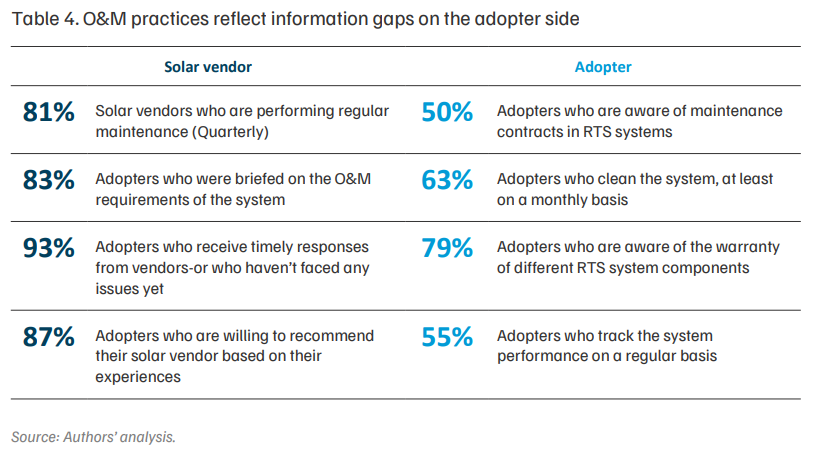
ensure the long-term sustainability of the system and a positive adopter experience. The limited awareness about O&M creates potential risk to the adopter’s positive experience. The risk is indirect but structural. When systems degrade due to low or no maintenancethese adopters are more likely to become detractors than sustained promoters.
The promoter mechanism: How peer influence operates
Peer networks were identified as the dominant information channel for all consumer categories (Figure 9). However, the socio-economic gradient analysis establishes that unassisted organic peer diffusion has structural limits.
Section 2.1 highlighted that for information to be effective and translate into outcomes, it must combine trusted stakeholders with preferred communication channels. The data points to distinct channel strategies across different governance contexts. In rural areas, the gram sabha emerges as a natural venue for information dissemination and adopter testimonial sessions. The Panchayat’s institutional endorsement can reinforce the peer messaging with legitimacy, combining the trusted sources with preferred mode of communication. Similarly, in urban areas, the equivalent mechanisms are area sabhas and community meetings organised by trusted entities such as RWAs and NGOs. In both contexts, the design principle is the same: peer testimony is most effective when delivered in an institutionally endorsed setting, through a channel the target audience already trusts. This mechanism combines the conditions for scaling mentioned in the DOI framework, and providing a platform for structured exchange of information-as mentioned in FLT.
The survey findings point out that the promoter potential of current adopters is real, significant, and largely untapped. However, realising this potential requires strategic interventions beyond organic diffusion alone.
Strategic recommendations for scaling residential RTS adoption in India
The pan India survey deep dived into consumer behaviour at various stages of RTS journey to suggest action-oriented recommendations for closing the gap. The findings establish that a significant share of households are aware and willing, but action is stalled at each stage where intent fails to convert. To maintain the momentum under the PMSGY as discussed in Chapter 1, the recommendations are structured around five stages of consumer journey and specify the responsible actor.
Close the 43% awareness gap by establishing the ‘need’ of RTS
• Deploy a phased multi-channel communication strategy. Social media and peer networks are the dominant information channels uniformly across household categories. This signals broad reach of this form of communication but risk is shallow conversion. A phased strategy should use mass media and social media to generate initial visibility at scale, followed by hyper-local digital engagement through WhatsApp and community platforms (such as Instagram, Facebook, Youtube, etc.) to deepen interest among digitally active households. High-visibility channels (TV, newspaper, social media) should be used to generate initial visibility, followed by hyper local, contextualised digital engagement through WhatsApp, Instagram, and Facebook. The critical design principle validated by the adopter profile data emphasise that channels enabling action must be invested in separately from channels building awareness with both types serving distinct purposes. Responsible stakeholders: MNRE, NPIA (national programme implementing agency), and SNAs.
• Leverage institutional trust to convert visibility into intent. Mass media and peer channels establish the initial visibility. The effectiveness of direct outreach increases when the household already has a point of reference for what is being discussed. After establishing initial visibility through broad-reach channels, directto-home outreach programmes anchored by Government officials, discoms, RWAs and NGOs should therefore serve as the primary vehicle for converting that visibility into recognised need. Responsible stakeholders: Government officials (district and block level), discoms, RWAs, NGOs, CSOs, and Panchayati Raj institutions (PRIs).
Shape ‘perception’ to generate an informed intent
• Lead with financial value and correct misconceptions before intent firms up. Among aware households, 81 per cent cite electricity bill reduction as their primary motivation, confirming that a wallet-first messaging is the most effective conversion lever. Environmental messaging, cited by 19 per cent, should be positioned as a secondary hook for already motivated households. All awareness materials should lead with specific, verifiable savings figures grounded in local electricity tariff data.
A significant perception risk exists among the 31 per cent of aware households. They cited power backup as a primary expected benefit. Households forming intent on an incorrect expectation are likely to become dissatisfied postinstallation and generate negative peer diffusion. Correcting this, among other misconceptions such as solar doesn’t function on cloudy days, must be part of all awareness materials before intent hardens. Responsible stakeholders: MNRE, SNAs, discoms, Solar vendors, NGOs
• Close the scheme knowledge deficit through process-oriented communication. Perception is not only about whether households find RTS attractive, it is also about whether they know how to act on that interest. Despite increased general awareness, 48 per cent of aware households remain unaware of PMSGY, and only 12 per cent of aware households know the first step of the installation process (i.e. registration on the national portal). The drop-off between PMSGY awareness and process knowledge is approximately 40 percentage points. This gap is entirely recoverable through targeted, call to action focused communication by translating scheme awareness into step-by-step procedural knowledge and specifying the next action clearly for each household category.
Responsible stakeholders: MNRE, SNAs, discoms, common service centres (CSCs), NGOs, and PRIs
Improving informational and structural ‘accessibility’
• Institutionalise end-to-end household handholding at critical friction points. The 80 per cent drop off happens between aware and willing households but not initiating the process. 68 per cent cite not knowing how to begin or what steps to follow as the primary reason for non-initiation. This ‘first-step friction’ is the single largest point of conversion loss in the entire adoption funnel. Among those who do initiate, only 43 per cent report a smooth process. The remaining majority encounter procedural barriers around documentation, vendor selection, financing, and approvals, with 59 per cent of initiators stuck in intermediate stages. Targeted nudges should be deployed at each identified friction point. For instance, at the vendor selection stage, corroborated by field experiences, an automated prompt linking to the PMSGY empanelled vendor list can reduce uncertainty along with a step-by-step guide for vendor selection. Similarly, for in process households, a chatbot can clarify steps and way forward. The goal is to make the next step always visible and always one click away. Dedicated chatbot-based tools can serve as scalable but low-cost solutions to address information accessibility constraints by streamlining the application process and guiding households through the installation journey, providing timely nudges, and enabling seamless grievance logging for a smooth transition from registration to installation.
Responsible stakeholders: MNRE, SERCs, and discoms.
• Address structural barriers through alternative delivery models. A smaller but binding subset of households face structural constraints, 10 per cent of urban households reported inadequate roof space and 4 per cent reported roof ownership issues. These households cannot be converted through better information or financing design alone. Unlocking the potential in this segment requires innovation in business models such as community solar, shared solar, or third-party ownership, among others along with enabling provisions in policy and regulations to support these models.
Responsible stakeholders: MNRE, SERCs, SNAs, and discoms.
Solving ‘affordability’ problem by imparting financial literacy
• Integrate financial literacy as a front-end intervention. ~26 per cent of aware-notinterested households indicate that they would reconsider adoption if offered solar loans with easier terms like concessional interest rate, longer tenure, and collateral-free. Improved financing awareness alone could unlock 16 per cent of those households. At least one affordabilityrelated barrier is cited by 44 per cent of interested non-initiator households and 29 per cent of aware-not-interested households. However, among aware-not-interested households who cite high system cost as a barrier, 73 per cent are unaware of solar financing options. Within this financially unaware group, nearly 30 per cent indicate willingness to adopt if easier financing were available. The perception of RTS as expensive is substantially an information problem, not solely an income problem. Financing literacy, which covers EMI structures, collateral-free loan availability under PMSGY, payback periods, and net savings must therefore be integrated into the initial outreach phase. Moreover, existing bank-vendor collaboration mechanisms are functioning effectively in enabling consumer financing. Vendors along with local bank staff hold a significant potential to raise the financial awareness as they are one of the first touch points.
Responsible stakeholders: MNRE, SNAs, Local bank staff, SLBC, and vendors.
• Design affordability interventions to match segment-specific constraints. Affordability barriers are not uniform and require differentiated response.
a. Rural households face stronger liquidity constraints, with 32-35 per cent citing ‘financial position does not allow’ and upfront cost concerns. Addressing this requires financing products specifically structured for rural income patterns - zero or very low upfront, seasonal EMI structures aligned to agricultural income cycles and longer loan tenures of 7-10 years to make the monthly payment comparable to existing electricity bills. These need to be delivered through Self-Help Groups, Farmer Producer Organisations, and NABARD-backed rural credit lines to leverage existing rural financial relationships and reduce the institutional friction that currently slows loan disbursement in semiurban and rural markets.
b. Urban households face comparably higher structural barriers alongside financial ones. For households deterred by cost, financing literacy and EMI-based products address the informational barrier. To address structural barriers, there is a need to explore innovative models such as community solar, virtual net metering, and third-party ownership models that solve roof ownership requirements. RWA-led group applications for PMSGY benefits can further simplify the administrative pathway for individual urban households who cannot independently navigate the scheme.
c. Low-consumption households, who comprise 63 per cent of aware-not-interested households, face a more fundamental economic mismatch, where perceived payback periods and absolute savings potential may genuinely not justify installation at current tariff levels.
For this segment, messaging around future tariff trajectories and long-term orientation may be more relevant than near-term bill savings alone.
Alternatively, target these households through alternative models designed with the principle for opt-out rather than opt-in and households receive the benefit without navigating any process, eliminating first-step friction, affordability barriers, and awareness gaps simultaneously. Five models merit piloting are utility-owned community solar with default bill credit allocation, Gram Panchayat-led collective solar with proportional VNM distribution, discom-as-developer models with socialised cost recovery, PM Awas Yojana integration with pre-installed solar, and welfare scheme-linked automatic enrolment using existing beneficiary databases.
Responsible stakeholders: MNRE, RBI, SLBC, NBFCs, and SHGs
• Building supply side capacity along with demand side financing. To service the demand, there is a need to build supply side capacity and ensure that household trust erosion doesn’t happen in the process. Capacity building for frontline bank staff on RTS loan appraisal is, therefore, a prerequisite, not a complement to consumer-facing financing awareness campaigns. Standardised appraisal frameworks reduce perceived lending risk and accelerate loan disbursements-particularly in rural and semi-urban markets where bank relationships are the primary financing channel. Lastly, SBI has been a flag bearer in the RTS loan disbursal. A case study of its role and the benefits of the RTS financing product to the bank needs to be highlighted among other banks.
Responsible stakeholders. MNRE, SNAs, RBI, SLBC, NBFCs, and Capacity Building Commission (CBC).
Leverage adopter experience to scale up RTS
• Close the O&M gap before activating adopters as promoters. Long term system performance is determined by actions of both vendors and households. Vendors are responsible for maintenance, warranty briefings, and query resolution; households must monitor performance and clean panels regularly. The findings reveal a concerning consumer-side gap that threatens long-term promoter quality. O&M support must be strengthened for existing adopters to protect the quality and durability of the promoter asset. A satisfied, well-informed adopter is a sustainable promoter.
O&M awareness must therefore be embedded into the installation process as a mandatory handover step and reinforced through automated reminders at defined intervals, given the 25-year lifespan of RTS systems. Vendors should be required to demonstrate household awareness of cleaning schedules, warranty terms, and performance tracking as a condition of PMSGY empanelment. In addition, O&M should also be part of initial consumer awareness campaigns. Responsible Stakeholders: MNRE, SNAs
• Promoters must be selected, not just encouraged. 87 per cent of adopters expressed willingness to become promoters among 1.4 per cent of surveyed households. Alignment between adopters’ experience and nonadopters’ requirements is the foundation of the promoter case. The adopter base should be identified, segmented by governance boundary, socio-economic profile, and electricity load- to ensure that peer influence reaches the most relevant household segments. Three distinct promoter types should be targeted: highconsumption, high-savings adopters as financial narrators affirming the bill reduction premise; adopters who navigated the PMSGY loan process and can demystify the application pathway; and adopters who used innovative mechanisms such as VNM for consumers facing structural barriers.
Adopter-led testimonial sessions should be institutionalised within Gram Sabhas, Area Sabhas and RWA meetings for organic increase in adoption. This can be through structured ‘Solar open house’ events, where adopters present their before and after bill data, describe the vendor selection process, and walk through financing steps and directly address the first step friction and financing information gap that stall the largest share of non-adopters.
Responsible stakeholders: MNRE, Gram Panchayat, and urban local bodies.
• Institutionalise a continuous feedback loop from adopter experience to scheme design. For effective policy design, it is important to systematically collect survey data (such as adopter satisfaction, O&M behaviour, financing navigation, and post-installation outcomes) and feed it back into scheme design on a continuous basis. There is a need to institutionalise a structured iterative feedback mechanism in the PMSGY portal and can be triggered at defined intervals post-installation to identify emerging experience gaps before they snowball and to adjust subsidy design, vendor empanelment criteria, and consumer outreach materials accordingly.
Responsible stakeholders: MNRE, PMSGY portal team, SNAs, and NGOs.
Residential rooftop solar helps households generate electricity at the point of consumption, reducing pressure on the grid while contributing to India's clean energy and Net Zero goals. During India's peak electricity demand of 270.7 GW on 21 May 2026, solar energy contributed about 22 per cent of the country's power needs.
Based on the survey findings, rooftop solar adopters in India are experiencing an average bill reduction of ~71 per cent, which amounts to more than INR Three Lakh savings in electricity bills over the lifespan of the system (25 years).
The report finds that the largest opportunity lies in helping households move from interest to action. Many households are aware of rooftop solar and willing to adopt it, but face challenges related to information, procedural complexity, trusted guidance, and financing awareness. Among all the households that are aware of residential rooftop solar, only 52 per cent are aware of the national scheme on RTS, Pradhan Mantri Surya Ghar: Muft Bijli Yojana.
The study was conducted through a telephonic survey of 17,094 households across 21 states and 1 union territory, representing 98 per cent of India's population, making it one of the largest consumer-focused studies on residential RTS conducted post PMSGY in India.
Current adoption is concentrated among affluent urban households with elevated electricity consumption. However, the study identifies substantial untapped demand across other household segments, alongside high satisfaction levels regarding electricity bill savings and overall rooftop solar performance across all categories.
Rooftop solar adoption is primarily facilitated by the PM Surya Ghar scheme, which offers capacity-based subsidies alongside low-interest, collateral-free financing for consumers requiring additional financial support. Additionally, a few states provide supplementary state-level subsidies and incentives to further accelerate adoption.
The survey highlights the importance of trust-based outreach and peer learning. Government departments are the most trusted source of information for 71 per cent of households, while over 90 per cent of adopters report positive experiences and 87 per cent are willing to recommend their vendors. Leveraging trusted institutions and satisfied adopters can help convert awareness into large-scale adoption.
Maximising Rooftop Solar Performance by Enabling a Robust O&M Ecosystem
Building a People-centric Energy Future:
Roadmap of the methodology to assess the climate co-benefits of the SUP ban in Tamil Nadu

Roadmap of the methodology to assess the climate co-benefits of the SUP ban in Maharashtra