Council on Energy, Environment and Water Integrated | International | Independent


Suggested citation: Elango, Sabarish and Hemant Mallya. 2026. Unlocking the Potential for a Gas-Based Economy in India. New Delhi: Council on Energy, Environment and Water.
India is among the world’s fastest-growing major economies. Over the past two decades, total primary energy demand has more than doubled, driven by rising population, income, and consumption. Coal and oil together account for over 80 per cent of this supply, while natural gas contributes only approximately 5 per cent, well below the government’s target of a 15 per cent share in the primary energy mix by 2030. Closing this gap requires addressing both the supply and demand sides of India’s gas economy.
A key challenge on the supply side is stagnating domestic production. India consumed a record 68 billion cubic metres (bcm) of gas in 2023–24, of which 47 per cent was imported as liquefied natural gas (LNG), with Qatar supplying 40–50 per cent of import volumes. This concentration exposes consumers to volatile global prices, geopolitical issues and resulting supply chain risks. At the same time, the complex taxation structure for natural gas, which sits outside the goods and services tax (GST) regime, leads to higher delivered prices and reduces the competitiveness of gas relative to other fuels across sectors.
Despite these challenges, significant untapped demand potential exists across several sectors. The city gas distribution (CGD) network, driven by compressed natural gas (CNG) in transport, has been growing at 8.7 per cent per year. The steel sector presents a major decarbonisation opportunity, as switching to gas-based routes could substantially reduce India’s steel emission intensity while offering a ready pathway for switching to green hydrogen-based clean steel production. Liquefied natural gas also offers a medium-term solution for cutting diesel demand heavy-duty freight, which accounts for over 40 per cent of road transport emissions. Small and medium enterprises transitioning from furnace oil, naphtha, and LPG represent a further growth segment.
This brief recommends a two-pronged approach. The first track focuses on rationalising domestic policy and price structures, including bringing natural gas under GST, reforming pipeline access and tariff mechanisms, and strengthening gas market trading. The second track focuses on securing and diversifying the supply base through government-to-government cooperation, long-term contracts with new partner countries, and investments in supply chain infrastructure. Together, these 11 recommendations provide a practical roadmap for India to realise the economic, energy security, and decarbonisation benefits of a more gas-intensive economy.
As one of the world’s fastest-growing major economies, India has witnessed a doubling of its total primary energy demand over the past two decades. This demand has been met predominantly by coal and oil, which together account for over 80 per cent of the country’s energy supply (IEA 2025). Although natural gas consumption has also doubled during this period, its share in the total primary energy mix remains relatively low at about 5 per cent as of 2022 (IEA 2025). The Government of India (GoI) initially set a target of increasing the share of natural gas to 15 per cent by 2030, consistent with India’s revised Nationally Determined Contributions (NDCs) and its commitment to achieving net-zero emissions by 2070. Achieving this growth, which could result in gas consumption tripling by 2040, will necessitate increasing gas penetration in sectors traditionally reliant on oil and coal, such as road transport, steel manufacturing, and other industries.
However, several barriers hinder the adoption of natural gas. Stagnating domestic production has increased India’s reliance on imports, exposing consumers to volatile global prices, with domestic output at approximately 36 bcm per year against total demand of 68 bcm in 2023–24, generating an import burden of USD 13.4 billion (PPAC 2025). Regulatory ambiguities, particularly regarding marketing and infrastructure exclusivity for city gas distribution (CGD) networks, and the incompatibility between the value-added tax (VAT) and goods and services tax (GST) regimes, create cascading tax burdens that raise end-consumer prices. The recent conflict in West Asia has also exposed India’s strategic vulnerabilities, with its current LNG import basket 60 per cent dependent on affected trade routes (Department of Commerce 2025).
Despite these challenges, significant opportunities exist to increase demand. The CGD sector, driven largely by the use of compressed natural gas (CNG) in transport, represents a key growth segment. The steel industry, which aims to double its production capacity, presents a substantial decarbonisation opportunity through gasbased production that cuts emissions by up to 60 per cent and offers a straightforward pathway towards green hydrogen–based clean steel production (Elango et al. 2023; Nduagu et al. 2022; Yadav et al. 2021). Liquefied natural gas (LNG) can also serve as a medium-term solution for heavy-duty freight, cutting diesel demand while offering lower emissions intensity (Mohan et al. 2025). In the power sector, currently underutilised gasbased power plants can play a crucial role in managing grid intermittency as renewable energy capacity expands under India’s Panchamrit targets.
To unlock the full potential of natural gas, this brief recommends a two-pronged approach. First, rationalise domestic policies and price structures by streamlining taxation, removing regulatory ambiguities, and fostering free-market principles, such as open access to gas sourcing and transmission infrastructure. Second, negotiate for favourable import contracts by aggregating demand at the national level and engaging directly with governments and trading partners to ensure better price discovery and reliable, diversified supply. The key findings and recommendations for this strategy are as follows:
India is among the fastest-growing major economies globally. Driven by rising population, income, and consumption, the country’s total primary energy demand has doubled over the past two decades (Figure 1). This demand has been met largely by coal and oil, which together account for more than 80 per cent of the primary energy supply (IEA n.d.). Coal-based energy has recorded the most significant growth during this period.
In 2016, the Government of India (GoI) set a target to increase the penetration of natural gas in the primary energy supply mix to 15 per cent by 2030 (PIB 2023c). However, while natural gas consumption has doubled over the last two decades, its share in the total primary energy mix remains relatively low, at about 5 per cent as of 2022 (IEA n.d.). In contrast, renewable energy from solar and wind has grown significantly faster, increasing nearly 100-fold over the same period. As shown in Figure 2, gas consumption in India grew steadily during 2000– 10, but declined and subsequently stagnated during 2010–22.
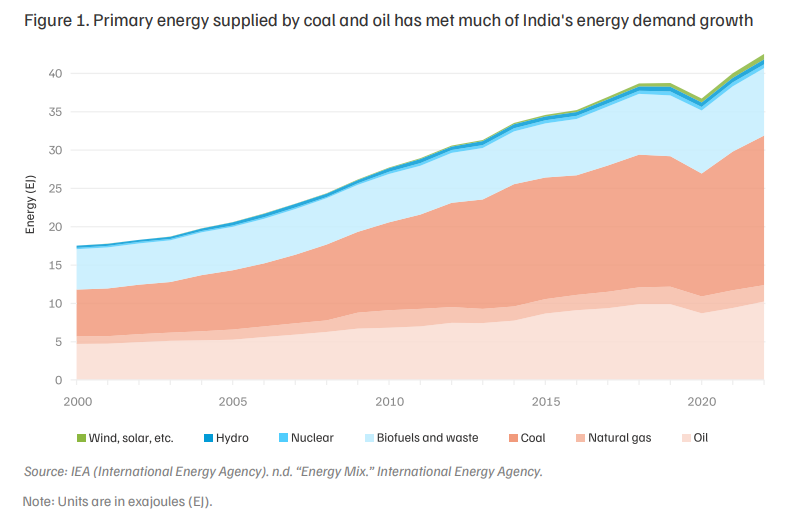
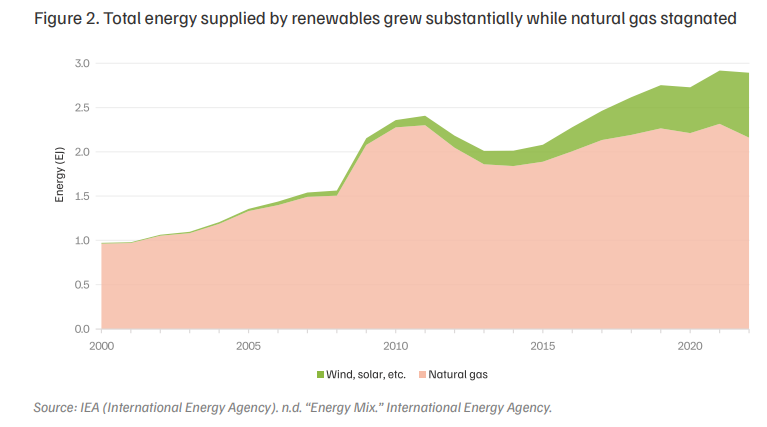
Figure 3 depicts primary energy demand projections by source until 2070 based on a CEEW analysis of the pathways to achieve net-zero emissions (Das et al. 2025). Under the depicted net-zero scenario, we do not expect the share of natural gas to reach 15 per cent. Instead, it peaks at 10 per cent by 2055, then declines to 0 per cent by 2070. This growth entails a tripling of gas consumption from 2.0 exajoules (EJ) (53 bcm) to 6.8 EJ (180 bcm) over 2025–40, thereby signifying substantial growth potential in the medium term while still aligning with the net-zero trajectory overall.
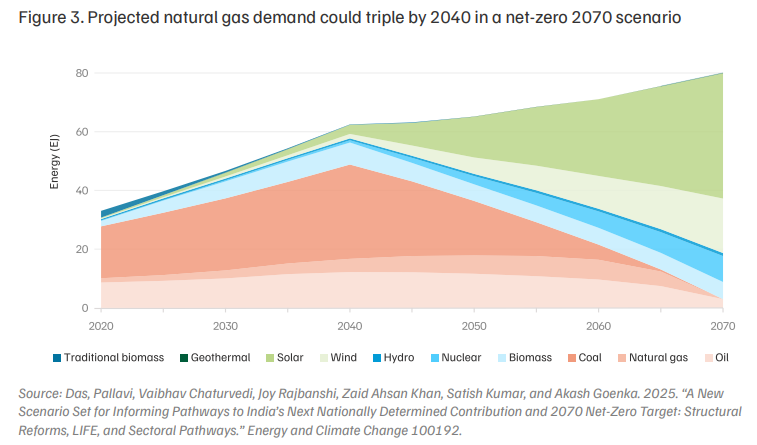
Note: The sharp decrease from 2040 is a result of modelling assumptions and functional parameters in the Global Change Analysis Model (GCAM) used in the cited study
Achieving this growth will require increasing gas penetration in sectors that traditionally consume oil and coal, such as road transport, steel manufacturing, and other industry sectors. At the same time, the country must strategise and counterbalance this growth with practical energy transition plans aligned with the national net-zero emissions target, which would necessitate a decline in gas consumption after 2060. By examining the varying growth prospects across key demand sectors, this policy brief outlines the urgent policy and regulatory shifts required to deploy natural gas strategically. This includes supporting gas use where it is essential for lowering emissions while avoiding dependence on it as cleaner alternatives emerge.
In the financial year (FY) 2023–24, India consumed a record 68 bcm1 of gas, of which 53 per cent was produced domestically and 47 per cent imported as liquefied natural gas (LNG) (PPAC 2025). India accounted for 7 per cent of the global LNG market in 2024 (GIIGNL 2025). Over the past decade, approximately half of India’s gas supply has been sourced through imports due to stagnating domestic production, resulting in an import burden of USD 13.4 billion in 2023–24 (PPAC 2025).
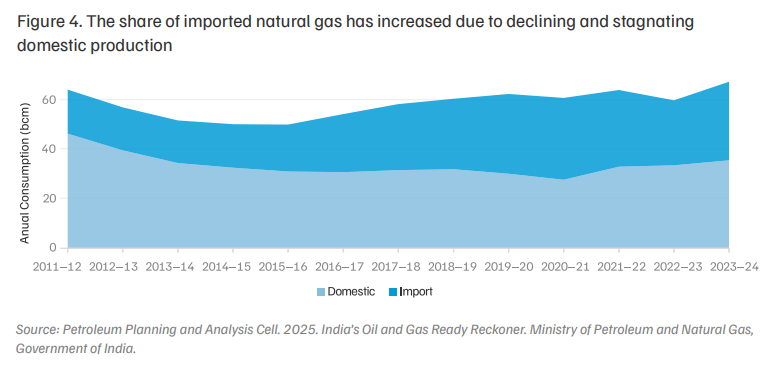
Figure 4 shows the division between domestically produced gas and regasified LNG (RLNG) imported in 2011–24 in total gas demand. The figure highlights a notable decline in domestic gas production during 2011–13, after which production failed to recover. This decline and stagnation are attributed to difficulties in extracting gas from major offshore reserves identified in the Krishna–Godavari (KG) basin on India’s east coast, along with declining volumes from other major offshore wells off the coast of Maharashtra in the west (Singh et al. 2022).
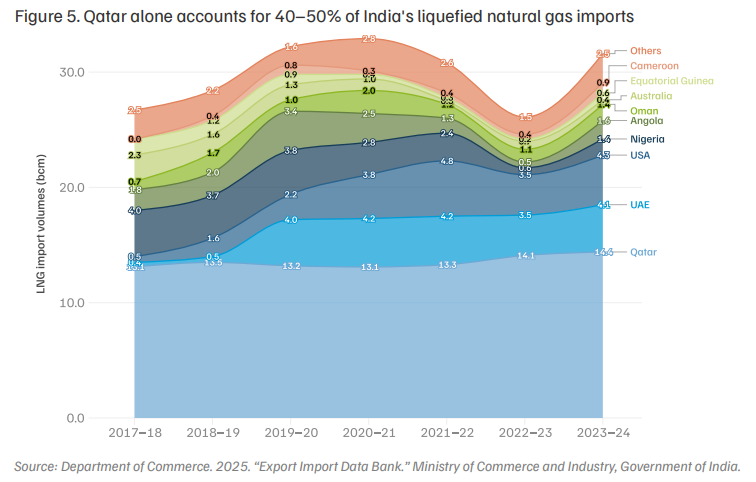
The inertia of domestic production has amplified the importance of gas imports. The five-year average share of imports rose from 33 per cent in 2011–16 to 49 per cent in 2019–24 (Figure 4). India primarily relies on long-term contracts for gas imports through its seven operational LNG terminals, with four additional terminals under construction. In 2024, 63 per cent of India’s imports were received through long-term contracts with countries such as Qatar, the United Arab Emirates (UAE),
the United States (US), and Australia (GIIGNL 2025; The Economic Times 2024). India also receives shortterm and spot volumes from these countries and from others, such as Angola and Cameroon (GIIGNL 2025). Qatar remains India’s largest gas exporter, constituting 40–50 per cent of imports (Figure 5). The UAE and the US have emerged as significant import partners over the past five years, each constituting 13–14 per cent of imports in 2023–24. India accounted for 50 per cent of the UAE’s LNG exports in 2024, contributing significantly to the development of their LNG market (GIIGNL 2025). The conflict in West Asia in early 2026, resulting in the effective closure of the Strait of Hormuz, has affected nearly 60 per cent of India’s LNG imports (Department of Commerce 2025), resulting in curtailment of gas supplies to industries and commercial establishments (Pande, Sahu and Dutta 2026). The conflict has highlighted vulnerabilities in concentrated imports and has called attention to the strategic need to diversify imports imminently
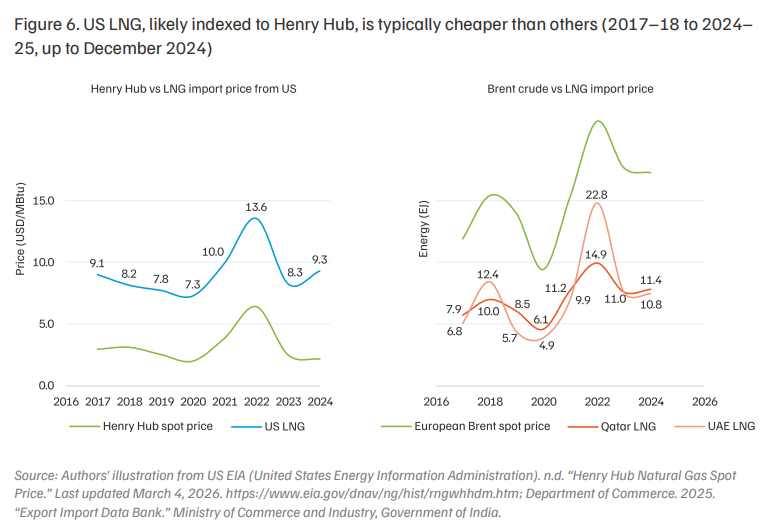
The landed price of LNG from the US (i.e. the price at the import terminal before taxes and duties) has typically been lower and more stable than that from other countries (Figure 6). Over the past eight years (April 2017–December 2024), US LNG has been 6.6 per cent cheaper on average than Qatar LNG, with the gap widening to 15.4 per cent over the last four years (April 2021–December 2024). In 2023–24, US LNG was the cheapest at USD 8.3 per million British thermal units (MBtu), compared with a quantity-weighted average price of USD 11.1/MBtu for all other countries, making it 25 per cent cheaper. In the longer term, a diversified portfolio of suppliers, contract terms and indices will provide the requisite stability and security
Since December 2024, Indian importers have signed four long-term contracts totalling 11 million tonnes per annum (Mtpa) linked to Henry Hub prices, typically structured at 115–120 per cent of the Henry Hub price plus USD 5–6/MBtu). Analysts note that importers prefer the lower volatility displayed by the Henry Hub index in recent years compared with other gas or oil indices (Sharma and Stapczynski 2025; Pande 2025). These contracts complement existing oil-linked contracts and will provide stability against index-specific volatilities.
Both the US and the UAE are planning substantial expansions in natural gas liquefaction capacity, with the US announcing or adding over 100 Mtpa (doubling its capacity as of 2024) and the UAE adding nearly 10 Mtpa (tripling its capacity as of 2024) by 2030 (GIIGNL 2025). Canada, Mozambique, Argentina and Australia are also adding considerable new capacities in the coming years (IEA 2026). These large capacity expansions strongly signal potential overcapacity in the coming years, presenting an opportunity for India to negotiate additional contracts at competitive prices and diversify away from Qatar. India already has a free trade agreement with the UAE (Department of Commerce 2024), has formally announced an interim agreement with the US aimed at increasing energy procurement (The White House 2026) and is in talks with Canada for a Comprehensive Economic Partnership Agreement that is expected to be concluded in 2026 (Chatterjee 2026).
Note: Natural gas import contracts can be broadly categorised into medium- to long-term, short-term, and spot contracts. Medium- and long-term contracts typically last 5–25 years, while short-term contracts last less than 5 years. Liquified natural gas may also be procured on the spot market, which operates on a daily basis for immediate delivery (within 30 days). In this paper, references to long-term contracts denote agreements with a 20-year term, while long-term demand or supply refer to periods extending to 2070.
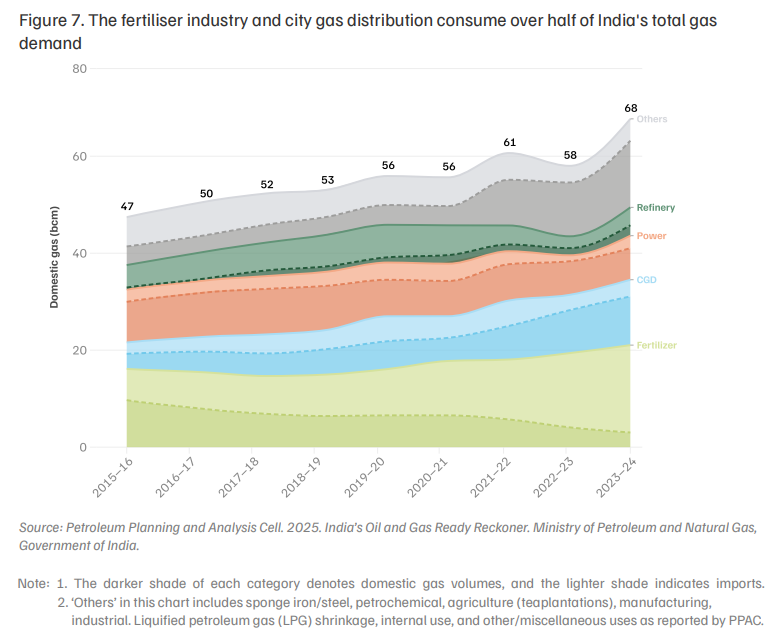
Natural gas consumption in India is currently dominated by the fertiliser (30.6 per cent in 2023–24), city gas distribution (CGD) (19.6 per cent), power (13.2 per cent), and refinery (8.5 per cent) sectors, with other industries accounting for nearly 30 per cent. Significant potential for demand growth also exists in transport (LNG) and steel. Figure 7 presents the sectoral consumption of domestic gas and RLNG. The effects of the priority allocation policy for domestic gas (discussed in the Annexure) are observed in the increasing domestic gas consumption by the CGD sector, while the allocation to the fertiliser sector has declined. As a result, the fertiliser sector has become, by far, the largest consumer of RLNG
3.1. Fertiliser and refinery: Past growth drivers with future shifts
India is the third-largest fertiliser producer globally and the second-largest consumer (PIB 2025a). All urea manufacturing plants rely entirely on natural gas as a feedstock, making the fertiliser sector historically the largest consumer of natural gas and, increasingly, the largest consumer of imported RLNG (Figure 7). Urea is a key agricultural fertiliser and remains a subsidised commodity, with subsidies alone amounting to over USD 20 billion annually (PIB 2025a). In recent years, several new and revived plants have commenced production, while additional plants remain under construction. Over the past six years, six new urea plants with a combined capacity of 7.6 Mtpa have been commissioned (Rajya Sabha 2025; PIB 2024, 2025). Therefore, stable and affordable RLNG supplies are critical for maintaining fertiliser production while managing the subsidy burden.
India currently has a crude oil refining capacity of nearly 250 Mtpa, making it the fourth-largest refiner globally (MoPNG 2025). Refineries accounted for 8.5 per cent of national gas demand in 2023–24, and total refining capacity is projected to expand by 20 per cent by 2028 (S&P Global 2025). However, over half of refinery products by volume are consumed by the transport sector (MoPNG 2025). The increasing adoption of electric and natural gas vehicles could therefore substantially reduce demand for refined petroleum products over the medium to long term (Mohan et al. 2025).
The National Green Hydrogen Mission (NGHM) aims to transition fertiliser plants and refineries to green hydrogen by 2030 (MNRE n.d.). This shift could offset a significant share of natural gas demand in these sectors and free up volumes for other sectors. As of 2025, 7,24,000 tonnes per annum (tpa) of green ammonia manufacturing capacity across 13 fertiliser plants, and 20,000 tpa of green hydrogen across 3 refineries, have been authorised for development under NGHM subsidies (PIB 2025b). While producing green hydrogen (USD 3.5–5/kg) remains more expensive than producing grey hydrogen (USD 2.3–2.5/kg) (Bharat Climate Forum 2026), green ammonia tenders have discovered significantly lower apparent prices of USD 2.3/kg for green hydrogen. However, this lower price was achieved through a combination of central (NGHM) and statelevel subsidies (Pal et al. 2025), as well as the use of electrolysers typically imported from China at affordable prices.
Until green hydrogen demand scales sufficiently to enable cost-effective indigenisation of the value chain (Bharat Climate Forum 2026), these anchor sectors are likely to continue consuming natural gas for a large share of their requirements. A CEEW study assessing the economic feasibility of blending green ammonia in fertiliser production found that, in urea production (where ammonia is produced domestically), blending 10 per cent green ammonia would increase the average cost of ammonia by 17 per cent. For non-urea fertiliser production (where ammonia is largely imported), the average cost of ammonia would rise by 8 per cent (Kothadiya et al. 2024).
Power: Limited growth with peak load management potential
Despite having over 25 GW of gas-based power capacity (6 per cent of national generation), total gas-based power generation in 2023–24 accounted for only 1.8 per cent of the national total (MoP 2025; CEA 2025). These plants operate at a very low capacity utilisation factor (14.9 per cent in 2023–24) because gas is more expensive than coal or renewable power. In 2023–24, despite ~60 per cent of the consumption being pricecontrolled domestic gas (at USD 6.5–8.5/MBtu), the cost of gas-based power was INR 7.2/kWh, compared with INR 4.6/kWh for coal and less than INR 4/kWh for solar and wind (Figures A2 and 8) (NITI Aayog and Vasudha Foundation n.d.).
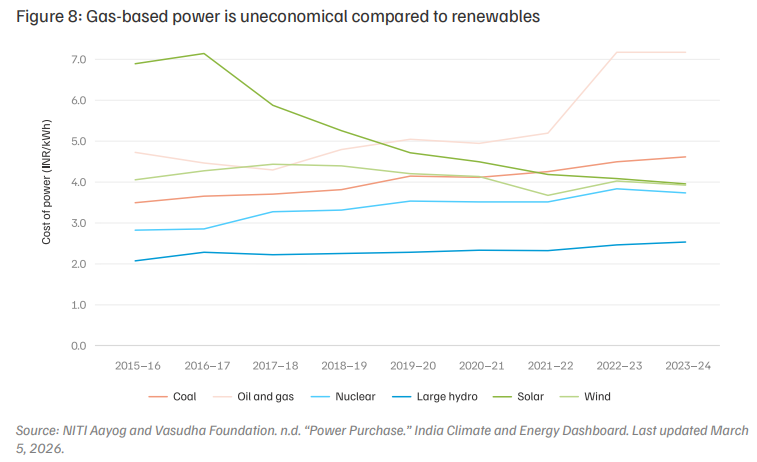
However, gas-based power plants are well suited for peak-load and intermittency management, as they can ramp generation up and down much faster than coalbased thermal power plants. In 2024, gas-based power plants were deployed to manage record-high electricity demand during extended summer heatwaves in May and June (Kemp 2024; Sharma 2024). This characteristic may also allow them to play a role in managing the intermittency associated with India’s growing renewable power capacity. At the same time, grid-scale battery storage systems are becoming cheaper, with recent tenders for firm and dispatchable renewable energy (FDRE) attracting bids in the range of INR 5/kWh (Freese 2025). Cheap and reliable gas supplies can provide peak-shaving support to the grid in the short term while grid-scale battery storage is fully integrated at a large scale.
City gas distribution: Push from gas in transport
City gas distribution represents the second-largest distinct consumer category for natural gas, accounting for nearly 20 per cent of demand, or over 5.6 bcm in 2023–24. With the CGD network rapidly expanding across the country, demand has grown at a compound annual growth rate of 8.7 per cent over the last decade (PNGRB 2023; PPAC n.d), more than doubling in annual sales volume in just the last four years. In 2023, India had 4.5 million compressed natural gas (CNG) vehicles on the road, accounting for 9 per cent of all non–two-wheeler vehicles (Mohan et al. 2025). The bulk of this growth, nearly 60 per cent, has been driven by the use of CNG in vehicles — especially three-wheelers, taxis, buses, and trucks — due to its cost-effectiveness compared to petrol and diesel (Figure 9). However, electric vehicles (EVs) are, on average, much cheaper than competing powertrain options in three-wheelers, with EVs in other segments slated to become more competitive by 2030 (Elango et al. 2025). Therefore, while the expansion of CGD networks will add to the CNG consumer base, competition from EVs will abate CNG growth.
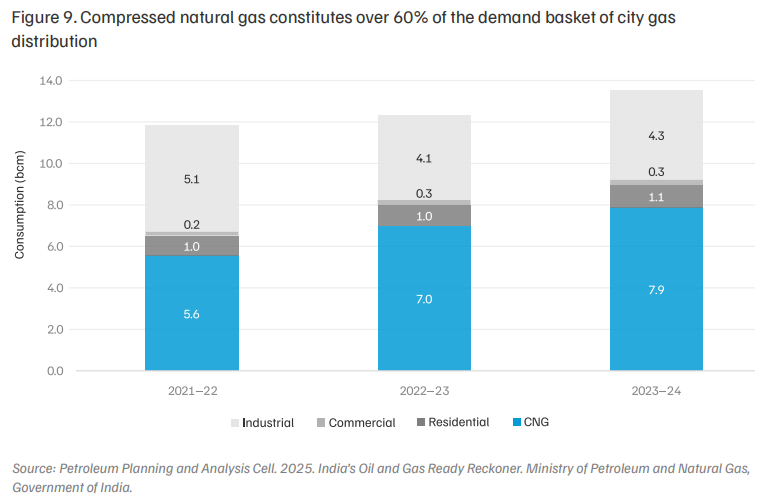
As of 2023–24, the CGD sector sources 25 per cent of its demand through LNG (PPAC 2025). Residential gas and CNG are entitled to 100 per cent allocation of price-controlled domestic gas (Annexure A1). However declining volumes of price-controlled volumes could mean greater exposure to market prices and RLNG for the CGD sector, especially given the expected pace of network growth in new areas.
3.4 Liquified natural gas in transport: A medium-term solution for decarbonising heavy-duty freight
Heavy-duty freight transport accounts for over 40 per cent of CO2 emissions from India’s road transport sector, a share projected to exceed 50 per cent by 2045 (Mohan et al. 2025). In the medium term, LNG could serve as a viable fuel for long-distance heavy-duty transport. Trucks utilising LNG are more efficient and offer a longer driving range than diesel trucks, and LNG could be cheaper than diesel, resulting in a lower total cost of ownership (Elango et al. 2025). Electric trucks currently face challenges related to higher costs, limited range, and insufficient charging infrastructure, while hydrogen trucks are still under development and are unlikely to reach scaled deployment in heavy-duty applications before 2040. An analysis by CEEW suggests that, without alternative fuel options in the medium term, diesel demand will continue growing until 2047, while petrol demand is expected to peak much earlier, by 2032. This could make it challenging for refineries to manage their product mix (Mohan et al. 2025). The analysis further indicates that a combined adoption of EVs and LNG vehicles represents the best scenario for reducing transport emissions while moderating growth in diesel demand (Mohan et al. 2025).
Regulatory support has also been extended to LNG, with the Petroleum and Natural Gas Regulatory Board (PNGRB) notifying amended regulations for the sale of LNG through refuelling stations and clarifying that any entity can establish LNG refuelling stations, thereby promoting wider adoption (PNGRB 2018, 2020). The PNGRB has also recommended reductions in truckloading charges and state VAT for LNG in trucking, and to reduce the GST on LNG trucks (PNGRB 2024a; ICF 2025). In parallel, commercial trials and operational fleets of LNG-powered trucks are demonstrating the viability of LNG (Delhivery 2024; Motorindia 2022; GreenLine 2025).
3.5 Steel: Doubling capacity with cleaner fuels
India’s steel industry is the second largest in the world, yet its emission intensity remains significantly higher than the global average. Steel production in India emits 2.36 tonnes of CO₂ per tonne of crude steel (tCO₂/tcs) compared with a global average of 1.91 tCO₂/tcs, largely due to the sector’s reliance on coal, which accounts for approximately 90 per cent of its production (Elango et al. 2023; World Steel Association 2024). Gas-based steel production currently accounts for less than 10 per cent of India’s steelmaking capacity. However, it entails over 30 per cent lower CO₂ emissions per unit of crude steel than coking coal–based routes (and 60 per cent lower when using renewable electricity) and can seamlessly transition to green hydrogen without substantial infrastructural modifications and investments, making it future-proof (Elango et al. 2023; Nduagu et al. 2022; Yadav et al. 2021).
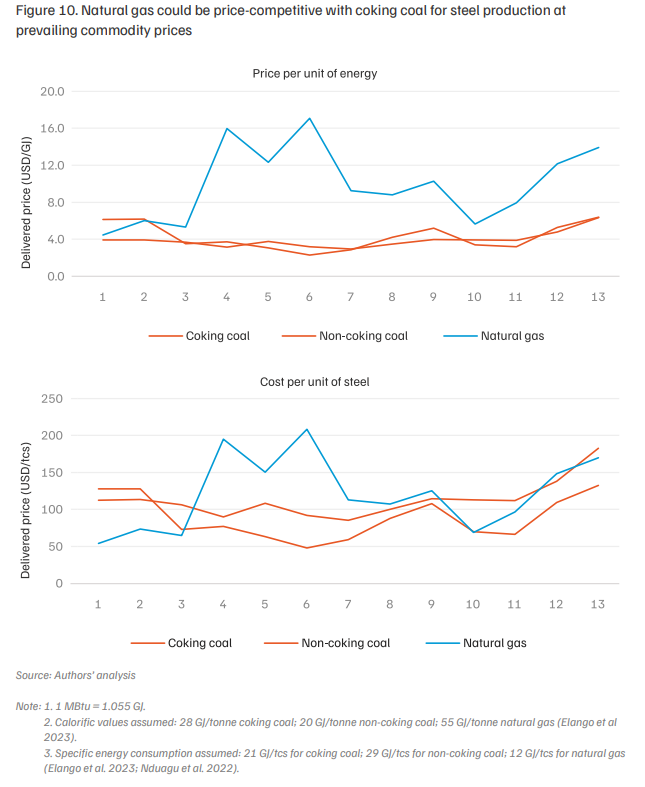
India’s steel industry is also highly dependent on imported coking coal, importing ~80 per cent of coking coal used in blast furnaces and ~50 per cent of noncoking coal used in rotary kilns (Elango et al. 2023). Policy shifts in key exporting countries, such as Australia, could therefore pose risks to the industry’s stability. While natural gas is more expensive on an energy basis, the higher efficiency of gas-based steelmaking processes can offset part of this cost difference (Figure 10).
The Ministry of Steel recently released a roadmap for green steel production in India (Ministry of Steel 2024) and introduced a green steel taxonomy based on emissions intensity (The Gazette of India 2024). In addition, the Bureau of Energy Efficiency (BEE) is developing the Carbon Credit Trading Scheme (BEE n.d.) aimed at establishing a domestic market for CO₂ emissions trading. Given all these market and policy signals, and the potential doubling of India’s steelmaking capacity to 300 Mtpa (PIB 2023b), investment in gasbased steelmaking may be more prudent. If the market and policies (such as green public procurement) signal sufficient demand, large-volume, long-term gas import contracts could be negotiated at competitive prices. Even 24 Mtpa of projected gas-based steel manufacturing could generate additional gas demand of ~7.3 bcm per year (Ministry of Steel 2017).
3.6 Small and medium enterprises: Transition from more polluting fuels
Favourable economics have led many small- and medium-sized industries, such as glass, ceramics, and plastics, to transition from petroleum-derived liquid and gaseous fuels, including furnace oil, naphtha, and LPG, to natural gas. In addition, the expanding availability of piped natural gas across more regions of the country has enabled a seamless and simplified supply chain for these industries. As transmission and distribution pipeline networks continue to expand, more such industries are likely to switch to gas.
Air pollution concerns have also driven gas consumption in regions such as the National Capital Region (NCR) of Delhi, the Taj Trapezium Zone in Uttar Pradesh, and Morbi in Gujarat. Industries consuming polluting fuels have been mandated by authorities to switch to piped natural gas to reduce carbon monoxide (CO), nitrogen oxides (NOx), sulphur oxides (SOx), and particulate matter emissions (PIB 2023a; Pathak 2019; Thomas 2022). Similar regulatory interventions could also emerge in other regions of the country as air pollution worsens and related public health concerns intensify.
Challenges to expanding natural gas adoption
The preceding sections discussed India’s supply scenario and the status and outlook of sectoral demand. Some key challenges to expanding natural gas adoption are summarised as follows:
- Lack of demand visibility: Apart from the CGD sector, where gas demand growth is driven by expanding city gas pipeline networks and rising CNG demand in transport, there are no clear demand signals from crucial industrial sectors, such as steel, for additional demand. Legacy sectors, such as fertiliser manufacturing and oil refining, have largely plateaued in terms of existing demand and are already on a path to decarbonisation through the adoption of green hydrogen. Energy modelling scenarios aligned with India’s 2070 net-zero target suggest that gas demand is unlikely to reach the targeted 15 per cent share by 2030, with further growth also expected to remain limited.
- Greenhouse gas emissions from natural gas: Although transitioning to natural gas in certain sectors (as discussed in Section 3) can reduce emissions, natural gas remains a fossil fuel and generates substantial greenhouse gas emissions. In particular, methane emissions present a significant concern for natural gas across its lifecycle; according to the United States Environmental Protection Agency, 60 per cent of emissions occur during production, 6 per cent during processing, 19 per cent during transmission and storage, and 6 per cent during distribution (US EPA n.d.). Methane is the primary chemical constituent of natural gas and has a 100-year global warming potential (GWP) of nearly 30 times that of CO₂ and a 20-year GWP of 83. This means that the warming effect of methane in the atmosphere over 20 years is 84 times that of CO₂ (Forster et al. 2021). Fugitive methane emissions and incomplete flaring in natural gas supply chains therefore pose a significant risk associated with increased gas consumption (World Bank Group n.d.).
- Import dependency: India’s domestic gas production has largely stagnated, with increasing outputs from high-pressure/high-temperature wells in the KG basin since 2021 offsetting declining production from several mature ONGC fields (MoPNG 2025). At the same time, demand growth expectations, particularly from CGD operators, point to a need for increasing gas imports, which further exposes India’s consumers to global price fluctuations. In addition, global geopolitical shifts and evolving policies regarding funding for fossil fuel projects threaten the stability of transnational supplies (IEA 2020; The National Archives 2021; Banking on Climate Chaos 2024). The recent conflict in West Asia has highlighted the vulnerability of having a concentrated supply chain, with nearly 60 per cent of India’s LNG imports affected by trade route closures (Department of Commerce 2025).
- Limited infrastructure access to pipeline capacity and LNG terminals: Although India has significantly expanded its gas pipeline network in recent years, access to infrastructure remains rigid and fragmented. Pipeline capacity booking remains operator-specific, with limited flexibility for short-term or round-the-clock (24×7) bookings. The continued use of point-to-point tariffs, rather than an entry–exit system, further discourages gas movement across regions and limits market integration. In addition, LNG terminal utilisation remains suboptimal, as a large share of the capacity is tied up under long-term contracts or withheld by operators. This limits open access for third-party users.
Lack of competitive market access: Regulations issued by the PNGRB incentivise infrastructure development by granting marketing and infrastructure exclusivity to CGD operators (PNGRB 2008), which can lead to a lack of competition and fair pricing. Ambiguity in the provisions governing the declaration or withdrawal of exclusivity has resulted in numerous disputes between CGD operators and consumers (PNGRB n.d.a). The current regulatory framework also creates uncertainties for non-CGD entities offering small-scale LNG services, i.e., direct LNG delivery from terminals to consumers via road or rail (Elango and Mallya 2021). Further, exclusivity provisions for CGD operators restrict small industrial consumers (with demand below 50,000 cubic metres per day) from participating in the Indian Gas Exchange (IGX), which enables transparent and automated procurement and trading. Recent regulations governing LNG terminals have also excluded a provision requiring 20 per cent of terminal capacity to be reserved for common access; i.e. this capacity could be used by any entity to import their own LNG using the terminal. The removal of this requirement further limits consumers’ ability to independently access global markets for potentially cheaper spot or short-term LNG volumes.
- Natural gas taxation and pricing structure: Several petroleum products, such as LPG, naphtha, and fuel oil, have transitioned from the earlier value-added ax (VAT) regime to the more streamlined goods and services tax (GST) regime. However, natural gas – along with crude oil, motor spirit, high-speed diesel, and aviation turbine fuel – remains under the VAT regime (or sales tax regime in some states) despite being constitutionally included under GST goods (PIB 2019).
A primary barrier to including natural gas under GST is the significant revenue concern among state governments. Unlike GST, VAT and sales tax rates are determined by state governments, resulting in substantial variations in tax brackets for natural gas across states – from 0 per cent in Delhi up to 25 per cent in Chhattisgarh. Additionally, the sales tax regime lacks provisions for input tax credits, leading to cascading taxes borne by the consumer. The application of GST to some parts of the value chain also complicates input tax credit claims. Figure 11 shows the price build-up and cascading tax components associated with natural gas in India.
The GoI introduced key policies and regulations to foster the adoption of natural gas, aiming to incentivise infrastructure development and prioritise certain pricesensitive sectors (see Annexure). However, unlocking the full potential of gas will require addressing existing barriers and deploying targeted policy interventions.
- Recalibrate national targets for natural gas: The GoI’s target of achieving a 15 per cent share of gas in India’s primary energy mix by 2030 is unlikely to be achieved at the current growth rate. The government should break down this aggregate target into complementary sector-specific targets where gas can play an important role in supporting the shift to clean energy without slowing the pace of the transition, such as in steel and heavy-duty road transport. Sector-level targets will also provide clearer policy signals to potential consumer groups for gas uptake, supplier groups for investments, and enable more directed policymaking.
- Diversify and hedge import sources: India’s significant dependence on Qatar for 40–50 per cent of its imports creates supply chain vulnerability. India signed nearly 11 Mtpa of new long-term contracts in 2024, 8 Mtpa of which were with Qatar (GIIGNL 2025). Entering more longterm contracts with countries like the US, Canada, Mozambique, Argentina, Australia and the UAE is crucial to secure supply chains and minimise exposure to volatile spot prices. These countries are adding substantial gas liquefaction capacities by 2030, signalling a sizeable increase in global LNG supply and potentially lower prices. India is already the largest export market for the UAE, constituting 50 per cent of its LNG exports in 2024 (GIIGNL 2025). This presents an opportunity for India to aggregate gas demand and negotiate new long-term contracts, which would be mutually beneficial to both sides by lowering procurement costs for India while providing demand certainty for exporters.
- Consolidate natural gas demand: The government should establish a central entity, similar to the SECI, to consolidate gas demand potential across sectors. Such an entity can establish baseline sectoral demand potential at various gas prices, providing clear visibility for bulk procurement and contract negotiations. For example, x bcm of demand available at a gas price of USD y/MBtu based on consumer expectations of economic viability. Such tiered demand aggregation will be useful for gas procurement and contract negotiations, as it provides clear visibility into demand at different price levels. For example, the steel industry may consume over 5 bcm of gas at delivered prices of USD 8/MBtu or below (Ministry of Steel 2024). The entity should prioritise demand aggregation for hard-to-abate growth sectors (such as steel) to secure long-term LNG contracts, while managing shorter-term flexible contracts for transitioning sectors. A similar approach is already used by GAIL (India) Ltd, which aggregates demand for urea manufacturing plants under the pooled gas pricing mechanism (MoPNG 2015).
- Strengthen government-to-government (G2G) cooperation and supply chain investments: A G2G framework for long-term contracting of LNG volumes can help ensure that decisions made and contracts signed are not contested or revoked due to changes in political dispensation. The framework can also provide necessary financial guarantees for investors or subsidies as needed. Encouraging partner countries to invest across the natural gas supply chain can further enhance reliability and resilience during global political disruptions, as experienced during the Russia–Ukraine conflict.
- Include natural gas under GST: Bringing natural gas under the GST regime will eliminate cascading taxes and significantly reduce the delivered price of gas to consumers. Currently, natural gas contributes a minority share of VAT and sales tax revenues for most states, with a few exceptions, such as Gujarat and Maharashtra, where gas adoption rates are much higher than average. For example, in 2023–24, central public sector enterprises paid over INR 2,50,000 crore in total sales taxes/VAT payments to all states, of which only INR 15,644 crore was attributable to crude oil and natural gas (MoPNG 2025). Therefore, states must achieve consensus on GST rates at the earliest to improve fiscal efficiency. The government can also set tiered GST rates based on consumer segments to further control revenue shares and consumer protection; for example, GST inclusion can initially focus on only industrial consumers that rely on RLNG.
- Reform infrastructure access and tariff mechanisms: India’s gas market is dominated by a few large vertically integrated players that manage both transportation (pipelines) and marketing (gas). This structure can create potential conflicts of interest, as entities controlling transmission infrastructure may prioritise their own gas marketing operations over third-party access seekers. To ensure non-discriminatory access, transparency, and competition, an independent system operator must be established. Establishing clear separation between gas transportation and marketing will align with global best practices seen in mature gas markets, such as the EU and the UK. Independent transmission operators will ensure a fair allocation of capacity and reduce entry barriers for new marketers, thereby enhancing market liquidity. Although unbundling reforms were proposed in India, the plan was later dropped (PTI 2021). The PNGRB has since published studies that support the unbundling of transmission system operation and gas production, marketing and distribution (PNGRB 2024b; PNGRB 2024c).
India should also plan to transition the gas market from the current point-to-point tariff system to an entry–exit tariff system. This shift would decouple gas sourcing from transport logistics, allowing consumers to switch suppliers instantly without rigid capacity bookings, thereby deepening market liquidity.
- Align pipeline capacity access code with the requirements of gas power plants: Gas-based power plants play an important role in meeting peak electricity demand. However, the current pipeline access rules lack the flexibility required to meet their needs. The access code should therefore be updated to allow 24×7 capacity booking through a single online platform, enabling power plants to book or release capacity in real time based on demand and generation schedules.
- Expand natural gas trading through the exchange: The IGX was established in 2020 as an automated national-level gas exchange. At present, only around 2 per cent of India’s total gas demand is traded through the IGX. The exchange enables gas consumers to procure volumes under different contracts, such as day-ahead, daily, and weekly, thereby allowing flexible procurement from multiple suppliers, particularly in sectors such as CGD and power. It also facilitates efficient price discovery through double-sided closed auctions, where both buyers and sellers submit offers and bids to the market operator.
Expanding access to IGX for imported LNG volumes at additional ports will strengthen its role in improving market access and price discovery. Greater participation will also increase the liquidity and viability of the GIXI, reducing India’s reliance on global indices that are often affected by global price shocks.
To promote more open market access through IGX, the PNGRB regulations governing marketing exclusivity for CGD networks should be amended to allow the regulator clearer authority to declare common carrier capacity after the stipulated period and terms. Additionally, PNGRB can revisit the provisions governing open-access capacity booking at LNG terminals, enabling independent consumers to procure LNG from the spot market and transport it through common-carrier capacity or trade it domestically through the IGX.
- Develop or adapt methane control protocols: Establishing standardised protocols to ensure methane emissions remain below acceptable thresholds is essential to prevent natural gas use from undermining its emissions advantage over coal. These protocols could either be developed specifically for India or adapted from globally accepted protocols. Suitable agencies could include the Ministry of Petroleum and Natural Gas (MoPNG), the PNGRB, or the BEE under the Ministry of Power, which serves the nodal agency for managing India’s Carbon Credit Trading Scheme.
- Invest in turquoise hydrogen pilots: Clean turquoise hydrogen can be produced from natural gas using pyrolysis technology, which generates solid carbon particles as a by-product (Prabhu et al. 2023). Compared with grey hydrogen, turquoise hydrogen can reduce CO₂ emissions by around 84 per cent, while potentially lowering production costs through revenue from carbon by-products. Significant quantities of carbon black and coking coal imports can be avoided by using pyrolysis carbon in these industries. Some pyrolysis processes are also capable of producing higher-value byproducts, such as graphite, which can be used in battery manufacturing. Globally, several players are developing pyrolysis technology for hydrogen production, with some projects achieving technology readiness levels of up to 7 (full-scale commercial pilot) (Prabhu et al. 2023). Deploying pilot plants in India can help assess the viability of this technology and scale it to build demand for hydrogen in industries and other end consumers.
- Leverage natural gas to access new markets or increase share: Non-tariff trade measures, such as the EU’s Carbon Border Adjustment Mechanism (CBAM), which aim to curtail imports of polluting commodities, could be an opportunity for India. Although India’s steel exports to the EU are marginal compared with domestic consumption (Department of Commerce 2025), the deployment of gas-based capacity could give India a competitive advantage over other countries by making exports relatively cheaper while still complying with CBAM regulations.
Natural gas accounts for approximately 5 per cent of India’s total primary energy mix, against the government’s target of raising this to 15 per cent by 2030. Coal and oil together account for over 80 per cent of supply. Modelling by the International Energy Agency and CEEW suggests the 15 per cent target is unlikely to be achieved at the current rate of growth under the existing policy environment, making structural reforms essential.
India’s domestic gas production has largely stagnated at approximately 36 bcm per year, while demand reached 68 bcm in 2023–24, meaning nearly half of consumption must be met through LNG imports. The concentration of these imports is a significant vulnerability: Qatar supplies 40–50 per cent of annual import volumes. This dependence exposes consumers to global price volatility and geopolitical supply risks, and limits India’s leverage in contract negotiations.
Natural gas offers a lower-carbon alternative to coal in several hard-to-abate industries. In steel, switching from coal-based to gas-based production routes can reduce emission intensity by 30–60 per cent, which is significant as India’s steel sector emits 2.36 tonnes of CO₂ per tonne of crude steel, well above the global average of 1.91. In small and medium enterprises, gas displaces more polluting liquid fuels such as furnace oil and naphtha. As the EU’s CBAM raises the cost of carbon-intensive imports, Indian industries using gas-based processes could gain a competitive export advantage.
Natural gas was excluded from the goods and services tax (GST) framework at its introduction in 2017 due to fiscal concerns at the state level, as several states, including Gujarat and Maharashtra, collect significant revenues from value added tax (VAT) and sales tax on gas. This exclusion means that gas consumers cannot claim input tax credits on the taxes they pay, effectively creating a cascading tax burden that raises delivered prices and makes gas less competitive relative to other fuels. Bringing natural gas under GST is one of the most impactful single reforms available to the government.
India has over 25 GW of installed gas-based power capacity, but these plants operated at only 14.9 per cent capacity utilisation in 2023–24. The primary reason is the high cost of gas relative to coal for baseload generation. However, gas-based plants have a critical role in peak-load and grid-balancing applications: they can ramp output up and down far faster than coal plants, making them well suited to complement the growing share of intermittent renewable energy on the grid. Inflexible pipeline access rules that restrict round-the-clock capacity bookings are a key barrier to unlocking this potential.
Heavy-duty freight transport accounts for over 40 per cent of CO₂ emissions from India’s road transport sector, a share projected to exceed 50 per cent by 2045. LNG-powered trucks emit significantly less particulate matter and NOx than diesel equivalents, and have a lower carbon footprint per tonne-km. In the medium term, before battery electric or hydrogen fuel cell trucks reach commercial viability for long-haul freight, LNG offers a practical and available decarbonisation pathway. Regulatory clarity around LNG refuelling station development has improved following amendments by the Petroleum and Natural Gas Regulatory Board (PNGRB).
Turquoise hydrogen is produced from natural gas using methane pyrolysis, a process that splits methane into hydrogen and solid carbon particles rather than CO₂. Compared with grey hydrogen (produced from natural gas with no carbon capture), turquoise hydrogen reduces lifecycle CO₂ by approximately 84 per cent. The solid carbon by-product can be sold as a feedstock for carbon black, batteries, or construction materials, providing an additional revenue stream. Turquoise hydrogen offers India a near-term bridge between the current dominance of grey hydrogen and the longer-term ambition of green hydrogen from renewable energy.
India’s gas pipeline network spans over 25,000 km of long-distance transmission pipelines, with an additional 10,000 km under construction. However, capacity booking is operator-specific and the point-to-point tariff structure restricts cross-regional gas flows and third-party access. These rigidities limit competition and raise costs for consumers. Key reforms include establishing an independent system operator to provide transparent and non-discriminatory access, introducing unified zone-based tariffs to encourage cross-regional trade, and updating the access code to allow flexible, 24-hour interruptible capacity bookings for gas-based power plants.
Enabling investment in clean primary steel

Can white hydrogen accelerate India’s energy transition?
How Secure is India’s Energy Future?
Advancing India’s Green Steel Transition
CO₂ Pipeline Network for Carbon Capture and Storage in India