Council on Energy, Environment and Water Integrated | International | Independent


Suggested citation: Rajakumaran, Hashvitha, Karan Kothadiya, and Deepak Yadav. 2026. Can White Hydrogen Accelerate India’s Energy Transition? Assessing Potential and Pathways. New Delhi: Council on Energy, Environment and Water.
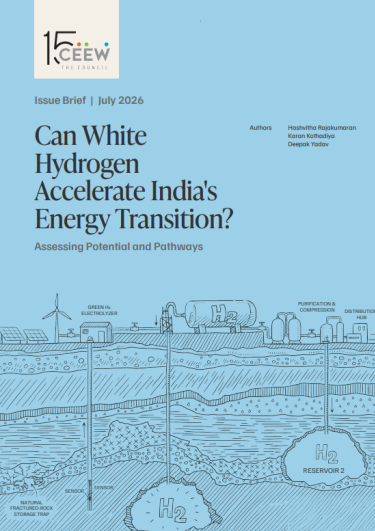
This issue brief assesses the relevance of white hydrogen for India by examining its formation mechanisms, global developments, India’s geological potential, and the policy and institutional actions required to evaluate the resource. White hydrogen, also known as geological or natural hydrogen, has emerged as a possible complement to green hydrogen. It is molecular hydrogen generated by natural geological processes and extracted directly from subsurface formations, without electricity-intensive electrolysis or emission-intensive fossil-fuel conversion. Because these geological processes generate it continuously, it is treated as a renewable resource. The report finds that the priority in the initial phase is structured learning rather than deployment, and sets out a sequenced set of actions across policy, geological surveying, research and development, and international cooperation.
White hydrogen, also known as geological or natural hydrogen, is emerging globally as a potential low-emission, low-cost hydrogen source. Unlike conventional hydrogen pathways, white hydrogen is produced by natural geological processes and can be extracted directly from subsurface formations without electricity-intensive electrolysis or emission-intensive fossil-fuel conversion.
Global hydrogen demand reached 97 million tonnes (Mt) in 2023 and is projected to quadruple by 2050, reaching 388 Mt (IEA 2023b), driven largely by decarbonisation targets. As countries seek to scale low-emission hydrogen supply, interest in white hydrogen has grown as a possible complement to green hydrogen.
In this report, we assess the relevance of white hydrogen for India by examining its formation mechanisms, global developments, India’s geological potential, and the policy and institutional actions required to evaluate and advance this resource.
White hydrogen refers to molecular hydrogen that accumulates underground in subsurface environments under suitable conditions. Since it is continuously generated through various geological processes, it is considered a renewable energy resource (Mao et al. 2025). White hydrogen generation occurs through five principal mechanisms: serpentinisation of ultrabasic rocks and oxidoreduction of iron-rich sedimentary rocks, both involving mineral-water reactions that release hydrogen. Additionally, late maturation of organic matter in coal and shale; radiolysis driven by radioactive decay of uranium, thorium, and potassium; and degassing from deep mantle sources also generate white hydrogen (Bendall 2022). These mechanisms are discussed in detail in Section 2.
These mechanisms allow hydrogen to exist in several forms, including as free gas trapped in reservoirs, dissolved gas in groundwater, and within mineral inclusions. Among these, free gas accumulations and hydrogen dissolved in groundwater are currently considered more viable for extraction. However, hydrogen’s high diffusivity and our limited understanding of reservoir stability pose challenges for reliable resource estimation and recovery. Ongoing global research and development initiatives are therefore aimed at overcoming these challenges, while also exploring the possibility of artificially triggering white hydrogen generation in geological formations through electrical stimulation or the injection of reactive fluids into geological formations.
We find that white hydrogen offers several potential advantages aligned with India’s sustainability and energy transition objectives. Environmentally, it has a low carbon intensity, minimal water and land requirements, and significantly lower energy input compared with electrolytic hydrogen (Table ES1).
Table ES1. White hydrogen is cleaner, cheaper, and more resource-efficient than alternative production methods
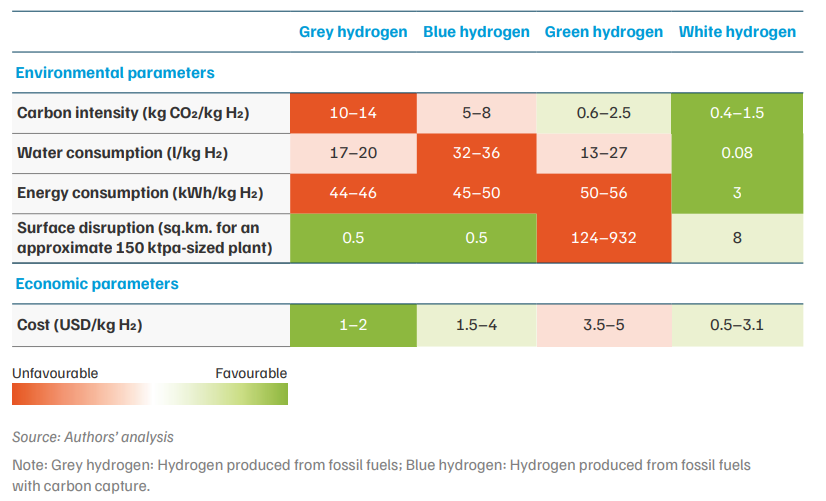
From an economic perspective, early global evidence suggests that white hydrogen could be produced at a lower cost than green hydrogen and potentially be competitive with fossil-based hydrogen, while offering more stable long-term pricing. The only commercially operational project to date, in Mali, produces white hydrogen at approximately USD 0.5 per kg H2 (Rystad Energy 2024), although the current production scale is small at around 0.5 tonnes per day. Other companies and research institutions estimate production costs at USD 0.5–3.1 per kg H2, depending on production stability and project lifetimes (Musa et al. 2024; Mathur et al. 2025). In addition, the potential to co-extract valuable gases, such as helium, could further improve project economics.
White hydrogen could therefore diversify India’s hydrogen supply and reduce its dependence on imported fossil fuels and critical minerals required for electrolysers. These benefits, however, remain contingent on the scale, continuity, and extractability of domestic reserves, which have yet to be established.
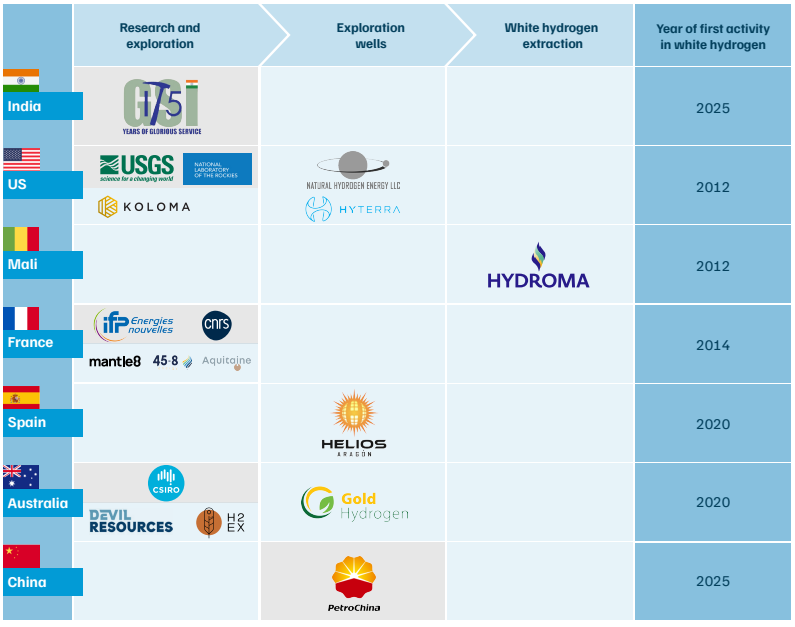
Globally, white hydrogen has moved beyond being a purely academic concept. We find that more than 15 countries, through several public-sector entities, government institutions, and private companies, are now actively engaged in research, exploration, and early-stage drilling. At present, Mali remains the only country with an operational white hydrogen well supplying low-cost electricity locally. However, interest in white hydrogen has grown steadily since 2012, with multiple countries advancing exploration and research initiatives (Figure ES1). In comparison, India remains at an early stage in developing its approach to white hydrogen.
Figure ES1. Global public and private interest in white hydrogen is growing, with exploration and extraction activities advancing
Source: Authors’ analysis
Note: USGS – United States Geological Survey; NREL – National Renewable Energy Laboratory; CNRS – French
National Centre for Scientific Research (Centre National de la Recherche Scientifique); CSIRO – The Commonwealth
Scientific and Industrial Research Organisation.
Entities marked in grey boxes are public-sector entities. Others are private-sector entities.
Governments in countries such as the United States (US), Australia, France, and Spain have introduced funding programmes, adapted regulatory frameworks, and issued exploration permits to support early development. For example, the US Department of Energy (US DOE) allocated USD 20 million in 2024 under the Advanced Research Projects Agency–Energy programme to fund early-stage research on geological hydrogen production and subsurface reservoir management (US DOE 2024). Similarly, Australia has committed public funding to support the exploration of white hydrogen, including a dedicated allocation for activities in Queensland (Queensland Government 2024).
Public research institutions, including geological surveys and national laboratories, are leading efforts in hydrogen prospectivity mapping, soil gas surveys, and subsurface research. These institutions include the USGS and the NREL in the US, the CNRS in France, the Geological Survey of Finland, and the Korea National Oil Corporation (KNOC), among others. These initiatives have produced early, country-wide hydrogen prospectivity maps and are working to improve understanding of hydrogen generation and migration processes. At the same time, private companies are deploying advanced geophysical tools, drilling exploratory wells, and testing monitoring technologies across North America, Europe, Africa, and Australia.
Private-sector activity in white hydrogen spans the full value chain, from early-stage exploration to operational production, with companies operating across North America, Europe, Africa, and Australia.
India possesses several geological markers associated with white hydrogen generation, including ultramafic rock complexes, cratonic regions, iron ore belts, uranium- and thorium-rich formations, fault zones, and volcanic provinces such as the Deccan Traps (Figure ES2). These markers are distributed across peninsular, central, and southern India. Preliminary evidence, including hydrogen detected in the Andaman ophiolites and geothermal regions, is encouraging. However, it remains insufficient to assess the resource size or its commercial viability.
Figure ES2. India has geological markers for white hydrogen

Source: Authors' analysis
Note: Basalt formations and iron ore mines are mapped using shapefiles; other mineral deposits are shown only as an indicative location due to data unavailability.
Several constraints may limit near-term deployment in India. These include limited geological data, low technological readiness, lack of policy recognition, and uncertainty regarding reserve size and production stability.
To address these gaps, we present the following areas for concerted actions by various stakeholders to advance white hydrogen explorations and development in India.
White hydrogen, a naturally occurring form of hydrogen found in underground reservoirs, could enable hydrogen production with lower energy consumption and, consequently, lower carbon emissions and costs compared with conventional fossil-based and electrolytic hydrogen production methods. Unlike fossil fuels, white hydrogen is continuously generated through various geological processes, making it a renewable resource. Additionally, some companies are now exploring the potential of stimulated geological hydrogen, which involves artificially generating hydrogen within certain geological formations (Vema Hydrogen n.d.). This process involves injecting water into specific underground rock formations to trigger chemical reactions that release hydrogen gas, thereby mimicking or accelerating white hydrogen generation. Due to these benefits and recent technological advances, white hydrogen–also known as natural hydrogen–has gradually gained global traction as a potential clean energy source.
White hydrogen could become an integral source of hydrogen supply to meet the rapidly increasing demand for this fuel. In 2023, global hydrogen demand reached 97 million tonnes (Mt), primarily used in ammonia production, oil refining, methanol production, and steel manufacturing (IEA 2024). However, new applications are emerging in transport, hydrogenbased synthetic fuels, electricity storage and generation, and high-temperature industrial heating. Consequently, global hydrogen demand is projected to increase to 390–1,000 Mt per year by 2050, significantly higher than current production levels (Agora Industry, Agora Energiewende, and Instituto E+ Transição Energética 2024; Hydrogen Central 2024; Energy Transitions Commission 2021). Hydrogen demand in India alone is expected to reach 29 Mt per year by 2050 (NITI Aayog and RMI 2022). Developing cost-effective, low-carbon hydrogen production pathways will therefore be crucial for achieving and accelerating the energy transition. White hydrogen can potentially play a central role in this transition.
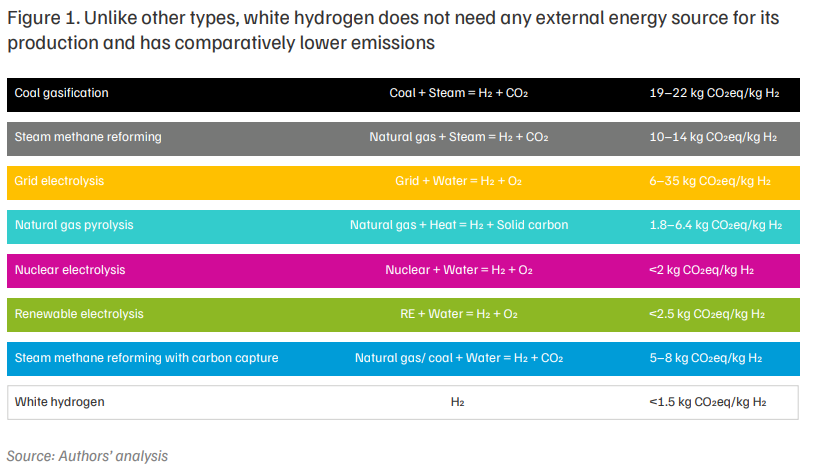
Hydrogen is commonly classified into distinct ‘colours’ based on its production pathway (Figure 1). As of 2026, hydrogen produced from fossil fuels (black and grey hydrogen) remains the most costeffective method globally. However, these methods have high carbon intensities, necessitating a shift towards cleaner alternatives. The turquoise hydrogen pathway, which involves natural gas pyrolysis, has significantly lower emissions but still relies on imported fossil fuels and may therefore not represent a long-term solution for an energy-importing country, such as India (Prabhu et al. 2023). Low-emission hydrogen production pathways, including electrolytic (yellow, pink, and green hydrogen) and fossil-based production coupled with carbon capture, utilisation, and storage (CCUS) (blue hydrogen), currently account for less than 1 per cent of total global hydrogen production (IEA 2023a). Electrolytic production pathways are categorised based on the source of electricity. Yellow hydrogen refers to hydrogen produced using grid electricity, while pink and green hydrogen are produced using nuclear and renewable energy sources, respectively. Among these low-emission production pathways, green hydrogen is considered a promising longterm solution for India. However, at present, its high production cost limits its widespread adoption (CFLI India and CEEW 2024).
This report is structured as follows. Section 2 presents a detailed explanation of the formation processes and occurrence of white hydrogen. Section 3 examines the key benefits of white hydrogen in terms of sustainability, cost, and energy independence. Section 4 profiles various global initiatives, including research efforts, government frameworks, and commercial projects. Section 5 provides an overview of exploration and extraction methodologies. Section 6 assesses the potential of white hydrogen in India. Section 7 highlights the critical challenges that must be addressed to advance progress on this resource. Finally, Section 8 offers actionable recommendations to support white hydrogen development.
White hydrogen, also known as geological or natural hydrogen, is a naturally occurring gas found trapped within underground rock formations.
As indicated in Figure 2, it forms through various geological processes and exists in different forms.
This section discusses some of the most prominent mechanisms responsible for the subsurface generation of white hydrogen. The geological terms used in this section are detailed in the technical glossary.
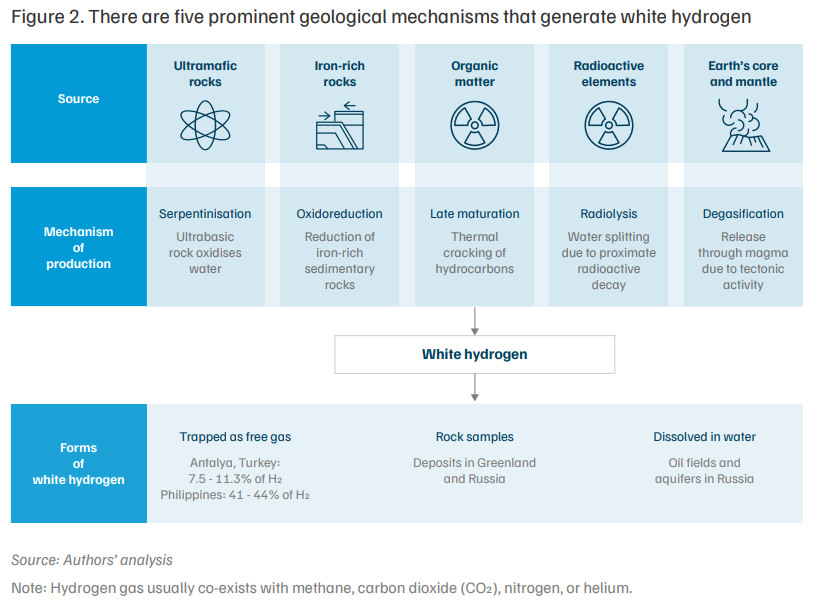
White hydrogen generation mechanisms
Several geological processes are responsible for the generation of white hydrogen. The relevance of these mechanisms to India is discussed in Section 6. This section provides an overview of the major mechanisms, the underlying geochemical processes, and the associated geological markers.
Oxidation–reduction (redox) reaction
A redox reaction involves the oxidation of ferrous iron to ferric iron, which reduces water to produce molecular hydrogen. These reactions occur in different geological settings, including the following:
• Serpentinisation of ultrabasic rocks: In this process, hydrogen is generated when iron-rich minerals in ultramafic rocks (such as olivine) react with water at high temperatures. This reaction oxidises the iron and releases molecular hydrogen (Bendall 2022). The process commonly occurs in greenstone belts and continental ophiolite belts (Wang et al. 2023). HyTerra Ltd, an Australian-listed energy company, has launched a project at Nemaha Ridge in Kansas, United States (US), focused on extracting hydrogen produced by serpentinisation (HyTerra 2024).
• Oxidoreduction of iron-rich sedimentary rocks: Distinct from serpentinisation, this reaction occurs in sedimentary sequences, such as banded iron formations (BIFs) or siderite-rich layers. In this process, the oxidation of ferrous iron by water produces molecular hydrogen. Although chemically similar to serpentinisation, this process occurs within sedimentary sequences rather than igneous rocks (Lévy et al. 2023).
These mechanisms of hydrogen generation are widely recognised as the most efficient geological mechanisms for generating white hydrogen, with experimental demonstrations showing production rates that substantially exceed those of radiolysis and other water–rock reactions (Jackson et al. 2024). Although the exact volumetric rates remain uncertain at the basin scale, these processes have attracted global commercial interest.
Late maturation of organic matter
Organic matter in coal and organic-rich shale rocks buried deep underground undergoes a stage of metagenesis or over-maturation. At this stage, high thermal stress causes the cracking of hydrocarbons and structural reorganisation of carbonaceous material, leading to the direct release of hydrogen (Pironon 2025). This is one of the few recognised mechanisms for hydrogen production that does not require water (Lévy et al. 2023).
Radiolysis
Radiolysis refers to the radioactive decay of elements–such as uranium, thorium, and potassium–in the Earth’s crust, which releases sufficient energy to split water into its constituent components through a series of reactions. Radiation interacts with water molecules, transferring energy and causing them to become excited or ionised. The energy absorbed by the water molecule disrupts its chemical bonds, leading to the dissociation of water into reactive species, such as free radicals, as well as molecular products, such as hydrogen peroxide, hydrogen, and oxygen (Tian et al. 2022; Lollar et al. 2014).
Degasification
Degasification refers to the release of gases during tectonic movements or volcanic activity, during which gases separate from hot molten rock, known as magma. These gases, including hydrogen and other volatile components, travel upwards from the Earth’s mantle into the crust. Once released from the mantle, this hydrogen can either escape into the atmosphere through fractures or remain trapped in underground reservoirs under suitable pressure and sealing conditions (Bendall 2022).
Other mechanisms
The following processes have also been documented to generate white hydrogen but are widely regarded as minor contributors to geological-scale hydrogen accumulations:
• Cataclasis: Cataclasis refers to the mechanical breakdown of rocks and minerals due to intense pressure and movement within the Earth’s crust. When silicate-rich rocks and minerals undergo cataclasis, newly fractured surfaces are created that are highly reactive.
When these fresh mineral surfaces come into contact with water, a chemical reaction occurs that produces hydrogen gas (Zgonnik 2020). Cataclasis commonly occurs in fault zones, where repeated cycles of stress accumulation create fresh mineral surfaces that provide ideal conditions for reaction with water. These fault zones occur in many tectonic settings, including orogenic belts formed by continental collision, subduction zones where one tectonic plate is forced beneath another, continental rifts undergoing extension, and fault zone boundaries between tectonic plates (Wang et al. 2023).
• Biogenesis: Biogenesis refers to the biological production of hydrogen through the metabolic activity of microorganisms. In this process, microorganisms break down organic substrates– such as plant material, algae, and other biomass–through fermentation, anaerobic digestion, and nitrogen fixation, producing hydrogen. This process can occur in a range of settings, including deep subsurface environments, sediments, and various geological formations where microbial life can persist under low-oxygen or oxygen-free conditions (Tian et al. 2022).
White hydrogen existence
All the mechanisms discussed result in hydrogen occurring primarily in three forms: free gas in reservoirs, gas trapped within rock inclusions, and dissolved hydrogen in groundwater. Current industry and research interests have largely focused on the potential of extracting white hydrogen from reservoirs and dissolved gas in groundwater, rather than from hydrogen trapped in rock inclusions for reasons discussed below.
Free gas in reservoirs
Hydrogen in its gaseous form is found trapped in geological formations associated with volcanic activity, such as kimberlite pipes, igneous rocks, and geysers. Other geological structures, such as uplifted oceanic crust, ophiolitic belts, ultramafic rocks, rift zones, Precambrian rocks, hydrothermal systems, and coal basins, may also host hydrogen accumulations. The hydrogen found in these reservoirs may have been generated through the various mechanisms discussed earlier.
Examples of such occurrences include hydrogen deposits in Antalya, Türkiye, with concentrations of 7.5–11.3 per cent, and the ‘eternal flames’ in the Philippines, which have burned for centuries with hydrogen concentrations consistently in the range of 41–44 per cent over the past two decades (Zgonnik 2020). These sites are associated with ophiolitic belts and ultramafic formations, where serpentinisation releases hydrogen. Despite their long-term stability, commercial extraction has not yet been undertaken at these sites. This is likely due to a combination of factors, including limited evidence of large subsurface accumulations, low flow rates, and uncertainty regarding the reservoir’s continuity and size.
The hydrogen found in such reservoirs could be among the most technically accessible forms for extraction if the stability of the reserves can be established. However, these reservoirs are often volatile, and their models are still being refined to better understand gas migration and diffusion patterns.
Hydrogen primarily occurs in three forms: free gas in reservoirs, gas trapped within rock inclusions, and dissolved hydrogen in groundwater.
Inclusions in rock samples
Hydrogen’s high diffusivity allows it to move through porous rock formations until it becomes trapped in rock inclusions–sealed microscopic voids or cavities within minerals–from which it cannot escape. These inclusions can form during crystallisation, metamorphism, or other geological processes that effectively isolate hydrogen for long periods. Various rock types, such as ophiolites, ultrabasic rocks, Precambrian rocks, igneous rocks, volcanic rocks, and even sedimentary or metamorphic rocks, can contain hydrogen in inclusions. Evidence of such deposits has been reported in regions such as Russia and Greenland, indicating that such reserves can occur in diverse geological settings (Zgonnik 2020).
Despite this apparent potential, reliably detecting hydrogen within inclusions remains challenging. Hydrogen is a colourless, odourless gas, making non-invasive detection ineffective. In addition, extracting white hydrogen from rock inclusions would require drilling or mechanical methods to cleave rock structures and release the gas. Furthermore, hydrogen’s light, highly diffusive nature requires careful containment during extraction to prevent loss, adding another layer of complexity to the extraction of white hydrogen. Recent studies also indicate that laserbased detection methods, such as Raman spectroscopy, may induce the breakdown of methane or other carbon compounds to produce molecular hydrogen during analysis (Lian et al. 2026). Distinguishing naturally trapped hydrogen from hydrogen generated accidentally during detection is therefore essential for accurately assessing resource potential.
Dissolved in water
Hydrogen dissolved in groundwater is often associated with recent tectonic activity near the detection site. Groundwater flowing through deep fault zones, rift zones, and oil and gas fields could contain dissolved hydrogen. Occurrences of hydrogen in groundwater have been documented in various regions of Russia, South Africa, Finland, and Canada (Zgonnik 2020), as well as in Lorraine, France, by the Française De l’Énergie (FDE) (The Economic Times 2025). Despite these findings, no cost-effective method for reliably capturing dissolved white hydrogen has yet been demonstrated, limiting its potential as an accessible energy resource.
Free gas reservoirs represent the most technically viable hydrogen source, provided reserve stability is confirmed.
White hydrogen offers a range of advantages, particularly in terms of environmental impact, economic viability, and energy security. These advantages are discussed as follows:
Environmental benefits
• Low carbon intensity: White hydrogen has an estimated carbon intensity of 0.4–1.5 kg CO₂eq/kg H₂, which is comparable to green hydrogen (0.6–2.5 kg CO₂eq/kg H₂) and significantly lower than fossil-based hydrogen (5–14 kg CO₂eq/kg H₂) (Brandt 2023; IEA 2023; Rystad Energy 2024; IEA 2023; Sola et al. 2024). The geological processes that generate hydrogen are inherently carbon-free, and emissions associated with white hydrogen occur only during extraction.
• Minimal water usage: White hydrogen requires almost no external water input, as it is directly extracted from subsurface sources without chemical conversion or electrolysis. By contrast, green hydrogen (Figure 3) requires approximately 13–27 litres of water per kg of its output (Mallya et al. 2024), while fossil-based grey hydrogen production consumes about 17.5–20 litres of water per kg H2 produced (IRENA and Bluerisk 2023). Blue hydrogen has an even greater water footprint, in the range of 32–36 litres per kg of H2 produced (IRENA and Bluerisk 2023).
• No external energy inputs: White hydrogen extraction is estimated to require 3 kWh/kg H2 of energy for its extraction (Koloma n.d.). In contrast, green hydrogen requires 50–56 kWh/ kg H₂ through conventional alkaline electrolysis (Biswas et al. 2020; Pradhan et al. 2024). Fossil-based methods also require significant energy inputs: grey hydrogen consumes 44–46 kWh/kg H2, while blue hydrogen requires 45–50 kWh/kg H2 (IEA 2023; Al-Breiki and Bicer 2023).
• Low surface disruption and energy requirements: As shown in Table 1 (Koloma n.d.), white hydrogen production has an estimated land footprint of 8 sq. km for a standard 150 ktpa-sized hydrogen extraction well. This footprint exceeds that of fossil-based hydrogen production methods, where grey and blue require only 0.5 sq. km for the equivalent size. However, the land footprint for producing white hydrogen is significantly less than that of green hydrogen produced using solar or wind energy, which require 124–932 sq km for the same sized production depending on the renewable energy mix between solar and wind energy configurations (Koloma n.d.).
| Grey hydrogen | Blue hydrogen | Green hydrogen | White hydrogen | |
|---|---|---|---|---|
| Environmental parameters | ||||
| Carbon intensity (kg CO2/kg H2) | 10–14 | 5–8 | 0.6–2.5 | 0.4–1.5 |
| Water consumption (l/kg H2) | 17–20 | 32–36 | 13–27 | 0.08 |
| Energy consumption (kWh/kg H2) | 44–46 | 45–50 | 50–56 | 3 |
| Surface disruption (sq.km. for an approximate 150 ktpa-sized plant) | 0.5 | 0.5 | 124–932 | 8 |
| Economic parameters | ||||
| Cost (USD/kg H2) | 1–2 | 1.5–4 | 3.5–5 | 0.5–3.1 |
Source: analysis
Note: Grey hydrogen - Hydrogen produced from fossil fuels; Blue hydrogen - Hydrogen produced from fossil fuels with carbon capture.
Economic advantages
• Lower production costs: Although large-scale production costs of white hydrogen remain uncertain, they could potentially be much cheaper than all other existing hydrogen production methods. The earliest reported costs were around USD 0.5/kg H₂ in Hydroma in Mali (Rystad Energy 2024). However, more recent studies provide an expanded range of cost estimates. A Stanford University analysis projects that production costs in the US could be as low as USD 0.5/kg H2, while case studies, such as the one conducted by the Commonwealth Scientific and Industrial Research Organisation (CSIRO) Energy in Australia, estimate a levelised cost of USD 1.99–3.13/kg H₂, depending on production stability and project lifetime (Musa et al. 2024; Mathur et al. 2025). By comparison, green hydrogen currently costs USD 3.5–5/kg H2, largely depending on the delivered price of renewable electricity, while grey hydrogen costs USD 1–2/kg H2, depending on fossil fuel prices (IRENA and Bluerisk 2023; CFLI India and CEEW 2024).
• Stable pricing: Unlike grey hydrogen, which is subject to fluctuations in fossil fuel prices, white hydrogen could potentially offer more stable long-term pricing if its usage is structured around dedicated, suitable applications.
• Co-extracted value-added gases: Extraction sites may also produce commercially valuable gases, such as helium and methane, which could enhance economic feasibility. For instance, when hydrogen is generated through radiolysis, there is a good probability that helium is co-generated at that site (Flude et al. 2025). Several companies, such as HyTerra and Helios Aragon, are also exploring the efficient co-extraction of helium gas obtained as a byproduct of white hydrogen extraction (Helios Aragon n.d.; HyTerra n.d.).
Energy security benefits
• Diversifying energy supply: White hydrogen has the potential to hold strategic value for countries such as India that are heavily dependent on energy imports. In the financial year 2023–24, India imported 21 per cent of its coal, 88 per cent of its crude oil, and 47 per cent of its natural gas, with a total value of USD 184.2 billion (Ministry of Commerce and Industry n.d.; PIB Delhi 2024; PPAC 2024). Thus, integrating domestically sourced white hydrogen into the country’s energy mix could support energy security by reducing dependence on imported fossil fuels.
• Reducing reliance on critical mineral imports: Unlike green hydrogen, which relies on critical minerals for electrolysis, white hydrogen extraction does not require electrolysers and could therefore reduce dependence on imported critical minerals. For instance, if India were to manufacture 20 gigawatts (GW) of proton exchange membrane (PEM) electrolysers by 2030, it would require at least 21 per cent of current global iridium production and at least 5 per cent of global platinum production (Patidar et al. 2024). Similarly, nickel and platinum requirements for alkaline and solid oxide electrolysers could exceed India’s current import volumes several times over. White hydrogen therefore offers a cleaner alternative without placing additional pressure on critical mineral supply chains.
The exploration of white hydrogen has gained significant global attention, with numerous companies and countries investing heavily in its development (Figure 3). These activities span various phases, including geological surveying and geographic mapping, laboratoryscale research and technology development, early-stage exploration, planning, drilling, and well operations undertaken by research institutions and commercial players. Governments are also supporting these efforts through policy initiatives, including funding for research and development (R&D), regulatory frameworks, and the issuance and management of exploration permits. These global developments could help guide India’s approach to white hydrogen. In particular, they provide useful insights for Indian stakeholders on navigating the sector’s nascent stage, including how existing systems, policies, or technologies can be adapted for hydrogen exploration.
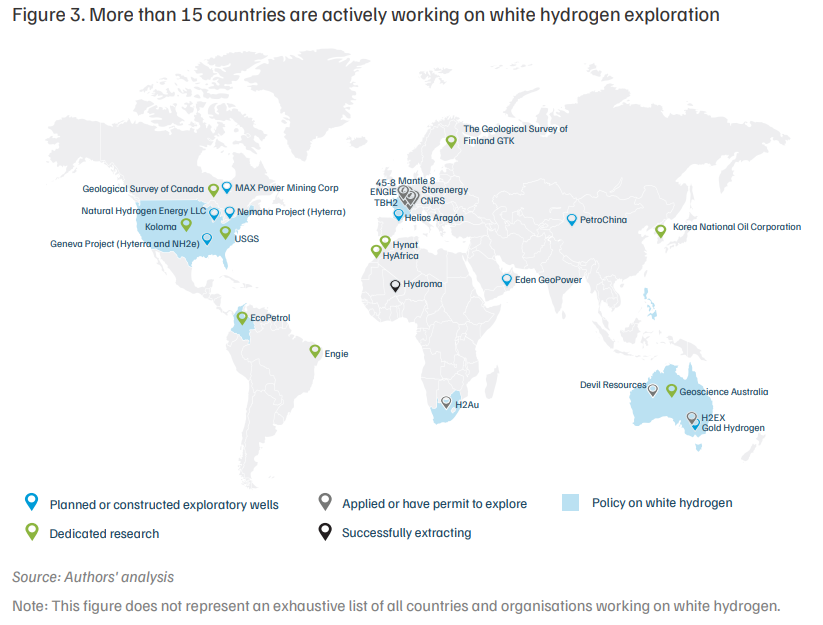
National regulatory frameworks and policy initiatives
Several countries, highlighted in blue in Figure 3, recognise white hydrogen as a potential energy source and have introduced regulations and policies to support its exploration, including mechanisms for issuing exploration permits and providing funding support.
Regulatory recognition
A small number of countries have formally recognised white hydrogen within their regulatory frameworks, acknowledging it as a key component of their energy transition strategies. For example, a provincial government in Australia has integrated white hydrogen into its regulatory framework (Department for Energy and Mining n.d.), and Colombia has recognised white hydrogen as a renewable energy source (Barragán 2024).
Other countries have not explicitly defined white hydrogen or established specific regulations for it. However, many governments regulate the development and exploration of white hydrogen technology under pre-existing structures governing other hydrocarbon extraction processes or mining activities. This approach has allowed early exploration to proceed without the need for entirely new regulatory systems. Whether formal legislation and regulations will come into effect as the technology and concept of white hydrogen mature remains to be seen.
States in the US, such as Kansas and Nebraska, have adopted such governance structures. For instance, Nebraska regulates hydrogen under its existing oil and gas regulations, which also cover other nonhydrocarbon gases. This allowed Natural Hydrogen Energy LLC to drill the first white hydrogen well in 2019 (EFIF 2025). Similarly, in Kansas, HyTerra drilled multiple wells near historically reported hydrogen wells without requiring a formal exploration permit (HyTerra 2024).
Multiple governments apply existing oil, gas, or mining laws and regulations to govern white hydrogen activities.
Funding support
The US and Australia have established public funding programmes to support research and exploration of white hydrogen. In 2024, the US Department of Energy (DOE) awarded USD 20 million to 16 different projects led by universities, national laboratories, and businesses through its Advanced Research Projects Agency–Energy (ARPA-E) programme (US DOE 2024). The initiative supports two research themes: ‘Exploratory Topic G: Production of Geologic Hydrogen Through Stimulated Mineralogical Processes’ and ‘Exploratory Topic H: Subsurface Engineering for Hydrogen Reservoir Management’. These research tracks aim to develop technologies for the synthetic production of white hydrogen and the management of white hydrogen reservoirs. Similarly, the Australian Government has allocated AUD 4 million to support white hydrogen exploration in Queensland (Queensland Government 2024).
Exploration permits
Several countries have granted exploration permits to companies to identify white hydrogen resources within their jurisdictions. Governments have either revised existing laws or issued specific licences to facilitate exploration. For example, TBH2, a white hydrogen production and exploration company in France, was granted a first-of-its-kind exclusive exploration permit by the French government. This permit grants the company exploration rights over a 225 sq km clearly demarcated area in the Pyrénées-Atlantiques region of France for a tenure of five years (Ministère de l’Économie 2023). Following this, the French company 45-8 Energy, in partnership with Storengy, received two white hydrogen exploration licences (exclusive research permits covering areas of 266 sq km and 691 sq km in the Landes and Pyrénées regions of France, respectively) (45-8 Energy n.d.b). In South Africa, the government issued a 100 per cent exclusive exploratory permit covering 15,000 sq km across three counties to H2Au, a UK-based production and exploration company (H2Au n.d.). Similarly, in Spain, a regional government granted a gas exploration permit covering 890 sq km to Helios Aragon for white hydrogen exploration (Helios Aragon 2021). The Philippines DOE has also received interest from international bidders after opening exploration bids for hydrogen resources in the country (Crismundo 2024). In addition, Koloma was awarded two government contracts to explore for white hydrogen in Central Luzon (NatH2Investing 2025).
Other countries have also taken regulatory steps to enable such research. In South Australia, the government amended the Petroleum and Geothermal Energy Regulations 2013 to classify hydrogen as a regulated compound, allowing the issuance of exploration permits (Department for Energy and Mining n.d.). Following this amendment, the state granted two five-year permits to Gold Hydrogen and H2EX, covering areas of over 7,000 sq km and 6,000 sq km, respectively (Department for Energy and Mining 2022).
These developments indicate a strong commitment by nations to advancing white hydrogen as a sustainable energy solution.
Government and public-sector-led research initiatives
Governments, through public institutions worldwide, are investing in surveying, mapping, geological field research, and technology development related to white hydrogen exploration, as shown in Figure 4. The specific activities under each category are discussed in this section. The groundwork laid by these institutions is critical for supporting the viability of commercial white hydrogen extraction and realising its potential benefits.
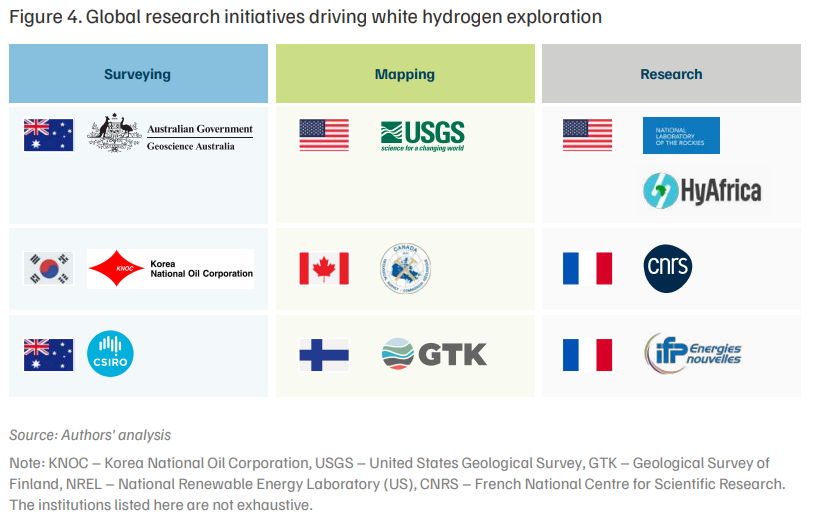
Surveying
Public institutions are conducting soil profiling studies and geological surveys to detect white hydrogen occurrences and measure hydrogen concentrations in countries such as South Korea and Australia. The Korea National Oil Corporation (KNOC) is leading soil profile studies to identify the presence of white hydrogen as part of its exploration efforts (KNOC n.d.). Similarly, Geoscience Australia is undertaking exploration activities by measuring hydrogen levels in soil profiles. It has also made significant progress by collecting and analysing gas samples from 470 wells across the country, revealing hydrogen concentrations of 0.0002–91.9 mol% (Boreham et al. 2021). Such efforts by public institutions can accelerate late-stage exploration by commercial players.
Mapping
National geological agencies are trying to identify regions with high hydrogen prospectivity in the US, Finland, and Canada. The US Geological Survey (USGS) has released a nationwide white hydrogen prospectivity map highlighting regions with favourable geological conditions for hydrogen generation and accumulation (USGS 2025). This map, described in detail in Box 1, was developed by integrating various geological and geophysical data layers based on the generation mechanisms discussed in Section 2. It also incorporates information on reservoir rocks and the potential for a site to retain white hydrogen via natural seals, thereby indicating areas with high hydrogen prospectivity. Similar efforts are underway in other countries as well, although not yet at the scale seen in the US. The Geological Survey of Finland (GTK) has published a national map showing measured hydrogen concentrations in gases from boreholes, either dissolved in groundwater or present as free gas (GTK 2024). In Canada, the national geological survey is developing a comprehensive database of potential white hydrogen deposits (Bakx 2024). These mapping initiatives play a crucial role in guiding further exploration and investment.
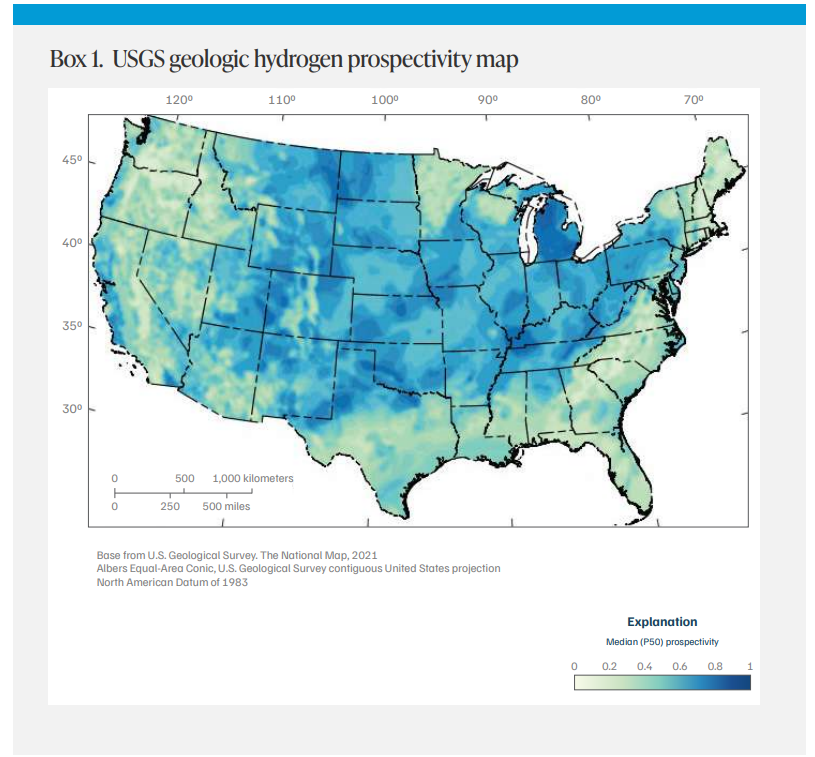
The USGS geologic hydrogen prospectivity map is a recently released, interactive, publicly available map launched in early 2025. As the first country-scale map of its kind, it is designed to guide research and exploration for white hydrogen in the US.
The map assesses white hydrogen potential by plotting several key geological variables and geophysical data layers. It models the occurrence of white hydrogen based on three essential components: a source, a reservoir, and a seal.
Key features of the USGS prospectivity dashboard:
• Integrated data layers: Includes layers representing known features, such as existing hydrogen and helium occurrences and isolated geothermal systems. These diverse geological datasets are integrated into a single accessible interface to support early-stage exploration insights.
• Mapped prospectivity regions by source: Identifies regions of potential hydrogen generation and accumulation, including deep sources, radiolysis zones, serpentinisation zones, and other subsurface structures that may release hydrogen.
• Analytical tools: Provides tools for zooming, filtering, and comparing geological variables to evaluate prospectivity at national and regional scales.
Although the dashboard does not specify commercial extraction potential, it represents an important early step in establishing a scientific foundation for white hydrogen exploration in the US. As the field evolves, these prospectivity insights are expected to inform future surveys, test wells, and pilot projects.
Source: USGS (United States Geological Survey). 2025. “USGS Releases First-Ever Map of Potential for Geologic Hydrogen in US.” United States Geological Survey, January 16.
Research
In addition to surveying and mapping, public-sector research institutions are actively investigating the mechanisms responsible for white hydrogen generation and migration. Furthermore, some countries are conducting economic, environmental, and operational feasibility studies for white hydrogen extraction.
Early reports indicate that researchers affiliated with the CNRS in France have identified a possible accumulation of white hydrogen in the Lorraine region, with a preliminary estimate of up to 46 million tonnes. However, these assessments remain preliminary and require further verification. The organisation continues to study white hydrogen generation processes and develop exploration technologies (The Economic Times 2025; Pironon and de Donato 2023). In the US, the National Renewable Energy Laboratory (NREL) has been selected to participate in a USD 1.6 million project to study the feasibility of large-scale white hydrogen extraction. Similarly, a European Union (EU)-funded project, HyAfrica, is investigating the potential for white hydrogen in Morocco, Mozambique, South Africa, and Togo. This initiative also aims to evaluate the potential socio-economic impact if successfully deployed (HyAfrica n.d.).
Private-sector-led initiatives
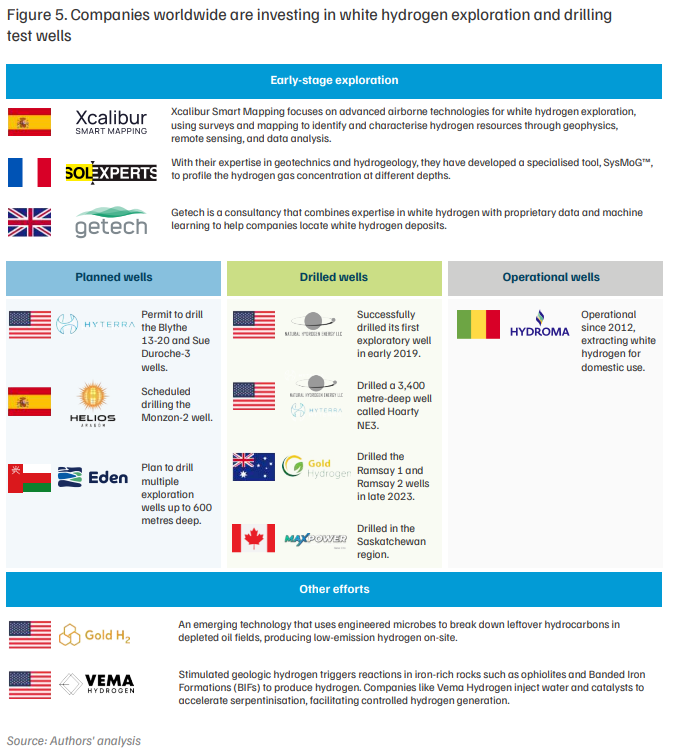
The private sector has a key role to play in scaling up white hydrogen production at a commercial scale. In this regard, companies worldwide are already investing in white hydrogen exploration and drilling test wells. Figure 5 highlights the progress made by market players across the value chain, spanning early-stage exploration to well operation. Innovative efforts to stimulate white hydrogen production are particularly noteworthy. This section also discusses the technologies, activities, and mobilisation of private capital across the value chain.
Early-stage exploration
Many companies globally are spearheading early-stage exploration of white hydrogen using advanced geophysical tools and data analytics in various ways.
• Remote sensing and airborne technologies: Xcalibur Smart Mapping, a Spanish company, employs airborne technologies, remote sensing, and geophysical surveys to identify subsurface natural resources. The company has supported other companies, such as Koloma, HyTerra, and Gold Hydrogen, in their exploration programmes (Xcalibur Smart Mapping n.d.).
• Mineral-based identification of hydrogen reserves through machine learning: Getech, a UK consultancy firm, assists its clients in identifying hydrogen reserves in the vicinity of various minerals, such as uranium-bearing granites, olivine, and pyroxene, using proprietary datasets and machine learning techniques (Getech n.d.).
• Subsurface gas monitoring tools: Solexperts, a French company, designs specialised gas monitoring tools, such as SysMog, to monitor and measure dissolved and free hydrogen gas at varying depths, providing critical subsurface data for exploration programmes (Solexperts d.b). The company was also instrumental in the discovery of 46 Mt of potential white hydrogen reserves in Lorraine, France (Pironon and de Donato 2023).
Planned wells
Several companies are transitioning from prospecting to drilling, with planned wells across North America, Europe, and Africa. MAX Power Mining Corp has scheduled drilling operations in the Saskatchewan region of Canada, targeting geological formations in the Canadian prairies for potential hydrogen accumulations (MAX Power Mining Corp 2024). In the US, HyTerra has obtained permits from the state commission to drill exploratory wells at two sites, Blythe and Sue Duroche. These planned wells are situated near a historic well, which recorded 92 per cent hydrogen and 3 per cent helium (HyTerra n.d.). Spain’s Helios Aragon is set to commence work on the Monzón-2 well, located near another historic well, Monzón-1, which documented hydrogen in the 1960s. The Monzón field reservoir, into which the wells will be drilled, is estimated to contain 1.1 Mt of recoverable white hydrogen (Helios Aragon n.d.). Meanwhile, Eden, operating in Oman, is planning to drill multiple test wells up to 600 metres deep to assess the presence and viability of white hydrogen (Eden n.d.).
Drilled wells
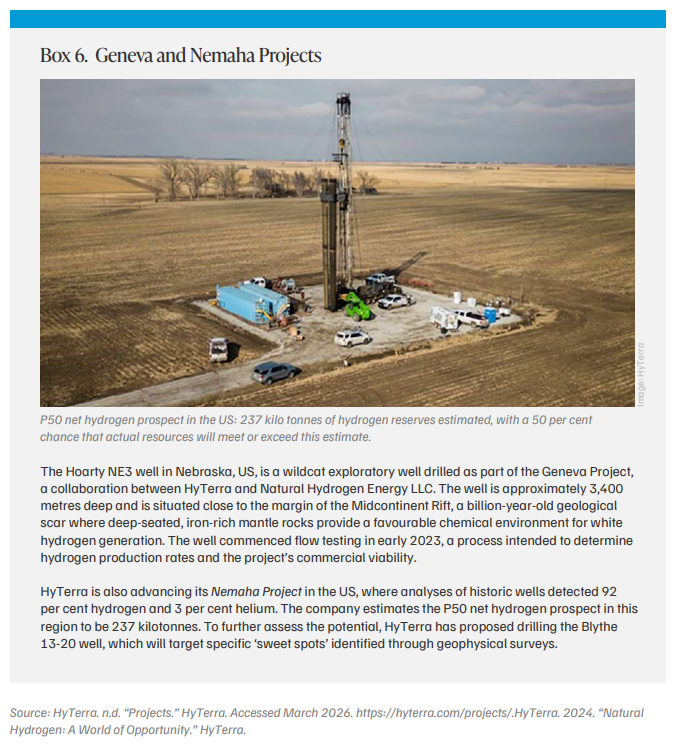
The drilling phase signifies tangible progress by established players as they transition from planning to actual subsurface investigation. Natural Hydrogen Energy LLC drilled the first known hydrogen-focused wildcat well (a term used for high-risk, high-reward drilling in previously unproven territory) in the US in early 2019 (H2EX n.d.). In a joint venture with HyTerra, the company also drilled a 3,400-metre-deep Hoarty NE3 well to assess hydrogen flow rates and geological characteristics in the region. Samples taken from this well indicated helium concentrations of up to 12.8 per cent and hydrogen concentrations of up to 44 per cent. They plan to conduct further assessments to better understand the true potential of hydrogen and helium (HyTerra n.d.). In Australia, Gold Hydrogen completed the drilling of the Ramsay 1 and 2 wells in late 2023. Both wells reported hydrogen concentrations of up to 86 per cent and helium concentrations of up to 6.8 per cent (Gold Hydrogen n.d.).
These exploratory wells allow companies to gain critical insights into subsurface hydrogen systems, including flow rates, gas purity, geological structures, and the mechanisms of hydrogen generation. This information helps assess commercial viability and guides future development strategies.
Operational wells
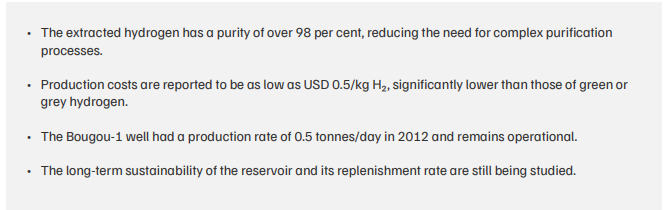
Mali remains the only case of an operational and stable white hydrogen production well. Hydroma has operated this well since 2012. It continuously extracts hydrogen and supplies it for local energy needs, demonstrating that white hydrogen can be a viable low-emission energy source under appropriate geological conditions. This project is detailed in Box 2.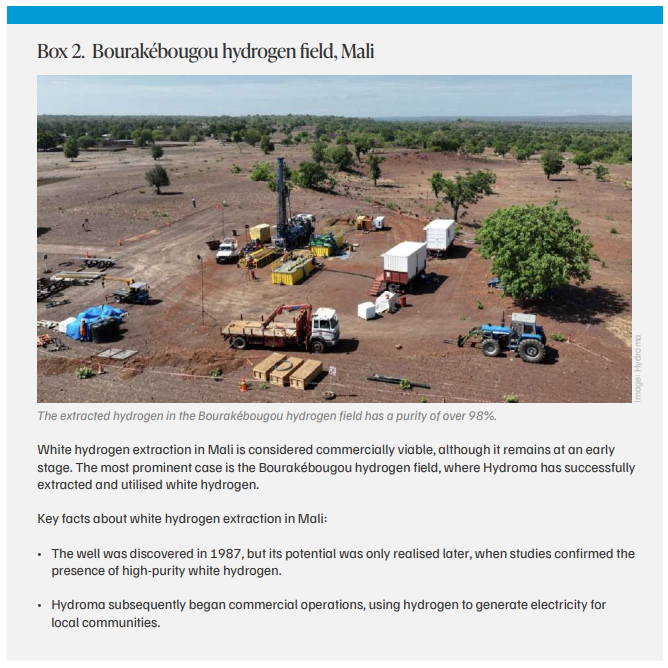
Source: Prinzhofer, A., Tahara Cissé, C. S., & Diallo, A. B. (2018). Discovery of a large accumulation of natural hydrogen in Bourakebougou (Mali). International Journal of Hydrogen Energy. Hydroma. n.d. “Natural Hydrogen.” Hydroma. Accessed March 2026. https://hydroma.ca/activities-natural-hydrogen/. Rystad Energy. 2024. “The White Gold Rush and the Pursuit of Natural Hydrogen.” https://www.rystadenergy.com/news/white-gold-rush-pursuit-natural-hydrogen.
Stimulated geological hydrogen production
In addition to naturally occurring hydrogen, some companies are exploring the potential of stimulated geological hydrogen, which involves artificially generating hydrogen using specific geological formations (Patonia 2025). Cemvita’s Gold Hydrogen Initiative employs engineered microbes that break down residual hydrocarbons in wells to produce hydrogen from depleted oil fields (Haider 2022). Similarly, Vema Hydrogen, which recently raised USD 13 million in seed funding, injects water and a catalyst into iron-rich rocks to generate hydrogen through the process of serpentinisation (Vema Hydrogen n.d.). Another company, Eden, utilises a technique called electrical reservoir stimulation to optimise hydrogen-generating mineral reactions and enhance production. This technology creates fractures in rocks using electric pulses to increase the surface area available for hydrogen-generating reactions (Eden n.d.).
While these approaches expand the potential resource base, stimulated geological hydrogen also raises concerns. Unlike naturally occurring hydrogen, these methods rely on active subsurface intervention, introducing uncertainties regarding long-term environmental impacts.
White hydrogen exploration strategies are expected to be similar to those used in the oil and gas industry, with geological surveys playing a crucial role in identifying potential hydrogenrich formations. These formations are often located near ancient basement complexes–hard crystalline rocks that form the deep foundation of the Earth’s crust–and seismically active regions.
Figure 6 shows the key steps currently used to explore and extract white hydrogen. The following sections can help Indian stakeholders understand the applicability of existing exploration approaches in Indian context.
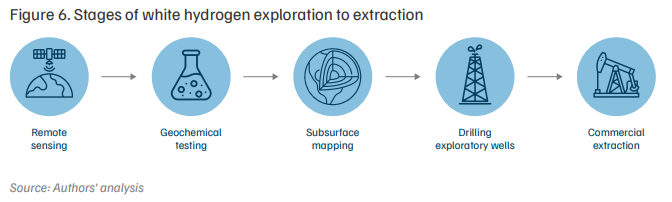
Remote sensing and geophysical mapping techniques
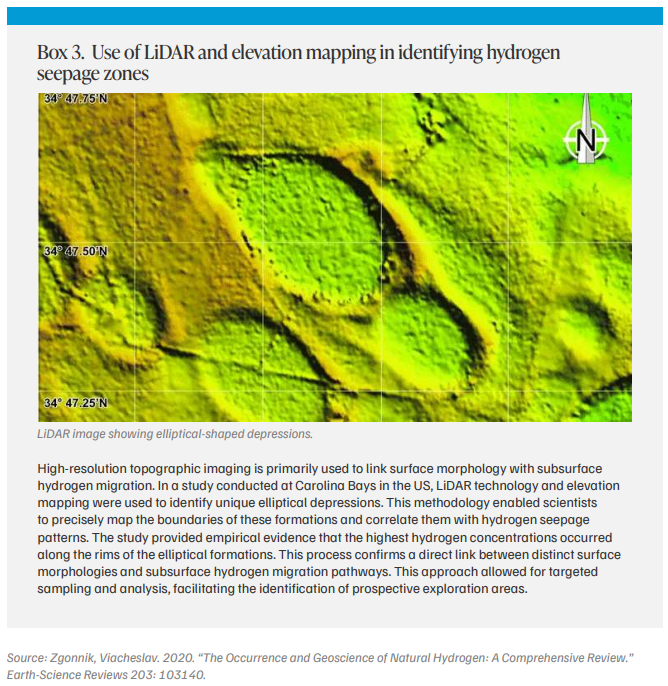
Remote sensing involves detecting specific geological and geomorphological features to identify potential white hydrogen reservoirs. These features are directly linked to active hydrogen seepage. One of the most distinctive indicators is the presence of ‘fairy circles’–circular arid grass formations associated with high hydrogen soil gas measurements (Moretti et al. 2021). The formation of these fairy circles is hypothesised to result from hydrogen gas altering soil chemistry and negatively affecting the region’s vegetation, thereby producing circular formations. These formations can be analysed using statistical surface geomorphology techniques alongside aerial photography, Light Detection and Ranging (LiDAR), digital elevation models, and satellite imagery to efficiently screen promising exploration targets in the early stages (Bendall 2022; Séjourné et al. 2024).
Other geological markers for hydrogen potential include subsurface geological structures. Geophysical surveys are used to characterise subsurface geological structures, such as those mentioned in Section 2, for hydrogen exploration. Section 5.3 discusses in greater detail the various tools and techniques that can be employed to identify these structures.
Geochemical testing and monitoring
Geochemical testing and monitoring activities–involving geochemical exploration tools, hydrogen-sensing gas probes, and geographical surveys–are necessary to evaluate potential sites. For further evaluation and evidence generation, continuous monitoring of soil, drill holes, and experimental mines has proven effective (Zgonnik 2020). A key challenge at this stage is that hydrogen is a highly reactive molecule that interacts with rocks and soil to form other compounds. Consequently, hydrogen-containing gases and compounds can serve as secondary indications for identifying hydrogen-rich locations (Bendall 2022).
To accurately assess hydrogen deposits, companies and research institutions are developing specialised hydrogen-detection probes and analytical tools. These technologies help verify hydrogen concentration levels, enabling precise evaluation of potential reservoirs before advancing to extraction.
Source: Zgonnik, Viacheslav. 2020. “The Occurrence and Geoscience of Natural Hydrogen: A Comprehensive Review.” Earth-Science Reviews 203: 103140.
Subsurface geophysical mapping
Subsurface geophysical imaging involves the use of advanced technologies to detect, characterise, and analyse underground geological structures, such as reservoirs and fault lines. This technique employs methods such as gravity gradiometry, magnetic surveys, and seismic surveys to understand the composition and structure of subsurface formations without drilling. Such approaches can help identify white hydrogen reservoirs and migration pathways. Magnetic surveys, for example, can identify rock types associated with hydrogen generation, such as ultramafic rocks. Gravity gradiometry can help identify high-density rocks, including ophiolite complexes and other relevant lithologies. This combination of geophysical methods has been employed in numerous exploration case studies, such as those of Koloma, HyTerra, and Gold Hydrogen, described in Section 4.3.
In 2023, Gold Hydrogen, an Australian company, led an advanced exploration campaign for white hydrogen using subsurface geophysical mapping techniques in South Australia’s Yorke Peninsula. The campaign focused on the Ramsay Project (PEL 687), an area with historical indications of hydrogen presence (Department for Energy and Mining 2025). The company carried out an extensive exploration programme using seismic reprocessing and airborne surveys across their licensed exploration areas.
Key activities:
Early-stage estimates suggest that this project holds a prospective resource estimate of 1.3 million metric tonnes of hydrogen and 96 billion cubic feet of helium. For context, India consumes 2.47 billion cubic feet of helium annually, accounting for 2.3 per cent of global consumption. The company is now planning to drill multiple appraisal wells across other zones within its licensed areas to conduct further testing.
Source: Xcalibur Smart Mapping. n.d. “Natural Hydrogen Projects Xcalibur Smart Mapping.” Xcalibur Smart Mapping. Accessed March 2026. and Gold Hydrogen. n.d. “The Ramsay Project Is Investigating Naturally Occurring Hydrogen.” Gold Hydrogen.
Drilling
Drilling exploratory wells is a crucial step in white hydrogen exploration. It allows researchers to confirm the presence of hydrogen and estimate its extractable volume. This process provides direct subsurface data, enabling the determination of the feasibility of commercial extraction. As detailed in Section 4.3, wells for white hydrogen exploration have already been drilled in the US and Australia.
Commercial extraction processes
The final stage of white hydrogen exploration focuses on developing commercially viable extraction methods from identified reservoirs. As this remains an ongoing area of R&D, continued advancements in drilling, extraction, and storage technologies will be critical to enabling largescale hydrogen production.
India is at a critical stage in its energy transition journey, seeking to achieve energy independence or self-reliance by 2047 and reach net-zero emissions by 2070 (GoI 2023). Hydrogen, especially green hydrogen, is expected to play an important role in achieving these goals. The discovery of white hydrogen could, however, significantly accelerate India’s transition to a low-carbon economy while providing an additional naturally occurring clean energy source.
India has the potential to hold white hydrogen reserves due to the prevalence of suitable geological structures. A preliminary screening indicates that several regions in India contain the combination of source rocks, migration pathways, and potential traps necessary for a white hydrogen reserve to develop. Although these resources remain unquantified, researchers have identified probable regions based on known geological processes, field observations, and characteristics of sites where white hydrogen has been identified internationally. Figure 7 indicates the probable regions in India where investigations could begin.
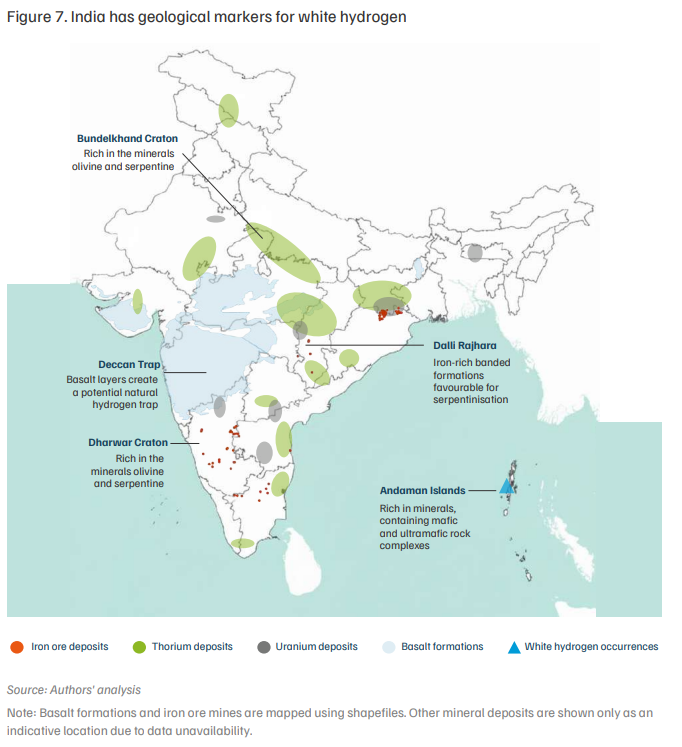
We identify probable regions where white hydrogen may occur based on the locations of associated geological regions or rock structures, hydrogen migration pathways, and hydrogen trapping environments observed across India’s landmass.
Geological regions or rock structures
Ultramafic and mafic rock complexes: Mafic or ultramafic minerals or rocks are silicate minerals or igneous rocks rich in magnesium and iron. These rock terrains generate hydrogen through the process of serpentinisation. Although such complexes are high-priority exploration targets, they are not explicitly shown on our map because there is no single consolidated nationwide map indicating their distribution. Instead, we have identified regions in India that host these rock complexes:
• Ophiolite complexes: These minerals contain mafic and ultramafic rock complexes. In India, prospective sites include the ophiolites belts in the Andaman and Nicobar Islands, as well as the Himalayan regions of Ladakh, Manipur, and Nagaland. A study by the Geological Survey of India (GSI) has detected white hydrogen in the Andaman Islands (GSI 2025).
• Cratonic rocks: Cratonic rocks are ancient, stable, crystalline basement rocks found in the interior of the Earth’s crust. India has cratonic rocks in the form of volcanic–sedimentary complexes rich in the minerals olivine and serpentine, which are conducive to hydrogen generation. The Bundelkhand Craton, with its greenstone belts in Uttar Pradesh and Madhya Pradesh, and the Dharwar Craton in Karnataka and Maharashtra are instances of craton rocks in India (Kala et al. 2023).
• Iron ore belts: The iron ore belts of Odisha, Jharkhand, Chhattisgarh, Karnataka, and Goa contain BIFs that can undergo serpentinisation and iron–redox reactions, potentially generating hydrogen (Krishnamurthy 2022; Bendall 2022).
Uranium and thorium-rich regions: Hydrogen can also be generated through the radiolysis of water in rocks containing uranium and thorium. The presence of these deposits could be a secondary indicator of white hydrogen. In India, the following areas are considered prospective due to high concentrations of these radioactive elements:
• Uranium deposits: Rajasthan, the Mahadek Basin in Meghalaya, the Singbhum Shear Zone in Jharkhand, the Bhima Basin in Karnataka, and the Cuddapah Basin in Andhra Pradesh and Telangana host uranium deposits (Asnani n.d.).
• Thorium deposits: India holds significant reserves of thorium in Odisha, Andhra Pradesh, Tamil Nadu, Kerala, West Bengal, and Jharkhand (Department of Atomic Energy 2014).
Hydrothermal systems: Hot water springs indicate active hydrothermal circulation and the potential for water–rock reactions. A study has revealed the potential for hydrogen in the hot springs of Uttarakhand, suggesting that Indian geothermal systems may be releasing detectable amounts of hydrogen at the surface (Kalyanaraman 2025). Similar hydrothermal environments in India offer comparable conditions and could serve as potential starting points for exploration. However, since these are small-scale sites, locating them regionally remains challenging.
Hydrogen can accumulate only where geological conditions prevent its rapid escape to the surface.
Migration pathways
For hydrogen generated at depth to accumulate in significant quantities, it must migrate through the subsurface. India contains several structural features, such as faults and fractured basement rocks, that can facilitate this migration. Tectonically active areas and fault lines have been historically associated with extremely high hydrogen concentrations and therefore represent critical zones for the generation and migration of white hydrogen (Zgonnik 2020). For example, in India, the Narmada Rift and the Godavari Rift are characterised by deep fault systems that enhance permeability and connect surface pathways with reactive mafic and ultramafic rocks at depth (Boruah et al. 2025). Similar faulted terrains occur across various regions of the country, highlighting the broader potential for hydrogen migration and accumulation.
Potential trapping environments
Hydrogen can accumulate only where geological conditions prevent its rapid escape to the surface. Certain regions in India, such as the Deccan Traps, may offer such trapping environments. The Deccan Traps consist of multiple fractured and impermeable basalt layers that create a reservoir seal, which is favourable for hydrogen migration and accumulation (Kala et al. 2023).
While early indicators–such as hydrogen in the Andaman ophiolites and Uttarakhand hot springs–are promising, systematic field surveys, geochemical sampling, geophysical mapping, and exploratory drilling will be required to assess the actual resource potential.
While white hydrogen offers significant environmental, economic, and energy security benefits, a few challenges must be addressed before it can be considered a major energy source. As confidence in the concept of white hydrogen grows, appropriate and timely action will be required to prepare India’s economy to utilise white hydrogen as an energy source. A few key challenges that will require intervention are:
• Limited geological understanding and data on white hydrogen: There is currently limited knowledge regarding the potential locations of white hydrogen in India. Key geological formations, such as rift zones and ultramafic rocks, remain largely unexplored, and there is insufficient geological mapping and survey data to guide exploration efforts.
• Low technological readiness: Technical challenges include identifying viable hydrogen deposits, developing suitable drilling techniques, and creating effective extraction methods. Technologies for white hydrogen exploration are still evolving, and domestic companies have yet to demonstrate technological capabilities, especially in identifying hydrogen deposits. Furthermore, limited historical data and research on white hydrogen deposits make it challenging to accurately assess reserves, predict flow rates, and understand long-term production potential. Further, when adequate white hydrogen resources are identified, India will need to complement it with suitable storage and transmission infrastructure.
• Increased subsurface and environmental risks: White hydrogen is highly diffusive and prone to leakage from reservoirs and infrastructure, with potential indirect warming effects from fugitive gases (Pearce 2024). In addition, drilling and other subsurface interventions may induce seismicity, while surface seepage may degrade soil quality and reduce vegetation. These risks highlight the need for comprehensive monitoring studies.
• Absence of policy recognition, support, and regulation: Current national policies focus exclusively on green hydrogen, including definitions and incentives. White hydrogen is not included in strategic plans, further delaying early-stage exploration. As white hydrogen is a relatively new energy source currently being explored commercially worldwide, there are no clear regulatory frameworks for leasing, royalties, or ownership of white hydrogen acreage.
• Uncertain capacities of white hydrogen reserves: The world’s only operational white hydrogen unit in Mali has a production capacity of about 0.5 tonnes per day, which is negligible when compared with India’s annual hydrogen consumption of around 5.6 million tonnes per annum (MTPA) (CFLI India and CEEW 2024). Similarly, the Nemaha Project in the US reports a P50 net hydrogen prospect of only 237 kilotonnes per annum (KTPA), while early estimates from France’s Lorraine region suggest a much larger potential reserve of around 46 Mt. Given the current uncertainty in accurately estimating white hydrogen reserves, identifying appropriate use cases in the immediate vicinity of production sites remains challenging. In the near term, early discoveries are likely to be decentralised and small-scale, necessitating a clear strategy to identify potential local use cases, such as on-site power generation, microgrids, or supply to nearby industrial clusters. At the same time, if significant reserves are discovered, it will be important to map potential large-scale demand, including refineries, ammonia production, and other hard-to-abate industrial applications, to ensure alignment between resource availability and infrastructure planning.
White hydrogen could offer environmental, economic, and strategic benefits to India’s economy and complement green hydrogen demand. Multiple other countries are already advancing white hydrogen initiatives, comprising geological research, technology development, surveying and exploration, and extraction through private- and public-sector activities.
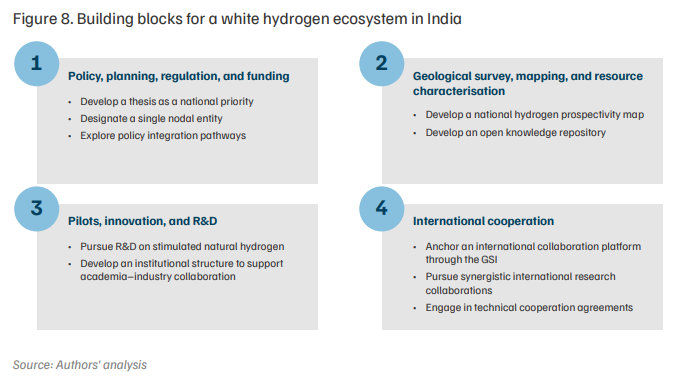
Given the nascent nature of the sector, India needs to immediately structure its approach to white hydrogen along two parallel tracks. First, government entities need to develop a clear, integrated, and sequential policy framework, supported by appropriate regulations, institutional capacities, and funding mechanisms. Second, research institutions must accelerate efforts in surveying, mapping, geological resource characterisation, and scientific validation. Once these building blocks are in place, industrial developers, energy companies, and hydrogen start-ups will be better positioned to participate in the sector and leverage white hydrogen as a clean energy resource. Figure 8 summarises our policy and R&D-related recommendations.
Policy, regulation, planning, and funding by government entities
Jurisdictionally, several government entities in India could anchor the development of white hydrogen. White hydrogen could be integrated into the portfolio of the Ministry of New and Renewable Energy (MNRE), which leads the National Green Hydrogen Mission (NGHM) due to its adjacency. Alternatively, it could fall under the Ministry of Petroleum and Natural Gas (MoPNG), which oversees all matters related to hydrocarbons in India. Further, the Ministry of Mines (MoM)–under which the GSI operates–and the Ministry of Environment, Forest and Climate Change (MoEFCC) with its overall mandate on climate change, will need to play vital supporting roles. In addition to central ministries, various government regulators and entities will need to support relevant functions, including the Directorate General of Hydrocarbons (DGH), the Petroleum and Natural Gas Regulatory Board (PNGRB), the Petroleum and Explosives Safety Organisation (PESO), the Department of Science and Technology (DST), National Institution for Transforming India (NITI) Aayog, and relevant state government entities.
We recommend that government entities adopt the following sequential approach to advance white hydrogen in India.
• Develop a thesis on white hydrogen as a national priority: NITI Aayog should assess the potential and attractiveness of white hydrogen for India’s economy through a rigorous multidimensional study. This thesis should examine the technical proof of concept for white hydrogen extraction, as well as the practicalities of its transportation and end use, drawing on global experience. It should also include indicative assessments and mapping of white hydrogen availability based on existing research. To expedite this process, the ONGC and Oil India Ltd should be encouraged to share existing well data and findings. The study should also evaluate the potential to leverage existing technical infrastructure, such as calibrating gas chromatography systems to detect hydrogen and helium signals alongside traditional C1–C5 gases during gas exploration. In parallel, the MoEFCC should develop an environmental risk assessment framework for white hydrogen. Based on these findings, NITI Aayog should also deliberate on a conditional definition of white hydrogen as a renewable energy source. Any policy intervention on white hydrogen, including a potential standalone mission, should only be developed based on this thesis.
• Designate a single nodal entity: The Government of India could appoint a nodal agency or ministry to oversee white hydrogen exploration and development. The assessment by NITI Aayog discussed above could inform this appointment. The nodal agency, in coordination with NITI Aayog, can help develop a clear roadmap for developing white hydrogen as an energy resource and coordinate efforts between geological surveys, energy regulators, research institutions, funding agencies, PSUs and private players. This approach would promote collaboration among key stakeholders, streamline decision-making, and ensure a unified strategy. Such a whole-of-government approach with a single institutional anchor is already adopted in the National Green Hydrogen Mission in India (MNRE 2023a).
• Explore policy integration pathways: India could either integrate white hydrogen as an energy resource within its existing policy framework or develop a dedicated new policy for the resource. The following approaches could be explored to enable policy-aligned development of a white hydrogen ecosystem in India:
» Update the Hydrocarbon Exploration and Licensing Policy (HELP) to recognise white hydrogen: The MoPNG, through the DGH, could expand the scope of existing hydrocarbon regulations of the HELP to include white hydrogen. Such a mandate expansion would require redesigning fit-for-purpose regulations and building institutional capacity to govern white hydrogen. A similar approach has allowed private companies in the US to begin commercial drilling for white hydrogen. The inclusion of white hydrogen under HELP could also potentially address legal and jurisdictional coordination issues that may arise between the central and state governments, such as land access, permits, benefit sharing, and involvement of central- or state-owned PSUs.
» Develop safety and environmental standards: The MoPNG, in coordination with agencies like the BIS and PESO, should develop or adapt the existing international technical standards for exploration wells, production systems, metering, storage, pipelines, leak detection, and well abandonment. Existing standards applicable to the oil and gas industry could also be adapted with appropriate modifications required for hydrogen. Such standards must also include hydrogen-specific safety and environmental protection norms in regulation rather than voluntary guidance.
» License acreage for white hydrogen: The Government of India, through the MoPNG or the MoM, could license acreage for white hydrogen exploration by leasing land to third parties. This approach could attract private-sector investment and technical expertise while minimising the financial burden. A similar approach is followed in the country’s mineral, oil, and gas exploration sectors. The licensing regime should clearly define exploration and production rights, royalty structures, and intellectual property (IP) ownership.
» Provide incentives for early-stage exploration: The nodal agency should develop suitable incentives for early-stage explorers of white hydrogen through mechanisms such as pre-competitive exploration credits or reduced fees during pilot phases to lower initial risk for explorers.
Geological survey, mapping, and resource characterisation
To date, no large-scale studies have been conducted to assess and estimate white hydrogen reserves in India. Addressing this gap should be a priority for the designated nodal agency. We present the following actions for research institutions to develop the concept of white hydrogen and generate knowledge products to support the ecosystem.
• Develop a national hydrogen prospectivity map: The GSI, in coordination with the nodal agency, should promote dedicated research to identify and map potential white hydrogen deposits. Remote sensing and geophysical mapping techniques, utilising LiDAR and satellite imaging technologies (described in Section 5.1), should first be employed to identify highprobability areas for white hydrogen occurrence. This should be followed by soil sampling, geochemical testing, and digitally simulated subsurface mapping in selected locations. The GSI should also revisit legacy data from oil and gas fields, particularly those that have indicated the presence of hydrogen or helium, and take this into consideration in the evaluation. Through these research initiatives, the GSI should develop a comprehensive hydrogen prospectivity map for India that can support future exploration efforts.
• Develop an open knowledge repository: The GSI should develop knowledge products, including dashboards, prospectivity maps, technical brochures, and researcher directories, to improve access to subsurface geological and geophysical data for researchers and private entities. These knowledge products should also include non-confidential data from sites owned by energy and mining companies. White hydrogen should also be integrated into various existing national resource atlases to potentially help attract new investments in white hydrogen exploration. Private entities could also be allowed and encouraged to participate in developing an open knowledge repository.
Pilots, innovation, and research and development
Given the high degree of geological uncertainty, limited empirical evidence, and nascent state of global experience, India could accelerate technological developments through targeted R&D and innovation-focused support. We present the following recommendations to progressively reduce technical, commercial, and regulatory uncertainties while supporting the development of indigenous technologies before large-scale deployment is considered.
• R&D on stimulated white hydrogen: Indian research institutions should explore the potential for artificially generating hydrogen through stimulated geological formations, alongside efforts to study naturally occurring hydrogen. Research institutes could use the concepts presented in Section 4.3 to stimulate hydrogen generation, including the use of specialised microbes, catalysing hydrochemical reactions in iron-rich rocks, and applying electric pulses to artificially create traps for capturing subsurface hydrogen.
• Develop an institutional structure to support academia–industry collaboration: India should develop an institutional structure to systematically and effectively enable research, testing, and knowledge dissemination. A public-private partnership (PPP) model with a private entity leading the initiative, with support from one of India’s technological universities or scientific research institutions with the requisite facilities, could be considered. An outcome-based or milestone-based payout structure could be developed to embed incentives for the entity to deliver on key R&D objectives. The entity could also provide shared infrastructure for testing, data repositories for geological and exploration data, and structured industry-funded research programmes.
International cooperation
Given the early stage of white hydrogen extraction globally and India’s limited domestic empirical base, targeted international collaboration can accelerate learning while avoiding duplication of effort. At this stage, India should prioritise research- and capability-oriented cooperation rather than commercial deployment. International collaboration should be anchored in public research institutions, geological surveys, and regulatory bodies with clearly defined knowledge-transfer objectives. We recommend the following actions to leverage international collaboration effectively (Table 2).
| S.No. | Collaboration topic | Indicative partner countries and organisations |
|---|---|---|
| 1. | Hydrogen prospectivity mapping and geophysical methodologies; geological data integration and open-access platforms |
|
| 2. | Hydrogen generation mechanisms (serpentinisation, radiolysis) |
|
| 3. | Stimulated geological hydrogen |
|
| 4. | Subsurface monitoring and exploration technologies |
|
| 5. | Regulatory design, safety standards, and permitting; early-stage exploration and drilling learnings |
|
Source: Authors’ analysis
Note: The entities listed in the table are indicative examples of currently active organisations in these specific domains and do not represent an exhaustive list of potential collaborators available globally.
• Anchor an international collaboration platform under the GSI: The GSI should anchor a technical, non-commercial forum focused on subsurface science, exploration methodologies, data standards, and environmental and safety considerations. Through this platform, the GSI can pursue formal collaborations with peer institutions, such as the USGS, the Geological Survey of Finland, and the CNRS, as well as relevant universities and national laboratories. The platform should facilitate structured outputs, including joint research projects, shared pilot studies, researcher exchanges, and co-authored technical publications.
• Pursue synergistic international research collaborations: India should collaborate with countries advancing public-sector geological surveying and hydrogen prospectivity mapping. Partnerships with France, the US, and Finland can support the development of hydrogen prospectivity maps for India using established methodologies. India should also pursue joint research on hydrogen generation mechanisms and stimulated geological hydrogen. Collaboration with France can support research on serpentinisation, radiolysis, reservoir behaviour, and monitoring technologies, while cooperation with Australia and the US can build expertise in subsurface reservoir engineering. In return, India offers access to diverse and underexplored geological settings, including cratonic terrains, ophiolites, large basalt provinces, and radiolysis-prone formations, thereby strengthening the robustness and transferability of global prospectivity models and improving understanding of subsurface hydrogen generation processes.
• Engage in technical cooperation agreements: India should selectively engage with countries with experience in early-stage exploration and drilling, such as Australia, the US, and Spain, to draw lessons on regulatory design, safety standards, and permitting frameworks. Government-to-government technical cooperation agreements could facilitate structured exchanges between regulators, geological surveys, and safety agencies, supporting the development of proportionate and fit-for-purpose regulatory frameworks in India.
Conclusion
White hydrogen presents a credible, though still uncertain, opportunity to complement India’s clean hydrogen ambitions. Global experience demonstrates promising environmental and cost advantages; however, significant gaps in geological certainty, technological readiness, and governance frameworks exist. For India, the priority in the initial phase should be structured learning rather than deployment. Targeted geological surveying, focused R&D, early-stage pilots, and selective international collaboration can progressively de-risk the resource. A sequenced approach, anchored by strong public institutions and aligned policy signals, will be essential to determine whether white hydrogen can meaningfully contribute to India’s energy security, decarbonisation, and long-term industrial strategy.
This CEEW issue brief assesses white hydrogen, also called natural or geological hydrogen, which forms through geological processes and is extracted directly from the subsurface. It finds early evidence of low cost, at USD 0.5 to 3.1 per kg, low carbon intensity, more than 15 countries exploring, and unquantified geological markers across India. It recommends a national thesis, geological screening, targeted research, and international cooperation.
White hydrogen is molecular hydrogen that forms underground through natural geological processes and accumulates in subsurface formations, from where it can be extracted directly. Green hydrogen is manufactured by splitting water using renewable electricity in an electrolyser. The practical difference is the input: white hydrogen requires no electrolyser, no renewable generation, and almost no water, so its energy and material requirements are far lower. It is also known as natural or geological hydrogen.
Unlike fossil fuels, which exist as a finite stock, white hydrogen is generated continuously by geological processes. Five mechanisms account for most of it: serpentinisation of ultrabasic rocks and oxidoreduction of iron-rich sedimentary rocks, both of which release hydrogen through mineral-water reactions; late maturation of organic matter in coal and shale; radiolysis driven by the decay of uranium, thorium, and potassium; and degassing from the deep mantle. Colombia has already recognised it as a renewable energy source.
India has the geological conditions associated with it, and one confirmed detection. The Geological Survey of India reported natural hydrogen from the South Andaman ophiolite complex in April 2025, and a separate study indicates hydrogen potential in the hot springs of Uttarakhand. Beyond these, preliminary screening identifies source rocks, migration pathways, and trapping environments across peninsular, central, and southern India. No large-scale study has yet assessed or estimated Indian reserves, so the resource size is unknown.
Reported and estimated costs range from USD 0.5 to 3.1 per kg of hydrogen, against USD 3.5 to 5 per kg for green hydrogen. The lower end comes from the only commercially operational project, in Mali, and from a Stanford University analysis for the United States; a CSIRO Energy case study in Australia estimates USD 1.99 to 3.13 per kg. These are early figures drawn from small or prospective operations, and large-scale production costs remain uncertain. Co-extracting helium could improve project economics.
How Secure is India’s Energy Future?
Unlocking the Potential for a Gas-Based Economy in India
Advancing India’s Green Steel Transition
CO₂ Pipeline Network for Carbon Capture and Storage in India
Bharat Cleantech Manufacturing Platform: Green Hydrogen Indigenisation Pathways