Overview
India’s shift towards electric urban freight is often discussed in terms of vehicle costs, charging infrastructure, and operational efficiency. But how drivers perceive electric vehicles may also matter.
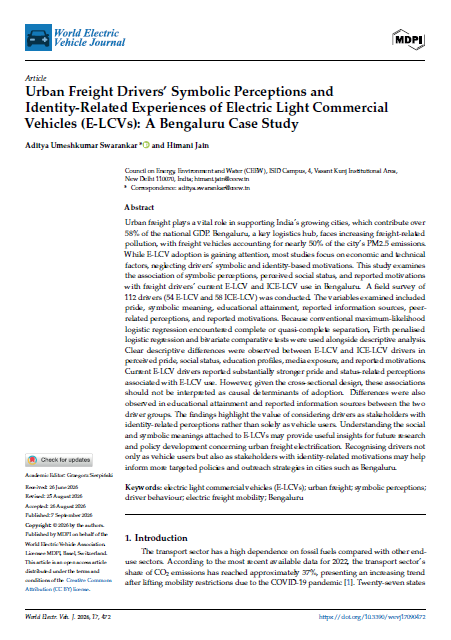
This study examines the symbolic perceptions and identity-related experiences of urban freight drivers using electric light commercial vehicles (E-LCVs) and internal combustion engine light commercial vehicles (ICE-LCVs) in Bengaluru. Based on a field survey of 112 drivers, the research explores differences in pride, perceived social status, education, reported sources of electric vehicle information, and motivations associated with electric freight mobility.
The findings show that drivers currently using E-LCVs reported stronger pride and status-related perceptions associated with electric vehicle use. The two groups also differed in their reported information sources and educational profiles. These results suggest that drivers’ experiences and social perceptions deserve attention alongside the financial and technical aspects of electrification.
The study is exploratory. Because it examines drivers after they had entered their current vehicle- use arrangements, it cannot establish whether these perceptions led to E-LCV uptake or developed through the experience of driving an electric vehicle.
Key Highlights
- Pride and perceived status matter: Current E-LCV drivers reported higher levels of pride and were more likely to say that electric vehicle use enhanced their status or image.
- Drivers receive information through different channels: E-LCV and ICE-LCV drivers reported different patterns of exposure to EV-related information. Friends and family were frequently reported by E-LCV drivers, while social media was more frequently reported by ICE-LCV drivers.
- The findings extend beyond vehicle technology: The study highlights the value of considering drivers’ social experiences, occupational identities, and perceptions when examining urban freight electrification.
- Policy outreach could be more driver-focused: Communication campaigns, peer-led information sharing, driver recognition, and capacity-building initiatives are potential approaches for further testing.
- More research is needed: The findings are based on a cross-sectional survey of 112 drivers in Bengaluru. Larger and longitudinal studies are needed to understand how perceptions evolve and how they relate to vehicle-selection decisions.
“Electric freight transitions are not only about vehicles, costs, and infrastructure. They are also experienced by the people who drive these vehicles every day. Understanding drivers’ pride, perceptions of status, and sources of information can help broaden the way we think about the transition to electric urban freight.”