Council on Energy, Environment and Water Integrated | International | Independent

Context: Rising temperatures, humidity, and warm nights are increasing heat risk across India, but most urban local bodies still lack locally calibrated Heat Action Plans (HAPs).
CEEW analysis: Effective HAPs should be built around four questions: when to act, where to act, what action to take, and who is responsible for implementation.
CEEW Recommendation: Indian cities should adopt local heat-health thresholds, ward-level heat risk assessments, clearly assigned responsibilities, and robust monitoring systems to strengthen heat resilience.
Summers in India have undergone a transformation. Increased hot days are now accompanied by warmer nights and higher humidity — conditions that prevent the body from recovering from heat exposure. Analysis by the Council on Energy, Environment and Water (CEEW) shows that an increase in relative humidity is especially pronounced in North India. Cities such as Delhi, Chandigarh, Jaipur, and Lucknow are experiencing a six to nine per cent rise in relative humidity over the past decade (1982–2011), while 70 per cent of India's districts recorded more very warm nights. About 57 per cent of India's districts, home to 76 per cent of the total population, now fall into the high- to very-high heat-risk categories. Rising temperatures have now become a public health emergency.
India’s primary institutional response has been through city, district, and state-level Heat Action Plans (HAPs). It is a formally adopted, multi-agency framework that defines in advance how a city or district will detect, communicate, and respond to extreme heat events, as per the National Disaster Management (NDMA) guidelines. However, while approximately 300 cities have some form of HAP today, more than 4,400 urban local bodies (ULBs) remain without one. Even among cities that do have HAPs, the scientific robustness varies significantly: a review of 38 HAPs in 2023 found that most contain blanket advisories not calibrated to local climate conditions, local health data, or population vulnerabilities. A city in coastal Odisha and a city in arid Rajasthan face fundamentally different heat risk profiles, and their HAPs must reflect that.
This blog draws on emerging evidence and implementation experience across Indian cities as well as CEEW’s own research in developing evidence-based, locally calibrated HAPs across 140 cities and districts in eight states to outline what an effective HAP actually requires.
A well-designed HAP answers four fundamental questions: when to act, where to act, what actions, and who will take responsibility for implementation. What follows is a practical guide to each.
The first decision in a HAP is also the most consequential: at what threshold does a city shift from routine preparedness to active response? In India, most HAPs currently rely on the India Meteorological Department’s (IMD) standard heatwave definition as a trigger. While these thresholds vary by region (coasts, plains, hills) and serve meteorological purposes well, they are not designed for public health. As a result, cities may respond too late or base actions on threshold levels that do not actually reflect health risks in their local context.
A better starting point is a heat-health threshold. This is a locally derived trigger point anchored in the relationship between temperature and health outcomes in that city, not merely in atmospheric conditions. Recognising this, the World Meteorological Organization (WMO) and the World Health Organization (WHO) jointly issued guidelines for Heat Health Warning Systems (HHWS) in 2015, placing localised, impact-based thresholds at the heart of effective heat governance.
These guidelines identify two primary methodologies:
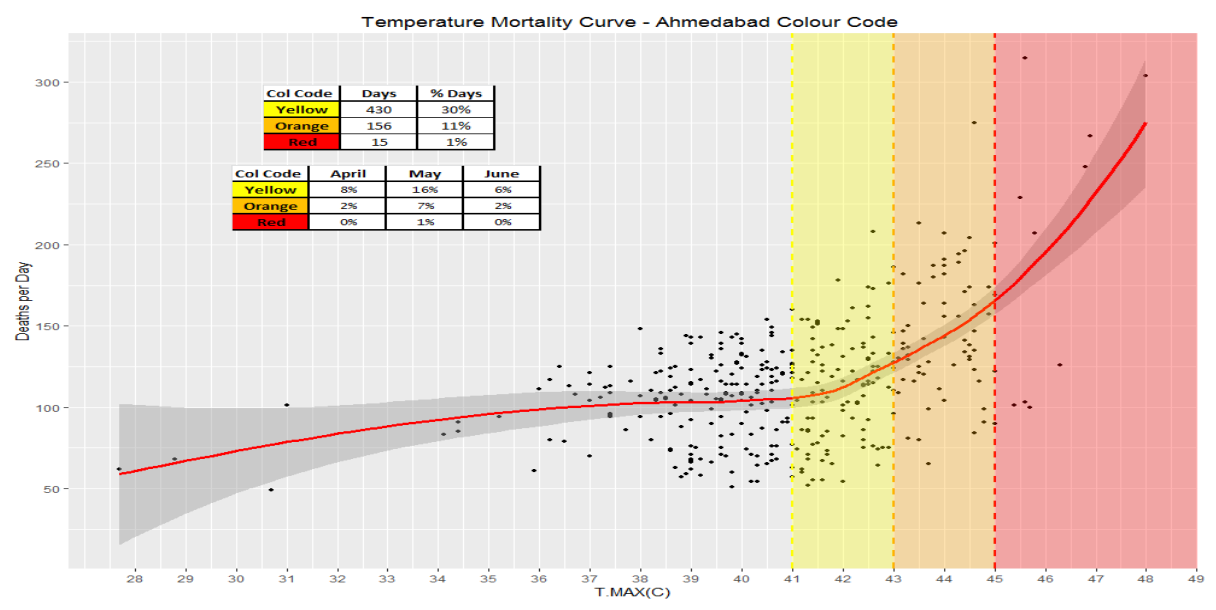
Image 1: Temperature-mortality curve: Daily deaths in Ahmedabad rise sharply once temperatures exceed 41°C, validating heat-warning thresholds (2001–2016).
Source: Developing local thresholds for heat health warning systems, NDMA
Given the lack of long-term data on mortality and morbidity, CEEW employed a hybrid framework for its HAP analysis of the 140 cities and districts, developing month-wise localised thresholds that reflect both the city's climatic baseline and the physiological realities of heat stress in a hot, humid environment. The approach goes beyond daytime extreme dry temperatures to incorporate felt temperatures, utilising the heat index, which is a composite of relative humidity and temperature. This is especially important in humid coastal cities, where felt heat can significantly exceed air temperature and where the physiological burden on residents is correspondingly greater (Image 2).
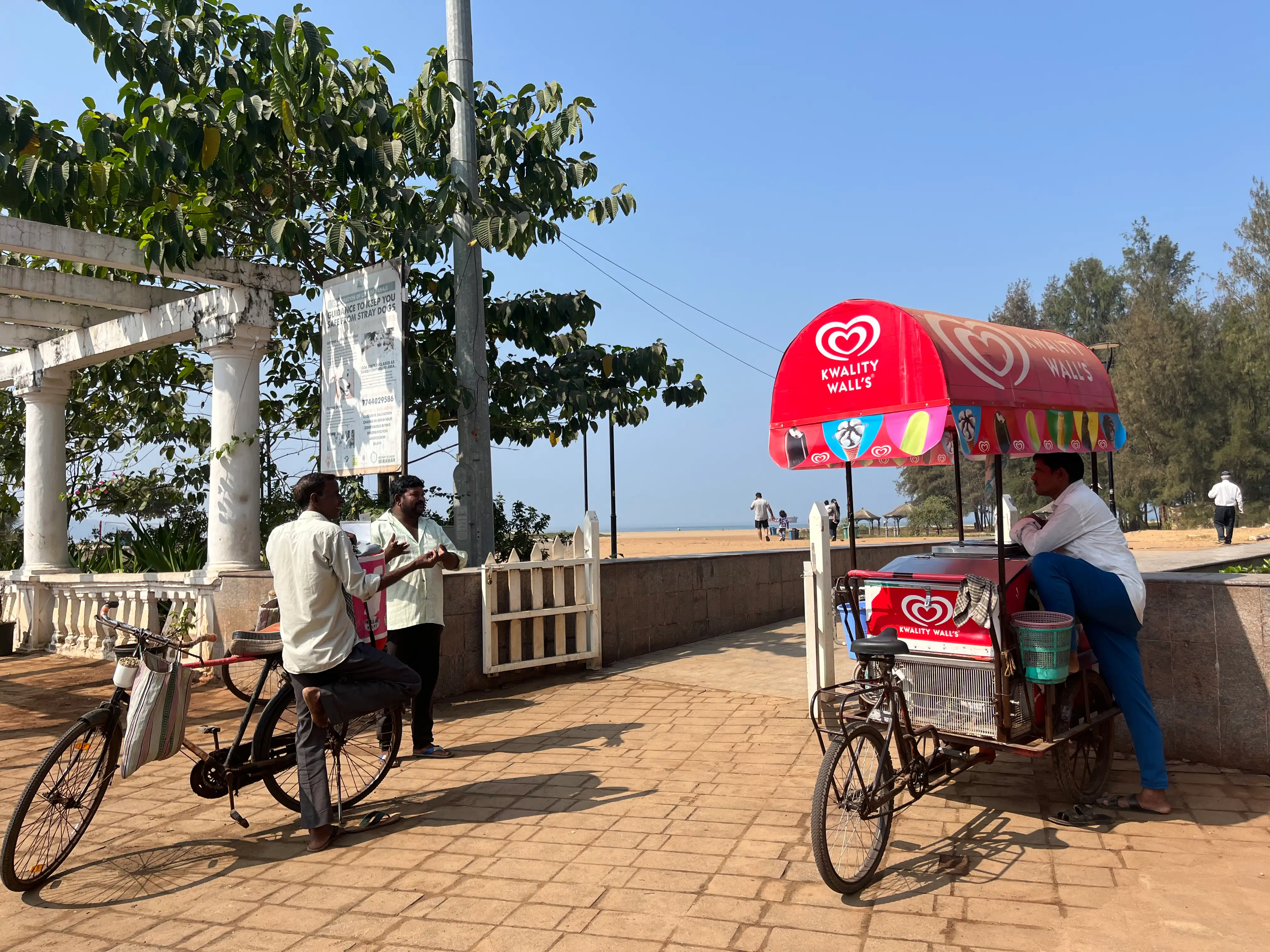
Image 2: An ice cream vendor at Miramar Beach continues work under intense coastal heat, where high humidity amplifies the body’s thermal stress.
Source: CEEW
This example from Cuttack city in Odisha illustrates how this plays out. Tables 1 and 2 show month-wise thresholds for yellow, orange, and red alerts derived from both dry temperatures and felt heat for the summer season. Two points are worth noting: first, thresholds rise consistently between March and May and fall in June, reflecting the city’s actual climatic seasonality rather than a constant national standard; second, felt-heat thresholds are consistently higher than dry-temperature thresholds in the later months, indicating the compounding effect of humidity. This enables more accurate risk assessment and better protection of vulnerable communities such as women, children, the elderly, people living with chronic health diseases and outdoor workers.
Table 1: Heat thresholds based on dry temperature for March–June (summer season) in degrees Celsius (°C)
| Month | Yellow alert | Orange alert | Red alert |
|---|---|---|---|
| March | 37 | 39 | 40 |
| April | 40 | 42 | 43 |
| May | 42 | 43 | 44 |
| June | 40 | 41 | 42 |
Source: Authors’ analysis
Table 2: Heat thresholds based on felt heat, which includes temperature plus humidity for March–June (summer season) in degrees Celsius (°C)
| Month | Yellow alert | Orange alert | Red alert |
|---|---|---|---|
| March | 37 | 39 | 41 |
| April | 40 | 42 | 44 |
| May | 42 | 45 | 46 |
| June | 42 | 44 | 46 |
Source: Authors’ analysis
Once a city knows when to act, it needs to know where to direct that action. While many HAPs have strengthened city-level preparedness for extreme heat, heat risk is not distributed uniformly across a city. Significant variations in exposure, vulnerability, and adaptive capacity exist between neighbourhoods, shaped by differences in the built environment, socio-economic conditions, and population composition. Two neighbourhoods separated by a few kilometres can experience very different levels of risk.
The answer to this question can be found in a ward heat risk index. This index can be built using frameworks such as the Intergovernmental Panel on Climate Change (IPCC) Fifth Assessment Report (AR5), which quantifies risk as a function of hazard (the intensity of heat exposure), exposure (the extent to which the built environment amplifies that heat), and vulnerability (the capacity of residents to cope). Each component can be measured using a combination of ward-level datasets spanning climate, socioeconomic, biophysical, and land-use and land-cover data.
Vulnerability is assessed across three broad dimensions:
Combining these dimensions into a composite ward-level heat risk index produces a map that helps administrators identify priority areas for action. In Cuttack, CEEW’s analysis identified Wards 12 and 26 as falling into the very high-risk category (Figure 2). Importantly, even neighbouring wards such as Ward 12 and Ward 11 fall into different risk categories. Ward 12 has a higher built-up density, with closely-packed structures and limited open spaces that trap heat, along with lower vegetation cover that reduces natural cooling. It also has a higher concentration of socio-economically vulnerable populations.
Figure 1: Heat risk assessment under CEEW's HAP highlights Wards 12 and 26 as most at risk in Cuttack
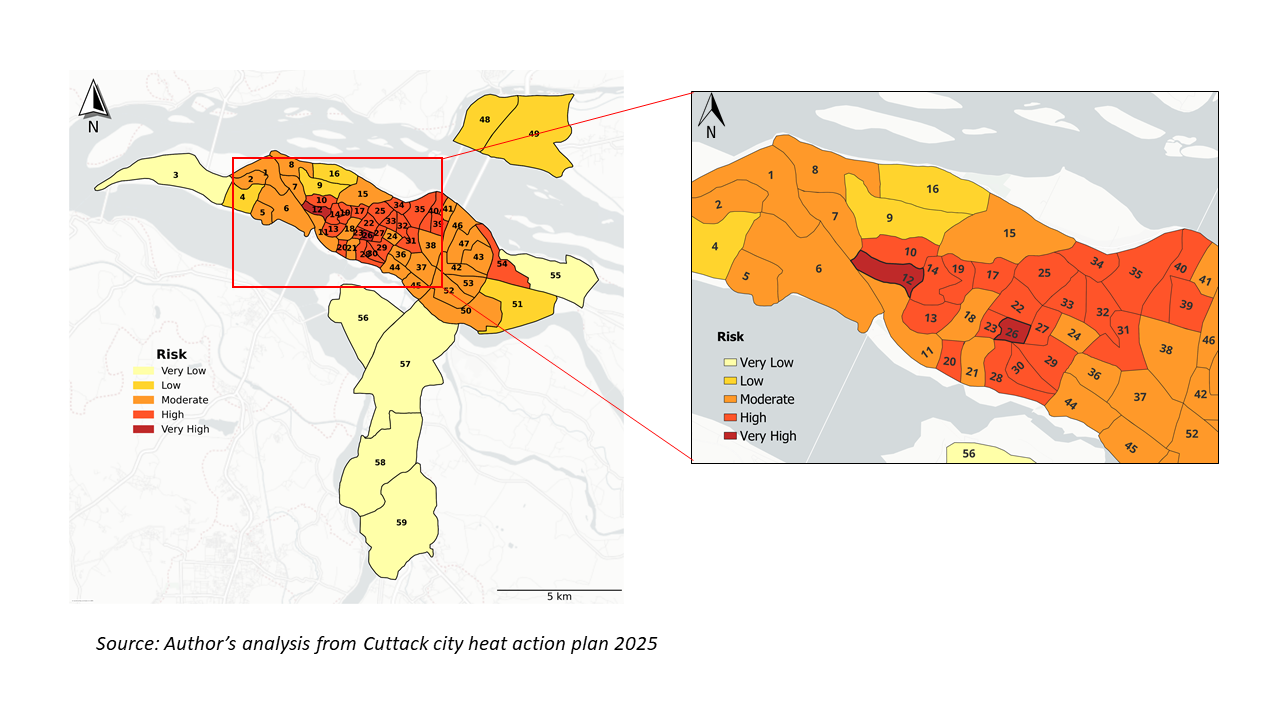
But the index is most useful when disaggregated: two wards can carry the same overall risk score for entirely different reasons. One may be at risk primarily because of extreme surface heat and dense construction; another because it has fewer health centres per thousand population. The intervention required in each case is different, and a composite score alone cannot reveal this. This is what makes the index a decision tool rather than a ranking exercise. It tells us which neighbourhoods to prioritise for cooling centres, where early warning outreach must reach first, and where the health system’s capacity must be strengthened before a heatwave arrives.
Knowing when and where to act raises the question: what should the line departments actually do? Effective HAPs identify and prioritise short-, medium-, and long-term actions. This ranges from early warning systems, public awareness campaigns, and emergency response measures to urban greening, cool roofs, climate-responsive infrastructure, and heat-resilient urban planning. To strengthen their effectiveness as long-term adaptation tools, current HAPs need to incorporate a clearer implementation roadmap, including phased interventions, defined institutional responsibilities, financing mechanisms, and monitoring frameworks.
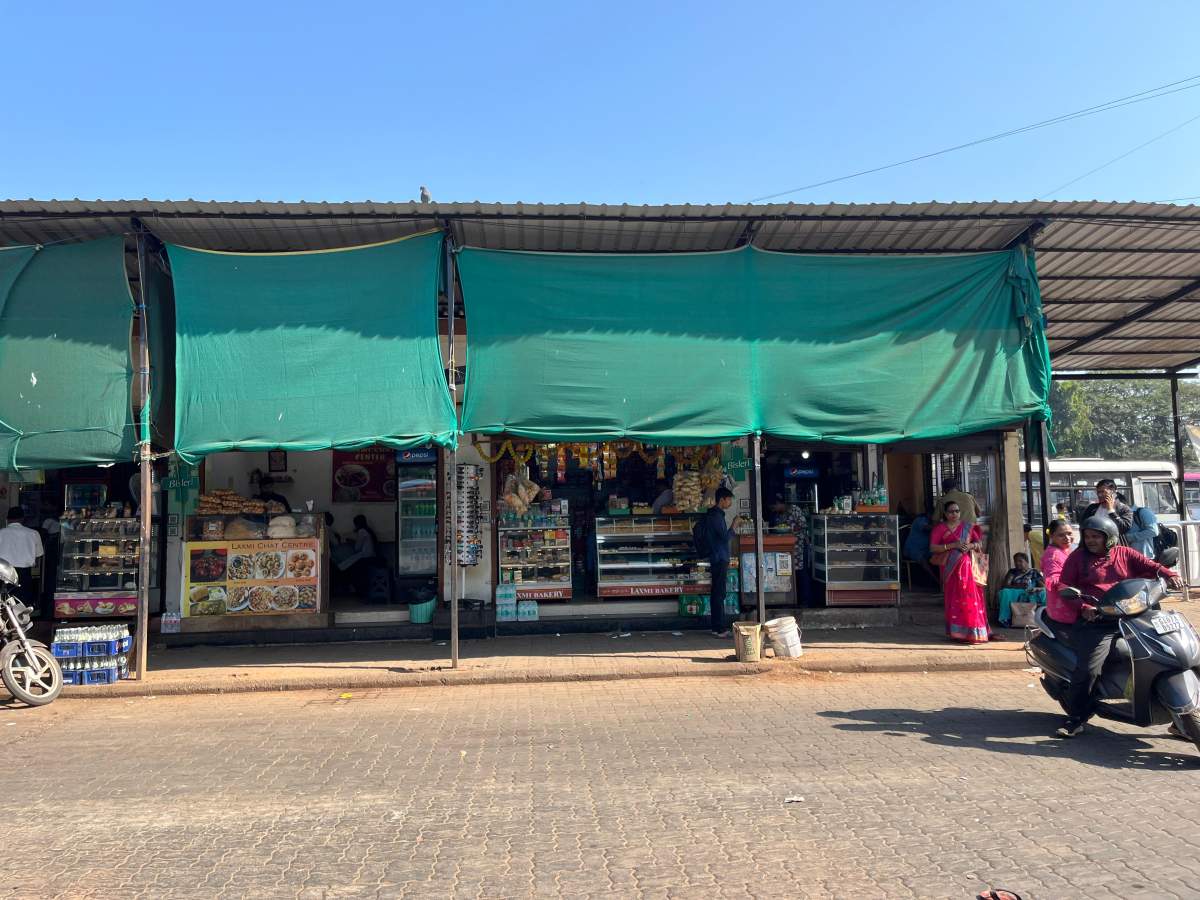
Image 3: Green shade nets installed in high-footfall areas near Kadamba Bus Stand provide low-cost, effective shading to reduce direct heat exposure for pedestrians and vendors.
Source: CEEW
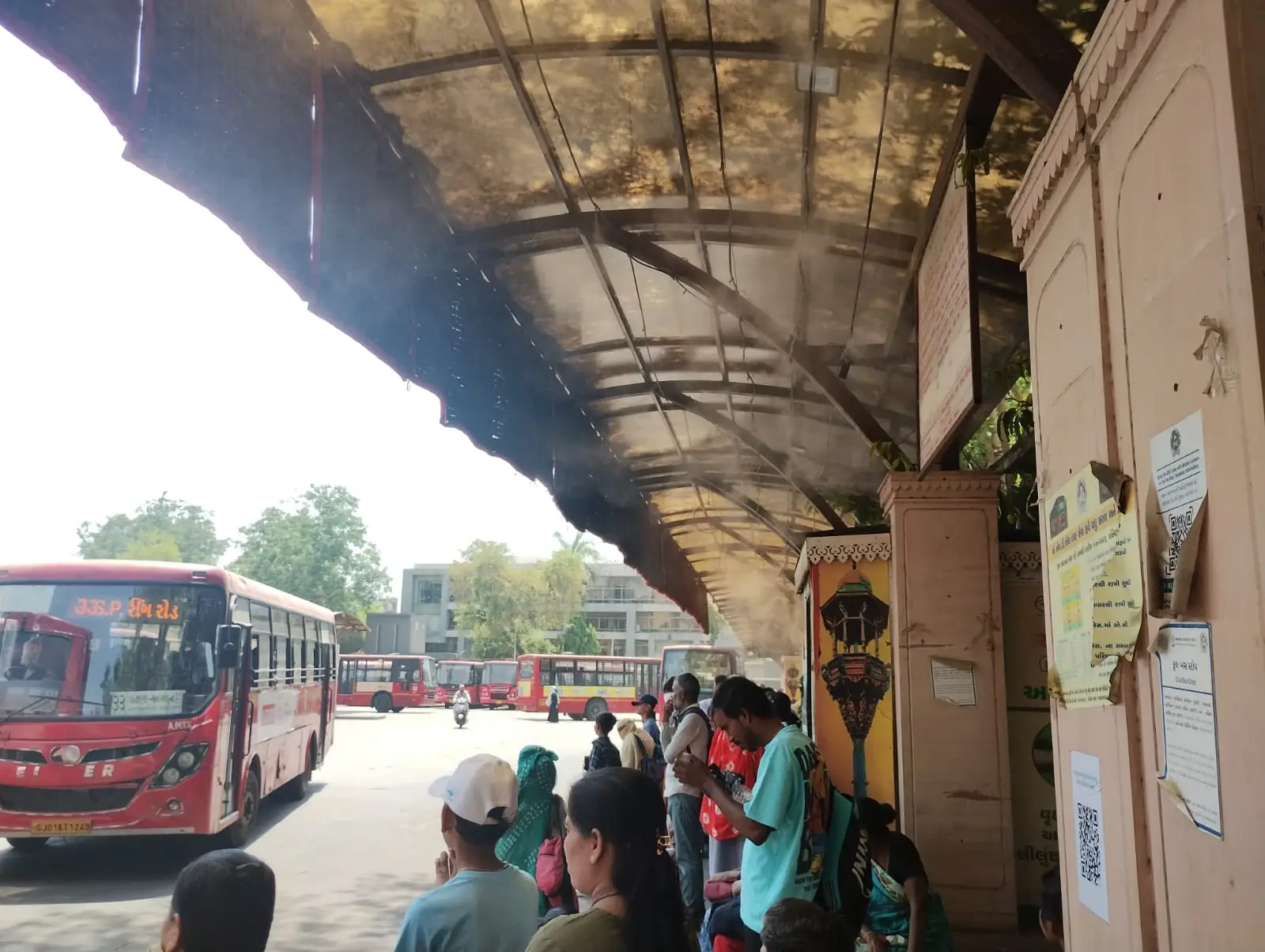
Image 4: Cool Bus Stop at Lal Darwaza Market in Ahmedabad integrates shading and mist-based cooling to lower ambient temperatures and reduce heat exposure for daily commuters.
Source: CEEW
A persistent gap in many HAPs in the past was the lack of clearly defined institutional responsibilities, which weakens implementation on the ground. CEEW addresses this within HAPs by establishing two accountability structures. The first is a dedicated heat-wave task-force committee. The second is a responsibilities matrix that clearly maps every mitigation, preparedness, and response action in the HAP to a named department, specifying supporting roles for each. The matrix should distinguish between actions that are the primary responsibility of city departments, and those of the District Disaster Management Authority (DDMA) or the State Disaster Management Authority (SDMA) that play a supporting or coordinating role. Without this clarity, implementation can become inconsistent.
To ensure that the heat wave task force committees and responsibility matrix are translated into action, capacity-building and awareness sessions could be conducted with relevant stakeholders. These engagements play a critical role in ensuring that the information does not merely remain on paper (Images 5 and 6).
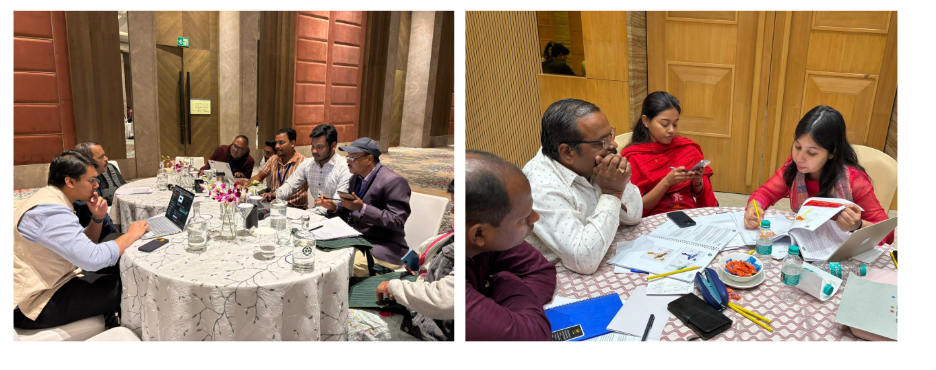
Images 5 and 6: Stakeholder consultations and capacity-building sessions conducted in Bhubhaneswar, Odisha, to operationalise HAPs at the city and district levels.
Source: CEEW
Equally important is a robust monitoring, evaluation, and learning (MEL) framework for every HAP. Implementing a HAP is only half the work. Knowing whether it is actually reducing heat-related illness and mortality and reaching the most vulnerable populations determines its real-world impact. MEL enables cities to track progress against each action, identify implementation gaps in real time, and provides opportunities for course correction before the next heat season. It also generates an evidence base that strengthens plan design, ensuring that each iteration of a city's HAP is more targeted, better resourced, and more effective than the last. Without MEL, HAPs risk becoming static documents rather than living, adaptive tools for building heat resilience.
With extreme heat emerging as a significant climate and public health risk, HAPs will continue to play a central role in advancing heat resilience and safeguarding public health, livelihoods, and economic productivity. Their effectiveness will depend on strong implementation, coordinated institutional action, and continuous monitoring to address evolving heat risks and local vulnerabilities.
Prerna Ojha is a Programme Associate, Anushka Goswami and Divyanshu Sharma are Research Analysts at the Council on Energy, Environment and Water (CEEW). Send your comments to [email protected].




Add new comment