Council on Energy, Environment and Water Integrated | International | Independent


Suggested citation: Jain, Srishti, Kurinji Kemanth, and Navjot Singh Sarao. 2025. Custom Hiring Centres for Better Crop Residue Management: Insights from Punjab. New Delhi: Council on Energy, Environment and Water.
The Indian government has placed a significant thrust on custom hiring centres (CHCs) to combat stubble burning in Northern India. Between 2018 and 2024, over 40,000 CHCs were established under the crop residue management (CRM) scheme to offer affordable, pay-per-use equipment access to farmers. However, despite high machinery ownership with these centres in states like Punjab, there is limited adoption of their services among farmers.
Based on interviews with 65 CHCs run by government and private operators across three districts in Punjab, we delve into a first-of-its-kind assessment to understand their service delivery model, operational challenges, and financial health. The study also presents strategies to transform CHCs into profitable machinery banks providing last-mile delivery of CRM solutions. While centred on Punjab, this report’s insights offer broader relevance that can strengthen CHCs delivering CRM services across other states, combating stubble burning.
India generates over 220 million tonnes of surplus agricultural residue annually. While this residue can be used as animal feed, industrial boiler fuel, or input in biofuel or biochar production, a significant portion is burned due to limited time and labour, as well as the absence of a lucrative market (Kemanth et al. 2024). Agricultural residue burning in India is no longer confined to traditional hotspots – such as Punjab and Haryana – but has become a nationwide concern deteriorating air quality and soil health. States such as Madhya Pradesh and Bihar have reported that farmers are increasingly burning crop residue to prepare their land for the next cropping cycle (Babu 2024; Business Standard 2023). Recognising this, the union government recently included Madhya Pradesh in the Crop Residue Management (CRM) Scheme in 2023 (Mo&AFW 2023).
Since 2018, the CRM Scheme has allocated over INR 3,623 crore to deploy approximately 2.95 lakh CRM machines such as Super Seeders for managing the crop residue through in- situ (incorporation of residue into the soil) and ex-situ techniques (using residue for bioenergy and other purposes). Additionally, the union government has also established around 40,000 custom hiring centres (CHCs) across Punjab, Haryana, and Uttar Pradesh (Lok Sabha 2025; Rajya Sabha 2024) to rent out these machines to farmers. The CHC model is promoted to democratise access to machinery by reducing the cost burden of individually owned CRM machines. It is also envisioned to boost rural entrepreneurship by enabling rural youth and farmer groups to operate the agricultural machinery rental businesses.
In 2025, the Punjab government allocated an additional INR 500 crore to subsidise CRM machines for both CHCs and individual farmers. By doing so, it aimed to eliminate crop residue burning in the state. CHCs in Punjab own 45 per cent of all CRM machines in the state. However, only 15 per cent of farmers practicing in-situ CRM techniques are accessing machinery through them (Kemanth et al. 2024) showing underutilisation of CHC - owned machinery. This exploratory study examines why CHCs have low lending rates for CRM and explores strategies to transform them into thriving machinery banks.
As part of the study, we conducted in-depth key informant interviews with 65 CHC operators across 3 districts in Punjab: Ludhiana, Patiala, and Sangrur, between September and November 2024. This enabled us to identify CHC business models and evaluate their effectiveness in renting out CRM machines. For the purpose of this study, we categorised CHCs1 run by cooperative societies and panchayats as government-run, and those operated by registered farmer societies (RFSs), farmer producer companies (FPCs),2 and individuals as privately run. Of the total sample, 42 per cent were government-run (27), and 58 per cent were privately run (38). A majority (55) facilitated in-situ CRM operations, while 10 supported ex-situ operations. Through this study, we aim to inform the union and the Punjab governments of the policy reforms required to incentivise and strengthen CHCs as financially viable business centres and one-stop solutions for CRM at the village level.
Rental services offered by CHCs
While government CHCs are proactive in renting machines, private CHCs offer packaged solutions
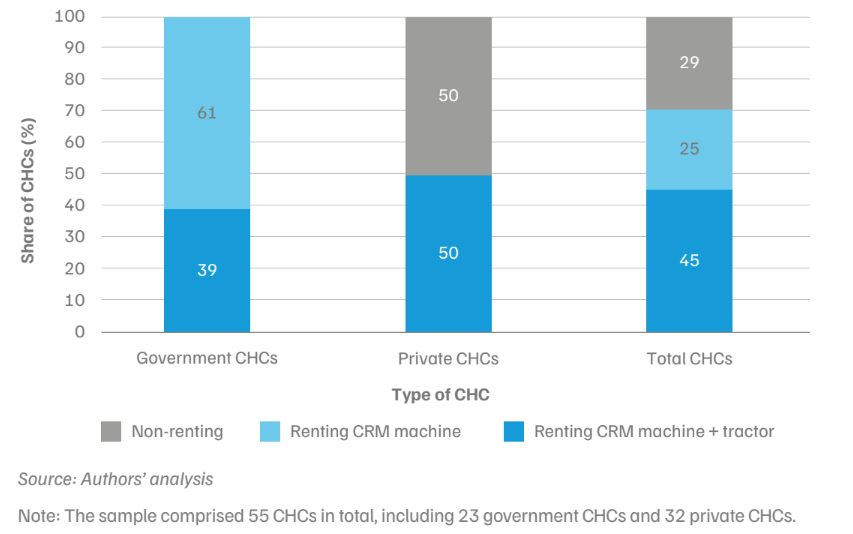
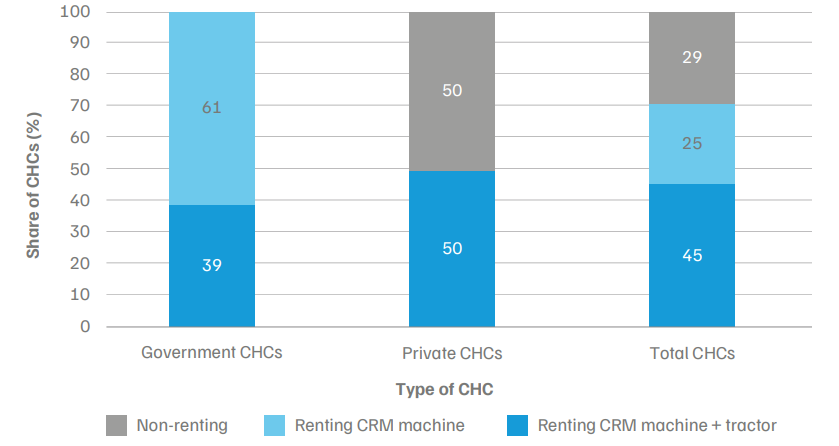
Figure ES1. ~39% of government and ~50% of private custom hiring centres (CHCs) provide crop residue management (CRM) as a packaged service
While CHCs are interested in providing baling services (ex-situ CRM), sustaining operations remains a challenge
The payment system is determined based on the types of services provided
Table ES1. The rental rates5 for CRM machines across all CHC types are similar
| CHC type | Rental rates (in-situ CRM machine only) | Rental rates (in-situ CRM machine + tractor + driver) | Baling service (baler + rake + cutter) |
|---|---|---|---|
| Cooperative society | INR 200/hour | INR 1,600–2,200/ acre | INR ~2,500/acre |
| Panchayat | Free service | NA | NA |
| Registered farmers society / Farmer producer company | NA | INR 1,800–2,000/ acre | Free service to farmers + payments received from industries |
| Individual farmer | NA | INR 1,800–2,200/ acre | NA |
| Source: Authors' compilation | |||
Limited penetration of digital platforms like Unnat Kisan and i-Khet
Higher maintenance costs affect the CHC rental business
Spare parts shortage and misaligned priorities hurt baling services
The machinery decommissioning process is only applicable for cooperatives, but absent for others
While most CHCs in in-situ CRM invest modestly, CHCs in ex-situ CRM invest comparatively higher amounts
Government CHCs have a wider reach for in-situ CRM, while private CHCs lead in providing ex-situ CRM solutions
Private CHCs tend to make more profits than their government counterparts
Globally, approximately 450 million tonnes of crop residue are burnt each year (FAO 2024). Between 2003 and 2020, the global annual cropland area affected by burning ranged from 64 million to 102 million hectares, averaging approximately 81 million hectares (Hall et al. 2024). The customary practice of burning crop residue is a significant concern in many South Asian regions, including the Indo-Gangetic Plain (Lin and Begho 2022). In India, agricultural residue burning contributes to almost 13 per cent of all PM 2.5 emissions (TERI 2021). Extending beyond air quality, it also depletes soil microbes and nutrients such as nitrogen and carbon, decreasing soil fertility and increasing reliance on irrigation, which can lead to further groundwater depletion in an already stressed agricultural landscape (Gupta 2019).
In response, the Indian government launched a centrally sponsored Crop Residue Management (CRM) Scheme in 2018 to subsidise the procurement of CRM machines, such as Super Seeders and Happy Seeders, in Punjab, Haryana, Uttar Pradesh, Madhya Pradesh, and NCT region of Delhi to mitigate crop residue burning (Mo&AFW, 2018). The scheme offers a 50 per cent subsidy on machinery costs to individual farmers and an 80 per cent subsidy to CHCs enabling them to procure and rent machines to farmers. Such CHCs can be set up by cooperative societies, cluster-level federations, self-help groups (SHGs), farmer producer companies/organisations, panchayats, registered farmer societies (RFSs), and village-level entrepreneurs. Although the subsidy rate is lower for individual at 50 per cent, some farmers have also established rental services as an additional income stream by providing crop residue management solutions.
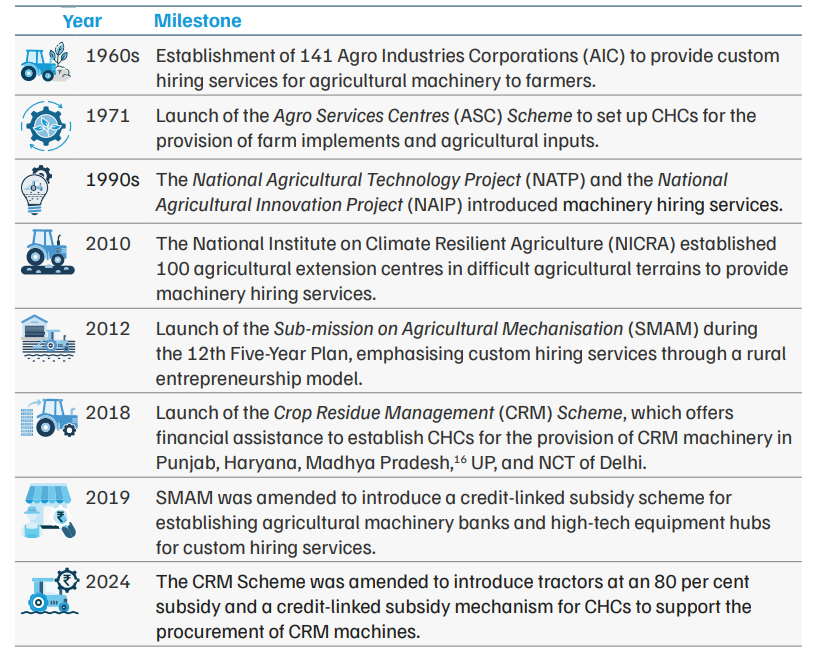
India’s agricultural machinery rental ecosystem has steadily evolved to improve the accessibility and affordability of farm mechanisation solutions for farmers. The history of CHCs in India can be traced back to 1961, when the union government established agro industries corporations (AICs) to offer agricultural machinery rentals along with training in maintenance and upkeep (Bethi and Deshmukh 2023). This support infrastructure was further expanded in 1971 with the launch of agro-services centres, which provided machinery rentals, financial assistance, and labour support (YES BANK-GAA-FICCI 2016). In the 1990s, the National Agricultural Technology Project (NATP) and National Agricultural Innovation Project (NAIP) also introduced machinery rental services, albeit to a limited extent. In 2010, the National Institute on Climate Resilient Agriculture (NICRA) established 100 agricultural extension centres across drought-prone and flood-prone regions, hilly areas, and other difficult agricultural terrains to promote custom hiring services (YES BANK-GAA-FICCI 2016).
A significant boost to farm mechanisation came in 2014–15 when the union government launched the Sub-Mission on Agricultural Mechanisation (SMAM) as a centrally sponsored scheme under its 12th Five-Year Plan. The mission aimed to establish village-level machinery banks and hi-tech equipment hubs, build awareness through demonstrations and capacity building, and conduct performance testing of the equipment to maintain quality standards (Mo&AFW 2017). In the early 2000s, states such as Punjab also promoted the custom hiring of tractors and agricultural equipment through agro machinery service centres (AMSCs) run by primary agricultural cooperative societies (PACS) (Singh 2017).
While the SMAM broadly focuses on farm mechanisation, the CRM Scheme is explicitly targeted at crop residue management. It supports the subsidisation of CRM machinery and capacity-building efforts to curb agricultural residue burning in selected, more severely affected north Indian states (Mo&AFW 2022). As of 2024, these initiatives have resulted in the establishment of ~45,000 CHCs under SMAM and ~41,000 CHCs under the CRM Scheme (Figure 1) (Rajya Sabha 2024).
Table 1. Key milestones in the evolution of custom hiring centres in India
Source: Authors’ compilation
Figure 1. Punjab and Andhra Pradesh are the states with the maximum CHCs under the CRM Scheme and SMAM respectively
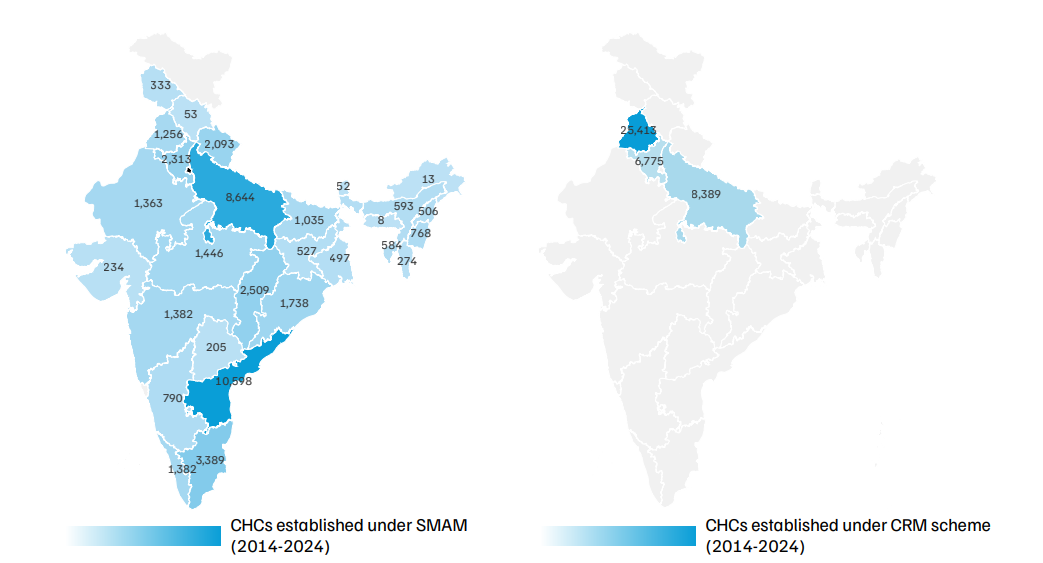
Source: Authors’ compilation from Rajya Sabha proceedings (2024).
Custom hiring services in the global context: Countries across the world have adopted diverse models to provide custom hiring services to farmers. For instance, China and the European Union have adopted a policy-driven approach to promote custom hiring, similar to India. In China, the agricultural machinery operation services (AMOS) market, operated by business enterprises, provides rental machines for farm operations, supported by financial incentives from the government for machinery purchases (Lu and Wei 2024). Europe’s Common Agricultural Policy (CAP) supports equipment rental through financial incentives, encouraging farmers to utilise rental services to comply with EU environmental regulations on emissions and resource conservation (Grand View Research 2024).
Conversely, in South Asian countries such as Thailand, Sri Lanka, Nepal, Cambodia, Vietnam, and Bangladesh, the hiring model for farm machinery is primarily driven by the private sector, particularly individual machine owners (FAO 2021; CAPSA-ESCAP 2017). In Thailand and Cambodia, contractors often serve as intermediaries, brokering deals between service providers and farmers for a commission. Similar models are observed in African nations such as Nigeria and Ghana, where digital brokerage platforms such as Hello Tractor and TROTRO Tractor connect farmers with equipment owners (Hilmi 2021). In Brazil, machinery rental services are primarily offered by independent companies such as Primavera Concessionaire (Schavinski 2024), whereas in the United States, they are provided by agribusinesses such as Gripp Custom farming Corp. Globally, CHCs primarily provide services related to land preparation, irrigation, and post-harvest operations (Koike 2009; CAPSA-ESCAP 2017). Notably, CHCs in Sri Lanka also facilitate crop residue recycling to curb burning practices, similar to India (CAPSA-ESCAP 2017).
The seasonal nature of crop residue burning results in intermittent use of straw management machines. In Punjab, for example, paddy is harvested between September and November each year (MoEFCC 2023a). This limited window of use impacts the economic viability of owning such machines (Chahal et al. 2014). In such cases, renting becomes a practical solution, allowing for more productive use of the equipment (Tanubala 2020; Nissa et al. 2017) and enabling cost recovery for machinery owners.
Moreover, high upfront machinery costs (for example, INR 2.4 lakh per unit for Super Seeders), combined with limited operational knowledge and space constraints, prevent many farmers from owning such specialised equipment (Nagaraj and Srilatha 2020). Renting, therefore, becomes an optimal option. It offers substantial economic benefits through financial savings while enabling capital-intensive, high-quality mechanisation opportunities through short-term machinery control (Singh 2013; Vaja et al. 2016). It bridges the gap between farmers’ needs and their financial limitations (Bethi and Deshmukh 2023; Rawal et al. 2023). Renting also reduces investment needs, maintenance responsibilities, and planning complexities, allowing farmers to manage their financial resources more efficiently and also allocate their time to other tasks (Kisku and Singh 2022). For many, this has helped ease financial stress and lower input costs. Additionally, renting safeguards farmers from the risk of owning such specialised and expensive machines that may become redundant if there is a change in farming practices (Singh 2013).
CHCs function as machinery banks for farmers, equalising access to sophisticated technology by distributing equipment costs over a large user base (Chahal et al. 2014). Revenue generated from the rental business is reinvested in society, contributing to broader social benefits (Nissa et al. 2017). Additionally, CHCs promote rural entrepreneurship and innovation by providing farmers with a platform to experiment with new technologies at affordable rates (Singh 2010; Bethi and Deshmukh 2023).
Under the CRM Scheme, the union and state governments have spent about INR 3,698 crore subsidising machines and setting up CHCs in the states of Punjab, Haryana, Uttar Pradesh, Madhya Pradesh, and the NCT of Delhi since 2018.
Table 2. Punjab has received the maximum funds across all states under the CRM Scheme
| State | Funds received (INR crore) | Machines deployed | CHCs setup |
|---|---|---|---|
| Punjab | 1,756 | 1,37,407 | 25,417 |
| Haryana | 1,081 | 89,770 | 6,775 |
| Uttar Pradesh | 764 | 68,421 | 8,389 |
| NCT of Delhi | 6 | 247 | NA |
| Others | 90 | NA | NA |
Source: Authors’ compilation based on Lok Sabha (2025) and Rajya Sabha (2024) proceedings.
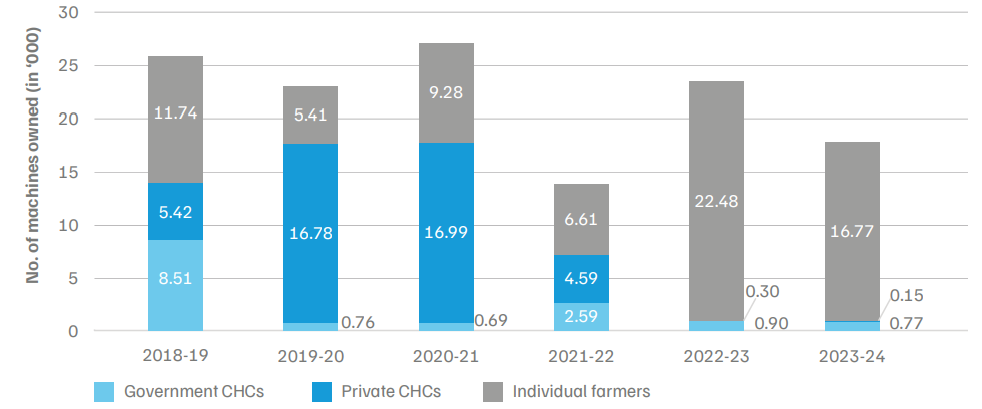
Despite a significant inflow of funds into the ecosystem, CHC - operated machines remain underutilised. In Punjab, CHCs own nearly 45 per cent of the total CRM machines (Figure 2); yet, only 15 per cent of the farmers practising in-situ CRM accessed their services (Kemanth et al. 2024). Among these, while 12 per cent rented from cooperative societies showing their relative success, just 3 per cent used machines provided by other CHCs, such as those run by FPOs, panchayats, and RFSs.
Moreover, the share of new machines procured by CHCs has also declined significantly in recent years, from over 50 per cent before 2022 to just 10 per cent in the last two years. Overall, nearly 85 per cent of the CRM machines currently held by CHCs were procured between 2018 and 2021, during the scheme’s initial years of rollout (Figure 2). In recent years, CHCs have been procuring new machines, albeit to a limited extent. According to state officials, demand for CRM machines through CHCs have slowed recently compared to the early phase of the scheme.
Figure 2. The procurement of new machines by CHCs in Punjab has declined significantly since 2021
Source: Authors’ compilation based on Agriculture Schemes Subsidy Portal of the Department of Agriculture and Farmers’ Welfare, Government of Punjab
Considering CHCs’ large share in machine ownership, coupled with low lending rates, we sought to answer the following key questions:
Through this study, we aim to inform the union and Punjab state governments about the working model of CHCs and the challenges they face. We also recommend strategies for the Department of Agriculture and Farmers’ Welfare (DoAFW), as well as the Cooperative Department, Government of Punjab, to improve the uptake of CHC services among farmers. Our goal is to support the transformation of these machinery banks into business centres that serve as one-stop solution for CRM operations at the village level. Additionally, the study can inform village-level entrepreneurs looking to invest and operate CHCs by outlining best practices to improve CHC performance, promote machinery adoption, and thereby reduce farmers’ dependence on stubble burning as a residue management measure.
We conducted in-depth key informant interviews with 65 CHC operators across three districts in Punjab–Ludhiana, Patiala, and Sangrur–to understand their business models and effectiveness in CRM. These interviews were carried out between September and November 2024, coinciding with the stubble-burning season, to observe CHC operations in real-time.
The Malwa region in Punjab accounts for the highest share of farm fires (~77 per cent) and the most significant number of fires per unit area20 (Department of Economic and Statistical Organisation, Punjab 2024). We therefore prioritised this region for our study. All districts within the Malwa region were divided into tertiles based on their fires occurred per unit area in 2023, and categorised as high, medium, and low burn zones. We then employed purposive sampling to select one district from each categories, choosing Sangrur, Patiala, and Ludhiana as the high, medium, and low burn districts, respectively, based on proximity to one another.
Although these three districts have comparable numbers of CHCs, their fire counts vary significantly. In Kharif 2023, Sangrur recorded the highest number of fires in Punjab (1,182), followed by Patiala (440) and Ludhiana (303). We used convenience sampling to select approximately 20 CHCs from each district for the study.
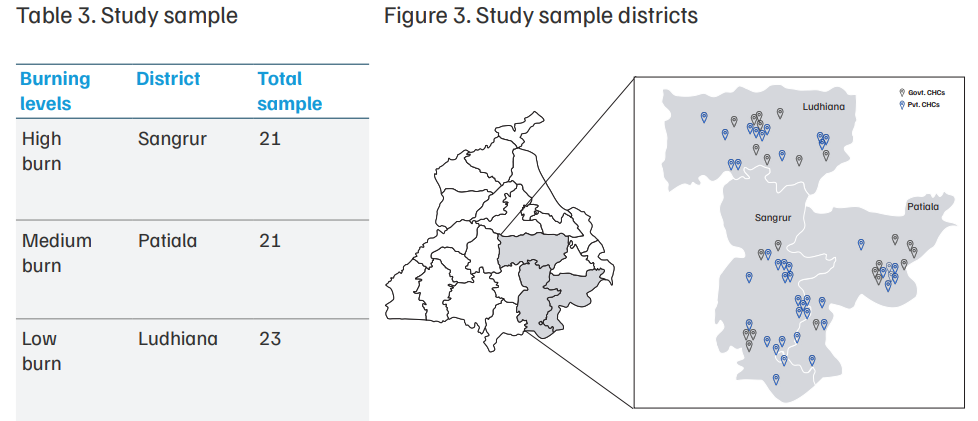
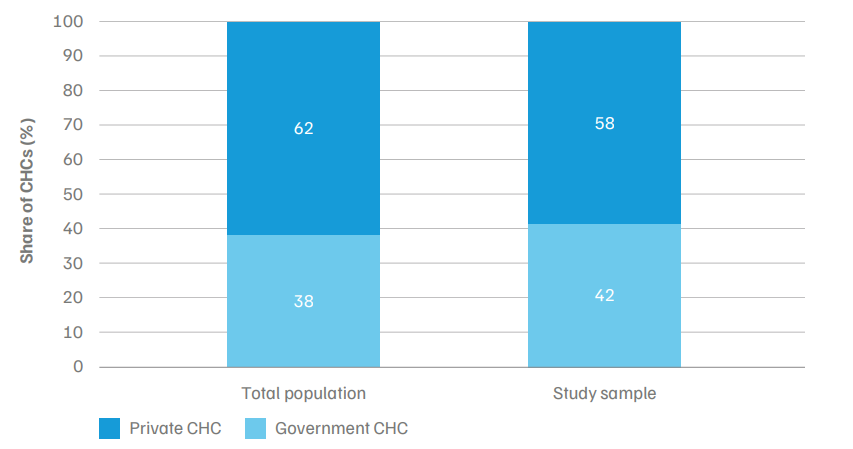
The study sample included both government- and privately run CHCs, selected in proportion to their representation in the overall CHC population across the three districts (Figure 4). For this assessment, we categorised CHCs operated by cooperative societies and panchayats as government-run, while those run by RFSs, farmer-producer companies (FPCs), and individuals as privately run. For more details on these categories, see Annexure 1.
Of the 65 CHCs in our sample, 42 per cent were government-run and 58 per cent were privately run. This distribution closely mirrors the overall CHC landscape across the three districts, where 38 per cent are government-run and 62 per cent are privately run. For more information, see Annexure 2.
Figure 4. Comparison of CHC distribution in the sample and in the total CHC population across the three study districts
Source: Authors’ compilation
Note: The sample comprised 65 CHCs in total, drawn from a population of 2,883 CHCs.
Using a mixed-methods approach, we conducted semi-structured interviews with CHC operators guided by a structured questionnaire. The research team at CEEW employed two consultants and three interns to administer the interviews in Punjabi and Hindi. Before deploying the final survey, the questionnaire was peer-reviewed by the Department of Agriculture and Farmers Welfare, Government of Punjab, and the Punjab Development Commission, Government of Punjab. To better understand the CHC landscape, we held preliminary discussions with several CHCs across the state and conducted a pilot with eight CHCs in the Sangrur district in August 2024. We also consulted the chief agricultural offices (CAOs) of the respective districts to obtain updated district-wise CHC lists and an indicative shortlist of high-performing CHCs, which we used to document best practices.
Our sample aimed to capture the diversity of CHC networks operating in Punjab. We interviewed 27 government-run and 38 privately run CHCs. Of the total, 55 CHCs were engaged in in-situ CRM, while 10 were involved in ex-situ CRM.
Table 4. CHCs studied in Punjab across three district
| District | Government CHC | Private CHC | Total CHCs | ||||||
|---|---|---|---|---|---|---|---|---|---|
| Cooperative society | Panchayat | Registered farmer society (RFS) | Farmer producer company (FPC) | Individual | |||||
| Type of CRM practised | In-situ | Ex-situ | In-situ | In-situ | Ex-situ | In-situ | Ex-situ | In-situ | |
| Ludhiana | 8 | 2 | 1 | 7 | 2 | 1 | 1 | 1 | 23 |
| Patiala | 7 | 1 | 2 | 9 | 1 | 0 | 0 | 1 | 21 |
| Sangrur | 4 | 1 | 1 | 11 | 1 | 1 | 1 | 1 | 21 |
| Total | 27 | 38 | 65 | ||||||
Source: Authors’ compilation
To conduct the interviews with CHC operators, we began with a standard set of questions to understand their motivations and service offerings. Based on the type of CRM services they provided, we then administered different questionnaires for CHCs engaged in in-situ and ex-situ operations. We also collected insights on service uptake, operational challenges and financial models to study the business case for establishing CHCs. Additionally, we explored innovative practices adopted to improve operational efficiency and gathered suggestions to strengthen the uptake of CRM solutions across Punjab.
While our team ensured that the questionnaire was administered with minimal bias, some degree of bias may persist due to the face-to-face mode of data collection. In particular, some degree of social desirability bias may persist as CHC representatives may have sought to present themselves in a favourable light. Additionally, a certain degree of recall bias may have influenced responses, given that the survey was conducted during the kharif harvest season. Moreover, the interviewees’ responses were self-reported and accepted, as there were no independent means of cross-verification.
The CHCs have evolved to offer a range of machinery rental packages for both in-situ and ex-situ CRM to farmers. This section outlines the scope of services provided by government and privately run CHCs, and their operational structures. Further, we outline the types of rental packages available, the target beneficiaries, and the payment frameworks followed as part of the rental business. We also assess the uptake of digital tools and their integration into the rental ecosystem.
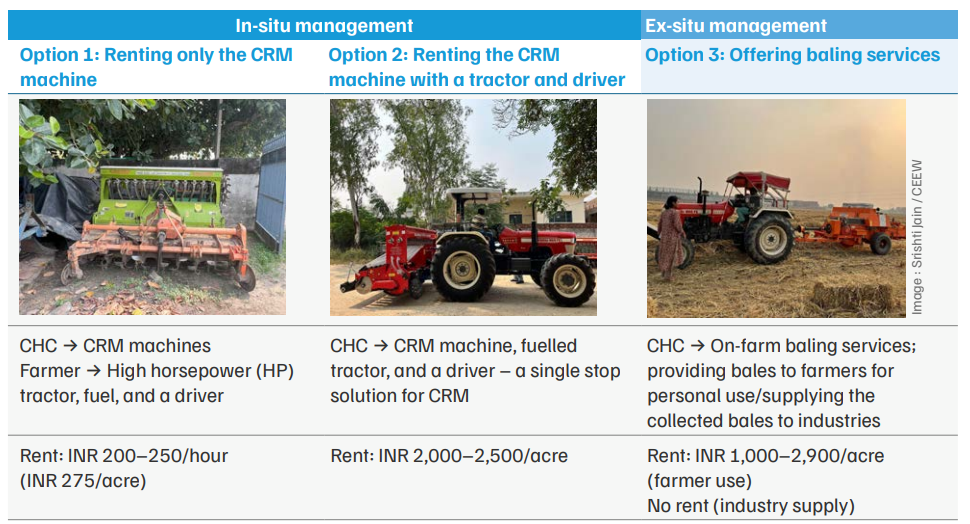
CHCs offer a variety of services to farmers. These include the exclusive rental of CRM machines, bundled packages that include the rental of CRM machines with a fuelled tractor and driver, and/or baling services (Table 5).
Table 5. CHCs provide diverse renting solutions for CRM based on farmer needs
Source: Authors’ compilation
In our interviews with CHCs, we found that all CHCs involved in ex-situ operations were renting out their machines. In contrast, only 71 per cent of CHCs engaged in in-situ management were doing so. While all government-run CHCs reported renting out their in-situ CRM machines, only half of the private CHCs reported renting them to other farmers (Figure 5). Despite receiving an 80 per cent subsidy on CRM machines, the other half of the private CHCs used their machines exclusively for their own group members. This is a missed opportunity, as private CHCs collectively own 75 per cent of all CRM machines deployed to CHCs in Punjab (Figure 2).
When asked why they did not rent out their machines, 47 percent of the non-renting private CHCs cited a lack of demand, particularly for machines such as Happy Seeders. A further 40 percent attributed it to their large landholdings, which often left them with little time to manage operations for other farms. Other factors included the cumbersome nature of rental operations. Some CHCs that owned both in-situ and ex-situ machinery also reported being fully occupied with delivering ex-situ management services to farmers.
Government and private CHCs differ in the nature of rental services provided to farmers. In Punjab, only 45 per cent of CHCs owning in-situ CRM machines offered a packaged solution that included a fuelled tractor and driver alongside the machine. The remaining CHCs rented out only the CRM machines, leaving farmers responsible for arranging associated inputs, such as tractors and fuel. Based on our survey, 39 per cent of government CHCs and all renting private CHCs (50 per cent of all private CHCs) offered CRM services as a package. The limited availability of packaged services is primarily due to a low tractor ownership with CHCs and a shortage of skilled labour, such as drivers, to conduct the CRM operations.
Figure 5. ~39% of government and ~50% of private CHCs provide CRM as a packaged service
Source: Authors’ analysis
Note: The sample comprised 55 CHCs in total, including 23 government CHCs and 32 private CHCs.
During our survey, we also identified certain individual farmers who, despite receiving machines at a 50 per cent subsidy, had initiated rental operations. Some even provided packaged solutions by operating the CRM machines themselves on others’ farms, generating additional income. In recent years, the Government of Punjab has also recognised such models as part of the broader CHC ecosystem.
CHCs represent a significant opportunity for rural entrepreneurship and employment generation in the village ecosystem. Most CHCs renting in-situ CRM machines reported employing 2–20 people, including drivers, depending on the number of machines deployed. In comparison, CHCs employed in ex-situ CRM reported employing up to 50 workers for baling operations.
In recent years, with significant support from the union and state governments, some CHCs have begun offering ex-situ CRM services to farmers, particularly for baling operations. Although the overall share of CHCs providing ex-situ services remains small, those engaged in such operations have adopted a range of service delivery mechanisms (Table 6).
In our sample, government-run CHCs were primarily providing baling services to farmers for personal use, such as for livestock fodder, or had subcontracted their balers to other aggregators. In contrast, privately run CHCs were typically engaged in large-scale ex-situ operations, conducting baling activities across multiple farms and supplying agricultural residue for industrial use at contracted rates (Table 6).
Table 6. CHCs provide baling services for the end use of residue for both industries and farmers
| Service delivery mechanisms | Number of government CHCs | Number of private CHCs | Number of total CHCs |
|---|---|---|---|
| No-cost baling services to farmers for industry-linked supply (Farmers incur no cost when aggregators supply bales directly to the industry) |
0 | 4 | 4 |
| Paid baling services for farmers’ personal use (Farmers must pay when using bales for their own use) |
2 | 1 | 3 |
| Baling services subcontracted by owners to third-party aggregators (Baler owners delegate baling operations to third-party aggregators instead of managing them on their own) |
2 | 1 | 3 |
Source: Authors’ compilation
Among the government-run CHCs, a cooperative society based in Ludhiana was offering balers to farmers for personal use at a rental cost of INR 2,600–2,900 per acre for a 20–25 kg baler, along with a rake and cutter. Another cooperative society in Ludhiana, which had initially provided baling services, had suspended operations due to the unavailability of spare parts for its mini baler.
Among the privately run CHCs, one RFS in Sangrur was charging around INR 1,000 per acre for raking and baling. In contrast, three RFSs and one FPO had signed contracts with industry bodies that use paddy straw as feedstock, charging them INR 155–180 per quintal for bale supply. The cost of baling includes capital expenditure (CAPEX) for purchasing balers, rakes, and trolleys, as well as associated operating expenditure (OPEX) for workforce salaries, fuel, transportation, and other related expenses. However, the CHCs we interviewed were neither collecting payments from farmers for these services nor compensating them for the collected residue.
Due to logistical challenges such as workforce shortages, limited transportation infrastructure (e.g., trolleys), and access to storage sites, some CHCs had leased their baling machinery to other aggregators. Two cooperative societies and one FPO reported such arrangements. One cooperative society charged INR 5,000 per day, while the other society and FPO had leased their balers for INR 1.1 lakh and INR 1.75 lakh, respectively, for the entire kharif harvest season.
Box 1. Lapran Farmer Producer Company’s tech-enabled solutions for efficiency in CRM operations
In 2022, Dr. Gurbir Singh, a PhD in business management, initiated a community-driven effort to address the issue of stubble burning. The group first acquired an old baler to understand the mechanics and efficiency of ex-situ CRM. Following this experiment, they procured a new baler in 2023 under the CRM Scheme, with a focus on managing crop residue through ex-situ management measures. They report that their efforts have significantly reduced stubble burning in Machhiwara, Ludhiana.
Today, the FPO manages around 2400 acres under ex-situ CRM, collecting about 3500- 3800 tonnes of paddy straw annually in and around Machiwara. The collected residue is supplied directly to industry under secured contracts, ensuring timely payments and eliminating the need for on-ground bale storage.
The FPO schedules its operations to ensure operational efficiency and smooth logistics. For instance, baling activities typically begin later in the morning to avoid moisture-related issues caused by dew. In some cases, bales are transported before dawn to reduce the risk of road accidents. The FPO also leverages technology-enabled solutions for smooth inventory management, including GPS-equipped tractors to track fuel usage and log routes for up to six months. Communication among workers and drivers is coordinated through WhatsApp to facilitate seamless bale delivery. Additionally, they prioritise regular machinery maintenance before the harvest season to minimise downtime and ensure uninterrupted baling operations.
The group also plays an active role in knowledge dissemination. They regularly collaborate with other farmer welfare groups and government departments to organise approximately five training sessions every season, focusing on CRM and soil health. With substantial investments in machinery and operations, the FPO has not only achieved profitability but is also reshaping the agricultural landscape, one bale at a time.
We interviewed 48 CHCs engaged exclusively in in-situ management to assess their willingness to diversify into ex-situ operations. Nearly 26 per cent of CHCs (11 per cent of government-run and 34 per cent of privately run CHCs) expressed interest in entering the exsitu business. While almost all CHCs cited high capital investment and workforce shortages as key barriers to undertaking baling operations, these concerns were more pronounced among government CHCs. Some CHCs also cited challenges, such as unreliable and delayed payments, concerns over bale moisture levels, issues with contract renewals, and the absence of clear bale pricing mechanisms. Additionally, a few CHCs believed that sufficient balers were already available in their area, reducing the incentive to invest in additional capacity.
CHCs adopt different pricing frameworks to collect rental payments from farmers. They typically charge rents on a per-acre, per-hour, or per-day (eight-hour) basis. Across both government and private CHCs, when renting only CRM machines, the per-hour model most common. In contrast, CHCs offering a bundled service, including a fuelled tractor and driver, prefer the per-acre model. The per-acre pricing approach guarantees a consistent rate of return and simplifies tracking, unlike the per-hour model, which may fluctuate due to delays in machinery returns.
Across the CHCs surveyed, the most commonly rented machine was the Super Seeder. When bundled with a fuelled tractor and driver, the service costs approximately INR 2,000 per acre. In terms of the cost breakup, this includes INR 275 for the CRM machine, INR 750 for fuel, and around INR 1,000 for the tractor and driver. Alternatively, farmers could rent the Super Seeder alone at approximately INR 200 per hour and arrange the tractor and driver independently. The four panchayats interviewed offered CRM machines free of charge to farmers. Despite this, they mentioned limited uptake due to outdated and ill-maintained machinery.
Table 7. The rental rates for CRM machines across all CHC types and districts are similar
| CHC type | Rental rates (in-situ CRM machine only) | Rental rates (in-situ CRM machine + tractor) | Baling service |
|---|---|---|---|
| Cooperative society | INR 200/hour | INR 1,600–2,200/acre | INR ~2,500/acre |
| Panchayat | Free service | NA | NA |
| Registered farmers group / farmer producer company | NA | INR 1,800–2,000/acre | Free service to farmers + payments received from industries |
| Individual farmer | NA | INR 1,800–2,200/acre | NA |
Source: Authors’ compilation
The DoAFW, Punjab, has prescribed rental rates for CHCs (Table 8), along with guidelines mandating that machines be provided to small and marginal farmers at zero rents but only at operational charges. During our interviews, 50 per cent of renting CHCs reported applying uniform rates to all beneficiaries for the machines. However, the remaining 50 per cent stated that they offered CRM solutions either free of cost or at subsidised rates to small and marginal farmers. This practice was observed across both government and private CHCs. In some cases, cooperative societies converted rental payments into credit, allowing farmers to pay in instalments, further enhancing the affordability of CRM solutions.
Table 8. The government of Punjab has fixed rental rates for CHCs renting CRM machines to farmers
| Sr. No. | Machine | Hiring charges of machine with tractor and operator (rs. Per acre) |
Hiring charges of machine without tractor and operator (rs. Per acre) |
|---|---|---|---|
| 1 | Super SMS with Combine Harvester | 1,900 | - |
| 2 | Shrub Master/Rotary Slasher | 450 | 100 |
| 3 | Super Seeder | 2,000 | 500 |
| 4 | Rotavator | 1,400 | 200 |
| 5 | Smart Seeder | 1,800 | 200 |
| 6 | Happy Seeder | 1,400 | 200 |
| 7 | Paddy Straw Chopper/Shredder Mulcher | 1,500 | 500 |
| 8 | Hydraulic Reversible M.B Plough | 1,800 | 500 |
| 9 | Zero Till Seed cum Fertilizer Drill | 800 | 200 |
| 10 | Balers & Rakes | 2,000 | - |
| 11 | Crop Reaper | 2,000 | - |
Source: Department of Agriculture and Farmers Welfare, Government of Punjab, 2024
Box 2. Renting versus buying the CRM equipment: Which is more economically viable for a farmer?
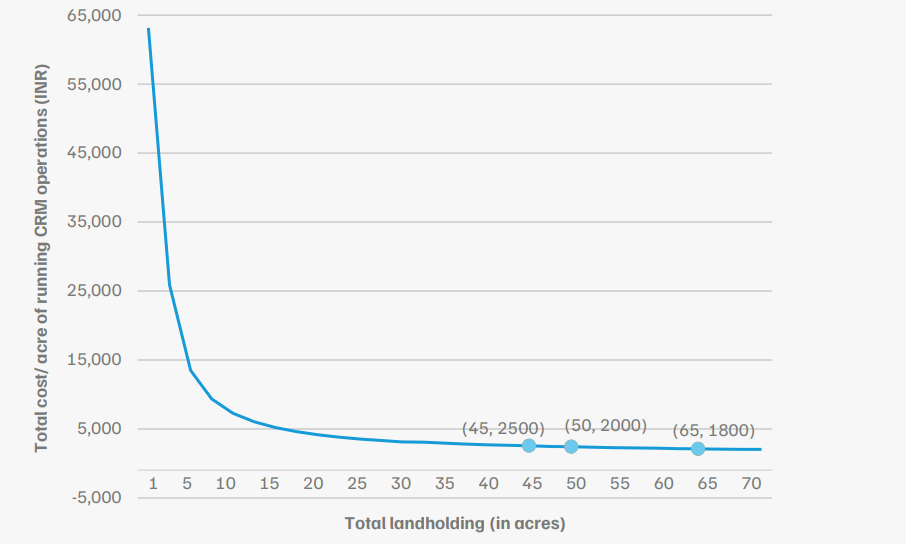
Individual farmers can purchase Super Seeder at a 50 per cent subsidy for ~INR 1.2 lakh. Additionally, the farmer also needs to invest in a high HP tractor for conducting the CRM operations which can cost ~INR 12 lakh at full cost. Assuming a lifespan of five years for the CRM machine and fifteen years for the tractor, the cost of ownership of the machines varies depending on the farmer’s total landholding. For running the CRM operations, a farmer also needs to invest in fuel for running the tractor and requires an operator for conducting the CRM operations.
For small and marginal farmers, self-ownership is particularly expensive, at ~INR 25,845 per acre. However, these costs decline significantly with increase in landholding, averaging ~INR 7,245 per acre for semi-medium and medium farmers, and ~INR 3,525 per acre for large farmers (Table 9). In contrast, the rental rate for the CRM services as a package ranges from INR 1,800 to INR 2,500 per acre. Thus, renting is particularly beneficial for small, marginal, semi-medium and medium farmers. While small and marginal farmers can access the rented CRM machines by paying zero rents but only at operational charges (~INR 1700 per acre ; machine rents exempted) with a fueled tractor and driver at less than 10 per cent of the entire cost of owning and running this equipment, even semimedium and medium farmers can access the whole package of the CRM machine, fuelled tractor and driver at less than one-third of the ownership costs of these machines.
Table 9. CHCs are democratising access to CRM solutions at less than 10 per cent of the cost of ownership for small and marginal farmers
| Cost head | Buying scenario (INR) | Renting scenario (INR) | ||
|---|---|---|---|---|
| Large farmer (>25 acres) calculated for 25 acres | Semi-medium or medium farmer (5–25 acres) calculated for 10 acres | Small and marginal farmer (0–5 acres) calculated for 2.5 acres | CHC rent | |
| Tractor | 960 | 2,400 | 9,600 | 655 |
| CRM machine | 960 | 2,400 | 9,600 | 300 |
| Fuel | 900 | 900 | 900 | 900 |
| Labour | 145 | 145 | 145 | 145 |
| Maintenance – CRM machine | 160 | 400 | 1,600 | 0 |
| Maintenance cost – tractor | 400 | 1,000 | 4,000 | 0 |
| Total cost | 3,525 | 7,245 | 25,845 | 2,000 |
Source: Authors’ analysis
Note: All values represent costs in INR per acre.
Owning a CRM machine and conducting the CRM operations themselves can be a practical investment for farmers cultivating more than 45 acres when rental rates in their area are INR 1800 per acre; for farmers cultivating more than 50 acres when rental rates are INR 2000 per acre and for farmers cultivating more than 65 acres when rental rates are INR 2500 per acre. However, renting through CHCs is far more cost-effective for farmers with lower landholdings. Renting not only reduces capital investment and maintenance burdens, but also improves access to expensive equipment at significantly low prices. Moreover, larger farmers who own CRM machines can further reduce their costs and generate additional revenue by renting them out to other farmers. They can earn up to INR 29,000 by renting out the CRM machine alone and up to INR 2 lakh per season when offering it as a packaged service. For more information, see Annexures 5 and 6.
Figure 6. Running the CRM operations using owned equipment is practical only for farmers with landholdings more than 45 acres
CHCs reported renting out CRM machines to farmers on a first-come, first-served basis. Although not explicitly stated, our interactions with private CHCs suggest that their own members are often prioritised over others. In terms of communication, almost all CHCs – both government and private – relied on in-person visits and phone calls as their primary mode of interaction. Around 10 per cent of the renting CHCs also maintained WhatsApp groups, which were used for multiple purposes, such as sharing information on machinery availability, renting coordination, and training sessions. Government CHCs additionally used these groups to market agricultural inputs to farmers. Some cooperative societies supplemented verbal communication with wall paintings displayed outside their premises. Certain CHCs, though not directly engaged in ex-situ operations, also connected interested farmers with baling aggregators by sharing their contact details.
For digitising the CRM rental ecosystem, the government has launched apps such as i-Khet and Unnat Kisan to promote machinery sharing among farmers. These platforms enable machinery owners to list CRM equipment for rent and allow users to locate the renters and book CRM services for their farms. However, uptake of these apps remains limited, even among CHCs. For instance, among CHCs renting in-situ machines, only 16 per cent had heard of i-Khet (24 per cent of government-run and 8 per cent of privately run CHCs), and none had ever used the app. This limited usage can be attributed to two main reasons. First, the app is perceived as cumbersome compared to more familiar and direct communication channels. Second, being a shared digital ecosystem, it requires both farmers and CHCs to be onboarded. Currently, only 1 per cent of farmers in Punjab use the i-Khet app, and it has not generated noticeable demand for CRM machines (Kemanth et al. 2024). Consequently, CHCs do not list their services on the platform.
The Unnat Kisan app, launched in 2024, has also struggled with adoption among CHCs. Only ~13 per cent of CHCs reported having heard of it, and just ~3 per cent had used it, with awareness levels of the app poor across both government and private CHCs.
Due to the poor uptake of digital platforms and the limited availability of rental data, such as the number of beneficiary farmers or the acreage covered through CRM machine rentals, assessing the service delivery of CHCs remains challenging. While all CHCs maintain manual records, only cooperative societies periodically upload such information on the CS Posible website, a pilot initiative by the India Paryavaran Sahayak Foundation (IPS Foundation). No such system exists for RFSs or other private entities. Additionally, while 95 per cent of CHCs reported collecting verbal feedback, none documented this feedback in written form. This lack of documentation limits the ability to track the CRM machine usage, evaluate service delivery, or recognise CHC efforts in providing quality services to farmers.
In interviews with CHCs renting in-situ CRM solutions to farmers, 76 per cent expressed support for partial burning. This method involves farmers burning the loose straw remaining after the use of combine-harvesters, rather than using cutters or Super Straw Management Systems to spread the residue after combine harvesting (CII Foundation 2019; Rajpurohit 2022). This trend is concerning, as partial burning is gaining traction in Punjab. Around 50 per cent of farmers practising in-situ technologies also practised partial burning prior to machine use during Kharif 2022 (Kemanth et al. 2024). Although CHCs have a communal responsibility to educate farmers, they largely believe that partial burning should be permitted. CHCs report that burning loose straw improves CRM machine performance, such as Super Seeders, by reducing their wear and tear, lowering diesel consumption, and aiding in pest control. Reported benefits include a reduction in diesel use of about 18–20 per cent, translating to fuel savings up to 1.8–2 litres per acre and cost savings of approximately INR 140–180 per acre. Some CHCs even reported charging an additional fee up to INR 200 for clearing a no-burn field compared to a partially burnt one. To address this challenge, targeted government-led training initiatives should be introduced for CHCs, enabling them to actively promote the complete elimination of burning practices.
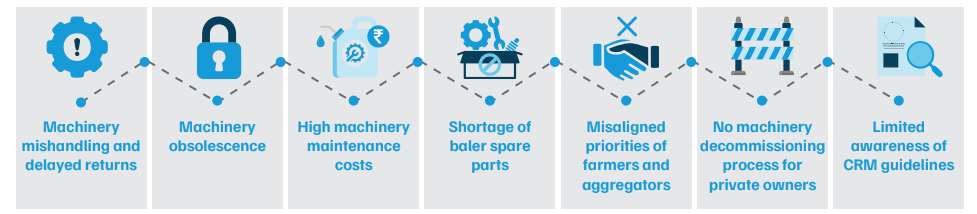
The sharp decline in new machine procurement by CHCs, combined with limited uptake of their services by farmers, could have long-term implications for the sustainability of machinery rental services in Punjab. This section outlines key operational and policy-related challenges that hinder the effective functioning of CHCs and limit their potential to become profitable business centres. Addressing these challenges is crucial to improving their operational efficiency and long-term profitability levels.
Figure 7. Roadblocks faced by CHCs in running their CRM business.
Source: Authors’ compilation
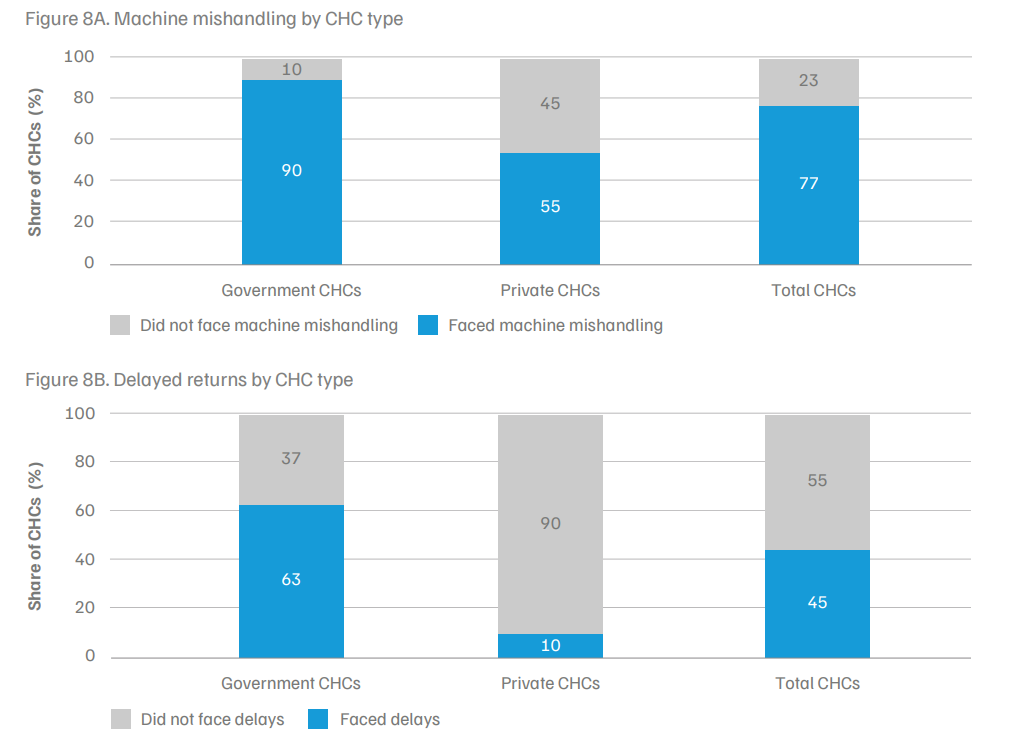
CHCs frequently encounter issues related to machinery mishandling and delays in returns. Almost 77 per cent of the renting CHCs providing in-situ CRM machines we interviewed reported damage due to mishandling, with the issue being more pronounced among government CHCs (80 per cent) compared to private ones (55 per cent). In most cases, CHCs bear the cost of major repairs, such as damage to the propeller or chain setup in Super Seeders, while farmers are expected to cover the cost of minor repairs for bolts, chains, and other components. However, in some cases, CHCs also reported having to cover the full cost of repairs.
Among those affected, 64 per cent mentioned that they fund the repairs themselves, while 32 per cent reported recovering the cost from farmers in addition to the rental fee. The CHCs also noted that damage is often discovered only after the equipment has been returned, which forces them to incur a considerable portion of the repair costs. Panchayats face additional barriers due to a lack of initiative and the absence of a designated entity responsible for repairing the damaged equipment, further reducing machine availability for future rentals. As a best practice, certain CHCs reported carrying out preventive maintenance by inspecting and repairing machines before the harvest season to reduce the risk of breakdowns and ensure smoother machinery operations.
CHCs also face challenges with timely machinery returns, with 45 per cent of CHCs renting their in-situ CRM machines reporting this issue. This challenge was significantly more common among government-run CHCs (65 per cent) than privately run CHCs (10 per cent). Delays were also more prevalent among CHCs that exclusively rent out CRM machines (62 per cent), compared to those offering a complete package including tractors (38 per cent). This discrepancy may be attributed to the fact that CHCs providing tractors tend to supervise operations themselves, reducing the likelihood of machinery misuse and delay in returns that may occur when farmers use the CRM machines independently.
Figures 8. Machinery challenges differ by CHC type
Source: Authors’ analysis
Note : In Figure 8A, the sample comprised 31 CHCs in total, including 20 government CHCs and 11 private CHCs.
In Figure 8B, the sample comprised 29 CHCs in total, including 19 government CHCs and 10 private CHCs.
Returning machines on time is crucial during the short harvest season to ensure timely access to machinery for farmers. To minimise delays, some CHCs have adopted alternative strategies. These include charging additional charges for late returns under hourly payment models; proactively following up with farmers nearing the end of their rental period, and facilitating direct machine transfers from one farmer to the next. The latter approach avoids repeated returns to the CHC, ensuring a smoother rental process.
Skilled labour is essential for both CHCs and farmers, as it reduces machine wear and tear and ensures efficient CRM operations on the farms. However, certain CHCs reported facing shortage of trained drivers to operate tractors and administer the CRM operations on the farmers’ fields.
The union government has introduced new CRM machines annually, including the Super Seeder in 2020, the Smart Seeder in 2023, and the Surface Seeder in 2024 (MoAFW 2020; MoAFW 2023, MoAFW 2024). In 2024, the Punjab Agricultural University (PAU) also initiated trials for the Mitter Seeder, which can operate on HP tractors and fully incorporates paddy straw into the soil while sowing wheat in a single pass (PAU 2024).
To promote newer models, the state government mandates procurement targets for CRM machinery. For instance, almost 62 per cent of government-run CHCs reported receiving such targets. According to the CRM operational guidelines, at least 35 per cent of the project cost must be allocated to CRM machinery, requiring CHCs to maintain a minimum stock of this equipment (MoAFW, 2020). Additionally, CHCs also respond to changing farmer preferences by frequently updating their equipment models. For instance, as demand for Super Seeders has grown, CHCs have aligned accordingly. Currently, these machines account for nearly 30 per cent of the entire CRM machinery stock of CHCs in Punjab (DoAFW, Punjab).
However, the introduction of new models, coupled with mandated procurement, has rendered many older machines obsolete, attracting limited demand from farmers. While Super Seeders remain one of the most sought-after CRM machines, most CHCs reported significant underutilisation of other machines. About 53 per cent of CHCs renting in-situ CRM machines had at least one underutilised machine, with the issue more pronounced among governmentrun CHCs. For almost all CHCs, it was the Happy Seeder. These machines were initially procured due to their popularity; however, their demand has declined significantly in recent years. As a result, many CHCs have exited the rental business, as their machines are no longer in demand. In fact, several CHCs are no longer interested in procuring any new equipment, perceiving such investments as high-risk ventures.
Punjab currently has approximately 13,719 Happy Seeders, accounting for approximately 10 per cent of the state’s total machinery stock (Rajya Sabha 2024). Despite falling into disuse, there are limited mechanisms available for decommissioning CRM machines. As a result, funds have been tied up in these machines, which occupy valuable space at CHCs while continuing to depreciate in value. To prevent a similar outcome for more machine models, both the union and state governments must proactively address this issue.
A majority of CHCs (~61 per cent) reported that with proper maintenance, in-situ CRM machines can last for about four to five years, and up to seven years in some cases. However, maintaining these machines entails significant costs. Around 52 per cent of CHCs identified maintenance expenses as a key challenge for their CRM rental business. For instance, operating a Super Seeder over 100 acres in a season can incur maintenance costs of INR 10,000–15,000 for lubrication, blade replacement, and other expenses. Such expenses can account for almost 35–55 per cent of the rental income29 generated from CRM machines. Given that ~50 per cent of CHCs offer discounted or free services to small and marginal farmers (as discussed in Section 3.6), offsetting such costs against the rental income becomes difficult. As a result, many CHCs bear the additional costs themselves, straining their financial sustainability
Of the eight baler owners (CHC operators) we interviewed who conducted baling operations themselves, seven (~88 per cent) reported difficulties in obtaining spare parts, such as twine and needles needed to bundle paddy straw into bales. Timely repairs are crucial during the short harvest season. However, baling machine owners often need to travel to the nearest block for spare parts, resulting in operational delays and high opportunity costs, which translate to reduced revenues and profits. Even where service centres exist, spare parts are frequently out of stock, forcing operators to rely on unauthorised or duplicate local alternatives.
Box 3. The story of a Ludhiana based co-operative society’s stranded mini baler as its spare parts remain unavailable.
A cooperative society based in Ludhiana ventured into ex-situ CRM with the purchase of a mini baling machine in 2021. The baler, sourced at a 50 per cent subsidy, was initially offered free of charge to farmers on a trial basis to encourage adoption, either for baling the residue for personal use, such as livestock fodder, or selling it further for additional income.
Unlike other balers that collect all residue, including loose straw and shaved stubble, this model compacts only the loose straw into bales, leaving the stubble for field incorporation. The mini baler model is compatible with lower HP tractors (35 HP), making it an accessible and practical solution for farmers.
However, the cooperative faced a significant challenge just after the first season of use. A malfunction in the sensor mechanism led to repeated twine breakage during baling, and the machine has remained non-operational ever since, as the required spare parts are unavailable in Punjab.
While the cooperative acknowledges the potential of balers as a solution for stubble management, they believe that the balers’ viability depends on the availability of spare parts and last-mile service delivery support from manufacturers. Baler manufacturers should therefore establish service centres in remote areas and ensure easy accessibility of spare parts to address such challenges on the ground.
During the short harvest season, farmers aim to clear their fields early to prepare for the next crop. However, baling is a time-intensive process. After paddy is harvested using a combine harvester, baling aggregators typically leave the residue on the field for a few days to allow moisture levels to drop. Then, they use a tedder to spread and aerate the straw for drying, a rake to gather it into windrows, and finally a baler to compress the straw into compact round or rectangular bales. This practice generally takes 2–3 days, but can extend to 4–5 days to prolong the drying process. Additionally, cloudy skies, high humidity, or shortages of machinery and labour can cause further delays.
In this backdrop, the farmers’ requirement for early field clearance often conflicts with the aggregators’ need to leave the residue on the field to reduce bale moisture levels (preferred moisture content of 15–20 per cent), which helps secure better prices from the industry. This misalignment in priorities between farmers and aggregators creates challenges in the collection of quality feedstock, even leading to the burning of straw bales in extreme cases (Harigovind 2023). In this context, training on ex-situ CRM practices is essential to demonstrate proper baling practices to farmers.
The Punjab state government provides cooperative societies with access to a formal machine decommissioning process, governed by the Punjab Cooperative Societies Act, 1961 (Government of Punjab 1961). To initiate this, cooperatives must obtain a no-objection certificate (NOC) from the DoAFW and submit usage details to the Department of Cooperation. They must then advertise the machine auction in the public domain – typically through newspapers or social media – and conduct the auction in the presence of officials from both departments and select members of the cooperative society. However, cooperatives reported delays in approval processes and challenges with machinery sales. In cases where machines remain unsold, societies must reinitiate the process, often at a reduced price. Some cooperatives, discouraged by these challenges, reported that they had never initiated the decommissioning process, leaving machinery unsold, lying defunct, and depreciating over time.
In contrast, no such established decommissioning processes exist for other machinery owners, including RFSs, FPOs, or individual farmers, who collectively own approximately 90 per cent of the CRM machines in Punjab (Figure 2). Without guidelines, these stakeholders rely on informal routes, including selling to junkyards or unregulated buyers. 13 per cent of the private CHCs we interviewed had sold or were planning to sell their obsolete and outdated CRM machines as scrap. One RFS from Patiala, for instance, reported selling their Happy Seeder for INR 45,000 as scrap.
Since the launch of the CRM Scheme in 2018, the union government has periodically revised its operational guidelines to improve access to sustainable CRM solutions for farmers. In 2024, the amended guidelines included two key provisions: allowing CHCs to procure high HP tractors at an 80 per cent subsidy and introducing a credit-linked subsidy mechanism to lower the upfront cost of machinery and improve CHC accountability when procuring CRM equipment (Jain et al. 2024). With our analysis showing that ~62 per cent of CHCs face high machinery costs as a significant barrier to procurement, this move holds potential to make CRM machines more affordable for them.
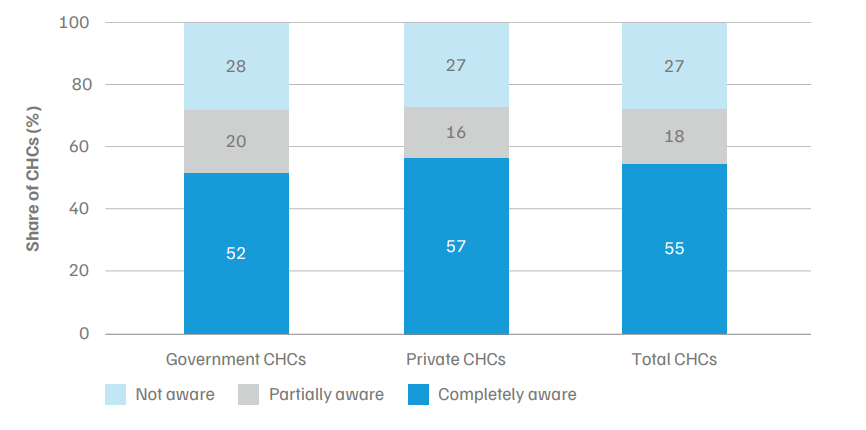
However, awareness of these guidelines remains limited. Only 50 per cent of the surveyed CHCs had a comprehensive understanding of the changes in the CRM guidelines, with awareness levels similar across both government and private CHCs. Even among those familiar with the guidelines, many lacked a clear understanding of the credit-linked subsidy mechanism, particularly when availing loans. This lack of clarity made the purchase of CRM machines under the subsidy mechanism a rather uncertain and risky proposition. Other concerns included limited information about the cost and operational expenses of GPSmounted tractors mentioned in the guidelines, which led to apprehension regarding the maintenance and operational costs of running the tractors bought under the scheme in 2024. Moreover, some CHCs noted that, despite having the necessary information, they were unable to complete applications or secure machines in time, due to a narrow application window.
Figure 9. Only ~50% of CHCs were completely aware of the changes in the 2024 CRM guidelines
Source: Authors’ analysis
Note: The sample comprised 62 CHCs in total, including 25 government CHCs and 37 private CHCs.
While the CHC ecosystem in Punjab has evolved significantly through policy initiatives, literature critically assessing the profitability of CHCs in the context of CRM remains scarce. Our study presents a first-of-its-kind assessment, offering a nuanced understanding of CHCs’ business models and their field-level constraints.
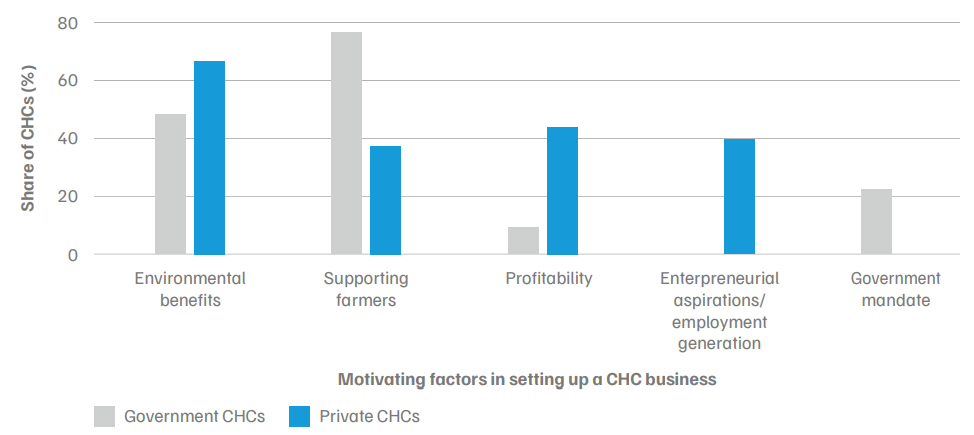
When asked about their primary motive for establishing a CHC, most operators cited environmental and social goals, such as providing affordable stubble management solutions to farmers. Among government-run CHCs, 78 per cent were primarily motivated by the aim of supporting farmers, while 66 per cent of privately run CHCs identified the need for sustainable stubble management solutions.
Additionally, privately run CHCs were also driven by an entrepreneurial spirit. About 42 per cent cited profitability as a key motivation, while 39 per cent highlighted entrepreneurial aspirations as their primary driver. In contrast, 22 per cent of government-run CHCs indicated that compliance with government mandates was also a factor behind their establishment.
Figure 10. All CHCs are driven by environmental and social motives, but private CHCs also have a profit-driven focus
Source: Authors’ analysis
Note: The sample comprised 65 CHCs in total, including 27 government CHCs and 38 private CHCs.
Therefore, ensuring the efficient use of CRM machines to support farmers and improve the profitability levels of CHCs is crucial to ensuring the long-term sustainability of CHCs involved in the CRM business.
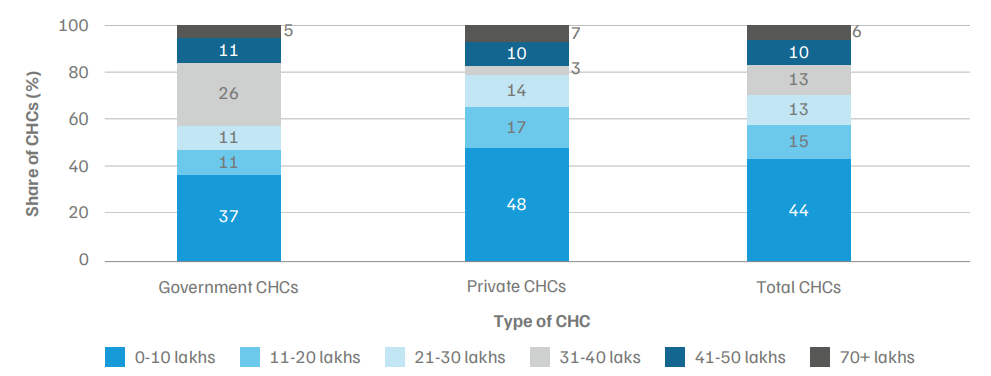
To avail subsidies under the CRM Scheme, CHCs must propose a total project cost between INR 10 lakh and 75 lakh, with at least 35 per cent of the project cost allocated to CRM implements. Among the CHCs that shared project cost details (40 in-situ; 8 ex-situ), nearly half (48 per cent) had invested less than INR 10 lakh in CRM machines. This includes 37 per cent of government-run CHCs and 44 per cent of privately run CHCs, indicating that most operate with modest capital. However, investment levels vary significantly, particularly between in-situ and ex-situ management (Figure 11).
Among CHCs involved in in-situ management, 47 per cent of government-run and 56 per cent of privately run CHCs had invested under INR 10 lakh. Higher investments were relatively rare, with only 13 per cent of government and 4 per cent of private CHCs having invested more than INR 40 lakh as part of their project cost. Median investments stood at INR 13.5 lakh for government CHCs and INR 8.9 lakh for private CHCs, likely reflecting the larger machinery inventories and user bases of government-run CHCs for in-situ management (Figure 11).
Ex-situ CHCs, conversely, reported significantly higher investments. All three government CHCs had invested between INR 30–50 lakh in the CRM business. Private CHCs often invested more, with amounts starting at INR 30 lakh and even reaching INR 1–2 crore in some cases. Median investment levels were INR 38.5 lakh for government-run CHCs and INR 48.5 lakh for privately run CHCs. This is likely because private CHCs often take on industrial contracts requiring larger machinery fleets, while government CHCs typically provide baling services for individual farmers and therefore invest relatively less (Table 6).
Figure 11. ~44% of CHCs have invested INR 0–10 lakh, while ~17% had invested more than INR 40 lakh in the CRM business
source: Authors’ analysis
Note: The sample comprised 48 CHCs in total, including 19 government CHCs and 29 private CHCs.
accessing CRM machines through the 50 per cent subsidy available to individual farmers, many are establishing machinery banks in their personal capacities. Driven by a mix of entrepreneurial ambition to earn additional income and a communal responsibility to reduce crop residue burning, they are improving access to CRM solutions at the village level.
In Bhundri, Ludhiana, Mr. Prabh Sivia purchased a Happy Seeder in 2016 and later availed the 50 per cent subsidy to procure a Super Seeder under the CRM Scheme in 2019. Recognising the need to support small and marginal farmers, he primarily rents his CRM equipment, along with tractors, at rates significantly lower than those charged by other CHCs. During the harvest season, Mr Sivia drives the machinery himself and works seven days a week. In addition to CRM, he also practices direct seeding of rice (DSR) in his fields using short-duration paddy varieties such as PR 126, and actively demonstrates its effectiveness to other farmers. He collaborates with the DoAFW, PAU, krishi vigyan kendras (KVKs), and NGOs such as Manav Vikas Sansthan (MVS) to organise and host training camps on CRM and DSR techniques, offering practical insights and hands-on learning techniques to the farming community.
Mr. Gurcharan Singh from Ghagga, Patiala, also procured CRM machines through the 50 per cent subsidy scheme and has made machine rentals his primary source of income. Farmers can contact him via phone calls or in-person to rent machinery. He maintains detailed records to ensure transparency and accountability of his operations. Mr. Singh and his family members personally operate the machinery on the farmers’ fields availing their services, guaranteeing proper handling of the machines. Despite incurring high diesel and upkeep costs, his Super Seeder covers an optimal area of about 120 acres per season, earning him a steady rental income.
While private CHCs primarily earn through rental payments for CRM machinery, governmentbased CHCs have additional revenue sources beyond CRM machinery rental payments. Cooperative societies typically generate their revenues from providing loans and selling agricultural inputs such as seeds, fertilisers, and pesticides to farmers. Their major expenditures include employee wages and salaries, as well as machinery maintenance costs. In our survey, 83 per cent of cooperatives cited loans as their most significant revenue source, while 50 per cent identified wages and salaries as their most significant expenditure. Both government and private CHCs allocate a significant portion of their seasonal expenditure to repairing and maintaining CRM machines. Additionally, several CHCs also invest part of their income in procuring new machines to align with farmers’ evolving needs.
Virk Farm Group, a registered farmer society (RFS) based in Ludhiana, procured two Super Seeders in 2020 to address the issue of stubble burning. While they rent out CRM machines to farmers, what sets them apart is their active engagement with the farming community through live, on-field demonstrations of CRM machines. By showcasing the utility and practical benefits of CRM machines through hands-on learning tools, they have helped build trust and improve the adoption of CRM practices. The group’s initiative highlights the power of farmer-to-farmer learning and knowledge sharing in accelerating the uptake of zero-burn farming practices on the ground.
Although CHCs procure CRM machines at an 80 per cent subsidy, they must cover sufficient acreage per year to ensure financial viability. For instance, a Super Seeder procured for about INR 48,000 would need to cover ~105 acres (42 hectares) annually to break even over five years (Annexure 3). Based on our survey, about 36 per cent (46 per cent of government-run and 27 per cent of privately run CHCs) met this threshold, covering ~100 acres with one Super Seeder in a single harvest season.
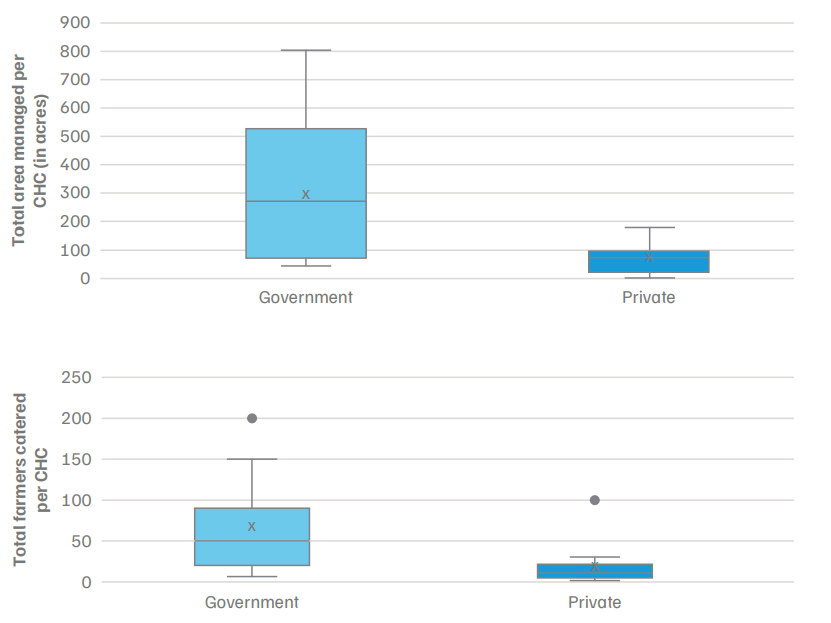
Government CHCs renting out in-situ CRM machines outperform their private counterparts in both land coverage and farmer reach. The median land area covered per government CHC was ~300 acres, compared to ~75 acres for private CHCs using in-situ CRM machines. Similarly, the median number of farmers served stood at 50 for government CHCs and 10 for private CHCs. One key reason for this disparity is that all government CHCs engage in renting out CRM machines, while nearly half of the private CHCs use their equipment exclusively within their own groups, limiting their scope and reach. Additionally, government CHCs tend to invest slightly more than private ones in setting up operations for in-situ management (Figure 12).
Figure 12. Government CHCs cover approximately 4 times the area and 5 times the number of farmers as compared to private CHCs through their in-situ machines
Source: Authors’ analysis
Note: 1) In the chart above, the sample comprised 34 CHCs in total, including 14 government CHCs and 20 private CHCs.
2) In the chart below, the sample comprised 30 CHCs in total, including 14 government CHCs and 16 private CHCs.
However, in the case of ex-situ management, private CHCs generally cover a much larger area. One government CHC32 reported covering 150 acres, while private CHCs covered areas ranging between 800–3,000 acres through their baling operations.
Box 6. Nurpur Bet’s model is a win-win with high machinery uptake and high profits
The Nurpur Bet multipurpose cooperative society in Ludhiana exemplifies how CHCs can become profitable. Starting with a single Happy Seeder in 2008, the society has since expanded its fleet to over 40 CRM implements and 12 tractors. Initially established to improve CRM access within the village, the CHC now provides both in-situ and ex-situ CRM services to six more nearby villages.
For in-situ management, the society rents out CRM machines along with tractors, covering approximately 750 acres and supporting nearly 150 farmers. Each Super Seeder alone covers around 175 acres per season, well above the optimal range of ~100 acres.
The CHC employs six permanent staff members to oversee the cooperative’s operations. In addition, chowkidars are assigned to monitor fuel levels before and after field operations to ensure the efficient functioning of the equipment. Tractor drivers are incentivised with performance-based incentives to ensure timely services, reduce attrition rates, and maintain the availability of skilled labour during the crucial harvest season.
The cooperative also offers baling services for farmers’ personal use at a rental cost. To maintain operational efficiency, baling operations are limited to a 15-kilometre radius, enabling timely service and minimising delays. Given the short harvest window, this is critical as farmers prefer fast field clearance for sowing the next crop. On average, the society successfully covers about 150 acres per season in 20–25 days through ex-situ residue management practices. With their broad coverage, high revenues, and effective functioning, they remain profitable under both in-situ and ex-situ operations.
The society is also proactive in staying informed about the latest government schemes. It is fully aware of the 2024 CRM operational guidelines, including the credit-linked back-ended subsidy (CLBES) mechanism. They are also digitally-inclined, using WhatsApp to disburse information regarding CRM practices and sell agricultural inputs to farmers.
Acknowledging the disparate situation of smaller societies with limited machinery stocks and their reliance on larger societies for equipment during the peak harvest season, the society also emphasises the need for more substantial support from the Cooperative Department to strengthen such smaller societies.
The Noorpur Bet model exemplifies how a well-executed CHC model can lead to the adoption of sustainable farming practices, community empowerment, and economic success.
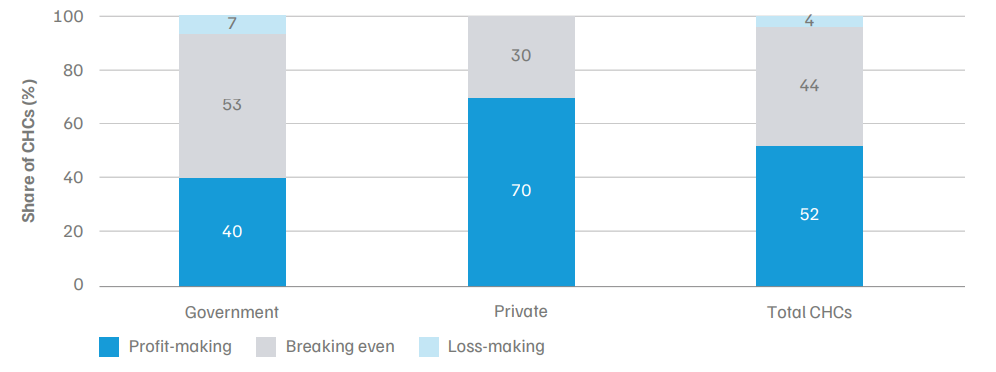
Among the 31 CHCs (25 in-situ; 6 ex-situ) that shared financial data for this study (17 government-run; 14 privately run), 55 per cent reported operating profitably. However, profitability varied across services: 52 per cent of in-situ CHCs and 67 per cent of ex-situ CHCs reported running a profitable venture.
Privately run CHCs involved in in-situ CRM tend to be more profitable than their governmentrun counterparts. While government CHCs typically serve a larger number of farmers over a wider area through in-situ rental services, only 40 per cent were reported to be profitable, compared to 70 per cent of private CHCs. This disparity may be attributed to several factors. For instance, government CHCs generally maintain a larger workforce, including administrative staff and machinery operators resulting in higher salaries and labour costs. In contrast, private CHCs often manage operations themselves, keeping overheads relatively low. Many government CHCs also own underutilised machines, which can further reduce profitability. Additionally, a higher proportion of private CHCs offer CRM services as a package, leading to higher profitability levels (discussed in section 5.6).
This trend is visible in ex-situ services as well, where a greater share of private CHCs reported profitability, primarily as a larger share of government CHCs had leased out their balers to aggregators. CHCs engaged in ex-situ CRM and supplying bales to industry users reported average profits of about INR 4,200 per acre.
Figure 13. A majority of private CHCs across both in-situ and ex-situ CRM reported profitable operations
Source : Authors’ analysis
Note : The sample comprised 25 CHCs in total, including 15 government CHCs and 10 private CHCs.
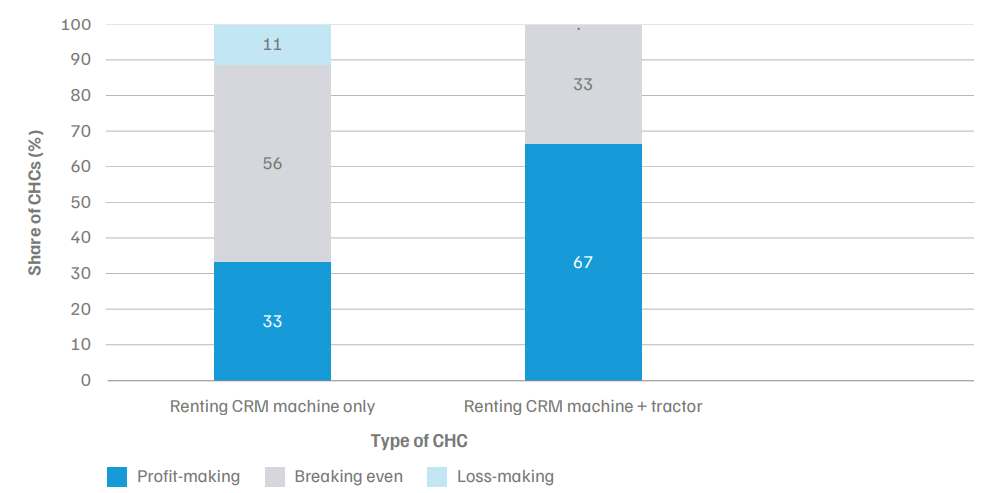
CHCs offering a one-stop solution, including a fuelled tractor, a driver, and in-situ CRM machines, tend to be more profitable than those offering only the machines. All private CHCs engaged in the rental business provided tractors along with CRM machines. However, only 39 per cent of government CHCs offered tractors with their CRM machines (discussed previously in section 3.2). Of these government CHCs offering the end-to-end CRM solution, 50 per cent reported profits. On the other hand, among government CHCs providing only CRM machines, just 33 per cent were profitable. On average, CHCs providing a one-stop solution earned profits of around INR 1,037 per acre, accounting for approximately 50 per cent of the revenue per acre. Comparatively, CHCs only renting the CRM machines made profits of INR 90 per acre forming about 30 per cent of their revenue per acre figures. This disparity may stem from higher costs of machinery mishandling and delays faced by CHCs only providing the machines. Although tractors involve a high-cost investment, the 2024 CRM guidelines allow CHCs to procure tractors at an 80 per cent subsidy, presenting an opportunity for these centres to boost their machinery rentals and improve their profitability levels in the coming years.
Figure 14. Providing a one-stop CRM solution is set to make more profits than only CRM machines
Source: Authors’ analysis
Note: The sample comprised 24 CHCs in total, including 9 CHCs renting only CRM machines and 15 CHCs renting CRM machines with tractors.
CHCs play a significant role in providing affordable CRM solutions to farmers. However, they face specific operational and structural challenges that hinder their effectiveness. This section outlines policy recommendations to strengthen the existing CHC model and foster an enabling environment for their establishment, expansion and effectiveness in the coming years. While these recommendations are informed by findings from Punjab, we believe they can also contribute to the broader policy discourse on enhancing the efficiency of CHCs in other states.
The 2024 CRM guidelines introduced an 80 per cent subsidy on tractors (60 HP and above) for CHCs for the first time. However, a clear framework to evaluate CHC performance before awarding tractors remains absent. Providing one subsidised tractor to every CHC under the CRM Scheme would cost nearly INR 3,896 crore, surpassing the INR 3,698 crore disbursed under the CRM Scheme since its inception in 2018 (Lok Sabha 2025). For more information, see Annexure 4.
Therefore, state agricultural departments should establish a transparent performance-based due diligence mechanism for assessing CHCs to allocate subsidised tractors in an organised manner. Only CHCs that meet minimum operational targets (which are independently verifiable) can be considered eligible: for example, CHCs that manage at least 35 hectares of paddy-sown land with one Super Seeder and report such data through a unified portal, similar to the CS Posible website. This would help the state government evaluate CHCs based on how often they rent out machines and reach service delivery standards, ensuring transparency in the disbursal of tractors to CHCs. Given the availability of second-hand tractor markets in Punjab (Singh 2024), CHCs can also explore and tap into this market to procure high HP tractors for conducting CRM operations.
As Punjab shifts its focus to ex-situ residue management, the number of balers in use has increased significantly. However, several baler owners have highlighted the unavailability of baler spare parts. Baling machinery manufacturers should thus ensure the availability of essential spare parts at service centres, especially during the harvest season. Moreover, they should also train service personnel, particularly in remote areas, to carry out repairs promptly and reduce operational downtime during the harvest season.
The state government of Punjab has issued guidelines for assets managed by cooperatives governed by the Punjab Cooperative Societies Act, 1961, which includes a decommissioning process for agricultural machinery (Government of Punjab, 1961). The state government should formulate and standardise similar guidelines for all types of CHCs and any similar entities that are offered CRM machines at an 80 per cent subsidy. A streamlined decommissioning process would enable CHCs to reallocate resources from outdated or underutilised machines to more productive assets.
This plan can be based on the Ministry of Road Transport and Highways’ Vehicle Scrappage Policy (2021), which specifies mandates for resource recovery and pollution control (MoRTH 2024). The Ministry of Agriculture and Farmers Welfare (MoAFW) should establish an operational framework incorporating an extended producer responsibility (EPR) mechanism, which would require CRM machinery manufacturers to take back machines at the end of their lifecycle. State governments should also maintain a verified registry of scrap dealers and recycling networks to ensure a structured and transparent disposal process, as well as fair resale pricing for decommissioned CRM machines (Jain et al . 2025).
In line with the 2024 Operational Guidelines under the Sub-Mission on Agricultural Mechanisation (SMAM) (Mo&AFW 2024), farm machinery training and testing institutes (FMTTIs), state-identified institutions, Indian Council of Agricultural Research (ICAR) institutions, Agricultural Technology Management Agency (ATMA) institutions, and KVKs under ICAR/state agricultural universities (SAUs) should conduct trainings on the proper use and maintenance of CRM machines to ensure their efficient use and extend machinery lifespan. These trainings must also address weather-related challenges, such as unexpected rain or excessive moisture in the residue, which may require different CRM practices to better adapt to such scenarios. Similar to the krishi sakhis who work as para-extension workers under the Lakhpati Didi programme, the Ministry of Agriculture and Farmers Welfare (MoAFW) can promote yantra sathis to provide agricultural employment to the youth and train farmers in the use of equipment, fostering capacity building and creating employment through technical and vocational training in machine operation and maintenance services.
These organisations must also collaborate with relevant stakeholders in the ex-situ management ecosystem, such as the state pollution control boards and agricultural universities, to expand the scope of these training programmes in line with emerging CRM solutions. For instance, farmers should be trained on ex-situ management practices, such as the working of balers. This will help align their priorities with those of aggregators and industries, ensuring timely field clearance while maintaining optimal bale moisture levels.
Given the significant changes in the CRM guidelines in recent years, state governments should also conduct capacity-building workshops to actively disseminate this information to CHCs, farmers, and other relevant stakeholders.
The DoAFW should collaborate with key stakeholders, such as the PAU Skill Development Centre, the National Institute of Rural Development and Panchayati Raj (NIRDPR), and the National Cooperative Union of India (NCUI), to provide business management training to CHCs, equipping them to function as profitable business centres. Such initiatives can be modelled after programmes such as Kudumbashree and Mahila Kisan Sashaktikaran Pariyojana (MKSP), which aim to promote capacity building and sustainable business development among SHGs. Additionally, these training institutes should also establish monitoring mechanisms to assess the outcomes of these programmes in terms of employment generation, skill enhancement, and productivity improvements, among other metrics.
While the credit-linked subsidy mechanism has been implemented under schemes such as the Mission for Integrated Development of Horticulture (MIDH), and the Credit Linked Capital Subsidy for Technology Upgradation Scheme (CLCS-TUS) for Ministry of Micro, Small & Medium Enterprises (MSMEs), it was incorporated into the CRM Scheme for the first time in 2024 (MSME, 2023 ; Mo&AFW 2024). To ensure the effective implementation of the CRM Scheme, the union government should identify the nodal agencies and financial institutions involved in the scheme’s rollout and equip them with the necessary information related to loan disbursement. This step will help reduce information asymmetry between banking officials and CHCs and address the challenges currently faced by CHCs in accessing scheme benefits.
Our interviews indicate that only 13 per cent of CHCs renting in-situ CRM machines were aware of the Unnat Kisan app launched in September 2024, and only 3 per cent had ever used it. Similarly, while 16 per cent of CHCs renting in-situ machines had heard of the i-Khet app, none reported active usage. Many perceived these apps to be cumbersome compared to more familiar and direct modes of contact. Moreover, the utility of such apps depends on the successful onboarding of both CHCs and farmers in sufficient numbers, given the shared ecosystem. To strengthen the functionality of these platforms, efforts should focus on improving the user interface, onboarding all service providers, and marketing it effectively using tutorials, use-case demonstrations, and awareness campaigns highlighting their benefits.
States can draw inspiration from apps such as Krish-E and Raj Kisan CHC in India, or Hello Tractor in Africa, to improve the uptake of machinery renting apps among farmers. Developing and popularising the use of such platforms can support inventory management and improve tracking of CHC service delivery through feedback mechanisms. Additionally, publicly recognising well- performing CHCs could further enhance their visibility and encourage wider farmer engagement.
The FMTTIs, along with relevant centres under ICAR, SAUs, and state/central governments, should be empanelled to carry out performance evaluation of CRM machines. The operational guidelines under the SMAM (2024) already include provisions for this, where evaluating institutions are provided a one-time grant of INR 1.5 crore each to strengthen infrastructure and testing facilities, with additional grants for establishing new facilities as approved by the DoAFW. Incorporating a similar provision within the CRM guidelines would ensure adequate testing and the promotion of the most efficient equipment with demonstrated success under the scheme. These technical evaluations would help minimise the deployment of equipment that later remains unused and provide a valid basis for allowing machinery owners to upgrade equipment with technical or design issues to improved models, thereby ensuring more effective use.
CHCs play a pivotal role in ensuring the last-mile delivery of CRM solutions to farmers. Their relevance is particularly critical for small and marginal farmers, who often lack access to farm machinery and tractors. This report examines the CHC ecosystem, with a particular focus on CRM, drawing insights from an assessment of 65 CHCs across three districts of Punjab. While government initiatives have significantly helped increase the establishment of CHCs and the distribution of CRM machinery, concerns remain about the operational effectiveness and long-term sustainability of these centres. It is thus crucial that we evaluate the performance of existing CHCs before establishing new ones. Doing so will help ensure that current centres remain viable and continue to serve farmers effectively over time.
The establishment of CHCs is primarily driven by environmental concerns, social responsibilities, and entrepreneurial aspirations. While government-run CHCs primarily aim to support farmers, privately run CHCs also seek profitability and aim to generate employment. The data indicates that private CHCs tend to be more profitable, particularly those offering comprehensive solutions, providing tractors and drivers along with the machinery, resulting in higher rental uptake and profit margins. These findings underscore the need to re-examine the current business models of government-run CHCs and strengthen their operational efficiency to ensure their long-term success.
We note that challenges such as machinery mishandling, delayed returns, high maintenance costs, and a lack of skilled labour contribute to the operational difficulties faced by CHCs. These issues are more commonly encountered by government CHCs, suggesting the need for improved machine management frameworks. Additionally, some CRM machines, particularly Happy Seeders, have reduced uptake among farmers. The year-on-year introduction of newer machinery models has rendered older equipment obsolete, resulting in financial losses for CHCs. A notable emerging trend is the increasing participation of CHCs, particularly private CHCs, in ex-situ CRM options. While this shift reflects a desire to enhance profitability, their operations are often constrained by logistical challenges and misaligned priorities between farmers and baling aggregators.
The report also highlights CHCs’ limited awareness and adoption of digital platforms such as i-Khet and Unnat Kisan, which were designed to streamline machinery rentals in Punjab. There is a pressing need to develop more user-friendly, well-promoted digital solutions that cater to both CHCs and farmers. Broader adoption of such platforms could support authorities with data in monitoring CHC performance and service delivery more effectively.
The CHC ecosystem holds significant promise for Punjab’s transition towards zero stubble burning. CHCs have the potential to boost rural incomes, generate employment opportunities, and reduce emissions. To realise this potential, the Punjab government must implement targeted reforms – leveraging information technology for improved tracking and service management, introducing an end-of-life machine management plan, and providing CHCs with business management training. While this report focuses on Punjab, its findings and recommendations offer broader relevance for policymakers in other states striving to address the stubble burning crisis.
While our study serves as a starting point in examining the effectiveness of CHCs established to promote zero - burn CRM operations, future research should aim to use a more representative sample of CHCs and apply quantitative methods to identify the key drivers of CHC performance, as well as the primary and secondary barriers hindering their success. This would contribute significantly to policy discourse and help prioritise areas for intervention, ensuring that CHCs evolve into a robust and scalable model for delivering CRM services.
Custom hiring centres rent crop residue management (CRM) machines, such as Super Seeders, to farmers at government-prescribed rates. Under the CRM scheme launched in 2018, they enjoy 80 per cent subsidy benefits on machinery purchases. Such CHCs can be set up by cooperative societies, cluster-level federations, self-help groups (SHGs), farmer producer companies/organisations (FPCs/ FPOs), panchayats, and village-level entrepreneurs.
By offering CRM rental services, CHCs provide farmers with access to capital-intensive, high-quality mechanisation opportunities at affordable rates, prompting rural entrepreneurship and innovation. They also reduce the capital requirements and maintenance responsibilities associated with owning equipment, allowing for more efficient resource use. Additionally, renting safeguards farmers from the risk of owning specialised equipment in case farming practices change.
CHCs own nearly 45 per cent of the total CRM machines deployed in Punjab, yet only 15 per cent of the farmers practising in-situ CRM accessed their services. The share of new machines procured by CHCs has also declined significantly from over 50 per cent before 2022 to just 10 per cent in the last two years. Overall, nearly 85 per cent of the CRM machines currently held by CHCs were procured between 2018 and 2021, during the scheme’s initial years of rollout.
Unlocking Finance for India’s Textile Waste Management

Are Clean Cooking Fuels Reaching India's Urban Poor?