Council on Energy, Environment and Water Integrated | International | Independent

Suggested citation: Aggarwal, Jhalak and Mohana Bharathi Manimaran. 2025. How to Equitably Scale Up Finance for the Loss and Damage Fund. New Delhi: Council on Energy, Environment and Water.
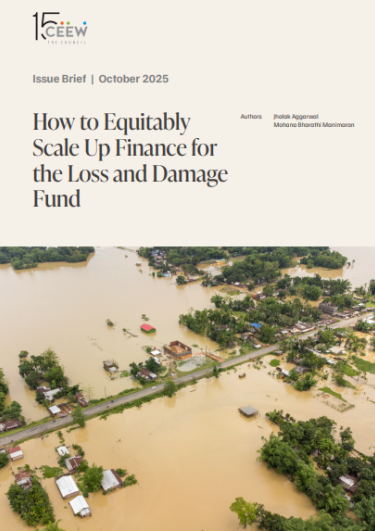
Loss and damage (L&D) from climate change is already imposing irreversible harm in the form of economic and non-economic impacts, and this burden is falling disproportionately on developing countries. Despite the establishment of the Fund for Responding to Loss and Damage (FRLD) at COP27 and its operationalisation at COP29, the scale of finance remains limited, inaccessible, and unpredictable. Current pledges are ~USD 800 million, which is 0.2 per cent of the estimated developing country needs for 2030.
To address this persistent gap, this issue brief nudges for a minimum allocation floor for developed-country contributions and offers a practical and politically rational approach to mobilising sustained, grant-based finance for the communities most affected by climate impacts. The research positions vulnerability alongside responsibility and capability as a foundational principle of burden sharing and applies this framework across 11 indicators for 150 countries. This enables finance to be mobilised and accessed in a manner that reflects historical emissions profiles, exposure to climate-induced disasters, fiscal constraints, and developmental realities. More importantly, our research also
There can be little progress on scaling up support for loss and damage (L&D) finance without a serious thought on who should pay and how much. The annual economic cost of L&D in developing (Non Annex I) countries is projected to be anywhere between USD 290–580 billion by 2030 and USD 1–1.8 trillion by 2050 (Reinhard et al. 2019, 349). However, the history of climate finance contributions has been marred by inaction, and the same is seemingly true for L&D finance. Currently, L&D finance is limited, inaccessible and unpredictable.
The Fund for responding to Loss and Damage (FRLD) was established at the 27th Conference of the Parties (COP27), to ensure adequate, timely, and predictable financing for the growing climate related L&D needs of vulnerable communities in developing countries. The FRLD aims to disburse finance in early 2026, though much of the groundwork remains to be done. A review of existing literature points to key challenges that persist.
As climate impacts intensify and vulnerabilities compound, determining pathways for securing sustainable funding is essential. And in this identifying a fair and feasible approach to garnering developed country contributions to L&D finance that can be sustained in the long term is central. This issue brief argues that vulnerability is an imperative framing for rethinking responsibility and capability, as the impacts are universal but differentiated.
It sets forth two instrumental and interlinked outcomes: an overarching burden sharing framework for countries to scale up finance, with vulnerability at its core, and a ‘baseline’ or minimum floor for developed country contributions to the FRLD.
The principle of Common but Differentiated Responsibilities and Respective Capabilities (CBDRRC) has long constituted the foundation of international climate governance. Grounded in historical accountability and economic capacity, it shapes obligations and expectations under the multilateral regime. However, climate impacts have been intensifying in scale, frequency, and distribution, and the geographies of exposure have been shifting. The 74 low income countries, which emit only 10 per cent of the world’s greenhouse gases (GHG) (World Bank 2015), are the most affected by climate change impacts. And, compared to the 1980s, they have already experienced approximately eight times as many natural disasters in the past ten years (Nishio 2021). It is evident that vulnerability is our new reality. Embedding vulnerability in the core architecture of global climate policy is therefore imperative (Sormunen 2023). However, this does not displace responsibility or capability as guiding principles but complements them by drawing attention to present and projected harm.
Burden sharing for L&D: Who pays?
Equally critical is to recalibrate burden sharing arrangements for L&D finance ensuring that the three pillars—responsibility (historical emissions), capability (ability to pay), and vulnerability (impacts of climate change)—inform the pathways for international support. We analysed 150 countries1 based on 11 indicators (Annexure 1) and categorised the countries into Most Responsible, Emerging Responsibility, Capable but Not Responsible, Capable but With Multidimensional Vulnerabilities, and Most Vulnerable (Figure ES1).
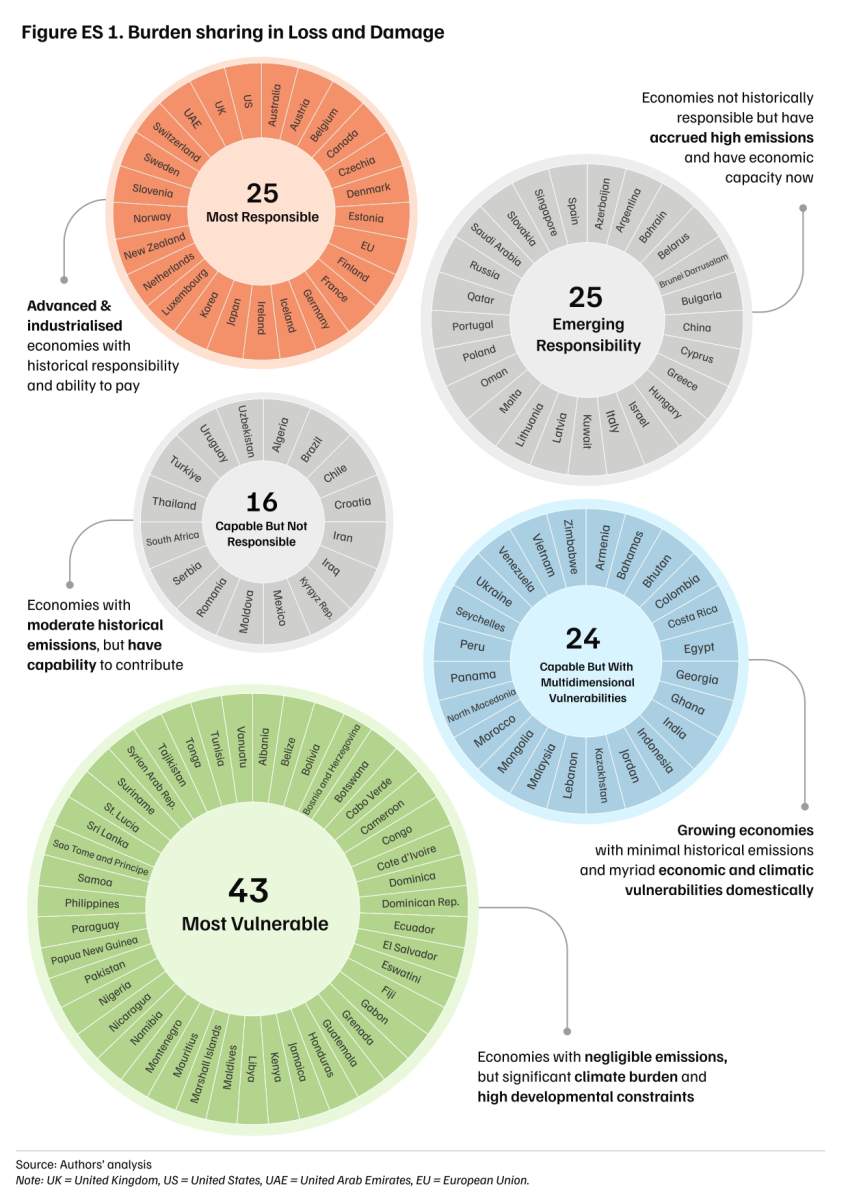
The Most Responsible category (25 countries), largely comprising historical emitters and industrialised economies with strong financial capacity to contribute, are expected to be the primary contributors to the FRLD.
The Most Vulnerable category (43 countries) is predominantly made up of Least Developed Countries (LDCs), Small Island Developing States (SIDS), and fragile or conflict affected states. Despite minimal contributions to global emissions, they are disproportionately bearing the brunt of climate impacts. This group is the highest-priority recipient for direct, predictable, and grant based support—not loans or complex instruments that add to their debt.
While we advance the case for who pays, it is important to understand how much. Our research nudges for a minimum floor of annual contributions from developed countries that offers a politically rational and implementable starting point for contributions. Based on three parameters found in established fair share frameworks—gross domestic product (GDP), cumulative GHG emissions, and population—we determined the proportional share of a country only for the Most Responsible countries obligated to provide support. We used the lower end of the finance need estimated for 2030 from Markandya and González-Eguino (2019) and expressed it as a percentage of their respective GDPs to arrive at the minimum share of country GDP or baseline (see Table ES1).
The results highlight the baseline contribution as 0.08 per cent of GDP for countries, which would yield approximately USD 60 billion annually from Most Responsible countries—a quantum leap from the ~USD 800 million currently mobilised.
Table ES1. Estimated annual country contributions from select Most Responsible countries
| Country | Contributions (billions USD) |
|---|---|
| United States | 22.02 |
| European Union (27) | 14.66 |
| Germany | 3.52 |
| Japan | 3.04 |
| United Kingdom | 2.75 |
| France | 2.39 |
Source: Authors’ analysis
While still not enough to meet the developing country demands of USD 400 billion per annum, the minimum allocation floor would raise the pledged quantum to nearly 15 per cent of the required quantum, much higher than the current state of 0.2 per cent mobilised. Given the potential for L&D finance to enable actualisation of developmental benefits accrued via development finance, the ask is a practical step ahead to mobilise tangible financial contributions, and thereby prevent the reversal of hard-earned development gains. The returns on investment in investing in L&D are also many fold - CDRI studies have demonstrated that every dollar invested in integrating resilience in the new and existing infrastructure systems can generate a resilience dividend in the range of USD 4 – USD 12 (CDRI 2023).
For L&D finance to deliver, four shifts are necessary relating to scale, capacity, targeted efforts, and cooperation.
For this finance to effectively render impact on the ground, three other shifts are needed across international, national, and subnational fronts.
Such decentralised planning not only enhances equity and effectiveness but also improves the legitimacy and public ownership of L&D interventions.
This issue brief contributes robust evidence, grounded in burden sharing principles and differentiated vulnerability, towards informing the scaling up of L&D finance. By proposing to shift the currently political discourse to an evidence based one, the issue brief holds the potential to enhance the ability of countries in the Global South to take the lead in formulating and negotiating solutions within coalitions such as the G77+China and key platforms like the Santiago Network and the FRLD Board.
Climate impacts may be slow onset climatic processes or extreme weather events. But both cause unavoidable, irreversible loss and damage2 (L&D) and impose long term recovery and opportunity costs. Each 1°C increase in temperature will reduce global GDP by 12 per cent, six times as much as previous estimates (Purton 2024). Over 3.6 billion people live in areas susceptible to climate impacts (WHO 2023). Climate impacts are rising worldwide, and the consequences are far reaching. In 2023 alone, heatwaves killed an estimated 47,000 people in Europe (ISGlobal 2024) and 37,000 in China (Rui 2024).
The Vulnerable Twenty (V20) Group3 has already experienced a cumulative GDP loss of 20 per cent over the past two decades i.e., 2000-2019 (Baarsch, Awal, and Schaeffer 2022, 6). Between 2019 and 2023, economic damage in India, amounting to USD 56 billion, accounted for over 25 per cent of the damage in the Asia Pacific region (ADB 2024). Nearly 76 per cent of India’s population are at high or very high risk of extreme heat (Prabhu et al. 2025, 3) and 75 per cent live in districts highly vulnerable to extreme hydrometeorological disasters, suggests CEEW research (Mohanty and Wadhawan 2021, 1).
Therefore, a disproportionate share of the burden is borne by low income, already vulnerable regions and communities, which have historically contributed the least to climate change. Coupled with inflation and geopolitical instability, climate impacts— complex, chronic, and compounding—amplify existing inequalities, developmental constraints, and financial gaps, and cause losses to lives, livelihoods, and ecosystems. From the perspectives of climate justice and global equity, this imbalance is unfair (Carbon Brief 2021), and the need to explore how resources can be adequately mobilised at a scale commensurate with the growing needs of vulnerable communities and developing countries is urgent.
To address the need, the Fund for Responding to Loss and Damage (FRLD) was established as an operating entity under the financial mechanism of the United Nations Framework Convention on Climate Change (UNFCCC) at the 27th Conference of the Parties to the UNFCCC (COP27). The largest global funding source for climate-related L&D, the FRLD was fully operationalised at COP29 and is now shifting from conceptual debates to operational realities. The FRLD has entered its catalytic phase—a critical juncture focused on defining access modalities and formulating a long term resource mobilisation strategy—to ensure adequate, timely, and predictable financing.
The FRLD aims to disburse funds early in 2026, but key challenges remain in defining its scope, access, and finance. Contributions are voluntary, and the New Collective Quantified Goal (NCQG), finalised at COP29, excludes allocations for L&D. So, country contributions towards relief are barely proportionate and fall drastically short. And, as climate impacts worsen and economic damages mount, the gap between the scale of needs and available resources is widening at an alarming pace.
The annual economic cost of L&D in developing (Non Annex I) countries by 2030 is projected, variously, at USD 400 billion (Baarsch et al. 2015) and USD 290–580 billion (Reinhard et al. 2019, 349); by 2050 it is projected to be USD 1–1.8 trillion. The Loss and Damage Fund Board4 identifies 2025–2026 as the startup phase and aims to roll out USD 250 million (Civillini 2025), but current pledges stand at USD 800 million, a mere 0.2 per cent of estimated needs, and actual payments as of August 2025 are even smaller, at USD 321 million (Civillini 2025).
The history of climate finance contributions, and L&D finance, has been marred by inaction—L&D finance is limited, inaccessible, unpredictable, and the L&D finance gap is only one of several climate finance gaps. Therefore, this issue brief develops an equitable framework for scaling up contributions to the FRLD and broader L&D finance measures by examining the available literature on burden sharing mechanisms and finance.
We also determine the differentiated responsibilities of countries and propose a minimum allocation quantum based on a conservative estimate of benchmarked needs. The quantum is merely a baseline, tantamount to the less ambitious end of the benchmarking range.
The current research addresses a question central to the longterm resource mobilisation and the operationalisation of the FRLD:
What would be a fair and feasible approach to formulating developed country contributions to L&D finance?
In answering this question, the study has proven instrumental in providing two interlinked outcomes:
To achieve these outcomes, the current research followed an iterative process of research and consultation (Figure 1).
Figure 1. The grounded theory approach
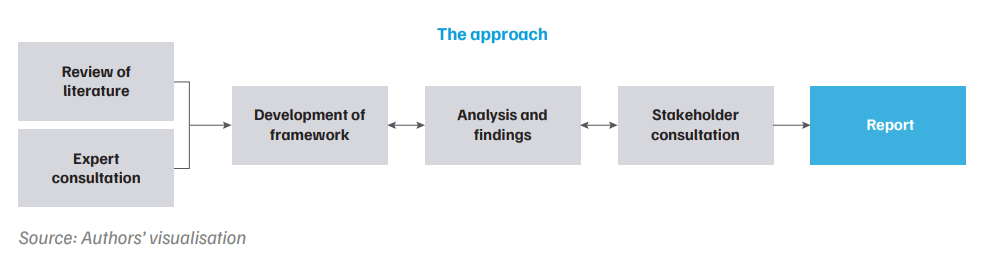
We used a grounded theory approach involving an extensive literature review and integrated it with a feedback loop that validated the findings from the literature in consultation with experts and stakeholders alike (see the list of expert reviewers and stakeholders consulted in Annexure 2). Therefore, the framework is built on the foundations of existing burden sharing principles—responsibility and capability.
This study intends to build on this and situate vulnerability—given its criticality in the L&D discourse—as a central tenet, therefore, foundational principles in our framing include responsibility, capability, and vulnerability in equal weightage.
Further, each of these principles includes indicators (11 in total – details in Annexure 1) that capture the different facets of the real world manifestations of these foundational principles across the countries assessed (Figure 2). Experts recommended these indicators the most over several rounds of review and consultation.
Figure 2. Principles and indicators of the burden sharing framework for L&D
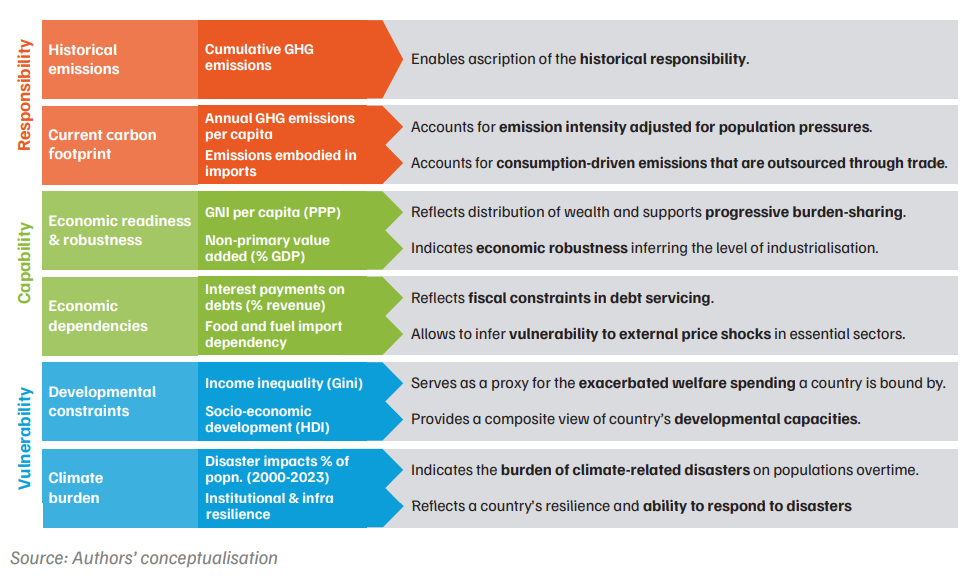
The assessment of 150 countries5 includes developing countries and economies in transition, essentially covering all Parties to the UNFCCC except Least Developed Countries (LDCs).6 Each country’s performance is compared to the average of developed (Annex II) countries: if it performs better than the average, it is given a score of 1; if it performs worse, it is given a score of 0. Intermediate scores are assigned based on thresholds set at the averages of the lowest-performing Annex II countries: 0.25 for the average of the 5 lowest-performing countries and 0.5 for the 10 lowest-performing countries.
Table 1. Categorisation of countries
| Most Responsible | Advanced and industrialised economies with historical responsibility and ability to pay |
| Emerging Responsibility | Economies not historically responsible but have accrued high emissions and have economic capacity now |
| Capable but Not Responsible | Economies with moderate historical emissions but can contribute |
| Capable but With Multidimensional Vulnerabilities |
Growing economies with minimal historical emissions and myriad economic and climatic vulnerabilities domestically |
| Most Vulnerable | Economies with negligible emissions but significant climate burden and high developmental constraints |
Source: Authors analysis
Based on the overall score across the 11 indicators, the countries are grouped into quintiles (Table 1). The resulting five groups represent the continuum of burden sharing between countries as a cumulative function of three foundational principles: responsibility, capability, and vulnerability.
The second critical outcome of this research is estimating the minimum developed-country contributions to the FRLD.7
We determined the proportional share of a country based on three parameters—GDP, cumulative GHG emissions, and population—found in fair share frameworks. Using the lower end L&D finance need estimated for 2030 (Markandya and González-Eguino 2019), we calculated the minimum contribution required of the Most Responsible countries. Then, we expressed this quantum as a percentage of a country’s GDP to arrive at the minimum share of country GDP that could be considered as a baseline.
While ensuring the robustness of the framework and the associated results was fundamental to each step of the research, certain assumptions are implicit in the methodology.
The research has made every effort to ensure that the framework adequately captures all facets relevant to the L&D discourse. However, it stands to be a suggestive list of highly recommended indicators. Parameters considering population displacement due to climate impacts, ecosystem pressures, and limitations to adaptation would have been critical but we left these out due to a lack of comparable data.
The data points collected reflect the most recent available data; however, given the global coverage endeavoured in the analysis, missing data continues to be a fundamental issue. Therefore, to reflect results based on available data, the final analysis includes only those countries that have data points on at least 8 of the 11 parameters referred to in the framework.
Estimates for L&D finance needs abound; however, in an effort to determine the absolute minimum required contribution from developed countries, we used a conservative approach in taking the lower end estimate of the finance needs (Markandya and González-Eguino 2019)8.
Estimating L&D has technical, institutional, and financial challenges:
Currently, UNFCCC defines ‘loss and damage’ as irreversible impacts of slow onset and extreme weather events as natural and human systems are pushed beyond their ability to adapt, but the definition is not universally agreed (UNFCCC n.d.). Adaptation efforts refer to preemptive measures to make people and ecosystems more resilient, such as building flood defences and establishing early warning systems. Loss and damage measures largely refer to primarily the ex post (after the event) response—relief, recovery, rehabilitation, and reconstruction efforts.
Ex post support is often clubbed with relief efforts under disaster management and humanitarian aid, making the delineation of support towards L&D an administrative quagmire. Thus, ‘adaptation’ overlaps with ‘L&D actions’.
Scientific tools like event attribution models can estimate the extent to which climate change influences the frequency and severity of extreme events, but their use remains uneven and technically demanding (World Weather Attribution n.d.). PostDisaster Needs Assessments9 (PDNAs) are widely used but these are time consuming and resource intensive (GFDRR 2015). Similarly, the Global Rapid post-disaster Damage Estimation10 (GRADE) and rapid impact assessments are valuable, but these are yet to be standardised or fully integrated into national systems (UNDRR n.d.).
Despite the rising intensity and frequency of disasters, no methodology to assess and quantify their full scope has been developed; and determining attribution, scale of impacts, and financial needs in a consistent, credible manner across countries is challenging. And since no standardised framework is universally acceptable, comparability is hindered, disbursement of funds is slow, and the legitimacy of claims is an issue of concern.
Much of the current discussion still revolves around economic damage, such as that of infrastructure, crops, homes—aspects that are quantifiable in monetary terms. But non economic losses and damage (NELD)—loss of life, cultural heritage, displacement of communities and mental health impacts– remain overlooked and underrepresented, due largely to challenges in accounting and quantifying the impacts for NELD. UNFCCC acknowledges NELD as a key component of L&D but actionable frameworks to assess, report, and address these remain underdeveloped. Recognising NELD and integrating these into L&D mechanisms is essential for ensuring equity, justice, and a holistic response.
The availability of accurate, timely, and disaggregated data remains a major challenge; and most countries lack the institutional and technical capacity to systematically collect, validate, and report climate related damage—limiting their ability to build credible evidence, track patterns, and inform financing decisions.
Several prominent developing countries lack data on economic damage corresponding to more than 70 per cent of recorded climate events (Aggarwal and Prasad 2024, 2). This data vacuum not only hampers accountability and planning but also makes it hard to meet funding eligibility criteria and compels countries to rely on ad hoc processes.
Major historical emitters remain reluctant to acknowledge their role in contributing to irreversible climate harm (Vulturius and Davis 2019). The result of this reluctance—one of the biggest and most fundamental challenges—is a persistent gridlock in multilateral negotiations that makes consensus difficult to achieve. Breaking the gridlock requires reframing L&D not only as a matter of climate justice but as a shared global risk with economic, social, and geopolitical consequences that transcend borders.
Perhaps the most critical challenge remains the persistent inadequacy and unpredictability of financial support for the actual funds pledged remain scanty. More troubling is the lack of predictability and clarity around the disbursement pathways. Pledges are voluntary, fragmented, and slow moving; and the timelines and conditions are unclear.
Furthermore, existing bilateral channels and multilateral funds have yet to establish consistent criteria for eligibility and access. This financial ambiguity undermines trust and leaves vulnerable countries with little certainty about what support they can expect or when it will arrive.
The discourse on L&D finance has been anything but straightforward in its interpretation, delivery, or accounting. While the Paris Agreement does not establish a basis for reparations, the understanding is that developed countries have a moral responsibility and duty to pay for L&D in developing countries in light of the Common but Differentiated Responsibilities and Respective Capabilities (CBDRRC).
The latest International Court of Justice (ICJ) advisory opinion11 stresses that developed countries have additional obligations to take the lead in combating climate change by limiting their GHG emissions on account of CBDRRC. Though the opinion is advisory and non-binding, it carries substantial legal importance in support of climate litigation, strengthens the legal accountability of climate action, can be set as a reference point in international negotiations, and lays a path for climate justice. However, despite the many international advancements, major gaps still persist, such as
UNFCCC guidelines on the constituents of L&D provide little clarity, and developed countries often conflate L&D finance with humanitarian aid or adaptation support—leading to overreporting and inflated figures in disbursed finance—so, the first challenge relates to accounting ambiguities in understanding L&D finance (Reinhard, et al. 2019).
Global climate finance flows exceeded USD 800 billion in 2022 yet less than 0.5 per cent was explicitly earmarked for L&D. The absence of a clear baseline or metrics makes it difficult to assess whether pledges translate into new and additional finance or merely repackage existing commitments.
Investments in emissions reduction yield measurable and longterm economic returns, but L&D finance is designed primarily to pay for irreversible impacts where traditional cost - benefit metrics fall short: rebuilding infrastructure after a cyclone or compensating communities displaced may not produce economic gains, for example, but they are essential for justice and recovery. This perceived lack of ROI often deters private investors, leading to chronic underfunding. Moreover, L&D interventions are highly context specific, fragmented, and harder to aggregate, which further reduces their appeal within conventional finance frameworks.
Donors and financiers often view L&D related interventions as politically and economically risky. The risk arises largely from concerns over weak institutional frame works, inadequate enforcement ability, low credit worthiness, and limited data on climate related losses. The result is a punitive risk premium that makes grant or concessional finance the only viable source of funding and undermines scalability. Moreover, the perception of risk deters private sector participation altogether and reinforces the dependency on public finance.
High debt servicing costs are a concern for development finance in general; however, given the exacerbated vulnerabilities associated with increasing disaster impacts, climate vulnerable countries bear the brunt of high debt servicing costs and they are caught in a vicious cycle of debt. One study (Action Aid 2023) found nearly 40 climate vulnerable countries to be at moderate or high risk of debt. Given this precarious financial landscape, attention to the deeper structural drivers shaping the global climate and, eventually, L&D finance policy needs to be renewed. Adequate, sustainable, and quality finance is instrumental; to mobilise it,
The CBDRRC principle underscores the essential elements—historical responsibility and economic capacity—in shaping obligations and expectations under the multilateral regime. And it has long served as the foundation of international climate governance.
However, as climate impacts intensify in scale, frequency, and distribution, and as the geographies of exposure shift, vulnerability is no longer a marginal concern or downstream effect: it constitutes the emerging realities impacting countries disproportionately across the world. Embedding vulnerability in the core architecture of global climate policy is imperative (Sormunen 2023), especially as it does not displace responsibility or capability as guiding principles but complements them by drawing attention to present and projected harm.
Recognising vulnerability as a core pillar acknowledges the transformations across the Global South and reframes climate action not as obligations or capacities but as lived realities, and the recognition that vulnerability must be elevated as an equally consequential axis of climate response is growing. It can advance the cause of equitable global burden sharing by feeding into the longterm resource mobilisation strategy. Moreover, this evidence strengthens the voice of the Global South, enhancing their bargaining power and negotiation leverage in international forums and shifting the discourse from political to evidence based and improving accountability.
The 74 lowest income countries emit only 10 per cent of the world’s GHG but they are the most affected (World Bank 2015). Compared to the 1980s, they have already experienced approximately eight times as many natural disasters in the past 10 years (Nishio 2021). And, by 2050, unchecked climate change might force more than 200 million people to migrate within their own countries, pushing up to 130 million people into poverty and unravelling decades of hard won development achievements. Recent scientific assessments also point to the breaching of the 1.5°C global warming threshold in annual averages alongside evidence that the planet is approaching the breach of its seventh planetary boundary. These changes are not abstract—they are manifesting in severe economic, ecological, and developmental impacts.
Projections for the Asia Pacific region, for example, indicate potential GDP losses approaching 41 per cent by the end of the century (ADB 2024, 21). Furthermore, over 60 per cent of Small Island Developing States (SIDS) and LDCs are currently in high debt distress, a condition that further compounds their vulnerability (UNDESA and UNDRR 2022, 34). These figures underscore a fundamental truth: vulnerability is our new reality (Figure 3). Vulnerability affects not only low - income countries but increasingly also those with moderate or considerable capabilities whose institutional, fiscal, or ecological resilience may fall short in the face of multidimensional climate risks.
Figure 3. Vulnerability is the new reality
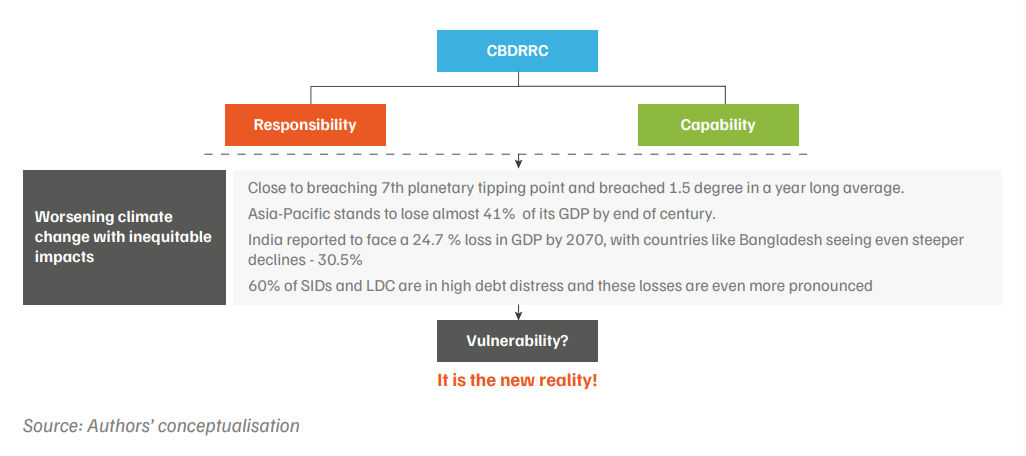
The concept of vulnerability, therefore, must be understood as a dynamic and structural characteristic that interacts with responsibility and capability in complex ways. It demands new metrics, tools, and financing modalities that explicitly prioritise vulnerability as a criterion for L&D mechanisms. Hence, embedding vulnerability in the core architecture of global climate policy is both an ethical and pragmatic imperative. It does not displace responsibility or capability as guiding principles but complements and enhances them by drawing attention to present and projected harm.
Recognising vulnerability as a core pillar acknowledges the transformations across countries in the Global South, reframes climate action not only as obligations or capacities but of lived realities, and foregrounds the need to centre vulnerability in discussions—as it is critical to recalibrate the burden sharing arrangements for L&Dfinance. Integrating the three pillars— responsibility (historical emissions), capability (ability to pay), and vulnerability (impacts of climate change), each independently necessary to adjudicate claims to finance and support—into a nuanced, coherent, and multidimensional architecture enables restructuring of burden sharing models and informs the pathways for international support.
As the FRLD enters its operational phase, adopting differentiated lenses can be critical for building legitimacy, mobilising contributions from a broader pool of countries, and ensuring that finance flows where it is most needed. Some countries should contribute towards scaling up finance, cooperation, and action; and others can demonstrate leadership (Figure 4).
Figure 4. Burden sharing in Loss and Damage
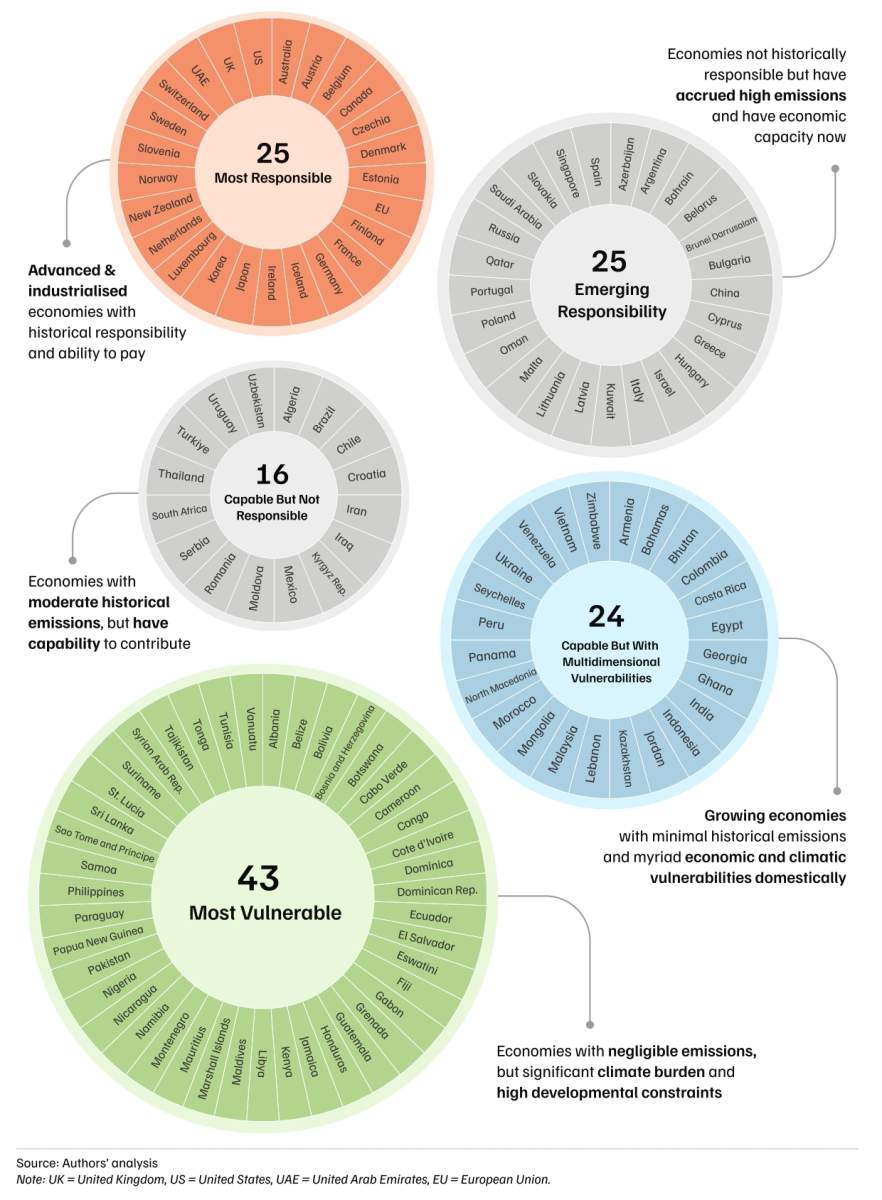
Perhaps unsurprisingly, the first category, Most Responsible countries (25), comprises largely of advanced industrialised economies—such as the US, UK, Germany, and Japan—that have been the engines of industrialisation and have contributed historically to emissions and that currently possess the financial capacity to contribute.
The outliers here are South Korea and the UAE. In both countries, the gross national income (GNI) per capita—USD 49,600 in South Korea and a staggering USD 69,100 in the UAE—exceeds the developed country average of USD 47,392. The UAE’s GNI per capita surpasses that of the EU (USD 58,454). The UAE’s emissions footprint, 25.5 tCO₂eq per capita, is heavier than even in the US (17.7 tCO₂eq per capita), where it is nearly double the developed world’s average (9.5 tCO₂eq per capita). With high economic capacity and emissions, almost at par or in some cases exceeding the historical polluters, these countries are uniquely positioned to shoulder the responsibility as primary contributors to the fund.
Secondly, the Emerging Responsibility category also comprises 25 countries. These countries have not been the primary drivers of historical emissions. Yet, many countries such as China and petrostates such as Saudi Arabia have emerged in recent decades as significant emitters with substantial economic weight.
Additionally, smaller EU economies—such as Lithuania, Latvia, and Slovakia, whose inclusion may appear incongruous given their modest GDPs compared to Western Europe—are more economically advanced than the broader Global South. Slovenia and Slovakia have already made voluntary pledges to climate finance and set a subtle moral benchmark for peers. While pledges do not put any onus on countries to contribute, these do nudge countries to provide leadership.
Singapore occupies a distinctive position in the Emerging Responsibility category given that historically its emissions have been negligible in comparison to its status as a global financial hub, high per-capita income, and worldclass governance system. China’s trajectory, too, demands special attention: its economic transformation, emissions profile, and geopolitical influence make it central to future climate finance discourses. While it continues to assert its developing country status in multilateral fora, this can be an avenue for enhanced leadership, particularly through South–South cooperation, institutional support, and targeted bilateral aid.
Thus, these countries can support risk assessments, technological transfers, and targeted bilateral support, which will be significant.
The third category, Capable but Not Responsible, consists of 16 countries that have not historically contributed to emissions and are not obligated under the traditional ‘polluter pays’ principle; it includes middle income economies such as Brazil, South Africa, and Mexico.
Some may have institutional state capacity or governance infrastructure that allows them to manage a substantial portion of their own climate damages without needing priority international L&D finance. This category recognises a special ‘set of countries’ that can enable South–South cooperation, share best practices, facilitate access to finance for more vulnerable regions within their regions, and support domestic L&D relief efforts.
Brazil, for instance, has historically played a leadership role in regional diplomacy, and it is currently steering efforts as the host of COP30. South Africa, as a G20 Member and the leader of the African Union, has the political capital to support dialogues within the African context for a just energy transition in the context of development with climate. Mexico, with its proximity to both the Global North and Global South, could function as a bridge actor and pilot climate justice mechanisms tailored to Latin America and small economies.
In sum, mobilising this cohort could unlock a new wave of tailored, context specific L&D efforts rooted in shared geography, experience, and needs.
The fourth category, classified as Capable but With Multidimensional Vulnerabilities, consists of 24 countries including India, Indonesia, Egypt, Ghana, and Vietnam. These countries have growing GDPs and technical capacity, and enjoy increasing significance, but they juggle domestic challenges: high exposure to compounding climate related risks, hazards, and vulnerabilities—coupled with deep socioeconomic inequalities and infrastructure deficits—constrains their adaptive capacity. About 80 per cent of India’s population is vulnerable to extreme hydrometeorological disasters, suggests CEEW research (Mohanty and Wadhawan 2021, 4). Indonesia and the Philippines face existential risks from the rising sealevel. Ghana and Armenia have limited institutional, technical, and financial support to build national L&D readiness.
Economic metrics are growing in some countries, so they may not need support but others, where domestic resources are strained, may require it. Knowledge exchange and region specific models can inform broader L&D financing frameworks; therefore, recognising this category is critical in highlighting a nuanced, multidimensional approach to responsibility and support.
Lastly, the ‘Most Vulnerable’ category, comprising 43 countries, is made up predominantly of LDCs,12 SIDS, and fragile or conflict affected states that have contributed the least to global GHG emissions yet are disproportionately bearing the brunt of climate impacts.
Vanuatu has incurred physical damage; the economic loss in 2020 was estimated at 61 per cent of the GDP (USD 617 million) (Department of Foreign Affairs and Trade n.d.). In Sri Lanka, recurring disasters have caused damages of nearly USD 7 billion between 1990 and 2018 (UNDRR 2019). Africa is at risk of high water stress, warns the IPCC Sixth Assessment Report; in Kenya, drought may force as many as 286,000 people to migrate and affect over 8 million in some way.
The ‘Most Vulnerable’ countries have high debt burdens and fragile institutions that limit their fiscal space and capacity to recover from increasingly frequent and intense multidimensional phenomena (Climate Refugees 2023). This group underscores the highest priority among recipients for L&D finance—they require direct, predictable, and grant based support, not loans or complex financial instruments that add to their debt. Direct, predictable, and grant based support is critical to uphold climate justice, ensure that the most vulnerable are not further penalised for a crisis they did not create, and create an anchor of ethical global climate finance efforts.
Postulating a baseline of contribution for annual contributions from developed countries and making it politically rational and implementable offers
As the FRLD is operationalised, generating sustained and adequate financing has become an issue of paramount importance as it offers predictability, essential for recipients planning long-term resilience and recovery measures.
For donor countries, adopting a baseline is a sign of leadership without committing to impractical absolute targets. For recipient countries, offers a clear demand signal that is economically justifiable and backed by empirical analysis. Adopting the baseline offers both groups credibility and leverage in negotiations, therefore.
It is also morally resonant without triggering alarm about fiscal overreach and facilitating ease of communication to domestic and international stakeholders.
Based on the methodology previously described, we found the baseline contribution as 0.08 per cent of GDP for countries. Given the current state of declining funds for climate and development and shifting geopolitical priorities, the allocation floor is significant. Interestingly, this share also corresponds to the share of the US, and it is only fair and equitable that the baseline figure of the biggest economy with the most historical pollution is used as a reference point to equitably pool additional country contributions to L&D finance (Table 2).
Table 2. Estimated annual country contributions from select Most Responsible countries
| Country | Contributions (billions USD) |
|---|---|
| United States | 22.02 |
| European Union (27) | 14.66 |
| Germany | 3.52 |
| Japan | 3.04 |
| United Kingdom | 2.75 |
| France | 2.39 |
Source: Authors’ analysis
Cumulatively, the contributions of all the Most Responsible countries (25, in our analysis) would raise nearly USD 60 billion annually. Given that the current pledges to the FRLD are barely USD 800 million, and the actual deposits are much less— at around USD 300 million—this allocation floor significantly ramps up contributions towards the FRLD in a sustained fashion year on year, an increase of over 70 times the current pledged contributions. While still not enough to meet the demand of developing countries—USD 400 billion per annum— the allocation floor would raise the pledged quantum to nearly 15 per cent of the required quantum, much higher than the current state of 0.2 per cent.
To put the baseline contribution (0.08 per cent of GDP) of countries in perspective, it is barely 11 per cent of the ODA benchmark—0.7 per cent of GNI—put forth by the Pearson Committee.13 The most recent NCQG decision to put forth USD 300 billion annually is 0.46 per cent of the country’s GDP, (UNCTAD 2024) and the ask of 0.08 per cent of GDP is 17 per cent of the NCQG share.
Given the potential for L&D finance to enable actualisation of developmental benefits accrued via development finance, the ask is a practical step ahead to mobilise tangible financial contributions to L&D. More importantly, finance for L&D fills a critical gap—respond to irreversible and uninsurable losses—that, in general, is not addressed by development or climate finance.
The ask, politically feasible and distributionally just, allows for differentiated contributions without imposing unrealistic burdens—especially on countries already facing fiscal constraints. It enables countries with high capacity and emissions to contribute under a common but differentiated responsibility lens and demonstrate leadership. Thus, by bridging this critical gap, L&D finance stands to not only protect and enhance outcomes of development finance but also prevent the reversal of development gains in vulnerable regions.
While all the benefits are evident, staggering finance to L&D is also the most feasible approach given the historical challenges in meeting existing climate finance commitments. To this end, the 0.08 per cent GDP benchmark serves as a starting point for ambition.
Practical steps to a phased increase should ideally involve a combination of voluntary coalition led commitments (from countries already demonstrating such leadership) and simultaneous alignment of the L&D goal to the NCQG benchmark. The ROI in a staggered approach is also manifold—every dollar invested in integrating resilience in new and existing infrastructure systems can generate a resilience dividend of USD 4–USD 12 (CDRI 2023). Directing the L&D fund towards building back resilience can save humongous future costs, especially during the postdisaster recovery phase.
We make four recommendations:
The negotiations—marred so far by lack of finance, ambition, and delivery—should push to establish a minimum baseline commitment for developedcountry contributions to the FRLD. Establishing a commitment can improve the quantum of resources mobilised for vulnerable countries. If adopted multilaterally or even as a coalitionled effort, it could serve as a minimum viable global agreement—a floor that lays the foundation for trust building, ambition raising, and climate solidarity.
However, this baseline alone may not suffice; it should be supplemented with innovative, predictable, grant based financing instruments that do not create debt—unlike windfall taxes and debt relief instruments—and by phasing out or redirecting fossil fuel subsidies. Such an approach would ensure that the burden of contribution is aligned with the principles of climate justice and that it does not exacerbate the debt stress of vulnerable countries.
The capacity and readiness need to be strengthened by
Bridging critical data, technological, and knowledge gaps via robust monitoring, reporting, and verification (MRV) systems to track climate induced L&D would facilitate both quantification of damages and disbursement of resources.
The Global Infrastructure Risk Model and Resilience Index (GIRI) offers data driven insights into major hazards that visualise and estimate risks for infrastructure assets (CDRI n.d.). Bangladesh has pioneered climate loss databases through their Climate Change Strategy and Action Plan (MoEF 2009). Country governments should invest in disaster databases, remote sensing, and AI based tools to attribute and quantify L&D and demonstrate clear evidence of need to international donors.
Leveraging domestic financial tools to complement international flows and dedicated institutional structures can improve accessibility, governance, and accountability of L&D finance. Establishing institutional mechanisms that can assess and channel L&D finance in alignment with domestic resilience priorities is critical.
Leveraging such domestic resources allows governments to complement international L&D flows and build credibility for access. India’s National Disaster Response Fund (NDRF) (NDRF n.d.) has enabled rapid disbursements, providing immediate relief, for example, and Bangladesh’s Climate Change Trust Fund has mobilised nearly USD 450 million (UNDESA 2021, 25) of domestic resources since 2009.
Embedding L&D considerations into national disaster risk management (DRM) frameworks and mainstreaming L&D into national DRM plans and climate finance strategies can improve finance delivery aligned with development priorities. For instance, India’s State Action Plans on Climate Change embed disaster resilience, while Bangladesh’s social safety net programmes (like cash transfers for cyclone affected households) demonstrate how L&D can be integrated into existing welfare systems. Such efforts ensure that financing is more effective, and it helps governments coordinate efforts across sectors, improve resource use, and strengthen governance.
As L&D is inherently specific to context and community, responses should be rooted in granular, hyperlocal data that captures the differentiated vulnerabilities and loss profiles of communities. Countries across the region must focus on mapping differentiated vulnerabilities by investing in community level climate risk mapping and loss registries and ensuring subnational governments and local actors have the capacity and autonomy to act on L&D risks. Such decentralised planning not only enhances equity and effectiveness but also improves the legitimacy and public ownership of L&D interventions.
The current international L&D governance architecture—coalitions such as the G77+China and key platforms like the Santiago Network (technical arm),14 the Warsaw International Mechanism (overarching arm),15 and the FRLD Board (financial arm)16—is fragmented. To make the architecture interoperable, countries should
Establishing the FRLD, a global facility to finance L&D tackle the adverse impacts of climate change, took 30 years; so, we may assume that operationalising the FRLD will not be easy. This issue brief offers developing countries negotiating positions and recommendations to ensure that rich countries honour their climate finance commitments and pledges.
This vital task can be tackled quickly and effectively if governments work with finance providers, civil society actors, academic institutions, and affected and at risk community members to identify and craft locally appropriate and mutually acceptable solutions. However, coordination will be required of the multiple political, multilateral, and financial stakeholders, and L&D finance must be designed to support locally led action and be based on mapping hyperlocal risks—without eroding hard won development gains.
If that happens in the leadup to COP30 and COP33 (India has placed a bid to host COP33), there could be a step change in the trust that is a necessary cementing agent for climate negotiations.
Loss and damage (L&D) finance addresses irreversible impacts of climate change — arising from both slow-onset processes (such as sea-level rise) and extreme weather events (such as cyclones and heatwaves) — where adaptation efforts are no longer sufficient. These impacts cause long-term economic losses (e.g., destruction of infrastructure, homes, and crops) as well as non-economic harms (e.g., cultural loss, displacement, and health impacts). L&D finance supports the ex post activities needed for relief, recovery, rehabilitation, and reconstruction, with a focus on ensuring that vulnerable communities are not pushed further into crisis due to climate-induced shocks.
The burden sharing framework applies 11 indicators across responsibility, capability, and vulnerability — with equal weightage — to derive a balanced and evidence-based approach to mobilising and accessing finance. By analysing 150 countries, the framework identifies five differentiated groups that reflect real-world differences across historical emissions, economic readiness, and exposure to climate risks. These results inform which countries can contribute more and which require predictable, grant-based support, while recognising that all three principles remain essential to global equity.
Climate impacts have intensified and expanded to regions with limited historic responsibility and constrained economic capacity. Vulnerability, therefore, captures current and projected harm, reflecting compounding disaster exposure, socioeconomic inequalities, institutional readiness, and climate-driven risks to development. Integrating vulnerability complements responsibility and capability, ensuring that global L&D finance decisions respond to lived realities. This strengthens legitimacy, negotiating leverage for the Global South, and allocation effectiveness within the FRLD.
Under existing arrangements, contributions to L&D finance remain voluntary, fragmented, and unpredictable, limiting the pace and quality of response. A minimum allocation floor equivalent to 0.08 per cent of GDP operationalises a clear, consistent, and politically rational starting point for developed-country contributions. It enhances predictability, supports long-term planning, and provides a credible basis for negotiations — particularly as the FRLD moves into its disbursement phase in early 2026. The benchmark is also conservative, reflecting the lower-bound of L&D finance needs and aligning with established burden-sharing logic.
The FRLD represents the financial arm of the L&D governance ecosystem, alongside the Warsaw International Mechanism (overarching arm) and the Santiago Network (technical arm). The burden-sharing framework supports efforts to strengthen alignment, clarify mandates, and enable smoother access pathways, especially for the most vulnerable.
How South Asia’s Energy Transition Can Respond to Global Disruptions
The India StoryA Green Investment Handbook
Time to develop an Asia-Pacific Green Development Agenda