Council on Energy, Environment and Water Integrated | International | Independent

27 Sep 2019 | 1700 - 1800
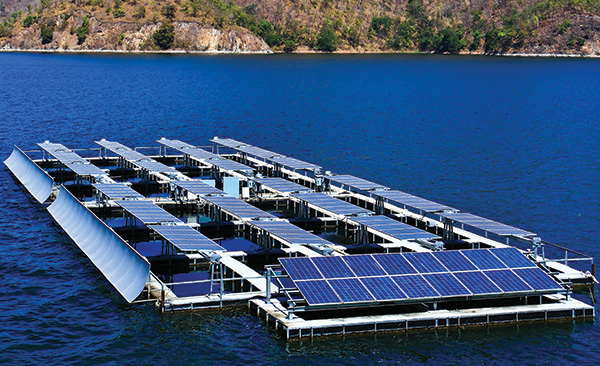
Installing solar power systems on water bodies is an emerging trend in the energy transition, especially in geographies with limited land availability. Experts estimate that 400 GW of solar power capacity could be installed globally, even if one per cent of man-made reservoirs were tapped. In India, plans to develop 10 GW of solar floating projects in three years have not yet taken off. Currently, India’s largest floating solar power plant (2 MW capacity) has been installed in Vishakhapatnam, Andhra Pradesh. Limited awareness of the technology and a nascent value chain are among the main barriers that impede scaling up floating solar in the country.
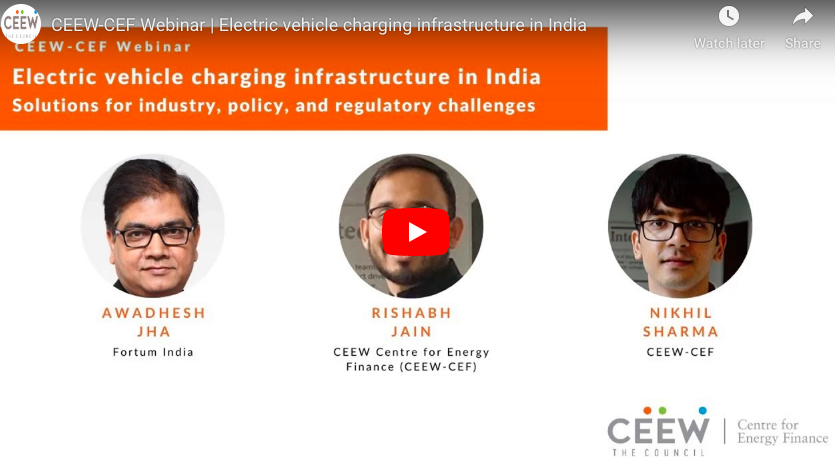
The webinar by CEEW-CEF, structured as a Q&A, will highlight experiences, existing policies, market potential, and upcoming opportunities for floating solar in India.

Riddhima Sethi
Communications Associate
Vivek Jha
Co-founder
Yellow Tropus
Rishabh Jain
Manager - Market Intelligence
CEEW-CEF
10 Sep 2019 | 1530 - 1700

The session is part of the Innovation Summit organised by UN Environment and Ministry of Environment Forest and Climate Change (MOEFCC) along with UNDP, United Nations Industrial Development Organisation (UNIDO), UN Women, International Solar Alliance (ISA), Indian Council of Agriculture Research (ICAR), Energy Efficiency Services Limited (EESL), Observer Research Foundation (ORF), ReNew Power and Microsoft.
As a water-stressed nation, India must vigorously focus on streamlining the management of its water resources - from source to sea. For India to become water-secure, it will be crucial to augment water supply, manage demand, improve data, and strengthen institutions. In this session, the panelists will deliberate on how implementable policies could support interventions like affordable and adaptive technologies, citizen and gender participation, and establishment of various types of multi-stakeholder platforms for water resources.
| 1530 - 1535 | Introductory remarks by Shoko Noda, Resident Representative, UNDP |
| 1535 - 1540 | Film screening |
| 1540 - 1555 | Keynote address by Shri U. P. Singh, Secretary, Ministry of Jal Shakti, Government of India |
| 1555 - 1700 | Panel discussion A. R. Shivakumar, IISc Seema Kulkarni, SOPPECOM Kalpana Ramesh, Innovator Dr Himanshu Kulkarni, ACWADAM Neville Bhasin, Forbes Marshall Dr Arunabha Ghosh, CEEW (moderator) |
Riddhima Sethi
Communications Associate
05 Jul 2019 | 1300 - 1500 hrs (ICT)
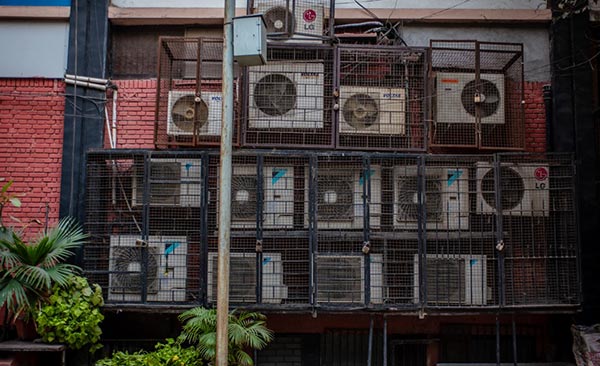
The Council on Energy, Environment and Water (CEEW) is hosting an International Dialogue on Phasing Down HFCs: Opportunities to Converge Industry, Sustainability and Development Wins at the 41st Meeting of the Open-Ended Working Group of the Parties to the Montreal Protocol in Bangkok.
The Dialogue will bring together several international stakeholders to deliberate on the drivers and challenges facing the HVAC sector and policymakers in India and other emerging economies globally. We will also discuss regulatory frameworks that are being developed and deployed as multi-pronged strategies to meet environmental commitments, development aspirations, and economic goals.
Riddhima Sethi
Communications Associate
04 Jun 2019 | 1500 - 1830
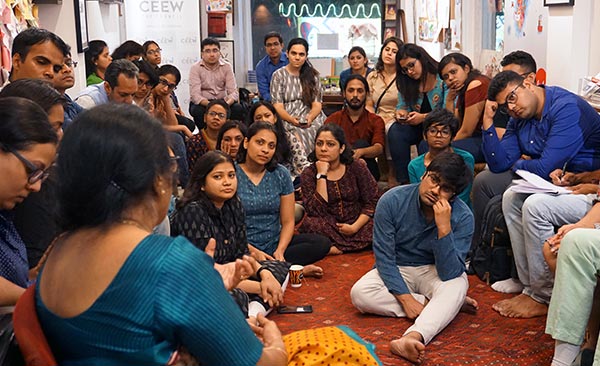
On the eve of World Environment Day 2019, the Women in Sustainability (WiS) Initiative at CEEW hosted a dialogue - Breaking Barriers and Building Careers for Women in Sustainability - which focused on the best practises to resolve implementation challenges in creating gender sensitive workspaces within the public policy sector. It marked the second anniversary of the Women in Sustainability initiative at CEEW.
Session I: Panel discussion
Each panellist discussed their unique experiences as employees, administrators, managers, mothers, spouses, and decision-makers, and shared learnings to inspire gender parity in workspaces. Here are the key takeaways:
Retaining women in the workforce:
Session 2: Breakout Session
At the breakthrough session, the audience was divided into smaller groups and given with three discussion themes:
The discussion between the groups focused on finding solutions to some of the pressing issues regarding enabling policies and culture to retain women in the sustainability sector. The groups were provided with context notes and discussion questions to help stimulate discussions which resulted in solutions. Here are the key highlights from the breakout session:
CEEW in collaboration with the United Nations launched WiS initiative in 2017. WiS hopes to expand the conversation around affirmative action to foster enabling work environments for women in sustainability and public policy. We hope that through collaborative partnerships, with like-minded individuals and institutions, this initiative can be nurtured for building a gender diverse workforce in the sustainability sector. You can read more about our work here. In the last couple of years, we have started conversations within and outside CEEW to reinforce the need for gender equality in the workplace, not just in numbers but also in the quality of involvement of women in key areas of research and implementation.
Riddhima Sethi
Communications Associate
Smita Mohanty
PRADAN
Yamini Aiyar
Centre for Policy Research
Rajat Kathuria
Indian Council for Research on International Economic Relations
Ritu Lal
Amplus Solar

Kanika Chawla
CEEW Centre for Energy Finance
Kangkanika Neog
CEEW
30 May 2019 | 1500 - 1700
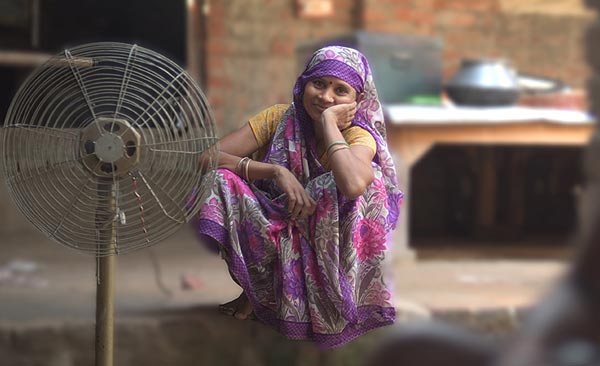
CEEW Energy Access Dialogues are quarterly forums where researchers and practitioners discuss their ongoing work in energy access, deliberate on its implications, explore possibilities for collaborative work, and review immediate priorities in the energy access space.
At the second edition of the Dialogues, two aspects of electricity access were discussed: the quality of power supply in rural India; and the state of metering, billing, collection, and electricity theft in Uttar Pradesh.
Session I
Session II
18 Jul 2019 | 1130 - 1900

CEEW presents Energy Horizons (EH) - a pre-eminent platform where India discusses the global energy transition. EH 2019 will be held on 18-19 July 2019 in New Delhi.
Formerly known as the CEEW RE Dialogue, EH brings together the world’s leading experts to discuss, debate, and deliberate on a forward-looking strategy to accelerate the energy transition in India and other emerging economies around the world.
Riddhima Sethi
Communications Associate
24 May 2019 | 1600 - 1800

The Centre for Energy Finance at CEEW is organising a series of Dialogues over the course of the coming weeks to discuss and deliberate on urgent interventions required to overcome challenges impeding the growth of the renewable energy sector. The recommendations collated from these roundtables will be submitted to the new government in June 2019.
Industry leaders will be invited to share presentations on the assigned topic followed by a detailed discussion every Friday of May (starting 10 May 2019) from 4 to 6 pm.
| Edition | Date | Focus area | Discussion topic |
|---|---|---|---|
| 1 | 10-May-19 | Finance | Affordability and accessibility of capital – dealing with risk variables and their premiums |
| 2 | 17-May-19 | Infrastructure | Transmission network, land availability |
| 3 | 24-May-19 | Manufacturing | Domestic procurement, CAPEX support, BIS, ALMM |
| 4 | 31-May-19 | New Technology | EV, storage, floating solar |
*Limited seats. Please register your expression of interest. A confirmation will be sent to you.
Riddhima Sethi
Communications Associate
10 Apr 2019 | 1000 - 1330 hours
The roundtable discussion aimed to disseminate findings of the academic working group on Solar Radiation Management (SRM) and discuss the current knowledge of the technology as well as associated governance needs. Through in-depth discussions led by global experts, academics, and key government officials, the discussion sought to consider and propose actionable recommendations for SRM governance in developing countries.
27 Mar 2019 | 0930 – 1430 hours
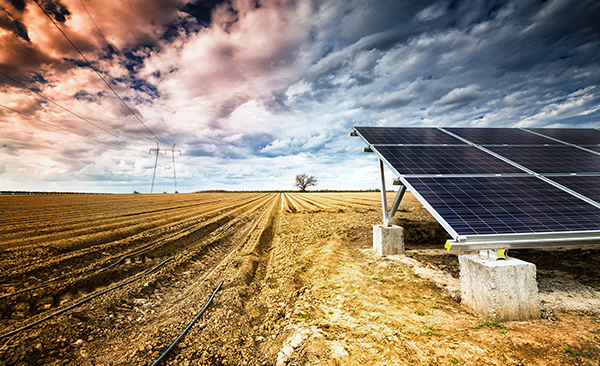
The workshop, in collaboration with the International Institute for Sustainable Development, will bring together stakeholders across India to deliberate on how the interventions affecting costs and prices in the energy sector – subsidies, taxes, regulation, and financing options – impact India’s energy transition to a higher share of renewable energy and decreased overall emissions intensity. At the workshop, new data on subsidies will be presented in the context of overall government support offered to various fossil fuels and renewable sources.
The workshop aims to provide a platform for experts and policymakers from across various sectors to exchange their ideas, views and, data to make informed decisions going forward.
Session I: Key issue areas for energy subsidies in 2019
Session II: Financing India’s new energy system
Ashutosh Jindal
Joint Secretary
Ministry of Petroleum and Natural Gas (MoPNG), Government of India
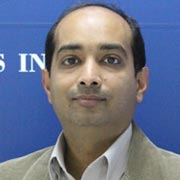
Rahul Tongia
Fellow
Brookings India

Rohit Chandra
Independent Researcher – Coal
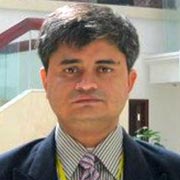
Sacchidananda Mukherjee
National Institute of Public Finance and Policy
(NIPFP)

Gagan Sidhu
Senior Independent Adviser (Renewable Energy)

Karthik Ganesan
Research Fellow
Council on Energy, Environment and Water (CEEW)

Christopher Beaton
Senior Policy Advisor and Lead
International Institute for Sustainable Development (IISD)

Abhinav Soman
Programme Associate
Council on Energy, Environment and Water (CEEW)

Kanika Chawla
Senior Programme Lead
Council on Energy, Environment and Water (CEEW)

The CEEW Centre for Energy Finance (CEF) acts as a non-partisan market observer and driver, to monitor, develop, test, and deploy financial solutions to advance the energy transition. It aims to help deepen markets, increase transparency, and attract capital in clean energy sectors in emerging economies. It will achieve this by comprehensively tracking, interpreting, and responding to developments in the energy markets, while also bridging gaps between governments, industry, and financiers. CEF is an initiative of the Council on Energy, Environment and Water (CEEW), one of South Asia’s leading think-tanks.
Responding to a growing need for enabling an efficient and timely energy transition in emerging economies, CEF will focus on developing fit for purpose market responsive financial products. A robust energy transition also requires deep markets, which need continuous monitoring, support, and course correction. By designing financial solutions and providing near-real-time analysis of current and emerging clean energy markets, CEF will build confidence and coherence across key actors, reduce information asymmetry, and bridge the financial gap.
Financing the energy transition in emerging economies
The clean energy transition is gaining momentum across the world with cumulative renewable energy installation crossing 1000 GW in 2018. Several emerging markets are now seeing renewable energy markets of significant scale. However, these markets are young and prone to challenges that could inhibit or reverse the advances made in the recent past. Also, the absence of well-functioning markets in emerging economies make investment in clean technologies risky and prevent capital from flowing from where it is in surplus to regions where it is most needed. CEF will address the urgent need for increasing the flow and affordability of private capital into clean energy markets in emerging economies.
CEF’s Focus: Analysis and Solutions
CEF has a twin focus on markets and solutions. CEF’s market analysis will cover energy transition-related sectors, both on the supply (solar, wind, energy storage) and demand side (electric vehicles, distributed renewable energy applications). It will create open source data sets, salient and timely analysis, and market trend studies.
CEF’s solution-focused work will enable the flow of new and more affordable capital into clean energy sectors. These solutions will be designed to address specific market risks that act as roadblocks to capital flows. These will include designing, implementation support, and evaluation of policy instruments, insurance products, incubation funds, etc.
For more information, visit cef.ceew.in