Council on Energy, Environment and Water Integrated | International | Independent

Suggested citation: Suryanarayanan, Uday and Arvind Kumar. 2025. Assessing the Impact of Behavioural Interventions in Reducing Air Pollution: A Meta-analysis. New Delhi: Council on Energy, Environment and Water.
This study, a meta-analysis of randomised controlled trials (RCTs), focuses on the role of behavioural interventions in reducing air pollution. It highlights that three sectors – indoor energy use (including electricity production), transportation, and waste burning – are responsible for 52 per cent of India’s annual mean PM2.5 concentration. These emissions are directly or indirectly driven by individual behaviours, making behavioural shifts a long-term strategy for source-level emissions reduction.
The report assesses the effectiveness of various behavioural 'nudges' in abating air pollution, aiming to inform intervention strategies for policymakers and researchers. It also provides insights to support the Government of India’s Mission LiFE, a mass movement launched in 2022 to mainstream sustainability and drive environment-friendly choices at the individual and community levels. The study draws on 151 estimates from 102 studies conducted in 29 countries over 46 years.
Behaviour change at scale is critical to reducing air pollution in India.
Three sectors contribute 52 per cent of India’s annual mean PM2.5 concentration: indoor energy use (which includes electricity production), transportation, and waste burning (Chatterjee et al. 2023). Individual behaviours directly influence the emissions load from domestic fuel use, transportation, and waste burning and indirectly drive that from electricity generation. Therefore, changing polluting behavioural patterns is a long-term solution for reducing air pollution in India.
In November 2021, at the United Nations Climate Change Conference (COP26), the Government of India announced Mission LiFE—which stands for ‘Lifestyle for Environment’ – a mass movement to mainstream sustainability (MoEFCC and NITI Aayog 2022). Mission LiFE, launched in October 2022, aims to change individual and community-level behavioural patterns to drive environment-friendly choices. Leveraging these behavioural shifts, Mission LiFE aims to influence industrial and government policies to create an ecosystem that promotes sustainable production and consumption. Changing mass behaviours lies at the heart of Mission LiFE.
In 2023, the Ministry of Environment, Forest and Climate Change (MoEFCC) mandated the integration of 14 Mission LiFE indicators into annual city action plans (CAPs) under the National Clean Air Programme (NCAP) (MoEFCC 2023). Although the central government mandates that cities make their action plans Mission LiFE-compliant, initiatives under Mission LiFE can effectively use behavioural interventions to reduce air pollutant emissions only when the relevant government agencies know which strategies to use in which sector.
We conducted this meta-analysis of randomised controlled trials (RCTs) to assess the effectiveness of various behavioural nudges in abating air pollution. Each nudge aims to steer people in a particular direction by changing aspects of the decision-making context in a subtle, unobtrusive, and cost-effective manner (Lieberoth et al. 2018). This study will help inform behavioural interventions, helping practitioners choose intervention strategies that could work best in specific sectors to reduce air pollution.
Limited evidence exists on the effectiveness of various nudges in changing environmentally harmful behaviours across study settings. Through this meta-analysis, we aim to fill that gap by gauging the impact of nudges on changing behaviours that directly contribute to air pollution. This study assesses the effectiveness of nudging strategies targeting reducing emissions from indoor energy use (including electricity generation), transport, and waste burning.
This study evaluates the following key behaviours:
We assessed the effectiveness of five types of nudges based on the template from Nisa et al. (2019):
The estimates from the primary studies have been standardised as standardised mean difference (SMD) or Cohen’s d, and the consolidated summary outcomes have been reported as SMDs. This study uses the I2 statistic to quantify heterogeneity (i.e., the variability in the effect sizes not caused by sampling errors) and ascertain whether the estimated pooled effect size is statistically precise (Deeks et al. 2024). An I 2 value of less than 40 per cent represents low heterogeneity (i.e., high statistical precision), and an I2 value of more than 40 per cent represents high heterogeneity (i.e., low statistical precision).
In this meta-analysis, the included studies tested the impact of nudges on self-selected samples (i.e., RCT participants who explicitly agreed to participate in the study) and on samples from the general population who did not expressly consent to participate. According to Cohen (1988), an SMD of 0.2 is considered small. However, in psychology, it is a meaningful effect size and is potentially consequential when scaled to the population level. Therefore, an SMD of 0.2 is the benchmark, with an SMD of less than 0.2 indicating low effectiveness and an SMD of more than 0.2 indicating high effectiveness at the population level (Carlo et al. 2005; Funder and Ozer 2019; Gignac and Szodorai 2016; Ozer and BenetMartinez 2006; van der Linden and Goldberg 2020).
This study considers 151 estimates from 102 studies, spanning 46 years from 1977 to 2023. The nudges in these studies have been tested in 29 countries on 6 continents. This meta-analysis aims to support the implementation of Mission LiFE by providing information on which nudges are effective at reducing individuals’ emissions of air pollutants. To this end, this study offers insights into the most effective nudging strategies to further the objectives of Mission LiFE and ensure impact at scale.
1. There is limited evidence from Asia, Africa, and Latin America
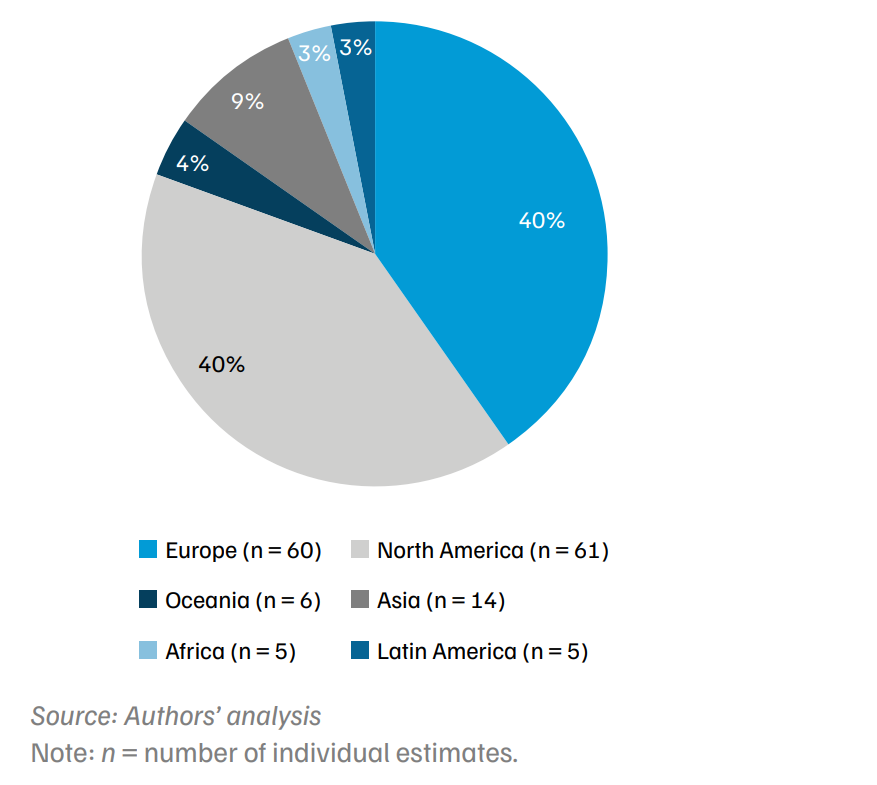
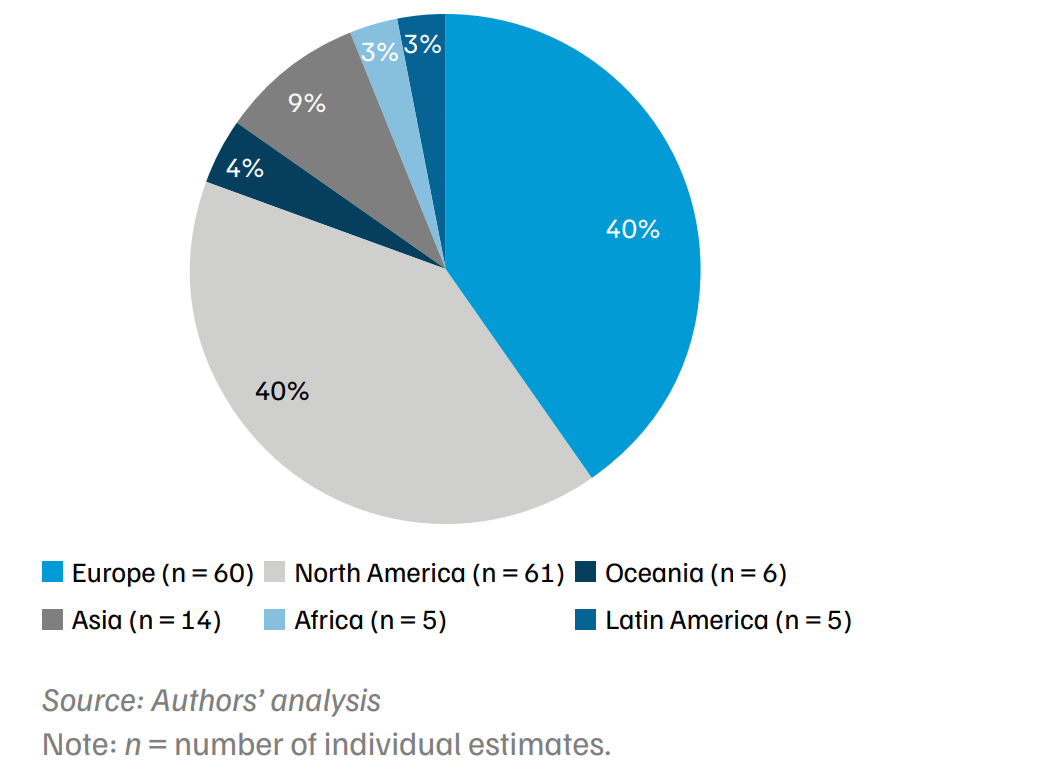
Nudges aiming to change polluting behaviours have been tested mainly in Europe, North America, and Oceania (Australia and New Zealand); evidence from Asia, Africa, and Latin America is scarce (Figure ES1). Even so, 20 of the 24 tested interventions in Asia, Africa, and Latin America targeted a reduction in indoor energy use. Moreover, in the Indian context, this study finds that out of the three sectors studied, only three estimates from two RCTs assessed the impact of nudges on indoor electricity consumption exclusively.The application of nudges to popularise public transport or recycling is a little-explored area on these continents, especially in India. Therefore, there is a need to assess more fully the impact of nudges across more polluting sectors in the Global South, particularly in India, on a pilot basis to inform the full-scale deployment of Mission LiFE as a national movement for mass behaviour change.
Figure ES1. Only 16% of global evidence on pollution-related nudges comes from Asia, Africa, and Latin America.
2. Engagement is highly effective in promoting waste recycling or reduction, but minimally effective in influencing transportation choices
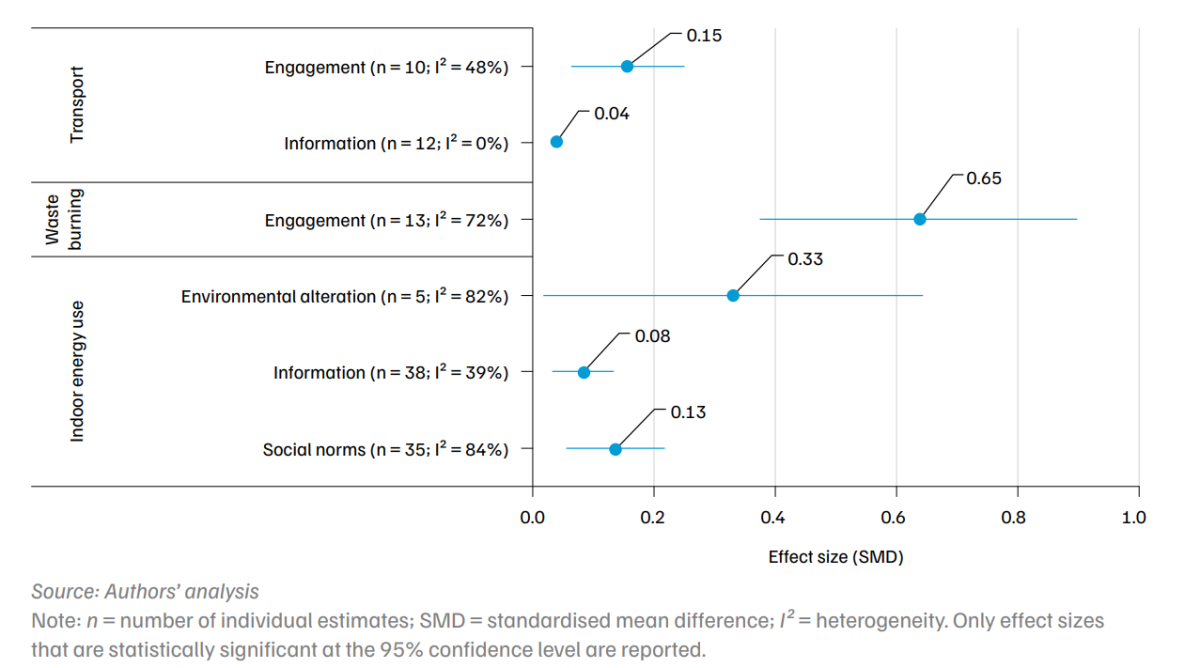
This study finds that engaging with RCT participants is highly effective in promoting waste recycling or reduction but minimally effective in changing transportation choices (Figure ES2). Engagement entails promoting goal-setting, intention to implement, commitment, and instilling mindfulness of air quality improvement. However, both sets of estimates (for high and low effectiveness) have only low statistical precision.
Though we could estimate the impact of engagement on waste recycling or reduction with low precision, the individual interventions report having achieved an increase in waste recycling or a decrease in the amount of waste generated. The impact of engagement on promoting waste recycling or reduction has been gauged mainly on self-selected samples (over 69 per cent of the estimates), which inflates the pooled effect size. Therefore, more tests on the general population must be conducted to establish the effectiveness of engagement as a strategy to promote waste recycling or reduction.
Figure ES2. Behavioural interventions curb polluting behaviours with varying success (effect sizes 0.04–0.65), depending on strategy and context
3. Provision of information has a minimal effect on indoor energy consumption and transportation choices
The intervention strategy of providing information to RCT participants is minimally effective in reducing indoor energy consumption and changing transportation choices (Figure ES2). For this study, information provision includes messages with helpful tips, air pollution-related statistics, in-home displays, and energy efficiency labels. The minimal effectiveness of information provision in reducing indoor emissions and changing transportation choices is estimated with high statistical precision.
4. Setting social norms has a minimal effect on indoor energy consumption
Setting social norms is minimally effective in reducing indoor energy consumption (Figure ES2). In this meta-analysis, setting social norms entails providing comparative information about the emissions reduction behaviours of close cohorts, such as local citizens, colleagues, and neighbours. The low effectiveness of setting social norms in reducing indoor energy consumption is estimated with low precision.
5. Environmental alteration is highly effective in reducing indoor energy consumption
Environmental alteration effectively reduces indoor energy consumption (Figure ES2). However, the high effectiveness of environmental alteration in reducing indoor energy use is estimated only with low precision. In this study, environmental alteration entails removing external barriers or expediting access to the desired option by altering the physical environment. Though there is limited evidence for the high effectiveness of environmental alteration (n = 5), all the individual interventions report a reduction in indoor energy consumption. More evidence on the impact of environmental alteration on indoor energy consumption is needed to bolster the case.
In this study, global evidence on the effectiveness of sectoral nudges has been reviewed. However, the lack of evidence from the Global South, and especially from India, impedes the deployment of these strategies at scale in India. The available evidence does provide some preliminary information on the nudges that have worked well and those that have not produced the desired results in specific sectoral contexts. In translating the objectives of Mission LiFE into action, this knowledge can aid researchers in selecting strategies for pilot-scale deployment in India to test their effectiveness in the Indian context before rolling them out at scale.
With the Central Pollution Control Board (CPCB) ranking cities on compliance with the 14 Mission LiFE indicators (CPCB 2024), urban local bodies (ULBs) and researchers can collaborate to deploy locally relevant nudges, scaling efforts based on evidence from the pilot interventions. Such collaborations will increase the amount of India-specific evidence and help us achieve the annual targets set for Mission LiFE.
The Government of India launched Mission LiFE in 2022, following the introduction of the ‘Lifestyle For Environment’ concept by the Prime Minister of India at COP26 in Glasgow in 2021. The central government aims to influence demand and supply dynamics by effecting sustainable behavioural shifts in individuals, communities, and institutions through long-term industrial and government policies. Mission LiFE envisions that these long-term policy shifts will support sustainable consumption and production, creating an ecosystem that will drive sustainable development. Shifting mass behavioural patterns is the crux of Mission LiFE.
Having set a target to make at least 80 per cent of all villages and ULBs environment-friendly by 2028, Mission LiFE has identified 75 actions in 7 broad categories – such as energy-saving choices, lowering the use of single-use plastics and waste reduction – which are specific, measurable, simple to adopt once the required infrastructure is available, and non-disruptive to economic activity (MoEFCC and NITI Aayog 2022). These actions include purchasing energy-efficient appliances, increasing waste recycling and encouraging sustainable mobility decisions such as choosing public transport and cycling over motorised private vehicles.
Changing mass behaviours holds the key to reducing air pollution in India. Three sectors contribute 52 per cent of India’s annual mean PM2.5 concentration: indoor energy use (which includes electricity production), transportation, and waste burning (Chatterjee et al. 2023). Individual behaviours contribute to PM2.5 emissions directly through domestic fuel use, transportation, and waste burning and indirectly through electricity generation. Therefore, altering individual choices and actions is a long-term strategy for source-level emissions reduction.
Nudges are an essential part of the toolkit to effect behavioural change. A nudge is any aspect of the choice architecture that predictably changes people’s behaviours while preserving their freedom of choice (Thaler and Sunstein 2021). Such an intervention aims to guide people in a specific direction by changing aspects of the decision-making context in a subtle, unobtrusive, and cost-effective way (Lieberoth et al. 2018).
An intervention that outright forbids some options or significantly changes economic incentives is not considered a nudge. Thus, this study does not include financial incentives or disincentives such as fines, subsidies, and taxes or regulations such as bans and mandates (Thaler and Sunstein 2021).
The fundamental design strategy for a nudge is to address and remove contextual and psychological barriers that hinder decisions in the desired direction and harness individuals’ habituated routines and cognitive biases towards the desired decision (Lieberoth et al. 2018).
Attitudes, beliefs, and intentions do not always match behaviours—this is known as the ‘intention–behaviour gap’ or the ‘value–action’ gap (Blake 1999; Service et al. 2014). Hence, assessing what drives people’s behaviours rather than just their opinions is critical to successfully effecting behavioural change. Nudges aim to change behaviours rather than just the associated attitudes or intentions.
The public sector has increasingly used nudges, informed by research, to design human-centric programmes to drive sustainable behaviours. For instance, in the United States (US), Opower, a subsidiary of Oracle Corporation since 2016, has collaborated with electric utilities to deliver personalised household energy consumption reports, known as home energy reports (HERs). These HERs compare the household’s energy use with that of nearby households with a similar carpet area and heating or cooling system and present the information through graphs, ideograms (such as a smiley face), and targeted energy efficiency tips (Alcott and Rogers 2014; Behavioural Insights Team 2011; Laskey and Kavazovic 2011). According to multiple evaluations, the Opower HERs lead to 2–3 per cent energy savings on average at the household level, which is scalable to the population level (Behavioural Insights Team 2011; Laskey and Kavazovic 2011). So far, 175 electric utilities worldwide have partnered with Opower to deliver HERs to households (Oracle 2025).
In 2023, the MoEFCC mandated the integration of 14 Mission LiFE indicators into CAPs under NCAP (MoEFCC 2023). In 2024, the CPCB began ranking cities every quarter against yearly targets set under the NCAP using Mission LiFE indicators and other metrics (CPCB 2024). These Mission LiFE indicators represent individual behavioural choices, such as preferring compressed natural gas (CNG) and electric vehicles over petrol and diesel vehicles and practising waste segregation at home. Therefore, the central government has incentivised cities to make their CAPs Mission LiFE-compliant. However, initiatives under Mission LiFE can only effectively use nudges to reduce the emissions of air pollutants when these initiatives are informed by knowledge of which strategies to use in which sector. This meta-analysis aims to fill that knowledge gap.
Though many studies have assessed the impact of individual nudges to reduce direct and indirect contributions to air pollution, a meta-analysis of the available evidence clarifies which strategies are effective. The results of such a meta-analysis will help guide researchers to focus on gathering and generating evidence. With Mission LiFE aiming to change individual and community behaviours, the results would also help policymakers assess how to include nudges in their strategies to reduce air pollution. This meta-analysis is an effort in that direction.
This study’s methodology involves a literature search and a meta-analysis. The literature search involved selecting RCTs that tested the impact of nudges using qualitative filtration criteria. In the meta-analysis, the study outcomes were converted to SMDs, and the SMDs were pooled for relevant categories (such as the target sector and the intervention strategy) to obtain an estimate representing the aggregate impact.
This study is a meta-analysis of primary studies that quantitatively measured behavioural changes due to nudge-based interventions. A meta-analysis is a systematic review that pools quantitative outcomes from individual primary studies to calculate a single numerical estimate summarising all the individual outcomes (Harrer et al. 2021). Used to summarise findings in the psychology literature (e.g., Bolier et al. 2013) and behavioural interventions (including nudges) literature in particular (e.g., Khanna et al. 2021, Mertens et al. 2021, and Nisa et al. 2019), a meta-analysis is a key tool for summarising the quantitative results of multiple studies.
We use the eligible study outcomes from two previous meta-analyses, Nisa et al. (2019) on reducing greenhouse gas emissions through nudges targeting indoor energy use, transport, and waste reduction or recycling and from Khanna et al. (2021) on testing non-monetary behavioural interventions to reduce household energy consumption. Additionally, we have considered published literature searched and identified from a bibliographic database (Web of Science) and unpublished grey literature from Google Scholar. We consider only RCTs containing error measurements: standard deviations, standard errors, and confidence intervals.
We used the following search string to perform the literature search: (gas OR wood OR engine OR food OR (public transport) OR energy OR electricity OR electronic OR bus* OR car* OR cook*) AND (social AND (comparison* OR norm*)) OR nudg* OR feedback* OR reduc* OR recycl* OR increas* OR wast* OR promot* OR conserv* OR sav* OR use OR consum* OR effect* OR inform* OR adopt* OR improv*) AND (evaluat* OR assignment OR evidence OR decision* OR interaction* OR case study OR test* OR (field AND (experiment OR trial)) OR intervention OR (randomised controlled).
Adhering to the definition of nudges from Thaler and Sunstein (2021), which is reiterated by Lieberoth et al. (2018), Mertens et al. (2022), Munscher et al. (2016), and Nisa et al. (2019), this study excludes all studies that tested economic incentives or disincentives (taxes, subsidies, and rebates) and regulations (bans and mandates).
The studies that quantitatively gauged behavioural shifts in individuals and collective units (i.e., households and offices) achieved through nudges leading to a lower contribution to air pollution were chosen to be included in this meta-analysis. This study has considered the following behavioural shifts:
The meta-analysis consists of only those studies that have measured behavioural change. In the case of the transport sector, as direct measurement of behavioural change is difficult, many studies assess the effectiveness of nudges based on high-quality proxies such as entries in travel diaries. Nudges have been divided into five categories based on the template in Nisa et al. (2019):
The final sample consists of 102 studies from 1977 to 2023, with 151 individual estimates used for the subsequent analysis.
The nature of the reported outcomes in the individual studies is diverse – mean, t-statistic and regression coefficient are the recurring types of statistics used.
As a result, the magnitude of the outcomes and the units of measurement vary greatly. Therefore, the first step was to standardise the outcomes relative to their variability (as measured by a standard deviation or standard error).
For this purpose, the SMD or Cohen’s d has been chosen in this study (Cohen 1988). All the outcomes are presented as positive, as all the interventions targeted positive behavioural shifts to lower emissions. Therefore, the outcomes were multiplied by -1 wherever a reduction was targeted (e.g., in the amount of waste generated, energy consumed, or use of motorised private vehicles) to ensure all the values were positive.
An online tool, Campbell Collaboration’s Practical Meta-Analysis Effect Size Calculator, was used to calculate the SMD and the accompanying variance. The tool requires the outcome and error measure as inputs, producing the SMD and variance as outputs (Wilson 2023).
A random-effects meta-analysis model was chosen to pool the SMDs and compute the consolidated SMDs. Assuming that heterogeneity (i.e., the degree of variation not due to chance in the included outcomes in the meta-analysis) is non-existent would have been erroneous. Hence, the random-effects model was used (Harrer et al. 2021). To compute the pooled SMDs according to the random-effects model, a method that estimates heterogeneity on the same scale as the standard errors of the individual effect sizes is needed. The Empirical Bayes method was chosen because of its higher accuracy vis-à-vis other estimation methods across the entire range of heterogeneity values (Sidik and Jonkman 2007; van der Linden and Goldberg 2020).
The I2 statistic was used to gauge the magnitude of heterogeneity. The I2 statistic is the percentage of variability in the effect sizes not caused by sampling errors. It helps to ascertain whether the estimated pooled effect size is statistically precise (Deeks et al. 2024). The I2 statistic is the most widely used measure of heterogeneity, primarily because it is easy to interpret. An I2 value of less than 40 per cent represents low heterogeneity (i.e., high statistical precision), and an I2 value of more than 40 per cent represents high heterogeneity (i.e., low statistical precision).
Then, the ‘small-study bias’ was gauged in our dataset. Small-study bias arises when the probability of publishing a reported outcome depends on its magnitude. Researchers only report large and statistically significant outcomes from studies with small sample sizes (Harrer et al. 2021). Hence, the data becomes asymmetric, leading to inflated pooled effect sizes. This study uses a robust quantitative technique to assess whether small-study bias exists.
We use the Pustejovsky–Rodgers modified Egger’s regression test to assess small-study bias quantitatively (Pustejovsky and Rodgers 2019). This test is an improvement over the conventional Egger’s regression between the standardised SMD and the estimate’s precision, correcting for the dependent relationship between standard error and SMD (Harrer et al. 2021). This modified test was chosen because it suits the evaluation of SMDs. The intercept of this regression model was used for this assessment: if it was not statistically zero, then it could be inferred that a small-study bias existed.
In addition, the factors driving heterogeneity across the primary studies were investigated using a metaregression. A meta-regression aims to predict study outcomes using various study characteristics (e.g., publication year, sample selection, etc.) as predictor variables. The statistical significance of the variable coefficients tells whether they are influential enough to dictate the study outcomes and, therefore, impact heterogeneity.
According to Cohen (1988), an SMD of 0.2 is considered small. However, in psychology, it is a meaningful effect size and potentially consequential when scaled to the population level. Therefore, an SMD of 0.2 serves as the benchmark, with an SMD of less than 0.2 indicating low effectiveness and an SMD of more than 0.2 indicating high effectiveness at the population level (Carlo et al. 2005; Funder and Ozer 2019; Gignac and Szodorai 2016; Ozer and Benet-Martinez 2006; van der Linden and Goldberg 2020).
The analysis includes 151 estimates from 102 studies spanning 46 years from 1977 to 2023. The behavioural interventions in the RCTs considered in this meta-analysis have been tested in 29 countries on 6 continents. The studies included in the meta-analysis are listed in Annexure 1.
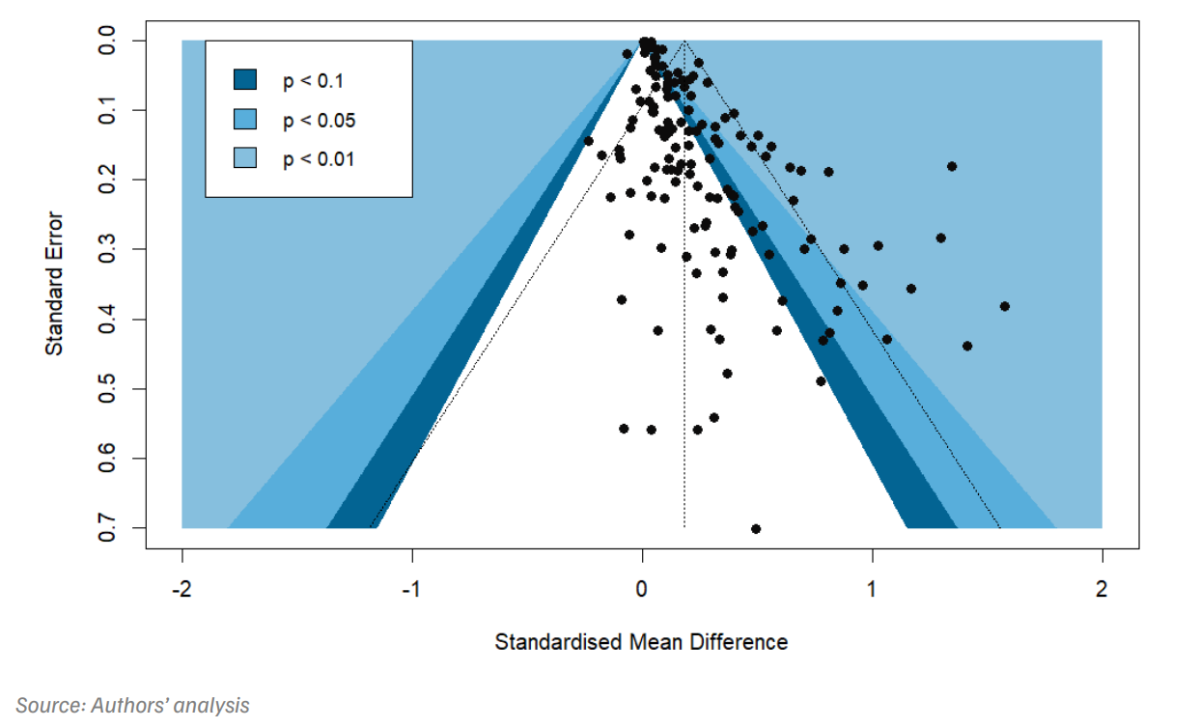
The overall heterogeneity (I 2 ) is 82 per cent, which is high. As the sample size increases, the pooled effect size decreases (SMD = 0.41 for a sample size less than 100, SMD = 0.23 for a sample size greater than 100 and less than 500, and SMD = 0.04 for a sample size greater than 500), which indicates a small-study bias. The scatter plot in Figure 1 maps the effect size (SMD) against the precision of the effect size (calculated as the standard error of the estimate). It shows the asymmetry, with smaller studies reporting larger effect sizes.
This study used a statistical test, Egger’s regression, to confirm whether the small-study bias exists. Specifically, this study used Egger’s regression, as modified by Pustejovsky and Rodgers (2019), to make the test compatible with SMDs. The Egger’s regression test yielded a statistically significant value of intercept (βo = 1.17, t = 7.43, p < 0.01). Thus, the data exhibit a small-study bias, indicating that the pooled effect size is inflated.
Figure 1. Small-study bias exists in the dataset, which inflates the pooled effect size
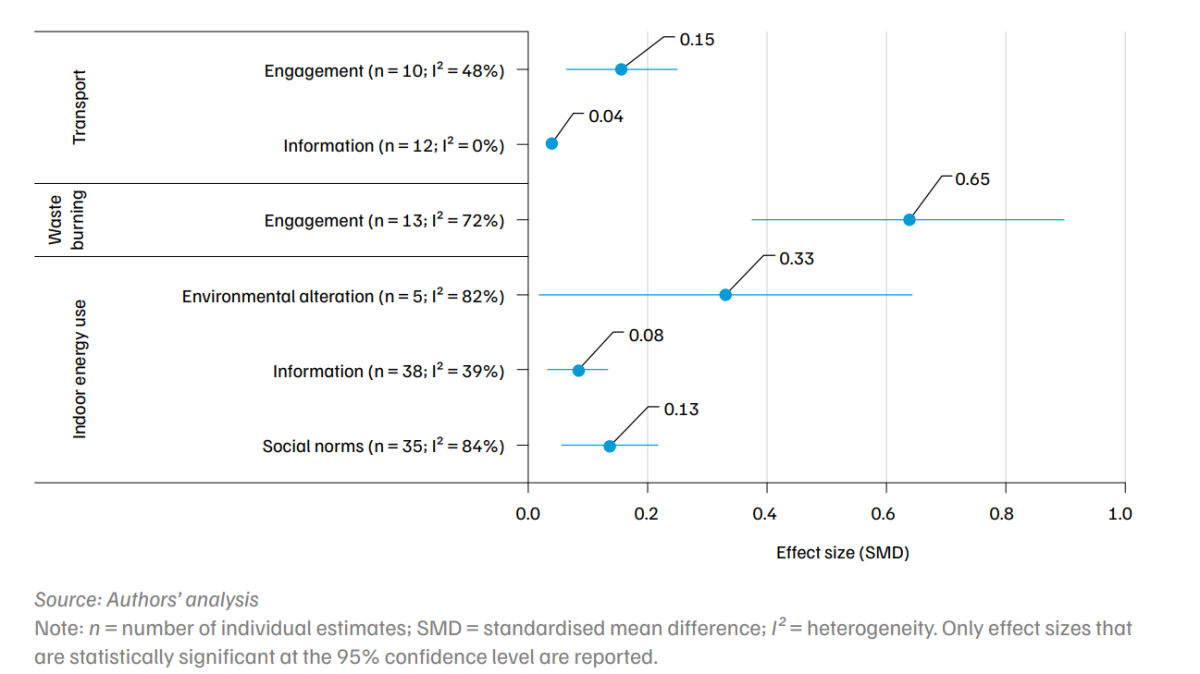
Based on the analysis with 151 effect sizes, the SMD varies from 0.04 when using information provision to change transportation choices to 0.65 when using engagement to promote waste recycling or reduction (Figure 2).
Figure 2. Effect size varies from 0.04 to 0.65 for different strategies
The vast majority of the nudges (84 per cent) have been tested in Europe, North America, and Oceania (Australia and New Zealand), and evidence is scarce from Asia, Africa, and Latin America (Figure 3).
The literature from the latter set also covers a limited range: 20 of the 24 tested interventions from Asia, Africa, and Latin America targeted at reducing indoor energy use. In the Indian context, only two RCTs with three estimates assess the impact of nudges on indoor electricity consumption. The application of nudges to increase the uptake of public transport, increase waste recycling, or reduce waste is a little-explored area in countries on these continents, specifically India.
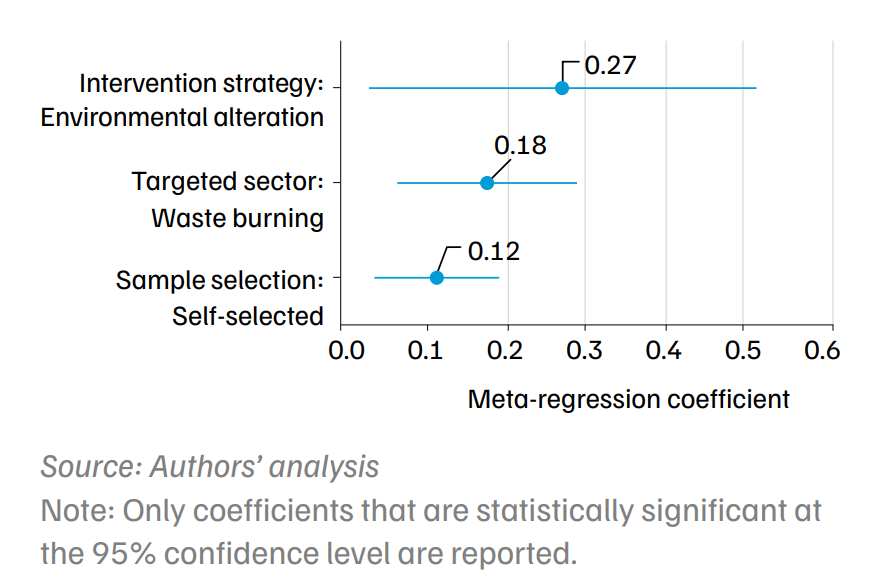
Given the dataset’s high heterogeneity (I 2 = 82 per cent), this study used a meta-regression to investigate the factors influencing study outcomes. As shown in Figure 4, self-selection leads to higher effect sizes. On average, nudges targeting increased waste recycling or reducing the amount of waste generated produce higher outcomes. Environmental alteration as an intervention strategy also produces higher outcomes.
Figure 4. Targeted sector, sample selection, and intervention strategy influence outcomes
Pooling the SMDs based on the targeted sector clarifies this point. Interventions that target an increase in waste recycling or a reduction in waste generated produce the highest impact (Figure 5).
Figure 5. Nudges targeting waste recycling or reduction report the highest impact
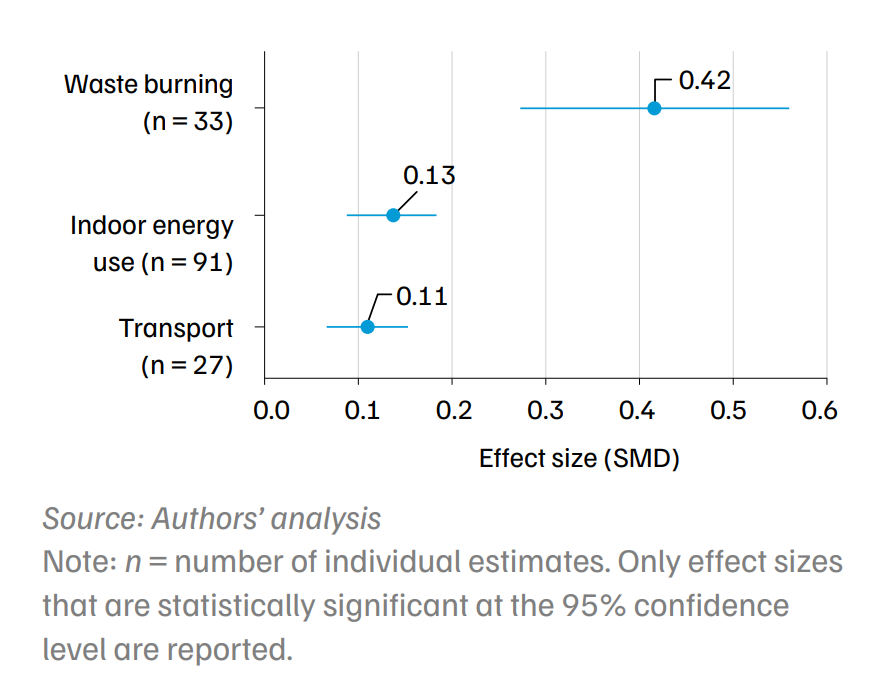
Similarly, pooling the SMDs based on the intervention strategy reveals that environmental alteration yields the maximum impact (Figure 6). The samples’ self-selection inflates the effect size. Self-selection corresponds to greater conformity to the expected behaviour (Schwartz et al. 2013), so the study outcomes are higher in magnitude. In this study, self-selection means the participants agreeing to participate in the RCT and being aware of the expected result.
Figure 6. Environmental alteration as an intervention strategy produces the highest impact
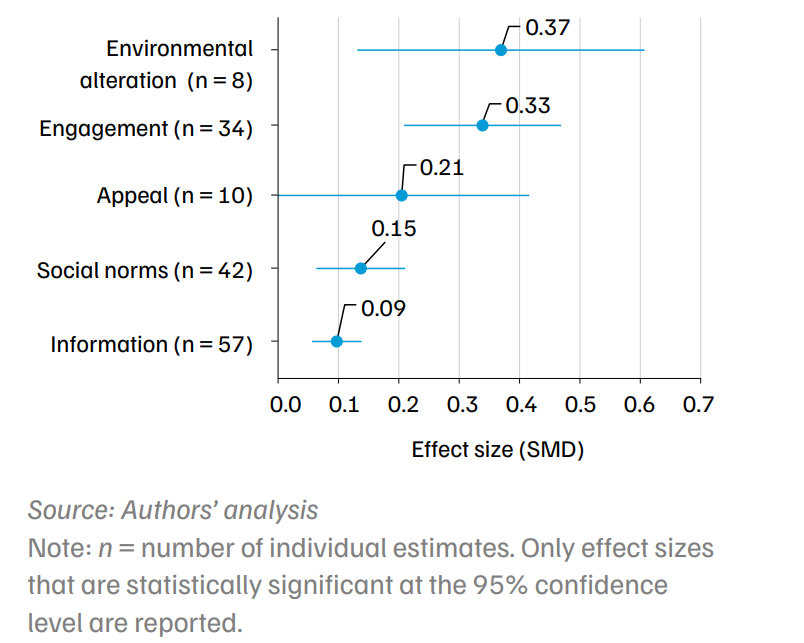
We find that environmental alteration (SMD = 0.33) is a highly effective strategy in reducing indoor energy consumption, even though the number of individual interventions (n = 5) is low (Figure 2). Also, the effect sizes are heterogeneous (I2 = 82 per cent), meaning the impact statistically varies between studies. However, the environmental alteration strategy yields emissions-reducing behavioural shifts across all the studies. More evidence is needed to bolster the case for the strategy’s effectiveness in reducing emissions from indoor energy use.
Providing information (SMD = 0.08) and setting social norms (SMD = 0.13) minimally reduce indoor emissions. This study assessed the low effectiveness of information provision with high precision (I2 = 39 per cent) and setting social norms with low precision (I 2 = 84 per cent).
Engagement effectively promotes waste recycling or reduction (Figure 2). Although this study gauged the high effectiveness of engagement with low precision (I2 = 72 per cent), all the interventions using engagement as a strategy increased waste recycling or reduced the amount of waste generated.
However, over 69 per cent of the interventions that tested engagement as a strategy to promote waste recycling or reduction used self-selected samples. Therefore, these interventions may suffer from self-selection bias, which inflates the results. These interventions may not bring about as significant a behavioural change in the general population as the outcomes showcase. Hence, more evidence from the general population is needed to establish the effectiveness of engagement as a strategy.
Engaging with (SMD = 0.15) and providing information (SMD = 0.04) to change the behaviour of travellers and commuters are minimally effective strategies. This study estimated the low effectiveness of engagement with low precision (I2 = 48 per cent) but that of information provision with high precision (I2 = 0 per cent).
Even though studies that have tested engagement as a strategy to change commuting patterns have done so primarily with self-selected samples (i.e., 80 per cent of the interventions), where inflated results are typically expected, the strategy is minimally effective.
The Government of India’s Mission LiFE presents an opportunity to promote mass behavioural changes that reduce individual emissions, improving air quality. The central government aims to effect a change in demand and supply based on behavioural shifts in consumption patterns through long-term government and industrial policies. The programme aims to make at least 80 per cent of India’s villages and cities environment-friendly and nudge at least 1 billion Indians to practise a sustainable lifestyle by 2027–28 (MoEFCC and NITI Aayog 2022). Therefore, changing individual and community-level consumption patterns is central to Mission LiFE.
Shifting individual consumption patterns is critical to improving air quality in India. Three sectors— indoor energy use (including electricity generation), transportation, and waste burning—are responsible for 52 per cent of India’s annual mean PM2.5 concentration (Chatterjee et al. 2023). Individual choices primarily drive emissions in these sectors. Therefore, changing individual polluting behaviours can help achieve cleaner air in India in the long term.
Nudges can be an effective tool for shifting consumption patterns. They aim to steer people in a particular direction by changing aspects of the decision-making context in a subtle, unobtrusive, and cost-effective way (Lieberoth et al. 2018). Given their cost-effectiveness, researchers can deploy them as a pilot and then scale them to the regional and national levels based on the emerging evidence.
Even though researchers have tested the impact of nudges on polluting behaviours through RCTs, summarising the available evidence through a meta-analysis can help aggregate information on which interventions work and in which context. This knowledge can help researchers deploy or avoid specific interventions. Nisa et al. (2019) conducted the last comprehensive meta-analysis of such RCTs, summarising the available evidence on the impact of nudges on polluting behavioural patterns using data from studies published until 2017. Given the increased volume of available evidence, the need for an updated meta-analysis covering all the available evidence has also grown. This study aims to fill that gap.
This study finds that engagement (i.e., promoting goal-setting, intention to implement, commitment, and mindfulness of air quality improvement) and providing information (i.e., messages with helpful tips, air pollution-related statistics, in-home displays, and energy efficiency labels) are minimally effective in shifting people’s transportation choices towards more sustainable options. The low effectiveness of engagement and information provision in changing individuals’ transportation choices is estimated with low and high precision, respectively. Information provision is also minimally effective in reducing indoor energy use, according to this study, and the low effectiveness of this strategy is estimated with high statistical precision.
Engagement is highly effective in promoting waste recycling or reduction, but the impact is estimated with low precision. However, all the individual interventions testing the impact of engagement on promoting waste recycling or reduction report having achieved positive behavioural shifts. However, most evidence comes from self-selected samples (i.e., participants explicitly agreeing to participate in the RCT). Therefore, more evidence from the general population is needed before endorsing its effectiveness.
Environmental alterations (i.e., removing external barriers or expediting access to the desired option by altering the physical environment) effectively reduce indoor energy consumption. However, the effect is estimated with low precision. Limited evidence suggests that environmental alteration effectively reduces indoor energy consumption; however, all the tested interventions reported achieving such a reduction. More evidence is needed to bolster this conclusion.
Setting social norms (i.e., providing comparative information about the emissions reduction behaviours of close cohorts such as citizens with a comparable demographic profile, colleagues, and neighbours) is minimally effective in reducing indoor energy consumption; however, the low effectiveness is estimated with low statistical precision.
Although evidence on such interventions is available from six continents, there is limited evidence from the Global South, which consists of Asia, Africa, and Latin America, specifically from India. The scarcity of evidence from the Global South limits the scope of this meta-analysis’s application to India. However, researchers and ULBs can extract relevant information on which strategies work and which don’t to help direct further research in India.
In 2024, the CPCB began implementing a quarterly ranking of cities against annual targets based on their CAPs (CPCB 2024). The metrics include compliance of the CAPs with 14 Mission LiFE indicators that capture individual choices, such as preferring CNG and electric vehicles over petrol and diesel ones and practising waste segregation at home (CPCB 2024; MoEFCC 2023). Therefore, the central government has incentivised cities to promote individual and community-level emissions reduction through this performance-based ranking initiative.
However, Mission LiFE initiatives can only tailor their interventions to change polluting behaviours when researchers and decision-makers know which strategies are most effective in each sector. The results obtained through this meta-analysis will help direct further research in the Indian context to this end, which will serve the dual purpose of increasing the quantum of available evidence and potentially effecting scalable behavioural changes.
This meta-analysis aims to assess the effectiveness of various behavioural nudges in reducing air pollution, particularly in the sectors of indoor energy use, transportation, and waste burning, and to inform future behavioural interventions.
Three sectors – indoor energy use (including electricity production), transportation, and waste burning – collectively contribute 52 per cent of India’s annual mean PM2.5 concentration.
Mission LiFE (Lifestyle for Environment) is a mass movement launched by the Government of India in 2022 to mainstream sustainability by encouraging individual and community-level behavioural changes towards environment-friendly choices. This study aims to provide data-backed insights on which nudging strategies are most effective in different sectors, thereby supporting the objectives of Mission LiFE and enabling its scalable deployment in India.
Unlocking Finance for India’s Textile Waste Management
Are Clean Cooking Fuels Reaching India's Urban Poor?