Council on Energy, Environment and Water Integrated | International | Independent

Suggested citation: Varghese, Chris Teresa, Seshadri Raghavan, and Vandana Vidhani. 2025. How can India make the Electric Three-wheeler Transition Gender-inclusive? A Case Study of Amritsar. New Delhi: Council on Energy, Environment and Water.
Within India's transportation sector, women form just 0.03 per cent of the workforce; moreover, only 0.01 per cent of them are engaged in better-paying roles as mobility service providers (MoSPI 2023). The limited participation of women is attributable to multiple factors, such as restrictive access to training, gendered assumptions, limited supporting infrastructure, and safety concerns. Even as India transitions to EVs, these issues remain unaddressed. Most of India's EV policies are yet to incorporate gender equity in their design. Past initiatives to facilitate women's entry into the 3W segment have not been very successful, as targeted measures based on defined goals, a structured implementation framework, and quality monitoring and evaluation mechanisms were not present.
In this issue brief, we highlight key considerations to make India's e3W transition gender-inclusive, using Amritsar's 'Rejuvenation of Auto-rickshaws in Amritsar through Holistic Intervention' (RAAHI) scheme as a case. Using Participatory Action Research, focus group discussions and structured interviews with women interested in driving 3Ws we identified women's motivation and barriers to entering the 3W segment. Based on these insights, we undertook collaborative efforts with the women to identify the potential strategies that the government can adopt to make local policies more gender-inclusive in Amritsar. India’s EV transition presents a unique opportunity to reshape the sector, and it is imperative that gender inclusivity remains a critical component of this transformation.
Two-wheelers (2Ws) and three-wheelers (3Ws) are driving India’s transition to electric vehicles (EVs). Electric 3Ws (e3Ws) offer advantages such as zero tailpipe emissions and lower cost of ownership over the vehicle’s lifetime besides holding the potential to increase daily savings and improve livelihoods (Harikumar et al. 2022). To lower the acquisition costs of e3Ws and thereby fast-track their adoption, EV policies in India have incorporated provisions for battery-linked purchase incentives. These provisions make e3Ws more affordable to facilitate EV transition, benefiting the lower-income groups the most (Harikumar and Jain, 2023), but the incentives offered by e3Ws are not equitably accessible to all. Women are underrepresented in India’s labour market. Therefore, their earnings are limited, savings low, and access to credit almost nonexistent which makes it challenging for them to reap the benefits of e3Ws. Within India’s transportation sector, women form just 0.03 per cent of the workforce; moreover, only 0.01 per cent of them are engaged in better-paying roles as mobility service providers (MoSPI 2023). In tune with the lower participation of women in the workforce, most of India’s EV policies are yet to incorporate gender equity in their design. Past initiatives to facilitate women’s entry into the 3W segment have not been very successful as targeted measures based on defined goals, a structured implementation framework, and quality monitoring and evaluation mechanisms were not present.
In this issue brief we highlight key considerations to make India’s e3W transition gender-inclusive, using Amritsar’s ‘Rejuvenation of Auto-rickshaws in Amritsar through Holistic Intervention’ (RAAHI) scheme as a case. The RAAHI project aims to transition diesel 3Ws (d3Ws) to e3Ws by providing a subsidy to drivers who scrap their existing vehicles. Since men own all d3Ws, women are outside the purview of this scrapping mandate. To explore women’s motivation and barriers to entering the 3W segment, we conducted focus group discussions and structured interviews with women interested in driving 3Ws. We also facilitated the National Urban Livelihood Mission (NULM) to consolidate these women into selfhelp groups and four SHGs of 38 women interested in driving 3Ws were formed.
Economic motivations
Socio-cultural motivations
The findings and recommendations from this issue brief can inform various government measures and guide the formulation of future policies to include women in their design and make India’s e3W transition genderinclusive.
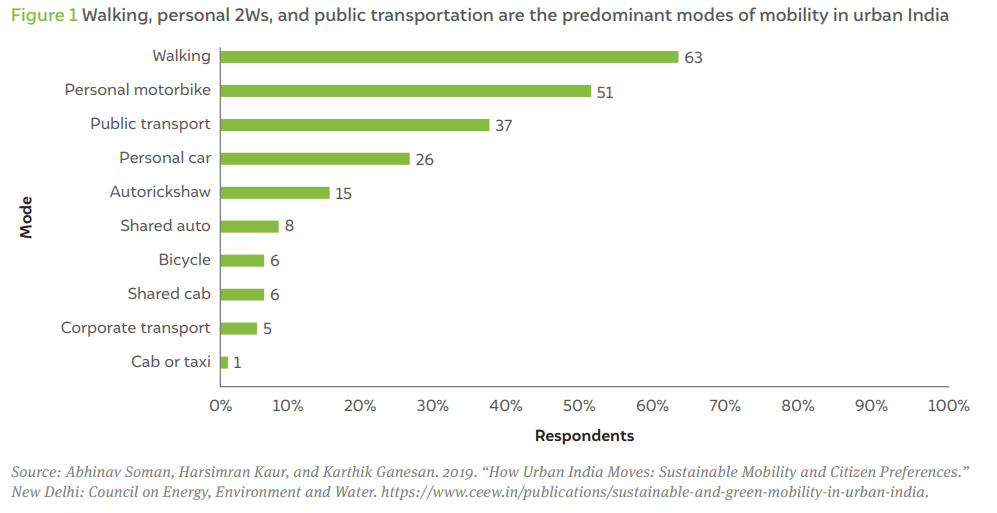
India’s mobility needs are predominantly met by three modes walking, personal two-wheelers (2Ws), and public transportation (Soman, Kaur, and Ganesan 2019). Three-wheelers (3Ws) which constitute only around 3 per cent of India’s total motor vehicles (Vahan Sewa| Dashboard 2024) are another important mode of transport which account for over 15 per cent of the modal share across several major cities in India (Soman, Kaur, and Ganesan 2019). They bridge a widening gap between private and public transport in India. In the absence of reliable and accessible modes of formal public transport, 3Ws gained popularity as the primary mode for door-to-door commuting (Mani, Pai, and Aggarwal 2012). However, the increased use of 3Ws leads to higher emissions that pose hazardous risks to human health (Jain and Barthwal 2022).
In most cities, 3Ws are dominated by internal combustion engine (ICE) vehicles running on diesel, petrol, and compressed natural gas (CNG). Diesel 3Ws (d3Ws) are the most polluting as they emit the highest levels of particulate matter (PM) with an aerodynamic diameter less than 10 microns (PM10) when compared to other types of vehicles. Even Bharat Stage VI (BS VI) compliant 3Ws emit close to six times higher particulate matter than diesel cars (Roychowdhury and Roy 2022). Exposure of humans to high ambient concentrations of PM10 can result in ill health and carries the risk of cardiovascular and pulmonary diseases (Roychowdhury and Roy 2022). These effects are also disproportionately experienced by certain groups, such as women, children, and poorer sections of the population, who are more exposed to vehicular emissions. Women, school children, and individuals between the ages of 18 and 35 years are more likely to use public transport, and poorer sections in urban areas live in greater proximity to areas with the highest traffic density. Consequently, these groups are rendered more vulnerable and at risk of health damage.
The damage caused by d3Ws extends beyond adverse environmental and health impacts (Roychowdhury and Roy 2022). Rising fuel prices, and maintenance and servicing costs give rise to economic concerns among the 3W drivers (Qamar 2020; Bali 2022). In Kochi, onethird of a 3W driver’s revenue is spent on fuel expenses and maintenance costs. The high operational costs reduce their spending capacities, making it difficult for them to meet basic needs such as health and education expenses for themselves and their families (Harikumar et al. 2022). This directly impacts their quality of life and lowers the standard of living of their dependents as well. States have previously transitioned to alternative fuels, such as CNG and liquefied petroleum gas (LPG), to curb emissions (Roychowdhury and Roy 2022). However, these alternatives offer no respite from the economic burden on 3W drivers. In this context, electric 3Ws (e3Ws) offer environmental and economic advantages to the drivers. When compared to CNG, diesel, petrol, and LPG vehicles, EVs feature zero tailpipe emissions, have the lowest cost of ownership over the vehicle lifetime, and increase daily savings by 30 per cent (Harikumar et al. 2022). Thus, e3Ws can potentially improve the livelihoods and enhance the quality of life of 3W drivers.
Recognising the benefits that e3Ws offer, India implemented policy measures to transform the 3W segment and fast-track the adoption of e3Ws. National policies such as Faster Adoption and Manufacturing of (Hybrid &) Electric Vehicles (FAME India) I and II offer battery-linked purchase incentives up to INR 10,000/ kWh for e3Ws. Additionally, 15 of the 27 state EV policies offer similar purchase subsidies on e3Ws (Bureau of Energy Efficiency 2024). However, these benefits are not equitably accessible to all, particularly women who are underrepresented in India’s labour market.
Despite rising eight ranks in the Global Gender Gap Index, India lags in the sub-index of ‘Economic Participation and Opportunity’, with only 36.7 per cent of the gap closed (World Economic Forum 2023). This low-level participation of women in the labour force also extends to India’s transportation sector, where women form only 0.03 per cent of the workforce (Periodic Labour Force Survey 2023). In both formal and informal transport systems, women are primarily engaged in lower-paid, passenger-facing roles such as conductors, cleaners, and customer service agents (ITF 2021). Only 0.01 per cent of the women are engaged in better-paying roles as mobility service providers (Periodic Labour Force Survey 2023).
The limited participation of women is attributable to multiple factors, such as restrictive access to training, gendered assumptions, limited supporting infrastructure, and safety concerns. For instance, women find it difficult to access vocational training specific to the transport sector since it is informally passed down from older male family members to younger ones, and formal training programmes require an upfront investment that women cannot afford (Baruah 2017). Similarly, gendered assumptions often disadvantage women regarding their suitability for the job (Baruah 2017). An Ola Mobility Institute (OMI) report found that companies often express concerns about the ability of women delivery workers to achieve kilometre targets. These gender biases prevent women from entering the transport sector (Raman, Ramachandran, and Sindhu 2021).
Even when institutions undertake gender-inclusive initiatives to support the entry of women into the sector, transport workplaces do not consider women in their design. This leads to the absence of supporting infrastructure (Swamy et al. 2021) such as secure parking spaces, provision of waiting rooms, restrooms, and separate clean, hygienic toilets (Gupta and Aishwarya 2024; Baruah 2017). Additionally, the attitude and behaviour of male co-workers sometimes prevent safe, inclusive, and gender-balanced work environments for women (Gupta and Aishwarya 2024; Baruah 2017). Similar patterns are observable in India’s 3W segment, due to which women constitute a diminutive proportion of the 3W workforce. Even as India transitions to EVs, these issues remain unaddressed.
Most of the state EV policies fail to incorporate gender equity in their design. Of the 27 state EV policies, only seven states—Chhattisgarh, Odisha, Jharkhand, Kerala, Tamil Nadu, West Bengal, and Delhi—mention initiatives specifically targeting women; only the EV policies of Delhi and West Bengal contain provisions to include women as drivers (Bureau of Energy Efficiency 2024). In the policies of the remaining states, the emphasis is on women’s participation in manufacturing and training and their upskilling to take up vehicle maintenance roles. Treating the mobility sector as a gender-neutral space perpetuates the existing gender disparity and hinders women’s access to the benefits of India’s e3W transition.
Since 2017, 12 cities across nine states have implemented various measures to make e3Ws more accessible by extending training and incentives to women. The majority of these initiatives are undertaken by the local governments, and a few of them are the outcomes of collaborations between private entities and local non-government organisations. Table 1 compares these initiatives.
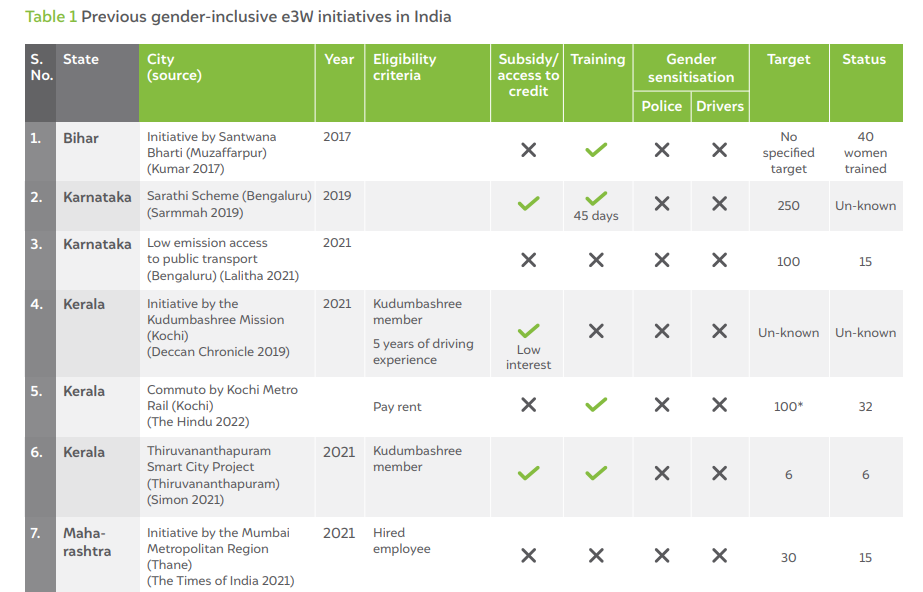
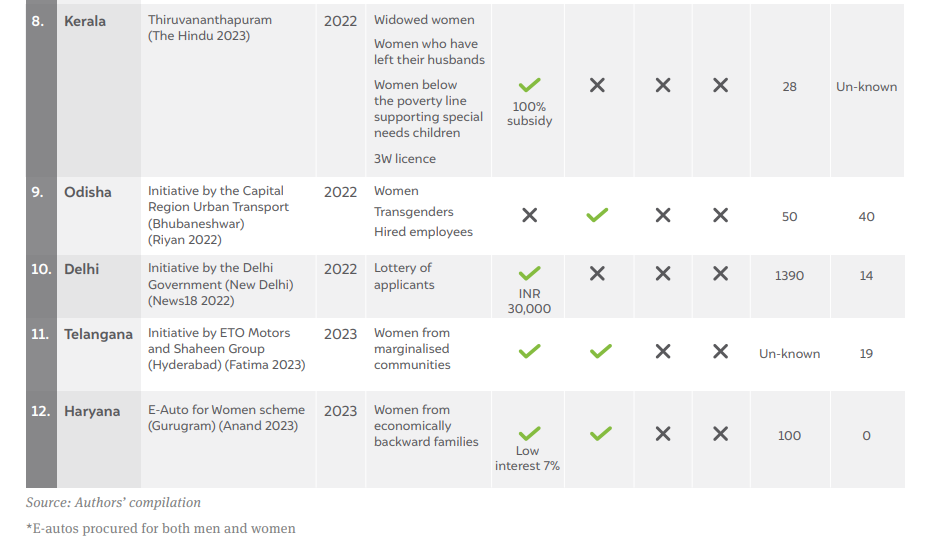
Most of the measures adopted by cities in the past to mainstream gender in their e3W transition are centred around subsidy allocation, access to credit, and training facilities. However, of the 12 cities, only one city, Thiruvananthapuram, met the target of its gender inclusion programme. The low success rate of such initiatives is attributable to three key issues: (a) lack of integration with larger state EV policies, (b) fragmented solutions, and (c) absence of adequate monitoring and evaluation mechanisms, as explained below.
Except for Delhi and West Bengal, no state with genderinclusion initiatives make provisions for women as e3W drivers in their EV policies. These initiatives are locally driven and lack a collaborative and programmatic approach. Integrating gender in state policies can offer a structured framework for cities to develop gendersensitive initiatives with consistent support mechanisms for their successful implementation.
Gender-inclusion initiatives arise from local needs and motivations and focus narrowly on specific challenges such as financial and skill barriers. As a result, solutions are often disjointed, and a wide range of issues may go unaddressed. For instance, New Delhi is the only union territory to provide a subsidy of INR 30,000 for women to purchase e3Ws. However, only one per cent of this target was achieved (The Times of India 2022). This may be due to the lottery system adopted in the policy to identify women drivers coupled with the absence of in-depth assessments of who the targeted beneficiaries should be, their key challenges, and what aspects must be addressed to ensure their smooth inclusion within the 3W segment. For effective outcomes, in-depth assessments are required to inform future initiatives.
Defined monitoring mechanisms to evaluate the progress and status of gender-inclusive e3W programmes are scarce. Apart from Delhi, official data on how many applicants sought to avail the proposed benefits, who underwent training, or who ultimately received the benefits and are currently driving e3Ws in other states is limited. Without monitoring mechanisms, it is not possible to measure the impact accurately and identify roadblocks to the successful implementation of the proposed initiatives. As a result, no model for gender-inclusive e3W transition currently exists that can be adapted or adopted and scaled.
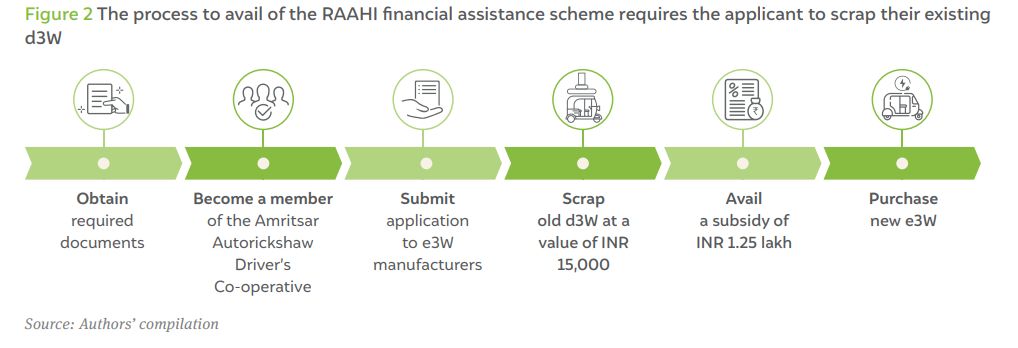
Amritsar is the most recent city to add a genderinclusion initiative to its local e3W policy—the Rejuvenation of Autorickshaws in Amritsar through Holistic Intervention (RAAHI) project. Amritsar Smart City Limited (ASCL) initiated the RAAHI project in 2019 to transition the city’s existing fleet of 6,650 d3Ws to e3Ws. As part of this project, ASCL introduced a financial assistance scheme. In this scheme, d3W drivers are required to mandatorily scrap their d3Ws and replace them with e3Ws to avail a subsidy of INR 1.25 lakh and a scrapping incentive of INR 15,000 (Figure 2) (RAAHI Amritsar 2024).
The subsidy scheme is only available to drivers who scrap their existing d3Ws. Since men own 100 per cent of the d3Ws operated in the city, the scrapping mandate remains outside the purview of women, and they are unable to enter a segment with better economic and livelihood potential than the ones currently accessible to them. Realising this disparity, the Municipal Corporation of Amritsar, informed by CEEW, submitted a proposal to eliminate the scrapping mandate and provide incentives for women who wish to drive e3Ws.
Amritsar’s move to include women in its e3W transition is a step in the right direction. However, the situation on the ground that impacts and influences women’s participation and retention as drivers need to be assessed. For this, we undertook qualitative research with women in Amritsar who wished to participate in the 3W segment. We obtained perspectives on women’s motivations to drive e3Ws, the challenges they face, and the measures required to facilitate their entry and retention into the segment.
Through a case study of Amritsar we examine the challenges, motivations, and benefits of women’s participation and retention within the 3W segment and make policy recommendations to include women in the e3W transition. We explore the following research questions in this issue brief:
The rest of this brief is organised as follows. Chapter 2 discusses the data and methodology of the study. Chapter 3 presents the results. Chapter 4 discusses the results, the generalisability of the findings, and the study’s limitations. Chapter 5 recommends policy actions for stakeholders, and chapter 6 concludes the report.
In this study, we adopt adopts a qualitative research approach that draws from the participatory action research (PAR) method. PAR is a collaborative and iterative research process that sheds light on the lived experiences of individuals. It is a process of action and reflection that brings together community members and researchers to co-create knowledge and initiate changes in social processes or dynamics (Cornish et al. 2023). As part of the PAR process, we conducted focus group discussions (FGDs) and structured interviews with 26 women to identify their challenges and motivations to participate in the 3W segment. We presented the challenges identified to government stakeholders, and we formulated and discussed a set of potential solutions with the women to determine the prerequisites to their participation in the e3W transition.
We conducted one FGD with 13 women who have previously driven e-rickshaws in Amritsar. We used snowball sampling to identify the women who are currently driving or have previously driven an e-rickshaw or a 3W. The purpose of this FGD was twofold: (i) to identify the key challenges inhibiting the participation and retention of women in the 3W segment and (ii) to discern their key motivations to consider driving in the first place.
The FGD lasted for one hour, during which participants provided information about their vehicle rental and driving experience, familial and societal response to their decision to drive, barriers to their participation in the 3W segment, care responsibilities, current occupations, and the motivation behind their initial decision to drive. The FGD helped collaboratively understand the issues inhibiting women’s participation in the 3W segment in Amritsar.
We used classical content analysis to analyse the findings from the FGD qualitatively. In classical content analysis, emergent themes and key concepts are identified through a process of open coding and quantification of codes (Hsieh and Shannon 2005). Codes from the transcript are identified using open coding. These codes are then quantified to indicate the number of times each participant uses a code and all the instances of a code in the FGD. Then, similar codes are organised into sub-categories and similar sub-categories are grouped into broader categories. The central themes that align with the research objectives are derived from these categories. We identified 56 codes, organised into 12 categories, that were used to arrive at three main themes: (a) barriers to women’s participation in the 3W segment, (b) motivations for women’s entry and participation in the 3W segment, and (c) support for women’s entry and participation in the e3W transition.
We conducted structured interviews with self-help group (SHG) members who expressed interest in participating in the 3W segment. These SHGs were formed after the FGDs. The National Urban Livelihoods Mission (NULM) registered the FGD participants as members of an SHG of women drivers. NULM officials also briefed other women who wished to form SHGs about the benefits of driving. Consequently, in three months, NULM registered four SHGs with 38 women who wished to drive e3Ws. Of the 38 women, 26 consented to participate in this research. We conducted interviews with them to understand their socio-economic contexts and challenges, to estimate the economic benefits that motivate them to drive and to identify their stated e3W usage patterns. We collected data using a structured questionnaire, which encompassed five key areas:
We used purposive sampling to identify the respondents for the structured interviews. We selected the participants from the registered members of SHGs of women with the intent to drive. We administered the questionnaires through in-person (13) and telephonic interviews (13) conducted in Hindi and Punjabi; each interview lasted around 20 minutes.
All the sections consist of close-ended questions except for sections on demographic details, SHG membership, number of children, income, expenditure, loan, and savings. A five-point Likert scale was used for questions on asset ownership and decision-making, challenges and support to their 3W participation, and the benefits of 3W participation and descriptive analysis was used to derive insights from the data collected.
All the respondents are aged between 26 and 50 years, with an average age of 38 years. The majority of the respondents are married (N=20/26), and 11 per cent are widowed (N=3/26). Four per cent of respondents have an undergraduate degree, 60 per cent of the respondents have completed secondary education, and 20 per cent have no formal education (Table 2).
The overrepresentation of working women in this sample is due to the purposive sampling method, which targeted data collection from women who have expressed their interest in driving, the majority of whom are currently employed.
Table 2 Comparison of demographic details of the sample with Amritsar district
The findings are spread across three themes, each corresponding to one of the research questions. The first theme identifies the barriers to women’s participation in the 3W segment in Amritsar. The second theme highlights the primary motivations driving women to engage in this sector, while the third theme outlines the support sought from the government by women who wish to enter into the 3W segment and partake in the e3W transition.
We identified the following barriers to women’s participation: financial, socio-cultural, and skill and capacity building.
Women do not own 3Ws
In households that own a vehicle, women are not the owners and may not have much control over them. Assets most owned in the households are cell phones, houses, consumer durables (such as appliances), and 2Ws. Overall, women owned around 30 per cent of all the assets; however, a gendered pattern of asset ownership exists. Women mostly own assets like bicycles, while their husbands own 2Ws (motorcycles) and 3Ws. In our study, five households own 3Ws.
However, men own the 3Ws in four of these five households. Similarly, there are 15 households that own 2Ws, of which men solely own six, parents of the respondents own two, five are jointly owned, and women solely own two. Therefore, 80 per cent of women stated that apart from financial constraints, not owning a 3W is the first significant barrier to their participation as drivers in Amritsar’s 3W segment.
Low earnings in current occupation, lack of savings, and high cost of 3W
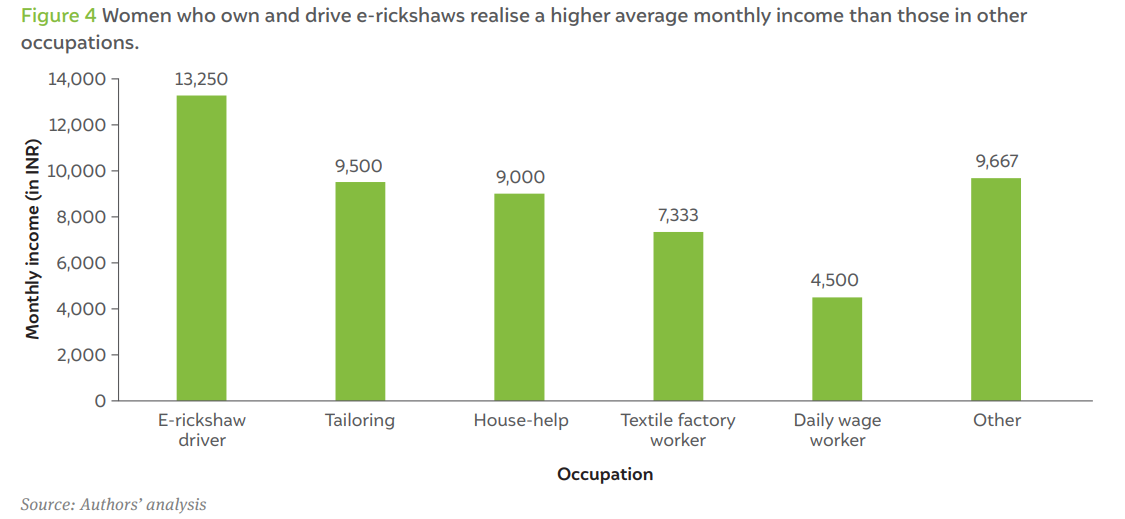
The majority of the respondents are currently engaged in occupations such as tailoring, domestic work, and factory labour. In these occupations, they typically earn around INR 8,000 per month. Some women stated that that their income is insufficient to even meet their daily needs. One participant said that she sometimes takes small loans from local shops to meet her monthly expenses. In some cases, the wages for certain months are delayed, making it difficult for them to maintain regular savings. Currently, only three of the 26 respondents have any form of savings. To add to their financial burden, seven of the 26 women have taken a loan in their name. Their average equated monthly instalment (EMI) is around INR 1,675, which is 20 per cent of their monthly income. Given these constraints, purchasing an e3W, which is priced between INR 3 and 3.5 lakh in Amritsar, is a financial burden and risky in the absence of purchase subsidies and demand incentives from the government.
Women who have driven e-rickshaws on rent find the rental systems to be financially unviable
No rental models exist for e3Ws, but d3Ws are given out for a rent of INR 500 per day. E-Rickshaws, which are available for a rent of INR 300–400, are the more affordable option in Amritsar. These are low-speed electric vehicles that are easier to learn to drive in comparison to the d3Ws, which dominate the 3W segment. Of the 13 women who participated in the FGD, four have driven an e-rickshaw on rent at some point but do not currently drive. This is due to specific issues associated with the informal e-rickshaw rental models where few individuals in each locality own and rent out 10–40 e-rickshaws. The rent on an uncharged e-rickshaw is INR 300. Renters must pay an additional INR 100 for a fully charged vehicle. With earnings of INR 500 a day, the drivers would take home only INR 100–150 per day. Moreover, the vehicles are available to them only for a fixed duration—between 10 a.m. and 7 p.m. Since the women cannot rent these vehicles outside these hours, they cannot use it for early morning trips or trips after 7 p.m. This restricts their operational hours and affects their daily earnings. The women also stated that owners of rental vehicles do not service, repair, or regularly maintain the vehicle. If the renters raised concerns with the owners of rental e-rickshaws, they were asked to service it themselves. They had to personally cover the maintenance or repair costs, which added to their economic burden. Thus, the rental system is not economically viable for them.
Certain socio-cultural barriers inhibit women’s entry and participation in the 3W segment. Their existing family structures and roles largely determine their entry into the segment, and their retention as 3W drivers is largely influenced by the existing male 3W drivers.
Some FGD participants have driven vehicles in Amritsar on rent. When recounting their experiences, the women report certain instances where rental owners and male 3W drivers behaved poorly with them, making it difficult for them to continue. The women faced discouraging comments from e-rickshaw rental owners, and male 3W drivers would pass comments about women partaking in a ‘man’s occupation’. One respondent, the first woman 3W driver in Amritsar, stated that when she started driving, she sought the company of her sister on her trips for support.
In addition to the financial and socio-cultural challenges, various institutional barriers hinder women’s entry into the 3W segment. These range from a lack of training and skilling facilities for women to complex systems and procedures to obtain licences.
More than half of the respondents have never driven e3Ws in their lives as they revealed in the interviews. Driving as a skill is traditionally associated with men and is primarily taught informally by fathers to their sons. As a result, women are excluded from the informal social system that passes down this skill. Additionally, Amritsar does not have any 3W training institute. Therefore, women lack the skills required to drive 3Ws, which prevents them from participating in the 3W segment and accessing better-paying jobs. All the respondents intend to drive, with over 75 per cent saying that they would be very likely to attend and complete a two-week training programme to learn how to drive if given the opportunity.
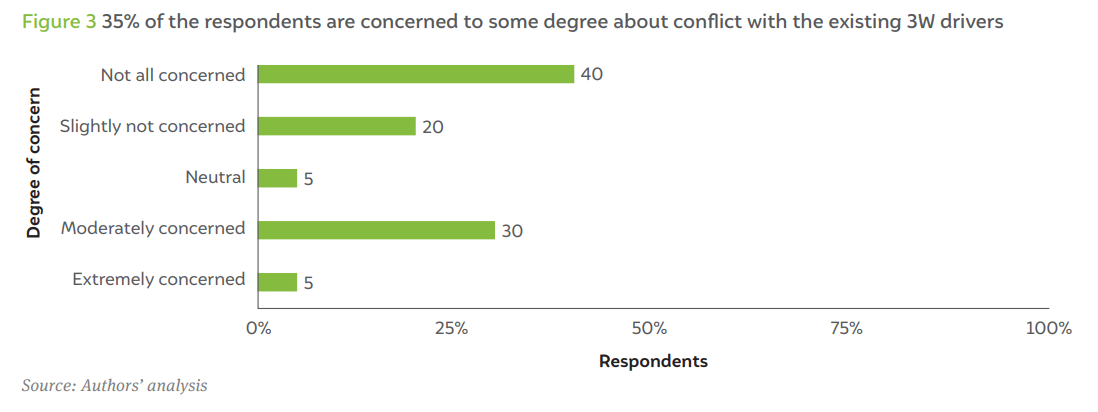
Women do not have 3W licences, and the process to obtain the licence is complex
The process to obtain a 3W licence in Amritsar is cumbersome. A learner’s licence must first be applied for 3Ws under the light motor vehicle (LMV) class of vehicles. This vehicle class consists of 4Ws, such as cars and jeeps, and also 3Ws. After applying for a learner’s licence, the applicant faces the challenge of getting a slot at the Road Transport Authority (RTA) to take their driver’s test and obtain a driver’s licence. Even if a slot is obtained, the women stated that the RTA conducts the test using a 4W instead of a 3W and does not allow applicants to take the test on a 3W. This is a concern for both women and male 3W applicants. As a result, more than half of the existing male 3W drivers in Amritsar currently operate without a licence, and more than half of the women respondents have not applied for a learner’s licence.
Despite the barriers mentioned in section 3.1, various factors motivate women to consider participating in the 3W segment. We classified these motivations into two categories: economic motivations and socio-cultural motivations.
Increase in income and savings
Women are aware of the economic gains of vehicle ownership and participation in the transport sector. The majority (around 90 per cent) of women state that it is very likely that driving professionally will benefit them. The respondent who drives an e-rickshaw earns around INR 5,000 more than women employed in other sectors, such as tailoring, textile factory work, domestic work, and daily wage labour (Figure 4). Currently, for the latter group of women, almost all their earnings are exhausted in covering their expenses and they cannot save any money; so, they see daily income from driving as an opportunity for savings. They stated that an increase in earnings would bring them a sense of relief as they could better manage their monthly expenses, meet unforeseen expenses, set aside daily savings to help pay off any loans, and secure their and their family’s future.
Women take pride in vehicle ownership
Women wish to own a 3W. In the structured interviews, it emerged that over 70 per cent of respondents are motivated to take up driving so they can purchase their own vehicle. When asked about this option, women stated that the benefits they foresee go beyond the economic benefits of e3W ownership. For them, vehicle ownership is a matter of pride. Several women said becoming owners would bring them joy and motivate them to drive the vehicle.
Flexible work hours enable women to manage their various roles better
A significant motivator for women to consider driving 3Ws is the flexibility that the occupation offers, compatible with their household responsibilities. Women handle a major share of the care responsibilities in their households. Globally, women spend thrice as much time on unpaid care work than men. This hinders
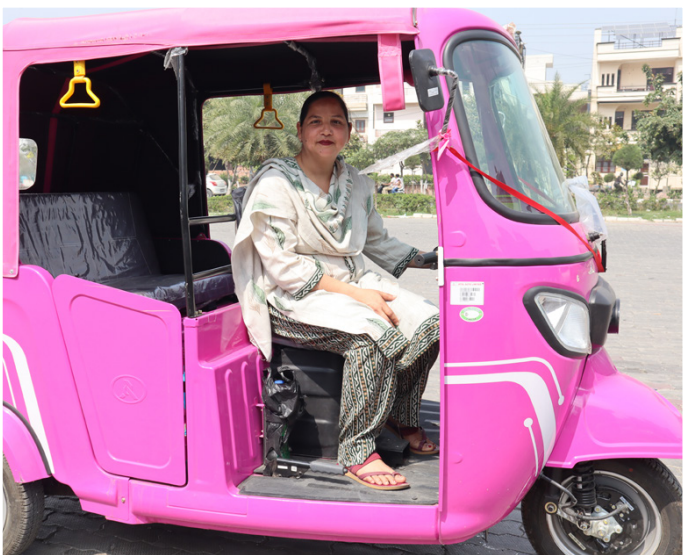
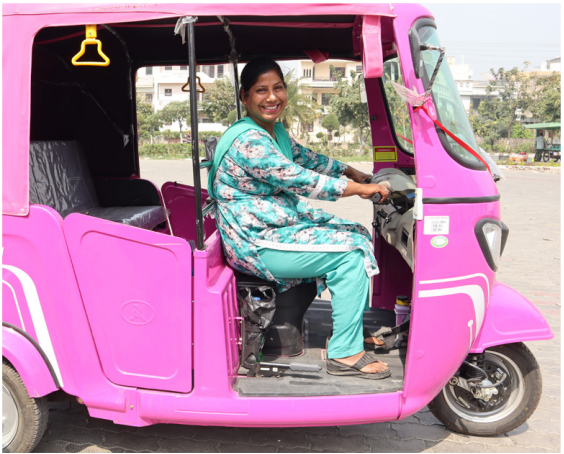
Raj is one of the first women to avail of a pink e3W under the RAAHI scheme in Amritsar. She first decided to drive a vehicle in 2019 when she rented an e-rickshaw to earn an income and support her family. However, the high rental costs and low earnings left her with only INR 100 of her daily earnings, which was not enough to meet her needs. As the sole earner in her household, she decided to stop renting an e-rickshaw and take up a job as a domestic worker from 2023 to 2024, earning around INR 6,000 per month but working till late in the evening. However, the demanding hours made it challenging for her to manage responsibilities at home. Raj aspired to own an e-auto and have more control over her work hours.
When the pink e3W scheme under RAAHI was approved, Raj was able to buy her own e3W, and her life has significantly improved. Starting at 9:00 a.m. every day, Raj heads out in her pink e3W; she goes to the Verka stand, where she gets most of her rides. She works till 2:00 p.m., after which she heads home to take a break and charge her vehicle. Around 4:00 p.m., she starts her commutes again and drives till 5:30 p.m., after which she comes home, cooks food for her family, and helps her son, who is just starting a new job. At the end of the day, after driving her e3W for just a couple of hours a day, Raj earns around INR 600, which is more than what she was previously earning. With her new e3W, Raj not only experiences a sense of pride in having fulfilled her dream, but she also feels more financially secure and independent as she is able to determine her work hours and manage her responsibilities at home. Raj drives around Amritsar in her pink e3W, hoping to inspire change and guide and support women who express an interest in driving e3Ws in Amritsar.
Source: Authors’ analysis
their transition to paid employment and better-quality jobs (Baruah 2017). Their daily activities include but are not limited to cooking food, sending their children to school, ensuring that their house is in order, and taking care of parents, in-laws, and grandparents in their households. In addition to these responsibilities, their jobs also take up eight to nine hours of their day. When jobs do not offer them flexibility, they are compelled to take a day or half a day off in the case of an emergency. Therefore, they are sometimes forced to compromise on their current occupations or care responsibilities. However, through their experience driving e-rickshaws, they feel that owning and driving e3Ws will give them greater control over their time and allow them to better manage their multiple roles.
Women drivers are role models for other women
The respondents stated that a key factor motivating them to consider driving a 3W was the example set by the first woman 3W driver in Amritsar. Through her, the respondents realised the benefits of owning and driving 3Ws. She also taught six of the respondents how to ride an e-rickshaw. In this way, she was instrumental in influencing their decision to enter the 3W segment. This was reiterated during the structured interviews, where over 80 per cent of respondents stated that seeing a woman driving in Amritsar highly influenced their decision to drive. Therefore, women drivers play a significant role in motivating other women to consider driving e3Ws.
Women commuters feel safer with women drivers
The benefits of women as drivers in the 3W segment may extend beyond those who drive. Past research finds that the commuting women state they feel safer in vehicles driven by women, as the latter would not drive rashly or use abusive language like some male drivers do (Gupta, Gupta, and Dhar 2022). The safety and comfort experienced by female commuters in vehicles driven by women 3W drivers was also reiterated in the FGD. One respondent stated that, in her experience, women prefer to commute in vehicles driven by women, especially if they need to travel at night and others added that this results in certain assured rides for women drivers. The women drivers also reported that they too experience a sense of safety when providing commuting services to women. Hence, the combination of assured earnings and safety enhances the attractiveness of driving 3Ws as a profession.
Sarabjit Singh is 38 years old. She lives in Amritsar with her husband and in-laws; they have two daughters and one son. She worked in a clothing factory for three to five years and was responsible for embroidering on clothes; her monthly earnings were INR 6,500. Her husband was a d3W driver. He met with an accident in 2016 and was unable to continue driving. The 3W was on loan, and the monthly EMI was 7,000 INR, which exceeded their household income. To ease the financial burden, Sarabjit, alongside her job, learned to drive at night for a week and later started driving the d3W fulltime. Her father-in-law and children were immensely supportive of her decision. Initially, she faced backlash from people in the neighbourhood and other 3W drivers. However, she feels that the situation is much better now. Being the first female 3W in Amritsar, she is an inspiration to other women, especially in her neighbourhood, and she also taught many of them how to drive.
Her income changed drastically when she left her job and started driving full-time. She was the sole breadwinner of the family and was able to provide sufficient food for the family and pay fees for the education of her children. In 2020, when her husband fully recovered from his accident, she gave the 3W to him, got an e-rickshaw on rent to continue driving. Now, both she and her husband drive and contribute collectively to the household income.
She prepares food, does the household chores in the morning, leaves the house at 10:30 a.m. and directly returns at 8 p.m. Currently, she is planning to buy an e3W, by availing the pink e3W scheme in Amritsar which offers her a subsidy of 90 per cent. She plans to take a loan to finance the remaining 10 per cent of the cost of the vehicle.
Lastly, when asked about what she enjoys about driving, she shared two things:
- She loves the flexibility and ownership of the time that she has in this profession.
- She feels proud to be part of this profession because of the confidence and support shown to her by her children.
Source: Authors’ analysis
Considering the barriers and key motivations to women’s entry, participation, and retention in the 3W segment, our assessment suggests potential measures and steps that need to be undertaken by the various stakeholders to facilitate the participation of women in the 3W segment.
Financial incentives in the form of subsidies and interest subvention should be explored for women
The first measure that must be undertaken by the government, as stated by the respondents, is to provide women who wish to participate in Amritsar’s 3W segment with some financial aid or assistance. Section 3.2 highlights the financial constraints experienced by women who wish to participate in the 3W segment. Their current income and expenditure patterns do not allow them to save enough for a down-payment when buying a vehicle. Therefore, the women proposed that the existing RAAHI policy to transition Amritsar’s 3W fleet be amended to extend the incentives to them. Additionally, they suggested that ASCL must also evaluate the need for a higher subsidy for women, considering their socio-economic conditions and financial capability. Based on this recommendation, Amritsar’s Municipal Commissioner amended the RAAHI scheme to allow women to avail a higher subsidy of 90 per cent and purchase e3Ws.
Partner with local institutions such as NULM or CSOs to build a community of women drivers
Section 3.2 B demonstrates how the visibility of women driving and a network of women who skill and train each other impact other women’s decision to drive. Considering this situation, the government can undertake initiatives to build a community of women drivers. These communities can perform functions, such as training women to become e3W drivers, assisting them in obtaining their licences, and ensuring that women are the ones benefiting from government programmes designed for them.
To facilitate the creation of such a community, we met with the NULM officials. SHGs are self-governing informal associations of 10–12 women, established to carry out a collectively decided productive activity. Following the discussion with the NULM officials, we briefed the FGD participants on SHGs to gauge their interest in forming SHGs to identify, train, and sustain driving practices among women. After apprising them about SHGs, what they are, how they can be formed, the benefits, and the potential activities that can be undertaken, the women decided they were in favour of forming an SHG to enable them to purchase e3Ws. NULM officials initiated the process to form the first SHG of women who wish to drive in Amritsar. Over the course of three months, they continued activities to create this community of women and formed four SHGs comprising 38 women who wished to drive.
NULM’s efforts have been successful in identifying potential women drivers; however, through the structured interviews, it emerged that while all the respondents are members of SHGs recently formed under the NULM, 65 per cent stated that they did not know the name of the SHG they formed. SHG members are also unsure whether a bank account has been created for their SHG, who their SHG president, secretary, or treasurer are, or what the practice of monthly group savings is. These activities are planned to help build relationships among the members, enabling them to develop a sense of community. These are vital to building the capacity and creating a sense of community among women drivers. To facilitate this, NULM can extend support to SHGs beyond their current role of identifying and registering women as SHG members.
Infrastructure provisions for women 3W drivers
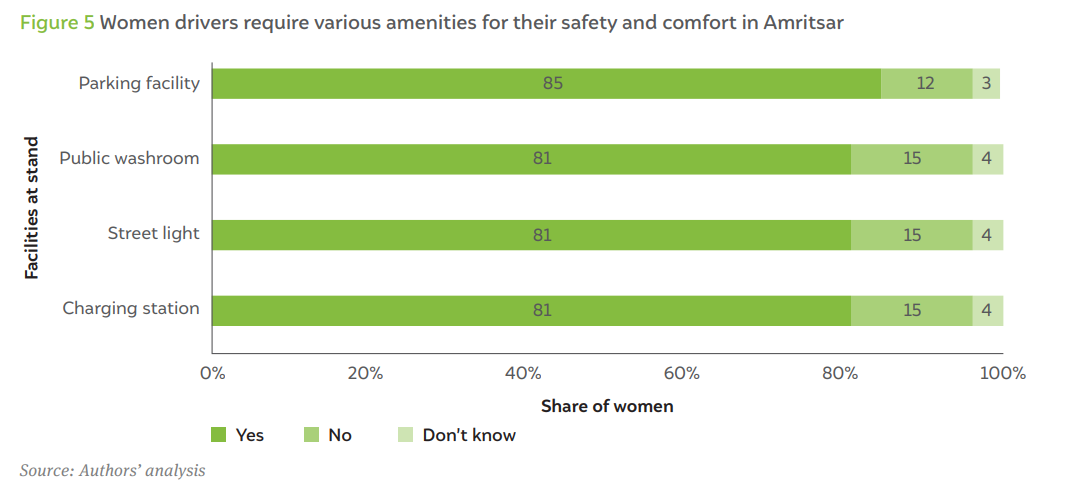
To ensure that Amritsar’s e3W gender-inclusive initiative is a comprehensive one, our study sought to identify the infrastructure required by women to facilitate their entry into and sustain their participation in the 3W segment. In the structured interviews, we asked the women whether they required charging stations, streetlights, public washrooms, parking facilities, and separate stands. Over 80 per cent of respondents stated that these facilities are required to ensure the safety and comfort of women who wish to drive e3Ws in Amritsar (Figure 5).
The only amenity on which a consensus could not be reached was whether stands for women should be separate from the current d3W stands. Those opposing separate stands stated that if these were in poorly planned locations, it would make it difficult for them to access the commuters. Others stated that separate stands for women, can be done when more women join as 3W drivers.
In Amritsar, the number of women who wish to participate in the 3W segment is increasing. However, their entry continues to be hindered by various barriers identified in the study. Women own fewer assets and have very meagre or no savings. As a result, they do not have access to financial capital or economic backing to enter occupations of their choice, placing them in a disadvantageous position compared to their male counterparts. Besides these financial barriers to women’s participation, there is also a dearth of systems, both formal and informal, to provide women with the necessary skills to drive 3Ws.
As India transitions to EVs, women foresee the benefits of participating in this transition. Owning and operating an e3W gives them access to various socio-economic benefits. Higher earnings and daily income would allow them to manage their expenses better, save more, and experience greater independence as they would have increased control over their time. Owning a vehicle will instil a sense of pride and balance the gendered patterns of asset ownership in their households. However, India’s gender-neutral national and state EV policies are yet to favourably consider women’s access to the incentives in the e3W transition.
Explicit policy provisions and robust incentives to address gender disparities in the EV sector are absent. This means that transport authorities lack clear strategies for gender-inclusive practices within their operations (Devaraj et al. 2023).
EV policies must address the barriers to women’s participation in the e3W transition by accounting for the following. First, policies must be genderinclusive, taking cognisance of the different contexts and experiences of men and women. Second, policies oriented towards transitioning the existing 3W fleets to EVs must evaluate the composition of the drivers in the segment and ensure that eligibility criteria and other mandates do not exclude women because of their low or non-participation in the segment. Finally, policies must be holistic and address financial, skill development, and infrastructural barriers that may prevent women from securing the benefits of the e3W transition.
Our study highlights the key challenges faced by women who wish to participate in the 3W segment and the essential considerations of gender-inclusive practices in India’s e3W policies. However, future research can address two limitations. The first is the study sample. Due to the limited number of women who expressed interest in driving at the time of our study, we could only conduct one FGD with 13 women and 26 structured interviews.
The second concerns the generalisability of the findings of our study. While our findings apply to the context of Amritsar and, to some extent, Punjab, the broader generalisability of these findings across the states in India may be limited. While some findings, such as financial barriers and the need for training, may be universally relevant, socio-cultural norms may vary substantially across regions. Future e3W gender inclusion initiatives must consider the local socioeconomic contexts. This brief is a preliminary guide outlining the essential principles for gender-inclusive policy formulation.
Considerations must be made at the policy formulation, implementation, and evaluation stages to ensure that policies aimed at transitioning the 3W segment to EVs in India are gender-inclusive. The following recommendations outline specific interventions at each stage.
Policy and regulatory provisions and stringent mandates
Explicit policy and regulatory provisions at the national and state levels are necessary to establish clear strategies for gender-inclusive practices into transport operations. National ministries and state governments also need to evaluate the existing EV policies through a gendered lens to assess their gender-responsiveness.
These questions can guide the formulation and evaluation of gender-responsive policies (Neimani 2005).
Policy formulation through participatory planning processes
The participatory planning process can be adopted where public consultations are held with women, men, and other vital stakeholders to shed light on the potential impact of the policy. Grassroots-level organisations and policy think tanks can undertake such consultations and large-scale research to build a body of knowledge required to formulate genderinclusive EV policies. For instance, in Amritsar, we adopted the participatory approach to inform the RAAHI scheme and propose recommendations to make it more gender-responsive.
Fund allocation
India’s general budget for 2023 allotted INR 2,230 billion to schemes aimed at mitigating the gender gap (Rao 2023), but women’s mobility was not explicitly featured in the list of focus areas. Moreover, the focus of public funding provided by the ministries and government departments for women’s safety in transport is limited in its scope and largely focuses on infrastructural measures for women’s safety (Devaraj et al. 2023). Therefore, it is essential to broaden the perspective of the EV policies and mobilise funds to support women as part of the transport workforce. The existing policies that outline subsidies and incentives for e3Ws must be extended to women and include them in the transition. This is vital to combat the financial barriers to women’s entry into the 3W segment. Such considerations in the policy formulation stage are a step towards ensuring that EV policies for the e3Ws transition are gender-responsive.
Policy formulation is followed by the policy implementation process, where actionable steps are undertaken to address a specific issue and work towards achieving the intended outcomes (Khan 2016). Once gender is integrated into e3W policies in the formulation phase, the focus shifts to implementing the policy. For this, three key questions need to be considered: (i) How can beneficiaries be identified? (ii) How can the capacity of women e3W drivers be strengthened? and (iii) How can women be retained as e3W drivers?
How can beneficiaries be identified?
To identify beneficiaries, existing institutions and channels such as NULM and State Rural Livelihoods Mission (SRLM) can be leveraged to raise awareness about e3W policies and their potential benefits. Grassroots-level organisations that actively engage with the local communities can also be called upon to raise awareness, disseminate accurate information, and aid in the identification of micro-entrepreneurs. In Amritsar, we recommended that the RAAHI scheme be integrated with the NULM, which has a network of 800 women in SHGs. Additionally, organisations like Voice of Amritsar and Clean Air Punjab worked with their hub members to apprise other women about the e3Ws, the RAAHI scheme, and the benefits of driving as an occupation.
How can the capacity of women e3W drivers be strengthened?
NULM and the community of women can facilitate the capacity building and skill development of the identified beneficiaries. As mentioned in section 3.1, women lack the skills required to drive 3Ws. NULM and the women who currently drive e-rickshaws can build informal systems to teach aspiring women how to drive. In addition to these informal training systems, governments should streamline training through formal training institutes, original equipment manufacturers (OEMs), and skill councils. This will ensure that women who wish to participate in the 3W segment are adequately skilled and possess knowledge about road safety, rules and regulations, basic life support, and driving skills so that a community of responsible drivers is created.
Training programmes should be designed considering the time and resource constraints that women face. One strategy to overcome these constraints is a dual system of training (DST), which allows for on-the-job training. Participants manage time between classroom instruction and on-the-job training, allowing them to earn while acquiring the necessary skills (Gupta and Aishwarya 2024). Such models ensure that women feel financially secure throughout and that skill development and capacity building occur in a just manner.
Lastly, streamlining the licensing process can help counter the barriers encountered while obtaining licenses. As a short-term measure, the road transport authorities (RTAs) can organise licence camps and training institutes can provide applicants with the necessary assistance required to overcome the existing challenges to obtain licences.
How to develop a gender-inclusive environment in the e3W segment?
The importance of infrastructure that enables women to feel safe and supports them in fulfilling their professional responsibilities has been highlighted in past research with women drivers and consultations with sector experts (Baruah 2017; Devaraj et al. 2023). Facilities such as women’s toilets, rest areas, closedcircuit television (CCTV) cameras, streetlights, and charging stations allow women to feel safer during their operational hours. City authorities like municipal corporations and councils need to develop and implement comprehensive infrastructure plans that take into consideration factors such as location, accessibility, visibility, key transport corridors, and land use patterns (Devaraj et al. 2023). Ensuring that adequate and quality infrastructure is in place will enhance the user experience for women and encourage them to participate in the EV mobility segment.
Building a community of women e3W drivers is another measure that can positively impact the retention of women as e3W drivers. NULM, through SHGs, can instil a sense of solidarity and shared identity in these women (Gupta, Chakrabarti, and Parmar 2022). Additionally, provisions such as rest areas in the work environment, and designated spaces for women can help create a sense of camaraderie among them. They can then share their experiences with interested women and act as role models, motivating others to pursue driving. SHG members can also act as informal checks to ensure that women themselves own and operate e3Ws.
Families and male 3W drivers also play a key role in sustaining driving practice among the women drivers. Certain awareness and gender sensitisation initiatives undertaken with family members, city traffic police, and male 3W drivers can help sustain driving practices among women. Such awareness and sensitisation programmes should be the collaborative efforts of the transport authorities and local NGOs to scale and institutionalise them. For instance, in Delhi, Manas Foundation, in partnership with the Transport Department of the Government of National Capital Territory (NCT) of Delhi and Indraprastha Gas Limited, trained over 1,60,000 3W drivers. As a result of its continued success, the training has been made a policy mandate in the city (Vaishnavi 2017).
By addressing the three critical areas—identifying beneficiaries, enhancing women e3W drivers’ capacities, and ensuring their retention—seamless implementation of gender-inclusive e3W policies can be ensured. The aim is to restructure and create a supportive environment and provide women with the necessary facilities for their continued participation in the 3W segment.
Monitoring and evaluating gender-responsive policies in the e3W segment are critical to reducing the persistent gap in gender-disaggregated data. Currently, very little data exists on who purchases e3Ws, how women participate in the e3W transition, their driving patterns, the benefits they experience from this transition, and the barriers to their participation and retention in the segment. State governments can lay down guidelines and mandates for city authorities to institutionalise the collection of gender-disaggregated data. Genderdisaggregated data can help establish a baseline and assess the success of gender-inclusive initiatives in the e3W transition, challenges faced by women in the segment, and policy changes to create more womenfriendly work environments (Devaraj et al. 2023).
The initiatives in the past have remained fragmented efforts. For gender-integration within e3W segment and the larger transportation sector, various stakeholders have to take collaborative and co-ordinated action. National ministries need to issue directives for states to make gender-inclusive EV policies. State authorities should establish systems or channels to facilitate the collection and exchange of gender-disaggregated data and learning across departments. Finally, collaborative partnerships with CSOs, grassroots-level organisations, and government’s skill bodies and institutes to initiate gender-inclusive e3W programmes have to be scaled up and replicated. For instance, in Amritsar, as a result of our collaborative efforts with ASCL, grassroots-level organisations such as Voice of Amritsar, Clean Air Punjab, and Asar Social Impact Advisors, the Ministry of Housing and Urban Affairs (MoHUA) approved 200 pink e-autos for women with a 90 per cent subsidy initiative in Amritsar on 14 March 2024. At present, 200 women have received e3Ws under the scheme. It is worth highlighting that no gender-inclusive e3W policy model applicable in one city will perfectly fit the other cities. Each region has its own distinct culture, values, and social systems that determine its acceptable norms. Therefore, efforts must be adapted to consider the regional diversities in the needs, challenges, and motivations of women across cities.
Fostering gender inclusivity in the mobility sector in India’s e3W transition is discussed in this brief. Our assessment examined the previous e3W gender inclusion initiatives undertaken in India and sought to understand why the majority of the previous approaches and measures were unable to achieve their targets. We analysed The case of the e3W transition in Amritsar in detail to highlight how the city can successfully implement a participatory gender-inclusive e3W policy. In this context, we identified the key challenges inhibiting women’s participation in the 3W segment. We also bring to light the motivations that nudge women to consider driving as an occupation. Based on these insights, we undertook collaborative efforts with the women to identify the potential strategies that the government can adopt to make local policies more gender-inclusive in Amritsar. Finally, the transition to EVs was assessed to understand the opportunity it presents to address gender disparities in the 3W segment.
India’s EV transition presents a unique opportunity to reshape the sector and it is imperative that gender inclusivity remains a critical component of this transformation. Despite evolving social norms, women still face financial and skill barriers that prevent them from partaking in the e3W transition. Women need to be provided with adequate infrastructure, thorough training, and financial assistance as is highlighted by the findings and recommendations in this brief. The experiences of women in Amritsar demonstrate why a gender-inclusive approach is necessary for equitable participation and also pivotal for the broader success of the e3W transition. By addressing the identified barriers and implementing the proposed strategies, policymakers can foster a more inclusive and sustainable mobility ecosystem. The insights and approach we outlined in this brief can be used as a guide by Indian cities to create policies that empower women and promote equity in the transportation sector, while also serving as a blueprint for future e3W initiatives to ensure a systematic integration of gender considerations.
Anand, Ankita. 2023. “Docu Delay: Why e-Auto Training for Women Halted.” The Times of India, June 21. https:// timesofindia.indiatimes.com/city/gurgaon/docu-delay-why-e-auto-training-for-women-halted/articleshow/101148726.cms.
Bali, Anmol Nath. 2022. “Unviable Rides: Fuel Costs Go through the Roof for Auto Drivers.” The Patriot. May 29. https://thepatriot.in/latest/unviable-rides-fuel-costs-auto-drivers-25721.
Baruah, Bipasha. 2017. “Women on Wheels: Empowering Women through an Innovative Training and Employment Programme.” Development in Practice 27, no. 2: 181–95. https://doi.org/10.1080/09614524.2017.1275527.
“Bureau of Energy Efficiency | State EV Policies.” 2024. https://evyatra.beeindia.gov.in/state-ev-policies/.
Cornish, Flora, Nancy Breton, Ulises Moreno-Tabarez, Jenna Delgado, Mohi Rua, Ama de-Graft Aikins, and Darrin Hodgetts. 2023. “Participatory Action Research.” Nature Reviews Methods Primers 3 (1). Nature Publishing Group: 1–14. doi:10.1038/s43586-023-00214-1.
Cortes, Patricia, and Jessica Pan. 2017. “Occupation and Gender.” Institute of Labor Economics, Discussion Paper Series, no. IZA DP No. 10672.
“Delhi Government to Introduce Electric ‘Pink Autos’ to Be Run Only by Women.” 2022. News18. February 15. https://www.news18.com/news/india/delhi-government-tointroduce-electric-pink-autos-to-be-run-only-by-women-4775876.html
Devaraj, Aravinda, Harshita Jamba, Chaitanya Kanuri, and Pawan Mulukutla. 2023. “Pathways toward Gender-Inclusive Mobility Systems in India.” Conference Proceedings. World Resources Institute India, New Delhi. https://wri-india.org/sites/default/files/Uddheshya-conference-proceedings-20230322.pdf.
“E-Auto | RAAHI Amritsar | Amritsar.” 2024. RAAHI. Accessed February 23. https://raahiamritsar.wixsite.com/ascl.
Fatima, Masrath. 2023. “Hyderabad Women Drive E-Autos, Defy Barriers in Male-Dominated Space.” The Siasat Daily. June 20. https://www.siasat.com/hyderabad-women-drive-e-autos-defy-barriers-in-male-dominated-space-2619230/.
“Global Gender Gap Report 2023.” 2023. Geneva: World Economic Forum.
Gupta, Ishita, Srijita Chakrabarti, and Sugandha Singh Parmar. 2022. “Friendships, Networks and Solidarity: Women’s Political Participation through Self-Help Group Memberships (Pilot Study).” Centre for Gender and Politics. https://www.cgapsouthasia.org/_files/ugd/0dea55_ecd090825f9c4f688520f85e17803233.pdf?index=true.
Gupta, Neha, and Agarwal Aishwarya. 2024. “EV Ready India: Feminising the EV Value Chains to Propel India’s Growth.” White Paper. New Delhi: Ola Mobility Institute Foundation.
Harikumar, Aravind, Anand RM, Himani Jain, and Sowmia Phillip. 2022. “India’s EV Transition: Catalysing Kochi’s Electric 3-Wheeler Market Through Local Policy.” New Delhi: Council on Energy, Environment and Water. https://www.ceew.in/publications/electricification-strategy-of-3-wheeler-market-through-local-policy-in-kochi.
Hsieh, Hsiu-Fang, and Sarah E. Shannon. 2005. “Three Approaches to Qualitative Content Analysis.” Qualitative Health Research 15, no. 9: 1277-88. https://www.researchgate.net/publication/7561647_Three_Approaches_to_Qualitative_Content_Analysis.
“In a First for Mumbai Metropolitan Region, Electric Autos Roll out in Thane with Women Drivers.” 2021. The Times of India.
Khan, Anisur Rahman. 2016. “Policy Implementation: Some Aspects and Issues,” Journal of Community Positive Practices 16, no. 3: 3–12. Available at: http://jppc.ro/en/ index.php/jppc/article/view/316
“Kochi: Kudumbashree to Help Its Team Avail e-Autos.” 2019. August 7.
Lalitha, S. 2021. “This Economical Auto Service with Women Drivers Looks to Fix Bengaluru Metro’s Last Mile Connectivity Issues.” The New Indian Express. January 14.
Mani, Akshay, Madhav Pai, and Rishi Aggarwal. 2012. “Sustainable Urban Transport in India.” New Delhi: WRI and EMBARQ.
“Periodic Labour Force Survey (PLFS).” 2023. Annual Report 6. New Delhi: Ministry of Statistics and Programme Implementation, Government of India. https://www.mospi.gov.in/sites/default/files/publication_reports/AR_PLFS_2022_23N.pdf?download=1.
Qamar, Sharif. 2020. “Fuel Price Hikes and Choices for Sustainable Transportation in India.” New Delhi: The Energy and Resources Institute (TERI). https://www.teriin.org/article/fuel-price-hikes-and-choices-sustainable-transportation-india
Raman, Aishwarya, Sreelakshmi Ramachandran, and Rajat Sindhu. 2021. “Women in the Platform Economy: Breaking Barriers and Driving Inclusive Growth.” New Delhi: Ola Mobility Institute. https://olawebcdn.com/ola-institute/women-platform-economy.pdf.
Riyan, Ramanath V.. 2022. “E-Autos with Women, Transgender Drivers Offer Last-Mile Connectivity.” The Times of India, May 21. https://timesofindia.indiatimes.com/city/bhubaneswar/e-autos-with-women-transgender-drivers-offer-last-mile-connectivity/articleshow/91697945.cms.
Roychowdhury, Anumita, and Sayan Roy. 2022. “Strategy to Electrify Three-Wheeled Passenger and Goods Vehicles in Cities of Odisha.” New Delhi: Centre for Science and Environment. https://www.cseindia.org/strategy-toelectrify-three-wheeled-passenger-and-goods-vehiclesin-cities-of-odisha-11411.
Sarmmah, Surupasree. 2019. “Make Way! Women to Drive e-Autos.” Deccan Herald.
Shah, Sonal, Kalpana Viswanath, Sonali Vyas, and Shreya Gadepalli. 2017. “Women and Transport in Indian Cities.” New Delhi: ITDP and Safetipin.
Simon, Steni. 2021. “E-Auto! Driving Women Forward in Kerala Capital.” The New Indian Express. February 3. https://www.newindianexpress.com/good-news/2021/ Feb/03/e-auto-drivingwomen-forward-in-kerala-capital-2258682.html.
Soman, Abhinav, Harsimran Kaur, and Karthik Ganesan. 2019. “How Urban India Moves: Sustainable Mobility and Citizen Preferences.” New Delhi: Council on Energy, Environment and Water. https://www.ceew.in/publications/sustainable-and-green-mobility-in-urban-india.
Swamy, H. M Shivanand, Shalini Sinha, G.P Hari, and Dennis Jose. 2021. “Gender Sensitive Mobility Policies: Case Studies from Two Indian Cities, Kochi, and Surat.” Transport and Communications Bulletin for Asia and the Pacific.
The Hindu. 2022. “E-Autos for 25 Snehayanam Beneficiaries Next Year,” December 15, sec. Kerala. https://www.thehindu.com/news/national/kerala/e-autos-for-25-snehayanam-beneficiaries-next-year/article66268116.ece
The Hindu. 2023. “Not Many Takers among Women to Drive Metro’s Feeder e-Autos,” July 20, sec. Kerala. https://www.thehindu.com/news/national/kerala/not-manytakers-among-women-to-drive-metros-feeder-e-autos/ article67102722.ece.
The Times of India. 2022. “14 out of 743 Women Applicants Get Their E-Autos Registered under Delhi Govt Initiative: Officials,” July 11. https://timesofindia.indiatimes.com/auto/cars/14-out-of-743-women-applicants-get-their-eautos-registered-under-delhi-govt-initiative-officials/articleshow/92794028.cms.
“Vahan Sewa| Dashboard.” 2024. Government website. https://vahan.parivahan.gov.in/vahan4dashboard/.
Vaishnavi, Hema. 2017. “Manas Foundation Has Trained 2.4 Lakh Auto, Taxi and Bus Drivers of Delhi to Become Women-Friendly.” https://yourstory.com/2017/03/manas-foundation.
The limited participation of women is attributable to multiple factors, such as restrictive access to training, gendered assumptions, limited supporting infrastructure, and safety concerns. For instance, women find it difficult to access vocational training specific to the transport sector since it is informally passed down from older male family members to younger ones. Even when institutions undertake gender-inclusive initiatives to support the entry of women into the sector, transport workplaces do not consider women in their design. This leads to the absence of supporting infrastructure (Swamy et al. 2021) such as secure parking spaces, restrooms, and separate clean, hygienic toilets (Gupta and Aishwarya 2024; Baruah 2017) which prevent safe, inclusive, and gender-balanced work environments for women (Gupta and Aishwarya 2024; Baruah 2017).
SHGs are self-governing informal associations of 10–12 women established to carry out a collectively decided productive activity. SHGs of women drivers can help to identify, train, and sustain driving practices among women. These communities can perform functions, such as training women to become e3W drivers, assisting them in obtaining their licences, and ensuring that women benefit from government programmes designed for them.
EV policies must address the barriers to women’s participation in the e3W transition by accounting for the following. First, policies must be gender inclusive, taking cognisance of the different contexts and experiences of men and women. Second, policies oriented towards transitioning the existing 3W fleets to EVs must evaluate the composition of the drivers in the segment and ensure that eligibility criteria and other mandates do not exclude women because of their low or non-participation in the segment. Finally, policies must be holistic and address financial, skill development, and infrastructural barriers that may prevent women from securing the benefits of the e3W transition.
Are Microbuses Suitable as Public Transport Vehicles?
Microbuses have Mega Demand in Indian Cities
Greenhouse Gas Accounting for On-road Transport Emissions