Council on Energy, Environment and Water Integrated | International | Independent

Suggested Citation: CEEW and RCUES Lucknow. 2026. How States can Build Capacity for Urban Mobility Officials: Learnings from Uttar Pradesh. New Delhi: Council on Energy, Environment and Water.
| CEEW | RCUES |
|---|---|
| Samradh Singh Chauhan | Anuj Kumar Jha, IAS |
| Sunaina Chauhan | Alka Singh |
| Sourav Dhar | Himanshu Chandra |
| Himani Jain | Priyansha Singh |
India is urbanising at a rapid pace, with more than 600 million people projected to live in its cities by 2036. This transition is driving unprecedented changes in the mobility ecosystems of thousands of Indian cities. Currently, the transport sector is the third-largest CO2 emitter in India, with road transport accounting for over 90% of those emissions. Moreover, the transport sector's dominant contribution to India’s severe year-round air pollution is evidenced by its contribution to PM2.5 emissions, ranging from 18% in Prayagraj and 27% in Indore to as high as 35% in Pune and 40% in Bengaluru. Beyond emissions, the sector faces a "triple crisis" of record-breaking road fatalities, extreme congestion, and economic productivity losses.
While India’s Nationally Determined Contributions (NDCs) and Net-Zero 2070 goals necessitate a shift toward public transport and vehicle electrification, a significant governance and capacity gap exists at the implementation level. There is currently no standardised, dedicated capacity-building program to equip the thousands of state and municipal officials with the technical and financial expertise required for integrated planning. Although urban transport is a State Subject under the Indian Constitution, its functions are fragmented across siloed agencies—such as Urban Development Departments, Transport Departments, and Traffic Police, etc., each operating from limited functional perspectives.
This study addresses this gap by conducting a cross-cutting training needs assessment. By leveraging Uttar Pradesh’s diverse urban tiers and multi-agency landscape as a case study, we aim to identify the training needs of urban mobility officials concerning their functional roles and develop an integrated on- duty capacity-building programme proposal. This framework aims to move beyond ad-hoc training toward a legally empowered, institutionalised system of continuous upskilling to manage transport demand and achieve sustainable urban mobility at scale. We conducted this study in collaboration with the Regional Centre for Urban and Environmental Studies (RCUES), Lucknow, a premier capacity-building institution under the Ministry of Housing and Urban Affairs (MoHUA).
No state in India currently has a dedicated capacity-building programme for its urban mobility officials. As part of the central government efforts, there have been past initiatives within the schemes of JnNURM, AMRUT, and the Smart Cities Mission, etc., having integrated capacity building, but the efforts remain largely piecemeal. The World Bank’s SUTP project made significant strides by training hundreds of officials and developing specialised toolkits; however, these were often restricted to senior leadership or tied to specific project timelines.
A capacity-building programme in any field must rely on a strong understanding of the training needs of individuals and organisations. Thus, a scientific training needs assessment (TNA) becomes the first step towards framing a capacity-building programme. Gujarat and Madhya Pradesh have earlier carried out TNA for urban transport officials. However, in both studies, only municipal body officials from four smaller cities were surveyed. There is a lack of research on capacity-building programmes focusing on urban mobility as a whole.
As part of this study, we conducted in-person training needs assessment (TNA) surveys involving over 330 government officials specifically working on urban mobility in 17 cities of UP. These cities have a population ranging from 3 to 30 lakh, and their urban mobility interventions are overseen by 6-7 major government agencies. The key findings of the study are:
We recommend establishing a state-level urban mobility capacity-building unit within the Urban Development Department of Uttar Pradesh, overseen by a sanctioning committee chaired by the Principal Secretary, to monitor programmatic progress.
Urban mobility is a dynamic and complex discipline that encompasses various fields, such as public transportation planning, congestion management, emission standards/regulations, street design and road safety. With the worsening impact of climate change and rapid evolution in technology, a new era of urban mobility planning is emerging, featuring alternative fuel technologies (electric/hydrogen/hybrid vehicles), mobility as a service (MaaS), data-driven mobility (integrated with digital infrastructure), etc. City or local government agencies are the closest entities to citizens, and best suited to ensure seamless, safe, affordable, and sustainable mobility for all. However, cities in India currently lack a dedicated capacity-building programme for their urban mobility officials. Urban infrastructure schemes/programmes— present and past—have enabled capacity building, but these efforts remain fragmented and project-based. The World Bank’s Sustainable Urban Transport Project was a pioneering initiative in India’s urban transport transformation; however, it provided training for only 450 urban mobility officials across India (World Bank 2019). CEPT University, which is an esteemed centre of excellence in urban transport under the Ministry of Housing and Urban Affairs (MoHUA), conducted a training programme titled ‘Leaders in Urban Transport Planning and Management’ (CRDF, n.d.), which trained approximately 250 participants and was limited to senior officials.
The absence of dedicated capacity building within the urban mobility sector in India leads to various negative externalities. The transport sector alone accounts for 11 per cent of India’s greenhouse gas (GHG) emissions (Kamboj et al. 2022). Throughout the year, the majority of India experiences severe air pollution and, in Prayagraj, Indore, Pune, and Bengaluru, transportation is responsible for 18 per cent, 27 per cent, 35 per cent, and 40 per cent of PM2.5 pollution, respectively (Urban Emissions 2017). India records the highest road fatalities in the world annually (Biswas 2025). Three of the top five most congested cities in the world are in India (TOM TOM 2024). One of the main reasons for this situation is that, in the Indian context, ‘urban transport’ is not explicitly classified as a constitutional subject under any of the three tiers of government (central, state, and local). It is rather intertwined with urban development, which is a state subject (Verma et al. 2021; NITI Aayog 2021). In the absence of a single agency planning and managing urban mobility in Indian cities, the subject is addressed by multiple government organisations/agencies from their own functional perspectives, which fragments capacity building in the sector. The National Urban Transport Policy (NUTP) 2006 emphasised that capacity building should be aimed at all the individuals working with the state transport departments, municipal corporations, metropolitan development authorities, traffic police, environmental authorities, transport corporations, public works departments, and so on. Through this study, we aim to identify the training needs of urban mobility officials concerning their functional roles and develop an integrated on-duty capacity-building programme proposal.
We partnered with the Regional Centre for Urban and Environmental Studies (RCUES), Lucknow, to carry out this study in India’s most populous state, Uttar Pradesh (UP). UP constitutes 12 per cent of India’s urban population, and is aspiring to become a trillion-dollar economy in the coming years, necessitating further and rapid urbanisation (Radhakrishna 2022). To improve its urban mobility ecosystem, the state is already investing in metro rail systems, electric buses, street redevelopment, intelligent traffic management systems, and urban planning schemes. We conducted in-person training needs assessment (TNA) surveys involving over 330 government officials specifically working on urban mobility in 17 cities of UP. We gathered various datasets from the officials through the surveys, including their profiles, awareness of government initiatives, and training needs.
The 17 cities included in this study were chosen based on the presence of a municipal corporation and the implementation of urban mobility projects through ongoing central/state government initiatives. These cities have a population ranging from 3 to 30 lakh, and their urban mobility interventions are overseen by different government agencies with overlapping jurisdictions and responsibilities. We identified and mapped all the government agencies directly or indirectly involved in performing one or more functions of urban mobility, and this is charted out in ES Figure 1.
Figure ES 1. Government agencies working on urban mobility in UP and their functional overlaps
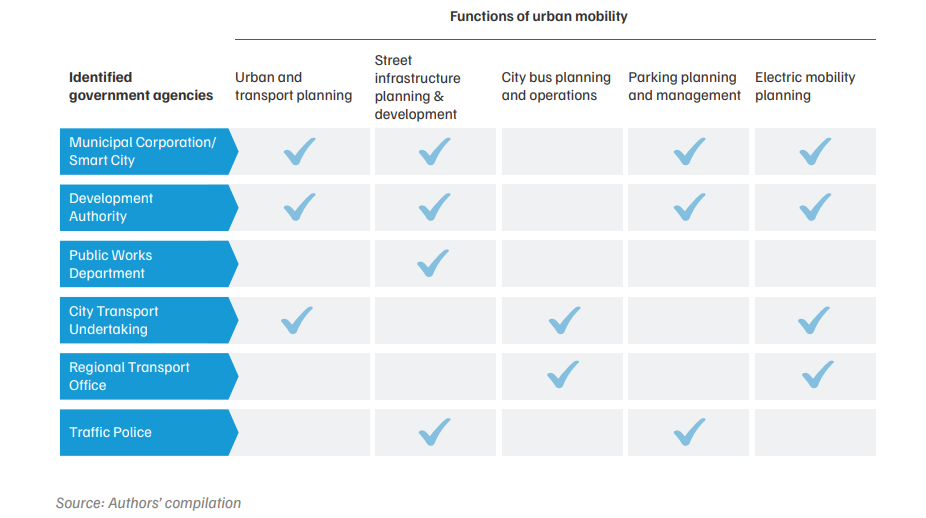
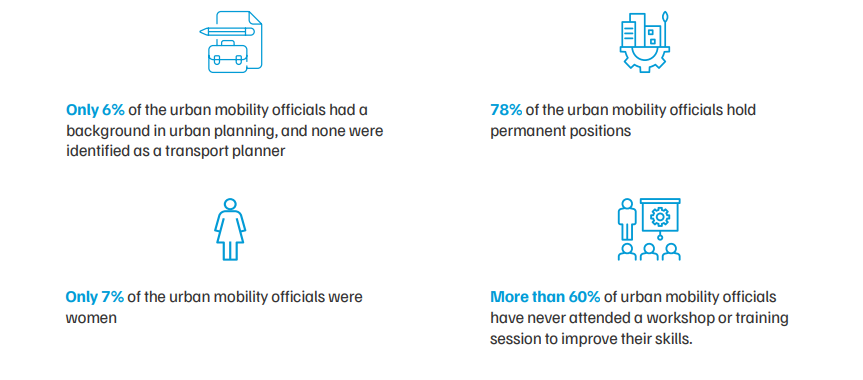
Table ES 1. Knowledge-based themes and sub-themes identified as ‘very high priority’ by all surveyed officials
| Knowledge- based themes |
Urban and transport planning |
Street infrastructure planning and design |
Electric mobility planning |
Parking planning |
Bus transportation planning |
|---|---|---|---|---|---|
|
Sub-themes
|
Transit-oriented development (TOD) | Safe intersection design | Route selection, operations planning and scheduling of the e-bus fleet | Developing parking policy | Service-level benchmarking for bus systems |
| Growth forecasting and scenarios | Complete street design | Introduction to electric mobility | Parking standards and guidelines | Last-mile connectivity to buses | |
| Compact city planning | Road network planning | Charging infrastructure network planning | Developing area-based parking strategies | Integrating bus transport with paratransit |
Source: Authors' analysis
Table ES 2. Skill-based themes and sub-themes identified as ‘very high priority’ by all surveyed officials
| Skill-based themes |
Project planning and communication |
Interpersonal skills | Functional skills |
|---|---|---|---|
| Sub-themes | Preparation of project proposals, procurement, and contracting | Conducting and managing traffic and urban transport surveys | Leadership and team-building |
| Project management | Mapping skills (GIS) | Human resource management | |
| Information, education and communication (IEC) | Transport modelling |
Source: Authors' analysis
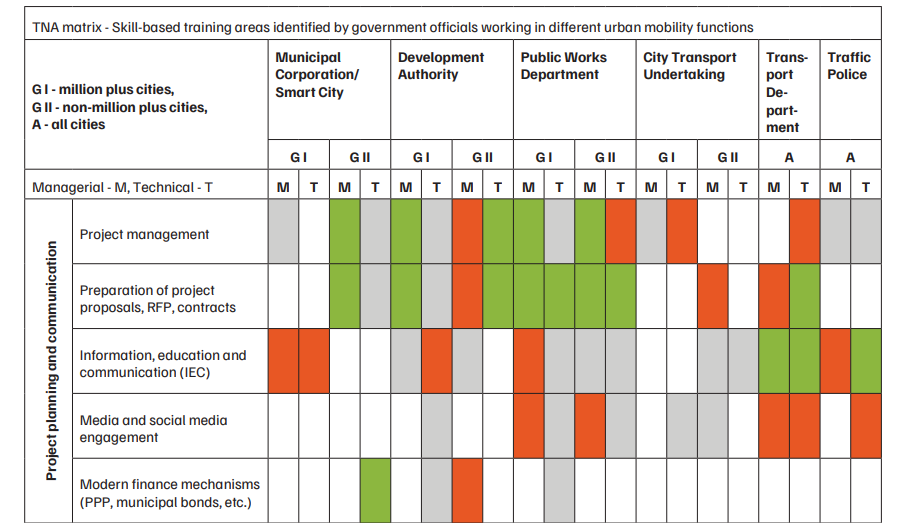
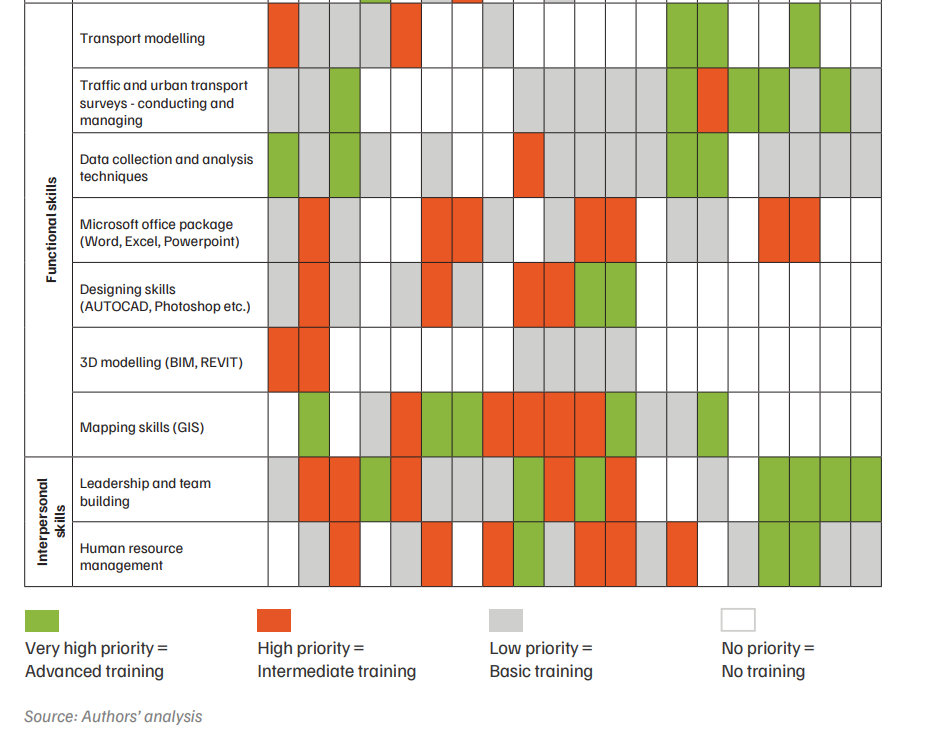
Table ES 1 and ES 2 emphasise the top three training areas recognised as ‘very high priority’ by all the 337 surveyed officials. However, because various agencies manage different urban mobility functions, and many of these roles overlap, we developed a TNA matrix (Figure ES 2.) showing identified training areas that cut across different agencies. With the aim of promoting collaborative training practices, the TNA matrix will be instrumental in planning for urban mobility training initiatives that contribute to the broader objectives of sustainable mobility. Additionally, it will enhance intergovernmental agency coordination and optimise resources.
The training needs are divided into two broad categories of ‘knowledge-based’ or ‘skill-based’ training areas. The results were categorised as Group I and Group II, based on the population of the cities, with Group I representing million-plus cities, and Group II, non-million-plus. The survey respondents were classified as managerial or technical staff based on their roles and responsibilities. jurisdictions and responsibilities. We identified and mapped all the government agencies directly or indirectly involved in performing one or more functions of urban mobility, and this is charted out in Figure ES 1.
Figure ES 2. Government officials from different agencies seek to learn about similar topics, emphasising the need for inter-agency collaboration and unified capacity-building
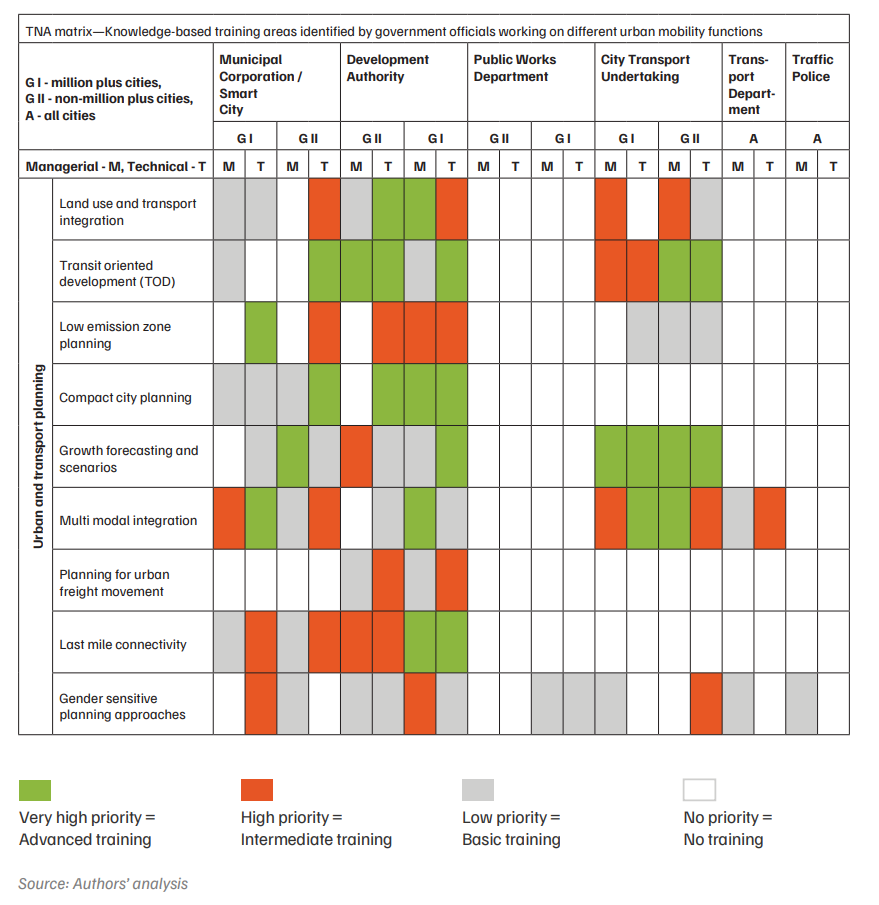
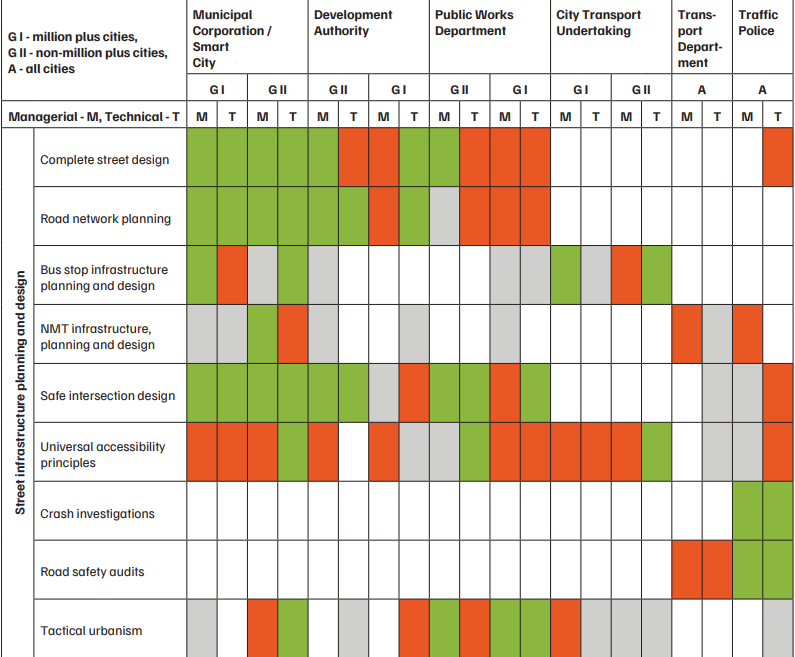
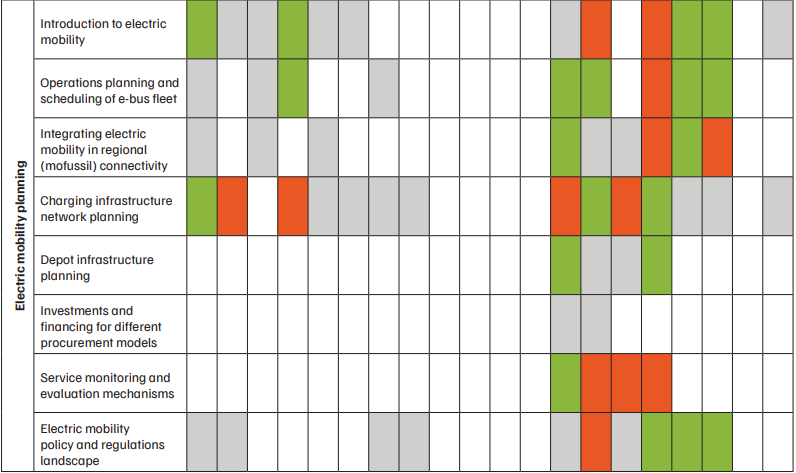
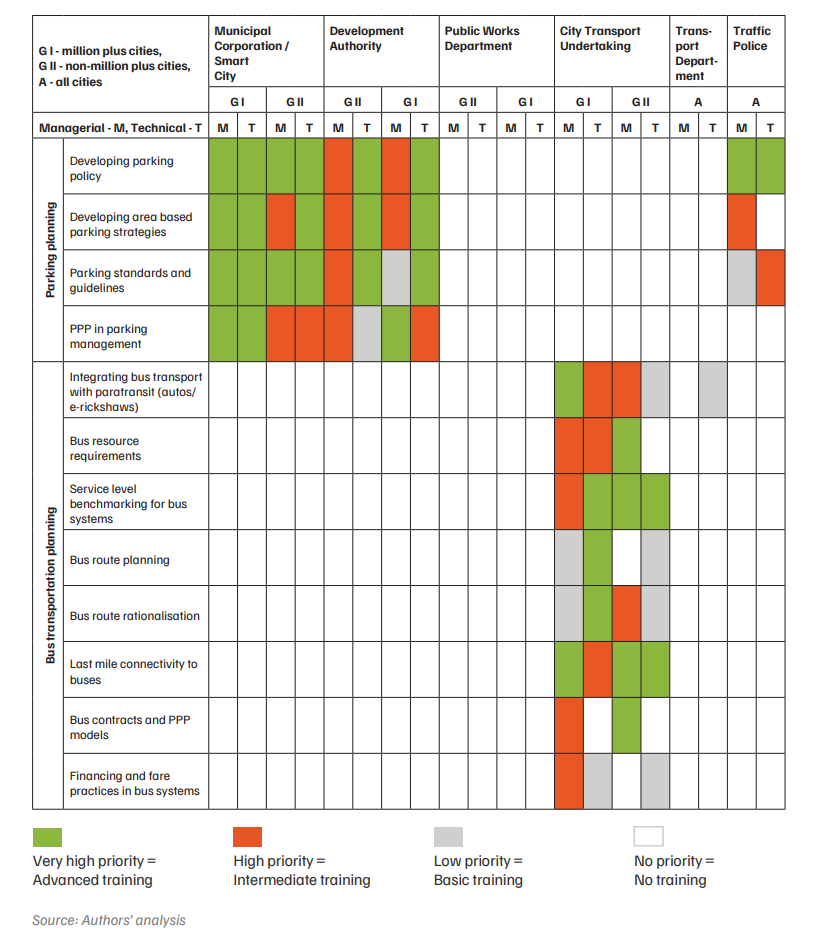
Figure ES 3. Besides knowledge-based skills, there is a high demand for project planning, functional and interpersonal skills
A key finding of our study is the limited availability of planning professionals in the field of urban mobility in Uttar Pradesh. The state must recruit more urban and transport planners across levels of project planning and implementation. Moreover, adding more number of women in roles within this sector can provide valuable perspectives on planning urban mobility from a woman’s point of view. Our study clearly also indicates that government officials involved in urban mobility in UP require continuous capacity building across multiple areas. Thus, we recommend a state-level capacity-building programme dedicated to improving the urban mobility ecosystem in the state. This programme aims to bridge the gap between technical advancements in the field and the operational skills of officials responsible for planning and managing urban mobility functions.
Capacity building for local government officials has been integrated into various government schemes/missions, such as the Jawaharlal Nehru National Urban Renewal Mission (JnNURM), Atal Mission for Rejuvenation and Urban Transformation (AMRUT), and Smart Cities Mission. The World Bank’s Sustainable Urban Transport Project (SUTP) was a pioneer initiative that trained more than 450 urban mobility officials across India’s national, state, and local government levels (World Bank 2019). The SUTP’s capacity-building programme was coordinated by the Institute of Urban Transport (IUT) under the Ministry of Housing and Urban Affairs (MoHUA). The programme resulted in the development of 10 comprehensive training modules and 15 toolkits specific to urban transport subjects. CEPT University, a centre of excellence on urban transport under the MoHUA, conducted a training programme, ‘Leaders in Urban Transport Planning and Management’ (CRDF, n.d.), which trained around 250 participants but was restricted to senior officials.
There is no dedicated capacity-building programme for urban mobility officials in Indian cities that is focused on continuous upskilling to help them plan, execute, and manage sustainable urban mobility solutions. This is primarily because, in the Indian context, ‘urban transport’ is not explicitly categorised as a constitutional subject under any of the three tiers of government (central, state and local). It is instead intertwined with urban development, which is a state subject (Verma et al. 2021; NITI Aayog 2021). In the absence of a single agency planning and managing urban mobility in Indian cities, the subject is addressed by separate government organisations/ agencies from their own functional perspectives. The Government of India (GoI), through its National Urban Transport Policy (NUTP) 2006, made an effort to establish urban metropolitan transport authorities (UMTAs) in all the million-plus cities, but, as of 2024, there were only five functional UMTAs — in Greater Mumbai, Chennai, Hyderabad, Bengaluru, and Kochi (Chauhan et al. 2024). Most Indian cities handle urban mobility piecemeal, which fragments capacity building in the sector.
The dynamic nature of the urban mobility landscape, influenced by urban growth, policy shifts, technological advancements, and climate change, demands that government officials possess adaptable skills and knowledge. A capacity-building programme in any field must rely on a strong understanding of the training needs of individuals and organisations. Thus, a scientific training needs assessment (TNA) becomes the first step towards framing a capacity-building programme. In this study, we aim to assess the training and skill development needs of urban mobility planning and management officials in Uttar Pradesh, and develop a proposal for a statelevel capacity-building programme. Gujarat and Madhya Pradesh have earlier carried out TNA for urban transport officials (Urban Management Centre 2013). However, in both studies, only municipal officials from four smaller cities were surveyed. In a detailed three-part series, GIZ India (an organisation in the field of sustainable urban development) identified government officials’ training needs vis-a-vis electric bus operations, and developed a training programme (Mishra and Mahindru 2021). However, there is a lack of research on capacity-building programmes focusing on urban mobility as a whole, and such analysis has not yet been performed at the state level in India.
We conducted this study in India’s most populous state, Uttar Pradesh, in collaboration with the Regional Centre for Urban and Environmental Studies (RCUES), Lucknow, a premier capacitybuilding institution under the MoHUA. According to the Census 2011, UP had the second-highest urban population among all states, accounting for 12 per cent of the country’s total. The state aims to achieve a USD 1 trillion economy by 2029 (Raghuvanshi 2024), which would require an urbanisation jump from 23 per cent to 35 per cent (Radhakrishna 2022). Currently, the state’s urbanisation rate is less than the national average, and it stands at a juncture where much of its urbanisation has yet to happen (Singh and Mishra 2019). UP is part of the Indo-Gangetic Plain, severely affected by air pollution yearly (Das et al. 2021). It has the second-highest number of non-attainment cities (17) under the National Clean Air Programme (NCAP) (MoEFCC 2019). The state also witnesses among the highest road traffic fatalities in the country (PIB 2024).
At the same time, UP today has the most cities with operational metro systems: Lucknow, Kanpur, Agra, Noida, and Greater Noida (UPMRCL 2024). In recent years, more than 700 e-buses have been deployed in UP cities, in addition to the 500 CNG/diesel buses (DUT, GoUP 2024) that were already operational. In the coming years, 26 cities in UP will need city bus systems with an aggregated demand of more than 12,000 buses (Jain et al. 2024). Also, since the inception of electric vehicle (EV) policies in India, UP has been a frontrunner in the adoption of EVs (CEEW 2024), and the majority of electrification has happened in the three-wheeler segment (JMK Research 2023). UP recently launched the CM-GRID scheme to redevelop urban streets (Chauhan et al. 2024), and set up the Urban Roads Infrastructure Development Agency (URIDA) to implement it. This shows how UP’s cities are witnessing rapid urban mobility transformation, necessitating the assessment and upgradation of government officials’ technical knowledge and skill sets.
Responsibility for urban mobility in Indian cities is distributed among multiple government agencies
Capacity building is “the process of developing and strengthening the skills, instincts, abilities, processes and resources that organisations and communities need to survive, adapt, and thrive in a fast-changing world” (United Nations, n.d.). The United Nations Development Programme’s (UNDP’s) capacity-building framework recognises capacity-building needs at three levels: the enabling environment, organisational and individual levels (UNDP 2008). It also emphasises the interdependency and mutual reliance among these three levels. Our study examines only the individual capacity needs of UP government officials.
India’s own Capacity Building Commission prepared the ‘Toolkit for Preparation of Annual Capacity Building Plan for Urban Local Bodies’, which emphasises adopting a demand-driven bottom-up approach, with local government officials at the centre of the process. Thus, in this study, we first identified the local (city) government actors responsible for planning, implementing and sustaining urban mobility solutions in the cities of UP. Further, we categorised these local government actors into groups based on city size and government agencies’ functions. We conducted a comprehensive TNA with the identified groups of government officials, and, on its basis, suggested an urban mobility capacity-building programme for UP.
2.1. Identifying target groups
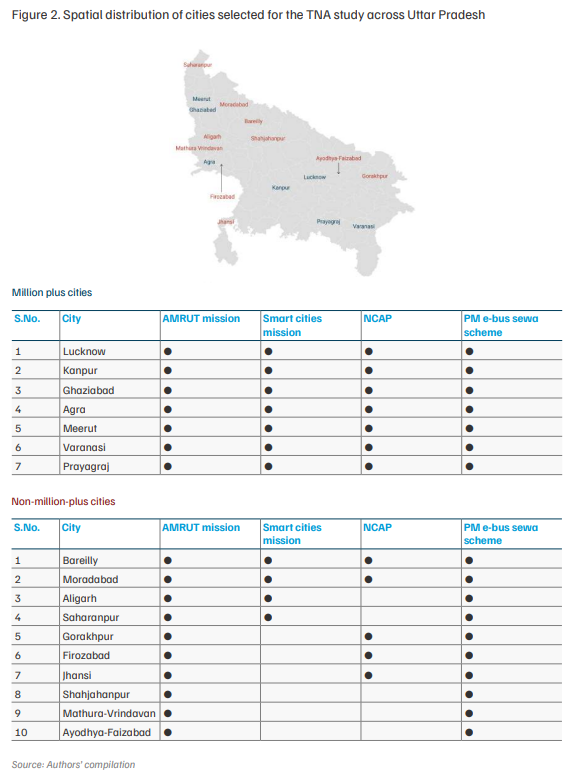
UP has over 700 urban local bodies (ULBs) catering to populations and areas of varying size Our primary criterion to select a city for the study was whether it has a municipal corporation. This helped us ensure a certain level of technical capacity and planning/implementation of urban mobility interventions. There are 17 cities in UP with municipal corporations, and their population ranges from 300,000–3 million (3 lakh–30 lakh). Across these cities, we noted the implementation of various GoI and UP government schemes/programmes with urban mobility components, including AMRUT, Faster Adoption and Manufacturing of Hybrid and Electric Vehicles in India (FAME), PM-eBus Sewa, and PM Electric Drive Revolution in Innovative Vehicle Enhancement (PM E-Drive).
| Urban mobility themes | Urban mobility components within different government initiatives | ||||
|---|---|---|---|---|---|
| AMRUT scheme | Smart Cities Mission, CM-GRID scheme | National Clean Air Programme | PM e-Bus Sewa scheme | FAME, UP EV policy, PM E-Drive | |
| Parking management | Smart parking, area-based parking plans | Multilevel parking and regulation of parking | |||
| Building and maintaining roads | Constructing roads, sewers | Smart roads development with facilities for NMT users | Pave and widen roads | ||
| Developing non-motorised transport (NMT) infrastructure | Develop walking and cycling infrastructure | Develop footpaths and cycle zones | |||
| Planning and operating buses | Promote electric buses | Procure and deploy electric buses | |||
| Planning and developing charging infrastructure | Promote EVs and establish charging stations | Promote the adoption of EVs, develop charging infrastructure | |||
| Managing traffic | Intelligent traffic management systems | Synchronise traffic movements | |||
In each of the 17 cities, at least two interventions of the government schemes/programmes mentioned in Table 1 were being implemented. According to the Census 2011, seven of these cities—Lucknow, Kanpur, Ghaziabad, Agra, Meerut, Varanasi, and Prayagraj—have a population of million-plus, while the remaining 10 are non-million-plus cities. The urban mobility planning needs and strategies of larger cities differ from those of smaller ones. Hence, we divided these cities into two groups: Group 1, comprising million-plus cities, and Group 2, for non-million-plus cities. Figure 2 shows the spatial distribution of the selected cities across the state. We will use Group 1 and Group 2 (G1 and G2) nomenclature across the report to refer to the cities.
2.2. Decoding Uttar Pradesh’s urban mobility governance
We identified and mapped all the government agencies that are involved in planning, implementing, managing, and enforcing urban mobility interventions at the city level. Figure 4 details Uttar Pradesh’s urban mobility governance ecosystem, with all the identified government agencies and their placement in the overall hierarchy at the state/regional/city levels. The governance structure presented in Figure 3 can vary for different states in India.
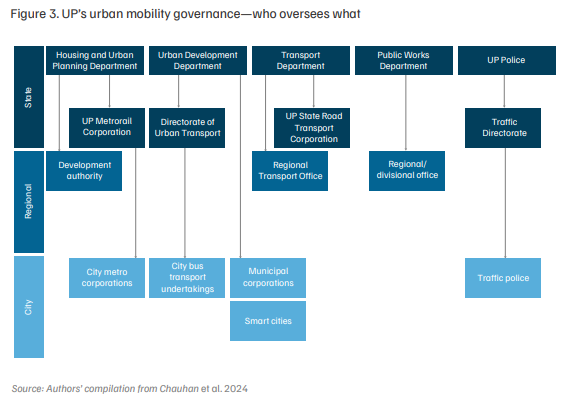
The institutional structure governing UP’s urban mobility planning and management is fragmented. Land-use and transport-planning-related functions are concentrated with the development authorities, with jurisdictions larger than municipal areas. There are 28 development authorities in UP, governed by the housing and urban planning department at the state level. They are responsible for making development and transport plans, as well as strategies for transit-oriented development at the city/regional level. The Uttar Pradesh Metro Rail Corporation Limited (UPMRCL) is also a special purpose vehicle (SPV) under the housing and urban planning department. The cities with operational metro systems have their city-level metro SPVs.
The development of municipal infrastructure and the operation of city buses fall under the ambit of the urban development department at the state level. The directorate of urban transport (DUT) oversees bus operations in 14+ cities of Uttar Pradesh, which are individually run by city-level SPVs such as Lucknow City Transport Service Limited and Kanpur City Transport Service Limited. DUT also guides municipal corporations in preparing comprehensive electric mobility plans, standardising street infrastructure development, and developing charging infrastructure. There are 17 municipal corporations in UP governed by the Uttar Pradesh Municipal Corporation Act, 1959, undertaking tasks such as street development, town planning, bus-stop development, charging infrastructure development, regularising para transit, and facilitating land availability for bus depots and terminals. Under the GoI’s Smart Cities Mission, several smart-city SPVs in UP have developed integrated command-andcontrol centres that oversee and manage key traffic nodes. Moreover, urban mobility projects such as smart roads, footpath/cycle track development, bike-sharing schemes, multilevel parking, etc., were being built as part of the smart-city mission.
Each government agency manages a specific aspect of urban mobility, often resulting in intersecting responsibilities
With its regulatory role in the sector, the transport department deals with various matters like issuing driving licences, motor vehicle registration, disbursing EV subsidies, granting and renewing permits, collecting taxes/fees, and road safety regulations. It also takes charge of all other regulatory and enforcement functions assigned to it under the Motor Vehicles Act of 1988. Regional transport offices (RTOs) have been set up in each district by the transport department to carry out the aforementioned activities. The Uttar Pradesh State Road Transport Corporation (UPSRTC) is an SPV under the transport department that owns/contracts and manages the operations of state transport buses. Earlier, UPSRTC operated many city buses as well, but, gradually, the operations were shifted under the supervision of the urban development department.
The public works department (PWD), with its regional offices, is responsible for constructing, improving, strengthening, and maintaining roads and bridges across the cities of UP. Uttar Pradesh has a traffic directorate at the state level, which also recommends and guides traffic management and road safety measures. The traffic directorate is also responsible for collating road safety data, identifying accident-prone areas, and taking measures to reduce road accidents. The city-level traffic police offices of the cities concerned look after the day-to-day traffic management and enforcement.
Although the functions of these different government agencies are defined by notified acts/ laws, there is constant overlap or sharing in responsibilities, jurisdictions, and projects. For instance, municipal corporations, development authorities, and PWD undertake street planning and development exercises in a city but often employ distinct approaches and methodologies. While development authorities notify city master plans, municipal corporations have to implement various components of the master plan. City transport undertakings (CTUs) run city buses, but municipal corporations develop the bus-stop infrastructure. Thus, we have broadly classified the urban mobility functions into five themes—urban and transport planning, street infrastructure planning and development, city bus planning and operations, parking planning and management, and electric mobility planning. Table 2 shows the overlap of functions between different government agencies. We have structured our study to gather information across the full spectrum of these government agencies involved in UP’s urban mobility domain.
| Government agencies and their guiding acts/rules | Urban and transport planning | Street infrastructure planning and development | City bus planning and operations | Parking planning and management | Electric mobility planning |
|---|---|---|---|---|---|
|
Municipal corporation/ smart city
UP Municipal Corporations Act, 1959
|
Town planning, improvement schemes, and laying out streets | Construction of streets, provision of lighting and traffic signage | Constructing and maintaining bus stops | Constructing and maintaining parking lots | Developing EV charging infrastructure |
|
Development authority
UP Urban Planning and Development Act, 1973
|
Preparing master plans and zonal plans | Defining street layouts in different zones of a development area | Developing area-based parking projects | Planning for EV charging infrastructure | |
|
Public works department
Roles and responsibilities under PWD
|
Construction, improvement, strengthening, and maintenance of roads and bridges | ||||
|
City transport undertaking
Roles and responsibilities under Lucknow, Kanpur City Transport Service Limited
|
Coordination, contracting, monitoring, supervision, and management of bus systems | Route planning and charging infrastructure planning for the e-bus fleet | |||
|
Regional transport office
The Uttar Pradesh Motor Vehicles Rules, 1998
|
Designating roads, regulating vehicle entry/exit, and traffic signage | Granting and renewal of bus permits | Issuing driving licences, registering motor vehicles, collecting taxes/fees | ||
|
Traffic police
Uttar Pradesh Traffic Rules
|
Traffic management and enforcement | Parking plan enforcement |
2.3. Training needs assessment data collection
Roles and responsibilities are delineated across hierarchical levels within different government agencies. To comprehensively understand the hierarchy of government officials, we consulted senior officials in different government agencies. Based on this, we classified our survey target groups as managerial or technical staff. The classification is explained in Table 3 below.
| Government agency | Managerial staff | Technical staff |
|---|---|---|
| Municipal corporation |
|
|
| Smart city |
|
|
| Development authority |
|
|
| City bus undertaking |
|
|
| Public works department |
|
|
| Traffic police |
|
|
| Regional transport office |
|
|
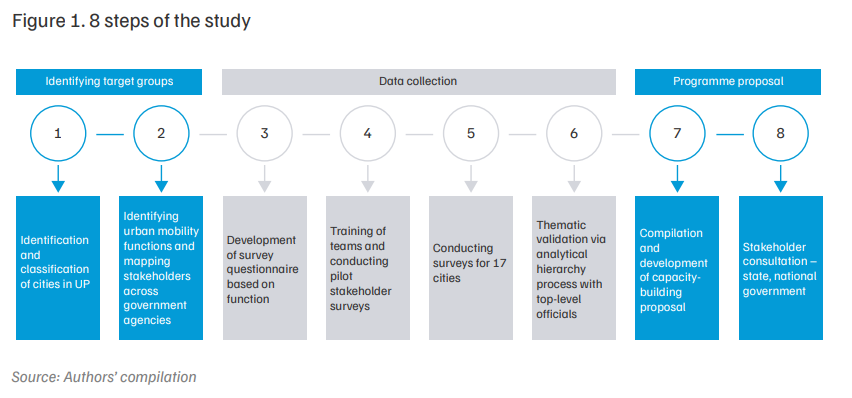
We developed tailor-made survey questionnaires based on the governance structure, functional priorities, and the hierarchy of government officials. The questionnaires were relevant to each government agency, with the overall format remaining the same. The survey questionnaire is divided into four sections, as shown in Figure 4. The complete questionnaire is attached in Annexure 1.
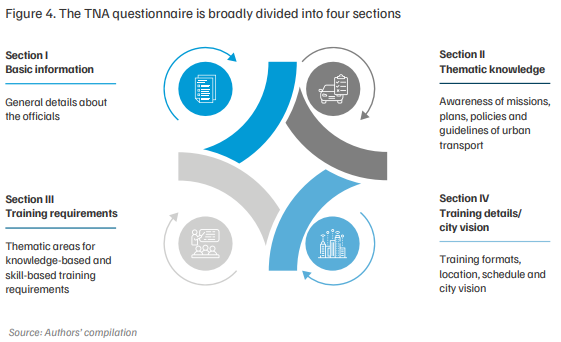
Section I comprised the officials’ basic profiles: age, gender, qualification, etc. It also focused on information regarding the urban mobility officials’ past training experiences and their impact on daily work. Section II elaborated on the self-assessment of the officials’ knowledge and awareness regarding various national missions, national/state-level policies, schemes, plans, etc., relevant to their respective functions. Section III covered the assessment of the officials’ training needs. The training needs were divided into knowledge-based and skillbased thematic areas. Each knowledge-based theme was further divided into sub-themes derived from the functions and responsibilities of the different government agencies. Table 4 presents a comprehensive list of sub-themes, which varied in the questionnaires based on the government agency whose officials were surveyed. The themes and sub-themes were derived from the existing roles and duties of government agencies, along with the particular missions and projects they engage in (Tables 1 and 2). Senior officials from government agencies— occupying top managerial posts such as chief engineers, chief town planners, managing directors, and general managers—were consulted to validate the thematic areas we classified. To understand the institutional priority of these themes, we employed an analytical hierarchy process (AHP) method. We have mentioned the institutional priority order in Annexure 2.
| Themes | Urban and transport planning | Street infrastructure planning and design | Parking planning and management | Bus transportation planning | Electric mobility planning |
|---|---|---|---|---|---|
| Sub-themes | Land use and transport integration | Complete street design guidelines | Developing parking policy | Constructing and maintaining parking lots | Developing EV charging infrastructure |
| Transit-oriented development (TOD) | Road network planning | Developing area-based parking strategies | Bus route rationalisation | Route selection, scheduling of e-bus fleet | |
| Low-emission zone planning | Bus stop infrastructure planning and design | Parking standards and guidelines | Bus resource requirements | Integrating electric mobility in regional (mofussil) connectivity | |
| Compact city planning | Non-motorised transport (NMT) infrastructure planning and design | Public Private Partnership (PPP) in parking management | Service-level benchmarking for bus systems | Charging infrastructure network planning | |
| Growth forecasting and scenarios | Safe intersection design | Bus contracts and PPP models | Depot infrastructure and equipment planning | ||
| Transport modelling | Crash investigations | Financing and fare practices in bus systems | Investments and financing for different procurement models | ||
| Multi-modal integration | Universal accessibility guidelines | Planning/ integrating IPT with PT | Service monitoring and evaluation mechanisms | ||
| Planning for urban freight movement | Tactical urbanism | Last-mile connectivity | Electric mobility policy and regulations landscape | ||
| Planning/integrating public transport with paratransit (autos/e-rickshaws) | Road safety audits | Charging infrastructure network planning | |||
| Last-mile connectivity | |||||
| Gender-inclusive mobility planning |
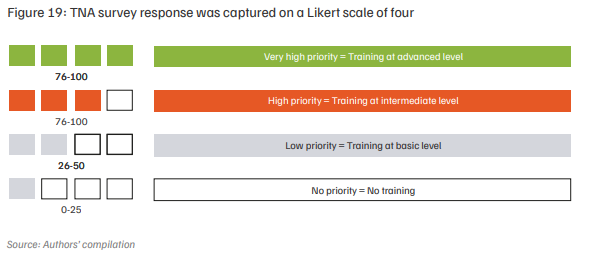
The skill-based thematic areas were kept the same across all departments. These themes included common attributes such as project planning skills (RFP preparation, project management, IEC, etc.), technical skills (GIS, AutoCAD, survey methods, etc.), and interpersonal skills (leadership, human resource, etc.). The officials’ training needs were measured on a Likert scale of four: no priority, low priority, high priority, and very high priority. A weighted score was calculated for each sub-theme and clubbed into percentile ranges. To simplify, the responses were converted to a four-pointer percentile (0-100) score. Section IV focuses on the format of training requirements, which guide the capacity-building programme proposal. This includes factors such as the number of days, training frequency, language, etc.
The surveys were conducted in person with the government officials. There are no urban transport or urban mobility departments in the city governance systems, but these roles are somewhat scattered among the internal departments of civil engineering, town planning, roads & bridges, etc. Thus, our teams would first meet the highest-level managerial staff in a government agency (for example, chief engineer, chief town planner, chief operations officer, etc.) and understand functions related to the urban mobility domain, and learn about the officials present in the agency to plan or implement them. We clubbed all the responses from different cities into Group 1 (million-plus cities) and Group 2 (non-million-plus cities). The data was further bifurcated for more detailed insights into responses from technical and managerial officials. Based on these findings, a training needs assessment matrix was prepared for all the surveyed government agencies. The assessment findings were then used to develop an urban mobility capacity-building proposal for Uttar Pradesh.
This section presents the profiles of the surveyed officials, including their qualifications, gender, and age groups. It also details the officials’ awareness levels regarding policies, guidelines, missions, etc., that serve as a reference framework for their day-to-day work. Lastly, the section outlines the training needs identified across various departments in the thematic areas.
3.1. Profile of urban mobility officials
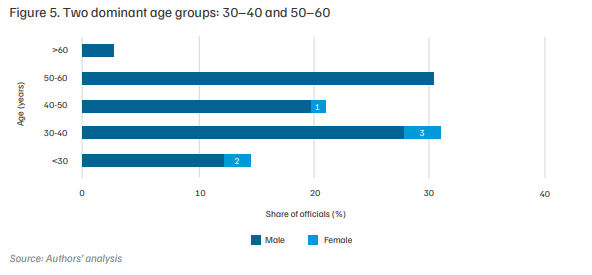
We surveyed 337 officials across eight government agencies in 17 cities of Uttar Pradesh. Most of the officials fall in the age group of 30–40 and 50–60, with nearly 30 per cent of participants in each. Female representation remains low, with women making up only seven per cent of the total urban mobility officials in the state. However, most female officials are under 40, indicating that women’s representation has increased recently. Additionally, we found that the sector will require active recruitment efforts, as almost one-third of the current employees are aged 50 and over, and likely to retire within the next decade.
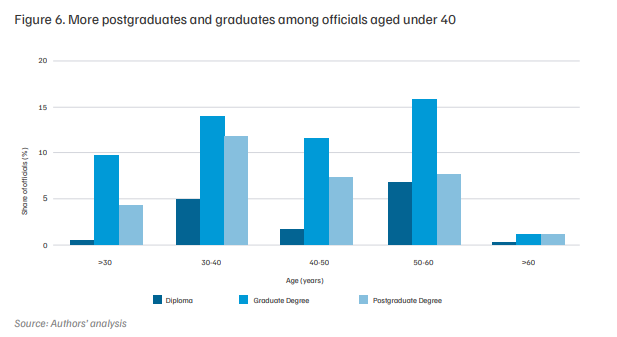
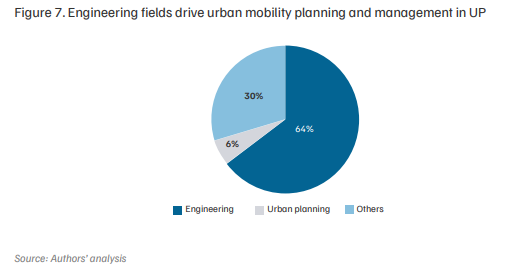
The staff’s educational qualifications have evolved over the years. Officials under 40 increasingly hold graduate and postgraduate degrees, while fewer officials under 30 have diplomas, indicating improved eligibility criteria for selection within government agencies. The 30-40 age group has the highest number of postgraduate officials. Almost two-thirds of the officials are from engineering backgrounds, with the majority of them being civil engineers. Only six per cent are from urban planning backgrounds. As many as 30 per cent of the officials have a background in arts, social science, humanities, etc. No transport planner or transport engineer was found in the state. This information highlights the opportunity to onboard more urban and transport planning officials, and diversify the sector’s expertise.
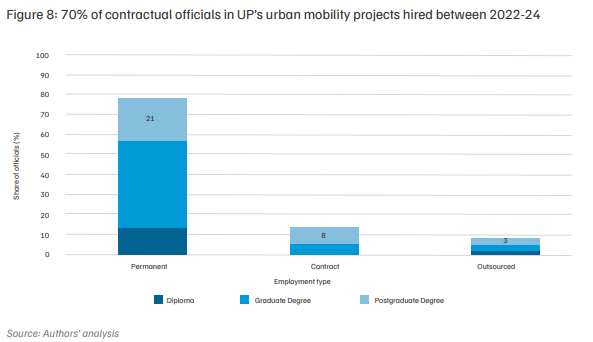
Around 78 per cent of the officials hold permanent positions, and most women are employed in permanent roles. The permanent nature of the jobs allows government agencies to train and upskill their staff mandatorily. The remaining 22per cent of the officials are either contractual or working in an outsourced role for specific tasks, with more than two-thirds hired between 2021 and 2023. A higher number of officials had a postgraduate degree in contractual/outsourced positions than in permanent roles.
Government officials’ exposure to urban mobility-related training programmes, seminars, and conferences was found to be low. Approximately 60 per cent of the officials do not attend any urban mobility-related conferences or workshops annually. More than 70 per cent of the state government officials surveyed have not previously undergone any training related to urban mobility. This indicates a lack of structured capacity-building initiatives in government agencies. The absence of exposure to conferences and workshops on urban mobility restricts officials’ understanding of foundational theories and emerging trends. The government officials who have undertaken urban mobility training in the past highlighted an improvement in their technical skills and knowledge.
3.2. Knowledge, awareness and utility of ongoing government policies, missions, plans, etc.
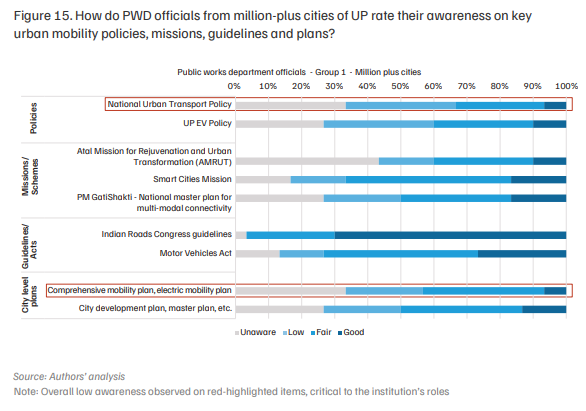
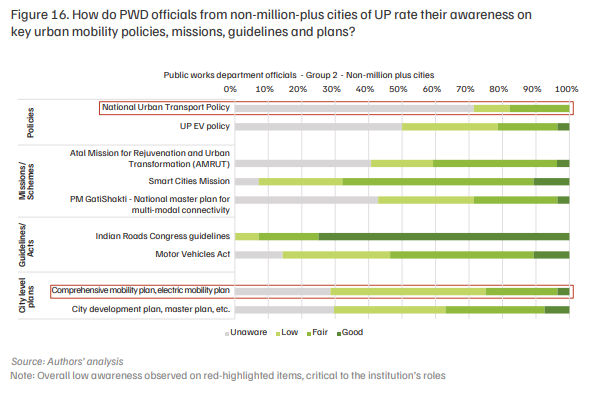
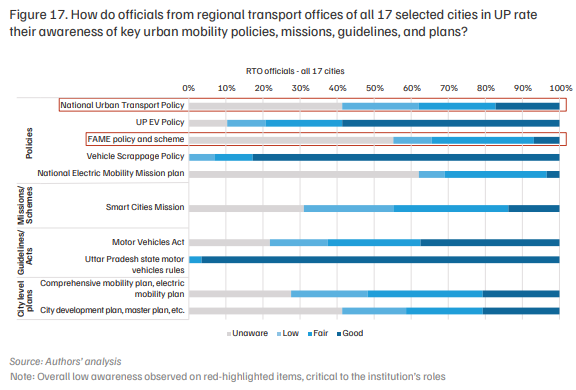
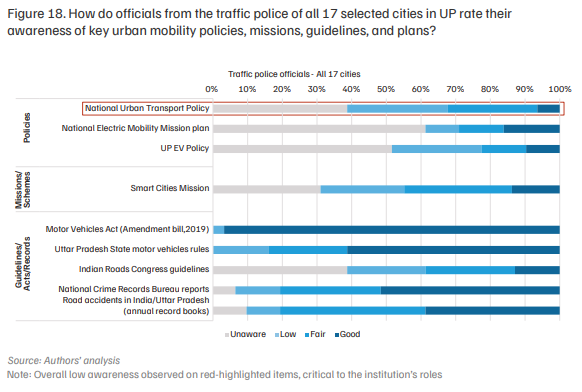
This section outlines the awareness level in government agencies on missions, policies, guidelines, city-level plans, laws, etc. The results are showcased separately for Group 1 and Group 2 cities. The government officials responded to these on a four-point awareness scale: unaware, low, fair, and good. Officials responded:
• ‘Unaware’ when they knew nothing about a topic
• ‘Low’ when they had basic knowledge
• ‘Fair’ when they had good knowledge but limited application in mobility project planning and implementation
• ‘Good’ when they had in-depth knowledge about a particular policy/ scheme/guideline and actively use its principles, components, etc., in their day-to-day work.
The current focus of urban mobility officials is on project delivery rather than long-term policy adherence required for sustainability.
3.2.1. Municipal corporations and smart cities
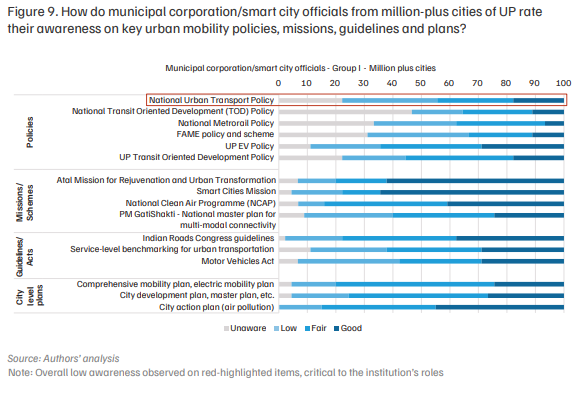
Among most municipal corporations and smart city officials in Group I, the awareness and utility of AMRUT and the Smart Cities Mission (SCM) were high. This may be due to the live projects underway under the two missions. AMRUT has provided central funds for projects like constructing facilities for non-motorised and public transport. Similarly, SCM also has urban mobility and public transport among its development components, and funds have been provided for the same. The increased awareness about these government missions can also be attributed to capacity-building programmes implemented under them.
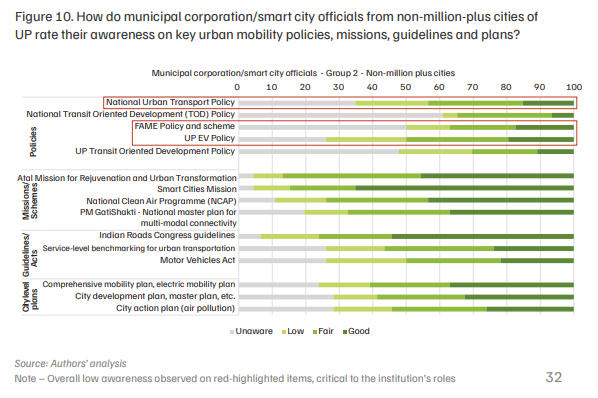
However, the majority of government officials displayed limited understanding of essential plans and policies, including the National Urban Transport Policy (NUTP), city master plans, comprehensive mobility plans (CMPs), and Indian Roads Congress (IRC) guidelines, which are foundational and vital for urban mobility planning. The master plan and CMPs provide a city’s growth with direction and infrastructure priorities. IRC guidelines are important for planning, constructing, and maintaining street networks in a city. The majority of officials in Group II cities also reported higher awareness and utility regarding missions (AMRUT, SCM, NCAP), with many showing a low level of understanding with respect to foundational policies/plans such as NUTP, service-level benchmarking (SLBs), FAME, CMP, etc.
3.2.2 Development authorities
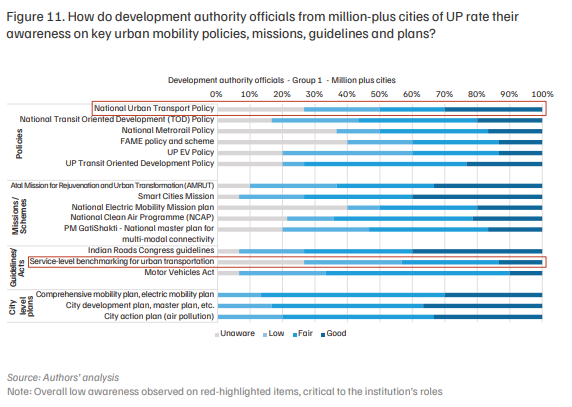
Most development authority officials in Group 1 cities show better awareness about transitoriented development (TOD) policies and city plans, but their utility and implementation remain low. Moreover, the majority of officials were not very aware of the NUTP and UP’s EV policy. The NUTP provides foundational concepts on urban mobility planning. Meanwhile, the UP EV policy lays down guidance on charging-infrastructure development with respect to land provisions, modification of bylaws, and group housing/township planning.
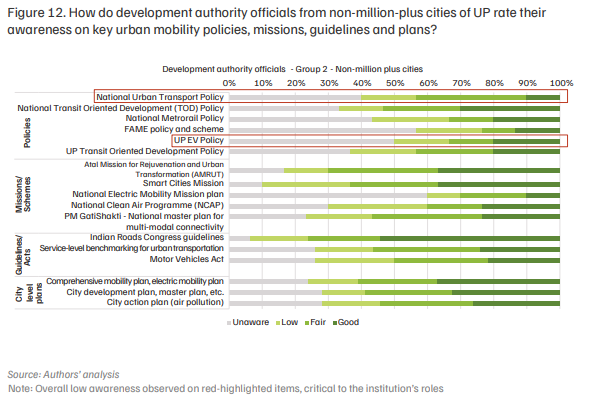
In Group 2 cities, more officials are familiar with city-level plans and IRC guidelines, suggesting they refer to these documents in their day-to-day operations. However, awareness levels for EV policies and NUTP remain low. Fewer officials in Group 1 cities are aware of and use city-level plans than in Group 2 cities.
3.2.3 City transport undertakings (CTUs)
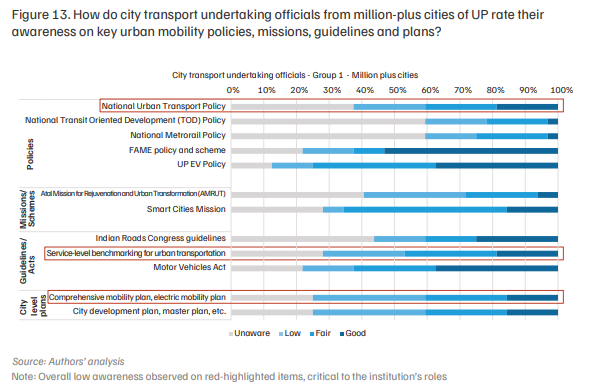
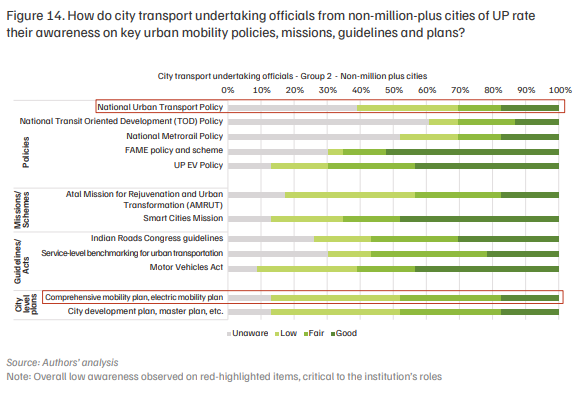
There are 14 CTUs in UP which run city bus services. Seven are in Group 1 cities. Among the 10 Group 2 cities, seven currently operate bus services: Bareilly, Mathura, Shahjahanpur, Jhansi, Aligarh, Moradabad and Gorakhpur. Most officials of Group 1 and Group 2 cities are well aware of and utilise national and state EV policies, motor vehicle acts, etc., in their day-to-day functioning. The increased awareness of FAME policies can be due to demand incentives in the scheme to promote e-bus procurement. The UP EV policy also outlines specific measures, such as green routes, to encourage the transition to public transportation. However, most officials’ awareness of NUTP and service-level benchmarks (SLBs) remains low. The NUTP outlines the fundamentals of public transport planning, land-use integration, multi-modal integration, etc. The MoHUA has provided a comprehensive list of SLBs for public transport planning and operations, which includes parameters such as coverage area, financial performance, user comfort, Intelligent Traffic Systems (ITS) usage, etc. These SLBs are essential tools for city bus services seeking continuous performance improvement.
3.2.4 Public works department (PWD)
Across both groups of cities, most PWD officials were highly aware of IRC guidelines and regularly used them to plan and develop streets. This indicates the higher level of technical capacity among PWD officials. Most officials in both groups were unaware of the NUTP, PM Gati Shakti and city-level mobility plans. NUTP remains a crucial guidance document for planning city streets, whereas city-level mobility plans show the growth trajectory regarding traffic movement, infrastructure updates, etc. PM Gati Shakti was launched as a flagship initiative by the GoI to streamline large infrastructure projects across the country, including urban transport improvement. The initiative’s success requires coordination among various government agencies, including PWD, to plan and develop urban infrastructure networks across the cities of UP. continuous performance improvement.
3.2.5 Regional transport offices (RTOs) — transport department
Officials from RTOs were surveyed for the transport department in all 17 cities. Since the roles and planning approaches remain the same with city size, a combined analysis was conducted for this particular department instead of grouping the cities as per population size. A high level of proficiency in the Motor Vehicles Act (MVA) of India and the UP Motor Vehicles Rules was evident among all the RTO officials, and these regulations were integral to their daily operations. However, while the transport department is the nodal agency for vehicle regulations, including those related to EVs, a significant lack of awareness in this regard was observed among its officials.
3.2.6 Traffic police
Most traffic police officials in both city groups were highly aware of India’s Motor Vehicles Act and UP Motor Vehicles Rules, highlighting their knowledge of critical regulatory and enforcement documents. The traffic officials were also highly aware of the National Crime Records Bureau, which annually maintains India’s road safety data. To improve their day-to-day functioning, many traffic police officials leveraged Smart Cities Mission projects, incorporating CCTV surveillance, traffic cameras, intelligent signalling, etc. However, awareness of IRC guidelines was relatively low. Many IRC guidelines focus on traffic marking and signage standards for urban areas and highways.
3.3. Training needs assessment (TNA)
In this section, we identify the training areas that the officials from various government agencies ranked in their surveys. The government officials’ responses are calculated as weighted scores and categorised on a Likert scale of four, as shown in Figure 19. The training areas were identified individually for all the government agencies, as many carry out different functions (discussed in Section 2.2). We have surveyed six different government agencies, and, in this section, we will detail the TNA results of one of these—municipal corporations and smart city SPVs. The detailed results of the remaining government agencies are shown in Annexure 3.
| Themes | Street infrastructure planning and design | Parking planning and management | Urban and transport planning | Electric mobility planning |
|---|---|---|---|---|
| Sub-themes highlighted by managerial posts |
|
|
|
|
|
|
|||
|
|
|
||
| Sub-themes highlighted by technical posts |
|
|
|
|
|
|
|
||
|
|
|
Table 5 represents the thematic areas of training highlighted as key priorities by municipal corporations and smart cities of Group 1. The responses have been categorised separately for managerial and technical officials. These training requirements clearly reflect the urgency of resolving pressing urban mobility issues. For instance, both managerial and technical staff feel the need for advanced training to solve the ongoing parking crises in the cities of UP. The Uttar Pradesh government’s push for electrification through its EV policy and citylevel comprehensive electric mobility plans’ has created a high demand among municipal corporations and smart city officials for training regarding charging infrastructure planning. Interestingly, technical officials also have a high interest in understanding low-emission zone (LEZ) planning techniques. This might be due to the burden of air pollution in UP cities.
| Themes → | Project planning and communication skills | Functional skills | Interpersonal skills |
|---|---|---|---|
| Sub-themes highlighted by managerial posts |
|
||
|
|
||
|
|
|
|
| Sub-themes highlighted by technical posts |
|
||
|
|
||
|
Apart from the knowledge-based training needs, we also sought to understand the requirements of other important skill-based training needs. These were broadly divided into three categories: project management, functional, and interpersonal skills. Table 6 above demonstrates a clear link between job roles and training needs. For instance, managerial staff prioritise data collection and analysis, likely due to their need to tailor these processes to project demands. Recently, GIS has emerged as an essential tool in urban development; thus, technical personnel place a premium on learning it.
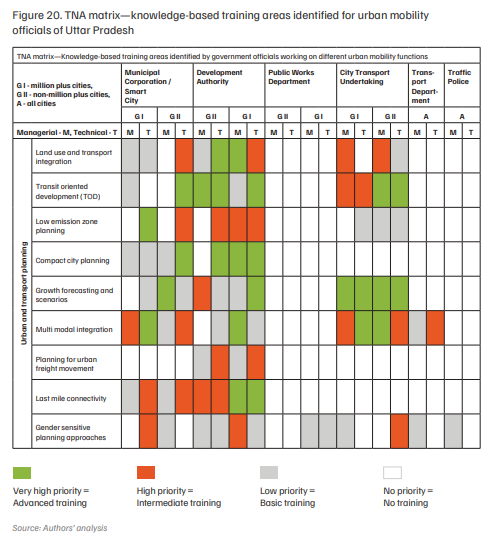
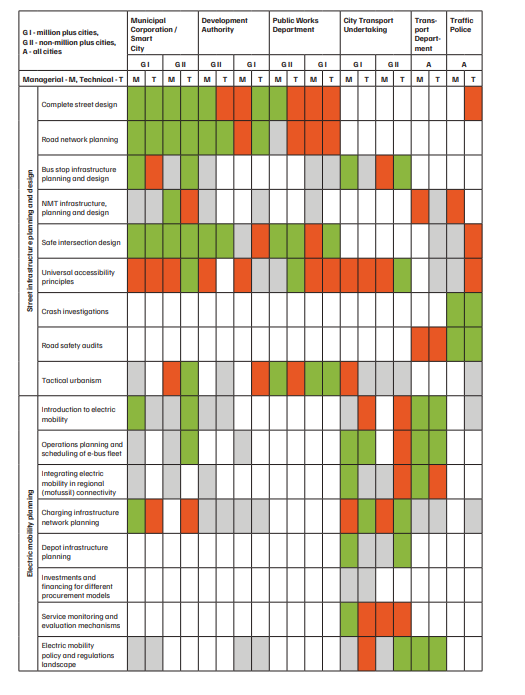
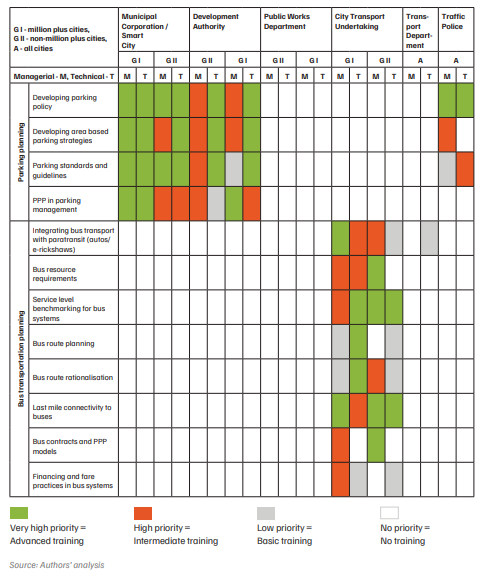
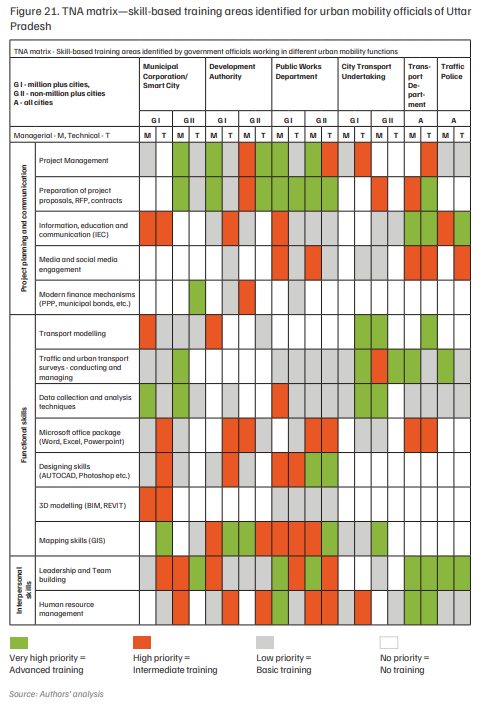
Similar TNA observations were made for all the government agencies. The TNA results from each government agency have been analysed for both groups of cities and are detailed in Annexure 3. Further in this section, we combine all these results into a single TNA matrix. As shown in Figure 20 and 21, this matrix shows the cross-cutting training and sub-themes prioritised by different government agencies working on urban mobility in UP. These training needs also highlight the importance of collaborative planning practices and intergovernmental agency coordination for effective transport planning. Since multiple thematic areas overlap across different government agencies, a cross-cutting approach for capacity building is required to align planning efforts, share expertise, and optimise resources.
A structured framework is required for the state of UP to regularly upskill urban mobility officials. We propose an on-duty capacity-building programme that should operate at regular intervals and be flexible in response to changes in the urban mobility sector, including vehicle technologies, planning paradigms, government policies, and urban growth patterns. Section 3 detailed the profiles of UP’s urban mobility officials, their awareness of government schemes/missions/ programmes, and their training needs. Based on this information, we suggest a comprehensive training programme and an institutional ecosystem to support it continuously.
4.1. Training curriculum
Training delivery is one of the most important aspects of ensuring skill improvement through a capacity-building programme. Thus, we also collected additional information from government officials regarding the delivery methods for a dedicated urban mobility capacity-building programme in Uttar Pradesh. More than 50 per cent of officials responded in favour of quarterly training sessions, with nearly 95 per cent preferring training sessions lasting between one and three days. To ensure relevance, we suggest a two-day quarterly training schedule, with its themes and modules consistently informed by frequent TNA exercises. The findings from the TNA matrix are translated into various levels of training for the officials, which can be used to develop training modules for each sub-theme. Using the TNA matrix and the findings of our survey, we suggest a three-level training structure:
Transforming urban mobility requires a continuous on-thejob training curriculum
Below, we demonstrate how the TNA matrix (Figure 20 and 21) can be used to develop a training curriculum. First, identify the government agencies interested in being trained in common sub-themes. Then, identify the training priorities of these government agencies’ managerial and technical staff. Finally, delineate the training items for the selected sub-themes. This inclusive training can be leveraged to improve coordination among different government agencies and streamline the delivery of urban mobility functions in cities. We recommend a template, as shown in Table 7, which outlines the levels of training on the topic–charging infrastructure network planning. Similarly, participating officials can be mapped from the TNA matrix shown in Figures 20 and 21 to develop other training modules.
| Basic training (online) | Municipal corporation/ smart city |
Development authority |
|---|---|---|
|
Managerial staff:
Technical staff:
|
Managerial and technical staff:
|
| Intermediate training (classroom + case study + analysis) | City transport undertaking |
|---|---|
|
Managerial staff:
|
| These lessons can be followed by group exercises on challenges/solutions, and field visits to existing charging locations. | |
| Advanced training (classroom + analysis + real world implementation) | Municipal corporation/ Smart city |
City transport undertaking |
|---|---|---|
|
Managerial staff:
|
Technical staff:
|
|
This can be followed by real-world charging infrastructure planning projects for a specific area within the respective city or state. This can include:
|
||
Existing training modules and platforms can be leveraged depending on their content and formats. Potential partner institutions include CEPT University, Centre for Science and Environment (CSE), The Energy and Resources Institute (TERI), Management Development Institute (MDI), Centre for Good Governance (CGG), Tata Institute of Social Sciences (TISS), All India Institute of Local Self-Government (AIILSG), Centre for Urban Studies at IIPA, the Human Settlements Management Institute (HSMI) of HUDCO, and the Institute of Urban Transport (IUT). The proposed ‘capacity-building cell’ (discussed in Section 4.2.) should collaborate with these established institutions that have the necessary expertise and infrastructure to deliver training across various thematic areas.
4.2. Setting up a state-level urban mobility capacity-building cell
We propose setting up a permanent capacity-building cell/wing within the urban development department of Uttar Pradesh to continuously upskill urban mobility professionals. This capacitybuilding cell can be set up under RCUES. This is on account of its robust capacity-building infrastructure, experience in executing capacity-building initiatives for a variety of urban development programmes, and its ongoing technical support to numerous urban local bodies (ULBs) within the state. Furthermore, RCUES was established by MoHUA and has a ‘Utkrisht’ accreditation from the Capacity Building Commission of India, which solidify its credibility. The capacity-building cell must consist of two full-time faculty members with 10+ years of experience in urban mobility planning/management. In addition, two-three full-time staff members should be hired to undertake technical, administrative, and financial tasks. The capacity-building cell will be responsible for the following:
1. Conducting TNA regularly and identifying key training areas based on changes in government policies, industry technology, the state’s economic growth pattern, etc.
2. Creating comprehensive and interactive training modules in consultation with the GoI’s centre of excellence, state government officials, academia, etc.
3. Planning, coordinating, and conducting regular capacity-building sessions.
4. Monitoring and evaluating the performance of government officials using proper tools and mechanisms.
To oversee the impact of capacity building on the state’s urban mobility sector, a sanctioning committee must be placed above the capacity-building cell. The principal secretary of the urban development department should lead the sanctioning committee. The committee must also have members from other key departments, such as housing and urban planning, public works, transport, and traffic. The sanctioning committee must undertake the following tasks:
1. Review the annual plans of the urban mobility capacity-building cell/wing.
2. Allocate continuous budgets to the urban mobility capacity-building programme.
3. Manage the convergence of funding or ongoing capacity-building initiatives under different government agencies.
4. Monitor the long-term impacts and outcomes of the capacity-building programme.
4.3. Monitoring and evaluation framework
The capacity-building cell should conduct periodic assessments, preferably after the completion of quarterly training. They must also develop a dashboard to maintain a performance record of the government officials participating in the urban mobility capacitybuilding programme. The dashboard must be dynamic, with quarterly performance updates based on assignments/exercises evaluated for each individual. Access to the dashboard can be shared with the respective government offices to link performance monitoring to career progression.
Government officials need to be encouraged to actively engage in upskilling through various methods. This can be achieved by offering certifications or accreditations recognised by either the government or industry. Their contributions should be acknowledged, with accomplishments celebrated through awards, certificates, or public recognition. Additionally, fostering competition, as seen in the Swachh Bharat Mission, can be effective. Incentives could be linked to the practical application of newly acquired skills in their roles or to measurable enhancements in performance connected to the training. These strategies will help maintain motivation and engagement among government officials. In the long term, the capacity-building programme must improve urban mobility indicators in UP. Table 8 highlights some examples of long-term outcomes associated with urban mobility capacity building.
| Training area | Officials involved | Impact/Outcome associated |
|---|---|---|
| E-bus charging and scheduling | Operations manager from city transport undertakings (LCTSL/ KCTSL) | Reduced downtime in e-bus operations |
| Low-mission zone planning | Urban planners from development authorities and municipal corporations | Integration of emission-zone plans with master planning exercises |
| Complete street design | Engineers, urban planners and designers from the development authority, municipal corporations, and the public works department | Number of ‘lane (road) kilometres’ improved in terms of accessibility features for public transport and non-motorised transport users |
| Road-safety audits | Engineers, urban planners and designers from the development authority, municipal corporations, and the public works department | Number of road fatalities/injuries reduced |
| Last-mile connectivity or integration of public transport with para-transit | Operations manager from city transport undertakings (LCTSL/ KCTSL), and engineers, planners and designers from the municipal corporation and development authority | Reduced in-vehicle time during public-transport trips |
| Developing parking policy | Engineers, urban planners and designers from the municipal corporation and development authority | Reduced congestion on streets and improved the financial performance of ULBs |
4.4. Financing of capacity-building activities
A permanent effort to upskill urban mobility officials will require regular financing. Our survey captured responses from 337 government officials who specifically work on urban mobility in 17 cities of UP. Our estimates suggest that the annual training of around 500 urban mobility officials will cost around INR 30–50 million (INR 3-5 crore) in UP. These costs include lodging, boarding, reading material, guest faculty expenses, training venue charges, institutional charges, travel costs, etc. To compute the annual costs, we have followed the MoHUA’s standard capacitybuilding cost norms, which are used by government training institutes, including RCUES. We have also assumed that these training exercises will be conducted in RCUES, as their Lucknow campus already has the infrastructure to deliver regular training. However, in the long term, the state must be divided into city/metropolitan training clusters with respect to the geographical distribution and proximity of the cities. This will ensure increased/regular participation and convenience for the urban mobility officials.
Multiple sources must be tapped to fund capacity building for urban mobility officials. The proposed capacity-building cell within RCUES must manage or streamline different funding channels under the guidance of the sanctioning committee, which includes representation from all the key state-level actors. These funding channels can consist of (but need not be limited to):
1. UP’s dedicated urban transport fund (UTF): A certain share of the UTF can be earmarked annually for capacity-building activities.
2. State and national government agencies independently engage in different urban mobility capacity-building activities. The capacity-building cell must create a unified approach to coordinate and direct these scattered efforts.
3. Funds from different state departments of Uttar Pradesh, including the urban development department, housing & urban planning department, department of personnel and administration, public works department, and traffic directorate, can be channelised for the proposed capacity-building activities.
4. Funds from ongoing schemes/programmes under national ministries such as the MoHUA, Ministry of Road Transport and Highways (MoRTH), Ministry of Heavy Industries (MHI), Ministry of Personnel, Public Grievances and Pensions, etc. can be channelised through the proposed capacity building cell.
The cities of Uttar Pradesh will have to start preparing for the upcoming era of rapid urbanisation and its subsequent need for mobility demand. The state has already realised this, and is investing in metro systems, bus-capacity improvement, fleet electrification, and street improvement through various initiatives. However, it also needs to quickly develop an upskilling ecosystem for its government officials, which can support a sustainable urban mobility transition. Our study has highlighted the intent of UP officials to learn different techniques and tools, and contribute to solving urban mobility challenges. The study also outlines the key thematic areas requiring urgent attention regarding capacity building for various urban mobility functionaries. The immediate next step must be the implementation of these capacity-building initiatives. Their successful execution has the potential to catalyse substantial improvements, resulting in enhanced quality of life for the citizenry.The urban mobility sector’s impacts on climate change, air pollution, road safety, and other negative externalities are well documented. Improving urban mobility also provides access to economic opportunities and livelihoods. It is time to realise this sector’s potential overall to improve the quality of life of citizens, and foster economic growth. With much of the state’s urbanisation yet to happen, UP currently stands at a pivotal point in shaping its future mobility paradigm. The role of urban mobility officials is most critical to shaping this paradigm. UP can also set a precedent for other states to follow. We also suggest a framework below, which can act as a starting point for other Indian states to plan their efforts towards upskilling urban mobility officials.
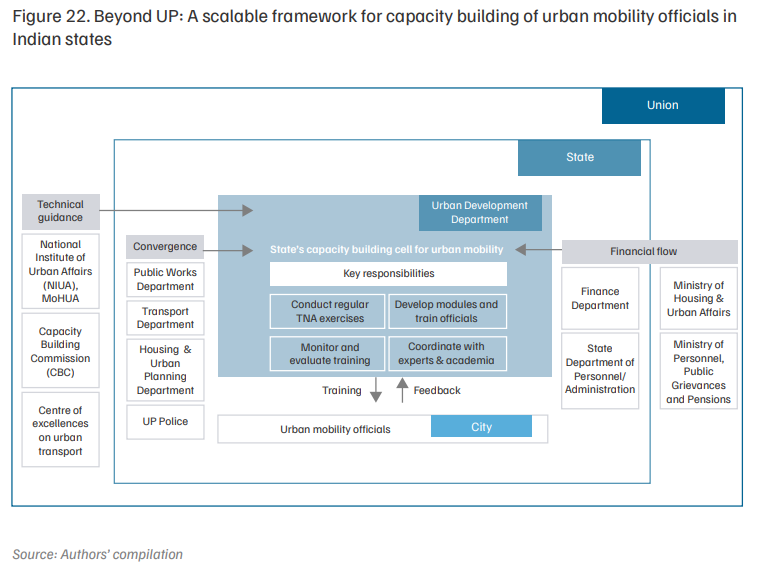
While national missions provide important directional/guidance-based training, they are often project-linked and time-bound. Urban transport is a state subject and a state-level unit within the Urban Development Department/other relevant department ensures that upskilling is continuous and institutionalised, addressing the specific legislative, geographical and technical nuances of states.
Uttar Pradesh serves as a "microcosm" of India. It features a wide variety of city tiers—from mega-cities like Lucknow and Kanpur to rapidly growing Tier-2 and Tier-3 towns—and a complex web of agencies (Development Authorities, Municipal Corporations, and Smart City SPVs). A framework that works in the diverse institutional landscape of UP can be effectively scaled across other Indian states.
The study’s focus is primarily cross-cutting in nature, meaning it brings officials from different departments (Transport, Police, Urban Development, PWD) into a shared learning ecosystem. This fosters a unified "functional perspective," ensuring that a road engineer and a traffic planner are working toward the same sustainability goals rather than competing objectives.
The programme proposal is designed for a broad spectrum of "urban mobility functionaries." This includes technical staff (engineers and planners), administrative leadership (Chief Planners and Executive Officers), and para-statal officials (from Metro Rail corporations and Smart City SPVs). By targeting multiple levels of the hierarchy, the study ensures that sustainable policies don't get "lost in translation" between senior leadership and ground-level execution.
Greenhouse Gas Accounting for On-road Transport Emissions
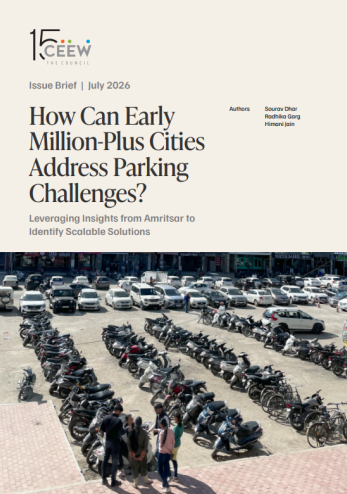
How Can Early Million-Plus Cities Address Parking Challenges?
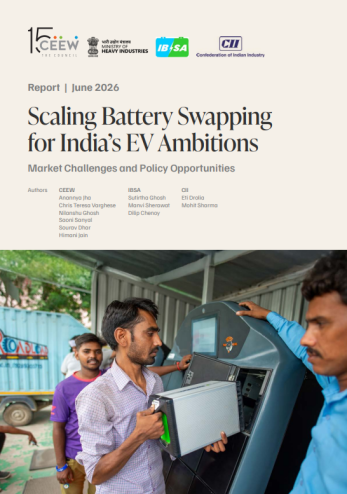
Scaling Battery Swapping for India’s EV Ambitions
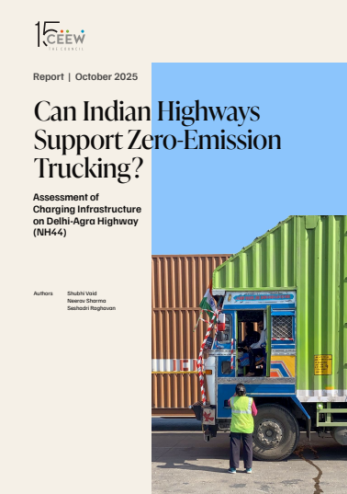
Can Indian Highways Support Zero-Emission Trucking?