Council on Energy, Environment and Water Integrated | International | Independent


Suggested citation: Global Heat Health Information Network South Asia Hub. 2026. Living with Heat in Bangladesh: Heat-Health Risks, Vulnerability and Emerging Responses
Please access India, Nepal and Bhutan reports:
This country synthesis report examines Bangladesh’s evolving heat risk and its implications for population health. It focuses on changing heat exposure, the populations and places most at risk, projection models, vulnerability dynamics, and the policy, institutional and on-the-ground responses, including heat action plans emerging across the country. The report assesses Bangladesh’s response to extreme heat, identifies current scenarios in heat-health surveillance, early warning, heat action plans, coordination and implementation, and consolidates priorities for strengthening long-term heat resilience. It also highlights emerging approaches and considers how evidence can inform practical, scalable and context-specific responses to the health impacts of extreme heat.
The report draws on historical and projected temperature trends, heat-risk data, evidence on heat-related health impacts, socioeconomic vulnerabilities and factors influencing exposure. It examines Bangladesh’s heat governance landscape, including national climate and health frameworks, forecasting and early warning systems, health-system preparedness, local heat action initiatives, and interventions led by non-governmental and community-based organisations. It then identifies priorities for strengthening long-term heat resilience, including developing a National Heat Action Plan, establishing heat-health surveillance, mainstreaming heat risk across sectors and levels of governance, and strengthening protection for workers exposed to occupational heat.
Extreme heat is becoming an increasingly important environmental, urban planning, public health and development challenge in Bangladesh. Rising temperatures are occurring alongside prolonged periods of apparent heat, high humidity, rapid urbanisation, and changing land-use patterns, increasing the potential for heat exposure to translate into adverse health and livelihood outcomes.
The burden is also spatially and socially uneven. Population concentration in major urban centres means that heat risk is particularly important where high thermal exposure coincides with dense settlements and limited access to cooling and essential services. Informal settlements, low-income communities, outdoor and informal workers, and women facing substantial domestic and care responsibilities can experience additional constraints to adaptation.
This country synthesis report examines Bangladesh’s changing heat-risk landscape, the populations and places most exposed, the country’s emerging policy and institutional responses, and the practical approaches being developed by government, civil society, development partners and communities.
Bangladesh needs to move from a growing set of sectoral and local initiatives towards a more coordinated and proactive heat-health framework. Four priorities emerge from our assessment.
The GHHIN South Asia Hub can contribute to this transition by convening stakeholders, strengthening the evidence base, supporting knowledge exchange, advancing heat forecasting and heat-health research, and building institutional capacity for heat-health action. In Bangladesh, these efforts can help connect existing national, local, civil society, and community initiatives into a more coherent approach that is anticipatory, locally informed, and responsive to the populations facing the greatest heat-health risks.
Extreme heat is increasingly being recognised as a major and multifaceted climate risk worldwide, affecting public health and productivity. The increase in frequency, intensity, and duration of extreme heat worldwide is largely driven by the convergence of rising global temperatures, whereas its risks are driven by rapid urbanisation and existing health vulnerabilities and socioeconomic inequalities. The warming signal is unambiguous. Global mean temperature for January–August 2025 stood at 1.42 degrees Celsius (±0.12 degree Celsius) above pre-industrial levels, and each of the eleven years from 2015 to 2025 is set to rank among the eleven warmest in the 176-year observational record (WMO 2025). Since the 1990s, heat-related deaths have increased by 63 per cent, averaging 546,000 deaths per year over the period 2012– 2021 (Romanello et al. 2025). Under current policies and near-term trajectories, exceeding 1.5 degrees Celsius of global warming is now widely considered unavoidable. However, the magnitude and duration of this overshoot remain contingent on the pace and scale of mitigation and adaptation action (UNEP 2026).
Cities in Asia, particularly Southeast Asia, are increasingly exposed to hazardous humid extreme heat events (Agarwal, Nagpure and Ramaswami 2024). By 2070, around 520 million people across the region could experience at least one month of dangerous heat each year. The risk is particularly pronounced in cities, where dense urban areas can remain more than 10 degrees Celsius hotter at night than the surrounding countryside, intensifying heat exposure and limiting overnight recovery (World Bank 2026). Under a 1.5 degrees Celsius warming scenario, South Asia could lose 5.3 per cent of total working hours to heat stress by 2030, equivalent to approximately 43 million full-time jobs (ILO 2019a). In India, one of the largest and most populous countries in South Asia, 57 per cent of districts, which are home to nearly three-quarters of the population, are already facing high to very high heat risk, according to CEEW research (Prabhu et al. 2025). Similarly, Bangladesh has experienced a 1.1 degrees Celsius increase in maximum temperatures since 1980, while feels-like temperatures have risen by 4.5 degrees Celsius, contributing to growing physical and mental health burdens, including heat-related anxiety and depression (World Bank 2025).
Rising global temperatures have accelerated changes in the cryosphere, particularly in high-mountain regions, leading to reductions in snow cover, glacier retreat, and permafrost degradation (IPCC 2019). In the Himalayan countries of Nepal and Bhutan, these rapid cryospheric changes threaten water security, ecosystems, and mountain livelihoods (IPCC 2022). While the chronic heat stress impacts different ecosystems, at the same time, low-lying parts of these high-altitude countries are increasingly experiencing extreme heat, with temperatures in some areas now regularly exceeding 40 degrees Celsius (Bhandari et al. 2025).
This section deals with the heat trend and extreme heat distribution all over Bangladesh along with the future projection techniques and heat distribution and exposure of vulnerable communities.
Historical trends in extreme heat
Heat is considered one of the fastest-emerging climate-change problems in an everchanging climatic hotspot like Bangladesh. While often ignored because of the tangible severity of other disasters like cyclones, floods, storm surges, riverbank erosion, and salinity intrusion, its effect falls on human health, labour efficiency, agricultural infrastructure, ecosystem services, and economic development.
Bangladesh has migrated from a six-season country to a three distinguishable climate segments winter from November to February, a hot and humid period from March to May (when the highest temperatures are recorded), and warm monsoon from June to October (M. Islam and Kotani 2016). Average temperatures in the hot period often exceed 35 degrees Celsius across the western side of the country, where in urban centres, the feels-like temperature can often exceed 40 degrees Celsius. In the northwestern and southwestern parts of the country, particularly Rajshahi, Chapai Nawabganj, Naogaon, Pabna, Natore, Dinajpur, Satkhira, Khulna, and Barishal, the heat scenario seems to be the most severe due to humidity variations, air concentration, variance in the moderating influence of maritime air masses, and the imbalance of natural land covers due to rapid urbanisation (Kamal et al. 2024). Coastal areas can exhibit slightly lower temperature but with higher humidity and elevated heat index, so elevated heat stress is noticeable (Kamal et al. 2024).
While a lower ambient temperature may be recorded, relative humidity often exceeds 70–80 per cent, mostly in the hot and humid periods, limiting a person’s ability to get comfortable by dissipating heat through perspiration. Studies related to heat stress in Bangladesh are now also focusing on combining indices such as Wet Bulb Globe Temperature (WBGT), Universal Thermal Climate Index (UTCI), and Heat Index (HI), incorporating humidity, radiation, and wind speed to better understand the physiological stress.
The definitions vary for each index—HI represents a combination of air temperature with relative humidity; UTCI comprises a more comprehensive human-energy balance information accumulating air temperature, mean radiant temperature, wind speed, and relative humidity to reveal an advanced and modern representation of heat stress. On the other hand, WBGT comprises natural wet-bulb and dry-bulb temperature, as well as globe temperature, to showcase occupational heat stress.
Heatwaves, designated by temperatures ≥36 degrees Celsius by the Bangladesh Meteorological Department (BMD), are considered as one of the fastest growing hazards in the country. According to BMD, the severity of the heatwave can differ from mild (36-≤38 degrees Celsius), moderate (38-≤40 degrees Celsius), severe (40-≤42 degrees Celsius), to very severe (≥42 degrees Celsius) (A. Sultana et al. 2024).
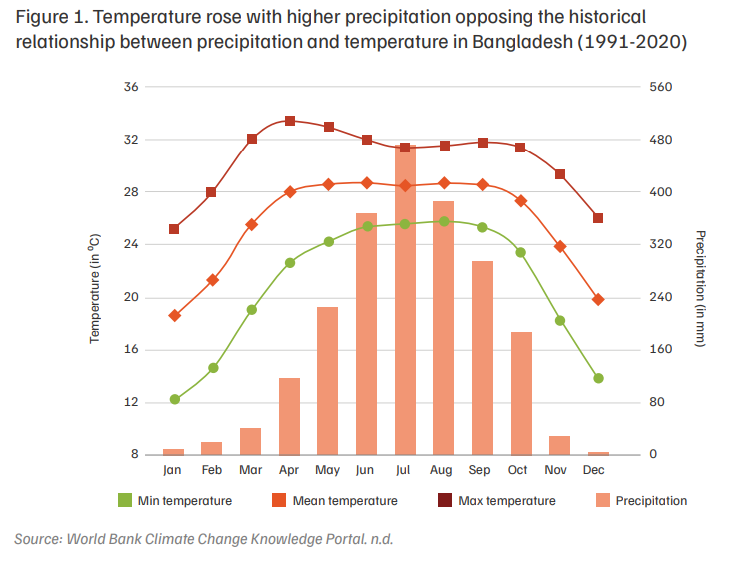
Figure 1 indicates the opposite of the traditional view of the relationship between precipitation and temperature. While the common belief states that with precipitation, temperature will drop, the graphical representation in the June– July period shows that comparatively hotter temperatures can be recorded even during 480 mm precipitation.
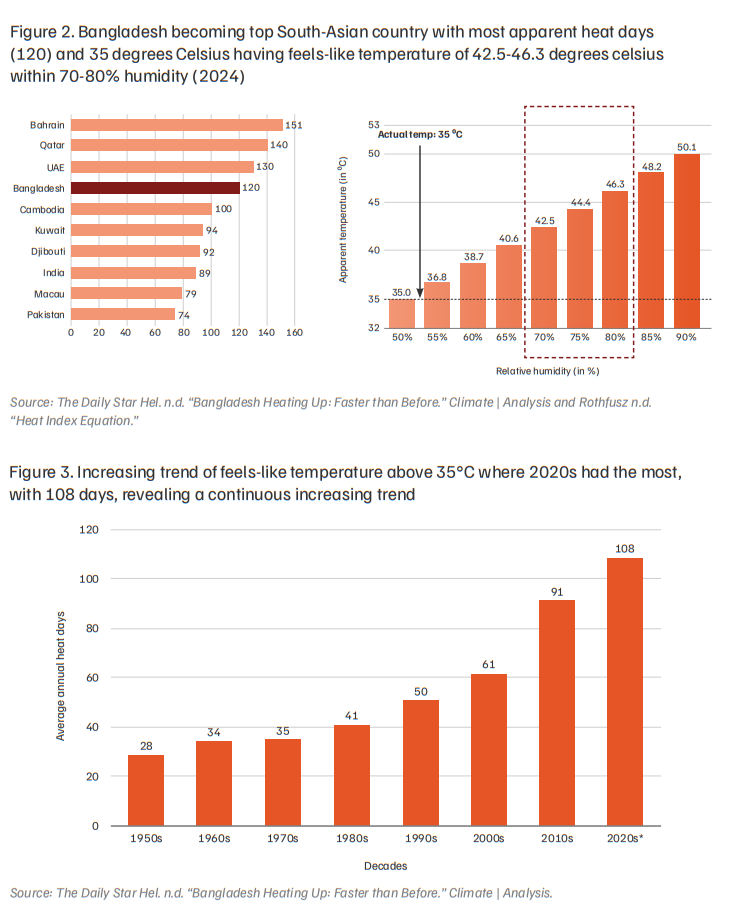
Figure 2 shows the duration that the heat index value registered above 35 degrees Celsius in the top-10 countries worldwide. Bangladesh ranked 4th in this category with 120 days (The Daily Star, n.d.). It is worth noting that the first three countries differ in climatic characteristics from Bangladesh, having arid topography. The closest climate to Bangladesh, India, notches up just 89 days of high apparent-heat days, showing the significance of heat in the country.
Arguments can be made that the heat index temperature was higher than 35 degrees Celsius in India and Pakistan too, but the duration and feels-like temperature are varied. Combining the two panels of Figure 2 and with the average relative humidity of Bangladesh ranging between 70 and 80 per cent, it can be said that during the 120 days of apparent-heat days, feels-like temperature ranged from 42.5 degrees Celsius to 46.3 degrees Celsius.
The average annual days with a feels-like temperature above 35 degrees Celsius ranged from a mere 28 to 50 days upto 1990s, while from the 2000s the number increased to 61, followed by 91 days during the 2010s. The number touched nearly one-third of the year (108 days) in the 2020s, a trend which is still increasing massively. It is worth noticing that the figure represented the average annual days of one decadal period.
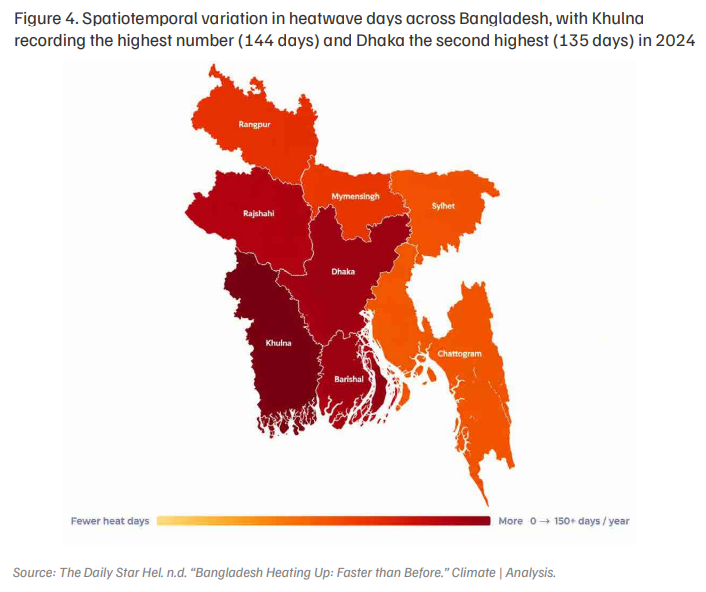
The spatial distribution of this heat is also noticeable, as the capital, Dhaka, faced 135 major heat days in 2024, while Khulna’s 144 days were the highest. Rajshahi and Barishal faced 126 and 134 heat days, respectively. Sylhet and Chattogram, though faced with a major increase in ambient temperature, did not show higher heat index values than the hotter urban areas. But even after that, the regions recorded nearly three months of heat days.
Heat risk, on the other hand, is a more complex subject that requires incorporating human population and its spatial distribution to understand the potential places where heat can occur. Where different climatic scenarios exist for different shared socioeconomic pathways (SSPs), SSP2–4.5 resembles the historical and current global patterns, which is necessary to understand the actual heat risk.
The World Bank Group’s Climate Change Knowledge Portal actually provides a reliable and compounded heat-risk categorisation of humidity and temperaturebased heat with population, enabling people to understand the spatial heat risk occurrence.
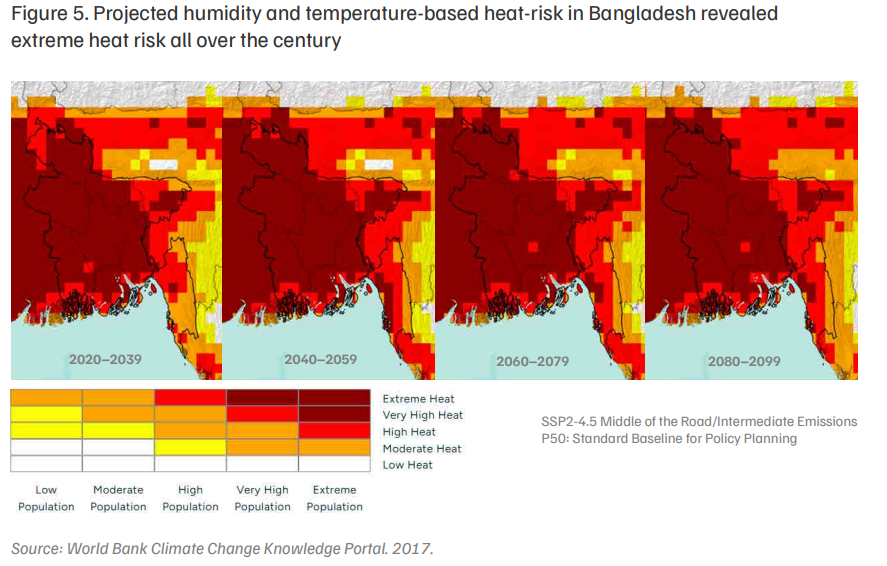
Figure 5 shows the projected heat risk by combining the historical trend of humidity-based temperature distribution with the population distribution and its socio-economic trend, to compute the exposure scenario. For example, areas with extreme heat but with no population will result in less risky pixels than moderate-to-high heat with extreme population density. It is worth noticing that as the population density is significantly higher in Bangladesh compared to other countries, hence the heat risk map shows dark brownish tones around the central and western side of the country. The only difference can be noticed at the eastern side of the country where, due to hilly regions, population density is lower and temperature is not extremely high, resulting in lower risks, and reddish to orange pixels forming in those regions.
Future projection and assessment
Understanding future trends and heat risk requires accounting for greenhouse gas emissions, atmospheric conditions, urbanisation, land use transformation, and ever-increasing population density. Future climate projections rely on numerical climate models for simulating interactions between the mentioned aspects. The most prominent of these are Coupled Model Intercomparison Project (CMIP) and Integrated Assessment Frameworks based on SSPs. According to the Sixth Assessment Report (AR6) of the Intergovernmental Panel on Climate Change (IPCC), South Asia is one of the world’s hottest regions, and Bangladesh is no stranger to that. The country’s projected average temperature, in a low-emission pathway model such as SSP1–2.6, is expected to increase by 1–2 degrees Celsius relative to the 1995– 2014 baseline by the end of the 21st century. Under an intermediate scenario like SSP2–4.5, the increase would be 2–3 degrees Celsius; and 4 degrees Celsius under a high-emission scenario like SSP5–8.5 (IPCC 2023).
According to the World Bank, Bangladesh will become predominantly urban within the coming decades; Dhaka, Chattogram, Gazipur, Narayanganj, Khulna, Rajshahi, Sylhet, and Cumilla will be major urban centres, with some secondary cities also expanding, without integrating climate-sensitive urban planning principles. Studies also reveal that if the current unplanned urbanisation pattern continues, future urban heat islands (UHI) will not only intensify but also expand spatially.
Researchers countrywide have utilised Geographic Information System (GIS) to predict the future spatiotemporal distribution of UHI using various models integrating remote-sensing (RS) technologies for better explanation of future hot zones. Cellular automata (CA) is one of the primary algorithms used for urban expansion predictability and establishing relations with the thermal environment (Kafy, Naim et al. 2021). Artificial Neural Network (ANN), on the other hand, has been used extensively for heat-risk assessment research due to its capability of modelling highly complex and non-linear relationships among various climatic variables such as land use change, vegetation characteristics, topography, population distribution, etc. (Kafy, Dey et al. 2021).
Integrating the IPCC data—like CMIP6 temperature projections—with the CA-Markov Chain model can open doors to predict temperatures based on future exposure of vulnerable populations under different development pathways. Future studies will move beyond just relying on thermal characteristics, and focus on the meaningful integration of WBGT, UTCI, and feels-like temperature, which will enable researchers and policymakers to make integrated plans easily.
Vulnerability assessment: gender, migration, urban poverty and informal settlements
The impacts of extreme heat are unequal and unjust. Bangladesh, a country with massive population density, has a lot of pressure on surrounding land for accommodation, causing UHI effects in disadvantaged slums and squatter areas.
Women in Bangladesh, who primarily perform activities such as cooking, water collection, child and elderly care, spend a lot of time within poorly ventilated homes. Women from low- to middle income groups are often exposed to intense heat, made worse by indoor heat generation. Those living in slum and squatter areas like Dhaka’s Shyampur share 100-square-foot rooms with family, leading to potentially trapped heat. The National Census of Slum Areas and Floating Population 2014 revealed 13,935 slums with nearly 2.23 million residents and a floating population of 16,621. The capital, Dhaka, itself consisted of nearly 3,000 slums with 1.1 million residents, reflecting the country’s large share of informal settlements in larger metropolitan areas (BBS 2015).
Though this large share of informal settlements results in trapped heat due to limited insulation and poor cross-ventilation caused by corrugated metal roofing, women in these households bear a larger burden. Due to household chores, they are often exposed to extreme heat-health-related problems like fatigue, exhaustion, mental illness. There is also a heavy impact on pregnant women— according to US-based think tank Climate Central, childbirth complications due to extreme heat are heavily concentrated in Bangladesh, especially in the Chattogram area—the report claims between 2020 and 2024, an average of 34 days per year have been categorised as ‘pregnancy heatrisk days’ (Climate Central 2025). The National Guideline on Heat-Related Illness reports that a 1 degree Celsius increase in temperature, 5 per cent rise in preterm birth rate, with 14 per cent greater likelihood of having neonatal disease if born during hot days. Furthermore, studies also revealed a direct correlation between cumulative extreme heat exposure during the first 1,000 days of life and stunting among children aged 24–59 months in Bangladesh. It also showed that a 1 per cent rise in total number of extreme heat days led to a 56 per cent increase in stunting odds (Raza et al. 2025). Beyond formal employment, many women work in brick kilns, waste disposal, and many other sectors where they get exposed to indoor and outdoor heat, making this discussion more significant.
Migration is a continuous process in Bangladesh, and it is now being pushed along by climate change. According to the World Bank’s Groundswell Report (Rigaud et al. 2021), the expected influx of climate migrants by 2050 is projected to reach up to 19.9 million under a high-emissions scenario, considered as one of the largest expected internal migration figures. But the very cause behind this is an accumulation of other climatic disasters like salinity intrusion, cyclones, riverbank erosion, and flooding, making migration a catalyst rather than an aftermath of heat. These migrants are often obligated to depend on informal occupations like construction labour, rickshaw pulling, waste collection, street vending, etc.—jobs that all have prolonged heat exposure in common (Rigaud et al. 2021). With an urban population of nearly 53 million countrywide, 23.2 million are classified as vulnerable urban poor. Add to this the expected 19.9 million climate migrants by 2050, and urban areas are expected to face more pressure to tackle the accommodation issue while considering thermal stress, making policy decisions much more difficult (Rigaud et al. 2021).
This section deals with the current infrastructural and administrative condition of building heat resilience in Bangladesh. It carries on the discussion with the present heat action initiatives and NbS and other approaches taken to battle heat-health impacts and identification of the government approaches and interrelation with those.
Multi-stakeholder approach for building heat resilience
Heat is a multi-sectoral problem that needs to be tackled with multi-sectoral inputs. Extreme heat scenarios have not received major attention in Bangladesh’s policymaking compared to traditional disasters like cyclones, floods and river erosion. Only during recent heatwaves in 2023 and 2024 did national attention shift towards heat impact on different sectors like public health, urban planning, climate adaptation challenges, and so on.
Currently, there are no heat action plans (HAP) nationally. The Ministry of Environment, Forest, and Climate Change (MoEFCC) addresses heat in the National Adaptation Plan (NAP) through explicit intervention CRC12 on the development of heatwave and disease-outbreak advisory services for city dwellers, creating a central focus on urban dwellers and their health. Initiatives also include creation of the Bangladesh Climate Change Strategy and Action Plan (BCCSAP), and Climate Prosperity Plan. In Nationally Determined Contribution (NDC) 3.0, the environmental justice aspect of heat impacts was set as one of the primary objectives, along with concerns related to green/blue infrastructure, climate action plans dealing with the urban poor, building climateresilient health facilities, and heatwave outbreak services.
The BMD issues heatwave forecasts and regular warning bulletins during the humid season. With technological advancement and expert personnel, the department ensures timely information for health agencies, local governments, and inhabitants to take protective measures beforehand. In the health sector, initiatives of the Ministry of Health and Family Welfare (MoHFW) include the attempt of the Directorate General of Health Services (DGHS), along with UNICEF, to develop guidelines on heat-related illness through the ‘B.E.A.T. the Heat’ communication framework during the 2024 heatwave.
Heat is one of the aftermaths of haphazard urban planning. Development authorities, as well as local government bodies like city corporations and municipalities, have taken numerous small initiatives to protect people from heat impacts. In the detailed area plan (DAP) for Dhaka, RAJUK imposed a strict ban on transforming cool land covers to any other land use, to protect the cooling potential. Rajshahi City Corporation (RCC), jointly with ICLEI South Asia, took the initiative of mass tree plantation to increase greenery, in an attempt to prevent the formation of UHIs.
Academic research on UHI and its impact on different sectors is also on the rise. Different research organisations, planning experts, and academicians have provided advanced understanding of UHI, climate modelling, and geospatial heat-risk assessment. Government initiatives, with community assistance, can build heat resilience among the inhabitants.
Governance structure and identification of departments responsible for building heat resilience
Bangladesh does not have a centralised governance mechanism to specifically address heat risk scenarios and build resilience. Responsibilities to build proper heat resilience have been fragmented among different government bodies, limiting effective implementation.
The MoEFCC serves as the national face for fighting climate change; it is held responsible for developing long-term adaptation policies and forming climate change adaptation strategies. It has already developed the Bangladesh Climate Change Strategy and Action Plan (BCCSAP) 2009, the National Adaptation Plan 2023–2050 (NAP), NDC 3.0, etc. Under the NAP, official recognition of higher temperature and heat stress was listed as one of the emerging climate risks that requires adaptation across public health, urban development, water resources, agriculture, and many other sectors (MoEFCC 2022). Also, the vulnerability of women, children, and other groups to climate change effects, especially heat, has been addressed and set as a primary objective by the NDC 3.0.
The BMD is considered the country’s principal technical institution for weather forecasting, climate monitoring, and heatwave prediction and observation. Though it did not develop any policies, it regularly issues heatwave forecasts and warnings, and supports disaster preparedness through meteorological information. During the 2024 heatwave, the BMD issued nationwide heat alerts that resulted in school closures by the Directorate of Primary and Mass Education (DPME) from 20 April 2024 by extending the Eid holidays; the Ministry of Education (MoE) made changes to the schoolcalendar by incorporating extra classes on Saturdays.
The Ministry of Disaster Management and Relief (MoDMR) coordinates disaster management and emergency response, and is responsible for ensuring resilient building activities throughout the country. Though it made legal attempts like the Disaster Management Act 2012, National Disaster Management Policy 2015, Standing Orders on Disaster 2019, and National Plan for Disaster Management (2021-2025), this government body did not address heat directly.
Heat is fundamentally a public health emergency and the MoHFW has become an important stakeholder. The DGHS has assumed the lead role for climate-sensitive health system formulation. Also, the Climate Change and Health Promotion Unit from the MoHFW provides significant input in addressing climate change impacts on health. In the 2024 heatwave, in collaboration with UNICEF, the DGHS launched the National Guideline for Prevention and Management of Heat-Related Illness that provides structured protocols for identifying, treating, and preventing heat-related illness. This can be considered a key step in heat-resilience building (DGHS and UNICEF 2024). Development of the Health National Adaptation Plan (HNAP) 2026–2031 is also an important strategic framework led by MoHFW, with technical expertise from the WHO and the United Nations Population Fund (UNFPA) that aligns with NAP 2023–2050, NDC 3.0, and COP26 health commitments. The HNAP also provides important information on developing heat action plans and early warning systems as part of its cost-benefit analysis.
While sectoral initiatives are necessary for mitigating sectoral effects, what the country also needs is one master plan that can be the bridge between two very significant aspects, heat resilience and the people. City corporations, municipalities (named pourashava in Bangladesh), development authorities, and other planning bodies like the Urban Development Directorate (UDD) can play a key role in building heat resilience. Narayanganj City Corporation (NCC) created the first-ever heat action plan for any city in Bangladesh, with technical support from ICLEI South Asia. A centralised HAP is already addressed in the Spatial Planning Act (SPA) 2026, which can pave the way for future policy initiatives for heat resilience.
To address the occupational heat scenario and ensure health and safety, the Ministry of Labour and Employment (MoLE) is a major stakeholder. The Bangladesh Labour Act, 2006, specifically mentions the impacts of heat on health, and possible remedial actions like ventilation and temperature, cooling water and rehydration, rest intervals and cooling mechanisms. The compliance with this act and the safety of the working environment often also get checked by the Department of Inspection for Factories and Establishments (DIFE).
The Ministry of Education (MoE) can make significant contributions to building awareness in the minds of children about this growing problem. Government research bodies like the Bangladesh Agricultural Research Council (BARC) and the Bangladesh Rice Research Institute (BRRI) can develop heat-tolerant crops for sustainable food production.
Assessment of heat action plans
As of September 2026, Bangladesh’s only example of a HAP is the Narayanganj City Corporation’s attempt, which was jointly prepared with the technical expertise of ICLEI South Asia (NCC 2025). Initiatives to create HAPs for other areas are in process.
In the NCC area, under the CLARE programme, this action plan was created to reduce the heatrelated health risk while enhancing resilience with an integrated, city-wide framework, combining actions like an early warning system, preparedness, climate-sensitive urban planning, and building community awareness. Through this project, the health-vulnerable population was identified, while cooling centres, public awareness campaigns, and a surveillance programme were introduced. This policy document recommended multi-sectoral integration through local governing departments, with the joint effort of the BMD, NGOs, private sector players, and community organisations. This was not only the first city-level plan, but also the first attempt to integrate UHI analysis with participatory planning while assessing the institutional readiness and nature-based solutions (NbS). This plan was deemed successful by many authorities as it involved significant stakeholder incorporation and integration with existing climate policies.
Efficiency of the early warning system
Bangladesh faces increasing heatwave risks due to its subtropical climate, high population density, and limited capacity to adapt. The country has made significant progress in forecasting capabilities for hazards like cyclones and floods; however, the development of a structured, operational heatwave early warning system (HEWS) by the BMD or other primary government agencies remains in a pilot phase.
In the absence of a fully developed governmentfacilitated HEWS, the academic and research community has played a key role in developing the necessary tools and frameworks. A pioneering study introduced a machine-learning tool to predict heatwaves using daily high temperatures, supporting the development of a data-driven warning system (Iqbal et al. 2024). In addition, researchers have evaluated past and projected changes in the Heat Index (HI), which provides a useful measure of how hot people feel by considering temperature and humidity. These CMIP6-based projections provide key data points such as the baseline needed for establishing regional heatwave thresholds for different regions in Bangladesh (Kamruzzaman et al. 2023).
Several pilot projects and frameworks are being developed to translate these research findings into policy. Alongside this, developing a strategic framework may support effective implementation of HEWS. Increasing emphasis is being placed on actionable forecasting where lead times and forecasts are specifically aligned with the information needs of public health and disaster management agencies, to enable them to take appropriate decisions and actions. Such forecasts are particularly important given evidence that high HI values are linked to adverse health outcomes, including diarrhoea-related hospitalisation in Dhaka (Haque et al. 2024). This evidence supports moving toward an impact-based warning system, where warnings are designed to take timely and proactive measures.
The existing disaster risk reduction framework in Bangladesh supports these initiatives. Bangladesh has successfully reduced cyclone-related deaths through an effective early warning and evacuation system, which is a useful model for heatwave preparedness. However, a key challenge in cyclone response is to understand why people sometimes do not evacuate despite receiving early warning (Zaman et al. 2022). This highlights the need for a HEWS that addresses social vulnerability, communication, and communityspecific actions, not just forecasting.
While Bangladesh does not yet have a nationwide, dedicated, and operational early warning system for heatwaves, key groundwork is already in progress. Researchers and academic institutions are working to develop forecasting tools for heatwave prediction and assessing its potential impacts (M.M. Islam et al. 2024). The priority now is to integrate these scientific advances into a formal government-facilitated framework that is technically reliable, socially equitable, and actionable.
Heat and health system preparedness
Heatwaves are projected to cost 1.6 million lives by 2050, which highlights the urgent need for effective interventions to protect populations from exposure to extreme heat (WHO 2025). In Bangladesh, rising temperatures and frequent heat extremes are increasing health risks, particularly for migrant and informal-sector populations who often lack safe housing, workplace protections, and access to essential services.
A recent survey of migrants in Dhaka found that 71 per cent of respondents reported health problems linked to extreme weather; 69 per cent reported food insecurity; and 66 per cent reported difficulty accessing water and sanitation services, indicating that heat stress compounds, rather than occurs apart from, existing deficits in food and basic services (Kidwai et al. 2026). This is consistent with the findings linking prolonged heat exposure to dehydration, exhaustion, heat stroke, cardiovascular stress, respiratory illness, and kidney disease, with informal workers at particular risk given outdoor or poorly ventilated working conditions (Ebi et al. 2021).
National data reflects the same urgency. Temperatures that historically ranged between 15 and 35 degrees Celsius now regularly exceed 35 degrees Celsius, and occasionally surpass 40 degrees Celsius, with heatwave days linked to 22 per cent higher mortality in past studies (DGHS and UNICEF 2024). Heat stroke alone carries a fatality rate of up to 70 per cent without treatment, though prompt care can raise survival close to 100 per cent, underscoring how closely health outcomes depend on system responsiveness (DGHS 2024).
In response, national guidance sets out preparedness requirements for four levels of health facilities: community clinics, union sub-centres, upazila health complexes, and district medical college/hospitals. These facilities are expected to maintain essential cooling equipment and trained staff, including dedicated cooling beds, ECG/CaTG machines, ice packs, and intravenous fluids (DGHS 2024).
However, infrastructure alone cannot guarantee protection from heat. A UNICEF U-Report survey, conducted through its free, anonymous platform for young people to share their views and access information, surveyed nearly 31,000 young people. While 85 per cent were aware of the health risks of heat, 73 per cent were unaware of preventive measures and 78 per cent had not received any heatwave alert (UNICEF 2022). This gap between institutional capacity and public awareness led to the development of the ‘B.E.A.T. the Heat’ framework, linking health facility preparedness with community awareness and action through four key steps: be aware, easily identify symptoms, act immediately, and take to a facility (DGHS and UNICEF 2024).
Identification of government schemes
Public-private partnerships (PPPs) are becoming an important part of Bangladesh’s efforts to address extreme heat, by bringing together government agencies, research institutes, development partners, and the private sector. Through these partnerships, various initiatives have been supported, including urban greening, assessing heat risks, raising public awareness, and workplace health interventions. City corporations, for instance, have worked with private organisations and development partners to expand urban green infrastructure, while research institutions and NGOs have partnered with government agencies to build the evidence base for heat action planning and early warning systems (UNDRR 2025).
The Government of Bangladesh has also introduced specific, targeted schemes to address extreme heat. One example is the HeatShield Project, a three-year initiative to strengthen resilience to extreme heat among agricultural workers in Rajshahi, Naogaon, and Satkhira (icddr,b 2025). It is implemented by the Department of Agricultural Extension (DAE), with technical support from icddr,b and RIMES Bangladesh, in collaboration with the DGHS and the BMD. As part of this initiative, the project has produced the National Heat Training Manual for Agricultural Extension Personnel, which equips frontline extension workers with knowledge on heat-related illnesses, preparedness, and response, helping farmers build resilience to extreme heat (icddr,b 2025).
Another such scheme is the National Guideline on Heat-Related Illnesses, launched by the DGHS with support from UNICEF to strengthen the prevention, diagnosis, and management of heat-related illness, with particular attention to children, pregnant women, and other vulnerable groups (DGHS and UNICEF 2024). The guidelines give healthcare providers a standardised framework to follow and include public awareness messaging through the ‘B.E.A.T. the Heat’ approach, strengthening preparedness and response across the health system (UNICEF 2024). Legislation also supports heat resilience. The Natural Water Body Protection and Prevention of Open Space and Playground Act, 2000, protects water bodies, open spaces, and playgrounds by restricting encroachment and unauthorised landuse changes. By protecting these urban blue and green spaces, the act can reduce the UHI effect and strengthen long-term climate resilience (Khan and Blackwell 2022). The current government’s electoral manifesto included several commitments that indirectly support heat resilience, although these are not specifically identified as heat-adaptation measures. The commitments include planting 250 million trees over five years, creating green jobs, GISbased land mapping for afforestation, and promoting greener cities through rooftop gardens, green building certification, and greener building standards (BNP 2026). These commitments, upon implementation, could help lower urban temperatures, increase greenery, and improve thermal comfort.
Identification of best practices
The BRAC University campus in Merul Badda, Dhaka, completed in December 2023, is a wellknown example of climate-responsive design in Bangladesh’s education sector. The seven-acre campus, designed by WOHA Architects, is an example of sustainable urban design, with a green portion ratio 130 per cent, community plot ratio 250 per cent and an ecosystem contribution index of 60 per cent (The Business Standard 2025). Inspired by the Sundarbans, its design uses two layers, with the elevated Academia block above the Campus Park. The building combines cross-ventilation with hybrid cooling systems to improve natural airflow and lighting, supported by aerodynamic fins (The Financial Express 2024). The building occupies around half of the plot, with the remaining space used for water bodies and plantations that support biodiversity. The design also maximises natural daylight and uses extensive greenery for shading and passive cooling. The project was internationally recognised for its sustainable design, earning WOHA a Bronze award for Sustainable Construction at the 2017 LafargeHolcim Awards for Asia Pacific (The Business Standard 2025). The building’s natural ventilation and greenery also help mitigate urban heat in Dhaka.
While national policies and government agencies set the broader framework for heat adaptation in Bangladesh, much of the practical response is shaped through NGO and civil society actors. This section examines two such strands complemented by two case studies. The first strand maps the national and international NGOs and CSOs engaged in heat resilience and the second looks at the nature-based solutions. Two country-specific case studies are then presented to illustrate the context.
Tracing key NGOs and civil society organisations working for heat resilience
Beyond government ministries and meteorological services, a distinct layer of national NGOs, international NGOs, and technical civil-society bodies is driving much of Bangladesh’s practical, on-theground heat resilience work—from early warning and emergency relief to city-level heat action planning.
Table 1. Bangladesh’s heat response is evolving from early warning and emergency action toward integrated, anticipatory, and city-level heat resilience, with Dhaka and Narayanganj emerging as key centres of heat-specific action
| Organisation name | Intervention/role | Heat relevance | Location | Target population/reach |
|---|---|---|---|---|
| BRAC National NGO |
(a) Weather-index insurance for farmers; (b) Climate Bridge Fund (with German development bank KfW) financing urban adaptation projects for climate-displaced slum dwellers (BRAC 2020). |
(a) Heat-relevant co-benefit (b) Heat-specific |
(a) Rural locations (b) Khulna, Barishal, Rajshahi, Satkhira, and Sirajganj. |
(a) Farmers (b) Climate-induced migrants |
| Bangladesh Red Crescent Society (BDRCS) | Heatwave Early Action Protocol (HEAP) implementation: early warning and awareness, drinking water/oral saline, cooling stations, first aid, psychosocial support, multi-purpose cash grants (ATACH 2026) | Heat-specific | Dhaka city (police station areas or thanas selected by heat-island exposure and vulnerability) | Slum residents, outdoor workers |
| IFRC Bangladesh | Technical and financial support for the same Dhaka Heatwave EAP (IFRC 2023) | Heat-specific | Dhaka city | 123,700 vulnerable people targeted |
| Save the Children | El Niño anticipatory-action pilot on drought and heatwave, with RIMES and MJSKS. Forecast-based thresholds, early warning, drought-tolerant seed and cash distribution; Support to Narayanganj Multi-Hazard Contingency Plan (Save the Children 2024) | Heat-relevant co-benefit (multi-hazard; heat not the primary focus) | Kurigram and Narayanganj | Climate-vulnerable rural households |
| ICLEI South Asia | Technical support to Narayanganj City Corporation’s Heat Action Plan, using ICLEI’s Heat Resilience Toolkit (ICLEI 2025). | Heat-specific | Narayanganj City Corporation | City residents with focus on heat-vulnerable groups |
Source: Authors’ analysis.
Nature-based solutions for heat adaptation in Bangladesh
Urban rooftop gardening is becoming more common in Dhaka, although the practice varies across neighbourhoods. It is one of the convenient ways to increase urban greenery and potentially reduce heat exposure in urban spaces. Rooftop vegetation can cool the surrounding environment through evapotranspiration, which uses solar energy to evaporate water; and providing shading, which reduces direct solar radiation and insulation, which in turn slows heat transfer into buildings (R. Sultana et al. 2021).
However, evidence from Dhaka is still very limited. One study—comparing 10 pairs of neighbouring green and bare-roofed buildings in a residential area found differences in air temperature of approximately 1–3.5 degrees Celsius (R. Sultana et al. 2021)—the limitation is that the study covered only a small number of buildings in one neighbourhood. Thus, its findings cannot be generalised for the city as a whole.
Recognising the importance of rooftop gardening, the government has introduced financial incentives to encourage it. In June 2023, the Local Government Division announced a 10 per cent holding-tax rebate for buildings with rooftop gardens (Mosharrof 2025). This extended previous incentives announced by Dhaka South and North City Corporations, but it remains unclear how this rebate provision has been utilised till now. Research suggests that Dhaka lacks a formal registration system and verified database of buildings with rooftop gardens, which makes it difficult to confirm eligibility and assess uptake (Ashikuzzaman et al. 2026).
Access to rooftop gardening also differs across income groups and neighbourhoods. An estimated 12 per cent of Dhaka households practise rooftop gardening, compared to 25 per cent in affluent planned areas like Gulshan (Chowdhury et al. 2020). Drone-based mapping of three neighbourhoods similarly found greater rooftop vegetation cover in a planned, uppermiddle class area than in a densely developed lowermiddle class area (Ashikuzzaman et al. 2026). These differences may reflect unequal access to suitable roof space. Low-income settlements often have limited roof space and insecure tenure, which can make rooftop gardening more difficult. As a result, cooling benefits and tax incentives become more accessible to wealthier households. Rooftop gardens can also provide household produce, including leafy greens, tomatoes, and eggplant (Bhuiyan and Ferdous 2021). However, recent research suggests that in Dhaka, rooftop gardening is more commonly motivated by aesthetics among middle and upper-middle income households, than by food security (Ashikuzzaman et al. 2026).
Country-specific case studies
Case Study 1: Painted Cool—a communityled roof-coating trial in a Dhaka slum
How residents, local painters, and student volunteers in Karail turned a simple coat of paint into a tested, community-owned heat solution.
Around 40 per cent of Dhaka’s 22 million residents live in low-income settlements like Karail, the city’s largest slum, where homes are typically built from corrugated iron sheets, a material that conducts heat readily and offers almost no natural ventilation. With intense direct and reflected solar radiation, indoor temperatures routinely climb above outdoor levels, leaving residents to cope with heat stress that affects both physical and mental health. A team from BRAC University’s Department of Architecture and School of Public Health set out to test whether a low-cost, lowtech fix—a reflective cool roof coating—could make a measurable difference, and whether that fix could be delivered by the community itself, not just delivered to it by authorities (Ali et al. 2024).
Table 2: Heat resilience research in Dhaka is also reaching informal settlements, focusing on practical, community-level responses to extreme heat among climate-vulnerable residents and workers
| Location | Sector | Community reached | Project duration |
|---|---|---|---|
| Karail slum, Dhaka, Bangladesh | Informal/low-income housing | 100 houses; residents, painters and volunteers of Karail | 2019–2023 |
Source: Ali, Zainab Faruqui, Emmat Ara Khanam, and Zillur Rahman. 2024. “Cool to Be Cool: Impact of Cool Roof Coating on the Thermal Performance of Slum Houses in Dhaka.”
Before a single roof was painted, the team held meetings with Karail residents to explain the research, what it would involve, and how long it would take, and gave assurances that any damage would be repaired. The trust factor was helped by the community’s familiarity with BRAC, the world’s largest nongovernment organisation, which had worked in Karail for years. The project then became a communitybased initiative—by hiring painters affected by COVID-19, recruiting college students to conduct surveys, and engaging young community leaders in protecting equipment installed in residents’ homes.
The team selected 100 houses of 100–120 square feet in Karail, and grouped them into coated ‘treatment’ houses and nearby uncoated ‘control’ houses, at a ratio of 2:1. As no locally produced paint met the required reflectivity and emissivity standards, the team sourced a certified coating from India. Applying the coating was challenging because the houses were built close together, leaving little space for ladders or scaffolding. Painters had to work from nearby tin roofs while applying a primer and two coats by hand. Electronic data loggers measured indoor and outdoor air temperature, roof surface temperature, and humidity for five days before and after treatment, across three seasons. A resident survey also assessed thermal comfort and health. During peak heat, painted roofs showed surface temperatures up to 15 degrees Celsius lower than uncoated roofs, while indoor temperatures were reduced by around 5 degrees Celsius.
The findings from Painted Cool suggest that community-led low-cost roof painting can measurably reduce indoor heat exposure among heat-vulnerable residents in Dhaka. Beyond Karail, two factory roofs were coated as demonstration projects, leading other factories to consider the technology for improving energy efficiency. The findings, shared with relevant government ministries, also generated positive interest in incorporating cool roof coatings into national building policies.
Case Study 2: Cooling the Factory Floor—practical heat protection for RMG workers in Dhaka
How researchers from Australia and Bangladesh assessed rooftop modifications, fans, and drinking water as potential alternatives to air conditioning for garment workers facing extreme heat.
Table 3. Heat-health research is increasingly examining occupational heat exposure in Bangladesh’s RMG sector, combining workplace realities with controlled experimental evidence
| Location | Sector | Community reached | Project duration |
|---|---|---|---|
| Readymade garment factory, Dhaka; climate chamber, University of Sydney | Readymade garment (RMG) manufacturing | RMG workforce | 2022-2025 |
Source: Bach, Aaron J.E., Jean P. Palutikof, Fahim N. Tonmoy, James W. Smallcombe, Shannon Rutherford, Ashikur R. Joarder, Monir Hossain, and Ollie Jay. 2023. “Retrofitting Passive Cooling Strategies to Combat Heat Stress in the Face of Climate Change: A Case Study of a Ready-made Garment Factory in Dhaka, Bangladesh.” Energy and Buildings 286 (March 4, 2023): 112954 and Smallcombe, James W., Ruindu N. Ranhotty, Aaron J. E. Bach, et al. 2025. “Sustainable Cooling Strategies for Workers in the Ready-Made Garment Factory Industry in Bangladesh under Simulated Extreme Heat: A Randomised Crossover Trial.” The Lancet Planetary Health 9 (9): 101317.
The readymade garment (RMG) industry in Bangladesh directly employs around 4.2 million people, approximately 60 per cent of whom are women. This sector remains central to Bangladesh’s export economy (ILO 2019b). In FY2025–26, RMG exports were worth approximately USD 38.7 billion, accounting for 80.62 per cent of the country’s total exports (The Business Standard 2026).
Heat is an important occupational concern for RMG workers. The research team studied a factory in Dhaka where indoor conditions were measured during hot weather. In the hottest week assessed, indoor conditions reached around 40 degrees Celsius, providing the basis for subsequent experimental simulations.
Heat exposure affects workers’ performance and comfort and adds physiological strain. Rather than relying solely on air conditioning, researchers of this study examined whether building-level and personal cooling measures could reduce heat exposure.
The first stage of the research examined a conventional, medium-sized, non-air-conditioned RMG factory in Bangladesh (Bach et al. 2023). Researchers used building-performance simulations to assess four rooftop interventions: (i) an extensive green roof, (ii) rooftop shading, (iii) a white cool roof, and (iv) an insulated white cool roof. All these four roof interventions reduced simulated indoor air temperatures by approximately 2 degrees Celsius on average.
This modelling also projected substantial reductions in annual working hours during which the WBGT exceeded recommended limits for moderate work. Based on the intervention, the reduction was up to 603 hours per year, equivalent to approximately 75 eight-hour working days. In addition, the modelling examined future climate conditions. This study estimated that, under a high-emissions scenario, rooftop interventions could maintain indoor conditions in 2050 at levels comparable to present-day conditions. These findings are based on modelling rather than measurements of how much heat exposure would actually be reduced after installation of cooling interventions in a factory. The authors also emphasised that further research is needed to assess the real-world effectiveness, feasibility, and economic viability of these strategies.
Building on the modelling result, the researchers then tested the modelled cooling approaches under controlled conditions in a climate chamber at the University of Sydney (Smallcombe et al. 2025). The randomised crossover trial involved 42 healthy participants aged between 18 to 40 years, each of whom completed six three-hour RMG work sessions under different cooling conditions. The climate chamber replicated the factory’s control condition at 40 degrees Celsius and 38 per cent relative humidity. The study used gender-specific work simulations, with male participants performing ironing tasks, and female participants performing sewing tasks.
The six sessions were completed under the following conditions:
1. Current factory condition without additional cooling;
2. Factory condition with an electric fan;
3. Electric fan and drinking water provided for workers;
4. A modified rooftop condition with the simulated temperature reduced to 37.5 degrees Celsius;
5. The modified rooftop condition combined with an electric fan; and
6. Air conditioning set at 24 degrees Celsius.
The trial found that the cooling measures could reduce the physiological heat strain under the simulated extreme conditions. Compared to the hot control conditions, the fan-plus-drinking water, modified roof, and roof-plus-fan conditions reduced participants’ core temperature and/or heart rate. Air conditioning resulted in the greatest reductions in physiological heat strain.
The simulated rooftop intervention reduced the chamber temperature from 40 degrees Celsius to 37.5 degrees Celsius. Among male participants, the roof condition was associated with an approximately 0.35 degrees Celsius lower core temperature compared with the control conditions. The roof, roof-plus-fan and fan-plus-water conditions also reduced heart rate in both male and female participants in several comparisons. The study also found that heat exposure reduced work performance, although the extent of the reduction varied across tasks and cooling conditions. For the ironing task, some of the productivity loss associated with heat could be recovered with cooling interventions.
The study found that physiological effects were less consistent among female participants than male participants, particularly for core temperature. The researchers suggest that differences in clothing and task characteristics may contribute to the observed differences. Because the study used different tasks for male and female participants, these results should not be interpreted as evidence that cooling inherently works better for men.
The two studies point to several ways of reducing occupational heat exposure in garment factories. Building-level interventions such as cool roofs, insulated roofs, rooftop shading, and green roofs can reduce simulated indoor temperatures, while fans and access to drinking water can provide additional personal-level protection. However, the evidence does not yet show that any single intervention is universally affordable or scalable across Bangladesh’s RMG sector. The building study was based on modelling of a typical factory, while the physiological trial was conducted in a climate chamber with healthy volunteers rather than workers on factory floors. The researchers therefore identify these approaches as promising components of broader heat-mitigation strategies, rather than replacements that have already been demonstrated across the sector.
For Bangladesh’s large RMG workforce, the findings suggest that building design, workplace cooling, hydration, and basic facilities should be considered together as part of a broader approach to occupational heat management. These approaches could also complement the sector’s broader efforts to improve environmental performance and reduce greenhouse-gas emissions. However, further assessment is needed to understand their costs, implementation requirements, and effectiveness under real-world conditions.
Conclusion
Extreme heat is rapidly becoming an alarming issue in Bangladesh’s environment, urban planning, public health, and development sectors. The evidence presented in this report shows that heat is no longer confined to just isolated episodes of high temperature; rather, it is combined with prolonged periods of apparent heat, humidity, unplanned urbanisation, and many other factors that result in heat-health risks across different parts of Bangladesh. The burden itself is uneven, falling more heavily on residents of informal settlements.
Bangladesh lacks a proactive policy-based approach to address heat-health related issues. While initiatives are present in different ministries’ policies, strengthening institutional preparedness and effective coordination is the need of the hour. This report highlights some important priorities.
• Develop a National Heat Action Plan: While initiatives like the Narayanganj Heat Action Plan exist, a city-wide action plan is not enough to address the broader aspect of heat. The Ministry of Planning (MoP), MoEFCC, and other professional planning bodies like the Bangladesh Institute of Planners (BIP) can jointly create a National Heat Action Plan for Bangladesh, followed by districtlevel plans to address heat-related issues.
• Develop a heat-health surveillance system: While health issues are well discussed in Bangladesh, heat-health related issues are often overlooked. Developing a complete heathealth related surveillance system, incorporating DGHS Management Information System (MIS) and BMD forecasting, can result in an effective early warning system. Areas with the most heat prevalence should be prioritised, and a comprehensive framework should be prepared for heat-health system management.
• Integrating the concept of heat into different sectoral plans: Heat is often identified as an emerging or critical issue in different policies in sectors like environment and climate change, but often gets overlooked in favour of disasters like cyclones and floods. To address broader impacts and ensure proper heat-health preparedness, this concept of heat-risk and its management has to be integrated with other sectors like urban planning, disaster management, occupational health and safety, human health, etc. Integrating a major portion of the master plan with heat can help address one of the most burning impacts of urban development.
• Incorporating heat in occupational health and safety: Heat impacts reveal a great deal of climate injustice in different sections of Bangladesh’s working population. While formal-sector employees get exposed to heat on a daily basis through commuting, working, and many other aspects, workers in informal sectors are often exposed to heat due to their work environment. This should be addressed as a crucial matter to generate a practical solution for heat and workrelated issues, correlating working environment, exposure, adaptation, and health.
The GHHIN South Asia Hub will help address these priorities in Bangladesh through stakeholder consultation, strengthening the regional evidence base, facilitating knowledge exchange, improving heat forecasting and heat-related research facilities, and building capacities for heat-health action. By connecting Nepal, Bhutan, Bangladesh, and India around shared priorities and solutions, the Hub will foster institutional collaboration and cross-country learning, supporting countries in advancing sustained and anticipatory heat-health resilience across South Asia.
Bangladesh has incorporated heat into national climate and health frameworks, including the National Adaptation Plan and NDC 3.0. The Bangladesh Meteorological Department provides heatwave forecasts and warning bulletins, while the Directorate General of Health Services (with support from UNICEF) has developed the National Guideline on Heat-Related Illness and the B.E.A.T. Heat communication framework. In terms of policy, there is already a recognized heat action plan (HAP) for Narayanganj City Corporation (NCC), with similar initiatives already present for Dhaka, Rajshahi, and other major urban areas.
The report sets out four priorities. First, it calls for a National Heat Action Plan to coordinate climate, health, disaster management, urban planning and local government, with city- and district-level plans that reflect local risk. Second, it recommends a heat-health surveillance system that links Bangladesh Meteorological Department forecasts with Directorate General of Health Services data, so that heat-related illness is tracked and early warnings lead to action. Third, it urges building heat risk into sectoral planning, especially urban and spatial planning, disaster management and public health. Finally, it calls for stronger heat protection at work for outdoor and informal workers, particularly those in hot and poorly ventilated workplaces.
Bangladesh has the building blocks for heat resilience: forecasting, health guidelines, a first city heat action plan, and action by civil society and communities. But these efforts remain fragmented. The priority now is to bring them under one national framework, link heat forecasts with health action, and protect the people most exposed, especially residents of informal settlements and outdoor workers.
How can Himalayan communities anticipate risks and adapt to a changing climate?