Council on Energy, Environment and Water Integrated | International | Independent


Suggested Citation: Global Heat Health Information Network South Asia Hub. 2026. Living with Heat in Nepal: Heat-Health Risks, Vulnerability and Emerging Responses
Please access India, Bhutan and Bangladesh reports:
This country synthesis report examines Nepal’s growing exposure to extreme heat, the populations and places most at risk, emerging policy and institutional responses, and locally grounded approaches to strengthening heat resilience. The report assesses Nepal’s response to the evolving risk of extreme heat, identifies gaps in heat-health surveillance, early warning, implementation, and consolidates priorities for strengthening long-term heat resilience. It also highlights emerging approaches and considers how evidence can inform practical, scalable and context-specific responses to reducing the health impacts of extreme heat.
The report examines four interconnected dimensions: historical and projected heat trends and the spatial distribution of risk; evidence on heat-health impacts and socioeconomic vulnerabilities to heat exposure; Nepal’s heat governance landscape, including heat action planning, health-system preparedness, early warning and forecasting, and heat-health surveillance; and the role of non-governmental and community-based initiatives in strengthening heat resilience. It then identifies priorities for strengthening long-term heat resilience, including integrating heat-health surveillance with early warning systems, strengthening local capacity and coordination, mainstreaming heat risk across sectors, and applying a differential vulnerability lens to heat-health action.
The increasing frequency, intensity and duration of extreme heat events have emerged as a global climate, health and development challenge, with impacts shaped by levels of exposure, socioeconomic conditions and access to health and social protection. This global warming trend provides important context for understanding Nepal’s changing climate risks: the World Meteorological Organization confirms that 2015–2025 were the 11 warmest years on record, with 2025 approximately 1.43°C above the 1850– 1900 average (WMO 2026). Against this backdrop, Nepal is experiencing rising temperatures and more frequent episodes of extreme heat, with risks varying across its diverse climatic zones and populations. In the high mountains, warming is also contributing to glacier retreat and the expansion of glacial lakes (Khadka et al. 2023). Understanding these changing patterns of climate risk, and the factors shaping vulnerability across populations and places, is therefore critical to strengthening climate and heat- health action in Nepal.
As part of GHHIN South Asia Hub’s knowledge products, this country synthesis examines heat risks in Nepal through four interconnected dimensions. It first assesses historical and projected heat trends and the spatial distribution of heat risk across the country. It then examines how socioeconomic conditions shape vulnerability to heat, before reviewing Nepal’s policy and institutional mechanisms for addressing heat risk. Finally, it highlights non-government and community- oriented solutions being implemented on the ground, offering insights into emerging approaches to strengthen heat resilience.
Nepal needs to shift from a largely reactive response to extreme heat to a more proactive, integrated and inclusive approach to heat-health action. This requires strengthening institutional preparedness across levels of government while ensuring that interventions respond to the differing risks faced by populations and places. The brief highlights four priorities.
The GHHIN South Asia Hub can support these priorities by convening stakeholders, strengthening the regional evidence base, facilitating knowledge exchange, and building capacity for heat-health action. This can help Nepal translate emerging evidence into practical, scalable, and context-specific approaches to reducing the health, livelihood, and socioeconomic impacts of extreme heat.
Extreme heat is increasingly recognised as a major, multifaceted climate risk worldwide, affecting public health and productivity. The increasing frequency, intensity, and duration of extreme heat worldwide are largely driven by rising global temperatures, while the associated risks are driven by rapid urbanisation and existing health vulnerabilities and socioeconomic inequalities. The warming signal is unambiguous. The global mean temperature for January–August 2025 stood at 1.42°C (±0.12°C) above pre-industrial levels, and each of the 11 years from 2015 to 2025 is set to rank among the 11 warmest in the 176-year observational record (WMO 2025). Since the 1990s, heat-related deaths have increased by 63 per cent, averaging 546,000 deaths per year during the period 2012–21 (Romanello et al. 2025). Under current policies and given near-term trajectories, exceeding 1.5°C of global warming is now widely considered unavoidable. However, the magnitude and duration of this overshoot remain contingent on the pace and scale of mitigation and adaptation action (UNEP 2026).
Cities in Asia, particularly Southeast Asia, are increasingly exposed to hazardous humid extreme heat events (Agarwal et al. 2024). By 2070, around 520 million people across the region may experience at least one month of dangerous heat each year. The risk is particularly pronounced in cities, where dense urban areas may remain more than 10°C hotter at night than the surrounding countryside, intensifying heat exposure and limiting overnight recovery (World Bank 2026). Under a 1.5°C warming scenario, South Asia could lose 5.3 per cent of total working hours to heat stress by 2030, equivalent to approximately 43 million full-time jobs (ILO 2019). In India, one of the largest and most populous countries in South Asia, 57 per cent of Indian districts, home to nearly threequarters of the population, already face high to very high heat risk, according to research by the Council on Energy, Environment and Water (CEEW) (Prabhu et al. 2025). Similarly, Bangladesh has experienced a 1.1°C increase in the average annual maximum temperature since 1980, while feels-like temperatures have risen by 4.5°C, contributing to growing physical and mental health burdens, including heat-related anxiety and depression (World Bank 2025).
Rising global temperatures have accelerated changes in the cryosphere, particularly in high-mountain regions, leading to reductions in snow cover, glacier retreat, and permafrost degradation (IPCC 2019). In the Himalayan countries of Nepal and Bhutan, warming has contributed to rapid cryospheric changes, including glacier retreat, declining snow cover, and permafrost degradation, which threaten water security, ecosystems, and mountain livelihoods (IPCC 2022). Alongside these chronic impacts on mountain ecosystems, low-lying areas of these high-altitude countries are increasingly experiencing extreme heat, with temperatures in some areas now regularly exceeding 40°C (Bhandari et al. 2025).
Rising temperatures are making extreme heat a growing concern across Nepal. This chapter characterises how that risk is evolving across the country, drawing on long-term meteorological records and recent observational evidence. It assesses historical trends in temperature and heatwaves, how exposure varies across Nepal’s physiography from the high mountains to the densely populated Terai, and the projected changes and socioeconomic factors that shape vulnerability. Together, these strands establish where heat risks are concentrated, who is most exposed, and where heat-health action may need to be prioritised.
Historical trends in extreme heat
Nepal spans an exceptional climatic range, from subtropical to alpine, and faces a severe multihazard risk shaped by steep Himalayan terrain, active seismicity, and intense monsoon rainfall. Its mountainous topography has historically made coldrelated hazards the dominant concern. However, over the past two decades, extreme heat has emerged as an increasingly significant climate risk. Rising temperatures, combined with more frequent and prolonged heatwaves and rapid urbanisation, have heightened heat exposure across the country, particularly in the Terai, Nepal’s southern lowland plain extending along the border with India as part of the Indo-Gangetic Plain. Its low elevation, hot and humid climate, and dense population contribute to high exposure to extreme heat.
Nepal faces both chronic and acute heat stress. The Department of Hydrology and Meteorology (DHM) categorises heatwaves into three levels based on local temperature thresholds: mild, moderate, and extreme heatwaves, corresponding to maximum temperatures exceeding the 90th, 95th, and 99th percentiles, respectively, for three or more consecutive days (DHM 2024b; IFRC 2025). Long-term observations from 46 meteorological stations between 1980 and 2016 show a consistent warming trend across Nepal, with maximum and minimum temperatures increasing by approximately 0.04°C and 0.02°C per year, respectively. Warming was more pronounced in the mountains than in the valleys and lowlands, and during the pre-monsoon season than during the rest of the year. Warm days increased faster than warm nights, by 13 and 4 days per decade, respectively (Karki et al. 2020).
Recent years illustrate the impacts of this warming. In 2024, the southern Terai plains recorded 50 extremely hot days above 40°C, with heatwave spells lasting 5–17 days between April and June (DHM 2025). In 2025, several Terai stations again exceeded 40°C between March and June, recording 22 extremely hot days and heatwave spells lasting 3–6 days, primarily between April and June (DHM 2026a). Temperatures remained above normal through March–July 2026, with the Terai again among the most affected regions (DHM 2026b).
Although heat has historically received less policy attention than hazards such as floods and landslides, growing scientific evidence and recent government initiatives indicate that extreme heat is emerging as a significant public health and development concern in Nepal (MoAFE 2021; Dhimal et al. 2018). Nepal’s National Adaptation Plan (NAP) (2021–50) recognises rising temperatures and increasing climate extremes as major threats to public health, agriculture, urban development, and water resources. It identifies Terai as one of the country’s most climate-sensitive regions and calls for stronger climate information services, early warning systems, and climate-resilient urban planning (MOAFE 2021).
Spatial distribution of heat risk across Nepal
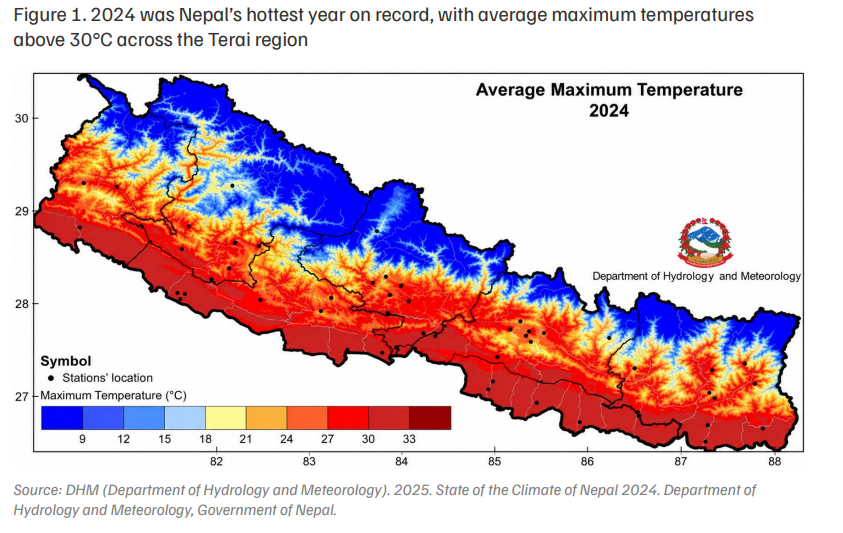
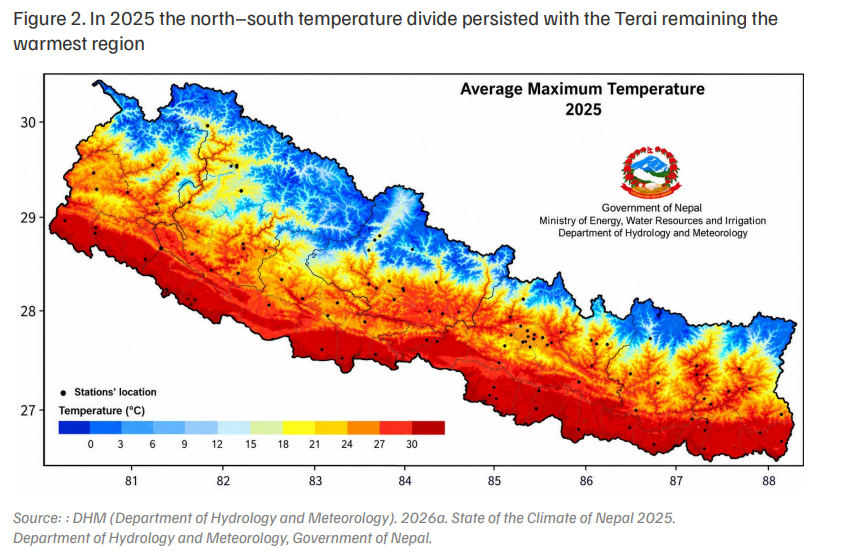
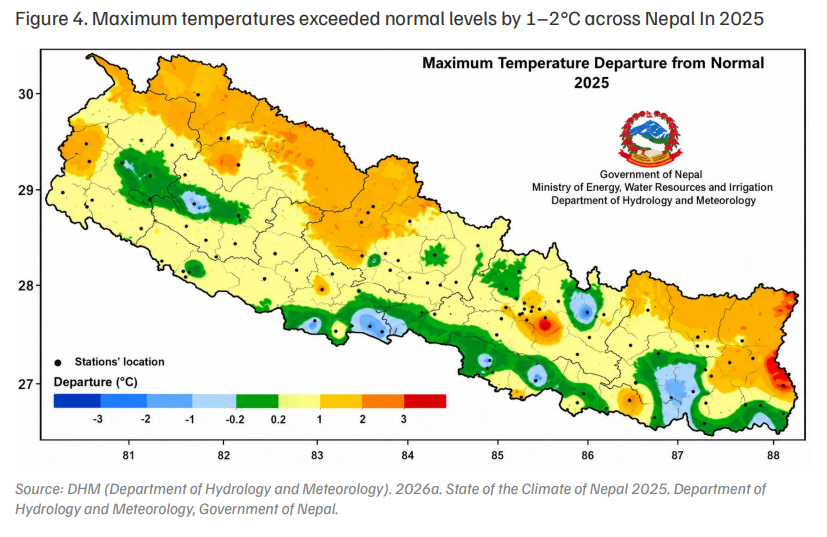
Nepal has a pronounced north–south temperature gradient, with substantially warmer conditions in the southern Terai than in the northern highlands. However, recent observations show that elevated temperatures are not confined to the Terai, with above-normal temperatures recorded across much of the country. According to DHM’s State of the Climate of Nepal 2024, the average annual maximum temperature in 2024 exceeded 30°C in the southern Terai, while remaining below 9°C in the northern regions, as shown in Figure 1. The same north–south gradient persisted in 2025, when Lahan station in Siraha recorded the country’s highest annual average maximum temperature at 32.6°C. Temperatures across most of the country were above normal in 2025, by 1–2°C in some areas, as shown in Figure 2 (DHM 2026a).
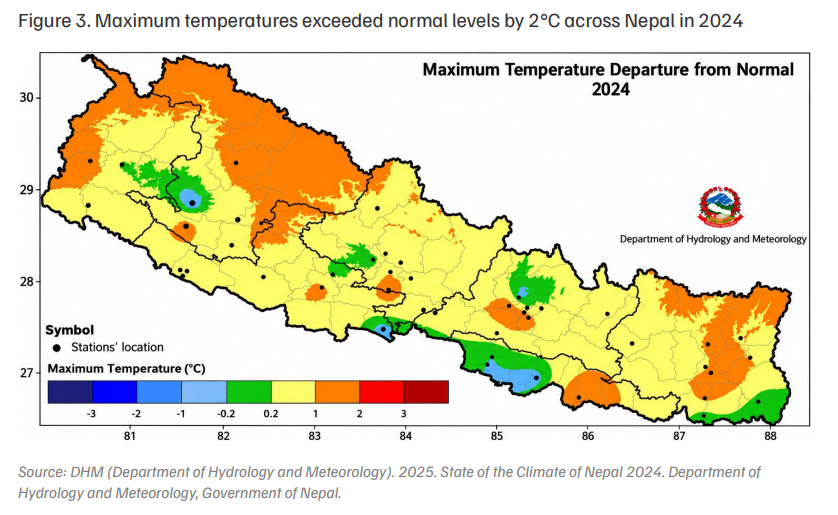
Recent observations indicate that above-normal temperatures are becoming a persistent feature across Nepal, reinforcing the country’s continued exposure to extreme heat, particularly in the southern plains. Compared with 1991–2020 long-term normal temperatures, most of the country recorded abovenormal annual maximum temperatures in 2024. Semari station in Nawalparasi West recorded the highest annual maximum temperature at 31.5°C, while Jomsom in Mustang recorded the lowest annual maximum temperature at 17.7°C (Figure 3). Dhankuta recorded the largest positive anomaly, at 2.0°C (DHM 2025). The national average maximum temperature in 2025 was marginally lower than in 2024, but abovenormal maximum temperatures persisted during most months (Figure 4; DHM 2026a), indicating a continued risk of extreme heat in the southern plains.
In heavily populated urban areas such as Kathmandu Valley and the core cities of the Terai region, including Nepalgunj, Chitwan, and Biratnagar, the urban heat island effect intensifies and prolongs heatwaves. The consequences extend beyond public health, affecting labour productivity, poorer air quality, and widening socioeconomic inequalities (Singh and Subedi 2022).
Future projections and assessment
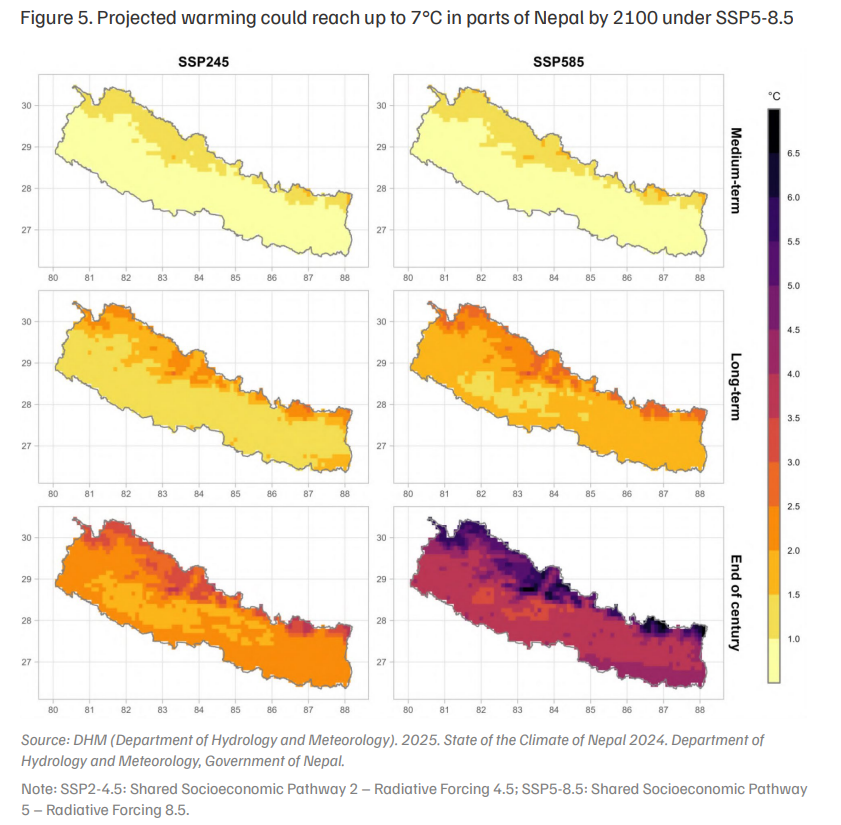
Climate projections indicate that Nepal could experience a substantial increase in average temperatures and in the frequency, duration, and intensity of extreme heat events over the course of the 21st century. According to Nepal’s NAP, which draws on the IPCC Sixth Assessment Report (AR6), mean annual temperatures are projected to rise by approximately 1.5–1.6°C during 2021–40, 2.0–2.4°C during 2041– 60, and 2.7–4.4°C during 2081–2100, depending on greenhouse gas emissions scenarios. Under the highemissions SSP5-8.5 pathway, warming could exceed 4°C by the end of the century. Such increases are expected to intensify extreme heat (MoAFE 2021).
As shown in Table 1, both temperature and precipitation are projected to increase across Nepal throughout the 21st century. By 2071–2100, annual temperatures are projected to rise by 1.72°C under Representative Concentration Pathway (RCP) 4.5 and 3.58°C under RCP 8.5, while precipitation could increase by 10.7 per cent and 23.0 per cent, respectively. Together, rising temperatures and changing precipitation patterns could intensify heat stress, increase the frequency of extreme weather events, and heighten climate risks across Nepal.
Nepal is projected to experience progressively warmer conditions alongside increasingly variable precipitation, potentially intensifying heat stress and other climate-related risks. By the 2050s, most of the country is projected to experience an increase of less than 20 per cent in annual precipitation, while warming is expected to become more pronounced over time. Relative to the 1981–2010 baseline, average annual mean temperatures in the lower belts are projected to increase by up to 1.5°C under SSP2- 4.5 and 2°C under SSP5-8.5 during the medium-term
Table 1. Temperature and precipitation in Nepal are projected to rise steadily with the sharpest increases under high emissions by the century’s end
| Climatic variable | Medium term (2016–45) |
Long term (2036–65) |
End of century (2071–2100) |
|||
|---|---|---|---|---|---|---|
| RCP 4.5 | RCP 8.5 | RCP 4.5 | RCP 8.5 | RCP 4.5 | RCP 8.5 | |
| Change in precipitation (%) | 2.1 | 6.4 | 7.9 | 12.1 | 10.7 | 23.0 |
| Change in temperature (°C) | 0.92 | 1.07 | 1.30 | 1.82 | 1.72 | 3.58 |
Source: MoAFE (Ministry of Agriculture, Forest and Environment). 2019. Climate Change Scenarios for Nepal for the National Adaptation Plan (NAP). Ministry of Agriculture, Forest and Environment, Government of Nepal.
period (2016–45). By the long-term period (2036–65), warming is projected to increase further, particularly under SSP5-8.5. By the end of the century, mean temperatures could increase by up to 4.5°C under SSP2-4.5 and up to 7°C in some areas under SSP5-8.5, with particularly pronounced warming in the HighHimalayan region (DHM 2024c). These changes point to a future in which rising temperatures and shifts in precipitation patterns may compound heat stress, particularly where higher temperatures coincide with increased humidity.
Socioeconomic drivers of heat vulnerability in Nepal
Nepal’s vulnerability to extreme heat is shaped by its demographic and socioeconomic conditions. The 2021 National Population and Housing Census recorded a population of approximately 29.16 million, with a sex ratio of 95.91 males per 100 females (NSO 2023). Gendered patterns of exposure compound heat vulnerability.Nepal’s vulnerability to extreme heat is shaped by its demographic and socioeconomic conditions. The 2021 National Population and Housing Census recorded a population of approximately 29.16 million, with a sex ratio of 95.91 males per 100 females (NSO 2023). Gender also shapes exposure and capacity to cope with extreme heat. National evidence indicates that women bear a disproportionate share of unpaid domestic and care work, with 60 per cent of women reported to engage in unpaid work during heatwaves (UN Women 2022b). This can increase exposure to heat within and around the household, particularly for women who combine domestic responsibilities with paid work. Evidence from Dhangadhi illustrates these intersecting vulnerabilities: women, particularly from marginalised and low-income communities, reported exposure to extreme heat while undertaking both paid and domestic work, with nearly half reporting that they did not receive heat alerts. Solid-fuel cooking can further increase indoor heat exposure (Subedi, Khan and Grünholz 2025).
Outmigration continues to reshape Nepal’s demographic profile. The Nepali population living abroad grew from 1,921,429 in 2011 to 2,169,478 in 2021, or about 12.9 per cent. Rising outmigration in search of better livelihood opportunities is a critical factor influencing Nepal’s slowing population growth rate (Shrestha 2022). As migrants are disproportionately working-age men, agricultural and domestic labour increasingly falls on the women, older people, and children who remain behind. Much of this work is undertaken outdoors or in poorly ventilated settings, increasing heat exposure for these populations (Kim et al. 2019).
Nepal is socioculturally diverse, with more than 125 ethnic groups and castes and 123 languages, including semi-nomadic communities such as the Raute, Chepang, and Byanshi (NSO 2023). Climate change disproportionately affects rural and mountainous regions and communities, including Indigenous Peoples, whose livelihoods depend on climate-sensitive sectors such as agriculture, forestry, and water resources (MoHA 2025). Some of these communities also face structural marginalisation and limited access to services, land, and decision-making, constraining their adaptive capacity and increasing their vulnerability to climate risks.
Heat risk in Nepal is compounded by socioeconomic vulnerability, particularly in urban areas. Residents of informal settlements face disproportionate exposure because of poor housing, limited access to water and healthcare, and a lack of green infrastructure (Giri et al. 2021). Nepal has 6.67 million households, with an average household size of 4.37 people. In 2021, only 53.1 per cent of households had an electric fan, 23.7 per cent had a refrigerator, and 37.7 per cent had internet access. About 4.5 per cent of households, or nearly 300,000 households, had no access to a toilet, while access to cooling and other household assets also remains uneven (NSO 2023). These gaps in access to basic services and household resources can compound vulnerability to heat by limiting households’ capacity to maintain safe living conditions and cope with extreme temperatures. Heat vulnerability in Nepal is therefore shaped not only by exposure to high temperatures, but also by access to cooling, essential services, household resources and timely heat-health information.
Economic structure compounds this vulnerability. Nepal’s economy is largely dependent on agriculture, remittances, and natural resources, including agricultural land, pastures, and forests. Agriculture remains central to Nepal’s economy and livelihoods, engaging around 66 per cent of the country’s population and contributing approximately onethird of the national gross domestic product (GDP) (FAO 2026). The number of full-time jobs affected by heat stress in Nepal is projected to increase from approximately 106,000 in 1995 to 391,000 by 2030. Agriculture remains the most affected sector, with the share of affected jobs increasing from 1.38 per cent to 2.62 per cent, reflecting the high exposure of outdoor and agricultural workers to rising temperatures. The construction sector is also expected to increase from 0.08 per cent to 0.23 per cent, while the share of affected jobs in services is projected to rise from 1.17 per cent to 2.05 per cent (ILO 2019). For these workers, the constraint is economic rather than informational. Among 356 outdoor workers surveyed across 8 districts, 78.6 per cent had experienced heat-related incidents, but only 43 per cent recognised the term “heatwave”, and many described having no alternative to work through the day’s heat because the day’s wage was their only income (Sharma et al. 2025). Addressing heat vulnerability in Nepal therefore requires responses that account for socioeconomic conditions alongside physical exposure.
Nepal became a federal state in 2015, devolving powers and functions across three tiers of government: the federal government, 7 provincial governments, and 753 local governments. The first local and provincial elections were held in 2017, and the tiers became operational that year. This decentralisation has been reinforced through a series of policy and legislative reforms that have strengthened subnational roles in climate change adaptation (CCA) and disaster risk reduction and management (DRRM).
On climate change adaptation, policy instruments including the National Climate Change Policy, 2019, the Local Adaptation Plans of Action (LAPA) Framework, 2019, and the Environment Protection Act, 2019, formalised climate-related roles and responsibilities across levels of government (Khatri et al. 2022). A similar shift occurred in disaster governance through the Disaster Risk Reduction and Management Act, 2017, the Disaster Risk Reduction National Policy, 2018, and the Disaster Risk Reduction National Strategic Action Plan (2018–2030) (AIDMI 2024; Vij et al. 2020).
As part of these reforms, the National Disaster Risk Reduction and Management Authority (NDRRMA) was established in 2019 under the Ministry of Home Affairs (MoHA), with a mandate to coordinate, facilitate, and support DRRM (MoHA 2022). It also serves as the secretariat to two bodies. The National Disaster Risk Management Council, chaired by the prime minister, sets strategic direction and policy, while its executive committee, chaired by the home minister, handles operations and coordination with line ministries (MoHA 2022). Provincial and local governments have, in turn, established their own DRRM structures for disaster preparedness and response at their respective levels (MoHA 2022) .
However, the devolution of authority has not been matched by comparable institutional capacity at the subnational level. Technical expertise, financial resources, and access to international climate finance remain concentrated at the federal level, limiting what provincial and local governments can actually deliver on adaptation and disaster management (Khatri et al. 2022). Heat governance in Nepal is therefore evolving within a broader governance system that still faces capacity, coordination, and resource allocation challenges. While these constraints apply across hazards, heat lags further behind. Heat has no established localised warning thresholds, sectorspecific advisories comparable to flood warnings, data in the Building Information Platform Against Disaster (BIPAD) portal, or a dedicated financing line within the Disaster Management Fund. It also remains underprioritised given its slow onset and less visible impacts (Bhandari et al. 2025). Civil society organisations and development partners have consequently played an important role in supporting local heat resilience through evidence generation, heat action planning, and anticipatory action initiatives.
Evolution of heat risk governance in Nepal
Like many countries in South Asia, Nepal has seen extreme heat become increasingly prevalent over the last two decades. Before 2024, Nepal’s heat action planning was primarily undertaken at the local level. The Nepalgunj Heat Action Plan, the country’s first city-level heat action plan (HAP), was developed by the Nepalgunj Sub-Metropolitan City in 2023 with support from the Nepal Red Cross Society (NRCS) and the International Federation of Red Cross and Red Crescent Societies (IFRC) network, including the Finnish Red Cross, American Red Cross, and the Red Cross Red Crescent Climate Centre (Kharel 2026; Subedi et al. 2023). It marked an important milestone in recognising heat as an emerging governance and public health challenge, introducing measures for preparedness, awareness generation, early warning dissemination, and protection of vulnerable populations.
The Nepalgunj Heat Action Plan builds on an earlier study that identified heat thresholds and hotspots in the city, and combines secondary analysis of health, water supply, electricity, and urban greening systems with structured household surveys, focus group discussions, key informant interviews, and a government stakeholder workshop (Subedi et al. 2022).
It is organised in two parts: seasonal heat-risk reduction and longer-term urban planning measures. Seasonal heat-risk reduction is further divided into three phases: (i) preparation from January to March; (ii) response from April to June; and (iii) after-action review from July to September. Its seasonal actions are specific and assigned which are supposed to be implemented: cooling centres operate from 10 a.m. to 4 p.m. with a capacity of 75 people, with the first located beside the daily-wage labour market in Ward 13; water ATMs, which are a coin- or card-operated dispensing unit that provides purified drinking water on demand and tanker distribution services serve water-stressed wards; the roofs of 50 tin-roofed households in Wards 18–22 have been painted white; LED boards display daily maximum temperatures; and heat messaging is broadcast in both Nepali and Awadhi. Longerterm measures cover energy, healthcare, building construction, water supply, and urban greenery.
Building on these local initiatives, the NDRRMA issued Nepal’s first federal heat plan in 2024 – the Plan of Action for Risk Reduction and Response on Measures for Protection from Heat Wave (Kharel 2026; NDRRMA 2024). The plan recognised that heatwaves require coordinated action across multiple levels of government and assigned responsibilities to lead and supporting agencies, though it remained primarily focused on emergency relief and rapid response.
The subsequent National Action Plan for Preparedness, Pre-Emptive Action and Rapid Response to Extreme Heat or Heat Wave (Loo) and Drought, 2026, adopted a broader and more anticipatory approach. It expanded heat governance beyond emergency response by introducing sector-specific actions across health, education, infrastructure, agriculture, and drought management, while prioritising vulnerable populations (NDRRMA 2026a). The plan also introduced a range of preparedness measures to reduce the health and socioeconomic impacts of extreme heat, including community-level cooling centres, restoration of green spaces, water conservation initiatives, public awareness campaigns, and measures to strengthen heat resilience in agriculture. NDRRMA has also published the National Framework for Anticipatory Action, 2026, to institutionalise anticipatory action for nine forecastable hazards, including extreme heat and heatwaves, within the federal disaster management system (NDRRMA 2026b).
Despite this progress, the devolution of responsibilities has not consistently translated into effective implementation. Technical capacity, financing, institutional coordination, and clear accountability mechanisms remain uneven across government levels. The 2026 plan advances heat governance, but offers limited guidance on dedicated financing, structural interventions, and monitoring and evaluation frameworks to measure reductions in heat risk. These gaps are most visible in the health sector, where the burden of extreme heat is direct, growing, and still poorly tracked.
Several factors help explain why health has remained peripheral. Nepal’s disaster management architecture developed around discrete, visible hazards such as earthquakes, floods, and landslides, whose casualties are immediate and attributable. Heat operates differently, contributing to cardiovascular and renal stress and exacerbating chronic conditions. Heatrelated deaths may therefore be recorded under other causes, making the overall mortality burden less visible in policy discussions. This invisibility is compounded by the absence of systematic heat-health surveillance: the Nepalgunj HAP requires hospitals to record heat-related admissions, highlighting the need for baseline data.
Heat-related health risks and preparedness
Heat stress is an emerging public health concern in Nepal. The country’s diverse topography creates considerable regional variation in heat exposure, but evidence suggests that heat-related risks are intensifying across the country. Analysis of meteorological data from 1987–2016 found an increasing heat index – a measure of how hot conditions feel based on air temperature and humidity – and a growing number of days classified within the heat-stress categories of “Caution”, “Extreme caution”, “Danger”, and “Extreme danger” (Dhimal et al. 2018). While the highest levels of heat stress occur in the Terai and southern lowlands during the pre-monsoon and monsoon seasons, rising temperatures combined with increasing humidity are extending heat-related risks to higher-elevation areas (Dhimal et al. 2018).
The health impacts of this growing exposure are already evident. In Nepalgunj Sub-Metropolitan, where average heat index values peaked at 42°C and maximum heat index levels remained within the “Danger” category from May to September 2019, more than 60 per cent of surveyed residents reported experiencing heat-related symptoms during the hot season (Bhatta and Pahari 2021). Reported symptoms ranged from relatively mild conditions, such as headaches, dizziness, skin rashes, excessive sweating, and muscle cramps, to more severe conditions, including hyperthermia, breathing difficulties, unconsciousness, and seizures. However, only 14.3 per cent of affected individuals sought care at a health facility. A more recent household survey in Nepalgunj and Siddharthanagar (n = 1,465) found a similar pattern: 23 per cent of Nepali respondents reported that they or a household member required medical attention for heat-related illness (Khan et al. 2026). However, the need for medical attention did not always translate into care-seeking. Outdoor workers, such as autorickshaw drivers and cobblers in Siddharthanagar, reported that they had never sought medical care, instead managing their symptoms with over-the-counter medication (Khan et al. 2026). These findings suggest that heat-related illness may be underreported and inadequately captured by routine health surveillance systems (Khan et al. 2026; Bhatta and Pahari 2021; Dhimal et al. 2018).
Those least likely to seek care are also the most exposed. Outdoor workers are frequently exposed to ambient temperatures between 36°C and 39°C under conditions of high humidity and strenuous physical activity, increasing the risk of heat-related illness twoto threefold (Venugopal et al. 2021 as cited in Sharma et al. 2025). Limited awareness of heatwave risks, inadequate protective measures, and the absence of workplace safeguards further exacerbate heatrelated risks. Prolonged occupational heat exposure has also been linked to chronic kidney disease of non-traditional origin (CKDnT) among workers (Thapa et al. 2026). Beyond its physical health impacts, heat exposure can affect mental health and overall well-being, contributing to anxiety, depression, and aggressive behaviour (Kovats and Hajat 2008 as cited in Sharma et al. 2025).
Extreme heat acts as a risk multiplier for other climatesensitive health outcomes. Hospitalisations for waterand vector-borne diseases are estimated to increase by 3–9 per cent and 2–12 per cent, respectively, for every 1°C rise in temperature (Shrestha 2018). Rising temperatures are further altering the distribution of disease vectors, contributing to the spread of dengue, malaria, and other vector-borne diseases in higher elevation areas previously considered at low risk (Dhimal et al. 2017). These interconnected impacts highlight that heat is not only a direct physical health hazard but also a driver of broader climate-sensitive health risks.
Recognising these challenges, Nepal has increasingly integrated climate-sensitive health risks into national health policies and planning frameworks. Key policies and plans, including the National Health Policy, 2019, the Nepal Health Sector Strategic Plan (NHSSP 2023–2030), and the Health National Adaptation Plan (H-NAP): Climate Change Health Adaptation Strategy and Action Plan (2023–2030), recognise the health sector as highly vulnerable to climate change and outline measures to strengthen health system resilience. Nepal has also introduced climatespecific initiatives, including climate-health focal points within the Ministry of Health and Population (MoHP) and early warning mechanisms (Reddy et al. 2026). Alongside these national frameworks, several cities have developed HAPs that specifically focus on health as part of their preparedness measures. These policy commitments and plans rest on an institutional arrangement that spans multiple agencies and levels of government, as summarised in Figure 6.
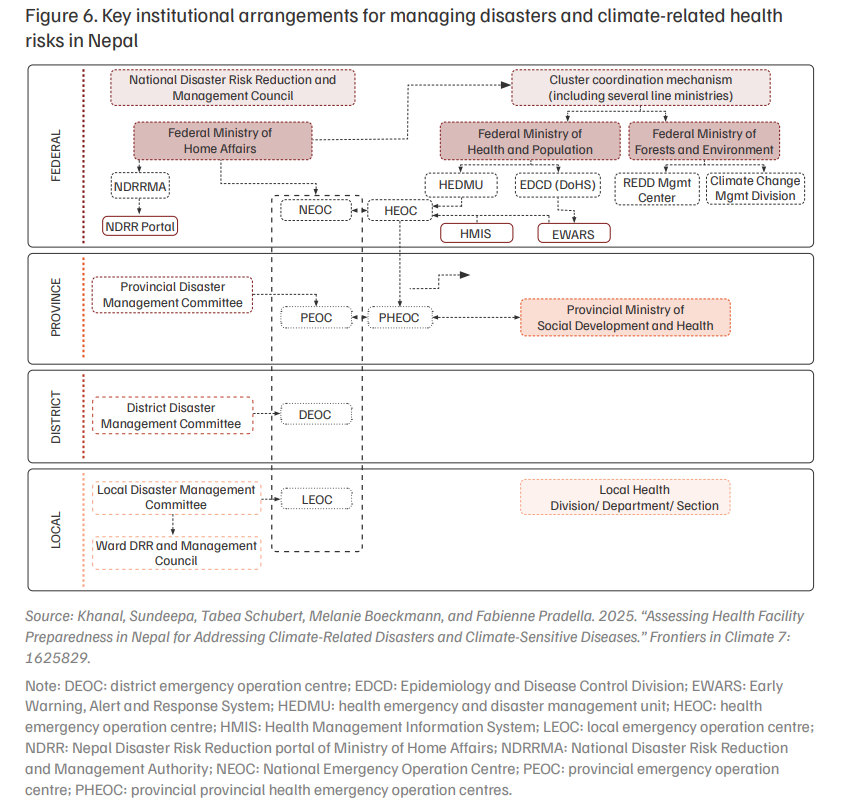
While Nepal has shown leadership in developing plans and policies, weak coordination across federal, provincial, and local levels, unclear institutional mandates, health workforce shortages, and the uneven distribution of health personnel continue to hinder effective implementation (Wasti et al. 2023). Similarly, limited managerial capacity, inadequate prioritisation of climate-health risks, and limited climate-health expertise undermine preparedness and service delivery (Reddy et al. 2026). Many health facilities lack climate-resilient infrastructure and remain insufficiently prepared, while financing constraints, including delayed fund disbursement, inefficient budget utilisation, and underinvestment in preparedness and adaptation, further limit resiliencebuilding efforts (Khanal et al. 2025; Wasti et al. 2023).
The expansion of District Health Information Software (DHIS-2) and electronic reporting systems has strengthened Nepal’s Health Management Information System (HMIS), but challenges related to data quality, verification, and workforce capacity persist (Wasti et al. 2023). Surveillance of heat-related health outcomes remains a significant gap. Nepal’s Early Warning and Reporting System, its principal sentinel surveillance mechanism, covers six priority communicable diseases but does not capture heatrelated illness. Nepal also has no established system for recording heat-related mortality (Dhimal et al. 2018; EDCD 2026). Recent assessments continue to call for an integrated heat-health surveillance system that links DHM alerts to MoHP reporting, indicating that this gap remains open. This absence of standardised reporting limits the ability to quantify the true burden on health and to assess the relationship between heat exposure and health outcomes (Dhimal et al. 2018). Climate resilience initiatives, including early warning systems and disease-specific interventions, remain fragmented and are not yet fully integrated into broader health system planning and governance (Reddy et al. 2026).
Strengthening heat-health preparedness will therefore require moving beyond policy recognition towards institutionalisation and implementation. Three priorities are particularly important. First, establish a comprehensive heat-health surveillance system that integrates meteorological, health, and disaster-risk information to support evidence-based decisionmaking and early action. Second, embed heat-health preparedness within routine health system planning and service delivery through stronger coordination mechanisms, dedicated financing, climate-resilient infrastructure and preventive care, and workforce capacity building. Third, strengthen communitybased preparedness to support risk communication, early action, and outreach to vulnerable populations. Nepal’s extensive Female Community Health Volunteers (FCHVs) network is already an important communitylevel asset for building heat resilience, particularly in underserved and remote areas. More than 50,000 volunteers, present in every ward of the country, could be trained to recognise heat illness, refer and report severe cases, and thereby extend surveillance into communities (MoHP 2025).
Extending forecasting capacities and the early warning system
The DHM, under the Ministry of Agriculture, Forest and Environment (MoAFE), is mandated to monitor hydrological and meteorological conditions across Nepal. It generates and disseminates timely information on extreme weather events to support early action and reduce loss of life and property (DHM n.d.a). The Hydrology and Meteorology Policy, 2024, provides the overarching framework for planning and implementing measures to address extreme weather events, including extreme heat, and guides the issuance of early warning bulletins to support preparedness and response (DHM 2024a).
The DHM has the technical capacity to generate both nowcasts and extended-range forecasts, including forecasts for urban areas. For extreme heat, DHM issues special bulletins on hot days and heatwave conditions, monitoring their evolution and providing outlooks on their likely intensity and duration using an absolute threshold of 40°C and percentilebased categories (DHM 2026a; DHM n.d.b). A day is classified as a hot day, very hot day, or extreme hot day when the observed maximum temperature exceeds the station’s 90th, 95th, or 99th percentile, respectively, based on April–September records from 1981–2020. A mild, moderate, or extreme heatwave is declared when the maximum temperature exceeds the corresponding threshold for three or more consecutive days (DHM n.d.b). The Weather Research and Forecasting (WRF) numerical modelling system supports forecasting, including DHM-WRF, DHMWRFDA (WRF Data Assimilation), and DHM-EWS (early warning system), which generate forecasts for key variables such as precipitation, temperature, wind, and wind gusts (DHM n.d.c). The models are run four times daily using Global Forecast System (GFS) data at 00, 06, 12, and 18 UTC to generate regional mesoscale predictions (DHM n.d.c). They provide a three-day forecast using a 9 km parent domain with a 3 km nested domain (DHM n.d.c).
The DHM disseminates information through the NDRRMA, provincial and local governments, district disaster management committees (DDMCs), security agencies, and development partners (NDRRMA 2026a). At the local level, DDMCs and local governments prepare context-specific advisories and disseminate heat-risk information to communities through multiple channels, including radio, television, social media, loudspeakers, local-language communications, and helplines, to support community preparedness and response (NDRRMA 2026a). In practice, however, the heat warning structure remains fragmented and insufficiently locally relevant, limiting its ability to reach vulnerable groups with actionable guidance (Khan et al. 2025).
Local and humanitarian actors are beginning to complement Nepal’s existing heat-warning system with impact-oriented thresholds that connect forecasts to predefined early actions. In Nepalgunj, for example, the heat index (HI) has been identified as an early-action trigger, with an HI of 47 proposed as a critical impact threshold (Subedi et al. 2022). The NRCS, supported by the IFRC, has also developed simplified early action protocols (SEAPs) for Biratnagar, Nepalgunj, Siddharthanagar, and Dhangadhi. Using city-specific percentile thresholds, these protocols connect heatwave forecasts with predefined preparedness and response measures to facilitate timely, coordinated action at the local level (IFRC 2025).
These efforts are also being complemented by a broader shift towards impact-based forecasting at the national level. With support from the Regional Integrated Multi-Hazard Early Warning System (RIMES) and the South Asia Hydromet Forum (SAHF), Nepal launched a national demonstration of impactbased forecasting (IBF) for extreme heat in 2026. The initiative aims to strengthen early warning systems by linking forecasts with information on exposure, vulnerability, impacts, and sector-specific early actions to support the development of a people-centred Heatwave Early Warning and Early Action System (HEWEAS) and enable anticipatory action before heat impacts occur (RIMES 2026).
NGOs, civil society organisations, and community groups contribute to building heat resilience in Nepal, particularly by reaching vulnerable populations through locally appropriate solutions. Their work spans awareness-raising, community preparedness, coping strategies, and nature-based and low-cost adaptation measures. The case studies below illustrate how these approaches are being implemented in different local contexts and highlight lessons that could inform heat-resilience efforts elsewhere.
Red Cross heat action initiatives in Nepal
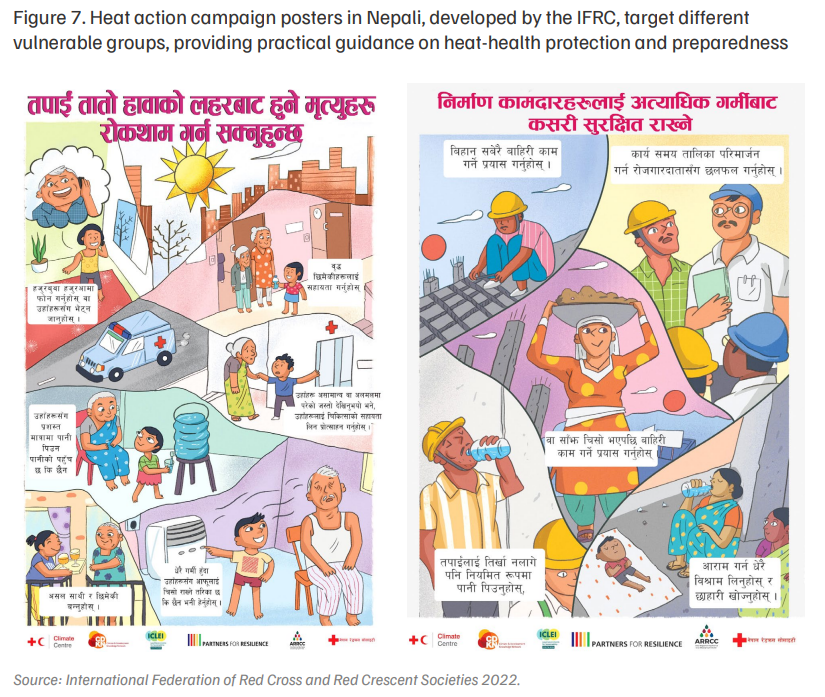
The NRCS, in partnership with the International Federation of Red Cross and Red Crescent Societies (IFRC), the American, British, and Finnish Red Cross societies, and with technical support from the Red Cross Red Crescent Climate Centre, has implemented heat-risk preparedness and response initiatives in four heat-affected cities: Nepalgunj, Siddharthanagar, Biratnagar, and Dhangadhi. Its public awareness campaigns reached more than 882,724 people through brochures, posters, pamphlets, radio, television, social media, public announcements, kiosks, and LED display boards. The IFRC has also developed Nepali-language heat action campaign posters covering at-risk groups, heat-stress symptoms, first aid, and protective behaviour (Figure 7). These materials are freely available through the Global Disaster Preparedness Center’s heat toolkit, alongside guidance for conducting local heat campaigns. These efforts focused on increasing awareness of extreme heat risks and promoting practical measures to reduce heat exposure (NRCS 2025).
The initiative also supported anticipatory action and community-level adaptation, reaching more than 4,443 people through household visits, health checkups, heat warning communication, safe drinkingwater stations in schools, and support for a cooling centre in Nepalgunj. As a pilot adaptation measure, cool roofs were installed in 14 households and two schools, benefiting 637 people.
The programme also focused on institutional capacity and heat action planning. In total, 287 people were reached through capacity-building activities for local governments and stakeholders, including workshops for occupationally exposed groups and teachers. The programme supported the development of HAPs for Siddharthanagar, Biratnagar, and Dhangadhi by undertaking consultations, data collection and analysis, the development of heat thresholds and triggers, and validation workshops, involving more than 204 people. In addition, documentation and knowledge-sharing activities included reviewing the implementation of HAPs, developing a heat action video, and marking Heat Action Day. Overall, the initiative demonstrates an integrated approach combining public awareness, anticipatory action, cooling interventions, capacity building, and heat action planning to strengthen heat resilience in Nepal.
ZCRA’s work in Nepal
The Zurich Climate Resilience Alliance (ZCRA) is a multi-sectoral partnership powered by the Zurich Foundation, working across 24 countries, including Nepal. Its nine members are Zurich Insurance Company Ltd, Concern Worldwide, the IFRC, Mercy Corps, Plan International, Practical Action, and the Institute for Social and Environmental Transition (ISET)-International, with the International Institute for Applied Systems Analysis (IIASA) and the London School of Economics and Political Science (LSE) Grantham Research Institute as research partners. In Nepal, Practical Action and Mercy Corps lead implementation, working to strengthen locally led adaptation and climate resilience financing (ZCRA 2025). As documented in the ZCRA’s Pathways to Locally Led Adaptation report, Mercy Corps’ budget tracking helped Madhesh Province and five municipalities commit 5 per cent of sectoral budgets to climate change adaptation and disaster risk reduction (CCA/DRR). The report also notes that Practical Action’s Climate Resilience Measurement for Communities (CRMC) assessments across 57 communities in 13 municipalities informed municipal planning and contributed to increased CCA/DRR allocations and investments in heat- and floodresilience measures (Lehtman and Tyldesley 2026).
Practical Action has worked on climate resilience in Nepal through community-based disaster risk reduction and climate adaptation initiatives. Its work has included strengthening end-to-end flood early warning systems, community preparedness, and locally appropriate resilience measures such as parametric insurance, bio-dykes, and livelihood diversification. Building on this foundation, the organisation is extending its expertise to extreme heat through heat alerts, the development of HAPs, and the application of artificial intelligence (AI) to strengthen risk identification, forecasting, communication, and decision-making. It is also exploring parametric insurance and other risk-financing approaches to address heat-related impacts, while supporting locally informed planning and responses that account for vulnerable populations’ needs (ZCRA 2025).
Mercy Corps, which began operations in Nepal in 2005, has worked to strengthen the absorptive, adaptive, and transformative capacities of vulnerable individuals and communities through disaster risk reduction and climate adaptation. Its 2025 study of 347 public schools across 79 municipalities in Madhesh Province assessed heat vulnerability by examining the impacts of heatwaves on students and teachers, existing coping mechanisms, and institutional gaps in preparedness and adaptation.
The findings can inform efforts to strengthen schoollevel heat resilience, as well as targeted adaptation measures and policy action (Mercy Corps Nepal 2026; Mercy Corps Nepal 2025).
Resilience, Adaptation, and Inclusion (RAIN) programme in Nepal
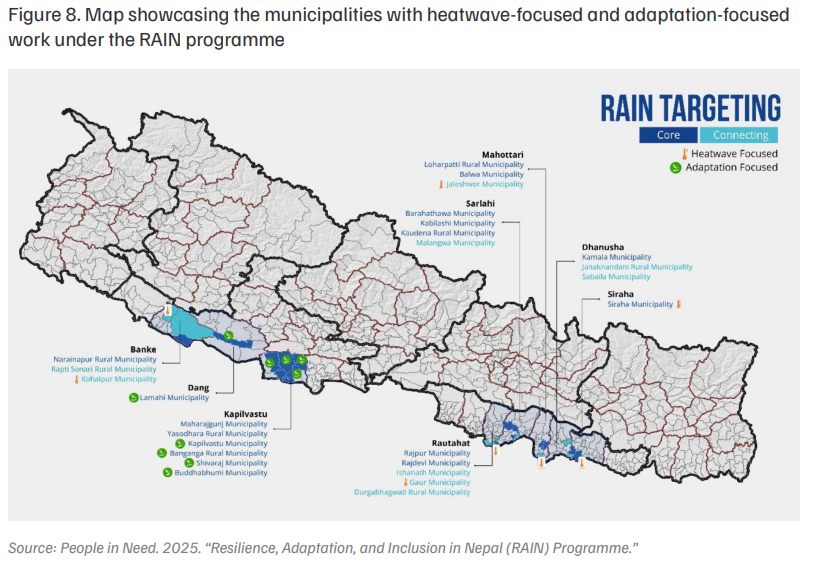
The Resilience, Adaptation, and Inclusion (RAIN) programme in Nepal is a climate change adaptation and disaster risk management initiative funded by the UK’s Foreign, Commonwealth and Development Office (FCDO) and led by People in Need and other partners. The programme’s primary goal is to build the resilience of communities at risk of natural hazards and to strengthen the Government of Nepal’s capacity to plan, budget, and implement adaptation policies and measures. It targeted 26 local governments (LGs), comprising 16 in Madhesh Province and 10 in Lumbini Province, as shown in Figure 8. The programme piloted a heat early action standard operating procedure (SOP) in June 2025 across the municipalities of Gaur, Jaleshwor, and Siraha in Madhesh Province to manage extreme temperature risks. Activated in June 2025 in response to a DHM forecast of a severe heatwave, the pilot established evidence-based trigger thresholds at local 95th maximum temperature percentiles: 38.5°C in Gaur, 38.05°C in Jaleshwor, and 36.5°C in Siraha. These pre-identified thresholds helped coordinate local government bodies, land rights forums, and Red Cross chapters to mobilise field preparations ahead of the heat spike, ensuring emergency actions were deployed before the community suffered the worst of the heatwave (Neupane 2025; People in Need 2025).
The subsequent rapid interventions focused on vulnerable groups, including street vendors, rickshaw riders, landless families, and outdoor daily-wage labourers in crowded public spaces. More than 17,500 outdoor workers accessed safe drinking water through temporary hydration stations, and trained
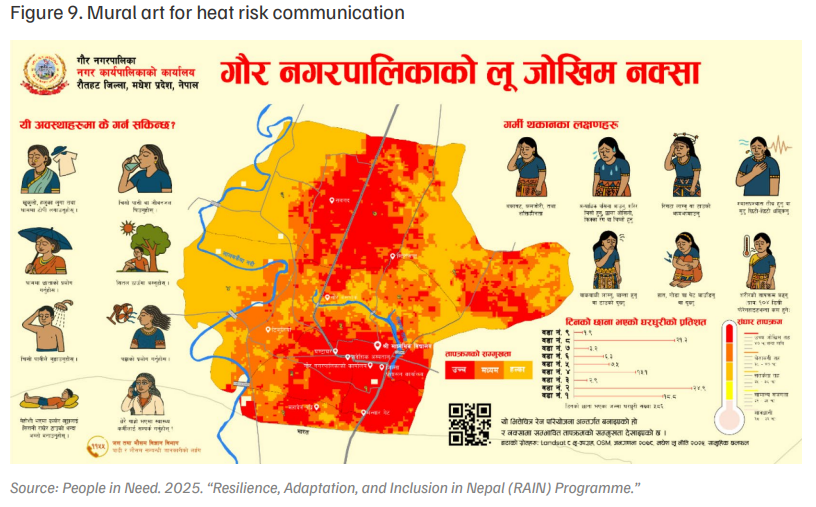
FCHVs conducted door-to-door visits to provide health checks and heatwave advice to over 1,800 marginalised individuals. Risk communication was localised through heat-safety jingles broadcast in Bajika and Maithili on community radio stations. In Gaur Municipality, a public Lu Jokhim Naksa (heat risk map) mural was also created to illustrate heat exhaustion symptoms and safety precautions in the local language (Figure 9).
The intervention engaged women and girls to identify gender-specific vulnerabilities, including domestic workloads, mobility barriers, and privacy concerns in shelters. These findings informed the training of FCHVs to provide targeted heat-health advice to vulnerable households. FCHVs were also mobilised as community-level channels for communicating heathealth information. RAIN is collecting community-level health data to examine the relationship between reported symptoms and local temperatures, with the aim of informing DHM alert thresholds. In parallel, the programme is implementing 32 small-scale adaptation interventions, including managing local ponds, developing agroecological villages, establishing drinking-water schemes, and planting trees to support longer-term cooling and climate resilience.
Conclusion
Extreme heat has rapidly emerged as a critical public health, environmental, and developmental challenge across South Asia, shifting from seasonal discomfort to a compounding systemic threat. This is driven by the convergence of high ambient temperatures, rapid and unplanned urbanisation, and deeply entrenched socioeconomic inequalities. The macroeconomic and human consequences of these changes are significant.
Nepal needs to transition from a largely reactive response to extreme heat towards a more proactive and integrated approach to heat-health action. This requires strengthening institutional preparedness across levels of government while ensuring that interventions respond to the differing risks faced by populations and places. The report highlights five priorities.
• Strengthen heat-health surveillance. A clearer, more systematic on mortality and morbidity would underpin an effective response. There is scope for the Ministry of Health and Population, in coordination with the DHM, to strengthen reporting of heat-related morbidity and mortality, beginning with hospitals in the heat-prone districts of the Terai. Improved surveillance would provide the evidence needed to understand the health burden of heat and to inform preparedness and resource allocation.
• Integrate heat-health surveillance into the early warning system. Forecasts are most useful when they trigger a clear response. Strengthening the link between meteorological information, locally appropriate heat-health thresholds, and healthsector surveillance would allow rising heat risk to translate into predefined public health actions. These could include activating health facilities, issuing targeted alerts, and directing resources towards locations where health impacts are emerging.
• Strengthen local capacity and coordination for heat action. The effectiveness of national guidance ultimately depends on the capacity of provincial and local governments to act. Local heat-health preparedness could be strengthened by clarifying institutional responsibilities, building technical capacity, and establishing coordination mechanisms across health, disaster management, meteorological, and local government authorities. Locally developed heat-health action plans can then translate national guidance into measures suited to local risks, resources, and populations.
• Mainstream heat risk across sectors. Heat resilience cannot rest on seasonal advisories alone. Embedding heat considerations into the decisions that shape exposure and coping capacity, including health-system preparedness, urban planning, workplace safety, housing, and disaster risk management. It would allow longer-term investments in cooling, shaded and heat-resilient public spaces, safer workplaces, and resilient health facilities to complement emergency responses.
• Apply a differential vulnerability lens to heat-health action. A single, uniform heat response is unlikely to serve everyone equally. Heat-health planning benefits from accounting for how occupation, income, gender, location, access to services, and other socioeconomic conditions shape people’s exposure and ability to respond. Policies and interventions should prioritise groups facing higher exposure or limited capacity to adapt, including outdoor and informal-sector workers, low-income households, and communities in heat-prone areas. Existing community networks, including the Female Community Health Volunteers (FCHVs), offer a means to strengthen household-level outreach, risk communication, and locally generated evidence on how heat is experienced across different groups. FCHVs already contribute to community-based surveillance and risk communication, providing an established platform that could be strengthened for heat-health action (MoHP 2025; WHO 2024).
The GHHIN South Asia Hub can support these priorities in Nepal by convening stakeholders, strengthening the regional evidence base, facilitating knowledge exchange, and building capacity for heat-health action. By connecting Nepal, Bhutan, Bangladesh, and India around shared priorities and solutions, the Hub can facilitate institutional collaboration and cross-country learning, helping countries strengthen sustained and anticipatory heathealth resilience across South Asia.
The southern Terai is Nepal's main heat hotspot. Average maximum temperatures there exceeded 30°C in 2024, and the region recorded 50 extremely hot days above 40°C. The urban heat island effect intensifies heatwaves in Kathmandu Valley and Terai cities such as Nepalgunj, Chitwan and Biratnagar, and rising humidity is extending heat risk to higher-elevation areas.
The NDRRMA issued the country’s first federal heat plan in 2024 and a broader national plan covering extreme heat and drought in 2026. The country also has heat action planning at a local level, including Nepalgunj 2023 HAP. The DHM operates forecasting models and issues heatwave alerts.
The report sets out five priorities for long-term heat resilience in Nepal: strengthening heat-health surveillance, integrating it into the early warning system, building local capacity and coordination, mainstreaming heat risk across sectors, and applying a differential vulnerability lens. Together, these would help Nepal move from a largely reactive response to a proactive approach that protects those most at risk.
Community organisations and NGOs are complementing national efforts with locally grounded heat action. The Nepal Red Cross Society has reached about 880,000 people through awareness campaigns and supported heat action plans in three cities. Community assessments under the Zurich Climate Resilience Alliance helped Madhesh Province commit budgets to adaptation. The RAIN programme piloted local heat thresholds and hydration stations for more than 17,500 outdoor workers. These efforts show how local partnerships can turn national guidance into practical protection.
Living with Heat in Bangladesh
Unlocking Finance for Nature-based Solutions (NbS) in Indian Cities