Home
Council on Energy, Environment and Water Integrated | International | Independent
ISSUE BRIEF
12 February, 2024 |

HAVE A QUERY?

author image
Programme Associate

HAVE A QUERY?

author image
Programme Associate

Sign up for the latest on our pioneering research

REPORT
20 February, 2024 |

HAVE A QUERY?

Frequently Asked Questions

  • What is the National Clean Air Programme?

    In January 2019, the Ministry of Environment, Forest and Climate Change (MoEFCC) introduced the National Clean Air Programme (NCAP) to improve air quality in 131 cities, including non-attainment cities and Million Plus Cities, across 24 States/UTs. The programme envisages achieving reductions up to 40 per cent or achievement of National Ambient Air Quality Standards for Particulate Matter10 (PM10) concentrations by 2025-26.

  • What is the difference between emission inventory and source apportionment?

    Emission Inventory is a detailed record of the amount and types of pollutants released into the air from various sources. It provides detailed quantitative data on pollutants in units such as kilograms or tons per unit of activity. Source Apportionment is the process of determining the contribution of different sources to observed air pollution levels. It helps identify the percentage contributions of different sources to observed air pollution levels, often measured in micrograms per cubic metre or as a percentage of the total pollution load.

  • What are hyperlocal air pollution sources?

    Hyperlocal air pollution sources refer to specific, localised, and recurring sources contributing to air pollution in a specific geographic area. Hyperlocal sources have a more immediate and concentrated impact on the air quality of a particular neighbourhood and, consequently, the overall city. We have attempted to capture 17 hyperlocal sources, including open waste burning, construction sites without safeguards, road dust, diesel generator (DG) sets, and construction and demolition (C & D) waste dumps.

  •  

HAVE A QUERY?

Sign up for the latest on our pioneering research

Workshop
National Workshop on Improving Air Quality Management through Modelling and Forecasting

15 - 17 March 2024 | 0900 - 1730 IST

CEEW, UrbanEmissions.Info, and IIT Goa are organising a 3-day National Workshop on Improving Air Quality Management through Modelling and Forecasting from 15 - 17 March 2024 in Goa. Inviting research scholars enrolled in M.Tech/MS/PhD programs and researchers working on air quality in Indian think tanks to apply.

The workshop will enable the participants to perform air quality modelling using chemical transport models through hands-on training. The participants will also have the opportunity to learn and experiment with the SIM-air integrated modelling tools. The deadline for application is 24 February 2024.

Eligibility:

M.Tech/MS/PhD students enrolled in programs related to atmospheric sciences, air quality, computational sciences, mathematical modelling and related fields or researchers working on air quality in Indian think tanks. The applicants must be comfortable operating a Linux system and should have experience in programming in any language.

Selected candidates will be provided with food, accommodation and a reimbursement of travel expenses of upto INR 10,000.

For Event Queries

Sonam Gairola

Senior Communications Associate
[email protected]

Ensuring Water Security

U20 Task Force
July 2023 |

Suggested citation: U20 Task Force. 2023. Ensuring Water Security. Urban 20 2023 White Paper.


Overview

This white paper was drafted within the priority area ‘Ensuring Water Security’ of the sixth cycle of the Urban 20 (U20) — under India’s G20 Presidency. — It aims to facilitate a change in the current water management practices in cities that are typically engineering-driven, carried out in ‘silos’, and rely on grey infrastructural interventions. For this purpose, it proposes tangible recommendations for strengthening integrated water management in cities. This includes actions to operationalise contemporary global initiatives and narratives for urban water security under a local institution and biophysical context.

Key Highlights

  • G20 countries report that at least 95 per cent of their urban population is covered by safe drinking water, but only nine countries claim 100 per cent coverage. Also, about 80 per cent of the urban population in G20 countries is covered by basic and safely managed sanitation services. However, only seven out of the G20 countries report that at least 80 per cent of their urban households used water which is safely treated.
  • Most of the G20 countries have low reuse of treated used water even though a significant percentage of it is treated. For instance, France, Italy, China, Germany, and the UK treat more than 95 per cent of used water but reuse is only 2-3 per cent in Italy and Germany, about 8 per cent in the UK, and 17-18 per cent in China and France. In a few countries, while the percentage of reuse is high, the volume of used water treated is very low.
  • G20 nations are vulnerable to climate-induced extreme events, especially floods. China, India, Indonesia, and Japan have the highest proportion of the population vulnerable to flooding. In eleven of the G20 countries, i.e., Argentina, Australia, Brazil, Canada, France, Mexico, Japan, Republic of Korea, Saudi Arabia, USA, and the UK, more than 80 per cent of the population live in urban areas and hence are at most risk to extreme events.
  • Conventional urban water management protocols practiced in some G20 countries may not necessarily be appropriate for addressing new and emerging issues such as those posed by climate change to water resources. Even those cities and countries that have performed well in water management in the past will need to be agile in terms of adapting their systems to respond to changing climate. Thus, there is a need to adopt an integrated urban water management framework.
  • In urban areas of many G20 countries, especially in smaller cities, there is a lack of awareness and knowledge about the need and benefits of integrated urban water management. Water managers are not equipped well enough to handle contentious tradeoffs between economic development and environmental protection. Further, the institutional inertia and silos within the government set-up, paucity of financial resources, lack of data for informed decision-making, and piecemeal approach for addressing problems in part make it challenging to coordinate and work together towards the implementation of integrated urban water management strategies.

Key Highlights

  • Re-imagine the role of water managers. Integrated urban water management requires a transdisciplinary approach for implementation, which means future water managers need to know different disciplines in addition to engineering including ecology, urban design, sociology, and landscape architecture.
  • Leverage urban planning instruments to promote integrated urban water management. Traditionally, such plans have been solely concerned with land-use planning. However, in recent years these plans have emerged as a strategic enabler to influence the direction cities will take to make them more vibrant, liveable, and productive.
  • Strengthen the data ecosystem within cities. The data attributes critical for integrated water management planning are land use maps, sources of water, water users by categories, water demand and wastewater infrastructure, drainage network and infrastructure, green cover, spatial spread of water bodies, source water quality, and the river ecosystem health.
  • Integrate nature-based solutions in urban water management. Ecosystems such as urban forests, wetlands, water bodies, rivers, and streams, if in a healthy state, can provide several vital inputs for implementing integrated urban water management.
  • Transition from mono-functional to multi-functional infrastructure. For example, the rejuvenation of a water body (e.g., a lake) can be planned in such a way that it offers multiple benefits—flood control, groundwater recharge, habitat for biodiversity, and creation of recreational spaces, among others.
  • Invest in social and human capital. Cities must invest in dedicated citizen engagement initiatives to nurture a brand of water-sensitive communities and citizens. These initiatives must not stop at the typical IEC campaigns and should seek to proactively engage citizens in co-management of the urban water sector. This is important to make that shift from ‘citizens as spectators’ to ‘citizens as actors.’
  • Explore non-traditional financing sources. As the financing requirement for water infrastructure required for integrated urban water management is significant, cities in G20 nations must start exploring non-traditional avenues of securing these funds such as Viability Gap Funding, Value Captured Finance, Municipal Bonds, etc.
  • Encourage city partnerships and networks. Given their convening power and authority, central governments may need to take the lead in creating such networks and partnerships. Their role should be limited to facilitation, allowing the network to draw up its agenda which will ensure the autonomy of the network whilst still anchored in the national machinery.
"Given that about 2.2 billion people worldwide don’t have access to safe drinking water, the way G20 nations approach the pursuit of integrated urban water management will have far-reaching implications within the G20 community and beyond, especially to avert humanitarian, economic, and developmental challenges."

Sign up for the latest on our pioneering research

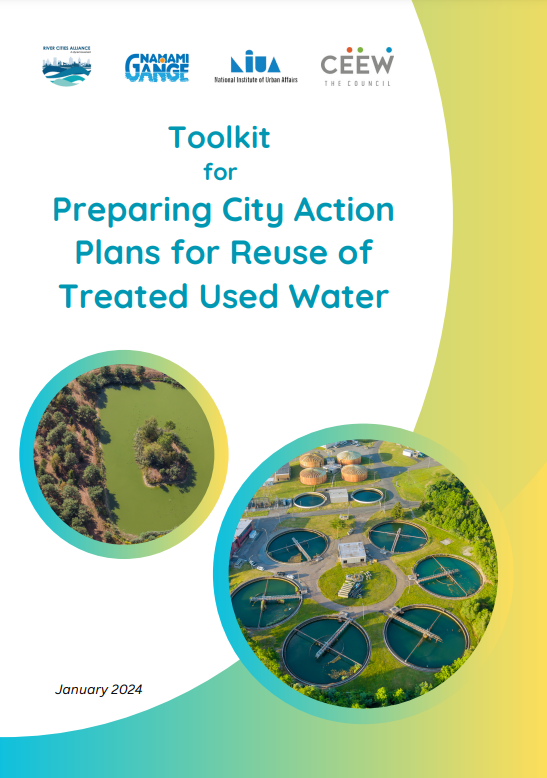
Toolkit for "Preparing City Action Plans for Reuse of Treated Used Water"

National Institute of Urban Affairs, National Mission for Clean Ganga and Council on Energy, Environment and Water
January 2024 | ,

Suggested citation: National Institute of Urban Affairs (NIUA), National Mission for Clean Ganga (NMCG), Council on Energy, Environment and Water (CEEW). 2024. Toolkit for "Preparing City Action Plans for Reuse of Treated Used Water". Delhi, India: National Institute of Urban Affairs (NIUA).


Overview

India is witnessing high pressure on its limited freshwater resources. As per India's Composite Water Management Index, about 70 per cent of the country's water supply is contaminated (NITI Aayog 2019). Thus, both the quantity of freshwater available and its quality are of concern. The situation will likely worsen in the urban areas with rapid unplanned urbanisation and industrialisation putting pressure on stressed freshwater resources. Therefore, there is a need to look beyond the conventional freshwater supplies. Reusing treated used water offers one such opportunity for cities.

This toolkit aims to guide Indian cities in adopting a step-by-step approach to planning for treated used water (TUW) reuse by assessing the current availability of treated used water, identifying suitable avenues for its reuse, and implementing reuse projects on the ground.

Key Highlights

  • The overall objective of this toolkit is to assist member cities of the River Cities Alliance (RCA) and other cities in India in preparing an action plan for managing TUW within their city limits. While the central focus is on the Ganga basin cities, the document also applies to other cities in India.
  • The major components of the toolkit include assessment of existing used water infrastructure in the city (both centralised and decentralised), mapping the existing TUW available for reuse, identifying reuse avenues and setting targets, planning and designing interventions, enabling policy and regulatory measures, and monitoring and evaluation.
  • It also focuses on business models that can be adopted by urban local bodies as well as engaging local communities through awareness campaigns and public consultations to implement reuse projects successfully.
"The toolkit has been developed as a guiding document for urban local bodies in India, providing a step-by-step approach for developing long-term and sustainable treated used water reuse plans at the city level."

Sign up for the latest on our pioneering research

Mechanisms for Mobilisation of Timely and Adequate Resources for Climate Finance

Indian Institute of Management, Ahmedabad, International Finance Corporation, Council on Energy, Environment and Water
June 2023 | ,

Suggested citation: Indian Institute of Management, Ahmedabad (IIM-A), International Finance Corporation (IFC), Council on Energy, Environment and Water (CEEW). 2023. Mechanisms for Mobilisation of Timely and Adequate Resources for Climate Finance.


Overview

Estimates of resource requirements for climate action to meet the goals of the Paris Agreement suggest that trillions of dollars per year are needed in the medium to long term. Global climate finance flows have not kept pace with these requirements and existing flows remain inadequate in both scale and type in addressing the climate finance needs of developing countries. Given the scale of investments needed, public capital has an important role to play in crowding in private investments for climate action. At the same time, given the developmental challenges faced by developing countries and their increasing debt vulnerabilities, international public capital channelled through institutions such as multilateral development banks (MDBs) will have a key role to play in unlocking private investments.

This input paper to the G20’s Sustainable Finance Working Group (SFWG) outlines a spectrum of instruments already in existence that could be utilised to mobilise finance for mitigation and adaptation. It also proposes measures for accelerating the flow of climate finance.

Key Highlights

The paper elaborates on the following set of instruments that are either already used or could be useful for mobilising climate finance.

  • Grants: These do not impose any financial obligation on the recipients.
  • Concessional finance: This is finance provided at below market rates.
  • Equity funds: These refer to investments in equity securities of companies to advance mitigation or adaptation activities.
  • Structured funds: These comprise multiple equity tranches, characterised by varying levels of investment risk.
  • First-loss capital: First-loss capital takes a junior role in the cash flow waterfall and acts as a catalyst to crowd in private investment.
  • Sustainability-linked loans/bonds: These instruments are used to raise capital whose terms are linked to pre-defined sustainability key performance indicators (KPIs).
  • Syndicated loans: Loan syndication allows for spreading of risks across multiple lenders.
  • Guarantee: The entity providing the guarantee bears partial or total loss in the event of default.
  • Securitisation: This refers to the issuance of asset-backed securities against a pool of underlying assets such as green loans.
  • Low carbon investment trusts: These allow initial investors to offload operational assets to less risk-averse investors.
  • Green bonds: These are fixed-income instruments that are used to raise debt capital which is earmarked for climate or environmental projects.
  • Green loans: This is a loan raised for eligible green projects.
  • Risk sharing facility: Typically offered by development finance institutions, these facilities help mitigate risks for local financial institutions through guarantees, co-financing etc. Other risk sharing facilities could also target non-project specific risks (e.g., currency, offtaker, political).
  • Insurance and reinsurance mechanisms: By providing second-loss guarantees to re-insurers, MDBs can help enhance the capacity of local institutions to insure climate risks.
  • Credit default swaps: If offered on concessional terms, these instruments can incentivise debt financiers to provide capital on superior terms.

Recommendations

While the aforementioned instruments exist, their current application does not mobilise climate finance at the levels required. The following are some proposed measures for mobilising climate finance at pace and scale.

  • Enhance the scale of concessional finance to fund de-risking instruments: International development finance institutions such as MDBs should tap new sources such as philanthropies as well as enhance their own capacities to deliver concessional finance to fund more de-risking instruments that crowd in private capital.
  • Deploy structured funds at scale: Collective investment vehicles with multi-tiered equity structures can be an effective means of mobilising private investments if MDBs take up junior positions in the cash flow waterfall.
  • A Global Clean Investment Risk Mitigation Mechanism (GCI-RMM) that pools risk across projects and geographies can lower the cost of mitigating non-project specific risks (currency, offtaker, and political).
"A Global Clean Investment Risk Mitigation Mechanism that pools risk across projects and geographies can lower the cost of mitigating non-project specific risks."

Sign up for the latest on our pioneering research

Unlocking India’s Mangrove Potential: Private Finance for Climate Resilience
On World Wetlands Day, bridging funding gaps & fostering investments will be crucial to increase India’s mangrove cover.

02 February 2024

It is becoming increasingly clear in one climate negotiation after another that just focusing on emission mitigation is not going to help the world limit global warming to the 1.5°C threshold. Developing countries, especially, need to step up climate adaptation measures. One of the foremost strategies for it is Nature-based Solutions (NbS), such as mangrove protection.

The Mangrove Ministerial hosted at COP28 in Dubai saw the establishment of a formal partnership between the Mangrove Alliance for Climate (MAC) and the Mangrove Breakthrough. The Breakthrough aims to secure 15 million hectares of mangroves globally by 2030 by restoring half of the recent mangrove losses that occurred during the past decade, doubling the protection of mangroves and ensuring sustainable long-term finance for all existing mangroves by achieving an investment of USD 4 billion by 2030.

For centuries, mangroves have been known for their invaluable benefits as resilient guardian ecosystems. Mangroves provide multifaceted benefits such as carbon sequestration and enhance resilience against extreme climate events such as floods and cyclones. For instance, mangroves present in the Kutch and Saurashtra regions reduced the impacts of Cyclone Biparjoy which made landfall during June 2023. In fact, mangroves prevent more than USD 65 billion in property damage and reduce flood risk for 15 million people annually. Additionally, mangroves have the ability to store up to 10 times more carbon per hectare than terrestrial forests. However, the finance – both public and private – flowing into the conservation and protection of mangroves is currently limited.

How India plans to strengthen mangrove ecosystems

According to the Indian Forest Survey Report 2021, India has a mangrove cover of 4,975 sq km and has witnessed an increase of 336 sq km in mangrove area over the last decade. Since India became a member of the MAC in 2022, it has bolstered its efforts in mangrove plantation and conservation through a series of initiatives.

In its 2023-24 Budget, India announced the Mangrove Initiative for Shoreline Habitats & Tangible Incomes (MISHTI) Scheme, which aims to develop 540 sq km of mangroves across the country and promote the sharing of best practices on plantation techniques, conservation measures, management practices and resource mobilisation through Public-Private Partnerships. According to estimates by the Indian government, MISHTI will provide indirect economic benefits worth INR 51.78 billion per year and provide an additional carbon sink of 4.5 million tonnes over a 10-year period. The Government also launched the Green Credit Programme, which incentivises environmentally positive actions through market-based mechanisms and generates green credit, with the aim to encourage industries, private companies and other entities to meet their existing targets related to environment conservation and protection.

As India aims to harness the potential of mangroves to achieve the target of creating an additional carbon sink of 2.5-3 billion tonnes of CO2 equivalent through additional forest and tree cover by 2030, it must create a strategy to generate investments in mangrove conservation and restoration. The government must also diversify the sources of investments flowing into mangroves by incentivising private investments.

Mangroves need money – both public and private

Mangroves are identified as NbS that contribute towards achieving both emission mitigation and adaptation-related goals. An increase in investments towards mangroves could provide both the public as well as the private sector with multiple benefits and opportunities.

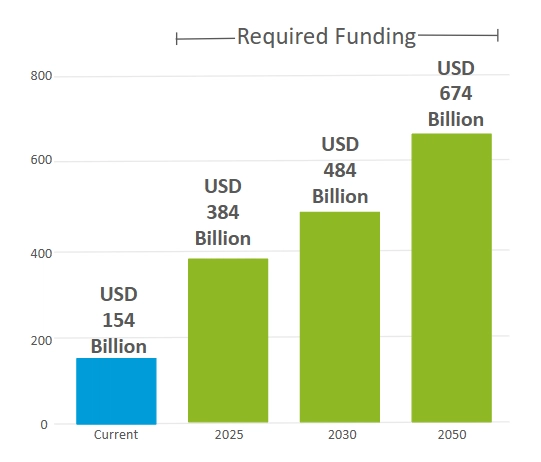
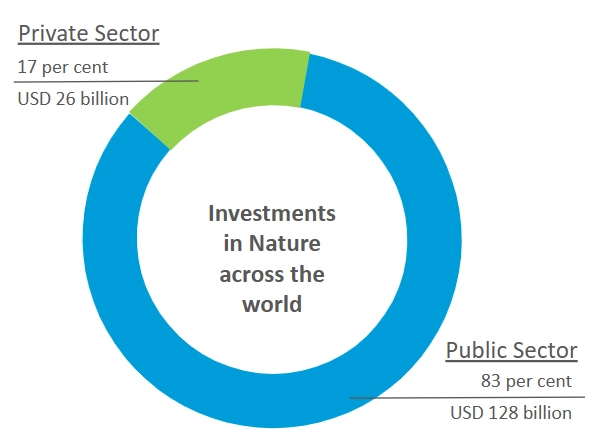
The State of Finance for Nature 2022 by the United Nations Environment Programme (UNEP) highlights a massive funding gap of USD 230 billion in investments in nature required to achieve mitigation, biodiversity and degradation-related targets (Figure 1). According to a report by the Global Mangrove Alliance, approximately USD 11.1 billion will be needed over the next two decades to reinstate restorable mangroves worldwide. However, the current scale of investments is significantly insufficient to meet this requirement. A report by Systemiq, developed for the Mangrove Breakthrough, suggests that a majority of the investment in mangrove protection and restoration has been delivered by the public and philanthropic sectors. But the financial flows from the private sector remain a challenge. The UNEP report supplements this by highlighting that the private sector contributes only 17 per cent of the current investments flowing into NbS (Figure 2).

Figure 1: Current investments in nature and required funding

Source: State of Finance for Nature 2022, UNEP

Figure 2: Contribution of the public and private sector in investments in nature

Source: State of Finance for Nature 2022, UNEP

Bringing in funds for mangroves

We propose three recommendations aimed at fostering private investments in mangroves. These can yield positive outcomes for both investors and the preservation of mangrove ecosystems.

Proposing a blended finance vehicle to mobilise investments from Multilateral Development Banks (MDBs): A high percentage of private climate finance, for projects under both adaptation and mitigation, is mobilised by Multilateral Development Banks (MDBs). According to a report by the OECD, MDBs mobilised private climate finance worth USD 33.8 billion per year between 2018 and 2020. However, MDBs face several risks and challenges, especially in developing countries such as credit risk, lack of data on the benefits of projects and potential barriers, and non-availability of efficient monitoring, reporting and valuation tools that deter investments.

A new blended finance vehicle named ‘Global Fund for Mangroves’ proposed by the Mangrove Breakthrough could be used to mobilise private finance from MDBs to scale mangrove-related nature-based solutions in India. The tool will address the multiple risks faced by MDBs and other private investors such as credit and offtake risk by ensuring multiple streams of funding and project development, thus, bridging the funding gap and encouraging private investments.

Incentivising the private sector to invest in mangroves: Investing in nature-based solutions as grants or direct investors could provide companies with multiple benefits in the form of profit, resilience, compliance or mission. Some of the most common barriers faced by the private sector in providing finance for nature include the uncertainty in assessing risks and estimating the value of investments. In order to reduce these uncertainties, the government should take two steps.

First, create a data repository with nature-related data such as data on ecosystem services, risk of climate change on different ecosystems and data on biodiversity, which includes the number of endangered and vulnerable species in an ecologically sensitive area, and observed change in habitat. This would help companies conduct risk assessments and help them understand the impact of their activities on natural ecosystems such as mangroves. Further, this would strengthen disclosures that are necessary under the Business Responsibility and Sustainability Reporting set by the Securities and Exchange Board of India (SEBI).

Second, the government must provide a framework to measure the effectiveness of nature-based solutions, which helps companies identify benefits achieved from existing projects, economically quantify ecosystem services such as avoided costs due to disasters, value of carbon sequestered, and livelihoods generated. This would also deter greenwashing. A framework to map and estimate the costs and benefits of nature-based solutions will provide much-needed guidelines to companies and thus encourage investments by reducing uncertainties. These measures will aid companies in finding relevant projects for investment under Corporate Social Responsibility (CSR) as well as support them in understanding their impact on ecosystems and biodiversity.

Several companies have already invested in mangroves as part of their CSR efforts. Reliance Industries Ltd (RIL) entered into an MoU with the Government of Gujarat to develop a 3,500-acre area of mangrove forest within the Marine National Park, as part of the Central Government's MISHTI scheme. The mangrove conservation project by Godrej in Maharashtra, which includes training and building capacity of the community, conserving species of both flora and fauna, increasing livelihood opportunities for local communities over a 3,000-acre area, has been functional since the 1940s.

Encouraging social entrepreneurship in mangrove conservation: Nature-positive businesses, which protect the environment and conserve natural resources while providing local livelihood opportunities, could lead to the establishment of a new revenue stream of climate finance in India. There is a growth of green entrepreneurship for nature and biodiversity conservation in India. The government could promote the establishment and sustenance of small enterprises that depend on the resources available in the mangrove ecosystem and thus conserve mangroves. This could include providing special incentives such as micro-loans to scale the positive impact of such businesses on both livelihoods and mangroves.

Ultimately, a push to increase private finance will go a long way in helping India achieve its target of increasing the mangrove cover to more than 5,500 sq km by 2030. India, as a member of MAC and Mangrove Breakthrough, should aim to improve its restoration efforts significantly as it aims to host COP33 in 2028 towards the end of the Decade of Ecosystem Restoration. The scaling up of mangrove-positive actions would highlight India as a globally prominent conservation leader and help the country achieve both its mitigation- and adaptation-related targets.

Aryan Bajpai is a Research Analyst at the Council on Energy, Environment and Water (CEEW). Send your comments to [email protected].

,

Sign up for the latest on our pioneering research

REPORT
07 February, 2024 |

HAVE A QUERY?

Frequently Asked Questions

  • What is the concept of e-cycles? Are electric cycles worth buying in India?

    E-cycles are bicycles with a supportive power unit, providing pedal assistance or fully throttle-controlled propelling force. Our analysis indicates that the e-cycles and low-speed e-mopeds are around 56-70 per cent cheaper than their ICE and EV counterparts. Thus, they can be a cost-effective solution as compared to other motorised two-wheelers for the Indian market.

  • How do e-bikes/e-cycles affect the environment?

    E-cycles can be a lucrative option for distances ranging from 5-10 km and can be a suitable substitute for motorised internal combustion engine (ICE) two-wheelers. Thus e-cycles can reduce the exhaust emissions from two-wheelers, which currently occupy the largest share of the total motorised vehicles on Indian roads.

  • What are the social impacts of e-cycles?

    From our survey, we find that the majority of the beneficiaries (70–75 per cent) believed that e-cycles would reduce fatigue and improve work efficiency, resulting in higher wages. Our analysis also indicates that the annual savings are around 70-80 per cent by switching to e-cycles. This could increase the disposable income of the beneficiaries, thereby leading to better education for the children, better healthcare opportunities and better family and social support.

  • Why are e-cycles a lucrative option for rural areas?

    In several regions of rural India, public transport and shared modes are unviable owing to low and dispersed demand, making people rely on private Internal Combustion Engine (ICE) two-wheelers for commuting. Total Cost of Ownership (TCO) reveals that e-cycles and low-speed e-mopeds are around 70% cheaper than ICE two-wheelers, making them economically lucrative.

  • What is the future uptake of e-cycles?

    Our analysis indicates that there is a potential for e-cycles among rural government institutions. In Kerala itself, there is a demand for around 77,000 e-cycles among the Anganwadi, ASHA and SHG workers.

  •  

HAVE A QUERY?

Sign up for the latest on our pioneering research

Art Exhibition
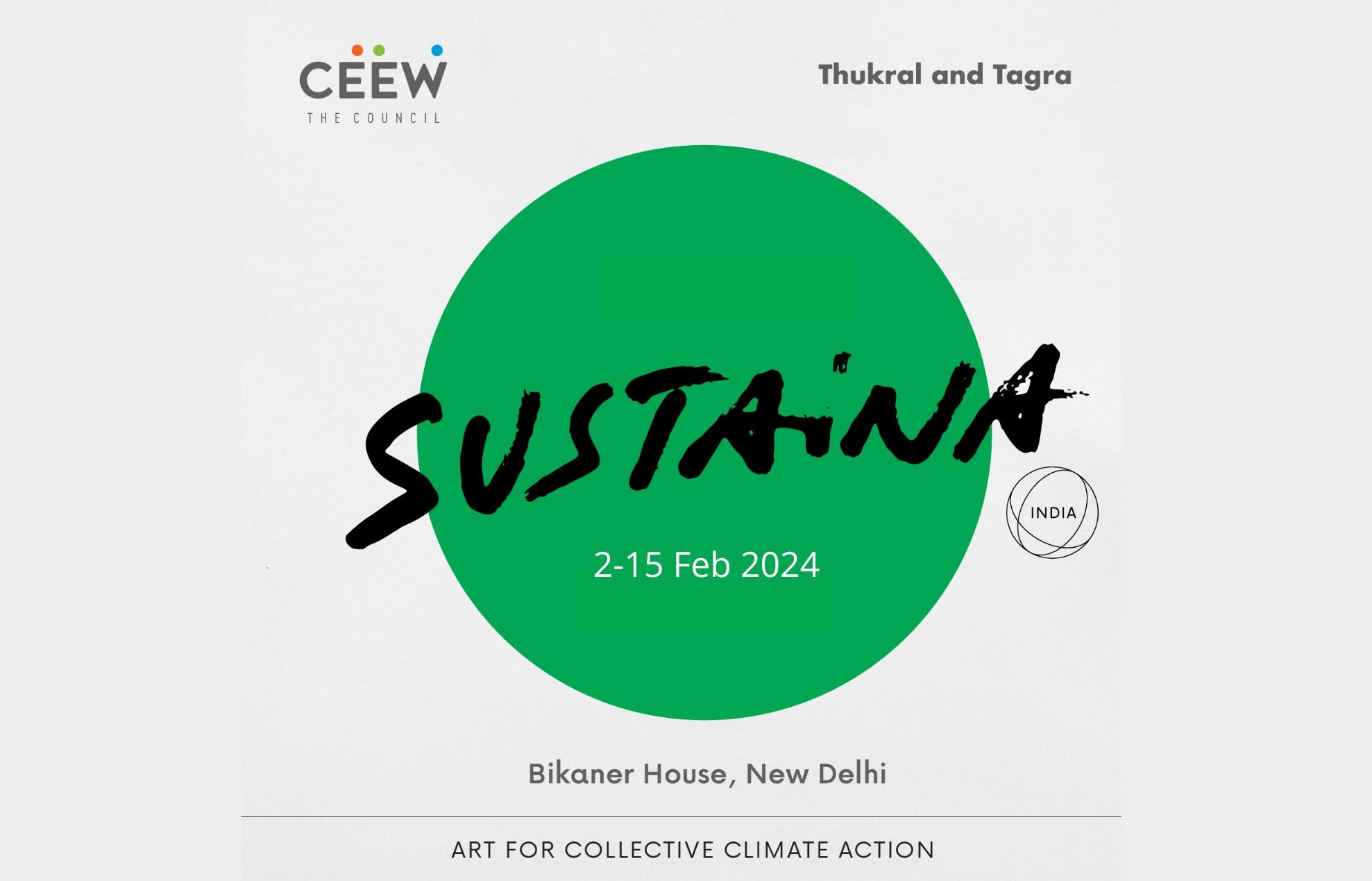
Sustaina India: Preview

02 Feb 2024   |   1800 IST

CEEW and artists Thukral & Tagra invite you to the preview of the inaugural art exhibition of Sustaina India — a first-of-its-kind platform where science meets art to inspire collective climate action, on the sidelines of the India Art Fair, on 2 February 2024, 1800 IST at CCA Gallery, First Floor, Bikaner House. The exhibition will be on till 15 February from 1100-1800 IST.

Featuring tapestries woven with ocean waste, an immersive forest experience, a synthesis of the impact of climate change on a tribal community and more, Sustaina India will present artworks by emerging and established Indian artists.

For Event Queries

Sonam Gairola

Senior Communications Associate

[email protected]

Evaluating Policy Coherence in Food, Land, and Water Systems

Evidence from India

Nitin Bassi, Suparana Katyaini, Kangkanika Neog, Ekansha Khanduja, Kartikey Chaturvedi, Upasana Negi, Saahil Parekh, Shashwat Shukla, Poonam Thakre, Archisman Mitra, Garima Taneja, Suchiradipta Bhattacharjee, Juan Carlos Sanchez Ramirez, Marie-Charlotte B
January 2024 |

Suggested citation: Council on Energy, Environment and Water (CEEW); International Water Management Institute (IWMI). 2023. Evaluating policy coherence in food, land, and water systems: Evidence from India. Colombo, Sri Lanka: International Water Management Institute (IWMI). CGIAR Initiative on National Policies and Strategies. 124p.


Overview

This report presents insights into the broader food, land, and water (FLW) policies landscape in India to guide policymakers, researchers, and other stakeholders towards coherent and effective governance of natural resources. A policy coherence framework was developed and used to analyse the selected seven national policies covering FLW systems that had a combined average annual expenditure of INR 39,550 crore during the last three years.

It is recognised that there are key transitions in the policy landscape in India toward sustainable management of water resources and shifts in the agriculture production system towards climate-resilient practices. To address any tradeoffs of such transitions, the report highlights priorities for informing the key stages of the policy cycle and offers evidence-based recommendations to enhance policy coherence in FLW systems in India.

Key Highlights

  • Enabling mechanisms at all levels of governance, i.e. national, state, district, and sub-district, are required to better align the policy initiatives in the FLW systems. Also, strengthening the bottom-up vertical institutional coherence is important. Some analysed policies, such as on groundwater sustainability, water use efficiency, and rural employment, have prioritised bottom-up vertical institutional coherence.
  • Enhancing capacity-building in monitoring and evaluation and impact assessment of the policy interventions at the state level is required, considering states have differential capacities. Policies such as watershed development and river rejuvenation programmes consider building knowledge partnerships with national and international institutions as key enablers in capacity building.
  • Expanding multi-stakeholder participation to cover all the stages of the policy cycle (planning and formulation, implementation, monitoring and evaluation, and impact assessment) is crucial for sustaining the long-term impact created by the policy, going beyond the policy duration. Participatory governance and management of water, and land resources with a focus on community-led activities is important for the long-term sustainability of resource management initiatives.
  • Adequate attention to creating a holistic knowledge base is needed to integrate evidence-based policy insights and convergence of efforts to advance sustainable development. This requires bringing together datasets on all the relevant parameters of environmental, economic, and social change in integrated knowledge systems such as the case of Ganga Knowledge Centre. Further, the community's role is important to identify the outcome-based indicators for impact evaluation of the FLW policies.
  • Policy mechanisms need to be strengthened to enhance cross-learning among members of institutionalised committees concerned with the sustainability of FLW systems. Further, integration of policy responses to environmental, social, and economic uncertainties through regular revisions in policy guidelines, possibly every two years based on the evidence, is identified as crucial for policy coherence.

FAQs

  • Why does India need to design coherent food, land and water policies?

    India needs to design coherent policies as it is crucial to take adequate measures for advancing the sustainability of water, food, and land systems. By identifying the most suitable institutional arrangements, coordination mechanism, and scope of convergence of efforts and resources, policy coherence acts as a major pathway to strengthen implementation and revitalise global partnerships for sustainable development.

  • What are some of the gaps in national policies when it comes to the interlinkages between food, land, and water (FLW) systems?

    The critical interlinkages among the food, land, and water (FLW) systems are complex and context-specific. There is a gap in the understanding of policy coherence in India, primarily due to the unavailability of adequate data at the sub-national level and there has been limited research on how policies governing one resource have deep implications for the other linked resources. Regular revisions of the policy guideline can lead to inclusion of the emerging policy-relevant evidence.

  • What is an evidence-based approach in policy-making?

    The evidence-based approach in policy-making is a method that is used for supporting policy decisions with policy-relevant evidence. Such evidences are collected through in-depth research and consultations with key stakeholders. The evidence should be context-specific. The study on policy coherence has undertaken a consultative approach to collect key evidence from the context of India on key lessons, and best practices to enhance coherence among national policies.

  • How can India develop better strategies to ensure coherence in food, land and water policies?

    To ensure the effectiveness of national policies and strategies, it is important to recognise mechanisms that enable coherence in food, land and water policies. These range from developing outcome-based indicators, regularly monitoring progress on these indicators and recognising inclusion of the vulnerable social groups through their participation in the policy processes. These strategies strengthen synergies between policies and overcome any points of incoherence.

  • How can community participation ensure the long-term sustainability of resource management initiatives?

    Community participation encourages on-ground actions and continuation of the policy interventions beyond the duration of the policy. As the communities have diverse profiles, the nature of the participation also varies. Community participation has led to sustainable outcomes of the policy initiatives, such as sustainable groundwater management, and are important for long-term sustainability of resource management, and judicious use of resources.

"One of our major findings from this study on policy coherence is that outcome-based impact assessment needs to be undertaken for policies, in addition to output-based evaluations. This will lead to long-term sustainability of policy interventions in the food, land, and water systems and make them climate resilient."

Sign up for the latest on our pioneering research

Pages