Council on Energy, Environment and Water Integrated | International | Independent

– India’s climate policies on power, transport & residential sectors have saved 440 MtCO2 from 2015 to 2020
– Solar and wind are expected to make up 43% of India’s electricity generation by 2050
– Further policy enhancements are crucial for achieving India’s 2070 net-zero targets
New Delhi, 07 November 2024: India’s current climate policies are already helping bend its long-term emissions curve and are projected to reduce CO2 emissions by almost 4 billion tonnes between 2020 and 2030, according to a new, independent study by the Council on Energy, Environment and Water (CEEW). This reduction is equivalent to nearly 1.6 times the European Union’s CO2 emissions in 2023. It is a significant achievement given India’s commitment to reducing emissions by 1 billion tonnes by 2030 at COP26 in Glasgow. The study, Impact of Select Climate Policies on India’s Emissions Pathway, found that policies for India’s power, residential, and transport sectors have already saved 440 million tonnes of carbon dioxide (MtCO2) between 2015 and 2020. The highest reduction due to the policy interventions is observed in India’s power sector, given that its share of the country’s carbon emissions is significantly higher than other sectors. Over the coming decades, India must scale up decarbonisation efforts and continue championing climate policies to meet its net-zero goal by 2070.
CEEW’s first-of-its-kind modelling assessment shows how India’s climate policies have collectively saved emissions and pushed India towards a higher share of renewables in its energy mix, increased adoption of electric vehicles, and improved energy efficiency in domestic air conditioning and lighting. It also examines how policies, like the National Solar Mission, FAME I & II schemes, Standards & Labelling scheme, and UJALA programme, will continue to affect future energy demand and supply.
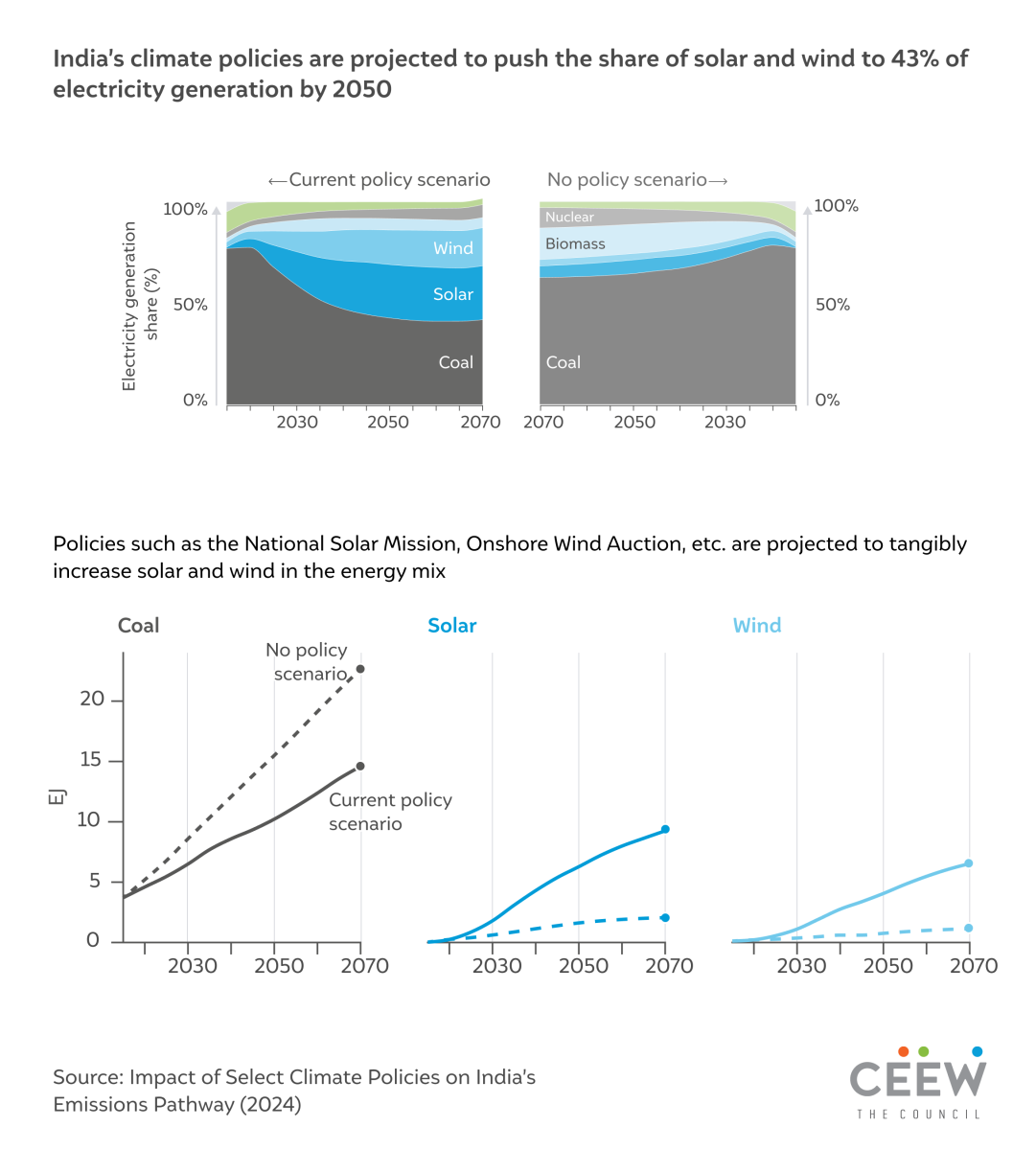
According to the study, in the power sector alone, policies promoting renewable energy are expected to drive a 24 per cent decline in coal-based electricity generation by 2030, relative to a no-policy scenario. This is equivalent to avoiding 80 GW of coal-based power plants that would have otherwise been installed to meet India’s burgeoning power demand. India currently has an installed RE (excluding large hydro) capacity of ~155 GW. Further, with strategic support and competitive tenders, the share of combined solar and wind power in the energy mix for India is projected to go up to 26 per cent by 2030 and 43 per cent by 2050, up from only ~3 per cent in 2015. This will decisively reduce reliance on coal, which is currently the source of nearly half of the country’s total carbon dioxide emissions. This shift is crucial for bending India’s emissions curve downward, but achieving net zero by 2070 will require even more ambitious action.
Dr Arunabha Ghosh, CEO, CEEW, said, “India has demonstrated formidable climate leadership over the past decade, from scaling renewables to advancing energy efficiency and electric mobility through policies. This has not only diversified our energy mix and doubled down on energy security, but also created new markets and significantly cut India’s carbon dioxide emissions. The road to net zero needs bolder action, and the foot cannot be taken off the pedal now. To enable the Global South’s efforts, COP29 must ensure climate finance flows to developing countries like India, without riders. This would deepen renewable markets and a sustainable future for all.”
In the transport sector, the CEEW study found that policies such as the FAME (2015-2022) schemes have set the stage for significant growth in the electric vehicle market. Projections show that by 2030, electric two-wheeler and four-wheeler sales could make up 19 and 11 per cent of their respective segments. This could lead to a 13 per cent reduction in oil and gas demand in this decade. By 2050, these figures are expected to rise dramatically to above 65 per cent for both EV categories, resulting in a 55 per cent reduction in the sector's oil and gas demand relative to the no policy scenario.
In the residential sector, the 2006 Standards and Labelling programme has led to significant energy efficiency improvements in air-conditioning and cooling. The CEEW study found that air conditioning-related electricity consumption in Indian households is projected to double between 2020 and 2030 and then soar by almost ten times by 2050. This growth would be driven not just by hotter summers and higher incomes but also due to lower electricity prices on the back of higher renewable energy penetration. Meanwhile, the UJALA programme – by promoting and distributing over 367 million energy-efficient LED bulbs since 2015 – is projected to reduce residential lighting electricity use by 48 per cent by 2030 and 59 per cent by 2050 relative to the no policy scenario.
Dr Vaibhav Chaturvedi, Senior Fellow, CEEW, and lead author of the study, emphasised the importance of enhancing existing policies: "Our findings show that current policies have set India on the right path. New policies that build on existing climate policies are already being formulated to accelerate efforts to meet the 2070 net-zero target. Immediate steps should include scaling up investments in renewable energy, enhancing the domestic Carbon Credit Trading Scheme, and focusing on energy efficiency in key sectors like industry, transport and buildings. The recently announced PM-EDRIVE scheme will build on the gains made by the FAME initiative, accelerating the adoption of electric vehicles and driving deeper emission reductions in the transport sector. These actions will be instrumental in decisively bending India’s emissions curve towards our net-zero goal and ensuring its energy security in the long run."
Limitations: The CEEW analysis hasn’t considered the impact of the government’s Perform, Achieve and Trade (PAT) scheme on India’s industrial energy efficiency use. Earlier studies have found it to have marginal impact on reducing emissions. The analysis also didn’t cover some recent policies - the National Green Hydrogen Mission, Carbon Credit Trading Scheme (CCTS), PM Suryaghar Yojna and PM-eBus Sewa Scheme- given that these are fairly recent to reveal their impact. These are expected to significantly impact India’s future emission pathways and will be evaluated in due course.
Read the full study, ‘Impact of Select Climate Policies on India’s Emissions Pathway’ by Vaibhav Chaturvedi, Anurag Dey, and Ritik Anand here.
For media queries and interviews, contact: Tulshe Agnihotri – [email protected] | +91 9621119643 / +91 7905717812
About CEEW
The Council on Energy, Environment and Water (CEEW) is one of Asia’s leading not-for-profit policy research institutions and among the world’s top climate think tanks. The Council uses data, integrated analysis, and strategic outreach to explain — and change — the use, reuse, and misuse of resources. The Council addresses pressing global challenges through an integrated and internationally focused approach. It prides itself on the independence of its high-quality research, develops partnerships with public and private institutions, and engages with the wider public. CEEW has a footprint in over 20 Indian states and has repeatedly featured among the world’s best-managed and independent think tanks. Follow us on X (formerly Twitter) @CEEWIndia for the latest updates.
29 Nov 2024 | 1800 - 2100 IST

CEEW invites you to a special screening and discussion at the All Living Things Environmental Film Festival (ALT EFF) 2024.
Join us to watch four powerful films that highlight our complex relationship with the changing climate and environment. From the gripping personal investigation in "Searching for Amani" set against Kenya's drought-stricken wilderness to the pressing water-agricultural-air quality crisis documented in "Stubble -The Farmer's Bane," these films unveil urgent interconnected challenges. "Traditional Engineers Reduce Water Stress" celebrates indigenous wisdom in water conservation, while "Kenya's Desert Alert" examines the devastating impact of deforestation. Together, they weave a powerful narrative of crisis, resilience, and hope in the backdrop of the planetary crisis across Africa and South Asia.
The screening programme will also feature a conversation on 'India's Groundwater Crisis: Why it Matters Beyond Dry Taps' with filmmakers and experts.
Programme
Short films:
Kenya’s Desert Alert (15m)
Traditional Engineers Reduce Water Stress: Kattas of Kerala (10m)
Feature Films:
Stubble - The Farmer's Bane (35m)
Searching for Amani (1h 17m)
Moderated Discussion:
India's Groundwater Crisis: Why it Matters Beyond Dry Taps

Milan George Jacob
Communications Specialist
16 Nov 2024 | 1315 - 1445 AZT
Emerging markets and developing economies face a pressing challenge: driving climate action while ensuring universal energy access, resilience, and economic growth. Small and medium enterprises (SMEs) are critical to this effort, yet they are often held back by complex financial barriers. As the world prepares for the New Collective Quantified Goal (NCQG) on climate finance and pushes to triple renewable energy capacity by 2030, the need for practical, scalable financial solutions is more urgent than ever.
SMEs leading clean energy and adaptation projects are confronted with significant risks and limited access to finance. Early-stage funding is scarce, and private equity and debt options often come with high costs and restrictive terms. Catalytic capital, which mitigates risk and provides early-stage support, offers a direct path to overcoming these hurdles. By focusing on actionable solutions, this session will examine where catalytic capital is working, where it’s falling short, and how we can scale finance to accelerate climate action.
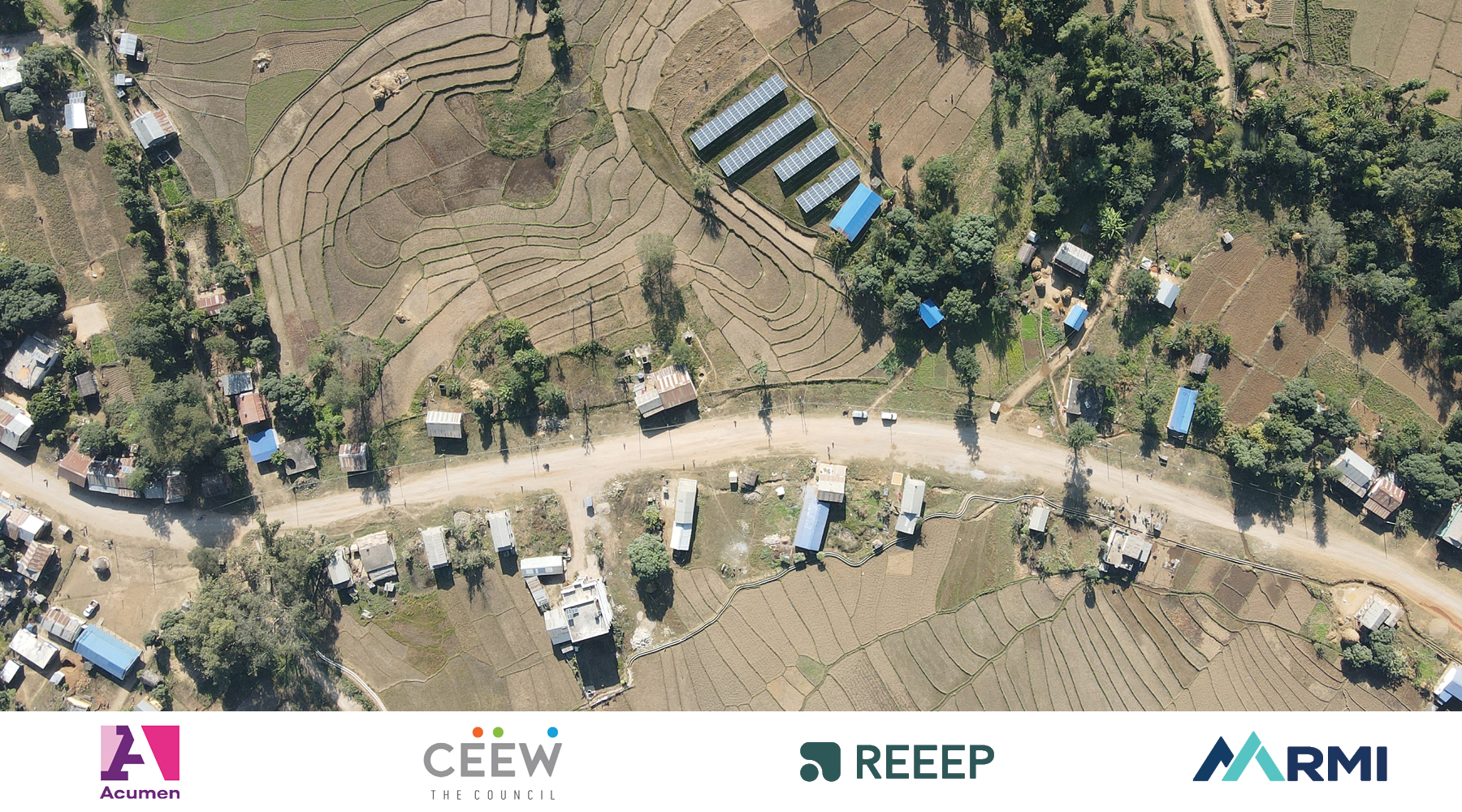
This official side event at COP29 in Baku, Azerbaijan, hosted by REEEP, Acumen, CEEW, and RMI, will deliver key takeaways on effective financial mechanisms for clean energy and adaptation. It will begin with a framing fireside chat featuring a leading energy entrepreneur, offering a real-world example of overcoming financial barriers. An expert panel of finance leaders, policy experts, and energy innovators will then share success stories and pinpoint gaps, offering tangible solutions to scale clean energy in developing markets.
Attendees will leave with practical insights into how blended finance, credit guarantees, and concessional loans are unlocking private investment. The discussion will focus on where and why these tools are succeeding and, more importantly, how we can replicate and expand these models to create jobs, strengthen food security through climate-resilient agriculture, improve energy access, and cut emissions across the Global South.

Anjuman Narula
Communications Lead
Whether fossil fuels or clean tech, the 2024 US elections will impact India’s energy and trade relationships. But there can be a win-win.
The interdependence of India for energy products makes them extremely precious goods. The changing geopolitical order and ongoing conflicts in West Asia and Russia-Ukraine are impacting the energy supply chains of most countries. It is imperative to analyse forthcoming major political events, such as the 2024 US election, to make an informed call about India's energy security. This article analyses previous Democratic and Republican presidencies, and explains the risks and opportunities associated with either Kamala Harris or Donald Trump becoming the next president of the United States.
Major trends include the differing preferences of Trump and Harris between oil and gas, and clean energy. The current geopolitical trend indicates that countries are driving towards attaining their net zero targets by launching policies focusing on decarbonisation, increasing the share of renewable energy sources in their power mix, and incentivising clean tech. There are differing strategies adopted by the Democratic and Republican parties on engaging with India in several multilateral forums, especially concerning the Paris Agreement and engagement through the Quadrilateral Security Dialogue (QUAD) and Indo-Pacific Economic Framework (IPEF). There is also a general agreement on de-risking supply chains by diversifying away from China and imposing tariff barriers. The promises of the current US presidential candidates fall under similar lines: keeping in with the trend of the United States becoming a net energy exporter, driving anti-China sentiments, and leveraging multilateral platforms.
Countries engaged in significant geopolitical events, like the Russia-Ukraine conflict and democratic backsliding in oil-rich countries such as Venezuela, have had disadvantageous trade relations with the United States, compelling the US to find alternative energy sources. The eventual increase in oil and gas production in the US has benefitted India. A Trump presidency could guarantee a stable supply of fossil fuels to India, given his pro-fossil fuel policies. Harris, while promoting clean energy, would likely maintain current fossil fuel production levels but with higher environmental standards.
Additionally, there has been a notable shift in investment flows away from emerging markets and developing economies (EMDEs) toward the United States, driven by more attractive investment opportunities under the Inflation Reduction Act (IRA), introduced in 2022 by President Joe Biden. Such shifts, combined with the economic consequences of higher tariffs on China and the looming threat of a trade war with the US, could significantly impact India's energy trade dynamics. In light of these factors, India must formulate strategic approaches to navigate the implications of the 2024 US presidential election and safeguard its energy security.
India must adopt a balanced approach to navigate US energy policies post-election. New Delhi should prioritise diversifying its energy supply, securing long-term contracts with multiple suppliers, and enhancing its clean energy manufacturing to mitigate potential trade disputes. Collaborating on next-gen technologies such as carbon capture, energy storage, and exploring alternative markets in Africa and Latin America could strengthen India’s energy resilience.
India is the fifth-largest economy in the world, with a real GDP growth rate of 6.8 per cent. India’s energy demand is expected to grow at 2.7 per cent till 2050 compared to the world's 0.6 per cent. There is an increasing reliance on the US to meet India’s energy demand. Between 2017 and 2024, the US became the fifth-largest liquified natural gas (LNG) and crude oil supplier to India. Meanwhile, the Biden administration is also investing heavily in clean energy. Considering the US’ prominent position, it becomes all the more important to evaluate promises made by the respective Republican and Democratic nominees for the US presidential elections – former President Donald J. Trump and current Vice-President Kamala Harris – and their impact on India’s energy security and sustainability ambitions.
Shifting strategies for energy independence – from fossil fuels to clean tech
During his administration from 2017 to 2021, Trump argued for energy independence for the US. He aimed to do so by reducing oil imports and increasing domestic energy production on federal lands and waters. The 2017 Executive Order (EO) Implementing an America-First Offshore Energy Strategy aimed at this, encouraging “energy exploration and production, including on Outer Continental Shelf”. This allowed annual lease sales in the Gulf of Mexico, mid-and-south Atlantic Ocean, and Alaska. Through the 2017 Tax Act, the administration directed the conducting of lease sales in the Arctic National Wildlife Refuge in Alaska for oil and gas development, with the first round of sales concluding in 2021 and the second due in 2024. In accordance with the EO on Expediting Environmental Reviews and Approvals for High Priority Infrastructure Projects, Trump allowed the TransCanada Keystone Pipeline to import crude oil from Canada.
Further, the Trump administration, through the 2017 EO Promoting Energy Independence and Economic Growth, repealed the previous Obama administration's federal coal leasing moratorium, which prohibited coal leasing on Federal lands, alongside reviewing and rescinding rules on hydraulic fracturing on Federal and Indian lands. During the Trump administration, crude oil production jumped from 8.8 million barrels per day in 2016 to 11.3 in 2020. These orders effectively became a step towards the US becoming a net energy exporter as crude oil production increased to 12.9 million barrels per day in 2023, breaking their previous global record of 12.3 million barrels per day set in 2019.
With respect to interactions with India, the Trump administration launched the US-India Strategic Energy Partnership (SEP) in April 2018, coordinated by the US Department of Energy with the Government of India’s Ministry of Petroleum and Natural Gas (MoPNG). It consisted of four pillars governing energy security: oil and gas, power and energy efficiency, renewable energy, and sustainable growth. Under the US-India SEP, the US-India Natural Gas Task Force was announced. During Trump’s visit to India in 2020, the leaders of both countries agreed to boost their overall trade in LNG, including crude oil. By 2019, the US crude oil exports to India increased tenfold, and India became a major destination for US LNG and the largest destination for US coal exports. Under SEP, the US and India carried out USD 9.2 billion trade of hydrocarbons along with other projects and technical support.
In contrast, during his presidency, Biden cancelled three off-shore lease sales in the Gulf of Mexico and Alaska in May 2022 due to their negative environmental consequences. Biden also revoked the Keystone XL Pipeline project in 2021 because it threatened climate, ecosystems, drinking water sources, and public health.
Although clean energy was the focus for President Biden, the Russian invasion of Ukraine in 2022 led to greater energy demand from Europe and Asia. The imposition of sanctions on Russia essentially meant that the US had to expand oil and gas production to achieve energy independence and support the European countries to manage their energy demands. Consequently, permits for oil and gas drilling and production increased under the Biden administration. The US’ fossil fuel production also reached an all-time high in 2023, amounting to 86.3 quadrillion British thermal units (QBTU). In the same year, the total energy production in the US exceeded its total annual energy consumption. The share of fossil fuels (petroleum, natural gas, and coal) consumed accounted for 84 per cent of US’ total primary energy production. Eight per cent of renewable energy and 8 per cent of nuclear electric power comprised the rest.
Reorienting the focus from fossil fuel to clean energy, the United States and India agreed to launch a high-level partnership – the India-US Climate and Clean Energy Agenda 2030 – under the Biden administration. It aims to mobilise finance and speed clean energy deployment, demonstrate and scale innovative clean technologies needed to decarbonise sectors, and build capacity to measure, manage, and adapt to the risks of climate-related impacts. The partnership has two main tracks: the Strategic Clean Energy Partnership (SCEP) and the Climate Action and Finance Mobilisation Dialogue.
The SCEP is a revamp of SEP that was launched under the Trump administration in 2018. During the SCEP Ministerial meeting in 2022, the co-chairs of the renewable energy pillar – the Ministry of New and Renewable Energy (MNRE) and the United States Agency for International Development (USAID) – agreed to a commitment of USD 500 million as a US Development Finance Corporation (DFC) loan to a vertically integrated photovoltaic (PV) solar module manufacturing facility of 3.3 GW capacity. This would be built by First Solar, a US company, in Tamil Nadu to boost domestic solar panel manufacturing capacity. The co-chairs agreed to partner with an Indian non-banking finance corporation (NBFC) to set up an Alternate Investment Fund (AIF) with a capitalisation of USD 70 million to deploy innovative, clean, and climate-smart technologies. Further, in 2023, the US DFC approved USD 425 million in financing for Tata Power’s 4.3 GW solar cell and module manufacturing plant in Tamil Nadu. The SCEP Ministerial that convened in September 2024 also welcomed the implementation of the Hydrogen Task Force through the Renewable Energy Technology Action Platform (RETAP). A public-private energy storage task force was also launched to address long-duration energy storage and alternative battery chemistries to lithium-ion technologies.
The Biden presidency marked a shift from achieving energy independence through fossil fuels to transitioning away from it. Biden launched the Inflation Reduction Act (IRA) in 2022 with over 20 tax incentives for clean energy manufacturing. Through a combination of grants, loans, and rebates amounting to USD 369 billion, these incentives create additional bonuses that enhance investments to strengthen supply chains for materials and equipment and accelerate the deployment of clean energy, clean vehicles, clean buildings, and clean manufacturing. IRA includes incentives for the development and deployment of emerging climate technologies such as clean hydrogen, sustainable aviation fuel, and direct air capture. It is expected that such incentives would reduce an additional 2.4-2.9 tonnes of CO2 emissions outside the US for every tonne of CO2 reduced within the US.
The clean energy industry in the US, with better funding facilities — both through the private financing options coupled with tax incentives provided under the IRA — has witnessed unprecedented growth. In 2023, the US solar industry deployed 34.2 GW of solar modules and as of 2024, US solar module manufacturing capacity exceeds 26 GW annually.
However, the IRA’s protectionist features – such as its local content requirements that require a percentage of the inputs used in manufacturing to be sourced locally – create global challenges. Similar inward-looking policies such as the Future Made in Australia, Make in China, and India’s Production-Linked Incentives (PLI) provide incentives to manufacturers by reducing significant capital costs in setting up upstream manufacturing facilities for solar, wind, and battery technologies. Such policies could create a supply-demand imbalance, acting as a barrier to the international trade of clean energy products.
The Trump tenure also saw a trade war with China. This grew out of cheaper imports from China leading to economic consequences in the US, such as job cuts. Some policy actions by the US, such as banning certain imports to address forced labour in Xinjiang and refraining from identifying Hong Kong as an independent customs territory for US imports and exports, also defined the dynamics of the US-China trade relations. In 2018, with reference to Section 201 of the Trade Act of 1974 concerning substantial cause or threat of serious injury to a US industry, the US imposed tariffs on China’s export of solar panels and washing machines. China retaliated with tariffs on agricultural products. Consequently, the Section 301 tariffs – concerning violation of trade agreement commitments or engaging in discriminatory or unreasonable practices that burden or restrict US commerce – were levied by the US against a range of products. The Trump administration also levied Section 232 of the Trade Expansion Act of 1962 on steel and aluminium products, which concerns circumstances that threaten to impair US national security.
Meanwhile, China earned a competitive edge in the production of renewable energy goods by effectively replicating and learning technological innovations undertaken primarily by the European Union (EU) and the US. The Chinese have been able to manufacture and supply solar cells and modules at a cheap rate, inherently driving down the global market price for such products as well. Unable to compete with cheap Chinese imports of solar cells and modules, large solar manufacturing companies in the US shut down. The tariffs imposed on solar modules during the Trump administration reduced the volume of cheap imports of solar modules for a brief period of time, salvaging the American solar industry. Later, the impact of the safeguard duty levied in 2018 diminished due to the exemption provided for bifacial solar panels (which are increasingly used in utility-scale solar) and an increase in the duty-free import quota.
A segment of the Section 232 tariffs introduced in 2018 was directed at India as well, which impacted around 2.3 per cent of India’s exports to the US. Although the tariffs impacted a small percentage of India’s exports to the US, they set a precedence for tariffs that can be levied on India’s solar industry, which exports around 90 per cent of the solar modules to the US.
The second trade action initiated by the Trump administration in 2018 was the review of India’s status as a beneficiary country under the Generalised System of Preferences (GSP), which is a preferential trade treatment granted to developing countries such as India by developed countries like the US. American exporters had raised concerns about the lack of access to the Indian market. A review conducted by the US Trade Representative (USTR) concluded that India does not provide reasonable and equitable market access and has, therefore, failed to meet the eligibility criteria as a beneficiary country. Consequently, the withdrawal of India from the GSP caused significant damage to India’s trade as it also affected employment and the micro, small, and medium enterprises (MSME). The major sectors affected here were the organic chemical industry, plastic and articles, iron, steel, and electrical machinery.
The Biden administration retained the tariffs imposed against China during the Trump administration and raised tariffs for certain commodities. The United States International Trade Commission (USITC) also launched antidumping and countervailing duty (AD/CVD) investigations against countries like China, Cambodia, Malaysia, Thailand, and Vietnam on solar cells. It also launched an AD investigation of oil country tubular goods (OCTG) – such as rolled metal products used in the oil and gas industry for transportation and handling – from Argentina, Mexico, and Russia, and CVD investigations of OCTG from Russia and South Korea. Following a review in 2024 of Section 301 tariffs imposed in the year 2018, the Biden administration further increased tariffs for several goods. The extent of these increases can be viewed in the table below:
The tariff increase supplemented the IRA, which incentivised the growth of domestic clean energy manufacturing industries, barring them from cheap Chinese imports. The US has also levied anti-dumping and countervailing duties (AD/CVD) against Southeast Asian countries through which Chinese exports were being redirected to the US. China’s market expansion strategies have also triggered various regulations from the US and the EU. For instance, the EU recently introduced new rules regarding auctions for hydrogen projects, stating that projects cannot have parts sourced from China exceeding 25 per cent of the plant’s production capacity. As many countries have adopted similar trade strategies against China, India stands out as a strategic trade partner in Asia. The US has been making an effort to smooth trade disputes with India and enhance cooperation, especially in the clean energy sector.
One of the successful interactions between the US and India during the Biden administration was the resolution of seven outstanding World Trade Organization (WTO) disputes, eliminating the Section 232 tariffs against steel and aluminium products and granting India access to the US market. It also resolved contention on certain measures relating to domestic content requirements under the Jawaharlal Nehru National Solar Mission for solar cells and solar modules, and certain measures of the US relating to domestic content requirements and subsidies in the renewable energy sector. These measures indicate that the US now looks at India as an alternative supplier and market of clean energy technologies, de-risking its supply chains from China.
As promised during his 2016 election campaign, Trump withdrew the US from the Paris Agreement, stating it to be unfair to developed countries. He emphasised that meeting energy demands via fossil fuels rather than renewable energy was imperative for the betterment of the American economy. Despite the go-slow approach to meeting the White House’s decarbonisation goals, some states, including California, committed to reducing carbon emissions. Meanwhile, other countries such as China, Japan, and South Korea agreed to carbon neutrality commitments, and the EU launched policies curbing emissions, such as the EU Green Deal in 2020, signalling their intent to transition away from fossil fuels.
While the US rejoined the Paris Agreement in 2021 under Biden, it also actively engaged in several other multilateral forums such as the Quadrilateral Security Dialogue (QUAD), Indo-Pacific Economic Framework (IPEF), and Mineral Security Partnership (MSP). The Biden administration has seen consistent meetings under the QUAD, redefining areas of cooperation and increasing financial assistance. Some important commitments by the member countries from the recent QUAD meeting held on September 2024 are as follows:
In an effort to strengthen renewable energy supply chains, including critical raw materials, the US spearheaded the Mineral Security Partnership (MSP). It is a collaboration of 14 countries and the EU to catalyse public and private investments in critical minerals supply chains globally. With US support, India – the only non-G7 member country – became a member of the MSP in June 2023. India’s entry into the MSP holds strategic importance, in line with several domestic policies launched to boost indigenous manufacturing of electric vehicles and semiconductors. The MSP has a strategic geopolitical rationale, de-risking reliance on China for processed raw materials and diversifying the raw material supply chain by exploring mineral sourcing and establishing processing infrastructure in South America and Africa.
Candidate Trump’s new promises for energy security are very similar to President Trump’s past record:
Meanwhile, Vice President Harris and Governor Tim Walz, her running mate, envision an ‘Opportunity Economy’ where America invests in its future, ensuring opportunities for all workers. They advocate for a ‘New Way Forward’ for the middle class, focusing on strategic industries and ensuring that communities benefit from these investments.
Positive outlook for India on oil and gas security
India’s energy demand is expected to grow at 2.7 per cent until 2050, compared to the world's 0.6 per cent. India imports about 85 per cent of its crude oil requirements, and only 15 per cent of it is met through indigenous sources.
Geopolitical conditions stemming from the US have significantly impacted India’s energy security even as India has been successful in finding alternatives. Before 2020, Venezuela accounted for 10-20 per cent of India’s total oil imports. Due to the Venezuelan political crisis and the subsequent US sanctions, India reduced its oil imports from Venezuela and started importing from the US. India became an alternative market for US exports as its exports to China shrank in market share. Similarly, the sanctions against Russia after the invasion of Ukraine in 2022 opened the alternative market of the EU for the US. The EU has extended sanctions against Russia till March 2025. For the foreseeable short term, the EU will also be reliant on the US for its energy demands.
The Trump administration's consistent preference to explore oil and gas reserves within the US and to ease regulations regarding the same creates a surety regarding the supply of fossil fuels from the US. There is a higher chance that Trump will retain the sanctions imposed on Venezuela, and he is likely to focus on increasing oil and gas exports. Regarding sanctions on Russia, Trump is keen on solving the Russia-Ukraine conflict, and any successful negotiation in the future on that front would ensure the removal of sanctions.
However, oil and gas production reached its peak during the Biden administration. It created immense economic value domestically by reducing energy prices while increasing exports. Harris’ statement clearly indicates that her administration is likely to focus more on clean energy manufacturing and reducing carbon emissions. It is highly likely that the pattern of production and export of oil and natural gas will remain the same during both administrations, but the Harris administration is expected to create higher emission standards for oil and gas companies. Higher emphasis and incentives will be provided to clean energy manufacturing and technologies while continuing the rate of oil and gas production.
This increased production of oil and gas has benefitted India. The domestic energy price in the US fell, which translated into reduced import costs for India. In September, the average price of the crude basket imported by India was USD 74 per barrel, a decrease from approximately USD 83-84 per barrel in March. It should be understood that the fall in prices is not just attributed to increased crude oil production in the US but also due to low demand and slow global market growth.
In the case of renewable energy, Trump has promised to pull back on tax incentives under the IRA, emphasising that there is no urgency in continuing policy measures for EVs and wind power. The extent of a pullback on IRA incentives might end up being less, considering that Republican states benefit the most from tax incentives.
The American incentives have attracted investments from emerging and developing economies to the US. However, the US has been negotiating deals with developed countries, such as the Critical Minerals Agreement (CMA) with Japan that waives the local content requirements to claim IRA EV tax credit. The US is also negotiating similar agreements with the EU and the United Kingdom. While such agreements attract significant benefits for wealthier countries, IRA also attracts private investments from developing countries such as India. Companies such as Reliance, Cubic Pv, and Vikram Solar have already invested in the US to gain benefits from the tax incentives under the IRA.
In the case of solar and battery manufacturing, the capital-intensive nature of upstream manufacturing requires multiple funding options, including government guarantees and support in the form of subsidies. The US presents itself as an attractive market with tax incentives and direct funding under the IRA, creating a favourable environment for clean energy manufacturers to set up plants in the US rather than in India. A Goldman Sachs analysis claimed that an estimated USD 1.2 trillion in federal incentives may encourage up to USD 3 trillion in private investment over the next decade. The uncapped nature of the tax incentives is driving clean energy investments to the US, pulling away investments that could have potentially benefitted emerging economies such as India.
Although Trump might not pull back entirely from the IRA, there is, however, a possibility that his administration might set a cap on tax incentives on the basis of sector, manufacturer, or manufacturing process. There is also an increasing sentiment that the tax incentives should be applicable to only American solar manufacturing companies and protect American taxpayer investments. A bipartisan bill, the ‘American Tax Dollars for American Solar Manufacturing Act,’ was also recently introduced to prevent Chinese companies from using American tax credits. The increasing nature of such inward-looking sentiments could create market disruptions. Similar sentiments from industries could potentially affect Indian manufacturers as well.
While incentives under IRA are essential for upstream manufacturing of solar PV modules, the global price of solar cells and modules is expected to remain unchanged. The price of solar modules is expected to fall to USD 100 per kW in 2030 and USD 60 per kW in 2040 (Chinese module prices before shipping cost and tariff). Solar panels are expected to get cheaper, and it will be difficult for both US and Indian manufacturers to compete with China at these prices globally. Hence, India needs to strategically increase its domestic deployment targets while scouting for alternative underdeveloped markets such as African and South American countries.
First, India exports around 90 per cent of domestically manufactured solar modules to the US and views the US as a potential export market for the next decade. The local industry in the US can flag the increase in the import of solar cells and modules from India, and India could be subject to the levying of tariffs and trade disputes. Both the Biden-Harris administration and the Trump administration have previously considered this regarding imports from China and Southeast Asian countries. And there is a high chance that such tariffs will be levied against India, especially if Trump comes to power.
Second, tariffs against imports from China have nudged it to explore other markets, such as the EU and the Middle East. While regulations are in place to de-risk Chinese supply chain dependency, the EU remains a major export market for China, which potentially decreases the market share for Indian manufacturers. The increasing regulations against China, both by the US and the EU, are expected to benefit India as an alternative supplier of clean energy goods.
India’s government under Prime Minister Narendra Modi has witnessed both the Trump and Biden administrations, and the strategic relationship between India and the US has deepened. While there has been an increase in India-US collaboration on various fronts during the last decade, India has to take a calibrated stand in terms of trade and energy. India faces the threat of a potential India-US trade war under the Trump administration and also has to take preventive measures to shield it from the repercussions of the US-China trade war. New Delhi should also remain alert with the Harris administration, considering that policies launched on the clean energy front have been increasingly inward-looking.
Clean energy policies aim to address the energy demand-supply balance and offer countries huge economic potential. Investments, innovations, and collaboration in the energy sector have the potential to drive a country’s economic growth. Unlike Trump's stance on using fossil fuels, achieving a balance between clean energy sources and traditional fossil fuels is imperative. India has to raise domestic deployment ambitions to address its Nationally Determined Contributions (NDCs) while exploring new markets and complying with emission norms and quality standards.
In case Trump wins the 2024 elections, India can be assured of oil and gas supply from the US. Under a Harris administration, diversification of traditional fossil fuel sources will become key. Over the last five years, India has added new suppliers – including the US, Russia, Canada, Angola, Guyana and Mexico – to its crude basket. Similarly, LNG imports have also diversified from Qatar to Australia, the US, and Russia. Despite US sanctions, India continues to consider Russia as an energy partner. Public Sector Units such as Indian Oil Corporation (IOCL) and Gas Authority of India Limited (GAIL) have also signed long-term contracts with Abu Dhabi National Oil Company (ADNOC). In 2022, IOCL concluded a long-term contract with Russia’s Rosneft for a period of 11 months for four million barrels of Urals-grade crude oil per month. India should keep an eye out for similar opportunities and sign such long-term contracts with other countries to diversify its crude basket for a resilient fossil fuel supply chain.
India's clean energy industry is also riddled with the issue of cheap imports from China, affecting the manufacturing capacity of India. Import concentrations from China, especially solar wafers, cells, modules, wind turbines, and critical minerals such as processed lithium, cobalt, and graphite, are quite high, creating price instability and market disruptions. While incentives to indigenise manufacturing of clean energy goods are important, the government should consistently find avenues for diversification of supply chains to support clean energy manufacturing. Under a Harris administration, India may have the opportunity to proactively engage in closed-door discussions regarding bilateral arrangements that can be beneficial to both countries.
Engaging in creative bilateral cooperation in underdeveloped critical mineral markets in South America and Africa, and collaborating on specific value chains of the highest importance can benefit India, such as the MoU between US-Zambia-Congo on supporting the development of a value chain in the EV battery sector. Alternatively, both countries will also benefit from mutually recognising the legitimacy of subsidy schemes, designing and developing shared principles, and best practices to implement such agreements. For instance, the EU and Japan have entered into a Mutual Recognition Agreement (MRA), which is a creative agreement to remove technical barriers to trade for a specific set of goods and services. The US-Japan CMA also waives the local content requirements clause for Japan. Such agreements provide a broader scope for investments and technology transfer between countries than traditional FTAs, which address a comprehensive set of goods and services.
Enhanced cooperation around green trade is required between India and the US in terms of differences in regulatory systems, product and performance standards, and scientific measurement framework. Countries should consider harmonising standards and regulatory definitions for clean technologies, updating customs nomenclature, and distinguishing between low- and high-carbon versions of the same good among their priorities. The US and India should identify and define a list of ‘environmental goods’ that can be considered for reduced tariff treatment. Both countries can also seek to expand this list to include like-minded countries such as the other QUAD members, the EU, and the UK.
Multilateral dialogues such as the QUAD, IPEF and MSP are creatively instituted to de-risk member countries’ supply chains from China. While QUAD is primarily a security dialogue, it has since moved away from addressing security threats in the Indo-Pacific and addresses more contemporary issues such as energy security. During the 2024 QUAD leaders summit, the QUAD leaders acknowledged the implementation of a Memorandum of Cooperation signed by export credit agencies (ECAs) supporting supply chain resilience, critical and emerging technologies, renewable energy, and other high-quality projects. The QUAD Investors Network (QUIN) facilitated nearly 10 strategic intra-QUAD investments and partnerships, including support extended to Waaree Technologies, headquartered in India, which successfully completed solar projects with a combined manufacturing capacity of 12 GW in Texas.
Collaboration depends on complementary strengths. QUAD has significant potential to secure the Indo-Pacific region by extending the QUAD network beyond its four member countries. Countries such as Vietnam and Thailand have immense processing capabilities but lack the finances and technology to carry it out. African countries are affected by climate change, famine, and health issues and require an influx of development measures that can potentially increase their standard of living and increase climate resilience. QUAD can extend support through QUIN and People-to-People Initiatives to support developmental and capacity-building activities in these countries for the holistic development of the Indo-Pacific region.
Investments in energy infrastructure, either upstream or downstream, can potentially help the cause of development while addressing domestic energy demands as well as those of the beneficiary country. The IPEF and MSP also provide much-needed financing measures to establish clean energy manufacturing, mining exploration, and processing infrastructure in countries with such potential. The recent commitment by India during the latest QUAD summit to invest USD 2 million in new solar projects in Fiji, Comoros, Madagascar, and Seychelles, is the right step taken towards energy transition in the Indo-Pacific region. India should continue to utilise these forums and expand its market share and presence in such countries while supporting the case for development and just transitions.
The transition towards a green economy remains a salient priority for both countries. A strategic approach to fostering positive relations with the United States, irrespective of the prevailing administration, would involve promoting carbon capture utilisation and storage (CCUS) as a long-term climate strategy. In 2022, Niti Aayog published a report detailing a CCUS policy framework and deployment mechanism in India, indicating that such projects could not only expedite India’s efforts to meet its NDCs but also generate substantial employment opportunities.
CCUS presents a diverse array of opportunities for converting captured CO2 into various value-added products, such as green urea, applications in the food and beverage sector, building materials (including concrete and aggregates), chemicals (like methanol and ethanol), polymers (including bioplastics), and enhanced oil recovery (EOR), thus contributing significantly to a circular economy in India. The Niti Aayog report also estimates that the potential capture of approximately 750 million tons per annum (MTPA) of carbon by 2050 could create between eight to 10 million full-time equivalent (FTE) jobs in a phased manner.
To ensure the efficacy of climate policies aimed at reducing emissions from fossil fuels, including CCUS, these measures must be applicable to existing fossil fuel infrastructure that cannot be immediately decommissioned. Many of India's new coal plants and US’ oil and gas facilities are expected to operate for decades. Enhancing energy efficiency and implementing additional emission reduction measures are therefore crucial. Collaborative efforts in science and technology will also facilitate the development of clean technologies for both countries while avoiding contentious issues related to fuel sources.
Emissions from fossil fuels are expected to grow in India, Africa, and other emerging markets, often referred to as the Global South due to their developmental needs. African countries have respective initiatives to ensure energy transitions but often encounter challenges in terms of financing and implementation to achieve their goals. The US actively plays a major role in sub-Saharan Africa, supporting the region through agencies such as USAID, the US Trade and Development Agency (USTDA), the State Departments, and others. It also launched a strategy toward sub-Saharan Africa, focusing on democracy, security, economic recovery and climate change.
India — as a leader of the Global South — can support the development of African countries with the US as a strategic partner by tapping into each other’s complementary strengths. An increase in trade restrictions against China also creates an incentive and opportunity to support clean energy supply chains in the world, especially in countries such as the Democratic Republic of Congo, Gabon, South Africa, and Zambia, as they hold significant reserves of critical minerals required for clean energy technologies. Similar to the US, India, and Tanzania’s Triangular Development Partnership established to strengthen energy infrastructure and promote renewable energy development in Tanzania, the US, India and sub-Saharan countries can collaborate, either through the African Union or trilaterally, to harness the potential of resource-endowed countries in the region. In return, the US and India can work together to set up a clean energy supply chain and tap into deployment ambitions in the region to further secure Africa's energy supply.
Within the ambit of the International Solar Alliance (ISA), India and the US have extended financial support for the implementation of programmatic activities. The collaboration has ensured the setting up of an African chapter of the Global Solar Facility, which aims to leverage investments to accelerate the transition to solar energy targets and raise 100 million USD. The ISA is aiming to globalise it for effective deployment of solar and EV, along with supporting infrastructure. This can be achieved via the ISA, the DFC, the USTDA and other US agencies, along with the Export-Import Bank of India, collaborating with Indian companies to explore investment opportunities and facilitating public-private partnerships with local African manufacturers. Such a collaboration would ensure holistic aid to the African clean energy sector in terms of finance, supply of bill of materials, capacity building programs, and meeting deployment targets in African countries.
As India navigates the evolving global energy landscape, the outcome of the 2024 US presidential election will offer distinct paths for its energy security. India has an opportunity to win in either scenario but has to strategise diplomatically and cautiously based on its energy requirements. Whether under Trump’s fossil fuel-friendly policies or Harris’s clean energy-focused approach, India will need to stay nimble and prepared. By continuing to diversify its energy sources, deepening next-generation clean technology collaborations, and exploring new partnerships bilaterally or through plurilateral dialogues, India can enhance its resilience against supply chain risks. While challenges are inevitable, this moment also presents an opportunity for India to balance its energy demands with its sustainability goals, positioning itself as a key player in the global energy transition.
Notes
1 In 2021, President Biden placed a temporary moratorium on all activities of the Federal Government relating to the implementation of the Coastal Plain Oil and Gas Leasing Program. Bureau of Land Management (BLM) suspended operations on the awarded leases, temporarily prohibiting exploration and development of the leased tracts while a supplemental environmental impact statement (SEIS) was prepared under the National Environmental Policy Act.
Arunabha Ghosh is the founder-CEO and Aarathi Srinivasan is a Research Analyst at the Council on Energy, Environment and Water (CEEW). Send your comments to [email protected].