Home
Council on Energy, Environment and Water Integrated | International | Independent
ISSUE BRIEF
08 April, 2026 |

HAVE A QUERY?

author image
Senior Engagement Associate

Frequently Asked Questions

  • What is this study about?

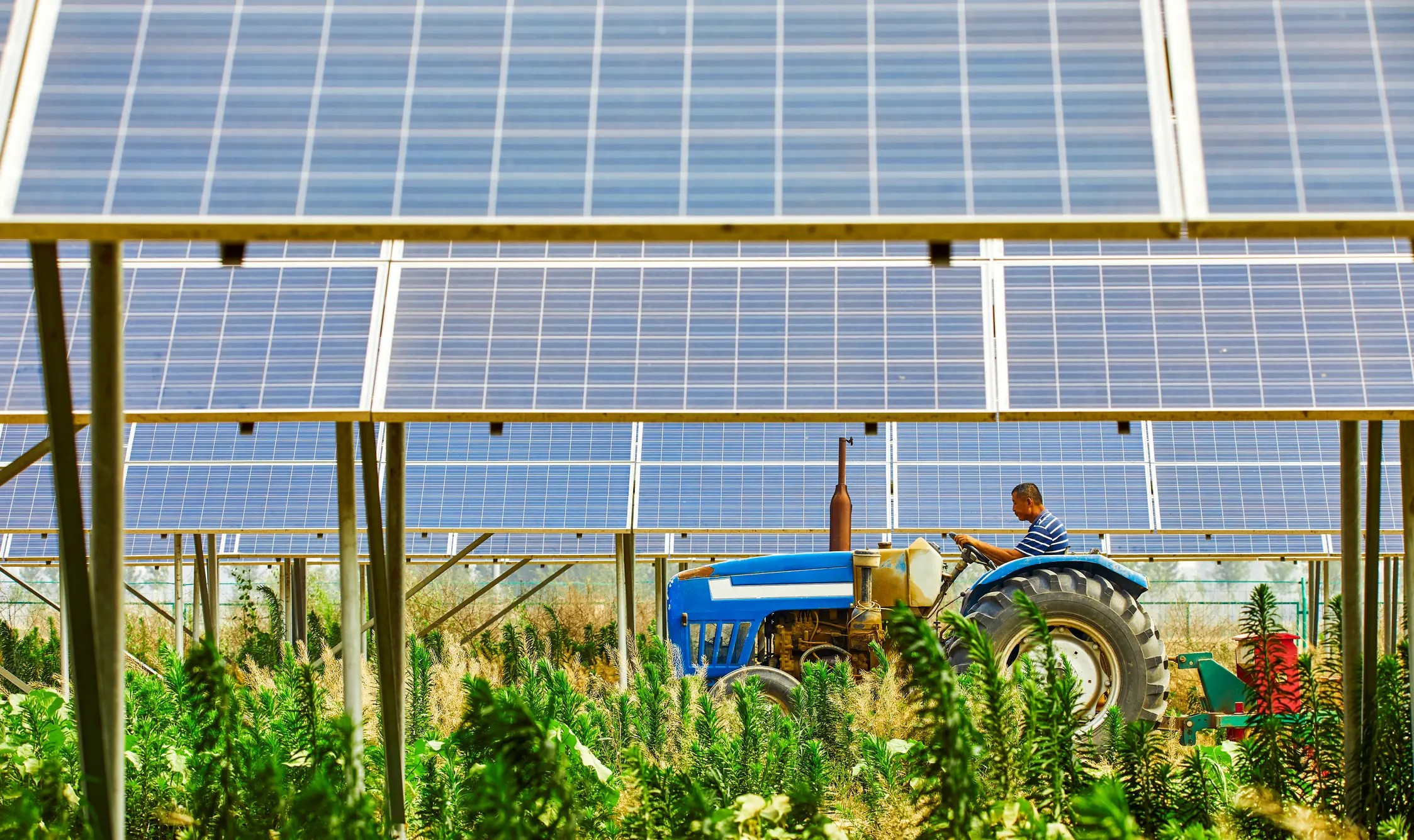
    This CEEW issue brief (April 2026) analyses the fiscal, environmental, and employment benefits of solarising agricultural electricity demand across 13 Indian states by 2030. It evaluates four adoption pathways — 25% to 100% — and finds that full solarisation could save state governments over INR 3 lakh crore in subsidies, require 191 GW of decentralised solar, cut emissions by ~160 MtCO₂e annually, and support ~8 lakh full-time equivalent jobs.

  • Why is agricultural electricity a fiscal problem for Indian states?

    Most Indian states supply electricity to farmers for free or at heavily subsidised rates, creating a large gap between the cost of supply and revenue recovered. In FY 2025, annual farm power subsidies across the 13 states exceeded INR 1.3 lakh crore — amounting to 4–6% of annual budgets in several states. Delays in subsidy payments strain discom cash flows and crowd out investment in grid infrastructure.

  • How does solarisation reduce subsidy costs?

    In FY 2024–25, the average power procurement cost for grid supply was INR 4.5–5.9 per kWh. Decentralised solar under PM-KUSUM is available at INR 3–3.5 per kWh — roughly 30–40% lower. By substituting grid procurement with cheaper solar for agricultural feeders, discoms reduce the per-unit cost of serving farmers, directly narrowing the subsidy gap states must fill.

  • Which states have the most to gain from solarisation?

    Karnataka, Rajasthan, Madhya Pradesh, Telangana, and Maharashtra have the highest potential gains given their large agricultural loads and high subsidies. Karnataka stands out with a possible 24% reduction in average cost of supply and INR 44,339 crore in cumulative subsidy savings under full solarisation. Rajasthan could save INR 40,099 crore with a 20% ACoS reduction.

  • What is the current status of PM-KUSUM implementation?

    As of January 2026, approximately 765 MW of decentralised grid-connected solar capacity has been installed under PM-KUSUM Component A against a 10,000 MW target — just 8% progress. Around 13 lakh grid-connected agricultural pumps have been solarised out of a 35 lakh target under Component C FLS (37%). While the policy framework is in place, deployment remains modest relative to the scale of agricultural electricity demand.

  • Does solarisation work even after accounting for storage needs?

    Yes. The study acknowledges that agricultural demand is seasonal and solar generation is daytime-concentrated. To address balancing needs, discoms could deploy up to 36 GWh of battery storage alongside solarisation. Even after incorporating reasonable storage investments, agricultural solarisation continues to generate substantial net fiscal gains for states.

  •  

HAVE A QUERY?

author image
Senior Engagement Associate

Sign up for the latest on our pioneering research

REPORT
08 April, 2026 |

HAVE A QUERY?

author image
Senior Engagement Associate

Frequently Asked Questions

  • What is PM-KUSUM, and what makes Components A and C-FLS different?

    PM-KUSUM is India's flagship solar irrigation scheme, launched in 2019 with three components. Component A sets up 0.5–2 MW solar plants on farmers' land for additional income; Component B installs stand-alone solar pumps; and Component C solarises existing grid-connected pumps — either individually (C-IPS) or at the feeder level (C-FLS). Components A and C-FLS are unique because they promote medium-scale plants (1–10 MW) connected to rural distribution substations — a model between conventional utility-scale and rooftop solar, requiring novel procurement processes and grid readiness.

  • Why have Components A and C-FLS significantly underperformed against targets?

    The report identifies seven interconnected barriers. SERCs set tariffs below actual market costs — the gap was largest when module prices spiked in 2021–23. DISCOMs were often excluded from scheme design. Land identification and right-of-way clearances proved far harder than anticipated near agricultural substations. Financing was inaccessible for new-entrant developers. Abrupt policy changes on customs duties and domestic content requirements froze tenders. Low farmer awareness and poor scheme branding compounded all of the above.

  • What tangible benefits have farmers actually received under the scheme?

    Under C-FLS, agricultural connections now receive reliable daytime power — previously many received power only at night, creating safety risks. Under Component A, farmers leasing land earned an average of INR 30,000/acre/year. Those investing in their own solar plants achieved estimated returns of 11–16% on investment, though capital requirements (INR 3–4.5 crores per MW) exclude most smallholders. The lease-based model was designed to address this gap, but awareness of it remains very low.

  • Which states are leading in PM-KUSUM implementation, and what are they doing differently?

    Maharashtra, Gujarat, Karnataka, and Rajasthan are the top performers. Maharashtra succeeded by positioning its DISCOM (MSEDCL) as lead agency, creating a pre-cleared government land bank, adopting cluster-based tenders for economies of scale, and establishing a revolving payment guarantee fund. Gujarat and Rajasthan attracted smaller developers by relaxing entry criteria and adopting competitive bidding without ceiling tariffs — discovering market-reflective prices. The common thread is DISCOM ownership and iterative experimentation.

  • What does the report recommend for a post-2026 solar irrigation scheme?

    The report calls for cooperative federalism: national guidelines should define objectives and financial incentives but leave deployment models to states. DISCOMs must be placed at the centre of planning, with solarisation targets embedded in their power procurement plans. Tariff frameworks should shift to competitive bidding. States need to build an incentive stack — land banks, payment guarantee funds, financing partnerships, and grid reinforcement plans. Inter-departmental coordination between energy, revenue, and agriculture departments must be institutionalised.

  • What grid infrastructure challenges will become critical as PM-KUSUM scales up?

    Rural distribution substations face frequent voltage fluctuations, transformer overloading, and tripping — particularly during peak irrigation season. As capacity scales, reverse power flow during non-irrigation seasons will become a serious challenge. The report recommends proactive substation-wise hosting capacity assessments, incentivising solar inverters to provide reactive power compensation (as piloted in Madhya Pradesh), and IoT-based virtual feeder segregation as a scalable, low-cost alternative to physical feeder separation.

  •  

HAVE A QUERY?

author image
Senior Engagement Associate

Sign up for the latest on our pioneering research

Greenprint Workshop
Code Red to Code Green: Activating AI for Climate Action in APAC Now

19 May 2026   |   16:15–17:15 SGT

Session brief:

Join CEEW and Google at Temasek's Ecosperity Week 2026, to participate in an interactive Greenprint workshop, Code Red to Code Green: Activating AI for Climate Action in APAC Now, to deliberate on priority actions and tailor recommendations for APAC by 2030, taking forward recommendations by the AI and Climate Expert Engagement Group (EEG) of the India AI Impact Summit, chaired by Dr Arunabha Ghosh (Founder-CEO, CEEW) and joined by Mr Spencer Low (Head of Regional Sustainability, APAC, Google) as an expert member. 

As Asia races toward its 2030 climate goals, the remainder of this decade is pivotal. The Greenprint is a vision to co-develop a practical agenda one that is rooted in the realities of this region. The convergence of AI and climate action presents unprecedented opportunities for APAC, whether it's to predict extreme weather events, optimise crop yields, enable efficient resource use, accelerate the discovery of breakthrough materials for hard-to-abate sectors, or optimise grids for the deployment of renewables. However, as the EEG notes, while AI's capability to transform climate action is proven in research and pilots, translating this potential into policy and business action faces financial, operational and ethical bottlenecks. 

APAC urgently needs a clear, ambitious, and actionable roadmap, especially as this climate-vulnerable region gears up to lead the AI race. To guide innovation and pragmatic action in the run-up to 2030, the workshop will convene leaders from tech, climate, policy, and innovation communities from across the world to reflect on the following questions from APAC’s context:

  • What are the urgent climate problems AI can help us solve, and how do we overcome the market failures and data gaps stalling these solutions?
  • What will it take to pull AI climate solutions out of "pilot purgatory" and achieve sustained, commercial scale?
  • How do we build robust guardrails to ensure AI accelerates climate action without automating inequity or causing hidden harm?

For Event Queries

Yadu Kathuria

Senior Communications Associate

[email protected]

Key Speakers

REPORT
31 March, 2026 |

HAVE A QUERY?

Frequently Asked Questions

  • What is the primary objective of this study on India's coal mine workers?

    The report aims to address a critical gap in India's just energy transition discourse by understanding how coal mine workers perceive their own skills and their chances of finding alternative employment. Knowing these baseline skills and personal preferences is a prerequisite for effective job transition planning. The study focuses on assessing the skills, preferences and future opportunities of non-executive workers across both opencast and underground mines in Jharsuguda, Odisha.

  • What types of skills do coal mine workers currently possess?

    Workers across various hierarchies possess a strong foundation of generic, technical, and soft skills. The vast majority are financially and digitally literate, meaning they can operate bank accounts and easily access the internet on their mobile phones. General mazdoors carry out basic technical tasks and adhere to safety measures. Meanwhile, operators and technicians demonstrate a firm grasp of complex machinery, and mining supervisors blend this technical expertise with strong people management abilities.

  • How do workers typically acquire their skills, and why is formal recognition important?

    Most of the workforce has developed its technical capabilities organically through learning by doing and peer-to-peer observation at the mines. Only a quarter of the surveyed workers had undergone formal skills training before taking up their current jobs, leaving the majority without officially recognised credentials. Implementing the National Credit Framework for the recognition of prior learning is therefore highly recommended. This will allow workers to aggregate a formal skill portfolio and significantly improve their mobility across different economic sectors.

  • Why does finding alternative employment pose a significant wage challenge for these workers?

    Coal mine jobs generally offer much higher compensation and better non-wage benefits compared to casual work in other industries. For example, a contractual coal worker typically earns between INR 20,000 and INR 25,000 per month, whereas most casual workers in other sectors earn less than INR 15,000. Departmental workers earn even more, making a wage-matched transition difficult. Consequently, nearly 79 per cent of the surveyed workforce naturally expects to earn lower wages if they move outside the coal sector.

  • Why is local economic diversification critical for coal-dependent regions?

    Nearly 61 per cent of the surveyed workers feel there are limited job opportunities outside of coal mining in their local area. Furthermore, a significant portion of the workforce, particularly those native to Odisha, shows a strong reluctance to relocate for new employment. To address this, the report stresses the need to strategically attract non-coal industries to these districts. Using the AI-driven SMART platform, the study identified the iron and steel, food processing, and automotive sectors as having a high skill proximity to mining roles. Decarbonising and expanding these heavy industries locally could provide viable, well-paid alternative livelihoods.

  •  

HAVE A QUERY?

Sign up for the latest on our pioneering research

OTHER PUBLICATIONS
09 January, 2026 |

HAVE A QUERY?

Frequently Asked Questions

  • What is the National Green Hydrogen Mission (NGHM)?

    The NGHM was launched in January 2023 with an outlay of INR 19,744 crore up to FY 2029–30. It aims to make India a global hub for green hydrogen production by establishing domestic manufacturing capacity for electrolysers, incentivising green hydrogen production, and supporting R&D across the hydrogen value chain.

  • What is the current state of green hydrogen production in India?

    As of 2025, India has only 0.3 MTPA of green hydrogen production capacity that is active and commissioned. An additional 0.4 MTPA is planned or under construction, and 11.2 MTPA has been announced but is yet to start construction. For these announced projects to meet the 2030 deadline, construction would need to begin by 2027, as commissioning typically takes around three years.

  • What is domestic value addition (DVA) and why does it matter for electrolysers?

    Domestic value addition refers to the share of component costs that are indigenised, meaning the portion of costs from processes or parts that can be manufactured locally. Currently, electrolyser components are predominantly (60–80 per cent) imported and only assembled domestically. Increasing DVA from the current 36 per cent to the targeted 59 per cent by 2030 would reduce India’s import dependence, lower costs through localised supply chains, and create significant domestic employment in manufacturing.

  • What are the main types of electrolysers and which ones is India focusing on?

    The main types are Alkaline, Proton Exchange Membrane (PEM), Anion Exchange Membrane (AEM), and Solid Oxide Electrolyser Cell (SOEC). India is primarily focusing on Alkaline and PEM electrolysers, which are expected to comprise approximately 80 per cent and 15 per cent of total capacity by 2030, respectively. SOEC and AEM are still at nascent stages and are not expected to contribute significantly to the 2030 electrolyser capacity.

  •  

HAVE A QUERY?

Sign up for the latest on our pioneering research

Dialogue
How can India scale agricultural solarisation?

08 Apr 2026   |   09:30 - 14:00 IST

The Council on Energy, Environment and Water (CEEW), International Institute for Sustainable Development (IISD) and the Center for Study of Science, Technology and Policy (CSTEP) is pleased to invite you to the dialogue on ‘How can India scale agricultural solarisation?’ on 08 April 2026, 09:00–14:00 IST, at the Longchamp Hall, Taj Mahal, New Delhi.

Launched in 2019, the PM-KUSUM scheme promotes decentralized solar power to provide farmers with reliable, clean daytime energy while boosting their income and easing the financial burden on DISCOMs. State agencies have shown significant progress: the first phase saw over 6.5 GW of solar capacity installed for 11 lakh standalone pumps, while another 7.3 GW solarized 13 lakh grid-connected pumps, with a further 40 GW already tendered.

The dialogue aims to highlight the key achievements and benefits of PM-KUSUM, share on-ground experiences and best practices from states, and identify practical solutions to strengthen implementation in its next phase. It will focus on addressing challenges and advancing strategies related to tendering, grid integration, land access, financing, and institutional coordination to scale solarisation of agriculture effectively. 

For Event Queries

Yadu Kathuria

Senior Communications Associate
[email protected]

Key Speakers

REPORT
25 March, 2026 |

HAVE A QUERY?

Frequently Asked Questions

  • What does this study reveal about scaling micro-irrigation in Gujarat?

    This study examines why Gujarat, despite leading India in micro-irrigation, with 2.31 million hectares covered, has realised only 30 per cent of its potential. Through on-ground consultations with 250+ farmers across three districts, it identifies how subsidy redesign, community-led water governance, and context-specific technology choices can bridge the adoption gap for over 2 million marginal farmers, offering actionable lessons for semi-arid regions worldwide.

  • How does Gujarat’s policy framework accelerate micro-irrigation through the Water-Energy-Food (WEF) nexus?

    Gujarat’s success is built upon the strategic convergence of nine central and state policies. The core initiative, 'Per Drop More Crop', works in powerful synergy with the Atal Bhujal Yojana (which mandates MI in over-exploited groundwater 'dark zones' for conservation) and PM-KUSUM (which promotes solar-powered irrigation). This layered and integrated approach ensures that water efficiency directly contributes to energy security and agricultural productivity.

  • What structural and environmental barriers continue to restrict equitable MI adoption?

    Despite high subsidies, several critical challenges hinder the scale-up of MI, especially for smallholders: (1)Land Documentation: Rigid mandates requiring the formal partition of undivided family lands effectively lock out genuine small and marginal farmers from accessing subsidies, as the entire family holding classifies them as "large farmers" on paper. (2) Financial Friction: The implementation of a 12 per cent GST significantly erodes the value of subsidies. For farmers replacing their systems after the standard 7-year lifecycle, the effective subsidy drops to roughly 33 per cent, discouraging sustainable re-adoption.(3) Water Quality Constraints: In districts like Kachchh, high Total Dissolved Solids (TDS ranging from 200 to 2,200 mg/L) and salinity cause severe emitter clogging, increasing maintenance burdens and reducing the lifespan of drip systems.

  • What are the key actionable recommendations to scale micro-irrigation more equitably and sustainably?

    To unlock the remaining 70 per cent of Gujarat's MI potential, the report proposes highly targeted policy interventions: (1)Revising Subsidy Equity: Shift to a 0.4-hectare base unit for cost calculations and remove ceilings to ensure the state's 2.02 million marginal farmers actually receive their intended 70 per cent effective subsidy. (2)Absorbing GST for Re-adoption: Shield farmers from the 12 per cent GST to encourage system upgrades after the 7-year lifecycle, drawing on successful state models like Tamil Nadu and Uttar Pradesh. (3)Promoting Collective Action: Establish cluster-based models and village-level cooperatives to help farmers with fragmented landholdings share the high capital costs of infrastructure, such as shared borewells and solar pumps. (4)Technical Upgrades: Mandate or subsidize "disc filters" in high-TDS regions like Kachchh to combat severe emitter clogging and improve system durability

  • What does this study reveal about scaling micro-irrigation in Gujarat?

    This study examines why Gujarat, despite leading India in micro-irrigation, with 2.31 million hectares covered, has realised only 30 per cent of its potential. Through on-ground consultations with 250+ farmers across three districts, it identifies how subsidy redesign, community-led water governance, and context-specific technology choices can bridge the adoption gap for over 2 million marginal farmers, offering actionable lessons for semi-arid regions worldwide.

  •  

HAVE A QUERY?

Sign up for the latest on our pioneering research

REPORT
22 March, 2026 |

HAVE A QUERY?

Frequently Asked Questions

  • What role does an ecosystem play in indigenising a technology?

    A well balanced battery ecosystem includes three parts that work in tandem and support each other- Manufacturing, deployment and end-of-life processes. Manufacturing consists of research to commercialisation of different components that are a part of the battery, deployment relates to consumption via various large and small-scale applications and end-of-life processes include the various principles of circularity that are used to manage the used batteries. Development of domestic technologies and local manufacturing of various battery components ensures supply chain resilience and enables technological sovereignty. This segment is supported by steady deployment trajectories which ensures product offtake and enables scale-up. The end-of-life processing segments can strengthen the manufacturing supply chain by providing critical materials from spent batteries for new ones. Increase in indigenisation of these segments can help to- create a robust battery sector, create green jobs, pose India as one of the strong players in cleantech manufacturing, and advance economic growth.

  • What applications can sodium-ion batteries be used for?

    Sodium-ion batteries can be used for a variety of applications such as two and three wheeler EVs, grid-scale storage, forklifts, high power medical equipment, vehicle starter batteries for high altitude regions, drones, missile ground systems, telecom, and AI data centres.

  • What are the key materials for sodium-ion batteries and which critical minerals are required for them?

    The cathode material is usually chosen from three groups of materials- Prussian blue analogues (PBAs), Layered oxides (LOs) and Polyanionic compounds (PACs). Commercialised chemistries of LOs require nickel and titanium and PACs require vanadium. However, recent developments in PBAs and PACs have led to commercialisation of critical mineral free chemistries. The anode, electrolyte and current collectors are completely free of critical minerals. The anode is made up of hard carbon and the electrolyte is usually sodium hexafluoro phosphate salt dissolved in organic carbonates such as propylene carbonate or a mix of ethylene carbonate and dimethyl carbonate. The current collectors are made up of abundantly available aluminium.

  •  

HAVE A QUERY?

Sign up for the latest on our pioneering research

ISSUE BRIEF
19 March, 2026 |

HAVE A QUERY?

Frequently Asked Questions

  • What is the National Carbon Removal Strategy (NCRS) proposed in this study?

    The study proposes a National Carbon Removal Strategy (NCRS) to guide the scaling of durable carbon dioxide removal (CDR) in India by aligning it with long-term climate goals and development priorities. Targeted at policymakers, industry, and market stakeholders, the NCRS focuses on clarifying definitions, strengthening demand and finance through carbon markets, and building robust MRV systems to enable credible, large-scale deployment of durable CDR.

  • What is durable carbon dioxide removal (CDR)?

    Durable CDR refers to methods that remove CO₂ from the atmosphere and store it for long durations, ranging from decades to millennia.

  • Why is durable CDR needed in addition to emissions reduction?

    Because residual and legacy emissions will continue to accumulate, requiring permanent removal to achieve net-zero and limit warming.

  • What role can carbon markets play in scaling durable CDR?

    Carbon markets can enable scaling by creating demand signals, aggregating finance, and providing predictable revenue streams through mechanisms such as advance purchase commitments, voluntary markets, and future compliance integration.

  • What are the key challenges in scaling durable CDR in India?

    Key challenges include high costs, limited domestic demand, unclear policy positioning, lack of definitional clarity, and fragmented MRV and integrity frameworks for durable removals.

  • How can durable CDR align with India’s development priorities?

    Durable CDR approaches such as biochar and enhanced rock weathering can generate co-benefits, including improved soil health, rural income, waste management, and industrial innovation, supporting broader development outcomes.

  • How can durable CDR be integrated into India’s carbon market framework?

    The study recommends integrating durable CDR into voluntary markets, Article 6 mechanisms, and, over time, into the Indian Carbon Market (CCTS), supported by clear taxonomies, MRV standards, and policy.

  •  

HAVE A QUERY?

Sign up for the latest on our pioneering research

OTHER PUBLICATIONS
18 March, 2026 |

HAVE A QUERY?

Frequently Asked Questions

  • Who is the primary target audience for this Guidebook?

    The target audience includes RE developers, engineering, procurement and construction (EPC) companies, and contractors involved in project deployment. Other users include detailed project report (DPR) consultants, impact assessment agencies, and land aggregators who manage the intersection between project needs, local communities, and ecosystems.

  • How does the Guidebook help in selecting the right land for a project?

    The Guidebook advocates for low-impact siting during the pre-feasibility phase. This involves using tools like SiteRight to identify land with minimal environmental and social impacts.

  • How should developers manage grievances from local communities?

    The Guidebook outlines a formal grievance redressal mechanism (GRM). This includes setting up a Grievance Redressal Committee with community and NGO representation, appointing an environment and social (E&S) officer as a focal point, and providing accessible channels like WhatsApp or toll-free hotlines in local languages to resolve disputes fairly

  • What is the role of an environment and social (E&S) officer in the guidebook?

    The E&S officer serves as the primary liaison between the project and the community. Their responsibilities include overseeing ESIA and ESMMP formulation, acknowledging and tracking grievances through the GRM, and ensuring that contractors comply with social and environmental obligations throughout the project lifecycle.

  • How can projects safeguard the interests of people who do not own land?

    The Guidebook encourages moving beyond one-time payments to landowners towards a more inclusive model. This includes livelihood restoration plans for landless laborers and grazers, earmarking technical and non-technical jobs for locals, and creating self-sustaining community development funds.

  • What are the requirements for managing solar waste and decommissioning?

    Developers must plan for decommissioning at least 1–1.5 years in advance. This includes technical evaluations for land restoration, sending damaged modules to authorised recyclers as per E-Waste Management Rules, 2022, and exploring second-life applications for panels, such as powering local community centers or schools.

  •  

HAVE A QUERY?

Sign up for the latest on our pioneering research

Pages