Home
Council on Energy, Environment and Water Integrated | International | Independent
Film Screening
All Living Things Environmental Film Festival 2025

11 Dec 2025   |   18:30 – 21:30 IST

Session brief:

CEEW, in partnership with Goethe-Institut, invites you to the exclusive screening of the All Living Things Environmental Film Festival (ALT EFF) 2025 in Delhi. The sixth edition of the world’s largest decentralised environmental film festival celebrates groundbreaking cinema that reimagines our relationship with the planet through stories of renewal, resilience, and hope.

Join us to watch four compelling films: a tale of women farmers in Maharashtra leading a silent agroecological revolution; a glimpse into life in the UK’s first town marked for “decommissioning” due to rising seas; an intimate look at how people with disabilities endure Odisha’s intensifying heat; and a journey into the cobalt mines of Congo.

The evening will also bring together filmmakers and climate science experts for a conversation on building a resilient future.

Programme

Short films:

One Seed at a Time  (Kavita Carneiro | India | 16 mins | Marathi | 2025)
When the Body Can’t Cool (Aishwarya Tripathi | India | ~10 mins | Odiya, English | 2025)

Feature films:

Frontier Town (Tom Tennant, Theo Tennant | UK | 30 mins | English | 2023)
Mikuba (Petna Ndaliko Katondolo | Democratic Republic of the Congo | 1 hr | Kiswahili | 2025)

Moderated discussion
Heatwaves, High Tides and Nutrition Security: Reimagining Resilience

For Event Queries

Shruthi Chikkuraj Pillai

Programme Communications Consultant

[email protected]

REPORT
15 November, 2025 |

HAVE A QUERY?

Frequently Asked Questions

  • What is the need for innovative financial instruments instead of relying on traditional municipal finance?

    Traditional sources such as government grants and loans remain important but are insufficient to meet the additional adaptation financing needs. Innovative instruments like green bonds, pooled funds, and insurance mechanisms offer ULBs new ways to mobilise private capital, diversify their funding sources, reduce dependence on public finance, and improve their financial sustainability.

  • Why is it critical for ULBs to integrate climate risk assessments into financial planning?

    Without quantifying climate risks, ULBs cannot develop adaptation strategies and accurately estimate their financial needs or design bankable adaptation projects. Embedding risk assessments into the planning process helps cities prioritise investments in resilience-building infrastructure, and align them with financing instruments.

  • Why should smaller and resource-constrained ULBs consider pooled funds or insurance facilities?

    Because limited creditworthiness and narrow revenue bases make it difficult for smaller ULBs to raise capital independently from debt-based instruments like green municipal bonds. Pooled financing and insurance-based mechanisms reduce individual fiscal stress and give such municipalities collective bargaining power to buy insurance for their assets from climate change induced risk.

  • Are the solutions globally sourced or India-specific?

    The compendium draws from both Global North and Global South experiences but prioritises examples from the Global South, given their socio-economic similarities to India and higher potential for replication.

  • What role can state governments and development partners play in enabling ULBs to access innovative instruments?

    State governments can unlock access by enabling pooled financing, offering credit enhancements, and creating clear regulatory pathways. Development partners and donors can complement these efforts by providing concessional finance, technical assistance, and capacity building to help ULBs pilot and scale resilience-focused instruments.

  •  

HAVE A QUERY?

Sign up for the latest on our pioneering research

PAPER
14 November, 2025 |

Sign up for the latest on our pioneering research

REPORT
14 November, 2025 | ,

HAVE A QUERY?

Frequently Asked Questions

  • What are the key highlights of the 'Financing for Treated Used Water Reuse in India' study?

    This study targets policymakers, urban local bodies, financiers, and water sector stakeholders. It highlights India's growing water scarcity challenge and presents economic, job, and environmental benefits of scaling reuse of treated used water (TUW). It outlines sustainable financing tools and governance recommendations to mainstream circular water management and ensure the long-term viability of TUW reuse projects.

  • How can TUW reuse in India be financed?

    Financing TUW reuse requires diversified funding mechanisms to ensure the long-term sustainability of reuse projects. Innovative models include Water Reuse Certificates, Hybrid Annuity-based Public-Private Partnerships, municipal bonds, and end-user investment, which are important alternatives to public financing that diversify funding streams.

  • How can water resource planning adapt to integrate a circular approach to used water management?

    The integration of a circular economy approach begins with long-term, city-level TUW reuse plans that define clear treatment and reuse targets. These plans must identify suitable reuse avenues, specific quality standards, and appropriate conveyance mechanisms.

  • What role do urban local bodies play in mainstreaming a circular approach to used water management?

    ULBs are central to implementing reuse plans, developing pricing mechanisms, leveraging commercial and industrial consumption, and coordinating the development of reuse infrastructure and policies at the city level.

  •  

HAVE A QUERY?

Sign up for the latest on our pioneering research

REPORT
11 November, 2025 |

HAVE A QUERY?

author image
Chief Executive Officer

Frequently Asked Questions

  • What is the South Asia Granary of Climate Solutions?

    It is a regional compendium of practical and replicable climate initiatives that documents how South Asian countries are addressing resilience, adaptation, and sustainable development in context-specific ways. Successful practices identified hold potential for guiding regional collaboration and international progress in climate change efforts.

  • What methodology underpins the Granary?

    The compendium applies a six-component analytical framework assessing transformative scale, local ownership, catalytic innovation, stakeholder convergence, long-term viability, and adaptive progress. Each country’s initiatives were reviewed and validated by government and civil society representatives.

  • Who is the Granary intended for?

    The compendium is designed for policymakers, regional institutions, development practitioners, and research organisations seeking to operationalise context-specific and scalable climate actions. By providing comparative insights and analytical tools, it facilitates peer learning among countries, enhances regional coherence, and improves the design of collaborative mechanisms and financing strategies.

  • What distinguishes the Granary from other regional climate reports?

    Unlike conventional assessments that catalogue challenges or commitments, the Granary focuses exclusively on implementation. It identifies verified initiatives from respective country sources that combine policy innovation, institutional reform, and local participation to achieve measurable outcomes. Each example is selected for its replicability, tested impact, and relevance to the broader Global South, making the Granary both a reference tool and a repository of evidence for action-oriented policy design

  •  

HAVE A QUERY?

author image
Chief Executive Officer

Sign up for the latest on our pioneering research

BOOK
18 November, 2025 |

HAVE A QUERY?

author image
Senior Communications Associate

HAVE A QUERY?

author image
Senior Communications Associate

Sign up for the latest on our pioneering research

REPORT
06 November, 2025 | ,

HAVE A QUERY?

author image
Programme Associate

Frequently Asked Questions

  • Why is developing a solar module recycling ecosystem critical for India?

    Establishing a solar module recycling ecosystem is essential to manage rising solar waste, recover valuable materials, and reduce import dependence. It can create economic and social opportunities, support domestic solar manufacturing, lower carbon emissions, and ensure resource security, making it a key enabler of India’s clean energy transition and circular economy goals.

  • What are the main challenges facing the module recycling industry?

    The module recycling industry faces key challenges, including the absence of clear regulatory mandates, a lack of granular spatial data on solar capacity deployment and manufacturing to identify waste hotspots, limited efficiency and scalability of current recycling technologies, and weak domestic markets for recovered materials. These barriers restrict commercial viability and hinder large-scale adoption in India.

  • What will drive the solar module recycling market growth in the coming decade?

    Market growth will be driven by the rising volume of end-of-life solar modules, introducing collection, recycling and recovery targets under Extended Producer Responsibility (EPR) for solar waste, improving recycling technologies, and increasing demand for recovered materials in domestic manufacturing. Policy incentives and private sector investments will further support industry expansion and commercial viability.

  • What business models currently exist for solar module recycling?

    Existing business models for solar module recycling can be categorised into three categories based on their operational models, financial implications, and potential for scalability. These include the integrated recycling model, the recycler-owned model, and the third-party/waste management company model.

  •  

HAVE A QUERY?

author image
Programme Associate

Sign up for the latest on our pioneering research

REPORT
06 November, 2025 | ,

HAVE A QUERY?

author image
Programme Associate

Frequently Asked Questions

  • Why is solar module recycling critical for India’s energy transition?

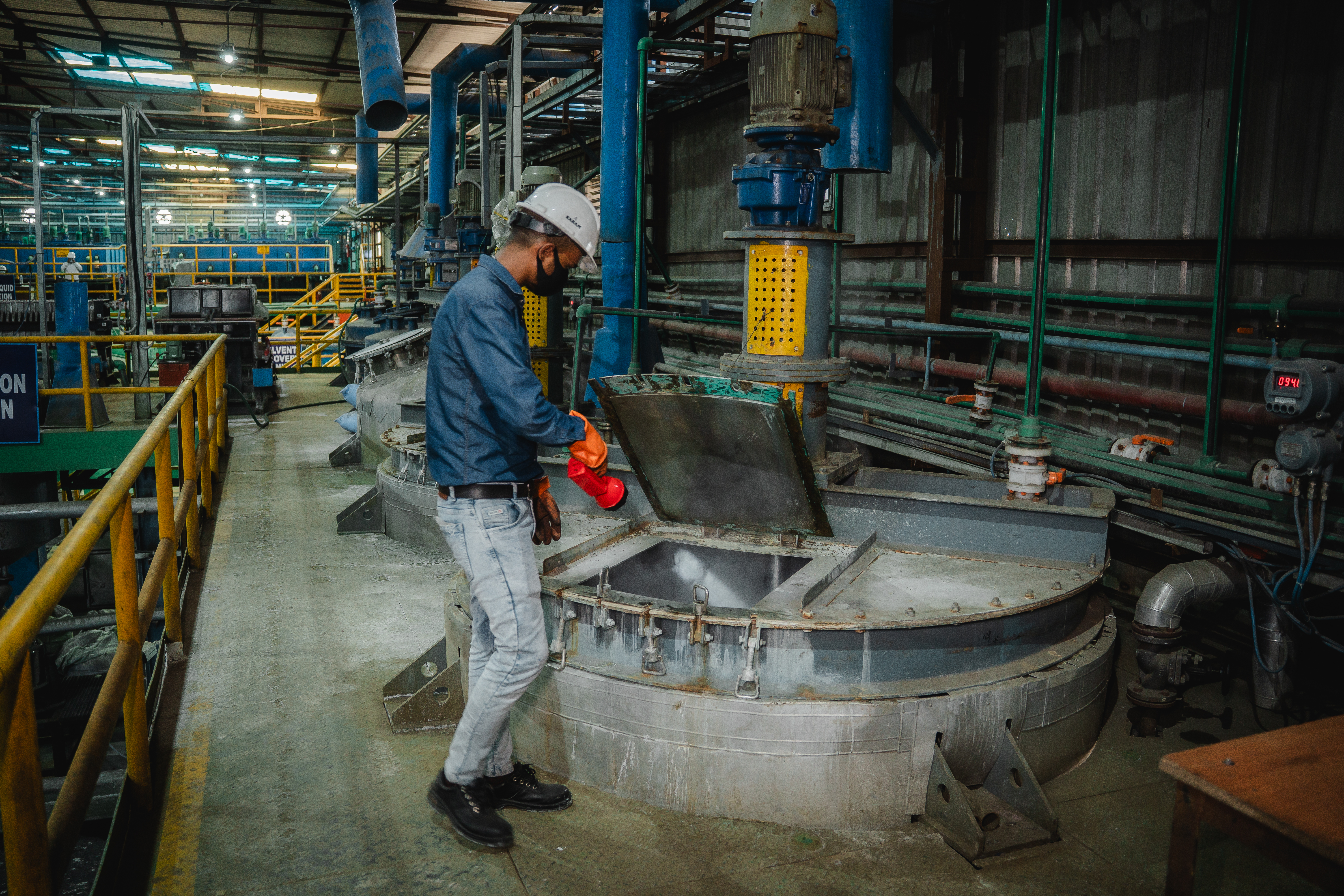
    Solar module recycling is critical for India’s energy transition as it addresses the dual challenge of managing growing solar waste and reducing dependence on imported raw materials. By recovering valuable resources like silicon, aluminium, and copper, recycling enhances resource efficiency, supports domestic manufacturing, and strengthens the resilience of India’s clean energy supply chain.

  • Which critical minerals are present in solar waste?

    Solar waste generated from crystalline silicon modules consists of critical minerals such as copper, silicon and tin, whereas thin-film cadmium telluride modules contain cadmium and tellurium.

  • What are the steps involved in solar module recycling?

    Solar module recycling involves three broad steps: disassembly of the module, delamination, and metal recovery. Disassembly is the step in which external components like metal frames and cables are removed from the laminated structure. Delamination involves separating the glass sheet, encapsulant, and the backsheet from the solar cells. Finally, metal recovery consists of various chemical processes to recover critical and precious metals from the cells.

  • What factors influence solar module recycling costs?

    The following factors play a significant role in the financial performance of solar module recycling: waste module procurement cost, collection cost, material composition of the modules, recovery rates of individual materials from solar waste, and purity levels of the recovered materials.

  • How can recycling costs be managed or reduced?

    Module recycling costs in India can be reduced through economies of scale, improved waste collection systems, and the adoption of advanced, energy-efficient technologies. Policy support such as subsidies, tax incentives, and inclusion of solar waste under Extended Producer Responsibility (EPR) can further lower costs. Developing local markets for recovered materials and integrating recycling into manufacturing supply chains will also enhance revenue streams, improving overall cost efficiency and financial viability.

  •  

HAVE A QUERY?

author image
Programme Associate

Sign up for the latest on our pioneering research

National Conclave
National Green Economy Conclave - Driving Jobs, Growth and Sustainability

26 Nov 2025   |   10:00 – 17:00 IST

Session brief:

India’s ambition to be a developed country by 2047 can receive a significant boost by embracing a Green Economy paradigm. A Green Economy is a market-positive, job-intensive, and low-carbon development pathway, which promises economic prosperity. It is India’s opportunity to be a global leader in demonstrating that growth can be profitably combined with a low-carbon development pathway. By 2047, India can aim to become the world’s largest green economy—setting the global agenda rather than following it.

The National Green Economy Conclave will convene leaders from government, industry, finance, philanthropy, academia, and entrepreneurship to debate pathways, spotlight scalable solutions, and identify what India needs to unlock this transition—from investment and R&D, to infrastructure and enabling ecosystems. Bringing together key institutional and industry voices, the Conclave will spotlight how the Green Economy can be India’s next engine of growth—delivering jobs, growth and sustainability. 

The Conclave will platform conversations among leaders on finance, policy, industry, innovation and philanthropy, and showcase presentations from inspiring stakeholders, business leaders, and entrepreneurs shaping India’s green transition.

For Event Queries

Yadu Kathuria

Communications Consultant
[email protected]

Key Speakers

Ten Years of Paris Agreement

Pages