Council on Energy, Environment and Water Integrated | International | Independent

In October 2022, more than 50 per cent of India’s rural households have a tap connection on their premises. The Jal Jeevan Mission, under which this expansion has taken place is targeting 100 per cent connections by 2024. Eight states and Union Territories (UTs) have already achieved tap water connectivity for 100 per cent of the households.
According to CEEW analysis, the proportion of rural households with access to an ‘improved’ drinking water source within the premises doubled between 2011 and 2018. However, this is the only comparable indicator from the available data sources across the years.
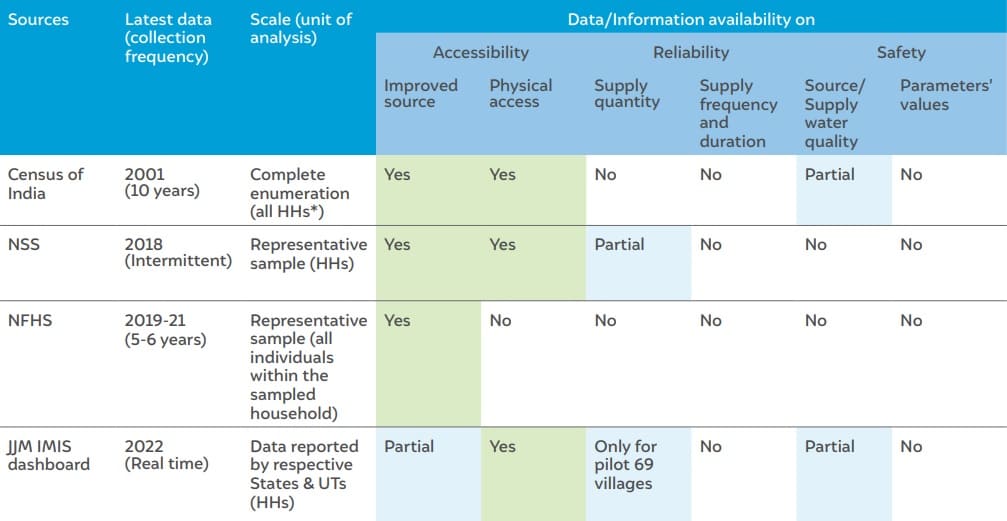
Currently, four primary government sources report data on rural drinking water services in India — the Census of India, the National Sample Survey (NSS), the National Family Health Survey (NFHS), and the Integrated Management Information System (IMIS) Dashboard under the Jal Jeevan Mission (JJM). However, as these surveys fulfil varied objectives, they do not include comparable standardised indicators. Let’s examine what their current gaps are.
1. These surveys are undertaken with different frequencies and mandates. On one end is the Census of India, last undertaken in 2011, while on the other end is the IMIS Dashboard that provides data in real-time. Between these we have data from 2018 from the NSS, and 2019-21 from the NFHS.
2. The unit of analysis of these surveys is also different. While the Census, NSS, and IMIS measure data in households, the NFHS measures it in terms of population.
3. At the intersection of everything, there is no harmonious understanding of rural drinking water quality, as the indicators are not reported by all the data sources. This makes it difficult for policymakers and water quality managers to arrive at the steps needed to increase access to safely managed drinking water services in rural areas.
Table ES 1: Data and information provided by various national government sources only partially cover all components of safely managed drinking water services
Source: Authors’ analysis
Note: *HHs refers to households
As the Jal Jeevan Mission increases penetration of physical access to water infrastructure, the need arises to measure whether these services are ‘safely managed’ or not. India needs a comprehensive Water Quality Index (WQI) that can standardise the water quality data available from different sources, and succinctly report on the several water quality parameters currently used in the domain.
A WQI would provide a single score that helps classify source water quality as excellent, good, medium, bad, or very bad. These scores can then be used to monitor changes in water quality over time, and highlight areas that need further investigation. Moreover, standardised scores are easier to communicate to the public and have the potential to increase citizen engagement with issues in the water sector.
The use of emerging and existing technologies in water monitoring needs scaling and investment. For instance, the Internet of Things (IoT)-based smart water supply monitoring system piloted under JJM can be extended to cover household-level water supply and quality parameters.
‘Har ghar nal’, said the Centre in 2019 as it launched the Jal Jeevan Mission. Since then, the mission to put every household on the water grid has only gone from strength to strength. The question now is of the jal from the nal. The next steps in this journey come from robust data collection and making ‘quality of water’ the talking point when it comes to drinking water accessibility.
For the full list of recommendations, read our report ‘How Safe are Drinking Water Services in Rural India?’ here.
Poojil Tiwari is a Communications Associate at the Council on Energy, Environment and Water (CEEW), an independent not-for-profit policy research institution. Send your comments to [email protected]
In 2018, as Kerala reeled under massive floods, the shutters of the Cheruthoni dam were opened after 26 years. The gushing water submerged the bridge connecting two ends of the town and erased houses and shops. The town’s arterial road partially caved in. Among the town’s residents who watched the disaster unfold in front of their eyes was E.P. Nasar, a 48-year-old auto-rickshaw driver.
“We learnt through the news media that the floodgates of Cheruthoni dam might be opened as the rain intensified and prolonged for days,” recalls Nasar. The residents on either side of the bridge watched helplessly as road connectivity was cut off. The district administration and rescue forces struggled to reach major parts of the town for disaster relief.
Nasar remembers that the destruction of the main road was the most grievous issue for the town. “A 1.5 km stretch of the road between Alinchuvadu and Cheruthoni collapsed partially,” says Nasar, adding that excavators could not reach the area as the remainder of the road was buried in mud. “That's how we became completely isolated,” he says.
According to CEEW analysis, Idukki received 60 per cent more rainfall than the average over the last decade in August 2018.
After the 2018 floods, the residents and the administration realised that with the rising impacts of climate change, measures must be taken to climate-proof the town’s critical infrastructure, such as roads and bridges.
“Despite the trail of destruction left by the floodwaters, the District Administration urgently intervened to ease our woes. They first made the road motorable,” says Nasar. The administration then commissioned the construction of a strong concrete wall along the approached road. To reduce the impact of gushing water if the floodgates were opened, tetrapods were also placed along the concrete wall.
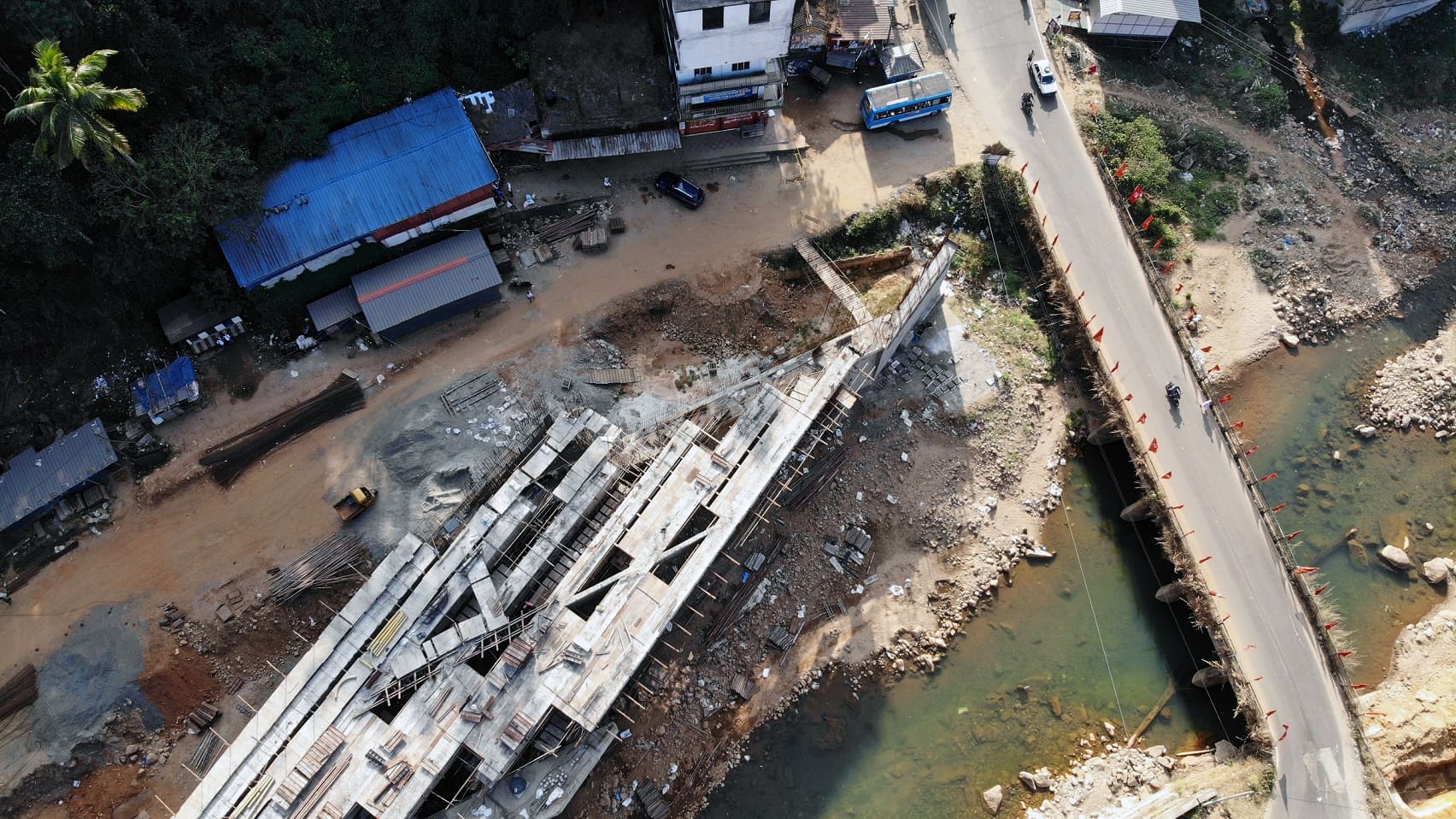
A concrete wall now protects the approach road, which partially caved in during the 2018 floods, to the Cheruthoni bridge. Photo: Shawn Sebastian
“Crores of rupees have been spent to make the road sturdy enough to withstand another major flood,” a confident Nasar says.
The government also took measures to build a new route to reach Cheruthoni town. The new road via Painav links 12 of the 14 wards of the panchayat and provides an alternative route using which officials and rescue forces can reach the town.
The town’s residents were also vocal about the need for a new sturdy bridge to replace the 60-year-old Cheruthoni bridge, which was submerged in 2018. The proposal was approved, and the construction is in progress.
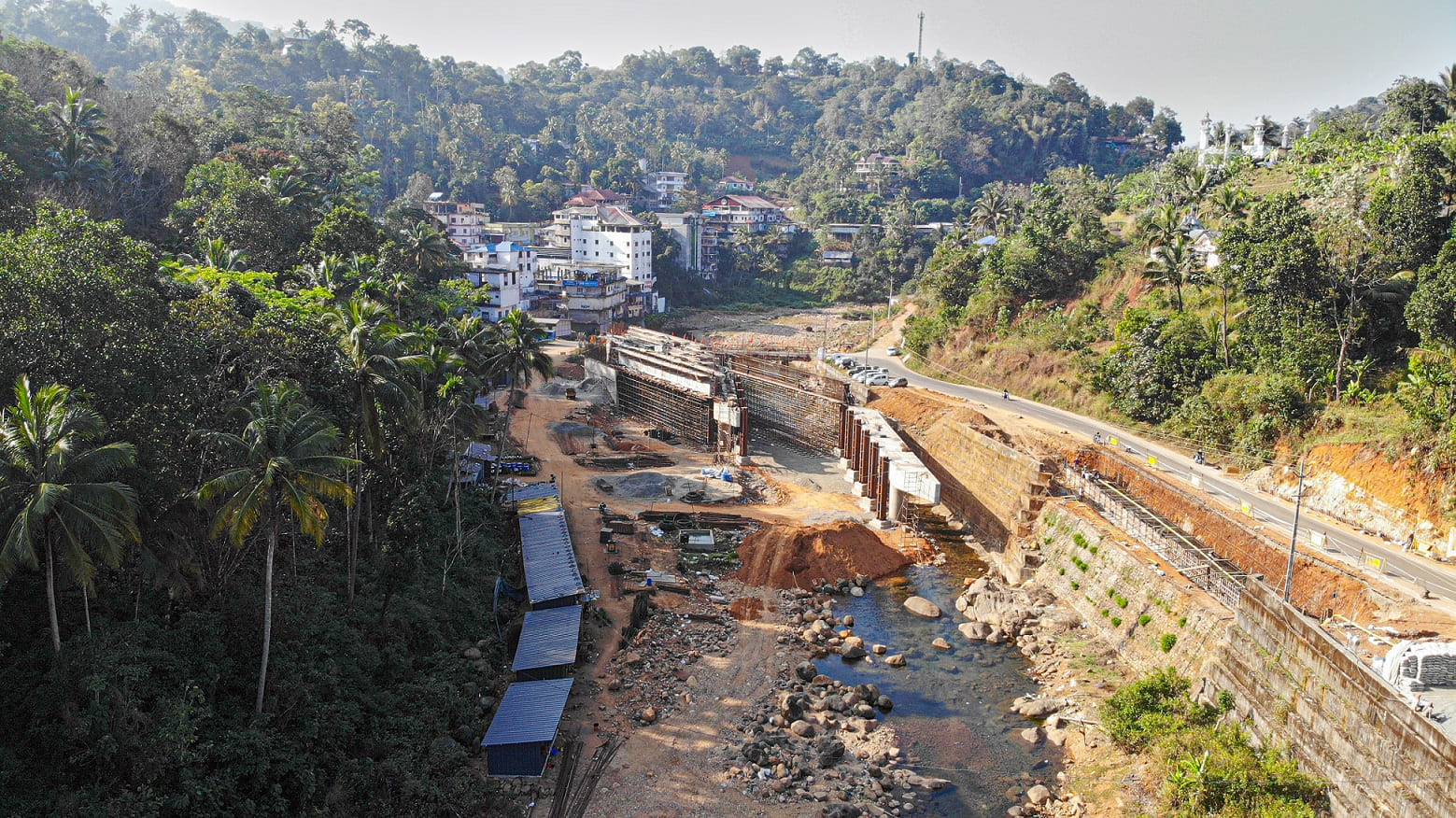
Over 50 per cent of the construction work of the new bridge that connects both ends of the town has been completed. Photo: Shawn Sebastian
Climate-proofing some of the critical infrastructures of the town has instilled confidence in the residents. “As far as the people of Idukki are concerned, Cheruthoni would not be isolated in the event of another flood,” Nasar says.
At a time when climate extreme events pose a serious threat to critical infrastructure, Cheruthoni points towards the need to develop a climate-proof infrastructure index for India. Such an index can help identify and map strategies to protect the country’s existing and planned infrastructure against climate risks.
Watch the full film here.
Prateek Aggarwal, Tarun Mehta, Chanmeet Singh Syal and Vaibhav Pratap Singh
October 2022 | ,
Suggested Citation: Aggarwal, Prateek, Tarun Mehta, Chanmeet Singh Syal, Vaibhav Pratap Singh. 2022. Approach for the regulatory treatment of the UDAY debt takeover. New Delhi: Council on Energy, Environment and Water.
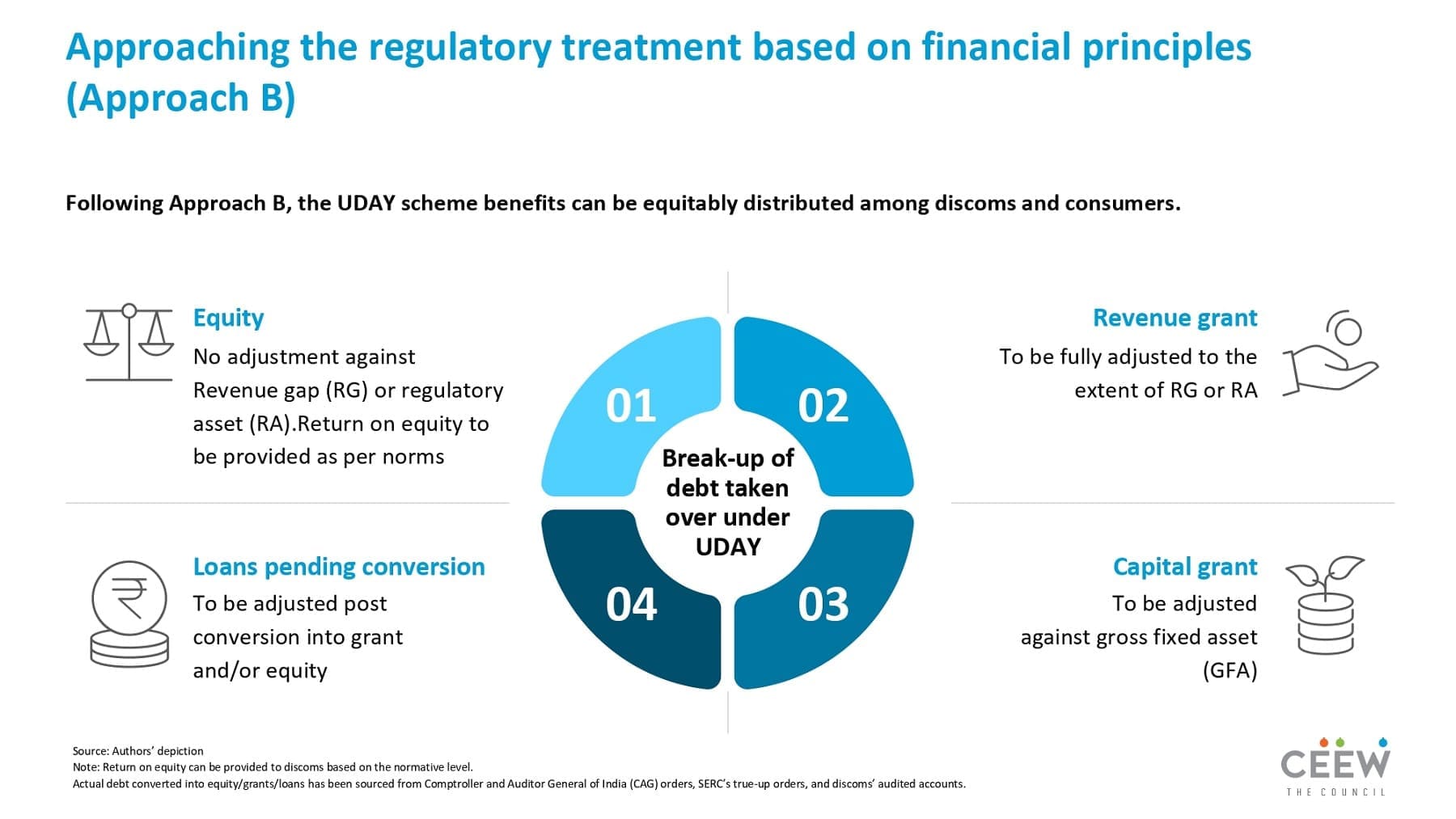
This study is a first of its kind and it reviews and analyses the impact of the regulatory treatment of the Ujwal DISCOM Assurance Yojana (UDAY) debt takeover on distribution companies (discoms) and consumers under two approaches: Approach A examines the regulatory treatment by state electricity regulatory commissions (SERCs) and Approach B looks at treatment based on financial principles.
Discoms from 16 states participated in the Ujwal Discom Assurance Yojana (UDAY) scheme for their financial turnaround and operational efficiency improvement1. As of 30 September 2015 (the launch date for the UDAY scheme), the total debt of the discoms of 15 states stood at INR 3.7 lakh crore, i.e.~93 per cent of the total debt of discoms in India2. Under the UDAY scheme, state governments were to take on over INR 2.3 lakh crore of discoms’ debt (~75 per cent of the INR 3.7 lakh crore debt).
The two approaches for regulatory adjustment provides insights for the Ministry of Power (MoP), Forum of Regulators (FoR), Appellate Tribunal for Electricity (APTEL), distribution companies (discoms), state electricity regulatory commissions (SERCs), state governments, and sectoral experts.
Notes
1 Overall, 32 states participated in the UDAY scheme. While 16 states participated to improve discoms’ financial and operational efficiency, the other 16 states participated to improve operational efficiency only.
2 Authors’ analysis based on the UDAY MoU for the 15 states that are covered in the study. Jammu and Kashmir has been excluded from our study due to a lack of data in the public domain.
3 Authors’ analysis based on the five states with reliable data

Subrat Kumar, a middle-aged farmer from Gupti village in Odisha’s Kendrapara district, had high hopes when he invested close to INR 0.15 million for paddy cultivation at the beginning of the Kharif season in 2021. He hoped that a good monsoon season would give his rain-fed paddy fields the irrigation required.
However, the months that followed did not go as planned for Kumar and scores of other farmers in the region — erratic monsoon followed the water-scarce summer months. Heavy rains left the farms inundated by the time of harvest in October.
“I had cultivated five acres of land and spent INR.0.15 million. But the flood destroyed everything,” Subrat says. “The rainy season began in August as usual, but it rained continuously for a week and then stopped for a week,” he adds. The rainfall which came after the lull period flooded the fields.
According to a 2020 analysis by the Government of Odisha, over 0.2 million hectares of agriculture and cropland suffered more than 33 per cent damage during the 2019 floods.
Ajay Kumar Sahu, 62, who cultivates paddy in a plot adjacent to Subrat, faced similar consequences. “Summers are not how they used to be. When the temperature starts rising, it becomes stiflingly hot. The rain is also unseasonal and late,’’ Ajay says about his observations on recent climatic change.
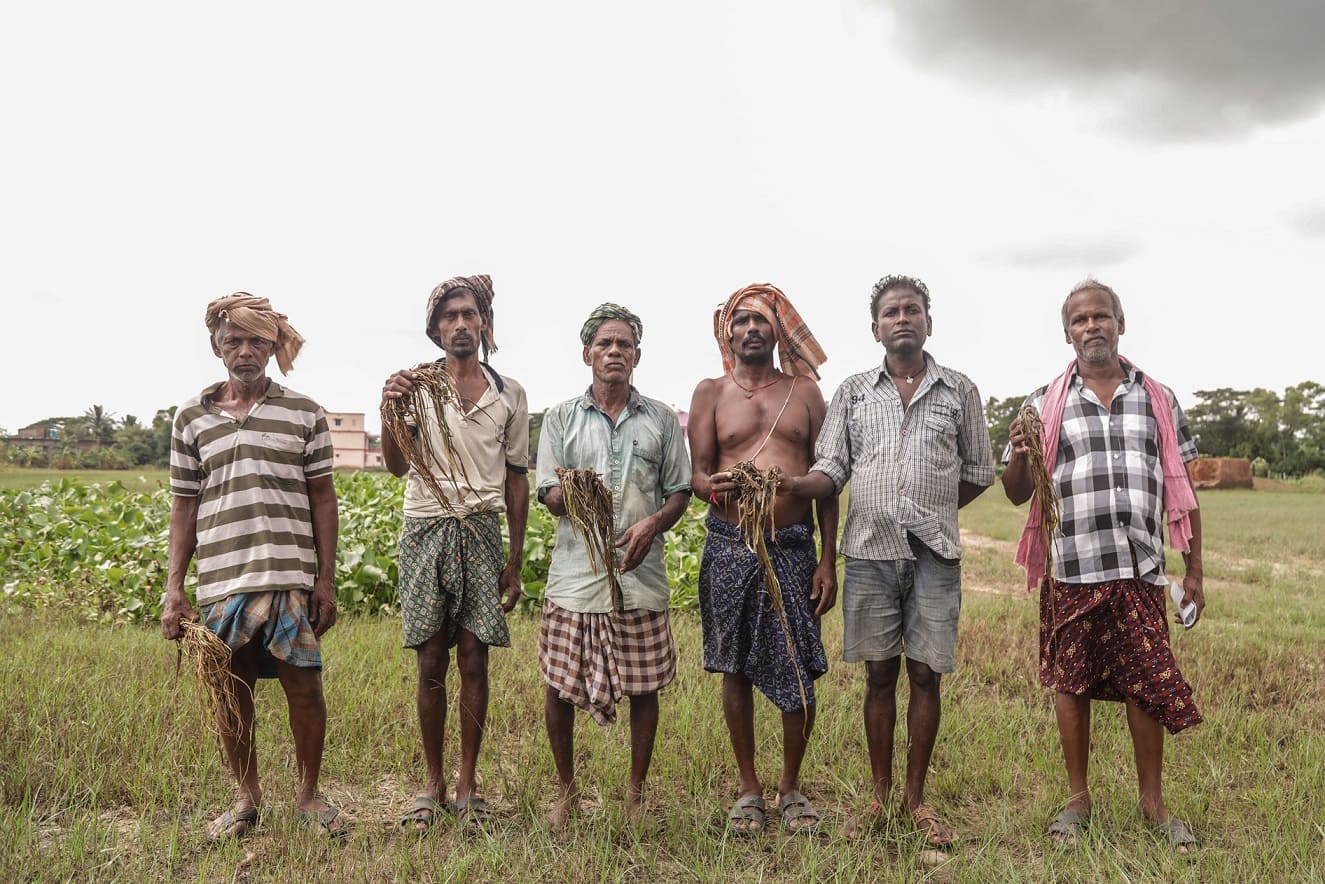
Farmers, including Subrat, hold the destroyed paddy crop. Most of them are marginal farmers owning upto three to five acres of land.
As per a CEEW analysis, Kendrapara district has recorded a 3X increase in the frequency and intensity of floods since 2000.
However, to overcome the crisis, the Belpada farmers have decided to return to certain traditional agricultural practices. Adjacent to his hybrid paddy crops, Ajay had also planted a paddy variety called ‘Pottiya’, which was cultivated by his forefathers. The traditional variety was not damaged in the flooding.
“The traditional crops can withstand floods for up to two months,’’ says Ajay, adding that the hybrid varieties get destroyed in 15 days.
Even though cultivated by their forefathers for generations, the farmers had shifted from varieties like ‘Pottiya’ and ‘Chatori’ to hybrid rice varieties over the years as they promised higher monetary returns. But, with monsoons becoming more unpredictable because of climate change, the high input cost of hybrid varieties has made them a risky venture. Realising the same, the farmers have decided to cultivate more traditional varieties.
“We will grow fewer hybrid varieties because the floods have been destroying our crops, and we are suffering huge losses,” Subrat says.
Recurring floods have clearly incurred substantial economic losses for the farmers. However, the resolve to adapt and cultivate more traditional crop varieties highlights their resilience to mend ways in the face of climate change.
Watch the full film here.
As a scorching April afternoon paves the way to a pleasant dusk in Kalu village, 90 kilometres northeast of Bikaner in the Indian state of Rajasthan, Prakash Naik shepherds his flock of 50 goats down a sand-dune. Prakash and the cattle are weary after their day-long journey in the Thar desert. Gulping water from his cloth-wrapped bottle, he says, “The temperature is rising. Rainfall is getting scantier.”
Pastoralists like Prakash are not unfamiliar with such hot conditions in a region where temperatures soar above 50 degrees Celsius in summers. But the rising temperatures have led to acute water shortages in recent years. Twenty-three year old Prakash asks, “When there is a drinking water shortage, how can we provide water for the cattle?”
Cattle rearing is the primary source of livelihood in Kalu village, where the rainfall is not sufficient for agriculture. The natural water bodies in the area have also been drying up in recent years. Coupled with diminishing green pastures for cattle, pastoralists in the region are facing an uncertain future because of the impacts of climate change.
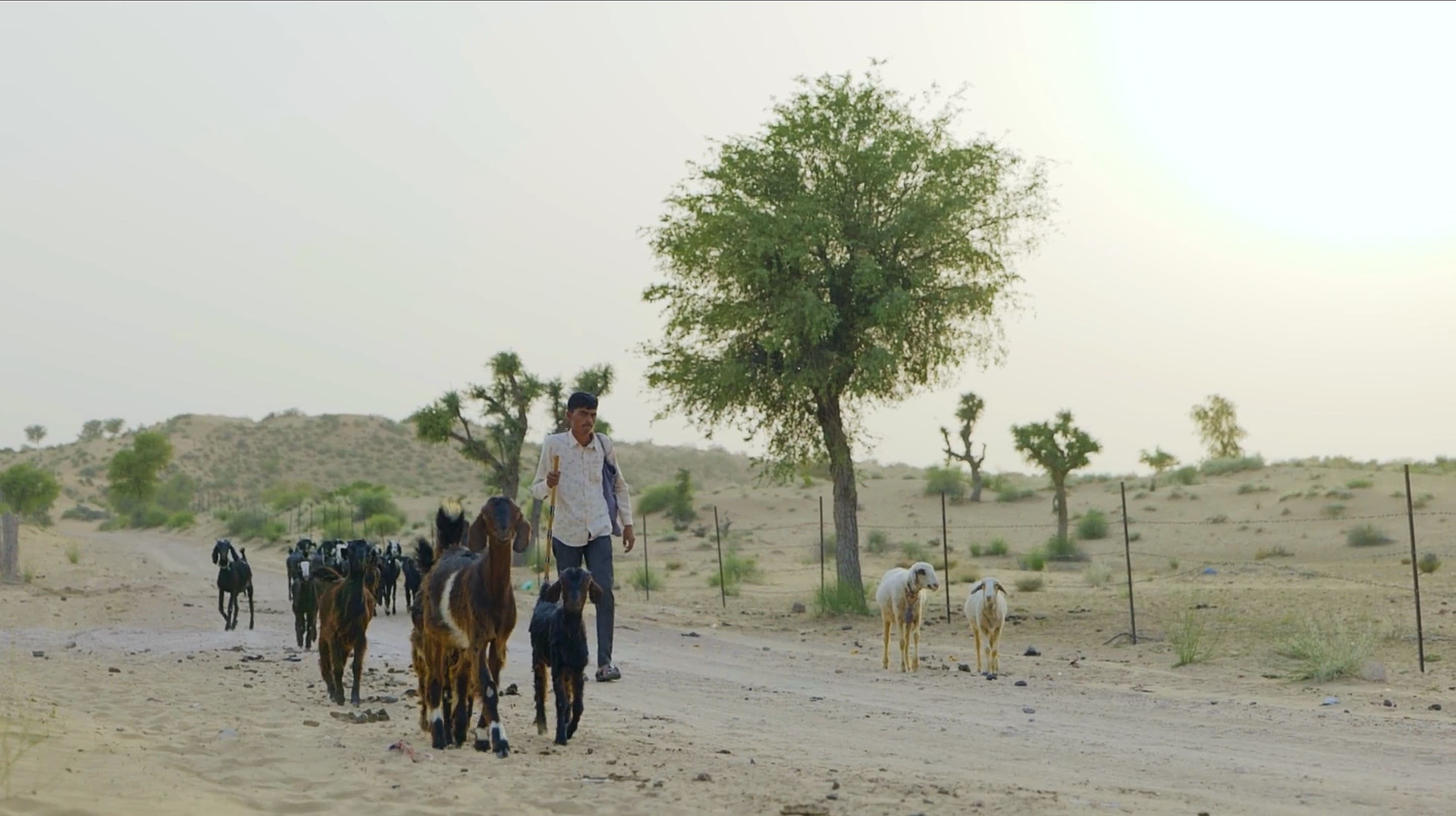
According to CEEW analysis, Rajasthan has recorded a six-fold increase in droughts since 2000. Photo: Shawn Sebastian
In an effort to help traditional pastoralists build climate resilience across the desert, Urmul Trust, a non-profit organisation, set up a Common Facility Centre (CFC) for shepherds and cattle in the village. Built under the aegis of the National Rainfed Area Authority (NRAA) of India and the Food and Agriculture Organisation (FAO), the facility ensures that the animals get timely fodder, water and health-care services.
Mola Ram, a Field Coordinator at Urmul Trust, says that the pilot project can be scaled up and replicated across the desert ecosystem. Detailing the infrastructure at the centre, Ram says, “We have constructed six-seven large water tanks, each of which can hold up to 20,000 litres of rainwater. If there is a drought, people can depend on this water for months.”
Another unique aspect of the centre is its climate-resilient architecture. Constructed with materials sourced locally, the centre remains cool in the summer and warm during winters. Rooftop solar panels are the source of power supply given its remote location.
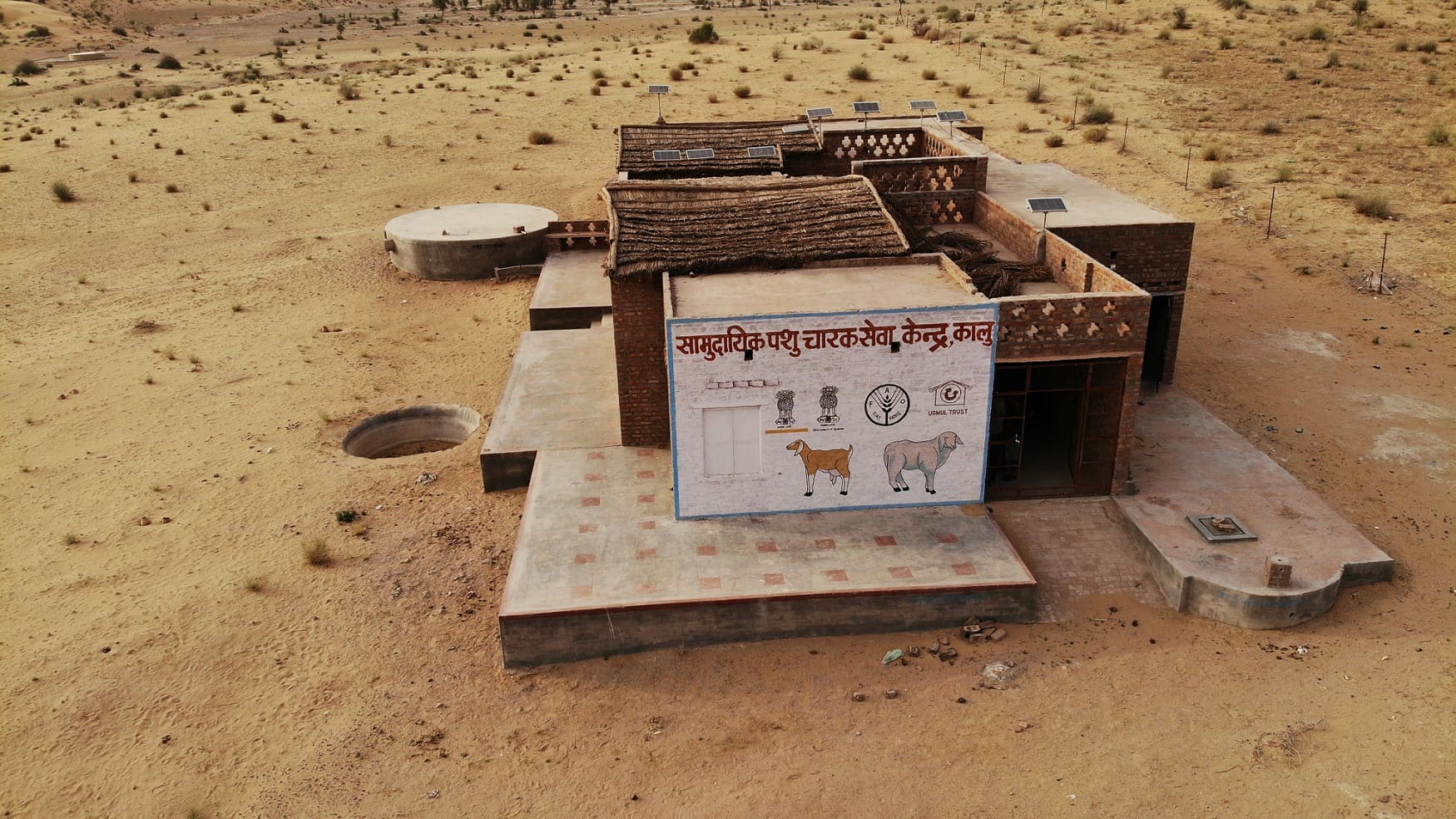
The CFC has been constructed with locally sourced materials that help to keep the temperature in check across seasons. Photo: Shawn Sebastian
In the scorching summer months, Prakash and his flock have been frequenting the centre. The cattle forage on vegetation around the centre. There is also enough water stored in the tanks. “If not for this centre, many of our cattle would have perished for want of fodder and water,” Prakash says.
While the centre is still in its pilot stages, the initiative at Kalu village shows that climate-resilient community shelters can reduce the exposure of pastoralists to extreme climate events.
Watch the full film here.
11 Oct 2022 | 10:00-13:00 ICT
The Centre for Energy Finance at the Council on Energy, Environment and Water (CEEW - CEF) welcomes you to a session on 'Advancing a low-cost energy transition in Viet Nam' on 11 Oct 2022, 1000-1300 ICT at the Meliá Hotel, Ha Noi, Viet Nam.
Viet Nam announced its intention to decarbonise its economy and achieve net-zero greenhouse gas (GHG) emissions by 2050 at COP26. Decarbonisation of the power sector, the largest contributor to economy-wide emissions, is central to the attainment of the net-zero goal
CEEW has, over the past several months, been developing a financial solution to bridge the gap between elevated perceptions of curtailment risk at present and a future grid that supports greater renewables penetration. The session will introduce its report 'Viet Nam Grid Integration Guarantee: A financial solution to mitigate curtailment risk for renewable energy projects'. This will be followed by a moderated panel discussion with experts on the Vietnamese power sector. The session will close with a networking lunch.

Richa Mehta
Consultant

Dr. Le Viet Anh
Dept of Science, Education, Natural Resources & Environment, Ministry of Planning & Investment
Government of Viet Nam
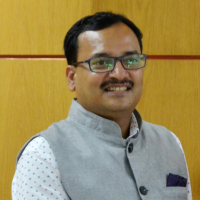
Subhash P. Gupta
Deputy Chief of Mission & Charge d'Affaires a.i.
Embassy of India, Hanoi Viet Nam

Ha Do
Senior Partner
KPMG
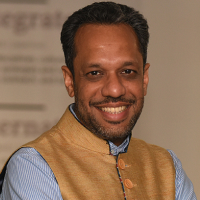
Dr Arunabha Ghosh
CEO
CEEW
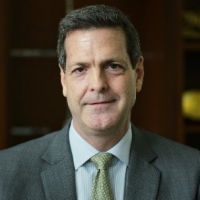
Andrew Jefferies
Country Director (Viet Nam)
Asia Development Bank
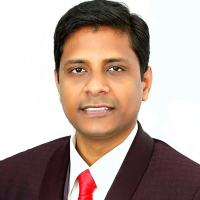
Vaibhav Saxena
Foreign Counsel
VILAF

Eric Nguyen
Country C&D Director (Viet Nam)
Shizen Energy Group
Gagan Sidhu
Director
CEEW - CEF/p>
Arjun Dutt
Senior Programme Lead,
CEEW - CEF
Like any other morning, the Versova harbour in the Indian city of Mumbai is bustling — a fleet of mechanised boats have just arrived with a fresh catch; trucks await the catch to be loaded to ferry them as far as southern and eastern India; small-scale fishmongers, mostly women, wait for their share to be sold across Mumbai. But, the Koli community, who call themselves the sons (and daughters) of Mumbai’s soil, say these are subdued scenes at the harbour.
The Kolis, who have been in the fishing business for generations, are now encountering an unfamiliar Arabian sea. According to CEEW analysis, Mumbai district has witnessed a two-fold increase in the frequency and intensity of extreme cyclone events since 2010. The frequent cyclones and the change in rainfall patterns have led to a loss of fishing days and reduced fish catch. The Kolis and many other fishing communities along India’s west coast are now battling the adverse impacts of climate change.
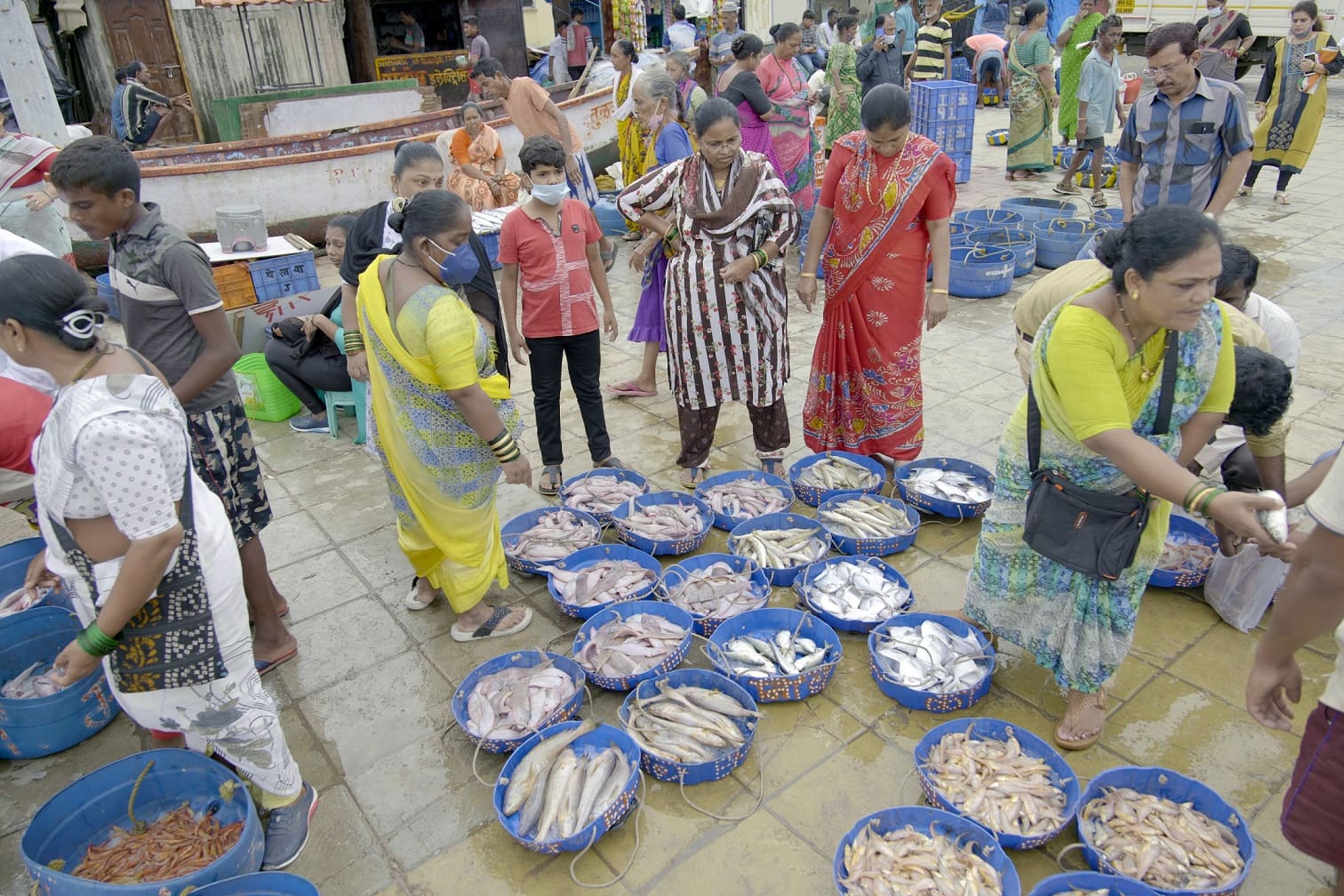
Fishmongers, mostly women, are selling the fresh catch that arrived at the Versova fishing harbour. Photo: Shawn Sebastian
Away from the bustle at the harbour, a few elderly men from the Koli community are contemplating the pressing issue at hand. Rajhans Tapke, a member of the National Association for Fishermen, says that the last three years have been hard for the community.
“When a cyclonic depression is formed, the traditional fishing grounds keep shifting. Now, it takes longer to find and catch fish,’’ Rajhans says. He adds that this hikes up the costs because of an increase in fuel consumption and other expenditure incurred while spending more time offshore while getting a lesser catch.
According to Rajhans, nearly 500 mechanised fishing vessels dotted the Versova harbour a decade ago, but not more than 100 are active today. Despite the recent challenges, the price at which the fish is sold has remained the same, and many boat owners now find it unviable to continue.
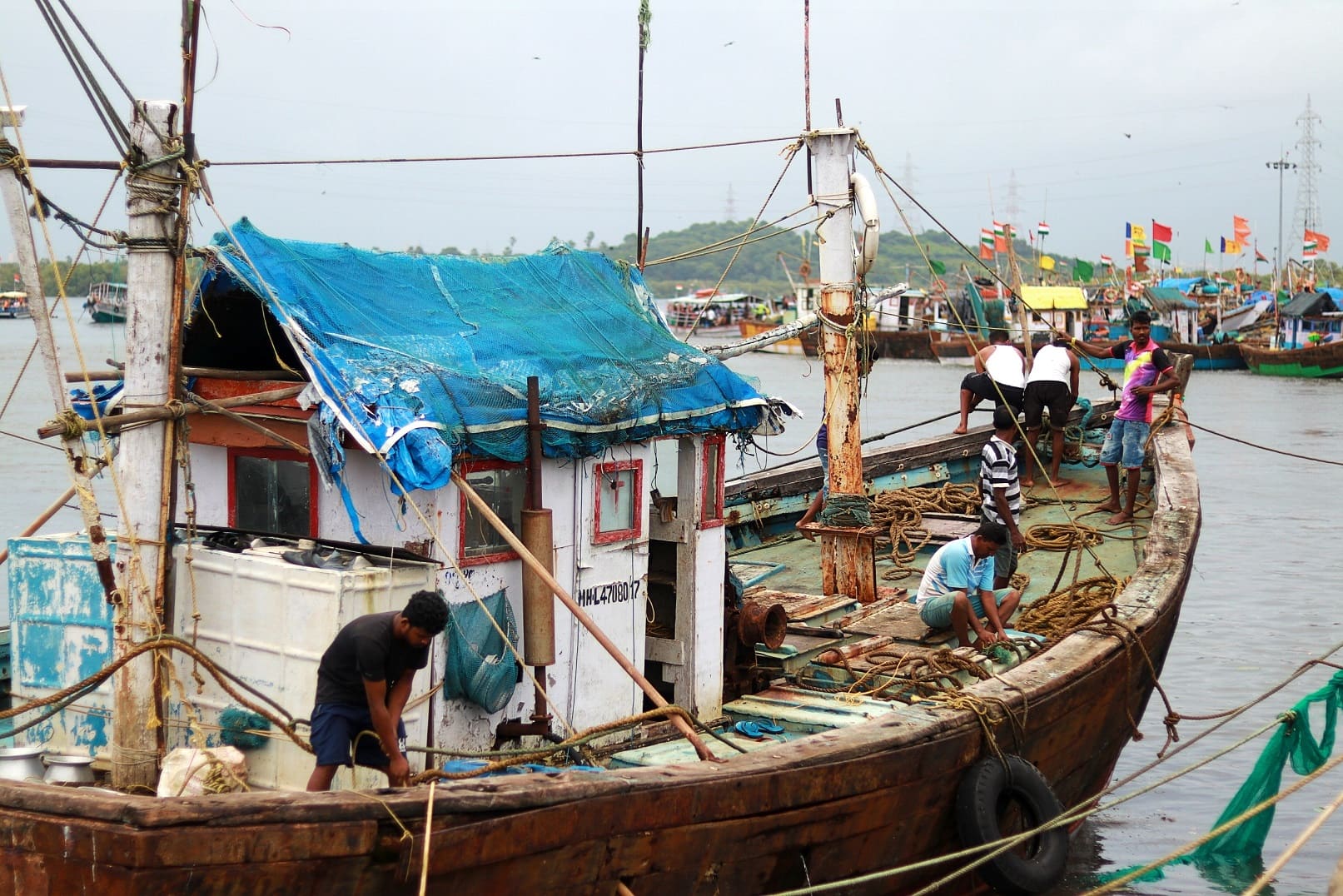
A mechanised fishing boat prepares for its long voyage deep into the Arabian sea. Photo: Milan George Jacob
Sunil Phoka, 52, who comes from a family of fishing vessel owners, agrees with Rajhans. “Earlier, the rainfall was predictable. From the onset of monsoon, the rains extended maximum till October,” Sunil says. Nowadays, it can rain anytime, and a cyclone can form at any moment. Due to multiple cyclone warnings in recent years, his boats had to be recalled several times, Sunil adds.
“I have to pay for the extra travel and for the manpower while we don’t make any additional revenue. Who will help me bear the added costs? On top of this, who would be even willing to go to the sea under such conditions?” Sunil asks.
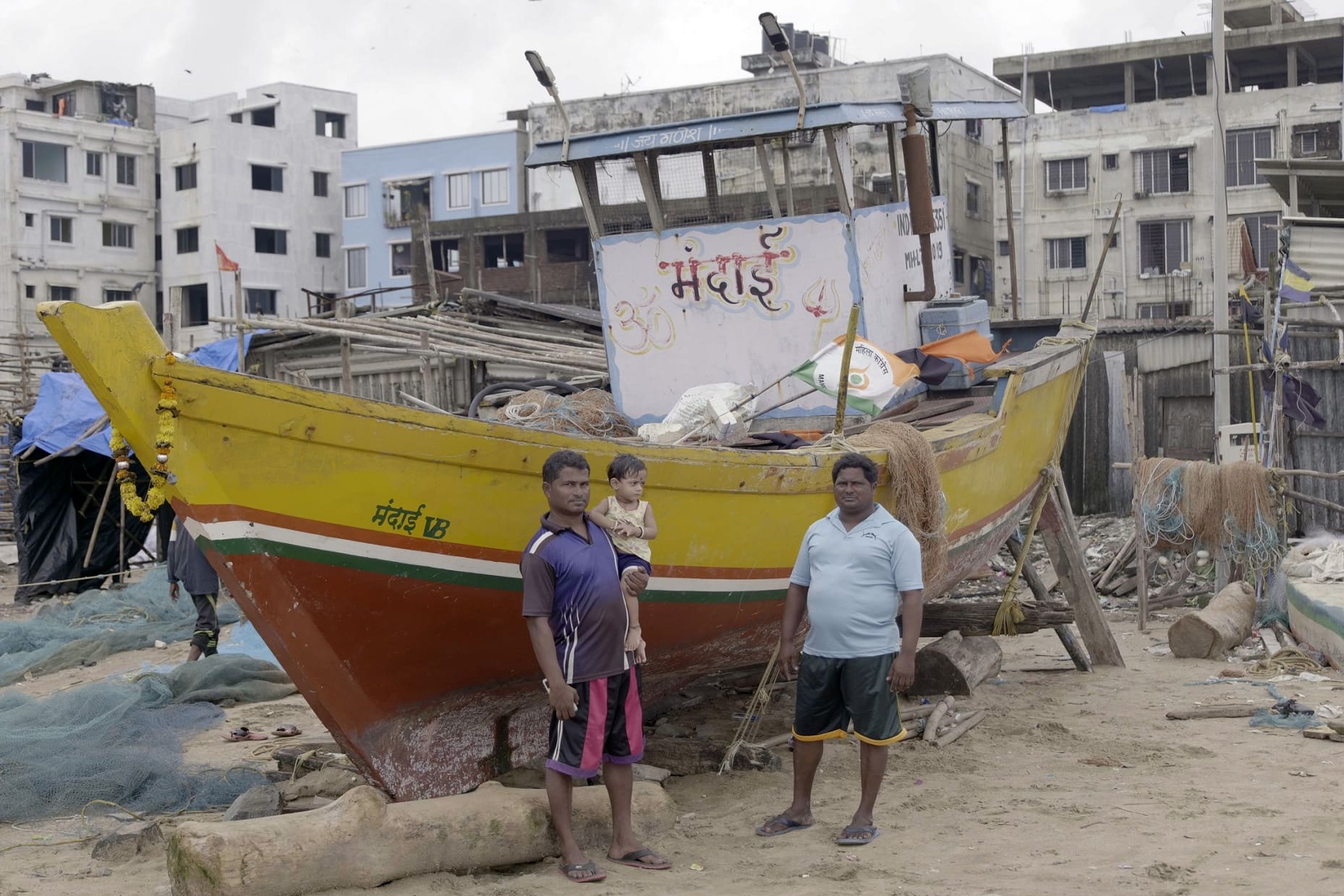
Jayaraj Hegde stands with his brother and child next to the boat that was damaged in cyclone Tuktae. Photo: Shawn Sebastian
Because of the increasing cyclone frequency, the Koli community is also concerned about the damage to their boats. Tucked away in a corner at the Versova beach was Jayaraj Hegde’s boat, damaged by cyclone Tauktae. Bending down, Jayraj was inspecting a hole in the bottom hull. Repairing the damages would cost him over INR 0.1 million. It was only a year ago when Jayaraj bought the boat for INR 1.1 million, but the unexpected damage put him on the back foot.
The allied fishing sectors, primarily a livelihood source for women, are also feeling the pinch because of erratic rainfall patterns. Sixty-one-year-old Jesubhai, engaged in the dry fish business for decades, says that she had been struggling because of the lack of sunlight for long spells of the year. “We can continue working only if there is enough sunlight. In recent years, it has become difficult to predict the rainfall patterns,” Jesubhai says.
Jesubhai and others sun-dry the fish on crisscrossing wooden poles on leased land near the beach. Fish stocks are rendered useless if they cannot be sun-dried. On the other hand, people like Jesubhai cannot reclaim their money from boat owners and land owners as they have to pay upfront. “Unseasonal rainfall means that we are forced to be at home without any income,’’ Jesubhai adds.
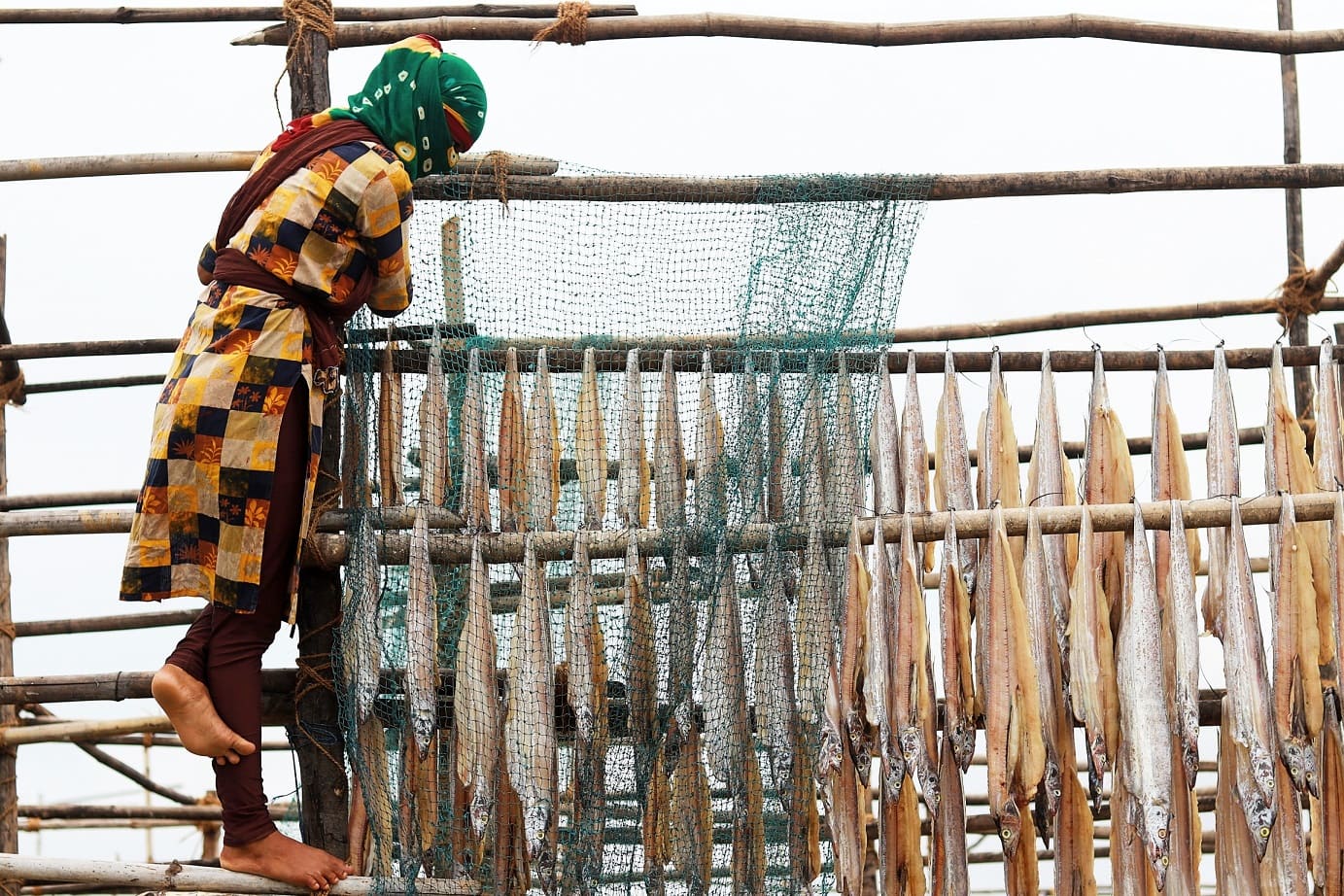
A woman dries fish on wooden poles near Versova beach. Photo: Milan George Jacob
More frequent cyclones and erratic rainfall patterns are detrimental to the Koli fishing community in Mumbai and fishing communities across India. With the younger generation exploring other employment opportunities, the Kolis are looking at a future where fewer people would be taking up their traditional occupations. In order to ensure the economic viability of fishing and allied businesses, there is a need to focus on developing precise, impact-based early warning systems. Besides, they also need to be provided adequate compensatory support for loss and damage incurred.
Watch the full film here.