




Home
Council on Energy, Environment and Water Integrated | International | Independent
OTHER PUBLICATIONS
09 December, 2024 |

HAVE A QUERY?

author image
Programme Manager - NGI Fellowship

HAVE A QUERY?

author image
Programme Manager - NGI Fellowship

Sign up for the latest on our pioneering research

REPORT
29 January, 2025 | , , ,

HAVE A QUERY?

author image
Fellow & Director - Green Economy and Impact Innovations

Frequently Asked Questions

  • What is India's green economy paradigm?

    A green economy paradigm for India must focus on: (i) mainstreaming sectors and value chains in the economy that further job-intensive economic growth while regenerating/safeguarding the natural capital; (ii) enhancing economic resilience by investing in sectors that would be relevant and thriving in a low-carbon and climate-changed world; (iii) expanding the ‘greening’ of the economy to include sustainability-oriented sectors, such as bio-economy, and nature-based solutions, the circular economy in addition to the energy transition and (iv) building the capacity and skills of the (future) workforce to actively transform the economy from extractive to a regenerative one.

  • What are the three key green economic sectors, and how were they identified for Odisha?

    The three green sectors identified are Green Energy Transition (ET), Circular Economy (CE), and Bioeconomy & Nature-based Solutions (BE and NbS). These were identified based on the following parameters: (i) evolving government policies (ii) growing interest from the private sector in India, ranging from large industries to start-ups, towards these sectors; (iii) the need to identify job-intensive growth opportunities in addition to energy transition (iv) the need to further economic activity across all levels of the economy – from microenterprises to large industries, and from primary to tertiary sectors.

  • What do the Energy Transition (ET), Circular Economy (CE), and Bio-economy & Nature-based Solutions’ (BE & NbS) sectors entail?

    ET involves adopting essential technologies to shift towards a non-fossil-fuel-based economy. We have identified 14 value chains within ET, including the deployment of renewable energy (RE) sources like solar and wind, decentralised applications of renewable energy for livelihoods, as well as the manufacturing of critical components needed for these sources. It also encompasses technologies, products, and services aimed at decarbonisation, such as EVs and GH2. Transitioning to greener energy sources has the potential to create significant job opportunities and unlock new markets. The CE is a system in which materials are never wasted and natural resources are restored. In this model, products and materials are cycled through processes such as maintenance, reuse, refurbishment, remanufacturing, recycling, and composting. We have identified four key value chains within CE – construction and demolition (C&D) waste, lithium-ion battery (LIB) waste, plastic waste, and electrical and electronic equipment waste (e-waste). BE is described as an efficient method of transforming and utilising biological resources to generate economic goods, thus fostering revenue growth towards realising a sustainable economy. It encompasses a broad range of value chains, including bio-inputs, biogas, bio-fibres, and biopackaging. While the BE focuses on product-based industry framing, NbS involve actions like protecting, restoring, or sustainably managing natural ecosystems to create income and job opportunities for local communities. It encompasses value chains such as agroforestry, ecological mangrove restoration, seaweed cultivation, sustainable forest management, and sustainable tourism. Within this combined sector, we have identified 10 value chains which could contribute to Odisha’s green transition.

  • How were the green economic value chains identified for Odisha?

    We estimate the job, market, and investment (J-M-I) potential for each of the green value chains till 2030. For jobs, only full time direct jobs are calculated with indirect and induced job opportunities described but not estimated. Additionally, for each value chain, we identify lead and allied government departments, challenges to implement and corresponding mitigation approaches, ecological risks at scale and a real-life story of success to inspire action.

  • What institutional mechanisms have been proposed to implement a green economy in Odisha?

    The study recommends forming a secretary-level committee and officers’ sub-committees to oversee the Green Odisha Initiative (GrOI). The Planning and Convergence Department (P&CD) would provide secretariat support, and a Common Results Framework (CRF) would help align schemes and monitor progress.

  • How is CEEW continuing to engage with the Green Odisha Initiative?

    The CEEW has signed an MoU with the Industrial Promotion and Investment Corporation of Odisha Limited (IPICOL), the single-point of contact for all industrial investments in the state — devises the investment promotion, facilitation and aftercare strategy for Odisha. As per the MoU the CEEW will serve as knowledge partners to the government and support through a Project Management Unit.

  •  

HAVE A QUERY?

author image
Fellow & Director - Green Economy and Impact Innovations

Sign up for the latest on our pioneering research

REPORT
16 December, 2024 |

HAVE A QUERY?

author image
Programme Associate

HAVE A QUERY?

author image
Programme Associate

Sign up for the latest on our pioneering research

REPORT
20 December, 2024 |

HAVE A QUERY?

HAVE A QUERY?

Sign up for the latest on our pioneering research

PAPER
16 December, 2024 | , , ,

HAVE A QUERY?

Frequently Asked Questions

  • What challenges does India face in creating circular value chains?

    Cross-sectoral systemic challenges exist that hinder the expansion of circular value chains- policy and government coordination, supply chain vulnerabilities, lack of traceability, inefficiency and stagnated innovation development, infrastructure and logistics deficiencies, low economic viability and market development, and social and behavioural barriers.

  • What steps has the Indian government taken towards mainstreaming circularity within the economy?

    India’s Lifestyles for Sustainable Development (LiFE), Swachh Bharat Mission, Draft National Resource Efficiency Policy, introduction of Extended Producer Responsibility(EPR) framework for various waste management regulations, and Resource Efficiency and Circular Economy Industry Coalition (RECEIC) launched during the 4th G20 Environment and Climate Sustainability Working Group (ECSWG) and Environment and Climate Ministers meeting during India’s G20 presidency.

  • What measures can be taken to address challenges and promote circular economy practices?

    Overarching interventions that advance recycling technologies and circular product designs can promote infrastructure development, enhance traceability, provide cohesive policy frameworks, increase investments in circularity, develop capacity, and boost cross-sectoral collaboration, enabling a circular economy transition across sectors.

  • How does circularity impact sustainable development?

    Mainstreaming circularity can directly improve progress towards SDG 8—Decent work and economic growth, SDG 9—Industry, innovation, and infrastructure, SDG 11— Sustainable cities and communities, and SDG 12—Responsible consumption and production. Additionally, practising circularity in sectors like agriculture and wastewater supports SDG 2—Zero hunger, SDG 6—Clean water and sanitation, and SDG 14—Life below water.

  • Which key sectors can be targeted for the adoption of circular practices?

    The report identifies solar panels, batteries, steel, construction and demolition, agriculture waste, wastewater, and organicwaste as key sectors that could lead the transition to a circular economy.

  •  

HAVE A QUERY?

Sign up for the latest on our pioneering research

PAPER
16 October, 2024 | ,

HAVE A QUERY?

author image
Senior Programme Lead

Frequently Asked Questions

  • Why is addressing river plastic pollution considered urgent?

    River plastic pollution significantly impacts biodiversity, public health, and economies worldwide. Rivers act as conduits for plastic waste to enter oceans, threatening aquatic and terrestrial ecosystems. The urgency lies in mitigating these effects to ensure environmental and socio-economic stability.

  • How does philanthropy contribute to river conservation?

    Philanthropy provides critical funding for research and development, supports community-led initiatives, and facilitates innovative technologies. It helps bridge funding gaps, enabling collaborative efforts across governments, corporations, and NGOs to address plastic pollution.

  • What role does the private sector play in river conservation?

    The private sector contributes through Corporate Social Responsibility (CSR) initiatives, aligning business interests with environmental goals. Companies invest in sustainable practices, promote circular economy models, and develop innovative solutions for waste management.

  • What is the circular economy, and how does it relate to river conservation?

    A circular economy focuses on reducing waste, reusing materials, and recycling products to minimise environmental impact. In river conservation, adopting this model can help mitigate plastic waste in rivers and transform waste into valuable resources, fostering sustainable development.

  •  

HAVE A QUERY?

author image
Senior Programme Lead

Sign up for the latest on our pioneering research

Report Launch
Pathways for Building a Circular Economy in India

16 Dec 2024   |   1330 – 1700 IST

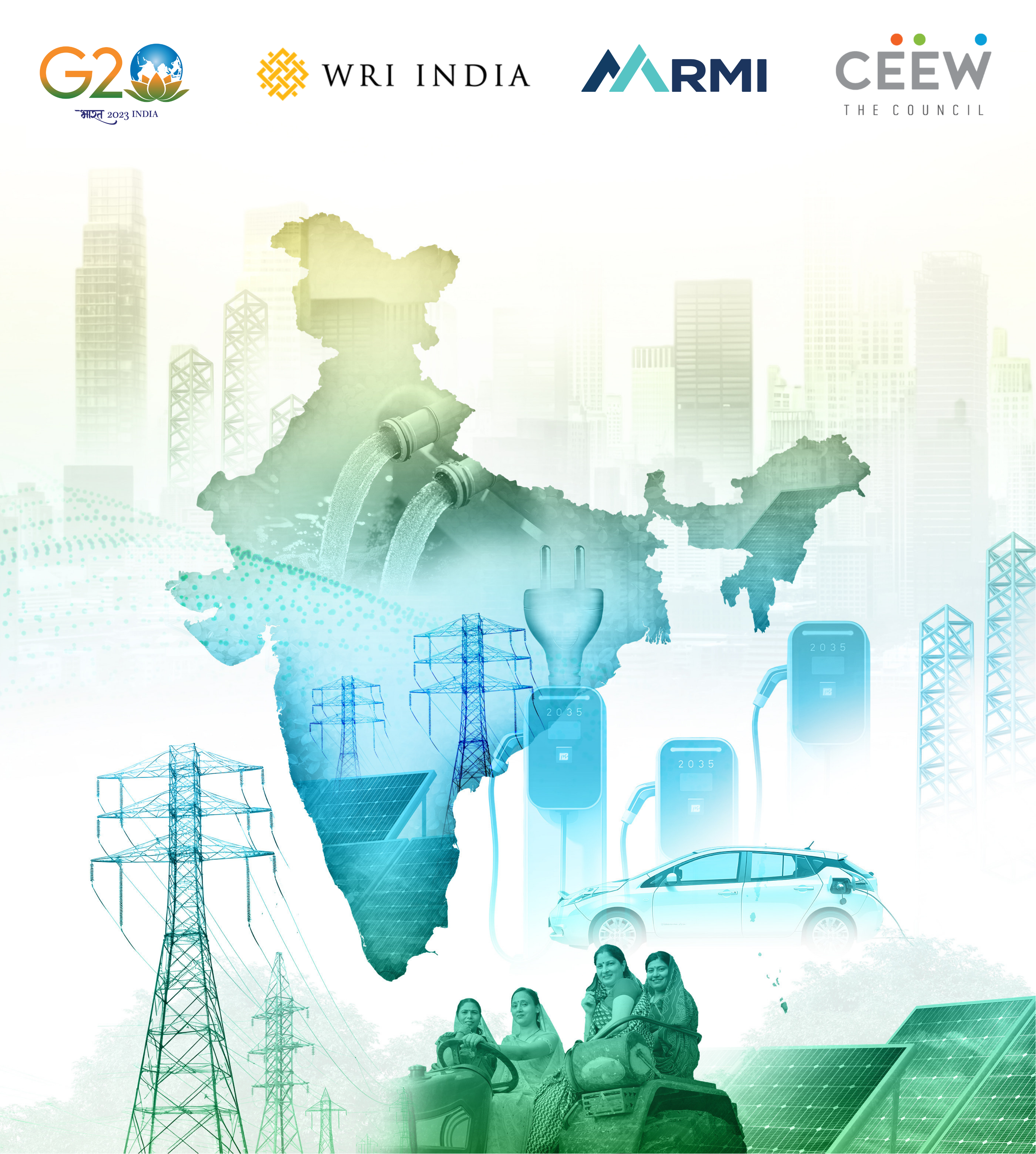
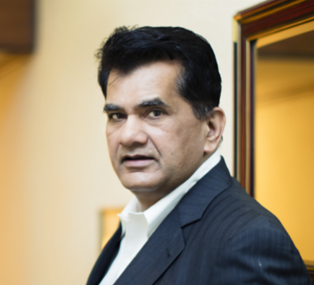
CEEW, WRI India and RMI are pleased to invite you to the launch of the discussion paper on 'Unlocking India’s Circular Economy Potential: Insights Across Seven Key Sectors' on 16 December 2024 (Monday) from 1330 – 1700 IST, at Taj Mahal Hotel (Mansingh Hall), Man Singh Road, New Delhi. Shri Amitabh Kant, G20 Sherpa, India, will deliver the keynote address at the session. 

The discussion paper is a strategic resource for the G20 Secretariat. It aims to chart a vision for India's ambitions regarding circular and sustainable growth across seven critical sectors: solar panels, batteries, steel, construction, agricultural waste, wastewater, and municipal solid waste. It provides an overview of the current policy, market, and technological landscape of circularity. It offers actionable guidance for ministries and key stakeholders to drive impactful change and develop circular supply chains.

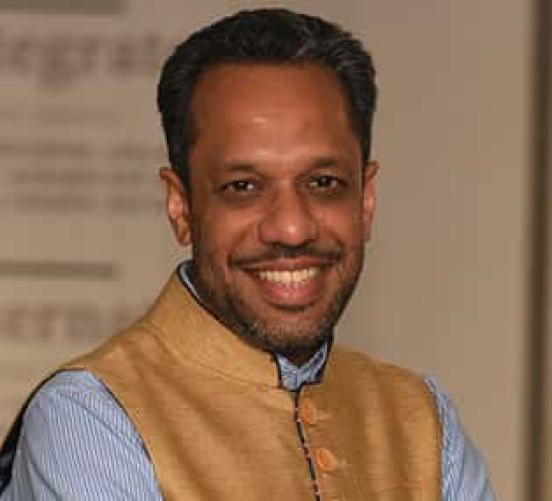
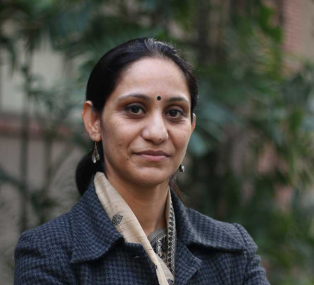
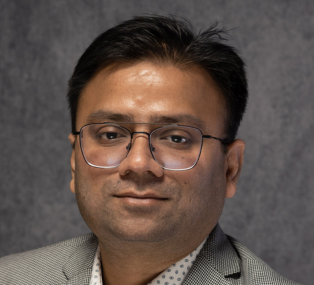
The event will also see a panel discussion with Shri Amitabh Kant (G20 Sherpa, India), Ms Akshima Ghate (Managing Director, RMI - India Program), Dr Arunabha Ghosh (CEO, CEEW) and Mr Sree Kumar Kumaraswamy (Program Director - Clean Air Action, WRI India).

Please note that this is an in-person event.

For Event Queries

Yadu Kathuria

Communications Consultant
[email protected]

Key Speakers

ISSUE BRIEF
16 December, 2024 |

HAVE A QUERY?

Frequently Asked Questions

  • What is the significance of long-term modelling for Indian states’ climate policies?

    Long-term modelling using Integrated Assessment Models (IAMs) helps states visualize future economic growth, energy needs and emissions pathways. These insights enable state governments to plan for net-zero transition strategies tailored to their unique socioeconomic contexts and resource availability.

  • Why is building trust with state-level stakeholders important for decarbonisation planning?

    Trust ensures that state departments actively participate in the planning process to co-create the decarbonisation strategy. Sustained and structured engagement builds trust over time.

  • What challenges do Indian states face in data collection for decarbonisation modelling?

    States lack granular data for fuel consumption even while over data is available. However, these challenges can be addressed through reasonable assumptions with validation from state officials.

  • How should modelling results be communicated to state stakeholders?

    Modelling results should be shared as actionable insights rather than raw numbers. Continuous engagement and scenario-based discussions help stakeholders visualize future possibilities. Framing decarbonisation as an economic transformation opportunity resonates more effectively than focusing solely on environmental benefits.

  • What role does governance play in the successful implementation of decarbonisation strategies?

    Effective governance ensures coordinated action across various departments and regular progress monitoring. A robust measurement, reporting, and verification (MRV) system is essential for tracking progress and taking corrective measures when required.

  •  

HAVE A QUERY?

Sign up for the latest on our pioneering research

Sanyogita Satpute

Sanyogita Satpute

Programme Associate

Sanyogita is a Programme Associate in the Power Markets team at The Council. Her current work mainly focuses on the smooth integration of renewable energy into the power grid to sustainably meet India's increasing electricity demand while achieving the decarbonisation targets.

Sanyogita holds a Master's degree in Public Policy from Kautilya School of Public Policy, Hyderabad, with a double specialization in Economics and International Relations, and has a B. Tech in Mechanical Engineering from Walchand College of Engineering, Sangli.

Before joining The Council, Sanyogita worked as a Short-term Consultant at the World Bank's Macroeconomics, Trade, and Investment vertical, where she primarily worked on macro-fiscal policies and sustainability indicators for Indian states. Before her Master's, she worked at Bajaj Auto, Pune, leading functions like New Product Introduction, Process Improvement, Capacity Building, and Line Readiness for Pulsar and Avenger models as an Assistant Manager.

During her Master's, she worked as a Teaching Assistant for the courses on Macroeconomics and Econometrics. During this period, she interned with Telangana Industrial Health Clinic (Industries & Commerce Department, Govt. of Telangana), working on the financial challenges faced by automobile SMEs in the Hyderabad region and later with an economics research group, working on projects under 'Women and Work' domain. Her master's thesis focussed on exploring the relationship between the time spent by women on unpaid domestic work and social infrastructure policies using cross-sectional data across all the Indian states.

She loves playing sports, especially table tennis and cricket and has participated in tournaments at various levels. In her leisure time, she often enjoys delving into soulful music, cinema, and literature and occasionally tries her hand at painting and photography.
  • 20kmsmaximum distance covered while running
  • 9extra credits earned during masters
  • 6number of forts trekked
  • What I believe in


    I prefer to be a dreamer among the humblest, with visions to be realized, than lord among those without dreams and desires

    - Khalil Gibran

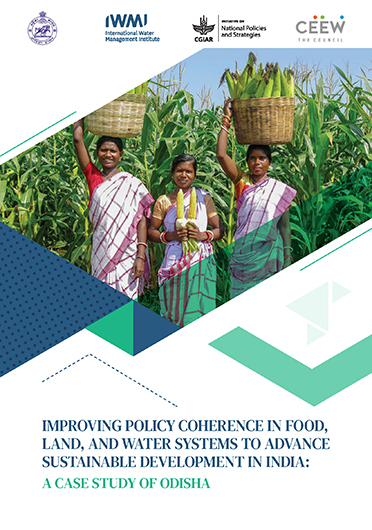
Improving Policy Coherence In Food, Land, And Water Systems To Advance Sustainable Development In India:

A CASE STUDY OF ODISHA

Dr Suparana Katyaini, Kangkanika Neog, Tejaswi Joshi, Upasana Negi, Shashwat Shukla, Don Mani Paul, Nitin Bassi, Archisman Mitra, Garima Taneja, Suruchidipta Bhattacharjee, Alok Sikka, Juan Carlos Sanchez Ramirez and Alan Nicol
November 2024 |

Suggested citation: Council on Energy, Environment and Water (CEEW); International Water Management Institute (IWMI). 2024.Improving Policy Coherence in Food, Land, and Water Systems to Advance Sustainable Development in India A Case Study of Odisha. Colombo, Sri Lanka: International Water Management Institute (IWMI). CGIAR Initiative on National Policies and Strategies. 104p.


Overview

This report delves into the critical issue of policy coherence within the interconnected Food, Land, and Water (FLW) systems in Odisha. Guided by the Department of Agriculture and Farmers’ Empowerment, Government of Odisha, the study outlines key practices and actionable recommendations for improving the effectiveness of FLW policies at state and national levels to enhance sustainability, water security, food security, and rural development and climate resilience.

The analysis covers nine significant national and state-specific policies that promote sustainable development in Odisha. By utilising an innovative multidimensional framework, the study offers strategic insights for policymakers, researchers, and practitioners.

Key Highlights:

  • Comprehensive policy landscape mapping: The study identified 149 policies relevant to FLW systems across nine departments in Odisha, highlighting the state's commitment to evidence-based policy formulation.
  • Coverage of multiple dimensions of policy coherence: A multidimensional framework was employed, focusing on vertical and horizontal institutional coordination, external consistencies, convergence opportunities, flexibility, and social inclusion.
  • Enhanced institutional coordination: Strong horizontal and vertical coordination is evident at national and state levels, emphasising the need for similar integration at sub-district levels to ensure cohesive implementation.
  • Marketing as skill development as a promising avenue of policy convergence: Effective integration of national and state schemes is showcased in areas such as watershed management and farmer support initiatives, highlighting the importance of collaborative efforts. Marketing emerges as a critical convergence point for enhancing farmer incomes, though skill development and farmer organisation formation remain challenging areas requiring focused attention through integrated approaches.
  • Established mechanisms for adaptive policy responses to changes: Odisha's significant strides towards integration of climate resilience in agricultural and water resource policies to promote climate-smart practices and efficient resource use marks the adaptability of policies to emerging scientific knowledge. Policies demonstrate flexibility during crises, allowing for adaptive implementation mechanisms that respond to evolving challenges. Regular revisions, incorporating third-party evaluations, ensure policies remain relevant and responsive to on-ground realities.
  • Advancing Social Inclusion through innovative and context-specific strategies: Innovative strategies to include vulnerable groups such as landless farmers, tribal communities, and women entrepreneurs, yet highlight a need for enhanced outreach and capacity-building programs to close awareness gaps.
"Policy coherence is the key to unlocking the full potential of Odisha's food, land and water systems. Inter-sectoral collaboration, participatory planning, and data-driven decision- making is enabling the transition towards a water-secure, food-secure and equitable future."

Sign up for the latest on our pioneering research

Pages