Home
Council on Energy, Environment and Water Integrated | International | Independent
PAPER
30 May, 2025 |

HAVE A QUERY?

Frequently Asked Questions

  • How will Odisha balance economic growth with sustainability in its transition to a trillion-dollar economy?

    Odisha plans to expand its manufacturing sector while implementing sustainable mining practices, green industrial policies, and just transition strategies to ensure environmental and economic stability.

  • What policies will be introduced to support a net-zero transition while maintaining employment in key industries?

    The transition will involve carbon pricing mechanisms, incentives for green industries, skill development for displaced workers, and investments in clean technologies like green hydrogen and carbon capture.

  • How will Odisha ensure climate resilience in the face of increasing natural disasters and extreme weather events?

    The framework emphasizes climate adaptation strategies, disaster-resilient infrastructure, early warning systems, and sustainable water resource management to mitigate climate risks.

  • What measures will be taken to prevent biodiversity loss and human-wildlife conflicts amid industrial expansion?

    The government plans to enforce strict environmental regulations, establish wildlife corridors, promote reforestation, and engage local communities in conservation efforts.

  • How will urbanization be managed to ensure equitable access to housing, transportation, and basic services?

    Future policies will focus on planned urban expansion, affordable housing, sustainable public transport, and infrastructure development to accommodate the growing urban population.

  •  

HAVE A QUERY?

Sign up for the latest on our pioneering research

OTHER PUBLICATIONS
11 June, 2025 |

HAVE A QUERY?

HAVE A QUERY?

Sign up for the latest on our pioneering research

ISSUE BRIEF
29 May, 2025 |

HAVE A QUERY?

author image
Programme Associate

Frequently Asked Questions

  • What are the health risks associated with exposure to construction dust?

    Exposure to construction dust is linked to severe health problems, including cardiovascular and respiratory diseases, chronic obstructive pulmonary disease, lung cancer, and silicosis.

  • Are there existing regulations in India to control construction pollution?

    Yes, India has a diverse legislative framework including the Environment Protection Act, 1986 (with EIA Notifications and 2018 amendments), the National Building Code, 2016, the Construction and Demolition Waste Management Rules, 2016, and the Solid Waste Management Rules, 201615.... Additionally, bodies like the CAQM issue statutory directions.

  • What are the main gaps identified in the current pollution monitoring regime for construction sites?

    Key gaps include a lack of clarity on which monitoring technologies to use, where and how to install monitors, how to utilise the collected data effectively, and the absence of standardised pollution thresholds for construction sites.

  • What are the recommended strategies for deploying AQ monitors at construction sites?

    Yes, India has a diverse legislative framework including the Environment Protection Act, 1986 (with EIA Notifications and 2018 amendments), the National Building Code, 2016, the Construction and Demolition Waste Management Rules, 2016, and the Solid Waste Management Rules, 2016-15. Additionally, bodies like the CAQM issue statutory directions.

  • How can the data from AQ monitors be used to manage pollution at construction sites?

    AQ data, combined with meteorological data, can be used to predict pollutant levels, identify polluting activities, inform mitigation strategies, integrate into construction schedules, issue alerts for high pollution events, and support targeted regulatory actions and bans.

  • Why are pollution thresholds important for construction sites?

    Establishing pollution thresholds is essential to differentiate the impact of construction activities from other pollution sources, assess the localised air quality impact, identify non-compliant sites, and enable timely, targeted regulatory responses based on data.

  • What is the role of human behaviour in dust mitigation?

    Yes, the study explores the potential of behavioural insights and interventions to improve compliance with clean construction practices among workers and site managers, noting that a lack of awareness, environmental conditions and motivation can be barriers.

  •  

HAVE A QUERY?

author image
Programme Associate

Sign up for the latest on our pioneering research

REPORT
27 May, 2025 |

HAVE A QUERY?

author image
Senior Programme Lead

HAVE A QUERY?

author image
Senior Programme Lead

Sign up for the latest on our pioneering research

REPORT
20 May, 2025 |

HAVE A QUERY?

author image
Programme Associate

Sign up for the latest on our pioneering research

ISSUE BRIEF
15 May, 2025 |

HAVE A QUERY?

HAVE A QUERY?

Sign up for the latest on our pioneering research

Virtual Dialogue
How can India strengthen its resilience to extreme heat?

20 May 2025   |   1000 – 1200 IST

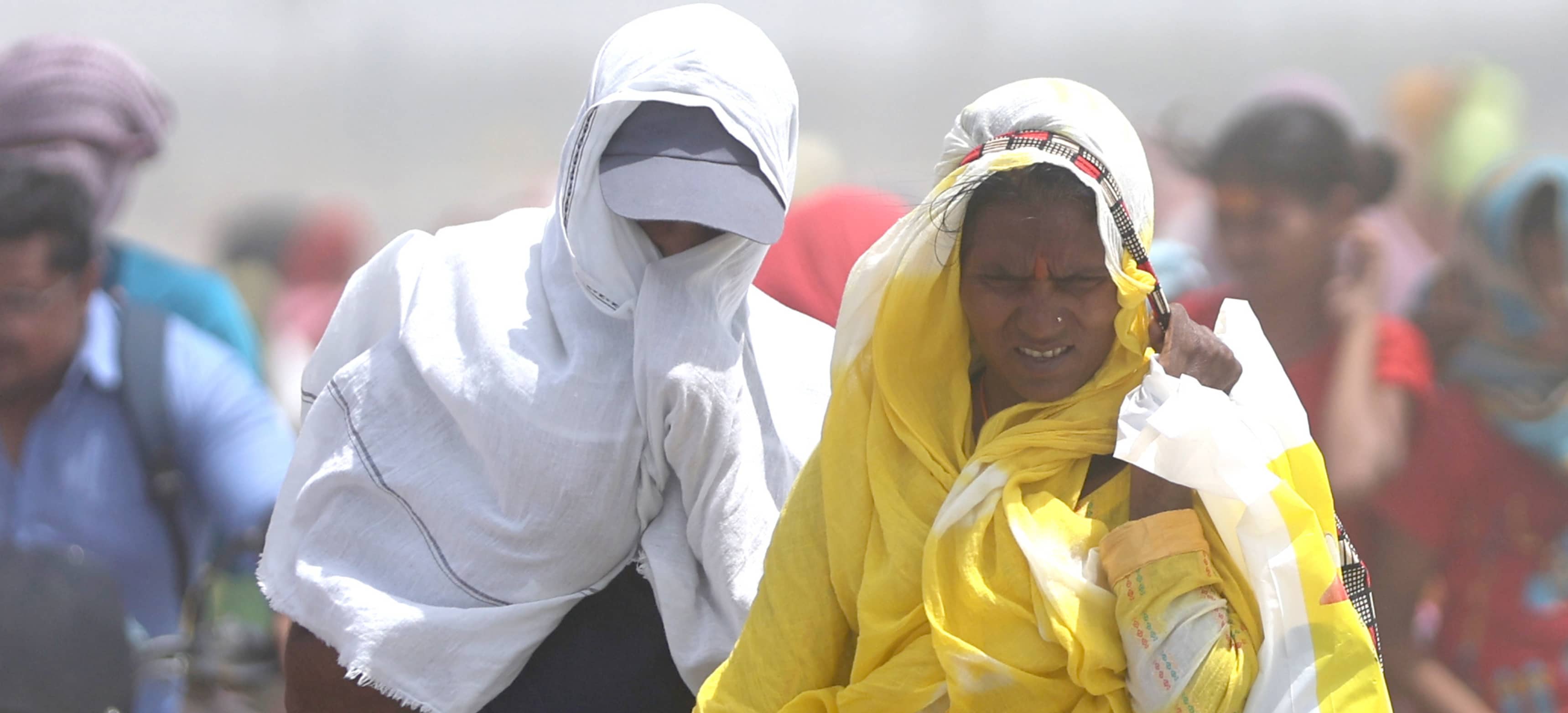
As many Indian states face heatwaves and the extreme heat is breaking records globally, the Council on Energy, Environment and Water (CEEW) is hosting a virtual dialogue to deliberate on strategies for advancing India’s resilience to extreme heat on 20 May 2025. As extreme heat events in India become more frequent, intense, and prolonged, it is essential to rapidly scale up heat resilience efforts. A comprehensive understanding of heat risks district by district is a critical step in this process. CEEW has conducted detailed research to map heat risks across India’s districts, using 35 indicators covering climatological changes in heat indices, land-use and land-cover changes, building and population density exposures, green cover, and socio-economic and health-related vulnerabilities.

At this dialogue, we aim to launch the report titled “How Extreme Heat Is Impacting India: Assessing District-level Heat Risk” and foster discussion on the strategies for building resilience against extreme heat. The discussions will focus on the disaster risk reduction strategies, ranging from the implementation of heat action plans to strengthening health resilience and securing financing solutions. There will also be a focused discussion on leveraging heat-related data for risk management and early warnings. These discussions will help in shaping a comprehensive plan for enhancing heat resilience and adaptive capacity at the national, state, and local levels.

For Event Queries

Yadu Kathuria

Communications Consultant

[email protected]

Key Speakers

REPORT
01 May, 2025 |

Sign up for the latest on our pioneering research

REPORT
11 September, 2024 |

HAVE A QUERY?

HAVE A QUERY?

Sign up for the latest on our pioneering research

REPORT
09 April, 2025 |

HAVE A QUERY?

HAVE A QUERY?

Sign up for the latest on our pioneering research

Pages