Home
Council on Energy, Environment and Water Integrated | International | Independent
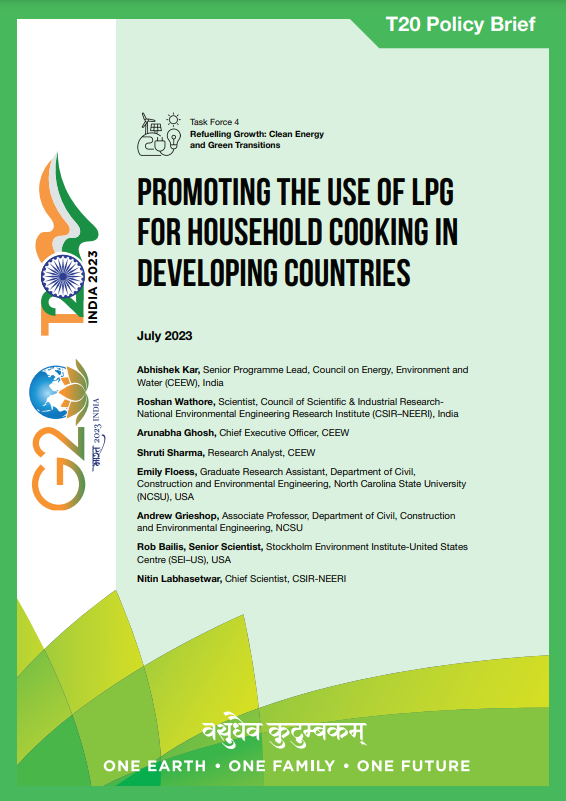
Promoting the Use of LPG for Household Cooking in Developing Countries

Abhishek Kar, Roshan Wathore, Arunabha Ghosh, Shruti Sharma, Emily Floess, Andrew Grieshop, Rob Bailis, and Nitin Labhasetwar
July 2023 |

Suggested citation: Kar, Abhishek, Roshan Wathore, Arunabha Ghosh, Shruti Sharma, Emily Floess, Andrew Grieshop, Rob Bailis and Nitin Labhasetwar. 2023. Promoting the Use of LPG for Household Cooking in Developing Countries. T20 Policy Brief.


Overview

This Policy Brief delves into the net climate benefits of scaling up Liquefied Petroleum Gas (LPG) in developing countries as an interim solution to aid the transition away from solid fuels. About 2.4 billion people continue to cook with solid fuels including firewood, charcoal, and biomass. LPG is seen as a scalable transitional cooking solution until renewable alternatives are ready for the market. However, consumers in the Global South face an affordability barrier to switch to primary use of LPG amidst a high inflationary environment.

Key Highlights

  • Over 2.4 billion people rely primarily on traditional, polluting (solid) fuels and technologies to meet their cooking energy needs. Cooking with solid fuels delays the progression of multiple UN Sustainable Development Goals (SDGs), including Goal 3 (Good health and wellbeing), Goal 5 (Gender equality), Goal 7 (Affordable and clean energy), Goal 13 (Climate action), and Goal 15 (Life on land).
  • Inaction on issues related to health, gender, climate change, and the environment has a yearly cost of USD 2.4 trillion, of which USD1.4 trillion is related to health, US$0.8 trillion is related to lost productivity for women, and USD 0.2 trillion is related to climate change.
  • There is a greater risk of affordability issues driving back solid fuel dependence for an estimated 100 million people who had already transitioned to clean cooking fuels.
  • An annual investment of USD 150 billion in Modern Energy Cooking Services (MECS) is estimated to provide universal access to clean cooking fuel. This represents a fraction of the overall cost to indicators of health, gender and the environment.
  • Apart from being a highly scalable interim clean cooking solution, cooking with LPG also presents net climate benefits as compared to firewood. Cooking with one 14.2 kg LPG cylinder saves 176 kg of firewood burning. Moreover, according to current carbon credits trading norms, a discount of upto USD 1.78 (INR 147) can be offered to end customers per 14.2 kg LPG cylinder.

Recommendations

  • Facilitate knowledge-sharing and capacity building efforts: The G20 can support countries with populations that lack access to clean cooking energy and have a high fraction of non-renewable biomass (fNRB) by providing roadmaps and best practices for Global South nations interested in upscaling LPG for cooking.
  • Aggregate an information repository: The G20 can support the development of an information repository for calculation of optimal subsidy for nations interested in driving primary and exclusive use of LPG, accounting for their purchasing power, export dependence and unique requirements, among other factors.
  • Engage with Organisation of the Petroleum Exporting Countries (OPEC): In order to combat the high inflationary environment and price shocks of international fluctuations, the G20 can negotiate for the extension of volume-based discounts, price guarantees to buffer against external shocks, and other price stability mechanisms to G20 nations that present a huge consumer base to the OPEC.
  • Determine the carbon credits accrued from emissions reductions: The ‘Technologies and Practices to Displace Decentralised Thermal Energy Consumption’ (TPDDTEC) methodology can be used to account for emissions reductions in switching over from non-renewable biomass to a mature and scalable technology like LPG.
  • Extend infrastructural and financial support: The G20 can establish a fund to extend financial support to Global South nations in the form of results-based financing and other avenues of viability gap funding.
​"The transition from solid fuels to LPG, despite being a fossil fuel, could result in a 74-percent reduction in net climate effect."

Sign up for the latest on our pioneering research

G20 Compendium on Best Practices for Water Management

Ministry of Jal Shakti and Council on Energy, Environment and Water
July 2023 |

Suggested citation: MoJS and CEEW. 2023. Best Practices for Water Management. Ministry of Jal Shakti, New Delhi, India


Overview

This compendium was developed through a synthesis of cases of best practices for water management in the G20 countries. For this purpose, the Ministry of Jal Shakti, Government of India developed a best practice template and shared with the G20 member countries to report programmes and interventions undertaken by them, across but not limited to the following thematic areas: universalisation of water and sanitation services; participatory groundwater management; climate resilient water infrastructure; water use efficiency improvement; and any other water management programmes or interventions that have led to improved water governance, better data and information, models for financing water infrastructure, and capacity building of stakeholders.

Key Highlights

  • The compendium on ‘Best Practices for Water Management’ includes 40 innovative case studies on best practices for water management received from the G20 member countries.
  • The case studies cover an array of themes including water use efficiency, river rejuvenation, climate resilient infrastructure, safe drinking water, hydro energy management, water data and information, flood management, drought management, water body restoration, global knowledge partnerships on water management, water harvesting, water supply augmentation, efficient water governance, wastewater management, watershed management and civil society participation, and groundwater management.
  • The upcoming G20 Presidencies may take this journey to a new level by collating thematic grouping of best practices for specific areas of water resources such as drinking water and sanitation, flood management, irrigation management, basin planning, water quality etc.
​"Building on the outcomes from past G20 presidencies, the compendium on ‘Best Practices for Water Management’ under India’s G20 Presidency aims to provide a platform for greater knowledge sharing and learning towards achieving sustainable water resources management across the world."

Sign up for the latest on our pioneering research

REPORT
04 August, 2023 |

HAVE A QUERY?

author image
Senior Programme Lead

Frequently Asked Questions

  • What is green hydrogen?

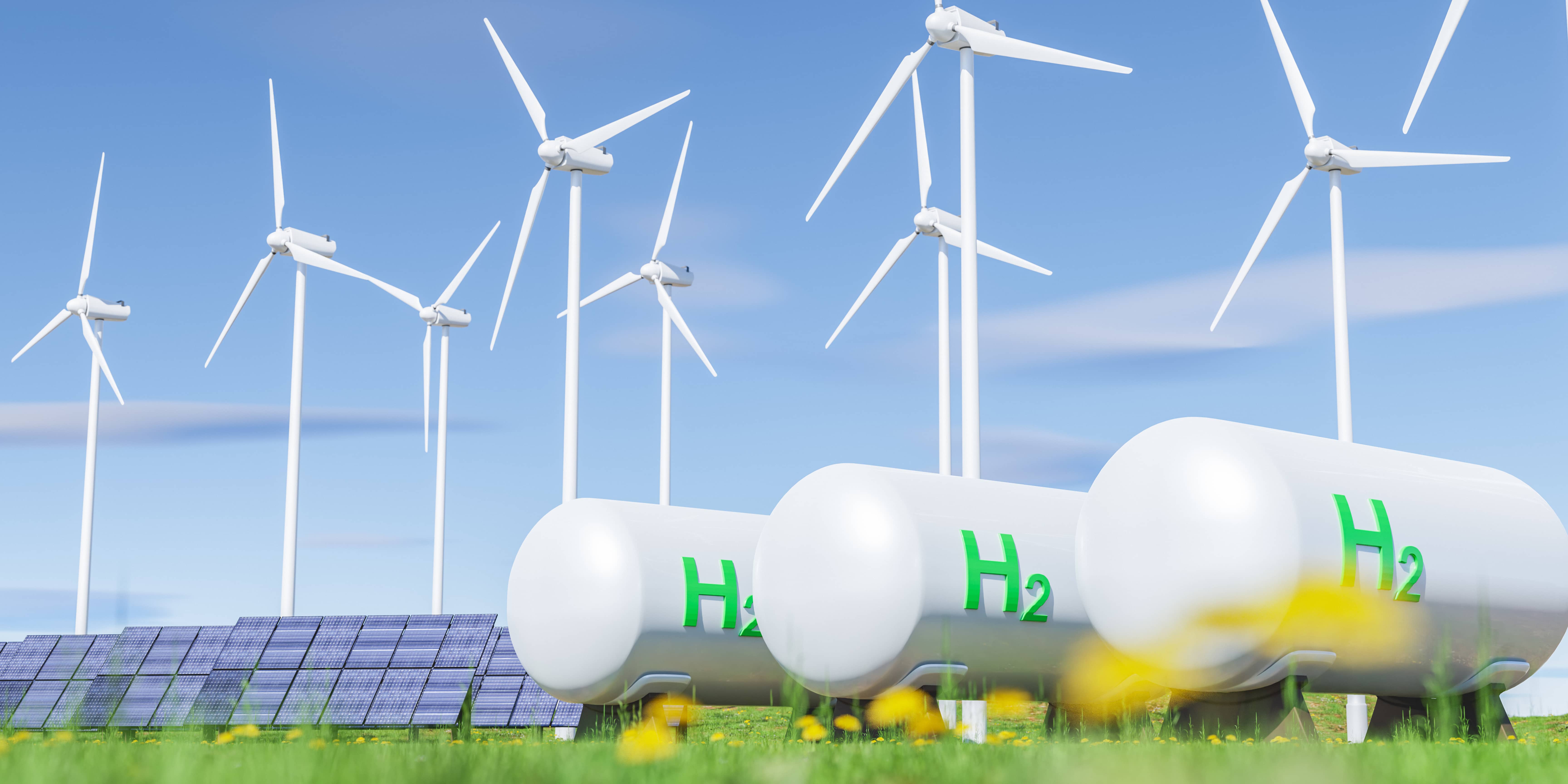
    Green hydrogen is the hydrogen produced through the use of renewable energy for the electrolysis of water. The ability to produce green hydrogen in a de-centralised manner makes this fuel of the future particularly useful.

  • What is India’s National Green Hydrogen Mission?

    The National Green Hydrogen Mission (NGHM) aims to make India a global hub for the production of green hydrogen while also creating demand for its usage and export of Green Hydrogen and its derivatives. This will contribute to India’s climate ambitions and help the country become Aatmanirbhar (self-reliant) for its energy needs. The Mission will lead to significant decarbonisation of the economy and reduced dependence on fossil fuel imports.

  • Does India have standards for the production, storage and transport of hydrogen?

    India already has standards for hydrogen production using proton exchange membranes (PEM), alkaline electrolysers, and anion electrolyte membrane electrolysers (AEM) but does not for solid oxide electrolyser cells (SOECs). India also has standards for hydrogen production through hydrocarbon reforming. However, India does not have standards for production through alternative means such as natural gas or biomass pyrolysis. India also has standards for the gaseous storage of hydrogen but needs to develop standards for bulk storage of liquid hydrogen. India also has standards for onboard hydrogen storage for fuel-cell electric vehicles. While India has standards for the storage and transport of gaseous and liquid hydrogen, it lacks standards for transportation through pipelines.

  •  

HAVE A QUERY?

author image
Senior Programme Lead

Sign up for the latest on our pioneering research

Use of Water Accounts Based Indicators for Water Management in India

Nitin Bassi
July 2023 |

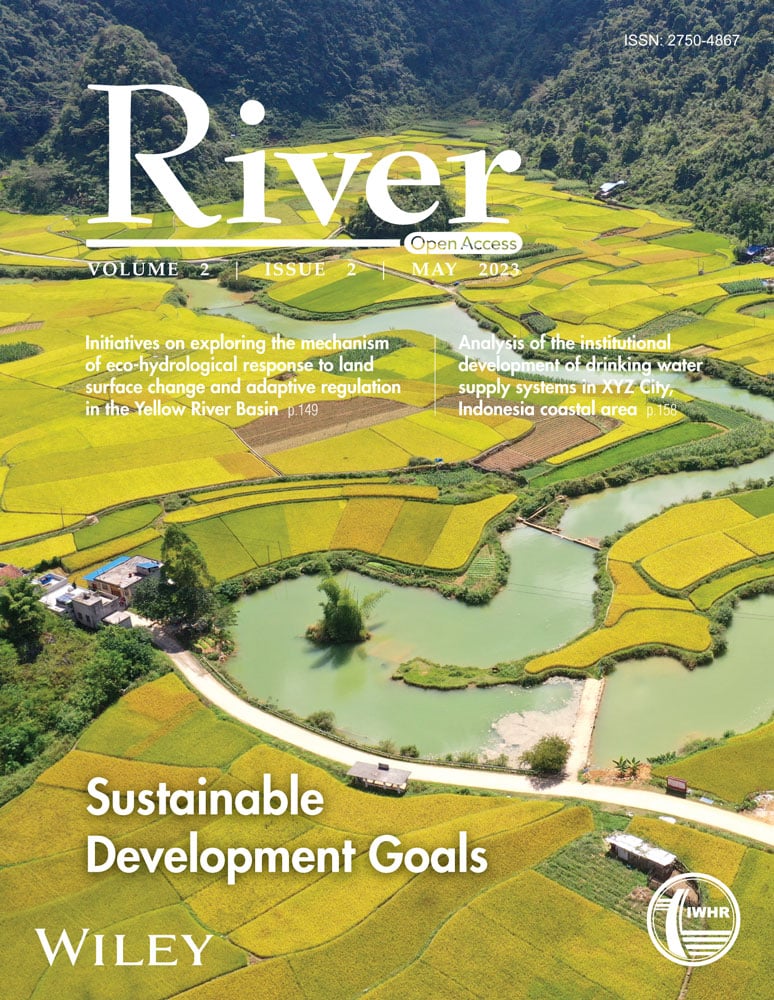
Suggested citation: Bassi, Nitin. 2023. “Use of Water Accounts Based Indicators for Water Management in India.” River 2: 1-19. https://doi.org/10.1002/rvr2.53


Overview

This research paper demonstrates an approach to prepare water accounts for the Mahanadi river basin in eastern India — which experiences climate-induced hydrological extremes — using the demographic, economic, hydrological, and geo-hydrological data available at different administrative and geographical scales. The water accounts were prepared for the normal, wet, and dry hydrological years. Further, selected water accounts derived indicators were computed to identify critical elements that need to be altered for improving water resources management at the river basin scale.

Key Highlights

  • The total inflow in the Mahanadi river basin during the wet year exceeds 24–26 per cent in comparison to the normal and dry years. In turn, 23 per cent and 24 per cent of the inflow get drained to the sea in a dry and normal year respectively.
  • Irrigated agriculture and evaporation from the surface of water bodies are the main consumers of blue water, accounting for 86-88 per cent during all the years.
  • The Mahanadi River has a huge dilution capacity, and, except for the biological oxygen demand in a dry year, the value of all other selected water quality parameters (nitrogen and electrical conductivity) is within the acceptable limits established by law.
  • Reducing water consumption in irrigated crops during summer, controlling evaporation from the reservoirs, and considering nitrogen concentration and electrical conductivity in the existing approach to determine polluted river stretches in India are identified as crucial actions for improving water management in the basin.
  • A total water saving of 2,385 million cubic metres (MCM)/annum is possible if the entire summer paddy is replaced by groundnut and one‐fourth area of the six big reservoirs in the basin is protected from evaporation.

Key Recommendations

  • Adopt drip irrigation technology, meter irrigation water use, and introduce volumetric pricing of water. These are the preconditions for converting field‐scale water saving from agriculture to the basin scale.
  • Plans for building any additional water diversion in upstream areas should consider the water consumption in the present and future and the environmental flow requirement of the river basin.
  • Prepare water accounts on a regular basis for the river basins in India (ideally for every normal, wet, and dry hydrological year). This can play an important role in decisions concerning water reallocation, promoting efficient water use, water quality management, and resolving disputes over water sharing between the riparian states.
​"In India, water accounts on a river basin scale are not prepared regularly, mainly due to the unavailability of data on consumptive uses in various economic sectors. Enabling the preparation of water accounts using available data sets and deriving indicators to quantify variables are critical for improving water management at the basin scale."

Sign up for the latest on our pioneering research

Webinar
How Can India Accelerate the Implementation of the National Green Hydrogen Mission?

04 Aug 2023   |   1630 – 1745 IST

The Council on Energy, Environment and Water (CEEW) is pleased to invite you to a webinar on 'How can India accelerate the implementation of the National Green Hydrogen Mission?' to deliberate on the gaps in standards for India's hydrogen value chain on 4 August 2023 at 1630 – 1745 IST, as well as the launch of a report ‘Accelerating the implementation of India’s National Green Hydrogen Mission - Assessment of Standards to Enable the Ecosystem’ during the webinar.

The National Green Hydrogen Mission targets producing 5 million tonnes per annum (MTPA) of green hydrogen by 2030. The need for codes and standards has been consistently recognised as a major hindrance to the large-scale deployment of any horizon technology. In order to enable the uptake of hydrogen, governments, research institutions, and international bodies are working in conjunction to harmonise codes, standards, and procedures related to the hydrogen value chain.

The webinar will bring together experts from industry and academia to deliberate on the standards framework in India. It will focus on the need and process of developing standards for a new-age fuel like hydrogen and its importance for a country like India.

For Event Queries

Richa Mehta

Consultant

[email protected]

Key Speakers

Dialogue
Greening C&I Segment's Electricity Consumption

01 Aug 2023   |   1000 - 1400 IST

The Centre for Energy Finance at the Council on Energy, Environment and Water (CEEW-CEF) is pleased to invite you to a Dialogue on 'Greening C&I Segment's Electricity Consumption' on 01 August 2023, 1000 - 1400 IST at Casuarina Hall, India Habitat Centre, New Delhi.

Electricity generation accounts for 40 per cent of India’s greenhouse gas (GHG) emissions. A significant share of these emissions comes from the commercial and industrial (C&I) segment, which accounts for 37 per cent of total electricity demand. Consequently, to reduce GHG emissions and supply green electricity to consumers, the country has set a target of achieving 500 GW of non-fossil-based generating capacity by 2030. Renewable energy (RE) capacity added through open access (OA) can contribute significantly to the achievement of national targets.

The Dialogue will feature a demonstration of CEEW-CEF's ‘Advanced Open Access Landed Cost Calculator’ (OA calculator), a session on first-hand perspectives of RE open access developers and consumers and a panel discussion on ‘Unlocking India's RE open access potential’.

For Event Queries

Richa Mehta

Consultant

[email protected]

Key Speakers

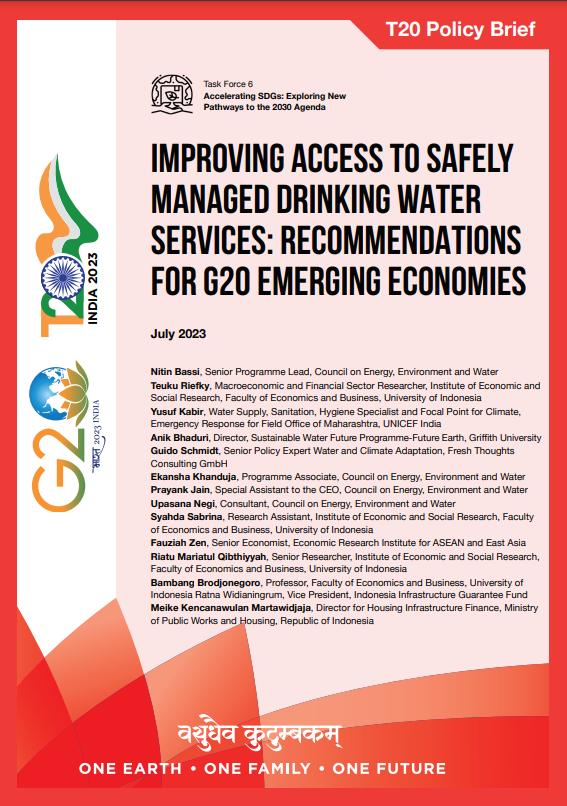
Improving Access to Safely Managed Drinking Water Services

Recommendations for G20 Emerging Economies

Nitin Bassi, Teuku Riefky, Yusuf Kabir, Anik Bhaduri, Guido Schmidt, Ekansha Khanduja, Prayank Jain, Upasana Negi, Syahda Sabrina, Fauziah Zen, Riatu Mariatul Qibthiyyah, Bambang Brodjonegoro, Meike Kencanawulan Martawidjaja
July 2023 | ,

Suggested citation: Bassi, Nitin, Teuku Riefky, Yusuf Kabir, Anik Bhaduri, Guido Schmidt, Ekansha Khanduja, Prayank Jain, et al. 2023. Improving Access to Safely Managed Drinking Water Services: Recommendations for G20 Emerging Economies. India: TF-6: Accelerating SDGs: Exploring New Pathways to the 2030 Agenda, T20 Policy Brief.


Overview

This policy brief, published by T20 India, draws on experience and lessons from G20 and other countries in achieving Target 6.1 of the sustainable development goals (SDGs) — it envisages ways to achieve universal and equitable access to safe and affordable drinking water for all by 2030. These lessons are contextualised in terms of accelerators (governance, data and information, finance, technology, and capacity-building) for the attainment of the same. This brief examines the governance models in domestic water supply management, advances in data and information to enable effective monitoring and evaluation, sustainable financing options for water supply projects, technological innovations, and capacity-building for effective operation and maintenance.

Key Highlights

  • As of 2020, 26 percent of the world’s population (about two billion people) did not have access to safely managed drinking water services, i.e., they did not have access to improved sources of drinking water within their premises, available when needed, and free from faecal and priority chemical contamination.
  • In the case of the G20 countries, a direct relation is observed in per capita gross domestic product (GDP) (in purchasing power parity (PPP) terms) and the proportion of people with access to safely managed drinking water services.
  • Human-caused climate change and contamination of water resources are leading to an adverse impact on water availability.
  • All productive uses of water are not accounted for by drinking water supply norms, and often the sources of supply of water are not reliable or the water is not properly handled/ stored.
  • Investments in water and sanitation are dominated by the public sector, leaving large scope for private financing untapped in most areas, especially the developing and under-developing economies.
  • Data for drawing conclusions on safely managed drinking water services is low, with only 138 countries (representing just 45 per cent of the global population) sharing such estimates. The consistency and comparability of the data reported by these countries is also not promising.
  • Skills and resources to ensure safety of water supply schemes, with community-based local institutions that are managing operations and maintenance of such schemes, remain low.

Recommendations

  • Institute adaptive and flexible governance models for sustainable water supply to respond to the challenges of climate change. An independent agency to allocate water across various competing uses in every river basin would be a step in this direction, as would be setting up legal provisions for access to safely managed drinking water.
  • Enable data and information collection and sharing for effective monitoring and evaluation. Build standardised and holistic list of indicators with adequate frequency of reporting to assess the progress on safely managed drinking water services, as has been brought out by India’s Jal Jeevan Mission.
  • Increase sustainable financing flow for water supply projects. Provisions which can facilitate accessing private financing available domestically and internationally must be made. For this it is crucial to improve the investment efficiency and commercial viability of water projects.
  • Promote and deploy technological innovations for water supply. Smart-water meters with real time data technology and SCADA (supervisory control and data acquisition) based monitoring systems enable the water supply utilities and the local community to better track risks related to the water sources and supply. Experiences from Ghana, Nigeria, Kenya, and other African and Asian countries can guide the way.
  • Building capacity for effective operation and maintenance to enable a change from water sufficient to water efficient climate resilient communities. The Jal Jeevan Mission of India, the National Water Quality Evaluation Program of Brazil, and CLARA (capacity-linked water supply and sanitation improvement for Africa’s peri urban and rural areas) in Africa present a strong case for the same.
​"The world is taking steps to move towards SDG 6.1, but the current pace of progress will have to be quadrupled to provide universal coverage of drinking water. It is important for G20 countries and the world to learn and contextualize from each other’s experiences in providing drinking water security to its people."

Sign up for the latest on our pioneering research

REPORT
20 July, 2023 |

HAVE A QUERY?

author image
Programme Associate

Frequently Asked Questions

  • Can DRE be leveraged DRE beyond energy access?

    Progress has been made in improving electricity access and achieving universal energy access; as of 2020, almost 91 percent of global population have access to electricity (ESMAP 2022). However, we are not on-track to meet the 2030 goal and the progress has been uneven (IEA 2022c). The progress has been particularly impeded in vulnerable regions, such as sub-Saharan Africa, where the number of people without access continues to alarmingly grow (IEA 2022c). One of the key levers that can help achieve this goal are DRE solutions that are increasingly costeffective and easy to deploy, leverage local resources, can be tailored to uses across residential, productive use and institutional applications, and are environmentally sustainable. Meeting the energy needs, therefore, through DRE helps meet multiple objectives.

  • Why there is a need for compendium on ‘good practices to mainstream DRE for SDG7’?

    While DRE has been around for a while, the sector is rapidly evolving with technological, business, market, and policy innovations. The effort of the compendium, which is a ‘practitioners’ guide on good practices’, is to showcase practices that can be replicated by planning agencies and help leaders and influencers in the public and private sectors mainstream DRE for achieving the SDGs. This practitioners’ guide attempts to compile and synthesise best practices from a wide variety of DRE interventions across the globe. If adopted at scale, DRE can help the G20 and other developing countries achieve more environmentally sustainable economic and job growth.

  • What key elements have been considered to capture emerging good practices to mainstream DRE for SDG7?

    Different studies in the DRE sector mention policy, finance, community, capacity building, market, infrastructure, technology, and institutional engagements as being core to enabling the deployment of DRE solutions (IRENA 2022, WWF-India and SELCO Foundation 2015, CLEAN 2021). Accordingly, we have captured the DRE ‘good practices’ by deep-diving into five core elements that are consistently considered by the literature and experts as the most critical elements for igniting transition and transformation and promoting a thriving DRE sector in any region. These are, an enabling policy environment, active community engagement, accessible and affordable financing, athriving market ecosystem, and a conducive environment for innovations.

  • What support can G20 countries provide in mainstreaming DRE for SDG7?

    G20 countries should support avenues for the active sharing of knowledge and lessons from DRE experiences to fast-track DRE deployments in the Global South. A key takeaway from the DRE case studies is that the challenges that impede DRE adoption remain similar across geographies to an extent. For example, diverse financing tools and mechanisms have been adopted by different countries to address the common challenge of affordable financing. These include PAYGO in Kenya, blended finance in India, and carbon emission reduction certificates in South Africa, among others. Accordingly, a lot can be learned from experiences across countries. Higher levels of global cooperation and partnerships for knowledge sharing can usher in a new era for DRE.

  •  

HAVE A QUERY?

author image
Programme Associate

Sign up for the latest on our pioneering research

REPORT
13 July, 2023 |

HAVE A QUERY?

Frequently Asked Questions

  • What are the functions of early warning systems and multi-hazard early warning systems?

    Early warning systems (EWS) are an essential tool for risk management and disaster preparedness that help save lives and minimise the potential impact of disasters. EWS do this by using a variety of tools and methods, such as sensors, data analysis, and communication channels, to gather information about potential threats or hazards and provide advance information or warnings to individuals or organisations that may be affected. Multi-hazard early warning systems (MHEWS) address several hazards and/or impacts of similar or different types in contexts where hazardous events may occur alone, simultaneously, cascadingly or cumulatively over time, and taking into account the potential interrelated effects. MHEWS, with the ability to warn of one or more hazards, increases the efficiency and consistency of warnings through coordinated and compatible mechanisms and capacities, involving multiple disciplines for updated and accurate hazard identification and monitoring for multiple hazards.

  • What are examples and types of early warning systems in disaster management?

    There are various ways of classifying EWS, such as by type of hazard, the level at which it is operated, and whether it is a single or multi-hazard system (UN-SPIDER 2021). Some examples of the types of EWS available globally include: 1. Weather and climate EWS: These systems are designed to provide advance notice of extreme weather events, such as hurricanes, tornadoes, and heat waves, as well as longer-term climate risks such as droughts and floods. They provide advance warning to local authorities and communities, allowing them to prepare and take necessary precautions. 2. Earthquake EWS: These systems use seismometers to detect potential earthquakes and provide warnings to people in affected areas. This can give people time to take shelter and protect themselves from potential damage. 3. Tsunami EWS: Similar to earthquake EWS, tsunami EWS use sensors to detect seismic activity in the ocean and provide alerts to coastal communities in the path of a potential tsunami. 4. Wildfire EWS: These systems use data on weather, vegetation, and other factors to estimate the risk of wildfires and provide alerts to nearby communities.

  • What are the key pillars of effective early warning systems?

    Effective “end-to-end” and “people-centred” early warning systems may include four interrelated key elements: 1. disaster risk knowledge based on the systematic collection of data and disaster risk assessments. 2. detection, monitoring, analysis and forecasting of the hazards and possible consequences. 3. dissemination and communication, by an official source, of authoritative, timely, accurate and actionable warnings and associated information on likelihood and impact. 4. preparedness at all levels to respond to the warnings received. These four interrelated components need to be coordinated within and across sectors and multiple levels for the system to work effectively and to include a feedback mechanism for continuous improvement. Failure in one component or a lack of coordination across them could lead to the failure of the whole system.

  • What are the different ways of communicating early warnings?

    The key component of accessibility to early warning information is access to early warning dissemination systems (EWDS). Maintaining access to EWDS is crucial to ensure information is relayed and disseminated from the state, district, and block levels to communities and vice versa so that the last person nearest to the sea is well informed about taking appropriate action in case a cyclone or any other disaster occurs. Without accurate information, people are often forced to make crucial decisions based on unclear and conflicting reports. Therefore, there is an urgent need for speedy dissemination of disaster alerts to a maximum number of persons in order to ensure preparedness, both at the individual level as well as the responding institution level (NDMA 2021). Telecommunication services such as calls, messages, push messages, and other alerts are the most reliable and immediate way to relay early warning communication to the masses. However, it is essential to identify the most suitable method for information dissemination based on the needs and level of comprehensibility of the community. Dissemination techniques can be further categorised into widespread and targeted dissemination techniques, depending on where they are used and applied. While targeted methods can provide warnings to individual users, families, persons, neighbourhoods, predefined groups, agencies, etc., widespread methods (mass dissemination techniques) are less targeted and are primarily via the mainstream media through television and radio, loudspeakers, signs and sirens.

  • Why should India invest in early warning systems?

    The 2019 Global Commission on Adaptation's flagship report, Adapt Now, found that EWS provides more than a ten-fold return on investment – far higher than any other adaptation measures included in the report. The report also found that issuing a warning just 24 hours before a coming storm or heatwave can cut the ensuing damage by 30 per cent. Furthermore, spending USD 800 million on such systems in developing countries would help prevent losses of USD 3–16 billion annually (UN 2022). Thus, investing in establishing an effective EWS will serve the dual purpose of saving lives and protecting economies while building long-term climate resilience. An effective EWS is the first step towards building resilience as it enables policymakers, public officials, administrators, and communities to plan ahead and safeguard lives and livelihoods. Under India’s G20 presidency this year, a working group on disaster risk reduction (DRR) has been formed for the first time since 1999. Further, EWS remains one of the key priorities throughout India’s G20 presidency. This is also in agreement with the Prime Minister’s Ten Point Agenda for DRR.

  •  

HAVE A QUERY?

Sign up for the latest on our pioneering research

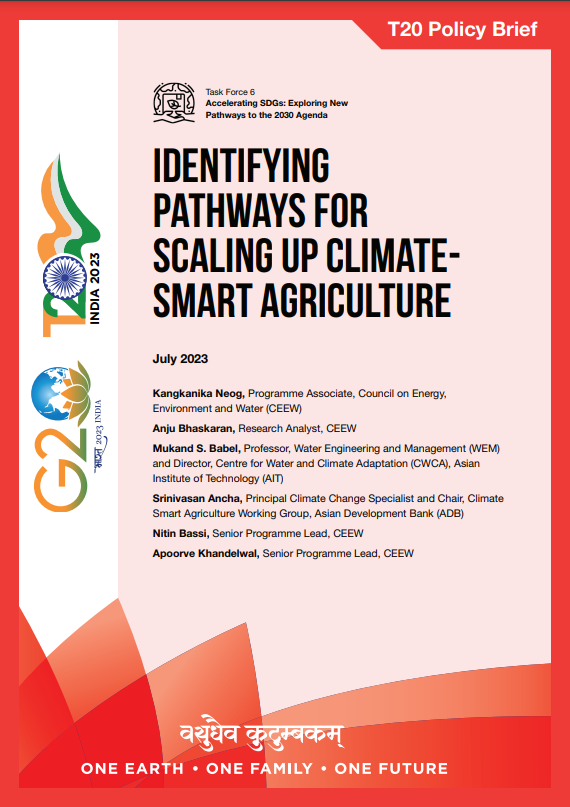
Identifying Pathways for Scaling Up Climate-Smart Agriculture

Kangkanika Neog, Anju Bhaskaran, Mukand S. Babel, Srinivasan Ancha, Nitin Bassi and Apoorve Khandelwal
July 2023 | ,

Suggested citation: Neog, Kangkanika, Anju Bhaskaran, Mukand S. Babel, Srinivasan Ancha, Nitin Bassi, Apoorve Khandelwal. 2023. Identifying Pathways for Scaling Up Climate-Smart Agriculture. T20 Policy Brief.


Overview

This paper, published by the T20 India Task Force on Accelerating SDGs: Exploring New Pathways to the 2030 Agenda, discusses pathways to scale up climate-smart agriculture (CSA). CSA is an evolving concept at the centre of global food security, climate action, and disaster risk reduction. It provides an encompassing framework to address mitigation, adaptation, and productivity challenges. This policy brief recommends a pathway that the G20 leaders and other intergovernmental collaborations could lead to accelerate CSA adoption: Existing multi-stakeholder platforms can be strengthened for collaboration, knowledge sharing, and information exchange; an enabling environment for deploying CSA should be created; and the planning, adoption, and implementation of monitoring, evaluation, and learning (MEL) processes for CSA should be accelerated.

Key Highlights

  • An estimated 22 per cent of global greenhouse gas emissions in 2019 were from the agriculture, forestry, and other land use sectors. Moreover, adverse impacts of climate change on agricultural productivity—including those of increased frequency and intensity of extreme weather events such as floods and droughts—have diminished food and water security, thereby creating a massive challenge to meet the SDGs.
  • CSA presents an encompassing framework that attempts to improve productivity while addressing mitigation and adaptation in the sector.
  • Advancing CSA needs a holistic approach: broaden scope, consider value chain, address governance challenges (policy-practice gap, participatory approach, small-scale producers, political economy), and establish pre-defined MEL processes.
  • Although there is a substantial increase in global collaborations on efforts to improve food security, there is also fragmentation in the agriculture sector on approach, framing and terminologies. Therefore, while developing solutions that are critical for food security, there is a need for 'true' collaboration in the sector across the interest groups following the myriad different but related approaches, framing and terminologies.

Recommendations

  • Strengthen multi-stakeholder platforms (MSPs) for collaboration, knowledge sharing, and information exchange. The G20 should lead the alignment of the numerous stakeholders employing different approaches to improve agriculture under climate change and variability and encourage collaboration in the common aspects.
  • Create an enabling environment for deploying CSA that are context-specific and targeted. To strengthen CSA, enhance data and research capabilities, build institutional capacity, drive finance and investments aligning with the Matera Declaration, prioritise capacity development, and promote innovation and technology transfer for scaling up leveraging G20 capabilities.
  • Accelerate planning, adoption and implementation of MEL processes for CSA at all scales. First, develop and drive CSA programmes and project-level monitoring and evaluation using indicators and taxonomy that is universal and therefore, comparable. Second, facilitate institutional readiness to support reporting at all scales that can be culminated in the national Enhanced Transparency Framework (ETF).
​"Although there is a substantial increase in global collaborations on efforts to improve food security, there is also fragmentation in the agriculture sector on approach, framing and terminologies"

Sign up for the latest on our pioneering research

Pages